…are going to the World Series.
I’m so old I remember when baseball players didn’t wear beards.

…are going to the World Series.
I’m so old I remember when baseball players didn’t wear beards.
I’m not at all sure the Democrats are pleased about the timing of this:
More Honduran migrants tried to join a caravan of several thousand trekking through Guatemala on Wednesday, defying calls by authorities not to make the journey after U.S. President Donald Trump threatened to cut off regional aid in reprisal.
The caravan has been growing steadily since it left the violent Honduran city of San Pedro Sula on Saturday. The migrants hope to reach Mexico and then cross its northern border with the United States, to seek refuge from endemic violence and poverty in Central America.
These are illegal immigrants, of course, and no doubt most if not all of them will ask for asylum status if they manage to cross the US border. The sad thing—and it is a sad thing—is that there are an awful lot of what someone or other once called “shithole countries” around the world, and many of the people in those countries would indeed dearly love to come here. Some of them would even make good citizens if they did; perhaps this woman is among them:
“We’ve lived in neighborhoods where our children have seen disaster after disaster,” said Daisy Turcios, resting briefly outside a school. “We have seen dead bodies thrown in front of us. So that’s my goal, in truth, to reach a country where life can change for my children.”
Or perhaps she wouldn’t be a good citizen. But whether she would or wouldn’t, she is subverting the lawful immigration process, and there is no doubt whatsoever that some of fellow caravaners would not make good citizens.
And it is a fact that every country on earth should have the right to make its own rules about who comes into it and who does not, and the US—as the most-desired nation on earth in which to live—cannot take all comers or even nearly all comers. The economic and social burdens would be too high.
More here about the politics of the caravan and what might await it:
“Hard to believe that with thousands of people from South of the Border, walking unimpeded toward our country in the form of large Caravans, that the Democrats won’t approve legislation that will allow laws for the protection of our country,” Trump said on Twitter on Wednesday.
The Honduran government has urged citizens not to join the caravan, calling it politically motivated. On Wednesday morning near the Guatemalan border, authorities could be seen stopping Hondurans still hoping to join, with police in riot gear at one checkpoint halting buses carrying at least a hundred people…
Mexico said anyone who enters the country with a Mexican visa can move freely, while those without proper documents would be subject to review and could be deported.
“This measure responds not only to compliance with national legislation, but particularly to the interest of the Mexican Government to avoid that such people become victims of human trafficking networks,” the foreign ministry said in a statement.
NOTE: For me, the word “caravan” almost immediately conjures up the poem “The Rubaiyat of Omar Khayyam,” a work I had to read in high school and very much loved. Here are the “caravan” references in the poem:
Think, in this batter’d Caravanserai
Whose Doorways are alternate Night and Day,
How Sultan after Sultan with his Pomp
Abode his Hour or two, and went his way…
One Moment in Annihilation’s Waste,
One moment, of the Well of Life to taste—
The Stars are setting, and the Caravan
Starts for the dawn of Nothing—Oh, make haste!…
A Moment’s Halt—a momentary taste
Of BEING from the Well amid the Waste—
And Lo!—the phantom Caravan has reach’d
The NOTHING it set out from—Oh, make haste!…
Do high school students read the Rubaiyat anymore? By the way, FitzGerald’s masterful translation of the poem apparently used the original Farsi merely as a springboard from which to work his own creative magic. Today it’s probably considered an act of cultural appropriation. But if it is, I say “bravo!”
There are many quatrains in the poem that are favorites, and so it’s hard for me to pick a favorite favorite. But perhaps this would be it:
The Moving Finger writes; and, having writ,
Moves on: nor all your Piety nor Wit
Shall lure it back to cancel half a Line,
Nor all your Tears wash out a Word of it.
NOTE II: The title of this post comes from this Arabic saying.
I’ve seen a lot of pundits referring to what happened to Kavanaugh as his having been borked. But that’s not entirely correct.
In the earlier part of the hearings, he was indeed borked. In other words, his judicial record was criticized and distorted in a way that could be described as deceptive and alarmist. But he seemed to sail through that section of the hearings, so the opposition had to up the ante.
After that he was Clarence Thomased, only more like Clarence Thomas Squared. That doesn’t fall as trippingly off the tongue as “borked,” but it’s what happened, although of course it’s hardly a perfect analogy. Anita Hill’s charges against Thomas were relatively mild and fairly specific compared to what was launched against Kavanaugh by three women in a series of escalating and ever-less-believable stories, although only one of those women testified publicly.
With Thomas, Anita Hill described events that she alleged had happened about ten years earlier. With Kavanaugh, Ford described an event that she claimed had occurred over three times further back than that. Hill alleged acts that would have occurred when Thomas was a mature man, but Ford alleged events from when Kavanaugh was in high school and had not reached adulthood.
Ford’s accusations were both more serious and more preposterous, and were even harder to disprove than Hill’s because of the antiquity and vagueness of the Ford accusations as to place or time, or even how many people might have witnessed them.
So the plan for Kavanaugh, if necessary, was a kind of one/two punch—first the borking and then the Thomasing.
One big difference between Bork and Thomas was that Thomas was confirmed and Bork was not. Why was Thomas confirmed? I’m not sure, actually, because at the time the Senate was controlled by Democrats. However, it seems that enough Democrats felt uncomfortable about refusing to seat him.
That may have been because Thomas was a black nominee and the Democrats who ultimately voted to confirm him came from states with very sizeable black populations. If you look at those eleven Democrats who voted “yea” on Thomas, you’ll see that most of them came from the South and one from Illinois, all states with very sizeable black populations. The only other Democrats who voted yes on Thomas were from Nebraska and Arizona, and I don’t have a theory about them:
The final floor vote [on Thomas] was not strictly along party lines: 41 Republicans and 11 Democrats (Dixon (D-IL), Exon (D-NE), DeConcini (D-AZ), Robb (D-VA), Hollings (D-SC), Fowler (D-GA), Nunn (D-GA), Breaux (D-LA), Johnston (D-LA), Boren (D-OK), and Shelby (D-AL) now (R-AL)) voted to confirm while 46 Democrats and 2 Republicans (Jeffords (R-VT) later (I-VT) and Packwood (R-OR)) voted to reject the nomination; John Glenn was particularly vituperative in his rejection. Ironically Packwood himself would later be engulfed by sexual harassment allegations which ended his Senate career.
I also find this interesting:
Some of the public statements of Thomas’ opponents foreshadowed the confirmation fight that would occur. One such statement came from African-American activist attorney Florynce Kennedy at a July 1991 conference of the National Organization for Women in New York City. Referring to the failure of Ronald Reagan’s nomination of Robert Bork, she said of Thomas, “We’re going to ‘bork’ him.
So that expression was used approvingly by Florynce Kennedy, describing the plan for Thomas’s hearings. And then there was this, another resemblance to what awaited Kavanaugh and what the political issues were for each nominee:
Under questioning during confirmation hearings, Thomas repeatedly asserted that he had not formulated a position on Roe v. Wade, or had any conversations with anyone regarding the issue
A significant amount of this behavior on the part of Democrats apparently comes down to their fear of losing Roe, and of course of losing SCOTUS cases in general.
Now this, this is how you bork someone—no holds barred. Note the first allegation in the list:
I’m surprised this is even allowed on YouTube these days. I learned it as a little girl:
This isn’t the version I learned, but here you have the visuals:
…with Farrakhan comparing Jews to termites.
After all, he’s not on the right, so Twitter’s hate speech rules are applied to him more liberally than they are to those on the right.
Suddenly, a lot of Democratic candidates are getting really really stupid.
Now, you might say they’ve been stupid for a long time. But I don’t mean “stupid” as in “thinking they’ll never run out of other people’s money,” or something like that. I mean “stupid” in the sense that Republicans have so often been stupid.
Stupid about campaigning. Stupid about tactics. Stupid about timing. The kind of stupid we recall seeing from “I am not a witch” Christine O’Donnell and “you can’t get pregnant when you’re legitimately raped” Todd Akin, who was on track to unseat Claire McKaskill until his unfortunate remark.
Shoot yourself in the foot, foot in mouth (mixed metaphor?) stupid.
On Monday I wrote about Elizabeth Warren:
I used to think that Elizabeth Warren was smart. I disagreed hugely with her politics and her tactics, but long ago she seemed intelligent. I can’t say I’ve been paying all that much attention to her in recent years, but today’s DNA caper seems an indication that if she ever was smart, being in DC so long has caused her to lose whatever savvy she may once have possessed.
In other words, why on earth would she think that releasing these DNA test results would help her cause? On the contrary, the move makes her look like an absolute fool…
And then yesterday I read about Heidi Heitkamp of North Dakota’s doxxing of alleged sexual assault survivors who never gave permission for their names to be used and who claim they’re not even sexual assault survivors. And all in the service of a pretty weak campaign ad, an attempt by Heitkamp to overcome the backlash against her “no” vote on Kavanaugh. The ad made little sense even if the all names had been correct and permission had been given (which apparently was the case with most of the names she used): why double down on the anti-Kavanaugh mess when it’s just not a popular stance in your state?
You might call that a rookie error—but Heitkamp’s not a rookie.
Heitkamp isn’t alone:
@SenateDems had a SLAM DUNK!?!? pic.twitter.com/N7BaNs5jXl
— ? George Kaplan ? (@En_vis_age) October 17, 2018
Why is all of this happening? Is it a simple case of “give them enough rope”? Perhaps, at least partly. But I continue to think that it’s due to something I discussed yesterday, the fact that Trump is a knuckleballer.
Now you may think that analogy of mine isn’t a good one. After all, isn’t the knuckleball a junk pitch? Not when it’s done right. A superlative knuckleballer is highly skilled at what he does, and it’s not something most pitchers can master and throw with any consistency or effectiveness. But the best knuckleballers can regularly make the batters who face them look like fools. The batters swing wildly, usually trying for the stands, because the knuckleball pitch looks so big and fat and juicy and slow that they’re sure they can knock it right out of the park. Then they end up looking like one of those cartoons of baseball players taking a big swing and missing, corkscrewing their bodies in the process, and then having to unwind.
I don’t know what’s going to happen in the election this year in terms of the results. I confess to being very anxious about it. Then again, I’m almost always anxious about elections these days. But I know that if I were a Democrat I’d be very, very frustrated right about now.
The character, that is, in the series that used to bear her name. The plot line has her dying from an opioid overdose, in both a nod to a current US problem and an act of vengeance against the series’ creator and star.
We’ll see if that helps them; so far, it’s doing so-so:
Down 35% from the Roseanne opener, the debut of The Conners was just 4% better than the mothership series finale in metered market numbers. In fact, despite a massive marketing push, The Conners wasn’t even the highest rated show of Tuesday night. Though The Conners was ahead of This Is Us by 22% in the early numbers, it was the fourth episode of the 16th season of CBS’ NCIS that topped the night with a 8.1/13 in metered market results.
Killing off Roseanne doesn’t mean they couldn’t bring her back, although I doubt they will (and I’m not sure she would accept even if they asked). After all, towards the end of the original series, Roseanne’s husband Dan was revealed to have died, and they brought him back.
I don’t watch the show, but I’m curious what will happen to the ratings.
I’m in agreement with Roger Simon’s take. No one is a good guy here, and it’s best to go slow.
The seeming stupidity of Elizabeth Warren claiming Native American status on the basis of her paltry DNA results points to some deep problems in the leftist identity politics narrative. It goes something like this:
(1) For some identities, leftism dictates that they are self-defined and ignore physical biology. The person creates his or her own reality, and this is most readily apparent with the transgender movement. In fact, once a person has formally identified as a man or a woman, regardless of his or her birth gender, then the world is required to address that person by the preferred gender pronouns whether that new gender seems to fit the person’s appearance or not, and whether or not that person has had sex reassignment surgery. This has already caused some problems in sports (see this, for example).
(2) The history of the assignment of racial identity is fraught with difficult decisions to be made about the governing rules. This is true whether the purpose is discrimination (apartheid, Jim Crow South, Nazis) or the conferring of benefits (affirmative action in the present-day US). Warren tried to take advantage of a minority status in order to gain such advantage in the hiring process (although she denies that motivation). Whatever her reasons, the real question is at what point it becomes ridiculous to claim such racial ties. Warren definitely went far beyond that point; she is no more Native American than most Americans of European descent who wouldn’t even think of claiming it, and a good deal less than some.
(3) Same for Rachel Dolezal, who appears to have had a different motive for her identification with black people although she’s white, probably an emotional one. At any rate, her case highlighted the conflict between the leftist rules about gender identity and the ones about racial identity.
(4) Warren’s case also makes it clear that if she meets the criteria for being a minority, then virtually all of us do, because most people have traces of other races (and often even other species, for example Neanderthals). Once it is accepted that a small amount of a race is enough to confer membership in that race, then the entire edifice collapses because almost anyone could claim membership in any race.
(5) That brings us right back to the more basic question: what is race, how can it be determined, and what is the purpose of such categorization? Why at this point do we have affirmative action or quotas? Why are some races favored and others not? Harvard is having to deal with this question right now regarding their treatment of Asian applicants, and I eagerly await the results of that lawsuit.
[NOTE: It occurs to me that I should point out that the left doesn’t care about the contradictions, although it’s inconvenient for them to have them pointed out. But since the left will say that 2+2=5 if necessary, contradictions are really no big problem for them.]
…and at first I think it’s just my site, so I’m actually relieved to find out it’s global.
And now it’s fixed.
The internet has become extremely sophisticated and ridiculously complex. No matter how many safeguards are built into it, it’s vulnerable.
So far, no one has a clue why this happened. But there were a lot of tweets about the apocalypse.
And of course, within minutes of YouTube’s restoration, there were a ton of YouTube videos with people talking about the outage.
Most people couldn’t pull off this fashion statement that Melania Trump made during her recent trip to Egypt. For instance, I would like silly in this outfit. But Melania can wear anything and look good, and she looks great here.
I must add that the First Lady of Egypt is one of the few people who can manage to hold her own while standing next to Melania. She has a different (and simpler) vibe and style entirely, but is equally tall and slim, with a natural elegance.
And how about those strange dancers seen from :12-:20? Is that supposed to be some Egyptian dance? It reminds me a bit of the Fokine version of “Afternoon of a Faun” from 1912:
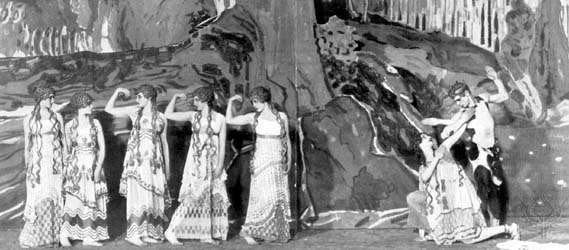
Nijinsky’s ballet caused a huge scandal when it premiered:
The style of the ballet, in which a young faun meets several nymphs, flirts with them and chases them, was deliberately archaic. In the original scenography designed by Léon Bakst, the dancers were presented as part of a large tableau, a staging reminiscent of an ancient Greek vase painting. They often moved across the stage in profile as if on a bas relief. The ballet was presented in bare feet and rejected classical formalism. The work had an overtly erotic subtext beneath its façade of Greek antiquity, ending with a scene of graphic sexual desire.
That “scene of graphic sexual desire” was with a veil, by the way, left behind by a nymph. Here’s what actually happens in the scene:
The Faun holds the veil to his face before spreading it on the ground and lowering his body onto it, head tucked in and arms to his sides. Soft horns and harp accompany a final flute passage as his body tenses and curls back, head rising, before relaxing back onto the veil.
That really doesn’t sound all that shocking, does it? But I’ve seen the ballet, and if that part is done well, it actually does convey a very sexual vibe that must have been intensely shocking in 1912.
But I very much doubt that anyone can do it the way Nijinsky did it. He was by all accounts one of the greatest dancers of all time, in no small part because of his acting abilities. We do have still photos of him and the veil, although not that final moment. You can see his special qualities:
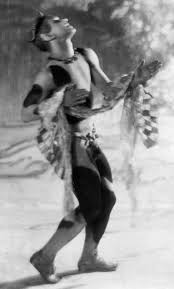
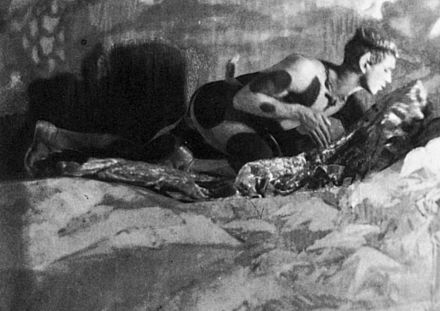
And here is a video of Nureyev doing the role. I’ve cued up just the last bit:
I’ve come pretty far from talking about Melania’s outfit on her trip to Egypt, haven’t I?
It seems possible that Khashoggi was murdered in order to embarrass Crown Prince bin Salman rather than to protect him.
If he was murdered at all, that is—and on the whole I think it’s likely that he was murdered.
I wonder why Lindsey Graham is falling into the trap of accusing bin Salman before we know more. Maybe Graham just can’t turn off his new-found feistiness. From the quotes in that article (I can’t find a full transcript of Graham’s interview), it appears that Graham isn’t saying “if” about the Crown Prince’s responsibility for the murder; he’s assuming it. This just seems wrong to me, and not smart.
Note that we haven’t yet gotten the promised announcement from the Saudis that CNN had predicted. Time will tell, of course, but CNN is not exactly a consistently trustworthy source. In summary, right now this entire affair is wide open and I’m assuming that we know nothing.