Want to photograph snowflakes? The approach of winter makes it seem an attractive proposition.
If so—and if you can follow these incredibly complex instructions—no doubt you’ll be rewarded with some wonderful photos. And if you can, no doubt you are also a more painstaking and patient person than I am, because I balked at even reading the directions (and speaking of painstaking and patient, consider the life of the father of snowflake photography, Vermont’s Wilson Bentley).
That doesn’t mean I don’t think about snowflakes from time to time. I remember one extraordinary night when I was in graduate school. I emerged from a February evening class and encountered a rare snowfall in which each flake was seperate and dry, its regular crystal form clearly evident to the naked eye. It was as though nearly-weightless white diamonds had somehow fallen from the sky and were there for the taking. They stood outlined for a moment on our coats and hats and hair and gloves, but disappeared at the touch of a warm human hand.
To form that sort of snow it can’t be overly wet. But it must be very very cold. Where are these conditions best met? Sometimes here in New England, but this snowflake seeker says they’re more likely to be encountered in the midwest, around large lakes. Also Antarctica, but that’s a bit more difficult to visit:
The pole is very cold, very dry, and at high altitude, and snow crystals found there tend to be small, nearly perfect, hexagonal prisms. The very low temperatures produces sharp crystal facets (no chance of melting), while the very slow growth tends to produce small solid prisms.
It turns out that memorable snowfall I saw long ago was most likely composed of stellar dendrites and ferned stellar dendrites, as especially magical storms often are. “Storm” might be the wrong word, though; to make the most perfect flakes, a calm snowfall is best. I recall that on that night there was hardly any wind at all:
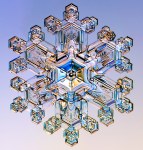
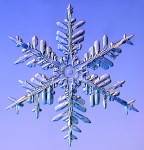
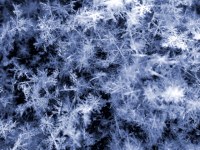
And this is what the aggregate looked like:
So, are no two snowflakes alike? I heard that in my youth, and wondered how it could ever be proven. Wouldn’t a person have to study them all, and wasn’t that impossible? The answer, unsurprisingly, is that it depends on what your definition of “alike” is. We can safely say, however, that at least for complex snowflakes, there have never been two alike in the history of the world.
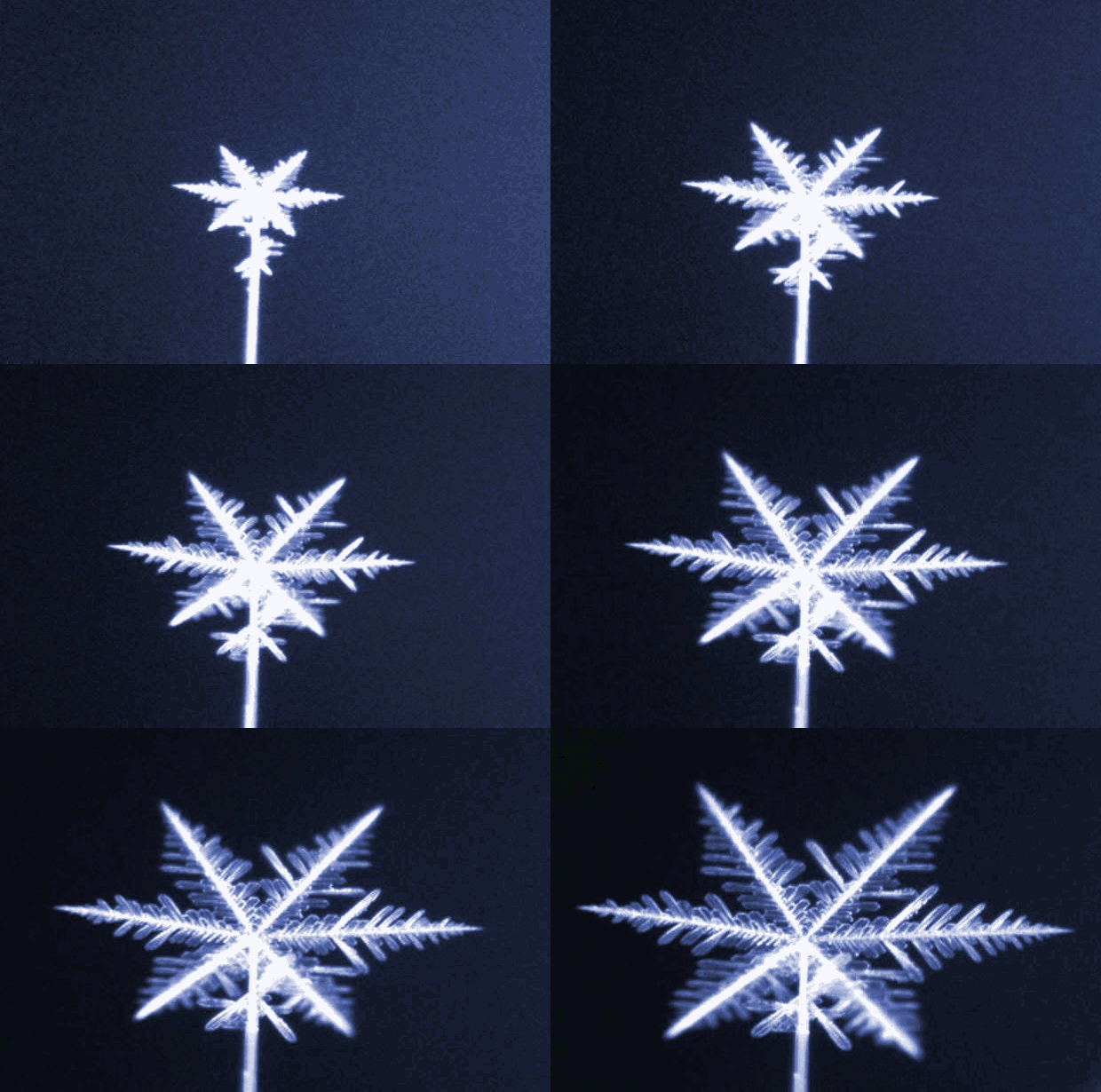
Here’s one of them, though. It’s a movie of a snowflake growing under lab conditions. I am so stunned that I managed to figure out a way to get this onto my blog that I can’t muster any more tech savvy to figure out how to shrink it down to the proper size.