↓
 

The New Neo

A blog about political change, among other things

  • Home
  • Bio
  • Email
Home » Page 973 << 1 2 … 971 972 973 974 975 … 1,916 1,917 >>

Post navigation

← Previous Post
Next Post→

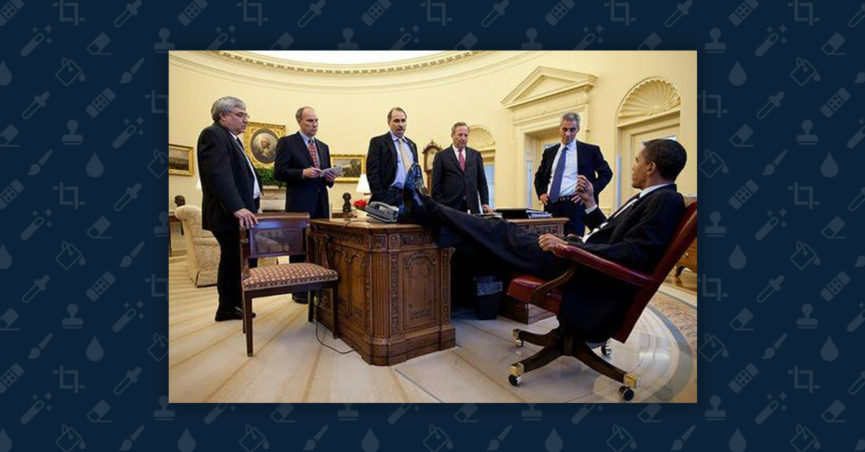
One of these things is not like the other

The New Neo Posted on March 1, 2017 by neoMarch 1, 2017

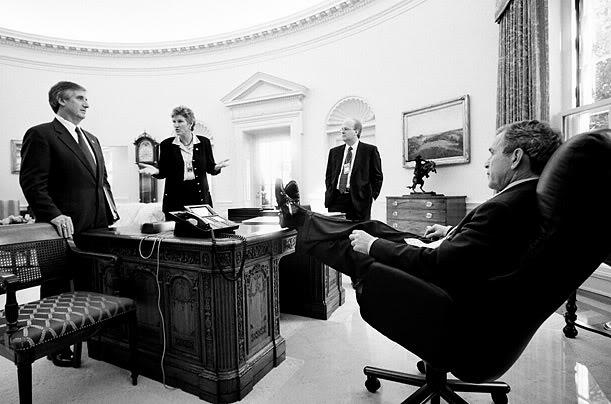
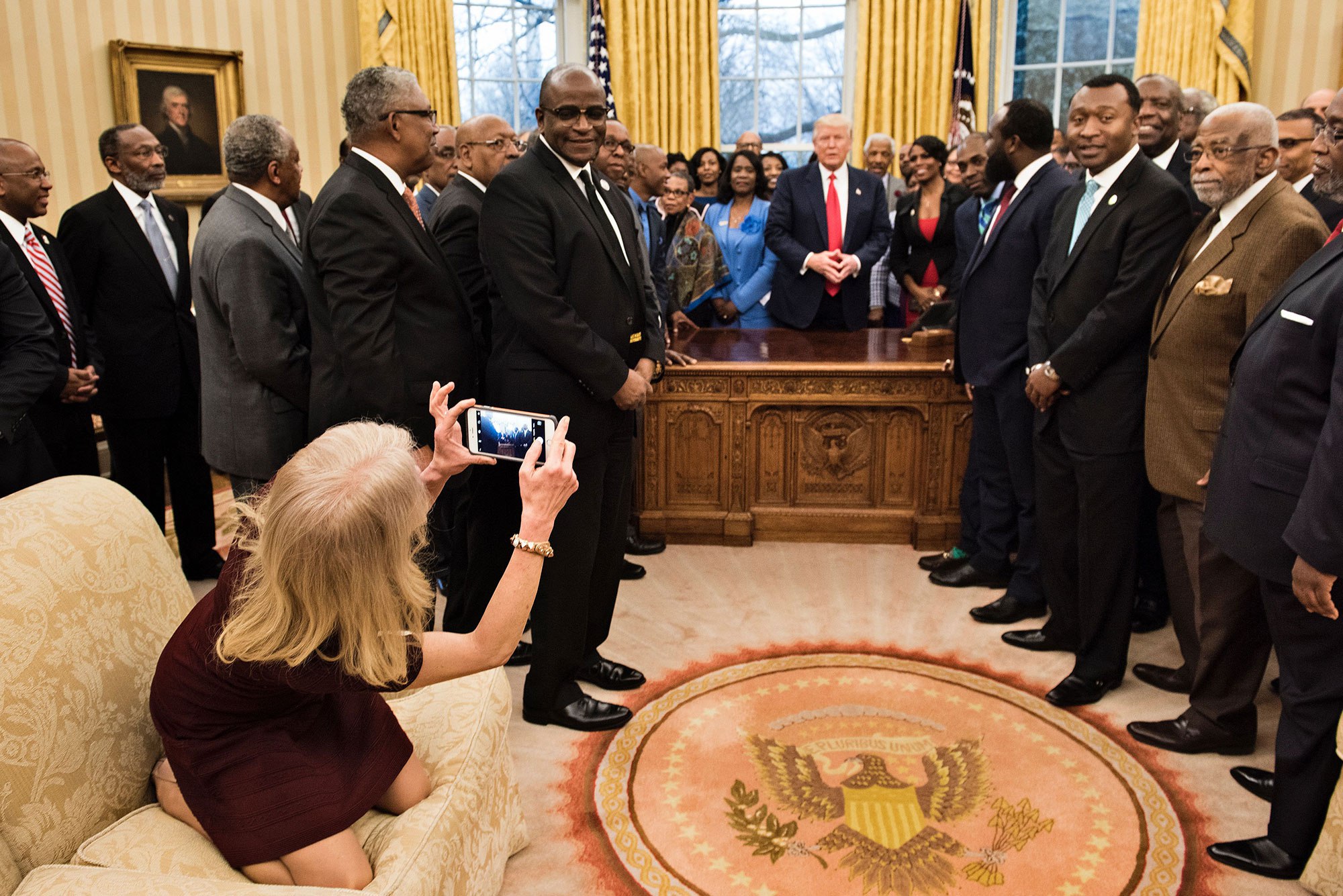
All four are examples of that terrible offense: furniture abuse. It’s time we stamped it out.

Two of them are in black-and-white, two in color. Three of them feature a male protagonist, one a female. Three of them illustrate desk abuse, and in one the victim is a couch. In terms of seriousness of the offense, I would argue that the desk in the Oval Office is a greater and more important symbol than the couch, and that therefore the terrible crime of feet-on-furniture is even worse when the victim is the desk, as in the first three photos.

I find this entire topic absurd beyond words.

Posted in Uncategorized | 15 Replies

Open thread: State of the Union

The New Neo Posted on February 28, 2017 by neoFebruary 28, 2017

You can talk about it here.

UPDATE 10:15 PM

I’m purposely listening to CNN post-speech, because I’m curious what they’re saying and how critical they will be.

The content of Trump’s speech was about what I expected, but I thought that Trump’s delivery was surprisingly good. Trump is great at the casual, funny, ad-lib (or seeming-ad-lib) speech. It’s not easy to switch from that mode to giving a speech off a teleprompter to a joint session of Congress, but he had a measured tone, an ideal pace, and some very emotional and compassionate moments.

The real surprise is that the panel on CNN agrees.

Anyone who thought Trump would implode tonight was sadly mistaken.

UPDATE 10:25 PM

Is this the guy who’s the new face of the Democratic Party? Steve Beshear??

UPDATE 11:25 PM

I think the Democrats are going to have trouble with this one. One of the problems with continually saying a person is a fool or Hitler or a clown is that if that person sounds pretty good and also like a decent human being—both of which Trump did tonight—it’s the criticizers who end up sounding like fools.

They can pick apart details of what he said—how can he pay for it? why did he say “Islamic terrorism”?—but I don’t think that will resonate with most people at all. Trump did something in the speech that has often been the province of Democrats: used the human interest story in a powerful way to illustrate and underline policy proposals he’s making.

Posted in Uncategorized | 26 Replies

The town hall meetings takeover

The New Neo Posted on February 28, 2017 by neoFebruary 28, 2017

You may have noticed that the brave Resistance has begun to dominate town hall meetings held by Republicans, in order to create “news” for the MSM to then report.

Marco Rubio has certainly noticed:

“They are not town halls anymore,” the Florida Republican told CBS4-Miami’s Jim DeFede on Sunday. “What these groups really want is for me to schedule a public forum, they then organize three, four, five, six hundred liberal activists in the two counties or wherever I am in the state.”

Citing protesting tips published by the new Indivisible movement, Rubio told the station that activists are instructed to go to town halls early and “take up all the front seats. They spread themselves out. They ask questions. They all cheer when the questions are asked. They are instructed to boo no matter what answer I give. They are instructed to interrupt me if I go too long and start chanting things. Then, at the end, they are also told not to give up their microphone when they ask questions. It’s all in writing in this Indivisible document.”…

Asked whether he thinks today’s town hall crowds do not consist of “real people,” Rubio was quick to dispel the notion.

“These are real people. They are real liberal activists, and I respect their right to do it. But it is not a productive exercise,” Rubio replied in the interview. “It’s all designed to have news coverage at night ”” look at all these angry people screaming at your senator.”

The article then goes on to explain that in 2009, “when [Rubio] ran against Gov. Charlie Crist for Senate. Back then, Democrats were complaining that the forums were being hijacked by conservative activists.”

I don’t know whether that’s a false equivalence or a true equivalence. In other words, I’ve been to quite a few public political meetings of the question-and-answer type, and there are always people from the other side—political activists—insistently asking questions. That happens on right and left, and politicians expected it. If that’s what was happening in 2009, no biggee.

But was it? I wasn’t following the 2009 Florida race that closely, so I don’t know. But I tend to think the situation was nothing like what’s going on today, when hundreds of leftist activists show up to hijack the proceedings by much more extreme disruption. That’s a lot different than a small number of activists asking a few questions that are hostile, or even some jeers.

What is the remedy? It’s a true dilemma. We want to have free assembly, free speech, dissent. But this is disruption of that give-and-take in the name of free speech. Why should a senator or any other public office holder hold a forum that doesn’t give him a chance to answer questions and merely affords a large group of activists a platform from which to heckle and stifle him? Is the remedy to hold the forum anyway? Chris Christie seems to think so:

“Welcome to the real world of responsibility,” he said to Republicans who don’t want to hold town halls. Christie said he himself had held more than 160 town halls during his two terms.

Christie was famously pugnacious during his town halls, but I wonder when the last one was held (couldn’t find that information when I briefly Googled it just now). Has he ever faced this particular type of protest? I watched some of his town halls on video when he was a rising Republican star, and I know he faced a lot of hostility particularly from teacher’s unions, but it seems to me that that was different in scope and kind than what’s been happening now. But I’m not sure.

When does free speech become the stifling of speech you don’t like? Is yelling and heckling in order to disrupt a public meeting protected speech, and when does it cease being protected speech? Here’s an article by Jonathan Levin on that very subject, published about a year ago at Legal Insurrection:

First, although there is some First Amendment protection for “speech” in the form of physical action, it is inapplicable for this conversation. Storming the stage is not protected speech; it is likely assault. If a protester crosses the line and lays hands on a candidate or somebody attending an event, that would be battery, at a minimum.

Second, the First Amendment does not grant an absolute right to speak or protest. There are a variety of limitations depending on the context. It is ironclad law that reasonable “time, place and manner” limitations on speech are permitted under the Constitution.

Levin cites a piece by Eugene Volokh on the subject, in which Volokh writes:

Many states outlaw “disturbing lawful assemblies,” which would include campaign rallies, whether on public property or private. . .

Attempts to shut down an event, for instance by shouting down a speaker, blowing whistles so that the speaker can’t be heard, rushing onto the stage and the like would thus be illegal. This is important both because the police can then arrest the disrupters, and because security guards and ordinary rally attendees could then legally use reasonable, non-deadly force to stop the disruption.

Levin further explains:

The “substantially impaired” piece means that it has to be more than a passing interference. Blowing an air-horn in a conference hall during a speech would interfere, certainly, but blowing it once then stopping probably would not be “substantial” enough to warrant arrest; blowing it continuously and drowning out the speaker probably would be. The interruption also has to be more than what everybody knows is acceptable. Booing a candidate no matter how vigorously will probably not support a conviction, because it is within the realm of normal responses at a campaign event.

I suggest you read both the Levin article and the Volokh article. It’s not an easy question with easy answers, and it’s a topic that will come up more and more often during the Trump presidency. At the extremes—a few boos, versus rushing the stage or podium—the answers are easy. It’s that vast middle ground that present the biggest problem.

Levin had this to say about the situation that had just occurred when he was writing the piece a year ago, when protestors ended up causing Trump to cancel a speech:

The problem, of course, is that Trump didn’t get to speak, and the audience didn’t get to hear him. This is known as the “Heckler’s Veto.” Protesters are so unruly and the situation so out of control that event organizers or police deem it too dangerous to proceed and shut it down. The protesters thereby obtain a de facto veto over speech they dislike.

That is exactly the problem with canceling the town halls.

Levin continued:

This sort of self-censorship raises its own issues. In giving up the podium, organizers signal protesters that they will cancel again if the atmosphere is adequately dangerous, creating an incentive for protesters to be ever more extreme. If the campaign then resists the next time, it becomes a game of chicken with protesters growing more volatile and organizers refusing to cave.

There is no great answer. Ideally, of course, we would conduct ourselves as members of a democracy and protest rather than intimidate, threaten or riot. More realistically, campaigns and police need to be vigilant for signs of concerted plans to disrupt events and who might participate, and to be prepared to quickly prevent that from happening. There is no constitutional right to attend a rally, and to the extent there is indication that somebody intends to disrupt an event, that person need not be allowed in.

This can easily escalate. In a sense, the protestors/agitators are in a win/win/win situation. They either force the person to stop having meetings (the Rubio solution), or they are allowed to stay and disrupt the meeting as well as getting themselves in the news and embarrassing the Republicans who held the meetings, or they are made into martyrs and seeming champions of free speech by being escorted out by police and perhaps even arrested. All three outcomes encourage more of their behavior.

Posted in Liberty, Politics | 34 Replies

The Times again, truth again, and Trump again

The New Neo Posted on February 28, 2017 by neoFebruary 28, 2017

“Put independent journalism first. 50% off savings won’t last.”

That’s the subject of an email I got today from the NY Times asking me to subscribe. I seem to have gotten on their emailing list long ago, back in the days when you registered and got to the site for free. The dears have never given up on me and send me emails regularly.

This one was of interest for obvious reasons; yesterday I’d written on the subject of the irony of the Times’ new Orwellian ad campaign, selling itself as the brave and stalwart purveyor of Truth against a web of lies. And here it is right on schedule, in my inbox:

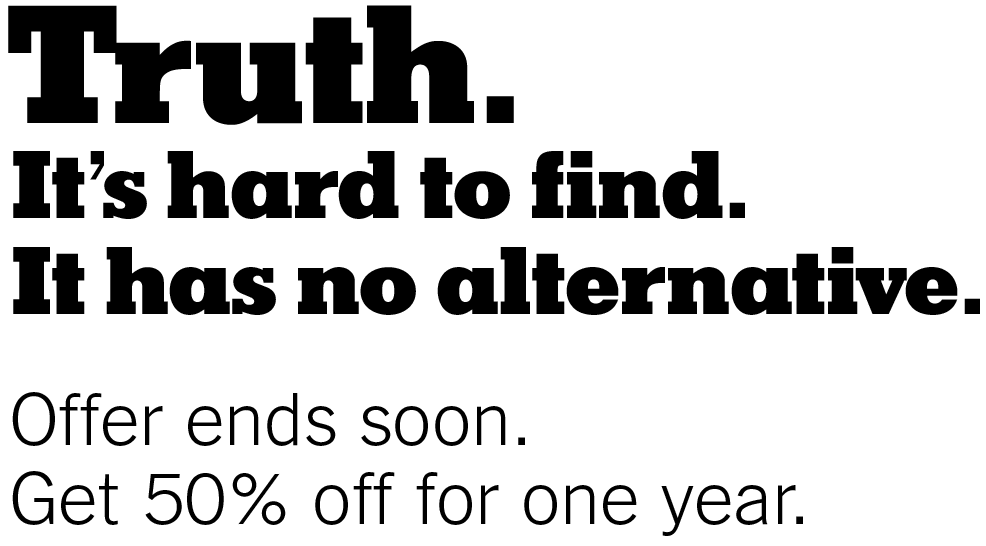
Independent journalism. Truth. The “it has no alternative” line is, of course, a dig at Kellyanne Conway’s widely-excoriated “alternative facts” remark—which merely pointed out that there is often disagreement on the facts and that, yes, “truth is hard to find” (and often the Times is not the place to find it). I’ve been paying close attention to the Times for well over a decade and I can say that they are among the best and most subtle of the many purveyors of alternative facts (otherwise known as propaganda) in the political arena.

The email continues:

Our stories don’t just present themselves. Times reporters must go after them. It’s their daily task, whether it’s Washington, D.C., or an Arctic base camp. Once these facts are verified, a story takes shape and we bring it to you.

And here is your intrepid NY Times reporter/explorer pictured in the email:

Meanwhile, back at the actual Times, we have this Times Truth (title of the post: “Why Did the New York Times Deliberately Misquote Donald Trump’s CPAC Speech?”). The whole article is worth reading, but the gist of it is that this is what Trump said in his speech to CPAC:

We are also going to save countless American lives. As we speak today, immigration offers are finding the gang members, the drug dealers and the criminal aliens and throwing them the hell out of our country.

And here’s how the Times described it (there was much much more, but this is the part about the misquote):

[Trump’s] speech also included a promise to throw undocumented immigrants “the hell out of the country” and a recitation of his law-and-order campaign promises.

The article says:

This is not a faithful and honest rendering of the speech either in words or in concept…

Now, admittedly, the people Trump was talking about was a subset of “undocumented immigrants” but it is subset that virtually everyone except some Democrat ward heeler would be in favor of booting.

This is not a mistake. This is agitprop. This is simply fiction designed to hurt Trump. And by doing so, the New York Times forfeits its right to claim that it is owed any respect as part of an independent media and reveals itself as simply the house organ for the Democrat party.

I would add only that it is beautifully done by the Times, because they are masters at their trade. It’s not actually a misquote, because the words in quotes “the hell out of the country” are definitely the words Trump used. It is a mischaracterization, though, of what he said, and a fairly subtle one at that because it has a built-in deniability. The Times can say “but these people are ‘undocumented,'” although that’s really irrelevant; they are also “human beings,” but both the “undocumented” and the “human beings” category are of course way too broad. They are a particular group of human beings, and a very particular group of “undocumented immigrants”—gang members, drug dealers, and criminals. And then the Times adds that Trump gave a “recitation of his law-and-order campaign promises,” which they can say is a reference to the “criminals,” part, but it’s a reference that no one who didn’t actually read or hear the speech could understand as a limitation on the categories of “undocumented immigrants” he is interested in deporting.

It’s really a thing of beauty how the Times threads that needle. The Times knows exactly what it’s doing.

And there’s a further level of protection for them among their readers. Churchill once said (in one of my favorite quotations):

Men occasionally stumble over the truth, but most of them pick themselves up and hurry off as if nothing ever happened.

Indeed they do. If readers of the Times happen to read Trump’s speech and “stumble across” the truth of what he said (despite the Times‘ misdirection), they can always use the Greater Truth argument, which is that Trump’s actual intent is to deport all “undocumented immigrants,” and that his focus on deporting immigrants who are criminals is just a screen for his real intentions. And indeed, at various times in his campaign speeches he seemed to be saying just that. He seemed to be saying a lot of things, some of them contradictory.

That’s one of the problems with Trump. During the campaign it helped him, because it allowed him to be different things to different people who wanted to believe in him. But his more extreme and contradictory statements have allowed MSM outlets such as the Times to twist the words he says now, as president, and present them in ways that are false but that strike its readers as very plausible.

Posted in Immigration, Press, Trump | 8 Replies

For all you computer experts out there

The New Neo Posted on February 28, 2017 by neoFebruary 28, 2017

Last night my computer suddenly refused to go to a huge number of sites, including this blog, memeorandum, RealClearPolitics, and StatCounter. But none of those sites were down, because I could get them easily on my cell phone. What’s more, my computer had no problem going to a bunch of other sites, and Google worked perfectly.

I did what I do whenever my computer’s acting temperamental: I rebooted. The problem persisted. I re-rebooted. No improvement. Then I went to bed, and this morning things were fine. But I don’t trust the situation, and am concerned that it will happen again. I also don’t understand what happened. Usually I either have a problem getting to a site or sites because the site or sites are down, or I have trouble with connectivity in general and can’t surf around at all. This was very very different.

And no, I had not recently loaded anything onto my computer, nor had I clicked on a suspicious site. Nothing unusual had happened that I’m aware of except the problem, which began very suddenly.

Anyone got any theories on it? Thanks.

Posted in Blogging and bloggers | 16 Replies

The Times and the pursuit of truth

The New Neo Posted on February 27, 2017 by neoFebruary 27, 2017

This ad aired last night during the Oscars, sponsored by the NY Times:

I’ve been blogging for over twelve years, and a great many of my posts have been devoted to uncovering the misstatements, twistings and shadings of the truth, and/or downright lies published in the Times. I doubt there’s been a day when I couldn’t find something of the sort there, but I don’t pursue it because I don’t want that to become my full-time occupation.

However, their propagandist tendencies are only exceeded by their chutzpah (hubris? arrogance? balls?) in running an ad like that.

To people on the right, there’s something almost comical about that ad, although it’s a serious subject. It’s certainly a subject I take very seriously, for the simple reason that the Times’s propaganda continues to be effective. Maybe it doesn’t work quite as well as it used to, but it still shapes the opinions of many millions of people in this country. And the Times is well aware of that.

Taking a closer look at the message of the ad. It has different people making a bunch of assertions from left and right, in order to set up the idea that people disagree on things. I have no quarrel with that; they certainly do. Then, in bolder type, we have the sentence, “The truth is hard to find.” And then, “The truth is hard to know.” Then, “The truth is more important now than ever.” That third one is especially curious. After all, the truth has always been very very important; I don’t see why it should be more important now than ever.

Unless it’s because Donald Trump, the “archenemy of truth” (headline of a column by Charles Blow in today’s Times) is now president, rather than Barack Obama? Could that be it?

After that sentence about the truth being more important now than ever, all we see is the logo: the words The New York Times in its familiar gothic script. The implication is that the Times is the place to come to find the truth. Or, at the very least, that the Times has the utmost dedication to the truth, to ferreting out the truth, to uncovering and then pursuing this extremely hard-to-find but absolutely more-important-than-ever truth.

More important than in Soviet times when Walter Duranty was their reporter, or in the late 50s and early 60s when Herbert Matthews told us what a great guy Castro was? Or during most of the Times’ reportage of the Second Intifada and other Israeli/Palestinian news for the last couple of decades? And certainly more important than during their Obama coverup years?

Truth is indeed difficult to find. That is, if you’re looking for absolute truth. But relative truth isn’t all that hard to find, to the best of your ability. For starters, don’t twist quotes. Try to apply the same standards to all sides. Don’t mix opinion journalism with factual reporting. Use the older more rigid rules about unnamed sources. And don’t lie.

Now, that’s hard. Because journalists these days have a Calling, and the Calling is to a Higher Truth than mere truth in reporting. They want to change the world to match their vision, because they know best and because their vision is the vision of the anointed.

Posted in Press | 24 Replies

And reports of her death were greatly exaggerated

The New Neo Posted on February 27, 2017 by neoFebruary 27, 2017

This Oscar error wasn’t noticed by so many people. But to Jan Chapman, it was a bit of a shock:

Janet Patterson, an Australian costume designer and four-time Oscar nominee (“The Piano,” “Portrait of a Lady,” “Oscar and Lucinda” and “Bright Star”) passed away in October 2016.

Her name and occupation were correct in the montage, but the photo used was of Jan Chapman, a still-living Australian film producer…

The Academy has yet to comment on the mistake.

And by the way, just to clarify this previous post on the far more prominent Oscar Best Picture gaffe, I want to add that I don’t actually blame either Beatty or Dunaway. The error was apparently made by the person giving them the card. If Emma Stone had been acting in some more obscure film that wasn’t even nominated for Best Picture rather than “La La Land,” Beauty and Dunaway would have almost certainly realized they’d been given the incorrect card. Problem was, the card they were given (for Stone’s award) also said “La La Land,” the film in which she starred. That’s what misled them.

Beatty immediately realized that something was off. But instead of being a brave liberal and Questioning Authority, he passed the buck (and the card) to Dunaway, who thought he was just being funny and read it as “La La Land,” perhaps because she was becoming embarrassed by the length of the delay.

Movie stars get nervous, too, especially when doing something live.

And now, back to our regular programming…

Posted in Movies, Theater and TV | 2 Replies

The Oscars: gaseous glamour and gigantic gaffes

The New Neo Posted on February 27, 2017 by neoFebruary 27, 2017

Blame it on Bonnie and Clyde (aka Faye Dunaway and Warren Beatty) in their dotage.

Blame it on the Russians, who must have hacked the thing.

Because the f-up at the end of the Oscars—the climax, as it were—was monumental.

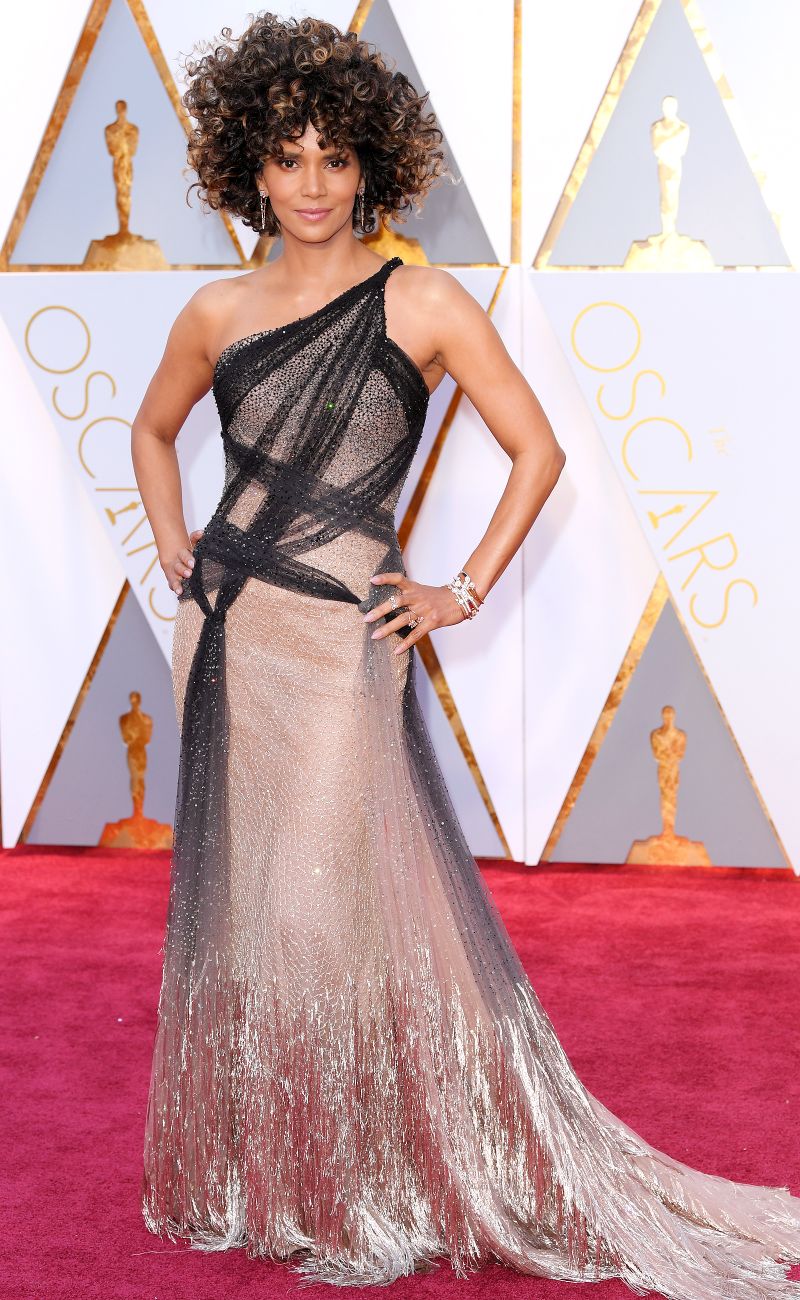
But first, the good stuff. Surprisingly, I liked most of the dresses, especially Halle Berry’s, although I think she should go back to her usual short hair because she’s one of the few people in the world who look really really great in that style:

You can find a lot of the other fashions here.

Now for the rest. Jimmy Kimmel was remarkably unfunny, and almost every “joke” he made was political. But he was hardly alone. I expected a lot of liberal self-congratulatory politics from the presenters and from the award recipients. But apparently I underestimated the capacity of Hollywood celebrities to keep up an incessant, repetitive drumbeat of praise for themselves and their devotion to diversity, love of immigration, reverence for freedom, and all those things they have been told that Trump and the right are dead set against. And all of this was delivered as though they were courageously standing up to tanks in Tianamen Square.

Which brings me to the finale of the evening. The monumental error occurred during the announcement of the Best Picture award, and rather than describe it I’ll show it to you. When you watch the video, it helps to know that just a moment earlier, Emma Stone had won Best Actress for her performance in “La La Land,” and also that “for each category, there are two cards waiting in the wings, one on each side”:

In addition to everything else, the award was a Trumpian-magnitude upset, because “La La Land” was considered a shoe-in. As Vox had predicted earlier in the day:

Best Picture

This race isn’t particularly close. La La Land will win, and if the trophy goes to any other film, it will be the biggest Oscar upset ever.

It was YUGE.

Posted in Movies | 39 Replies

At the movies: yearning for romance

The New Neo Posted on February 25, 2017 by neoFebruary 25, 2017

The Oscars are being held tomorrow. I can understand why a lot of people might not want to watch them: the self-satisfied political posturing, the paucity of good movies, the windy acceptance speeches, and the sleaziness of what passes for glamour these days.

But I plan to watch, although probably not every single moment. I always enjoy the fashions, good or bad. And I’m curious to see if a movie I’ve actually seen—“La La Land”—will set some sort of record for Oscars.

A lot of people have questioned why this movie, which is pretty good but not necessarily one of the all-time greats, has been nominated for so very many awards. Well, one reason might be the lack of quality competition. Another might be that it celebrates the city of Los Angeles and aspiring to be an actor, which after all is the home of most of the people doing the voting and the profession of many of them.

Oh, it has other things to recommend it, too. A hummable score, an opening number that knocks your socks off, popular and attractive leads, bright colors. But I think key to the whole thing is romance. I think that I can say, without spoiling the movie for anyone who hasn’t yet seen it, that one of the most remarkable things about the film is the big big deal it makes of the first hand-holding between the man and woman who are its main protagonists. Hand-holding, a monumental activity, a watershed moment? Yes.

Same for their first kiss. And though we can assume that sex definitely enters into the picture for this couple, it doesn’t really enter into the picture known as “La La Land.” Dancing is the stand-in for it.

I maintain that people are thirsty for that sort of approach, even young people. They’ve been brought up on so much overt and even casual sex in the movies (and in music, and online, and in life) that it no longer has any novelty to watch it being enacted on the big screen.

Posted in Men and women; marriage and divorce and sex, Movies | 22 Replies

Ignoring the obvious: there’s been at least one completed act of terrorism in the US by someone born in Somalia

The New Neo Posted on February 25, 2017 by neoFebruary 25, 2017

The seven countries in Trump’s immigration EO have yielded not only many arrests for terrorism (unbeknownst to the court, apparently), but one completed of act of terrorism that was extremely high profile. It’s puzzling that this one has been so ignored, because it’s so glaringly obvious.

I’m talking about the Ohio State attack from just a few short months ago:

A Somali-born student at Ohio State University injured 11 people, one of them critically, on Monday when he attacked a crowd of pedestrians on campus in an incident one lawmaker said “bears all the hallmarks of a terror attack.”

Authorities said Abdul Razak Ali Artan, 18, plowed a small gray Honda into the crowd outside Watts Hall, an engineering classroom building, just before 10 a.m. ET. Artan then got out of the vehicle and attacked people with a butcher knife before he was shot and killed by a campus police officer.

…Two law enforcement sources told Fox News that Artan came into the United States as a Somali refugee, and was granted status as a legal permanent resident.

Does it not count because Artan didn’t actually murder anyone (although not for lack of trying, with two weapons, car and butcher knife)?

Does it not count because he was never charged with a crime, having been killed at the scene?

Or does it not count because Artan apparently had been naturalized as a citizen in 2014? Perhaps once a person comes here as a refugee from one of the seven countries and later becomes a citizen, and then kills people in an act of terrorism, he no longer counts as someone from that country?

It’s an absurdity to have such distinctions/limitations, of course, but it helps with the denial.

Whether there have been a large number of attacks (or thwarted attacks) by people from the seven countries countries is a far more valid subject for debate, of course. But to say there have been none is a blatant falsehood. Another proper subject for debate is what the threshold for tolerance of such attacks should be, past or future (some say zero), before a ban is justified. But no one should be able to get away with saying say that there haven’t been any attacks or aborted terrorist attacks by perpetrators from the seven countries.

Trump hasn’t yet issued a revised immigration EO on the subject. Will he, or will the issue just fade away, to be supplanted by others, or dealt with in some different manner? I imagine that this is one of the things Jeff Sessions has been busy working on.

Posted in Terrorism and terrorists | 16 Replies

How we got here: Ben Rhodes on callow youth

The New Neo Posted on February 25, 2017 by neoJuly 10, 2023

The other day I was reminded by commenter “AesopFan” of this article from last spring:

“[Obama’s Deputy National Security Advisor Ben] Rhodes, 38, said in the article that it was easy to shape a favorable impression of the proposed (Iran) agreement because of the inexperience of many of those covering the issue.

“All these newspapers used to have foreign bureaus,” he said. “Now they don’t. They call us to explain to them what’s happening in Moscow and Cairo. Most of the outlets are reporting on world events from Washington. The average reporter we talk to is 27 years old, and their only reporting experience consists of being around political campaigns. That’s a sea change. They literally know nothing.” ”

Old man Rhodes—38 years old when that quote was uttered—knows whereof he speaks. Prior to becoming a mover and shaker in foreign affairs, this was his own resume: born in 1977, majored in English and political science at Rice and graduated in 2000, got an MFA in creative writing at NYU in 2002.

Sort of like the resumes of those kid reporters he’s talking about. He “literally [sic] knew nothing.”

Then in 2002 Rhodes got his big break, one I confess I don’t fully understand even though I’ve read quite a bit about him over the years (his brother was in the news business and later become the head of CBS News, but didn’t hold that position at the time). This is what happened:

In 2002, James Gibney, editor of Foreign Policy, introduced Rhodes to Lee Hamilton, former member of the House of Representatives and director of the Woodrow Wilson International Center for Scholars, who was looking for a speechwriter. Rhodes then spent five years as an assistant to Hamilton, helping to draft the Iraq Study Group Report and the recommendations of the 9/11 Commission.

So, was the 25-year old recent creative writing Master’s recipient Ben Rhodes hired by the Democrat Hamilton (who’d been a member of Congress for about three decades, and had a great deal of experience) on the strength of his writing and editing skills? Even in that capacity he was pretty green. At any rate, the Iraq Study Report that Rhodes helped to author was roundly criticized by just about everyone on the right, for what that’s worth.

What did Rhodes the creative writer, who at that point had never been to the Middle East or studied it as far as I know, a young man of 25 when he began that particular gig, actually contribute to the report? I don’t know, but he made it clear that he didn’t think much of the people he was working with: “When [Rhodes] was a staff writer on the congressionally mandated Iraq Study Group in 2007, Samuels reports, Rhodes concluded most foreign policy decision makers were ‘morons.'”

At that point, what popped into my head was “Holden Caulfield.” And sure enough, the author of that Bloomberg piece (Eli Lake) had much the same thought:

Let’s start with our Holden Caufield character. When Rhodes decided to give up fiction writing and take up foreign policy, he landed his first job at the Woodrow Wilson Center.

Lake doesn’t seem to know much more about what Rhodes actually did there (other than sneer at the moronic old fogies who were in charge) than I do. No wonder Rhodes had a lot in common with Barack Obama, who had much the same high opinion of himself, and for whom experience had little valence.

Here’s more on Rhodes and the Iraq Study Group (although we still don’t know what “Rhodes wrote” means in this context; does it refer to contributing ideas and content, or just to the putting-together of the words in a readable manner?):

When Hamilton was named co-chair of the Iraq Study Group in 2006, Rhodes helped him write that panel’s landmark report as well. Most notably, Rhodes wrote a majority of the chapter advocating direct U.S. diplomatic engagement with Iran and Syria, a recommendation that would have considerable influence on President Barack Obama beginning in 2009. Indeed, Obama ultimately adopted most of the report’s 79 suggestions. Critics have noted that the report’s “expert list” was heavily weighted with pro-Arab apologists who directed a number of rebukes pointedly at Israel. According to the American Thinker, “Some of the experts who were interviewed were appalled by the final written report because they felt it did not reflect facts, their testimony, or reality.”

Then in 2007 at age 30 Rhodes became Obama’s speechwriter and trusted policy advisor. Shortly afterwards, he wrote (among other things) Obama’s famous Cairo speech.

The depth of the irony of this man criticizing those reporters in that interview is immense.

In that same interview [emphasis mine]:

A May 2016 New York Times profile reported that Rhodes was, “according to the consensus of the two dozen current and former White House insiders…the single most influential voice shaping American foreign policy aside from [President Obama] himself; that according to Obama’s chief of staff Denis McDonough, the president and Rhodes communicated ‘regularly, several times a day’; and that ‘part of what accounts for Rhodes’s influence is his mind meld with the president.'”…

Like Obama, Rhodes is a storyteller who uses a writer’s tools to advance an agenda that is packaged as politics but is often quite personal. He is adept at constructing overarching plotlines with heroes and villains, their conflicts and motivations supported by flurries of carefully chosen adjectives, quotations and leaks from named and unnamed senior officials. He is the master shaper and retailer of Obama’s foreign-policy narratives, at a time when the killer wave of social media has washed away the sand castles of the traditional press. His ability to navigate and shape this new environment makes him a more effective and powerful extension of the president’s will than any number of policy advisers or diplomats or spies. His lack of conventional real-world experience of the kind that normally precedes responsibility for the fate of nations ”” like military or diplomatic service, or even a master’s degree in international relations, rather than creative writing ”” is still startling.”

Yes, it is “still startling.” That’s why I’m still writing about it, in addition to the fact that our present world has been shaped by it, particularly our relations with Iran. But it makes perfect sense that Rhodes was chosen by Obama for such an influential position (and that for the most part, the MSM didn’t challenge that choice). Obama is and was all about the narrative, the smooth appearance, the words. Rhodes is and was all about the same thing; perhaps even more so.

No wonder they are so often described as having had a “mind-meld.” No wonder they led us into such a mess. And no wonder so many people were hypnotized by them.

That WaPo article I linked to at the outset goes on to detail how Rhodes’ fingerprints were on almost every bad decision that Obama made (well worth reading the whole thing)—including the Benghazi coverup. But let’s not blame Rhodes overly; Obama did what Rhodes said not because he liked to listen to someone else’s advice, but because Rhodes’ opinion was the same as Obama’s opinion (mind-meld). It was a reassuring Obama-echo that spoke in another’s voice.

One of Rhodes’ last official acts was to attend the funeral of Castro as Obama’s representative. How very fitting.

The mystery is not so much how Rhodes got to be Obama’s right-hand man: neither man had any respect for experience, both are interested in convincing through words, both have the foreign policy attitude of sophomores in college, and both think they are the smartest people in the room. The puzzle to me with Rhodes remains those first big jobs, the 9/11 report and then the Iraq Study Group authorship.

I’ll let that mystery rest for now and ask what is our boy wonder doing these days? After all, he’s not yet 40, and has all that great experience behind him. Well, for one thing, Rhodes is currently under Congressional investigation:

Ben Rhodes…is under scrutiny in the wake of disclosures he was declined interim clearance status by the FBI in 2008, when the administration was moving into the White House…

Lawmakers are now concerned that Rhodes’ access to the top levels of government””including its diplomacy with Iran””is inappropriate due to the FBI’s concerns about his past…

The FBI was to complete a full review into Rhodes after the transition. It remains unclear what they concluded…

Rhodes was granted full security clearance before Obama’s 2008 inauguration, [a] source disclosed…

“For the FBI to evidently find something in Mr. Rhodes’ background that led it to potentially deny him a security clearance only to have Mr. Rhodes work at the highest levels of the Obama administration shakes the entire clearance process to the core,” the lawmakers wrote. “Mr. Rhodes has working in the White House for the past seven years and is the architect of the Iran deal ”˜echo chamber,’ as he recently described himself.”…

The lawmakers also are seeking to learn if the Obama administration applied political pressure to the FBI in order to obtain a security clearance for Rhodes.

With Rhodes, you never quite know whether what he’s saying is just shooting the breeze (as Holden Caulfield might say), or if he’s being sincere. But I think I’ve found a recent quote of Rhodes’ (from an interview he gave during the transition to the Trump administration) in which Rhodes tells why Obama hired him and put him in a position of such power, at least how Rhodes saw it. To me, this has the ring of truth:

Third, I guess I’m just young and a different profile and I know that that upsets people, but I always felt that I represented the people who elected President Obama, who were young people and they should have a voice and their worldview is our worldview. They think it’s stupid not to engage people. They don’t know why we wouldn’t make a deal with Iran.

I read that quote after I had already written that Rhodes and Obama share “the foreign policy attitudes of sophomores in college.” But that’s basically what Rhodes is saying here. Now, there’s nothing wrong with sophomores in college. But they’re still in college for a reason, not at the helm of the ship of state.

In that same interview, Rhodes answers another question of mine—what he plans to do now. The mind-meld continues:

I’ll write some form of a memoir, one that will also be an argument on behalf of what we were doing. And I’m going to be a senior adviser to the president on his international work, including at his foundation.

Ben—go forth, be happy, write your memoir, leave us alone. Please.

[NOTE: Those who criticize Donald Trump for lack of experience probably didn’t have any problem with Rhodes at the time. I must say in Trump’s favor that, despite Trump’s inexperience, he certainly hasn’t chosen people with a similar lack of experience in foreign affairs.]

Posted in Literature and writing, Obama, People of interest | 41 Replies

Got an idea for the design of the border wall?

The New Neo Posted on February 24, 2017 by neoFebruary 24, 2017

If you do, you can enter the competition, which begins soon:

The Dept. of Homeland Security, Customs and Border Protection (CBP) intends on issuing a solicitation in electronic format on or about March 6, 2017 for the design and build of several prototype wall structures in the vicinity of the United States border with Mexico. The procurement will be conducted in two phases, the first requiring vendors to submit a concept paper of their prototype(s) by March 10, 2017, which will result in the evaluation and down select of offerors by March 20, 2017. The second phase will require the down select of phase 1 offerors to submit proposals in response to the full RFP by March 24, 2017, which will include price. Multiple awards are contemplated by mid-April for this effort. An option for additional miles may be included in each contract award.

It should be interesting to see what emerges.

But that’s not the first “design a wall” competition that’s been held, although I do believe it’s the first sponsored by the government. However, an alternative wall contest was sponsored by these folks:

… a group of architects, designers and artists to initiate thought-provoking and meaningful competitions that are of an interdisciplinary nature…

The announcement of the Competition sparked considerable controversy. Many assumed it endorsed then presidential candidate Donald Trump’s call to build a border wall to keep out illegal immigrants. Its purpose, however, was to elicit serious discussion about the very idea of a border wall. One of the questions proposed by the challenge: “Is the idea patently ridiculous on a purely practical and moral basis?” Entrants were invited to contemplate the deeper issues of a border wall and, indeed, even propose alternatives.

The winners got cash prizes. A sampler of the proposals:

1st Prize (Tie)””Anticipating the eventual exhaustion of the essential resource of water along the U.S.-Mexico border, an “irrigation wall” would draw water from the Gulf of Mexico, the Sea of Cortez and the Pacific Ocean, desalinate it and flow it into a channel running the length of border. Possible benefits could include re-vegetation of the desert, creation of agricultural operations on either side of the channel and new bilateral treaty governing the distribution and use of the water between the two countries.

1st Prize (Tie)””Rejecting the current wall as “a fetishized object,” Inflatoborder is a system of flexible bubbles that perform a variety of functions meant to bring communities on either side of the existing wall together. Air pressure is adjusted according to need””creating a canopy, for instance, that shelters roadside markets where it runs through agricultural lands, or creating “play area” enclosures for families and children in densely populated urban centers straddling the border.

2nd Prize””Also rejecting the idea of a fixed wall that divides nations and people, this plan proposes a bi-national park running the length of the border that is “a symbol against difference” where people from both sides can camp, hike and engage in other outdoor activities.

3rd Prize””This proposal, called “Across,” was inspired by Paul Rudolph’s Manhattan Expressway and builds “on architecture’s more social and humanistic intentions” by creating “a flexible membrane which has the capacity to take on programs that are both needed and shared by the inhabitants on either side of the border.”

I am pretty certain that the designers were well aware that these projects won’t come to fruition. They are exercises in imagination (“imagination” in the John Lennon “Imagine” sense). Unrealistic, of course.

Artists might say that our dreams help to create reality. I say that there’s very much of a limit as to how far that can go in the real world, before it meets up with—a wall. To pretend that the situation doesn’t exist, and that problems can be wished away by “symbols against difference” is something pretty rampant on the left. I’m not sure whether the entrants in that contest really believed this, or whether it’s just an exercise in showing what wonderful people they are in addition to what wonderful designers.

The last design competition I remember paying much attention to was the Vietnam Veterans Memorial in DC. The design that was chosen—initially controversial—really did end up having a healing, “bringing together” effect. But the architecture of memorials is a very different proposition, utterly symbolic in nature. A border wall is not a memorial. It is functional, although the functional can be designed with esthetics and psychology in mind, too. But my guess is that whatever ends up being approved will be primarily practical—although remember that Trump himself said that the wall will be “beautiful.”

We’ll see.

Posted in Arts, Immigration, Politics | 39 Replies

Post navigation

← Previous Post
Next Post→

Your support is appreciated through a one-time or monthly Paypal donation

Please click the link recommended books and search bar for Amazon purchases through neo. I receive a commission from all such purchases.

Archives

Recent Comments

  • rbj1 on Update on my ex
  • Chases Eagles on Open thread 9/1/2026
  • Cicero on Update on my ex
  • AManOfTheWest on Update on my ex
  • Sharon W on Update on my ex

Recent Posts

  • Update on my ex
  • Open thread 9/1/2026
  • Letitia James was out to get Trump
  • “Our democracy” in Germany
  • Utopias and dystopias: the twain shall meet

Categories

  • A mind is a difficult thing to change: my change story (17)
  • Academia (328)
  • Afghanistan (98)
  • Amazon orders (6)
  • Arts (8)
  • Baseball and sports (164)
  • Best of neo-neocon (91)
  • Biden (536)
  • Blogging and bloggers (593)
  • Dance (292)
  • Disaster (244)
  • Education (323)
  • Election 2012 (360)
  • Election 2016 (566)
  • Election 2018 (33)
  • Election 2020 (513)
  • Election 2022 (114)
  • Election 2024 (403)
  • Election 2026 (89)
  • Election 2028 (12)
  • Evil (129)
  • Fashion and beauty (324)
  • Finance and economics (1,041)
  • Food (317)
  • Friendship (48)
  • Gardening (18)
  • General information about neo (4)
  • Getting philosophical: life, love, the universe (734)
  • Health (1,160)
  • Health care reform (545)
  • Hillary Clinton (184)
  • Historical figures (337)
  • History (716)
  • Immigration (448)
  • Iran (464)
  • Iraq (227)
  • IRS scandal (71)
  • Israel/Palestine (820)
  • Jews (437)
  • Language and grammar (365)
  • Latin America (212)
  • Law (2,972)
  • Leaving the circle: political apostasy (124)
  • Liberals and conservatives; left and right (1,319)
  • Liberty (1,117)
  • Literary leftists (14)
  • Literature and writing (393)
  • Me, myself, and I (1,496)
  • Men and women; marriage and divorce and sex (929)
  • Middle East (383)
  • Military (324)
  • Movies (353)
  • Music (533)
  • Nature (261)
  • Neocons (32)
  • New England (183)
  • Obama (1,738)
  • Pacifism (16)
  • Painting, sculpture, photography (131)
  • Palin (93)
  • Paris and France2 trial (25)
  • People of interest (1,043)
  • Poetry (258)
  • Political changers (178)
  • Politics (2,793)
  • Pop culture (397)
  • Press (1,634)
  • Race and racism (881)
  • Religion (428)
  • Romney (164)
  • Ryan (16)
  • Science (639)
  • Terrorism and terrorists (971)
  • Theater and TV (266)
  • Therapy (71)
  • Trump (1,629)
  • Uncategorized (4,548)
  • Vietnam (109)
  • Violence (1,442)
  • War and Peace (1,026)

Blogroll

Ace (bold)
AmericanDigest (writer’s digest)
AmericanThinker (thought full)
Anchoress (first things first)
AnnAlthouse (more than law)
AugeanStables (historian’s task)
BelmontClub (deep thoughts)
Betsy’sPage (teach)
Bookworm (writingReader)
ChicagoBoyz (boyz will be)
DanielInVenezuela (liberty)
Dr.Helen (rights of man)
Dr.Sanity (shrink archives)
DreamsToLightening (Asher)
EdDriscoll (market liberal)
Fausta’sBlog (opinionated)
GayPatriot (self-explanatory)
HadEnoughTherapy? (yep)
HotAir (a roomful)
InstaPundit (the hub)
JawaReport (the doctor’s Rusty)
LegalInsurrection (law prof)
Maggie’sFarm (togetherness)
MelaniePhillips (formidable)
MerylYourish (centrist)
MichaelTotten (globetrotter)
MichaelYon (War Zones)
Michelle Malkin (clarion pen)
MichelleObama’sMirror (reflect)
NoPasaran! (bluntFrench)
NormanGeras (archives)
OneCosmos (Gagdad Bob)
Pamela Geller (Atlas Shrugs)
PJMedia (comprehensive)
PointOfNoReturn (exodus)
Powerline (foursight)
QandO (neolibertarian)
RedState (conservative)
RogerL.Simon (PJ guy)
SisterToldjah (she said)
Sisu (commentary plus cats)
Spengler (Goldman)
VictorDavisHanson (prof)
Vodkapundit (drinker-thinker)
Volokh (lawblog)
Zombie (alive)

Meta

  • Log in
  • Entries feed
  • Comments feed
  • WordPress.org
©2026 - The New Neo - Weaver Xtreme Theme Email
Web Analytics
↑