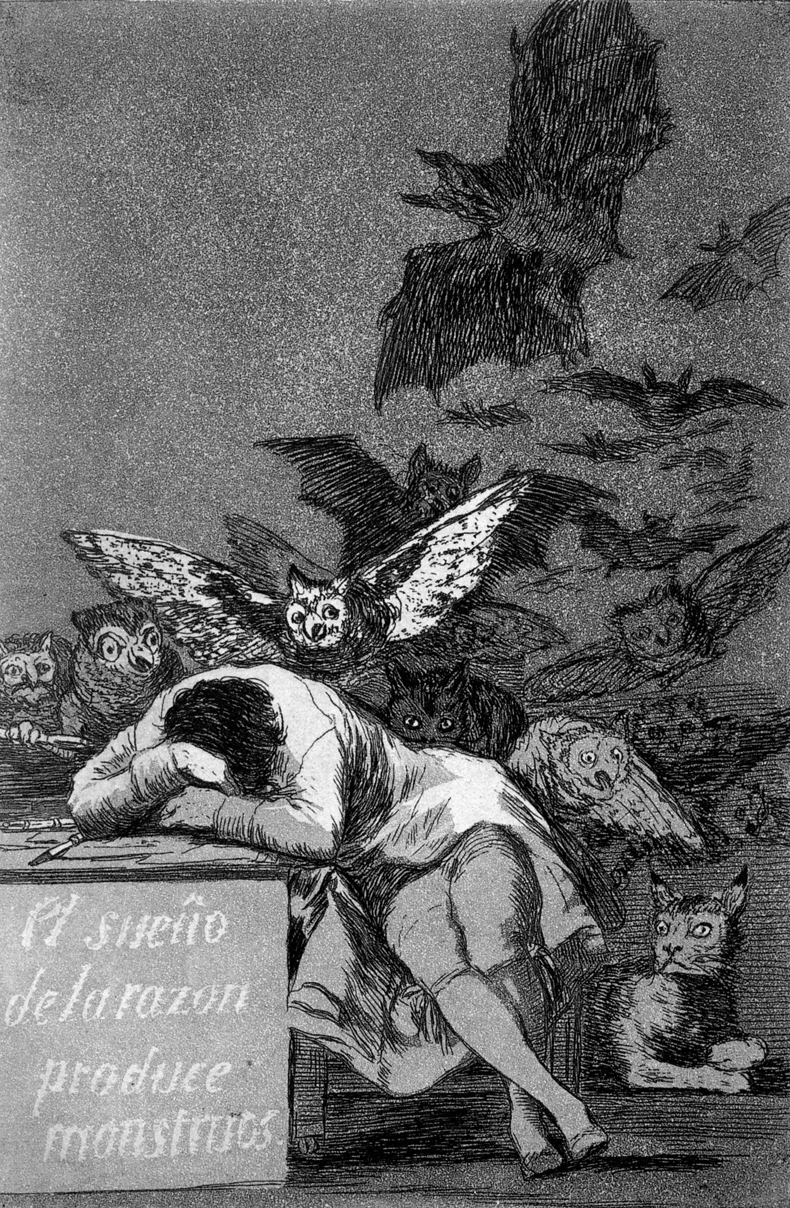
If you’re going to San Francisco, be sure to watch out for deadly mushrooms.
On Northam and the blackface photo: is there no statute of limitations?
I’m going to assume most of you are aware of the brouhah around a photo that appeared on Virginia Governor Ralph Northam’s medical school yearbook page in 1984 that showed two young men, one in blackface and one in a KKK hood. Northam apologized deeply for the photo, which he originally claimed was of him, although he also said he didn’t know which one of the two he was. After near-universal calls for his resignation, today he’s changed his story to this:
…[Northam] will not resign…his spokeswoman said, despite mounting pressure to do so, and the embattled governor has told a top Virginia Democrat that he now believes it is not him in a racist yearbook photo…
Northam told the top Virginia Democrat he was in touch with some of his former Eastern Virginia Medical School colleagues since issuing the apology. Those former classmates said they believed many of the pictures in the yearbook were mixed up.
Northam did not recall the picture being taken, he told the source, and said he was not involved in the production of the yearbook.
I may be alone in thinking this explanation is actually a possibility. Northam sounds remarkably befuddled and unusually unable to come up with a coherent story to defend himself—maybe he should be resigning for that. But that’s not the point of this post.
Nor is the point of this post what you think about Northam otherwise; you may strongly detest him, because he is also the person who spoke in defense of a bill that was being considered in Virginia that might have made abortion legal right up to the point of birth.
Democrats are eager to get rid of Northam at this point, because he’s become a huge liability and there’s a far more politically correct replacement waiting in the wings, 39-year old lieutenant governor Justin Fairfax, who is black. That way the Democrats get to turn an embarrasment—Northam—into a way to show how noble they are, and to put it all behind them (and to distance themselves from their earlier support of people such as Robert Byrd, for example). It’s all very practical; if they needed Northam to stay for some reason, I assume they’d get behind him no matter what he’s done. But they don’t need him.
However, I want to pursue a larger question, one that transcends party politics (or should, anyway), and goes beyond Northam himself and what you think of him: why care about someone’s racist prank at 24 when he’s now 59 and has a track record in all those intervening years, a record we can study and one that tells us who that person has been for most of his adult life?
Why go back to an obscure and relatively minor detail of a person’s young life and dig it up, and then punish that person for it while ignoring everything the person is now and what the person’s done since that silly insensitive and youthful move back when thoughtcrime wasn’t forever?
And I would say the same no matter what the party.
If Northam’s been a racist in recent years, discuss that instead. Or if there are other things about a person’s more recent record for which you think a person should resign—and in Northam’s case, there may indeed be—then stick to those.
And let’s say, just for the sake of argument, that Northam (or any other person) actually had been a racist in his youth. And let’s say that decades ago he or she changed, and became a champion of racial equality. In other words, let’s say a person has a change of mind and heart—about that, or about any other topic. Wouldn’t that make that person okay, as long as the change is sincere and not faked? And couldn’t sincerity be proven by acts, by human interactions, and by the length of time all that good stuff has been going on since the time of the youthful unacceptable point of view?
Apparently not. Are we now at the point where it’s “one racist act, even if symbolic (a costume)—no matter how long ago and no matter how young you were—and you’re a racist forever, to be exiled from the world of public service or even polite society”?
How far back can we go with this? What if Northam had been 16? Would he be off the hook? I doubt it. What about if he’d been in that get-up at 10? At 5? What if his parents dressed him up that way as a baby? Where are the accusers willing to draw the line?
Writing this post made me think of someone I haven’t thought about in quite a while, George Wallace of Alabama. Remember him?:
With his coffin draped in the red and white flag of the state he dominated for three decades, former Alabama Gov. George C. Wallace was eulogized Wednesday as a passionate, talented man who later in life was not afraid to admit to the errors of his segregationist past.
“He knew both victory and defeat; he displayed courage; he endured pain. He experienced the roar of men’s applause and the shattering gun blast of despair,” said the Rev. Franklin Graham, son of the Rev. Billy Graham, in his eulogy.
“He accepted God’s forgiveness when he confessed and repented of his sins. The result was that he was changed and became a man redeemed,” Graham said. “He received forgiveness from communities that once saw him as their enemy. The result was that he became a trusted friend.”…
Nearly 1,000 people crowded into Wallace’s funeral service at the First United Methodist Church…
Wallace’s open casket had lain in state since Tuesday in the Capitol’s rotunda. About 25,000 people filed past to pay their respects.
Many blacks were among those mourning a man who, at his first inauguration in 1963, had vowed “segregation today, segregation tomorrow, segregation forever” and later stood in a doorway at the University of Alabama to prevent two black students from enrolling.
In the years after he was shot in 1972, Wallace renounced his segregationist views, began reaching out to black voters and appointed African Americans to state positions.
At Wednesday’s funeral, a black pastor read Psalm 23. Two black National Guardsmen folded the flag on the coffin and presented it to James, who then presented it to the Wallace family.
“We have to learn to forgive and forget,” said Reedie Russell, a black worker at Maxwell Air Force Base who also came to the rotunda. “This was history being laid to rest.”
The olden days, 1998.
It’s Groundhog Day. Again.
What could be more appropriate on Groundhog Day than a repeat of an old essay about the movie, a personal favorite of mine (slightly edited, of course, because in the spirit of the movie we try to get it better each time)?
In discussions of the film “Groundhog Day” on this blog, I’ve noticed a couple of people questioning why the Bill Murray character would find Andie McDowell’s Rita deserving of all those years of his devotion and energy. For example, “…[W]hat, exactly, made the lovely but, let’s face it, vapid Rita worthy of Phil’s centuries of effort?”
My answer is that he discovered love. Yes, Rita was beautiful, and a good human being with many excellent qualities. But of course she was imperfect, and over the years (centuries? millennia?) Phil no doubt had learned just about all of her flaws. Still, it didn’t matter to him because it wasn’t about Rita, exactly—it was about the fact that, somewhere along the long path of his transformation to wisdom, he finally understood that every person in town, including the ones he couldn’t tolerate at the beginning, was worthy of his attention—and of something one might call “love,” in its broadest sense.
And somewhere along the way to that knowledge, Phil’s efforts in “Groundhog Day” stopped being about getting into Rita’s pants or even getting her to love him, although that certainly took up a larger percentage of his time (and the movie’s length) than some of his other pursuits. But he probably spent at least as much time learning to play the piano (a form of love, too), or to carve ice sculptures, or to become skilled at some of the more mindless and meaningless tricks he mastered, or learning details about the life of almost everyone in town.
Was the old derelict, whose life Phil tried to save over and over and over, “worth it” either? Such questions no longer mattered to him, because the gesture and the effort were worth it, and every life was worth something to him.
Rita, of course, had always been physically attractive to Phil. But as the film (and time) wore on—and on—she became the object not just of eros, but of agape as well. By the end of the movie, I think that Phil had come to appreciate the idea of the theme and variations versus the symphony, which I wrote about here:
And, although walking repeatedly in the same place is very different from traveling around the world and walking in a new place every day, is it really so very much less varied? It depends on the eye and mind of the beholder; the expansive imagination can find variety in small differences, and the stunted one can find boredom in vast changes.
And I submit that love is like that, too. Some people spend a lifetime with one love, one spouse; plumbing the depths of that single human being and what it means to be in an intimate relationship with him/her. Others go from relationship to relationship, never alighting with one person for very long, craving the variety.
It would seem on the face of it that the second type of person has the more exciting time in love. But it ain’t necessarily so. Either of these experiences can be boring or fascinating, depending on what we bring to it: the first experience is a universe in depth, and the second a universe in breadth. But both can contain multitudes.
Towards the end of the film (SPOILER ALERT), Phil makes it clear that he has given up the pursuit of Rita entirely, and immersed himself in his love for her instead. Is this what finally frees him?
In this discussion of the movie, there’s what I consider to be an error. The article states, “Of course, this being an American film, he [Phil] not only attains spiritual release but also gets the producer [Rita] into bed.”
Well, that may be literally true; on the final night, Rita and Phil do sleep in the same bed. But what I believe the writer might be implying—which is that they have sex before the morning comes rather than after—is untrue, as far as I can tell. (Note, also, the snide “American film” reference).
[NOTE: Here’s another essay on the film that’s worth reading.]
Hospitals are not a great place to get some rest
But a new program is trying to change that—for the better:
…[I]n a new study, a Chicago hospital adopted sleep-friendly measures for patients that led to fewer nighttime awakenings without compromising care. Nighttime room entries dropped by 44 percent after researchers educated doctors and nurses on the health consequences of in-hospital sleep deprivation. The researchers also tweaked the hospital’s electronic health records system to avoid unnecessary overnight disruptions.
Over a year, patients in the so-called SIESTA unit also experienced an average of four times fewer disruptions for medication dosing and three times fewer for routine vital signs.
“We’ve known [inpatient sleep deprivation] is a problem since Florence Nightingale in the 1800s, so why hasn’t it been fixed? It’s a very patient-centered problem that also has health implications,” said study author Dr. Vineet Arora. She’s a professor of medicine at University of Chicago.
This would be wonderful, if it actually helps the situation that seems to prevail now, which is that you have to recover from the stresses of the hospital stay itself. I’m sure some of the awakenings are necessary, although disruptive, but apparently there are things they could do to make that aspect of thing less frequent, disorienting, and counterproductive to full healing.
The Title IX lawsuit against universities for creating a hostile environment for males
This is awfully interesting:
California doctoral student who filed Title IX complaints in 2018 against Yale University and the University of Southern California for alleged discrimination against male students has now filed a similar complaint against Harvard University.
Ph.D. student and former USC assistant lecturer Kursat Christoff Pekgoz claims that Harvard, along with other institutions of higher education in America, has created a “hostile environment against men.”
“Male students/professors who deviate from the orthodoxy of campus gender politics often face mobbing or termination,” Pekgoz wrote in his recently filed complaint against Harvard.
The Ph.D. student’s previous complaints focused mostly on the exclusion of males from certain programs, much like a 2018 complaint filed against the University of Michigan by economics professor Mark Perry, who claimed that certain university resources, including funding and scholarships, were available only to women. The Department of Education has recently agreed to investigate Perry’s claims.
Bravo.
The suit against Harvard has a different twist, however:
Pekgoz’s complaint against Harvard, however, is centered around the Ivy League school’s status as a “sponsor and accomplice” of the American Psychological Association (APA), an organization that, according to Pekgoz, “has recently proclaimed that masculinity is a form of (or a driving factor for) mental illness.”
Pekgoz claims that Harvard’s use of recently revised APA guidelines result in a number of Title IX violations, including creating “different standards of behavior/sanctions/treatment for men and women,” adopting “biased” training resources that “rely upon sex stereotypes,” and simply “endorsing an external agency (i.e., APA) which discriminates on the basis of sex in offering services.”
Bravo again.
The APA has, in my opinion, long been a political group. This is just the latest iteration.
Pekgoz has created this guide for others wishing to mount similar challenges. If you know any interested people, you might want to send them the link.
And here is his website (he was born in Turkey, by the way, and emigrated here). His self-description:
I am a PhD Candidate at the University of Southern California. I have engaged in various forms of human rights advocacy throughout my life, including the rights of political dissidents against Islamic fundamentalism and Title IX Advocacy on college campuses. I have a Prior Degree in Molecular Biology and I am Currently writing My Dissertation on Law & literature in Renaissance Tragedy. I Created this Website to Provide Contact Information and to Offer Guidance to Individuals who Want to File Civil Rights Complaints.
Courageous guy. Much more at the link.
Schultz and third-party-candidate hate
I think it’s almost normal for at least one political side to hate a third-party candidate. And it stands to reason that the more appealing the candidate, the more that person will be hated by the side that feels threatened.
It’s commonly believed that third-party candidates cannot win; they can only be spoilers. Under most circumstances that’s true, and although I don’t think it will always be true, I tend to think it’s true of Schultz.
Democrats assume that, as a Democrat-lite, he would siphon off votes for the regular Democratic nominee, since that nominee is probably going to be further to the left than many Democratic voters would like. The Party is afraid that he’ll get some of the independents who hate Trump, too, and therby facilitate the re-election of the dread Trump.
And perhaps that’s the case. I’m not 100% sure of it, simply because there are a lot of Republicans who hate Trump but if it were Trump against, say, Kamala Harris or some other leftish candidate, would hold their noses and vote Trump. But with Schultz in the race, they just might vote for him and lessen Trump’s total.
It’s not even clear that Schultz will run, of course. But the ire on the left is enormous, whereas the right is sort of happy about Schultz.
I can understand this. All I have to do is to remember how I felt back during the 2016 primaries during the time when it seemed that Trump might not get the GOP nomination but might run as a third-party candidate. Remember that? I do. To me, it seemed that if he were to do that, he’d be guaranteeing the election of Hillary Clinton. And I believe that’s exactly what would have happened, but fortunately it didn’t come to that.
Schultz has one characteristic that I personally find appealing, although I’m not planning to vote for him. That characteristic is very simple, and it’s the reassuring sense that he’s not going to do anything too radical and that he loves America. For much of my political life, I felt that way about all the candidates. No more.
[NOTE: There’s long been a question about who Perot hurt most in 1992. But the consensus of the number-crunchers is that he hurt both sides equally and didn’t make that much difference in the end.]
The fashionable Willie Brown and his fashionable ties
Commenter “huxley” has a question:
When I met him, Willie [Brown, of San Francisco] was wearing a gold tie collar pin bar something which attaches at the collar and beneath the tie so the knot juts forward.
Is there a standard name for this accessory? The web is not much help.
I could picture it in my mind. I thought I knew what huxley meant. But what on earth was it called? I hadn’t a clue.
But the internet actually is a lot of help. I tried Googling a bunch of things like “men’s jewelry for tie.” But that search kept leading me to tie bars and tie tacks. But I finally hit pay dirt with the very creative (although incorrect; there’s no chain involved) “chain for necktie that makes knot jut forward.”
Which brought me to (drum roll please): the collar pin! And the collar bar! Huxley had it (“collar pin bar something”) and didn’t even know it. There’s also a collar clip.
This guy will solemnly explain it all for you:
As you can see, collar pins had a big heyday in the 1920s and 1930s, as well as a bit of a revival in the 1950s and 1960s. Willie Brown is now 84 years old, having been born in 1935, which means that in his very formative very young years a lot of elegant men still were wearing collar pins, and when he was a young man they were doing it as well.
I think they look mighty sharp, if a man has the inclination to wear one, and the presence to pull it off.
Willie Brown apparently has the inclination—although, try as I might, I could not find a photo of him that clearly shows a collar pin. And Brown most definitely has the panache. In fact, he has long been quite renowned for his style and sartorial elegance.
From a 2010 blog post written by none other than—of all people—Roger Stone, we have this [I corrected some typos]:
From his hand-crafted Brioni suits to his extensive collection of hats, the former California Assembly Speaker could be the best dressed man in America. While most men should avoid brown as a suiting color (Philadelphia brahmin Biddle was once asked why he had over 200 identical bespoke blue suits . “Because brown [the hue, not the person] looks like shit” he replied) Willie Brown pulls it off in both double-breasted and three-piece vested models. As mayor Brown sometimes changed clothes as many as four times a day for his various public ceremonies. A master of color-co-ordination, Brown’s shoes, suit, shirt, necktie and chapeau always complement each other.
And lastly, here is Brown and Sonya Molodetskaya, the girlfriend he’s been with for quite a while:
[Russian refugee] Sonya Molodetskaya was 30 years old when she first met Willie Brown at the restaurant Ana Mandara at Fisherman’s Wharf in 2002. She admitted to San Francisco Magazine that she was engaged to another man at the time, but that night, she was out with friends.
Brown was with Carolyn Carpeneti, the mother of his youngest daughter, at the time. (Their daughter, Sydney, was born in 2001). One of Molodetskaya’s friends knew Brown, and he asked for an introduction.
Molodetskaya and Brown have been together ever since. She told Haute Living in 2018 that she and Brown speak on the phone 5 or 6 times each day…
Molodetskaya has long acknowledged that she did not think Brown was exclusive with her. In 2013, she told San Francisco Magazine, “He was always a playboy. So did he change for me? I don’t think so.”
That San Francisco Magazine interview is from 2013, and it paints a portrait of Molodetskaya that makes you realize why she and Brown are together. She’s pretty audacious herself, has a sense of humor, and is quite the fashion plate. There’s something very forthright about her:
Neither Molodetskaya nor Brown cooks—they typically eat out seven nights a week. Her favorite restaurant is Kokkari; he gravitates to North Beach Restaurant, Waterbar, and Quince. Brown, she says, is “basically going blind” with retinitis pigmentosa, so she reads him the menu. Because his hearing isn’t what it used to be, she reads loudly. What do they talk about? Usually not politics. From the beginning, “he knew I knew nothing about politics. He knew I wasn’t rich, that there was nothing he could get out of me. But he still found subjects of interest to talk to me about. You would think it was just to get me in bed, but 10 years later, it’s still the story.”
That’s quite a track record for a man who writes firmly in his memoir, “I convey to women who are in relationships with me, ‘Because we go out, because we date, because we sleep together, that doesn’t mean there’s supposed to be anything permanent. Do not expect it. Do not demand it.’” In his column, Brown always refers to Molodetskaya coolly as “my friend” or “my lady friend.”
Nevertheless, Wilkes Bashford, Willie’s droll best friend and clothier, says that that’s just Brown talking big…adding that you have only to look at the longevity of the Molodetskaya–Brown pairing to see that there are genuine feelings between them. “C’mon, 10 years tells the story, doesn’t it? They have as much fun now as before. They’ve maintained the excitement and allure. When it really gets down to it, they respect each other.”…
When I approach [Brown] and tell him that I’m working on an article about Molodetskaya, he shrieks in mock disdain: “You are?! Why?” Brown doesn’t like to be upstaged. I ask him for the secret of their longevity. “Ten years ago! Ten years ago!” he repeats, as if he can’t believe it. “I fear the Russian Mafia,” he says, his eyes twinkling mischievously. “She’s a fun lady. She’s really funny.”
And he was attracted to Molodetskaya at Ana Mandara…“Instantly,” he interjects. “Instantly!”
“Instantly what?” Molodetskaya calls over her shoulder from the jewelry counter, where she’s been eavesdropping. “Instantly fall in love with me?”
“No, never!” Brown says. “Attracted, yes. Love, no.”
“I guess our stories are different,” Molodetskaya replies, belting out a belly laugh that carries across the room.
And here she is:
And here they are (although alas, no collar pin):
Howard Schultz is driving the Democrats crazy
Third-party candidates just about always strike fear into one party more than the other, and it’s the party that figures it stands most to lose. In the case of candidate Howard Schultz, that’s the Democrats.
Schultz is (or was) basically a Democrat, although he knows they won’t nominate him and that has caused him to run as an Independent. Although until now he’s not been a politician, he reminds me in many ways of the sort of Democrat that used to be relatively common in my youth and early adulthood: a mostly moderate one who appreciates America and capitalism’s achievements. And although he’s not especially moderate on social issues, he’s moderate compared to much of the rest of the Democratic Party.
In more recent (although not so recent) years, Bill Clinton took a more moderate tack than much of the rest of the Party when he ran for president as a Democrat. That was part of his political genius; he realized that a Democrat candidate that was too far left wasn’t going to win back then. And he won, big time, although that was at least partly due to his considerable charm (you may disagree about the charm, but a lot of people were susceptible to in, and not just women whose pants he wanted to get into), and partly due to failings of the GOP candidates opposing him.
Steven Hayward of Powerline says this about Schultz’s candidacy and the Democrats:
But even if he can’t win, he might pull the Democratic nominee, whoever z/he is, toward the center. This might seem to risk losing progressive voters, but I’m guessing not much: the progressive left that is agitating for full socialism hates Trump so much that they’ll likely turn out no matter how weak they think the Democratic nominee is.
It is worth noting further just why Schultz is so unacceptable to today’s Democratic Party, with his plain and sensible talk about the debt, deficits, and the fantasy of Medicare-for-All. (By the way, how come nobody ever advocates Medicaid-for-All? Someone ought to ask. . .) Hang around a college campus as I do (so that you don’t have to), you soon discover that the au courant left doesn’t just hate Ronald Reagan, Margaret Thatcher, and the ideas of Milton Friedman and Friedrich Hayek—they also hate Bill Clinton and Tony Blair. Say what?
Will Schultz pull the eventual Democratic nominee to the center? I don’t think so. I think the Democratic nominee will pull to the center in the general, however, but that’s because it always happens. Obama certainly did it, and not just in the general, because most extreme candidates want to hide their extremism until they are safely in office.
What passes for “center” to the Democrats these days, however, is a lot more left than it used to be. I don’t think that certain Democratic contenders can successfully do it, unlike Bill Clinton. Nor do I think most of them will even want to do it, because the Democratic Party has gone so far to the left and their extreme wing is so large and so extreme that pulling to the center really does risk having that large wing stay home.
[NOTE: By the way, Schultz (like Trump) is a New Yorker. Unlike Trump he’s Jewish, which is unusual for major candidates for president. The only one who comes to mind in recent years is Joe Lieberman. And we know what happened to him. Also, in the intervening years, the Democratic Party has become a home for a lot more anti-Semitic politicians that used to be the case.]
Howie Carr on Mueller’s involvement…
…in covering up an FBI frame-up.
An old one.
The big news today is the weather
It’s a relatively slow news day in the USA.
The big news is the midwest big chill. It’s really really really cold—although as a person who’s been in the midwest in winter for extended periods of time, I have to say that far-below-zero temperatures aren’t unusual there. But this is record-setting cold even for that region, and it extends over a large area:
Records are being shattered and communities are enduring the harshest cold in years as the polar vortex tightens its grip on the midwestern United States.
After the polar vortex plunged southward, temperatures plummeted under 20 below zero F from North Dakota to northern Illinois on Wednesday morning.
Biting winds made the extreme cold more life-threatening as AccuWeather RealFeel® Temperatures dropped under 50 below zero. Frostbite can occur in mere minutes on exposed skin in these conditions.
Not here in sunny New England. We’ve had what I consider a pretty mild winter so far.
How about you?
Another hate crime hoax?
The incendiary story of an alleged hate crime attack targeting Empire actor Jussie Smollett immediately went viral yesterday, with media reporting the attackers made racial and anti-gay comments while using President Trump’s “MAGA” slogan during the 2 a.m. assault in downtown Chicago.
But conflicting versions of the incident from Smollett himself, and details reported by the media being outright contradicted by Chicago Police have raised questions about what actually happened.
Debra Heine noted on the PJ Media last night that police had found surveillance video of Smollett, but had not been able to find video of the alleged assailants.
Many more details of the shifting stories at the link.
If it is a hoax, or at least partly a hoax, those MAGA-hatted perps would be the tell. After all, we now know—thanks to the uproar created by a smiling Catholic teenager wearing one—that a MAGA hat is the new KKK hood. So of course they’re going to be assaulting Smollet while wearing the emblems of their hateful creed.
I had never heard of Jussie Smollet before this incident, which tells you how out of touch I am. I had barely read about this incident before today. And I have no idea what actually happened. But Smollet’s story is appearing fishier by the moment.
One thing I do know is that Smollet hates President Trump (although I think “hate” may be way too weak a word to describe Smollet’s sentiment):
Shut the hell up you bitch ass nigga. You will continue to run this country further into the ground and risk lives every time you breathe. You’re not the president. Just a dumpster full of hate. FOH. Sick to my stomach that literal shit currently represents America to the world. https://t.co/qoNWllmZIm
— Jussie Smollett (@JussieSmollett) January 12, 2018
A plea to keep Kamala Harris’s sex life off-limits
That plea certainly isn’t being made by me. It’s being made by Monica Hesse, who is something called a “style reporter” at the WaPo.
The reason?:
Our collective consciousness has been raised and so we’ll begin by … excavating one of the candidate’s decades-old love life?
Sigh.
The candidate in question is Sen. Kamala D. Harris (D-Calif.), whose past relationship with former San Francisco mayor Willie Brown was confirmed for the national media when Brown published an op-ed: Yes, they’d dated. And, yes, he “may have influenced her career” by appointing her to two commissions…
We talk about men abusing power. We talk about women not even deserving power. The distinction matters, because the conversation isn’t really about sex, it’s about legitimacy. It’s about who we think has earned the right to be successful, and what criteria we’ll invent, and who we’ll apply it to.
“Maybe we should stop accusing women of ‘sleeping their way’ to the top,” Erin Gloria Ryan wrote in the Daily Beast in 2017. “Maybe because men have been the ones sleeping women to the middle and bottom.”
Ryan was talking specifically about women in the entertainment industry whose reputations were stained by Harvey Weinstein’s predation. But the application is more general, and the pattern is often the same: a talented woman dates a powerful man. And from then on, whether the relationship lasted two decades or two months, her success will be traced back to that man. As if her own hard work were less important than his cameo appearance in her life — as if she were actually the cameo in her own story.
Actually, among the reasons we talk about such things is because they tend to reflect on the person’s morality and ruthlessness, as well as the use they make of their own attractiveness and sexuality to achieve power. In Harris’s case, it is also relevant that Brown was 60 at the time and she was 30, and it becomes difficult if not impossible to imagine that his power—and what he could do for her career—was not the biggest part of any attraction she might have felt for him at the time.
And “dated” is a coy euphemism, by the way, one used by Brown himself but then seconded by Hesse.
Oh, and Brown was married at the time—or, as Hesse coyly writes, “technically still-married.”
She also writes this:
Does it help your career, to date someone powerful? I’d assume so. Does it also help to play golf with someone powerful, or smoke cigars with someone powerful, or belong to Skull and Bones? I’d assume that, too. But for decades we’ve accepted those relationships — many of which benefited only men — as standard procedure for how executives and politicians get ahead.
She only assumes it helps a woman’s career to “date” someone powerful? And does Hesse really mean to equate—on the moral, personal, philosophical scale—playing golf with someone in order to get ahead with having sex with them in order to get ahead? I believe so—at least, if it could help the female candidate most people see as one of the strongest in the 2020 Democratic field. I have a hunch that were Harris a conservative who’d slept with a powerful guy to get some political favors, Hesse would be singing another tune.
By my calculations, Hesse is thirty-six years old (I base that on some information in this article). I would guess that her attitude about sex and women is shared by a large number of her age cohorts, who have learned not only to excuse anything a Democratic candidate does but who also have learned that sex is about as deep an exchange as smoking cigars, and that on any moral plane, smoking a cigar is far worse (especially around other people who might get the stinky secondhand smoke) than loveless sex for mutual exploitation.
Now, Kamala Harris may have genuinely been attracted to Brown. Stranger things have happened, and in fact I ascribe to the idea that—as no less a personage than Kissinger has observed—“power is the ultimate aphrodisiac.” Now, that’s an interesting conversation to have. But so is the one about Kamala Harris’s career. If you can’t stand the heat, get out of the bedroom—and politics.
Ah, but Hesse is worried:
…[T]he only way a woman is ever going to be elected to the top of anything is if we stop making insinuations about how she got there.
So, we cannot judge women for what they do, sexually or otherwise. Even if they’re running for the highest office in the land. Because—well, because if we did discuss them as we discuss men, no woman would be elected to high office. That contention seems to sell women rather short, doesn’t it? But of course what Hesse means is that women are held back from “the top” by unfair discrimination, and they need to receive special dispensation from criticism as a sort of compensation.
And the sad thing is that this sort of reasoning is probably persuasive for a lot of people desperate to get a Democrat elected to the presidency in 2020.
[ADDENDUM: See this.]