
Happy Mother’s Day!
[NOTE: This is a slightly-edited repeat of my traditional Mother’s Day post. It was written while my mother was still alive.]


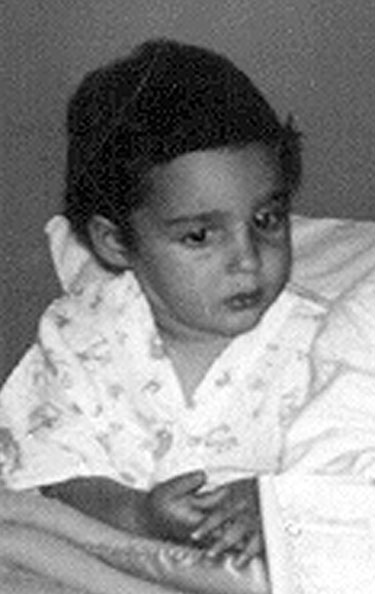
Okay, who are these three dark beauties?
A hint: one of them is one of the very first pictures you’ve ever seen on this blog of neo, sans apple. Not that you’d recognize me, of course. Even my own mother might not recognize me from this photo.
My own mother, you say? Of course she would. Ah, but she’s here too, looking a bit different than she does today—Mother’s Day—at ninety-eight years of age. Just a bit; maybe her own mother wouldn’t recognize her, either.
Her own mother? She’s the one who’s all dressed up, with longer hair than the rest of us.
The photo of my grandmother was taken in the 1880’s; the one of my mother in the teens of the twentieth century; and the one of me, of course, in the 1950s.
Heredity, ain’t it great? My mother and grandmother are both sitting for formal portraits at a professional photographer’s studio, but by the time I came around amateur snapshots were easy to take with a smallish Brownie camera. My mother is sitting on the knee of her own grandfather, my grandmother’s father, a dapper gentleman who was always very well-turned out. I’m next to my older brother, who’s reading a book to me but is cropped out of this photo. My grandmother sits alone in all her finery.
We all not only resemble each other greatly in our features and coloring, but in our solemnity. My mother’s and grandmother’s seriousness is probably explained by the strange and formal setting; mine is due to my concentration on the book, which was Peter Pan (my brother was only pretending to read it, since he couldn’t read yet, but I didn’t know that at the time). My mother’s resemblance to me is enhanced by our similar hairdos (or lack thereof), although hers was short because it hadn’t really grown in yet, and mine was short because she purposely kept it that way (easier to deal with).
My grandmother not only has the pretty ruffled dress and the long flowing locks, but if you look really closely you can see a tiny earring dangling from her earlobe. When I was young, she showed me her baby earrings; several miniature, delicate pairs. It astounded me that they’d actually pierced a baby’s ears (and that my grandmother had let the holes close up later on, and couldn’t wear pierced earrings any more), whereas I had to fight for the right to have mine done in my early teens.
I’m not sure what my mother’s wearing; some sort of baby smock. But I know what I have on: my brother’s hand-me-down pajamas, and I was none too happy about it, of that you can be sure.
So, a very happy Mother’s Day to you all! What would mothers be without babies…and mothers…and babies….and mothers….?
Mother’s Day is tomorrow
[NOTE: And in honor of the occasion, I’m reposting this essay from 2021.]
One of the tasks that fell to me since my mother’s death years ago was to go through her papers and photos.
Some “getting rid of” candidates were obvious. Medical records, of which my mother kept very many. Not needed any more, now that she was gone. Ditto her lists of things to do, address and appointment books, and random jottings.
But the rest! A few letters from me in high school and college. Greeting cards. At least a hundred letters from my father when they were dating in the late 30s when he was traveling constantly while working for the government as a lawyer. Those tend to take the form of descriptions of cities and small towns visited, but here and there are some more personal nuggets. A scrapbook of clippings about her activities in the community. A similar one made by her mother my grandmother, and one compiled by her grandfather my great-grandfather. That last one contains his wedding invitation, circa 1883.
Yearbooks. As an only child of an only child, my mother also inherited all the family photos going back to Civil War times and earlier. Some are of people I knew but many lovely ones are of the total strangers who must be my ancestors, and whose identities are lost.
Sorting them out has been time-consuming, and the task is still incomplete many years later. But I try, especially with those things that seem of special interest.
For me that includes my mother’s writing – because she was a writer too, an essayist whose work was often published in local newspapers and who’d written poetry as a precocious child and young woman. I had seen many of her poems and essays before, but some were new to me.
Here’s an essay of my mother’s that I found and read for the first time about a year after her death. I thought it might be fun to publish it on the blog; I don’t think that would have bothered her in the least. It appears to be something she wrote at the age of 80 (during the 1990s) for a writing workshop in response to an exercise staged by the teacher. It’s written in longhand, with various cross-outs, but I’m impressed with how few corrections she had to make in the flow of her thoughts, and how graceful her expression was under the circumstances.
And she seemed to like the dash, too—just like me.
It appears that the teacher had played music for the class, lit some candles, and given the students a sheet of guidelines (these were not saved; I have a hunch my mother didn’t think too much of them), telling the students to write for a few minutes. Here’s what my mother produced:
80 years of living has immunized me somewhat to candles, music, and yes, even meditation—so I looked with a somewhat jaundiced eye at first on Guidelines—and what strikes me at once is the word “Proprioceptive”—what does it mean and where does it come from?
Isn’t that awful—but I do like words and I keep wondering about that one—
The music is delightful and I wonder what is making me put words on a yellow legal pad anyway—and why am I resistant—
Probably because I tend to have used humor as a shield all my life—it helped me overlook hurts, and raise children without going crazy, and a laugh has been like medicine—the best for me.
As an only child I looked for friends—-and it helped me acquire them and saw us through good days and bad.
My husband liked a “light view”—but now it is more difficult because people are different—more violent, angry, and sad. I cling to humor—if and when possible—and its not always possible anymore to find it.
Why am I writing about fun and laughter when I could pick anything? Perhaps it keeps me sane when the alleged golden years have crept up and facing the inevitable is too much. Like Scarlett O’Hara—if it’s unpleasant “I’ll think about that tomorrow”—
Writing fiction is almost impossible for me because “truth is stranger than.” Coincidence, friendships, travels, the endless variety in people who cross your life are enough—there is little laughter these days and I plan to hold onto just as much as possible.
Now I have made a neat ending but the time is not up and the music and candles are still with me—and with them go gratitude for good luck and good health and the ability to cope with what comes—so far so good.
My mother and I were temperamentally very different, although we both liked humor. One of the things we shared was writing, and perhaps that’s why her essays mean a lot to me. I was especially struck in this one by her saying she couldn’t write fiction. I’ve written quite a few short stories, but they’re not my natural genre and I gave up writing fiction about fifteen years ago and it’s been essays ever since.
Some of my earliest writing memories involve my mother helping me write. She was a fabulous typist (she could even use carbons, and boy was she fast on a manual!) and a good editor. When we were young, my brother and I would leave our essays for her to read and correct for grammar errors, and she knew what she was doing.
My mother was also an excellent natural untrained dancer. But even though my mother couldn’t really sing, when I saw Bebe Daniels in the movie “42nd Street” on TV as a child, I was transfixed because the actress reminded me so very much of my mother. Here’s Bebe:

And here’s my mother, at the time of her graduation from college:

I thought everyone had an editor for a mother. I thought everyone had a mother who could write. Turns out they don’t.
Obama meets with the Canadian PM
Obama is in Canada in order to give the keynote speech to a group called Canada 2020, which has the goal of furthering “a more just, inclusive and forward-thinking Canada.”
That’s “just” as in “social justice” or what Thomas Sowell called “cosmic justice.” I guess the Canadian left just isn’t satisfied with the present status quo, nor is Obama.
He also met with PM Carney, which – according to Newsweek – has MAGA “seething” (rather than pouncing, as is customary).
Carney wrote:
“Welcome back to Canada, President @BarackObama,” Carney wrote. “Thank you for joining us in Toronto for important conversations on how we can build a better and more just future—and empower more people to build with us.”
There’s that “just” business again.
I’m not seething about this; there are plenty of more seethable things around, vying for attention. But I became curious as to whether, if Obama became a Canadian citizen, he could run for PM? The answer is “yes,” because Canada has no “natural born citizen” requirement.
By the way, I’ve never thought Obama was anything but a “natural born citizen” of the US. When he was running for office, there were a lot of discussions here on the subject, so I’m not going to go into it again now. I’ll just add that the whole controversy makes me think of Macbeth – the prophecy that Macbeth couldn’t be defeated by anyone “of woman born,” and then the revelation of the fact that Macduff was “from his mother’s womb untimely ripped.”
YouTube ad placement
I have the free YouTube service, and the ads are designed not only to promote whatever they’re promoting, but also to drive viewers to the point of such annoyance and frustration that they finally spring for the premium, ad-free version of YouTube.
Not me, not yet, although I find the ads incredibly annoying.
For some reason, for about a year I’ve been getting an ad for some sort of face makeup (I turn it off after the usual five seconds, so I don’t even know what it’s advertising, even after all this time), featuring a woman with the most droning grating annoying voice ever. But those ads are nowhere near as infuriating as what I’ve come to call the counter-message ads. At present, they seem to solely involve Israel and Jews – or rather, with countering the message of videos made by pro-Israel or pro-Jewish sources.
For example, if I happen to watch a video by some Jewish or Israeli organization which offers news of the Gaza War or the Iran War from Israel’s point of view, the ads invariably are pro-Gaza and pro-Hamas. If I happen to watch a video that has to do with Jewish thought or religion, invariably it is accompanied by ad after ad from proselytizing Christian organizations explicitly dedicated to converting Jews to Christianity.
These counter-ads are presently solely on Israeli or Jewish videos, but it hasn’t always been that way. I distinctly recall, during the 2024 election campaign, that nearly every pro-Trump video or podcast I would watch (or really anything on the right) would be paired with an ad for Kamala Harris. The opposite may have been true (pro-Kamala podcasts paired with Trump ads), but I wasn’t watching a whole lot of podcasts on the left, so I don’t know.
So, who makes these ad-placement decisions? It certainly doesn’t seem to be the people making the videos. Is it YouTube? Is it the advertisers? Do advertisers pay extra for counter-placement of their ads?
Democrats and NeverTrumpers are very very angry at the Virginia Supreme Court
I think they were counting on winning in court, which is one of the reasons they originally backed the idea that the court allow the vote to occur before issuing a ruling, which is an accord with Virginia precedent.
Now we get “confused” tweets like this:
very confused as to why the VA Supreme Court declined to stop the vote on the redistricting referendum. Whatever you feel about the merits of their decision to strike it down today, the handling of this is a bit odd
— Sam Stein (@samstein) May 8, 2026
Which brings up the old fools/knave issue. Does someone like this not remember the course of events? Did someone like this never pay attention in the first place? Or does he remember but is lying in order to get readers even more incensed at the court for allowing the vote to go forward and then cruelly striking down the people’s will?
Speaking of the people’s will – I’d say this is more than a “little” ironic:
Lydia Moynihan: It's a little ironic that the woman now who is likely going to win the 9th Congressional District in Tennessee is a black Republican instead of a white Democrat male. But that's racist?
Tezlyn Figaro: It actually is
It's now RACIST to elect a black Republican pic.twitter.com/2gEVkz870K
— Brianna Lyman (@briannalyman2) May 8, 2026
The only bona fide black people are Democrats.
Reaction after reaction follows a pattern that shows zero understanding of the fact that states have different rules from each other about how to accomplish redistricting, and that Virginia didn’t follow its own rules. A lot of tweets and comments follow a “they did it in [fill in the blank with a Republican-controlled state], so why can’t we do it in Virginia?” Well, because Virginia has different rules, and this is a state-by-state proposition:
The Virginia Supreme Court has narrowly voted to overturn the will of the people, who voted for a new map to counter Trump’s gerrymandering.
This is despite Republicans in the South moving to eliminate Black-majority districts without even a vote after the Supreme Court gutted… pic.twitter.com/4WoRugVIqI
— Headquarters (@HQNewsNow) May 8, 2026
Also:
Let’s be clear: If this standard applies in Virginia, it should apply in Florida too.
Two different standards for democracy is not justice. https://t.co/SsAdJupxfq
— Katherine Clark (@TeamKClark) May 8, 2026
Once again, I don’t think this is mere stupidity. The concept of federalism is not a difficult one, and I’m pretty sure these people could easily master it. Their reaction is politically motivated, of course. To me, it also indicates the desire for states all to have the same rules, and for those rules to always favor Democrats. Plus, I think these tweets come from people who may (accent on the “may”) know better, but who count on the idea that their readers don’t know better and are trying to stir them up to rage. It’s one of the reasons Democrats want education to be leftist indoctrination that keeps people ignorant of some very important facts about our government and our history.
Speaking of stirring readers to rage, we have Hasan Piker:
the va supreme court denied the results of the redistricting referendum. scotus gutted the voting rights act and tennessee carved up the last dem district destroying black voter power in the state.
those who make peaceful revolution impossible, make violent revolution inevitable https://t.co/Ul1nW2oz29
— hasanabi (@hasanthehun) May 8, 2026
NOTE: And what of California? Stay tuned.
Open thread 5/9/2026
Denaturalization
Once a person gets US citizenship, it’s hard to lose it no matter what that person does. However, one reason it can happen is if the person committed fraud in order to obtain his or her citizenship, or committed terrorist acts or acts in support of terrorism.
And so we have this:
The DOJ is expected to announce on Friday that it is filing denaturalizing actions against 12 individuals, originally from Iraq, Colombia, Morocco, Somalia, Gambia, Bolivia, Uzbekistan, Kenya, India, China and Nigeria.
Ali Yousif Ahmed, a native of Iraq, is one of the individuals the DOJ says they are taking action against. Ahmed came to the U.S. in 2009, claiming his family was attacked by Al-Qaeda terrorists in Iraq. Ten years later, Iraq asked the U.S. to extradite Ahmed to Iraq, claiming he was facing criminal charges for the premeditated murder of two Iraqi police officers in 2006.
“Upon further investigation, United States learned that, in 2015, Ahmed illegally procured his naturalization, which warrants his denaturalization, because he lied under oath about his criminal and family history when he sought admission to the United States and naturalized as a U.S. citizen,” a document on the denaturalization process and shared with the Caller read.
More at the link.
The Trump administration has been stepping up investigations for this sort of thing. Sounds like a good idea to me.
:
In case you missed this: on the Carlson interview
In the open thread the other day I posted a video by Ami Kozak satirizing Tucker Carlson . But afterward, reading the comments, I realized that unless someone’s been watching a lot of Carlson lately, there wouldn’t be much context for it. I provided some background in a comment on the thread, but most people probably didn’t see it, so I’m highlighting it here.
Carlson gave an interview to the NY Times, and it was that interview in particular that was being satirized. It was probably one of the very first times he wasn’t in the driver’s seat, either spewing out a monologue or interviewing someone hand-picked by none other than Carlson himself. As the interviewer, he can softball or hardball as he wishes, depending on how simpatico he is with the subject matter. As interviewee, he seemed flummoxed by any follow-up questions challenging him on his wild assertions, and he fell back on stark denial combined with claims of ignorance.
Here are four excerpts from the interview:
And this is the spoof video:
NOTE: For some reason, I’m having trouble finding the full NY Times interview. Is it only behind the Times’ paywall? But there are many many excerpts on YouTube.
Starmer is in trouble after local elections
More good news:
The United Kingdom’s ruling Labour Party is on track to suffer a major defeat in Thursday’s local elections as Nigel Farage’s right-wing Reform UK surges in support, prompting calls for Prime Minister Keir Starmer to resign.
British local elections are widely viewed as a functional referendum on the popularity of the ruling party and its head. With Labour having already suffered a net loss of nearly 500 local council seats with just over half of the councils called, multiple Labour MPs are saying that Starmer must agree to a timeline for his exit from office.
He should, but must he? Not really – not so far, anyway.
Not only did Starmer’s Labour Party do poorly, but the Conservatives continued to do poorly as well. The results seem to indicate a major sea change, with the Greens and Reform in the ascendance – Reform more than the Greens:
Alan Mendoza, executive director of the London-based Henry Jackson Society, told Fox News Digital, “The era of two-party politics is definitively over with Reform UK’s stunning national success and the Green Party’s more localized wins. The two traditional parties of government, Labour and the Conservatives, have been routed nationally and in some cases have ceased to exist as a meaningful force in whole swathes of the country. By backing Reform across much of the political landscape and the Greens in pockets, British people are indicating they’ve had enough of the politics of the past and are ready to embrace different ideas.”
As I said, good news.
The Virginia Supreme Court comes through on redistricting
Well, well, well:
Democrats in Virginia looked to pick up four congressional seats by a partisan gerrymandered map that passed the legislature and went to a referendum where it passed by a couple of points. Now the Virginia Supreme Court has stricken the referendum as not having followed Virginia constitutional requirements.
From the Opinion:
On March 6, 2026, the General Assembly of Virginia submitted to Virginia voters a proposed constitutional amendment that authorizes partisan gerrymandering of congressional districts in the Commonwealth. We hold that the legislative process employed to advance this proposal violated Article XII, Section 1 of the Constitution of Virginia. This constitutional violation incurably taints the resulting referendum vote and nullifies its legal efficacy.
Gerrymandering for political reasons is legal, but violating the procedural requirements in the state constitution is not. The Virginia Court did not base the ruling on the deficiencies in the wording of the referendum, which had been another possibility.
The upshot of the entire redistricting effort in Virginia is that the Democrats spent oodles of money – reported as eighty million dollars – on this, all to no avail. Between this and the recent SCOTUS decision on racial gerrymandering, the Democrats are not happy campers.
Although it seems to me that the procedural violations were egregious and obvious, the ruling was only 4-3. But we’ll take it.
This result could have been handed down prior to the election, but the Virginia Supreme Court decided to let the referendum proceed and rule on it after that. I had thought this meant there was a good chance that they wouldn’t have the courage to overrule it after it passed, but I’m happy to report that was not the case. The GOP was ready post-referendum to fight it, and they prevailed.