
↓
 

The New Neo

A blog about political change, among other things

  • Home
  • Bio
  • Email
Home » Page 1729 << 1 2 … 1,727 1,728 1,729 1,730 1,731 … 1,917 1,918 >>

Post navigation

← Previous Post
Next Post→

Obama’s choice: FDR or Reagan?

The New Neo Posted on January 9, 2009 by neoJanuary 9, 2009

Well, it may be Pat Buchanan saying it, but I still agree with him: Obama has a choice between the FDR approach to the Great Depression, policies that made it “greater”—that is, longer and more damaging—than it otherwise would have been; and the more successful Reagan approach to the recession of 1980.

But Buchanan ignores the one thing both FDR and Reagan had in common: an abiding optimism and the ability to convey it. They exuded confidence.

There is something very different and disturbing about Obama’s message, and that is his deep pessimism about America. Despite the lip service paid to the hope/change campaign message of uplift, his negativity comes through loud and clear.

Of course, Obama’s latest economic speech is being given in the context of trying to motivate legislation he will be proposing, especially his huge and controversial stimulus package, which jumps (rather than wades) into deep and uncharted waters. But if you read excerpts from his speech, you will see how extraordinarily gloomy it is, couched in the language of the dire consequences of what could happen if Obama’s plan isn’t realized.

The remedy? Why, big government, that’s what:

Mr. Obama insisted that only government could “break the vicious cycles that are crippling our economy,” prevent “the catastrophic failure of financial institutions,” restart the flow of credit and restore the regulations needed to prevent such a crisis in the future.

Not only is big government the one and only answer, according to Obama, but the changes he proposes have to occur as soon as possible:

For every day we wait or point fingers or drag our feet, more Americans will lose their jobs,” Mr. Obama warned. “More families will lose their savings. More dreams will be deferred and denied. And our nation will sink deeper into a crisis that, at some point, we may not be able to reverse.”

For some contrast, let’s have the words of FDR in his First Inaugural, facing a situation far worse than that Obama faces today:

This great Nation will endure as it has endured, will revive and will prosper. So, first of all, let me assert my firm belief that the only thing we have to fear is fear itself””nameless, unreasoning, unjustified terror which paralyzes needed efforts to convert retreat into advance. In every dark hour of our national life a leadership of frankness and vigor has met with that understanding and support of the people themselves which is essential to victory…Yet our distress comes from no failure of substance. We are stricken by no plague of locusts. Compared with the perils which our forefathers conquered because they believed and were not afraid, we have still much to be thankful for. Nature still offers her bounty and human efforts have multiplied it. Plenty is at our doorstep, but a generous use of it languishes in the very sight of the supply…

We can argue over the proper policy to institute in order to deal with the financial crisis, and the Left and Right certainly will do so. But I don’t think there’s any argument about the fact that Obama is striking exactly the wrong tone, if economic recovery is what he is really after.
Posted in Obama | 20 Replies

Palin agrees that it’s the class war, stupid

The New Neo Posted on January 9, 2009 by neoAugust 23, 2016

Back in September I wrote that much of the vicious bias against Sarah Palin was a result of her being from the wrong side of the tracks—the Walmart side. Now Palin is on the record as acknowledging the class issue in an interview with conservative filmmaker John Ziegler.

Palin feels that Caroline Kennedy’s upscale bona fides have caused her to be been handled by the press with more delicacy:

I think that as we watch that we will perhaps be able to prove that there is a class issue here also that was such a factor in the scrutiny of my candidacy versus, say, the scrutiny of what her candidacy may be.

I personally have been somewhat surprised that Caroline has been criticized at all by the press; I expected more of an anointment, which she certainly has not gotten. Nevertheless it’s true that she has been treated nowhere near as poorly as Palin was—but then again, few people on earth have been treated by the press as poorly as Palin was.

Palin adds that she was certainly aware of how badly things were going with the MSM almost from the start. Re the disastrous Couric interviews:

[M]y question to the campaign was, after it didn’t go well the first day, why were we going to go back for more?

This is another example of the fact that Palin had good political instincts. That was clear from the moment she gave her first speech, and it was one of the things that frightened the opposition and made them determined to destroy her. Her handlers should have trusted her more.

She’s not given up, but I wonder whether she’s through politically on the national level.

Posted in Palin | 25 Replies

Pallywood at CNN?

The New Neo Posted on January 9, 2009 by neoJanuary 9, 2009

The intrepid Richard Landes is on the case.

Posted in Uncategorized | 6 Replies

If the only thing we have to fear is…

The New Neo Posted on January 8, 2009 by neoJanuary 8, 2009

…fear itself, why does Obama keep playing on it?

In the financial crisis, he’s been sounding a relentlessly gloomy note from the very start. I agree that things are far from rosy, but I believe that Obama is doing no one any favors by being so consistently pessimistic. Perceptions and emotions affect the economic climate, and pronouncements of the President (or President-Elect) help to shape them.

Posted in Uncategorized | 56 Replies

The donut vs. the cupcake

The New Neo Posted on January 8, 2009 by neoMay 30, 2013

Donuts (or doughnuts, take your pick) are popular again, not that they ever really went out of style.

This article indicates that those luscious little bundles of fried dough are undergoing a renaissance, as well as a gentrification that includes something called the gourmet artisanal doughnut. Really. Examples of the latter include donuts with lavender-scented glaze, or flavors such as mashed banana-filled peanut butter.

Well, count me out. I actually only like one kind of doughnut: the sour cream glazed. And I only like them when they’re very fresh, and a bit heavy and rough-edged to give the right crust of crunchy, with many depressions and crevices in which the (non-lavender-scented) glaze can pool.

This exact type used to be readily available in the supermarket near where I live, representing a constant and not easily resisted temptation. Not only that, but a nearby bakery (which thankfully closed a few years ago) used to package up its unsold doughnuts late in the day and sell a bag of eight for about two dollars, and often that bag would contain nothing but the sour cream glazed variety. Dangerous.

A few years ago when the Krispy Kreme Kraze swept the country, I had to wait a while to get my first taste. But when I finally came across one, I was deeply disappointed. This was the donut I’d heard so much about? This airy thing that evaporated almost as soon as it entered the mouth? A travesty.

But worst of all is the cupcake. When I was a child I found them perfectly fine, but past the age of about eight I’ve never understood what the fuss is about. A cupcake is just a piece of cake with some icing, except there’s no layers and therefore no filling. So, what’s the big deal? Why have they become so incredibly popular these days?

And why oh why have they become so astoundingly expensive? At four dollars a pop, the things are ridiculous.

And stores entirely dedicated to them? I first encountered this phenomenon a couple of years ago in Greenwich Village. Nothing but cupcakes in the window, enticing aging and paunchy boomers to wax nostalgic and young and slender hipsters to contemplate the retro pleasures of the comfort food. It must hark back to something about childhood, but that’s as far as I can get with it.

Posted in Food | 22 Replies

The city is too much with us

The New Neo Posted on January 8, 2009 by neoJuly 9, 2009

This article mentions that the world has passed an important milestone: more than half its population lives in cities. That means that city life is having a greater and greater effect on our culture, bodies, and psyches. So there’s reason to be interested in the crop of recent research discussed in the piece, which indicates that cities dull our ability to think, reduce our impulse control, and increase aggression.

This isn’t really all that surprising; some of these results have been known for some time What is somewhat new is that the same research suggests that just a bit of greenery can mitigate some of these effects. Although we are social animals, apparently we are also meant to be natural ones amidst the world of plants and foliage:

[J]ust looking at a natural scene can lead to higher scores on tests of attention and memory. While people have searched high and low for ways to improve cognitive performance, from doping themselves with Red Bull to redesigning the layout of offices, it appears that few of these treatments are as effective as simply taking a walk in a natural place.

Wordsworth had a thing or two to say about it all:

The world is too much with us; late and soon,
Getting and spending, we lay waste our powers:
Little we see in Nature that is ours;
We have given our hearts away, a sordid boon!
The Sea that bares her bosom to the moon;
The winds that will be howling at all hours,
And are up-gathered now like sleeping flowers;
For this, for everything, we are out of tune;
It moves us not.””Great God! I’d rather be
A Pagan suckled in a creed outworn;
So might I, standing on this pleasant lea,
Have glimpses that would make me less forlorn;
Have sight of Proteus rising from the sea;
Or hear old Triton blow his wreathed horn.

Posted in Nature, Poetry, Science | 13 Replies

It’s been said before, but…

The New Neo Posted on January 8, 2009 by neoJanuary 8, 2009

…it bears repeating:

Many people ask why there are so few Israeli casualties in comparison with the Palestinian death toll. It’s because Israel’s first priority is the safety of its citizens, which is why there are shelters and warning systems in Israeli towns. If Hamas can dig tunnels, it can certainly build shelters. Instead, it prefers to use women and children as human shields while its leaders rush into hiding.

The article in the WSJ is by Marvin Hier, dean of the Wiesenthal Center. In it, he also mentions that ceasefires are used by Hamas to regroup and rearm, and that this is a pattern. The pattern includes offers by the world to give ever-increasing funds for humanitarian aid to the Palestinians, whose leaders then use it to do everything but truly benefit its people.

My question is: why is this pattern not more widely recognized? It’s not as though it’s hard to see. One can evoke anti-Semitism as the reason, and no doubt this is responsible for a portion of it. But it’s hardly the whole story. There’s also the need on the Left to sympathize with any third world peoples, and the Palestinians have been milking this for decades in their unrelenting propaganda.

But I continue to believe that the media itself has an enormous role, perhaps in great part because of a self-serving need to continue to report favorably on the Palestinians in order to continue its all-important “access” to a story it’s already presenting in such a skewed manner. Why bother?

Posted in Israel/Palestine | 15 Replies

Panetta and Obama’s unseriousness

The New Neo Posted on January 7, 2009 by neoJanuary 7, 2009

Ralph Peters doesn’t like the Panetta pick, not one little bit. He says that it shows that Obama does not take intelligence “seriously.” I hadn’t thought of that description when I wrote my piece on the subject, but it does seem particularly apropos.

As Peters says, this is not a good time or venue for on-the-job training. It would help immeasurably to at least be familiar with the bureaucracy that forms the intelligence community, but Panetta is not. And Obama doesn’t seem to care:

To be a qualified D-CIA, a man or woman needs a sophisticated grasp of three things: The intel system, foreign-policy challenges and the Pentagon (which owns most of our intelligence personnel and hardware). Panetta has no background – none – in any of these areas. He was never interested.

Is Obama interested? One wonders.

This pick worries Peters, and it certainly worries me. It is an indication of a trend that was evident during the entire Obama campaign, which is that Obama seems to think qualifications and experience are not important.

Remember his preposterous assertion that he himself was as qualified (or more qualified) than anyone to make foreign policy decisions because he had lived in Indonesia as a child and traveled to Pakistan as a young adult (please see this to refresh your memory)? Perhaps that wasn’t just campaign hyperbole.

My current suspicion is that Obama believes it is true. If so, this a dangerous thing. The most ignorant person isn’t merely the one who doesn’t know, it’s the one who doesn’t know that he/she doesn’t know.

Posted in Obama | 86 Replies

Sanjay for Surgeon General

The New Neo Posted on January 7, 2009 by neoJanuary 7, 2009

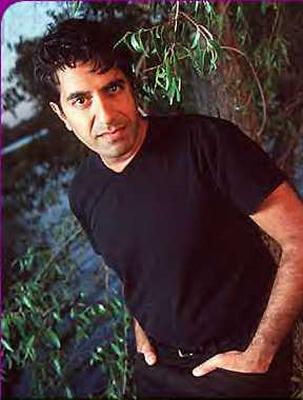
After the Panetta debacle, it’s a tremendous relief to hear of a possible Obama appointee I can support with enthusiasm: CNN’s Dr. Sanjay Gupta for Surgeon General.

First of all, there’s the lovely euphony and alliteration of it all: SanjayGupta/SurgeonGeneral. But let’s cut to the chase: I’ve had a mild crush on Sanjay for quite some time now.

Yes, he’s too young for me (thirty-nine, but who’s counting?) And although I know I’m showing a remarkable amount of shallowness in admitting that the guy is handsome, and that’s a goodly part of his considerable appeal, I also happen to think he’s charming, smart, and showed moral courage when he performed emergency surgery on several Iraqis and US Marines while he was embedded in 2003 as a medical correspondent there.

Apparently I am not alone in my admiration for Dr. Gupta. He was named one of the sexiest men of 2003 by People magazine; I challenge any previous Surgeon General to be able to put that particular honor on his resume. And he tangled with the abominable Michael Moore, as well.

Here’s a little Sanjay beefcake for your enjoyment/edification:

sanjayg.jpg

Posted in Health | 16 Replies

Let them eat squirrel

The New Neo Posted on January 7, 2009 by neoJanuary 7, 2009

I don’t know about you, but this piece put me off my feed. It’s an article about the growing popularity of squirrel as a food in Britain. And here I thought British food was coming up in the world after getting a bad rep for so long.

That bad rep was certainly justified back in the 70s, when I last visited England. Greasy, tasteless, boring, and heavy, British food could only be endured by bypassing it altogether and going to ethnic restaurants instead. I’d heard, however, that Britain had experienced a culinary renaissance of sorts in the decades since I was there (this backs up that information).

Now it appears that squirrel has been added to the bill of fare at many British restaurants. This is not because it’s so tasty; a few people describe it that way but many don’t find it appetizing. It has other drawbacks, too (I’ll spare you the nasty details; let’s just say it has to be very carefully prepared). But the reason that squirrel has now become the plate de jour is that the native red squirrel of the British Isles has become threatened by the gray (or “grey,” as the Brits might write) one, the latter being the less-cute type we have in this country.

It’s only the invader gray squirrel that the British have taken to eating, in an effort to preserve the threatened reds: “Save a red, eat a gray!” is the battle cry of the squirrel-killing squirrel-protectors. The red is native to the Isles and the gray was introduced during the late 1800’s. As the latter has thrived, the former population has shrunk.

Personally, I think the whole thing is payback by this country for the European “gift” of the dandelion to the US. Yes, they were purposely introduced here by early settlers from Europe:

Common dandelion is an introduced plant in North America. In the mid-1600s, European settlers brought the common dandelion (scientific name, Taraxacum officinale) to eastern America and cultivated it in their gardens for food and medicine. Since then it has spread across the continent as a weed.

Yes indeed, so it has, as I know from bitter personal experience. No doubt you do, as well. In an interesting parallel, the dandelion could find its way to more of our plates. But I very much doubt this would do anything to stop the spread of this especially tenacious weed.

Posted in Food | 20 Replies

Panetta: Obama makes an unintelligent choice for head of intelligence

The New Neo Posted on January 6, 2009 by neoJanuary 6, 2009

For a supposedly intelligent man, Obama has made an especially poor choice in his reported choice of Leon Panetta as CIA chief.

To say Panetta is inexperienced in intelligence would be an understatement. He is profoundly inexperienced, even more so than other previous CIA chiefs who came from a basically non-intelligence background. His main qualification appears to be that he was President Clinton’s chief of staff, and yet nevertheless supported Obama in his campaign against Hillary.

Well, I guess the Panetta appointment represents “change.” And we can only “hope” it doesn’t lead to a further and dangerous undermining of the already troubled CIA.

It is a mark of Panetta’s profound lack of qualifications for the job that even Democrat partisans such as incoming chairwoman of the Senate Intelligence Committee Diane Fienstein and departing chairman John D. Rockefeller sounded stunned and displeased. Feinstein was particularly upset that she had not been consulted about the choice—never a good move for an incoming President trying to work and play well with Congress—and she made it clear she would have preferred someone with a background in intelligence.

This doesn’t mean Panetta’s confirmation is truly threatened, however. It appears that whatever Obama wants, Obama will get.

The real problem that seems to have led to the appointment of such a complete outsider was that everyone with any sort of background in intelligence was considered tainted by ties to the supposedly nefarious Bush-era CIA, which approved controversial techniques such as waterboarding.

So Obama decided to throw out the baby (intelligence) with the bathwater (coercive interrogation techniques). To find a CIA head with the properly squeaky clean hands, Obama had to find one with no hands-on experience at all. Panetta fit the bill, since he not only had the requisite lack of background, but he had also been outspoken in his condemnation of all CIA practices that could conjure up any suggestion that they might arguably represent torture. Therefore he was doubleplusgood.

Panetta’s inexperience might not have made that much of a difference with a President who was not a complete neophyte himself. But unfortunately, Obama has no more credentials than Panetta has in that arena. What’s more, Obama recently appointed as Director of National Intelligence retired Navy Admiral Dennis Blair, who likewise has no experience in intelligence.

This makes for quite a troika. As blogger “Spook86,” who represents himself as being a former intelligence officer, says, it “doesn’t exactly inspire confidence.” No, not exactly.

It’s not as though we are in an era right now in which intelligence is relatively unimportant. It is widely conceded that it is vital. Does Obama not think so? Does he consider it an afterthought? Does he feel that PC considerations and placating the left wing of his party trump finding a competent person to head the intelligence community? Or does he think all that’s required is to be a good administrator, and the rest can be learned on the job? If so, is this an extension of the hubris that has plagued him from the very start of his campaign?

[ADDENDUM: The WSJ wonders if this signals an upcoming purge in the CIA of all persons associated with the “torture” years. If so, the entire agency would end up staffed by neophytes. How very reassuring that would be.]

Posted in Obama, Terrorism and terrorists | 33 Replies

Maus and memory

The New Neo Posted on January 5, 2009 by neoJanuary 5, 2009

I recently reread the two-volume graphic novel Maus, by Art Spiegelman. It struck me once again, as it did the first time I read these books, that they should not work on any level. And yet, against all odds, they constitute a bona fide masterpiece.

Why should they fail? Let me count the ways. Because of our over-familiarity with the genre, as well as the risk of trivialization, Holocaust stories are inherently difficult to write, especially by people such as Spiegelman who did not directly experience the horrors. He chooses to write in the form of the graphic novel—in other words, a lengthy cartoon. This genre should be especially offensive as a medium for telling so deeply horrific and monumental a tale.

What’s more, Spiegelman decides to depict the protagonists as various animals, which might have served to underline the cartoon aspects as well as dehumanizing the story: the hunted Jews are mice, the Nazis are cats, Poles are pigs, Russians bears, Americans dogs. And he intersperses his own experience of typical and somewhat pedestrian intergenerational angst and parent-child strife with the searing Holocaust sufferings of his parents.

How is it that Spiegelman manages to succeed? He begins slowly, by introducing his father Vladek but concentrating on their present-day post-Holocaust American life (the book was first published in the mid-80s). The man is so crotchety and annoying, so stingy and testy, that the reader shares Spiegelman’s frustration with him. And then the son gets the idea of interviewing his father about his experiences during the war, and the story begins to shift gear into a very different time and place.

Part of the power of the book comes from the idiosyncratic, colorful, and yet laconic way Vladek expresses himself, in accented English that conveys his practical and canny nature. The use of animals to portray the different ethnic and national groups stops seeming strange and becomes powerfully symbolic, keeping the reader from ever forgetting for a moment that these identities were the most salient characteristics of the world in which Vladek and his fellows lived, marking him and his fellow Jews as hunted prey and others as predators, helpers, or neutrals.

The reader learns at the outset that Spiegelman’s mother is dead. Although she came through the Holocaust seemingly intact, she committed suicide when Art was a young adult. As Vladek’s story introduces the reader slowly to the person she was, it becomes more and more apparent that the love between the two was an extraordinarily powerful force, and largely responsible for her wartime survival. Vladek was able to at least temporarily transfer some of his own remarkable gift for endurance to his wife. He was very clever and resourceful. But “clever” and “resourceful” are mild words to describe his stunning ability to find a way out of almost any situation.

Virtually all Holocaust survivor stories involve large elements of both luck and skill. But, having read many such tales, I think I can safely say that Vladek’s history involves more of the latter than any other such story I have read. He is always planning ahead, always thinking, always ingratiating himself with those who might be able to help him in the future. He pretends to have knowledge and training he lacks, and then he makes it his business to learn those skills and to learn them quickly and well (shoemaking, tinsmithing). Although starving, he manages the extraordinary feat of controlling his hunger in order to save food to use as bribes or gifts in ways that can help him in the future.

As Vladek’s past emerges in his own words, the reader—and his son Art—learn the source of many of the man’s maddening quirks. What appears from the perspective of the bountiful America of the 1980s to be a miserly and rather nasty need on the old man’s part to save and hoard seemingly useless things is revealed to be the same impulse that allowed him to live while so many others died. The angry Vladek who is so mean to his second wife (another Holocaust survivor) still mourns the first wife he loved so deeply. The man who maddens son Art with his clinginess and demands is the same person who lost almost every member of his large family, including his first child, in ways that retain their power to horrify even those who are familiar with the Holocaust.

It is said that to know all is to understand all. By the time Art has finished interviewing his father and writing the book, he has come to understand as best he (or any other person who did not directly experience the Holocaust) can what motivates the man, and to respect those very traits of his that originally drove the son nearly crazy. In one of the final panels of the book, Vladek, now very ill and lying in bed, sleepily addresses Art by the name of his deceased first son Richieu who died as a young child in the war. This especially moving moment demonstrates the fusion of the past with the present, and the fact that the dead still exist in the mind, untethered to time.

The strength of Maus is that it tells two tales simultaneously: an almost unimaginably terrifying story of suffering and heroic survival is interspersed with the story of the ordinary middle class life of an American family in which Old World parents give birth to a New World son. No one is spared and no one is glorified, and yet the final message amidst the horror and cynicism is of the power and depth of love.

Posted in Jews, Literature and writing, War and Peace | 19 Replies

Post navigation

← Previous Post
Next Post→

Your support is appreciated through a one-time or monthly Paypal donation

Please click the link recommended books and search bar for Amazon purchases through neo. I receive a commission from all such purchases.

Archives

Recent Comments

  • neo on The AfD does very well in the recent German elections in Saxony-Anhalt
  • neo on The AfD does very well in the recent German elections in Saxony-Anhalt
  • BJ on Happy Labor Day
  • BJ on The Clancy jury apparently will end in a mistrial
  • Charles R Harris on The AfD does very well in the recent German elections in Saxony-Anhalt

Recent Posts

  • The AfD does very well in the recent German elections in Saxony-Anhalt
  • Happy Labor Day
  • Open thread 9/7/2026
  • A restrained AI spam comment
  • A lost skill

Categories

  • A mind is a difficult thing to change: my change story (17)
  • Academia (328)
  • Afghanistan (98)
  • Amazon orders (6)
  • Arts (8)
  • Baseball and sports (164)
  • Best of neo-neocon (91)
  • Biden (536)
  • Blogging and bloggers (595)
  • Dance (292)
  • Disaster (244)
  • Education (323)
  • Election 2012 (360)
  • Election 2016 (566)
  • Election 2018 (33)
  • Election 2020 (513)
  • Election 2022 (114)
  • Election 2024 (403)
  • Election 2026 (93)
  • Election 2028 (13)
  • Evil (129)
  • Fashion and beauty (324)
  • Finance and economics (1,042)
  • Food (317)
  • Friendship (48)
  • Gardening (18)
  • General information about neo (4)
  • Getting philosophical: life, love, the universe (734)
  • Health (1,161)
  • Health care reform (545)
  • Hillary Clinton (184)
  • Historical figures (337)
  • History (716)
  • Immigration (448)
  • Iran (464)
  • Iraq (227)
  • IRS scandal (71)
  • Israel/Palestine (821)
  • Jews (437)
  • Language and grammar (365)
  • Latin America (212)
  • Law (2,975)
  • Leaving the circle: political apostasy (124)
  • Liberals and conservatives; left and right (1,321)
  • Liberty (1,117)
  • Literary leftists (14)
  • Literature and writing (394)
  • Me, myself, and I (1,498)
  • Men and women; marriage and divorce and sex (929)
  • Middle East (384)
  • Military (324)
  • Movies (353)
  • Music (533)
  • Nature (261)
  • Neocons (32)
  • New England (183)
  • Obama (1,738)
  • Pacifism (16)
  • Painting, sculpture, photography (131)
  • Palin (93)
  • Paris and France2 trial (25)
  • People of interest (1,043)
  • Poetry (258)
  • Political changers (178)
  • Politics (2,793)
  • Pop culture (397)
  • Press (1,635)
  • Race and racism (882)
  • Religion (428)
  • Romney (164)
  • Ryan (16)
  • Science (641)
  • Terrorism and terrorists (971)
  • Theater and TV (266)
  • Therapy (71)
  • Trump (1,630)
  • Uncategorized (4,555)
  • Vietnam (109)
  • Violence (1,445)
  • War and Peace (1,027)

Blogroll

Ace (bold)
AmericanDigest (writer’s digest)
AmericanThinker (thought full)
Anchoress (first things first)
AnnAlthouse (more than law)
AugeanStables (historian’s task)
BelmontClub (deep thoughts)
Betsy’sPage (teach)
Bookworm (writingReader)
ChicagoBoyz (boyz will be)
DanielInVenezuela (liberty)
Dr.Helen (rights of man)
Dr.Sanity (shrink archives)
DreamsToLightening (Asher)
EdDriscoll (market liberal)
Fausta’sBlog (opinionated)
GayPatriot (self-explanatory)
HadEnoughTherapy? (yep)
HotAir (a roomful)
InstaPundit (the hub)
JawaReport (the doctor’s Rusty)
LegalInsurrection (law prof)
Maggie’sFarm (togetherness)
MelaniePhillips (formidable)
MerylYourish (centrist)
MichaelTotten (globetrotter)
MichaelYon (War Zones)
Michelle Malkin (clarion pen)
MichelleObama’sMirror (reflect)
NoPasaran! (bluntFrench)
NormanGeras (archives)
OneCosmos (Gagdad Bob)
Pamela Geller (Atlas Shrugs)
PJMedia (comprehensive)
PointOfNoReturn (exodus)
Powerline (foursight)
QandO (neolibertarian)
RedState (conservative)
RogerL.Simon (PJ guy)
SisterToldjah (she said)
Sisu (commentary plus cats)
Spengler (Goldman)
VictorDavisHanson (prof)
Vodkapundit (drinker-thinker)
Volokh (lawblog)
Zombie (alive)

Meta

  • Log in
  • Entries feed
  • Comments feed
  • WordPress.org
©2026 - The New Neo - Weaver Xtreme Theme Email
Web Analytics
↑