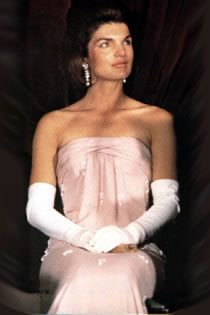
↓
 

The New Neo

A blog about political change, among other things

  • Home
  • Bio
  • Email
Home » Page 1726 << 1 2 … 1,724 1,725 1,726 1,727 1,728 … 1,917 1,918 >>

Post navigation

← Previous Post
Next Post→

Updike At Rest

The New Neo Posted on January 28, 2009 by neoJuly 25, 2015

9361731.JPG

John Updike has died at seventy-six.

In the last decade or two, his work had increasingly grappled with issues of aging and death, so perhaps his actual death should come as no surprise. But somehow it does—as it may have to him, if a passage from one of his early stories, “Pigeon Feathers, ” is any guide:

The story is about a boy, David, who is forced to shoot some pigeons in a barn and then watches, fascinated, as their feathers float to the ground. “He was robed in this certainty: that the God who had lavished such craft upon these worthless birds would not destroy His whole Creation by refusing to let David live forever.”

“Prolific” is a term often used to describe Updike. The man spewed forth words at an almost alarming clip, churning out approximately one book of fiction or short stories a year throughout his long literary life, not to mention a simultaneous outpouring of book reviews and other essays. It would be surprising if all of them were very good, and of course they’re not. But an astonishing number are.

Updike’s fictional oeuvre wasn’t really my cup of tea. The trials and adulterous liaisons of hard-drinking suburban men of the 1950s and 1960s, or the similar doings of former basketball stars in small-town Pennsylvania, aren’t my favored reading topics. But even though I’m not much of a novel-reader in general, I managed to voluntarily get through quite a sampler of Updike’s fictional output, mostly because of his amazing ability to write.

In this he reminds me of another (and less prolific) literary stylist of very different background and subject matter: Vladimir Nabokov. But where Updike celebrates the ordinary and accessible, Nabokov delves into the arcane and mysteriously complex. Where Updike is somewhat warm (although at times repellent), Nabokov is very cold (and at times repellent). But both are almost unsurpassed in their ability to string words together beautifully in what are often very long sentences that nevertheless retain their clarity of meaning.

These are virtuoso performances, meant to inspire awe. And they do. Updike also writes from a stance of awe (even religious awe; he was a very religious man) at the entire physical world and especially its amazing human denizens. And although he is often accused of being a misogynist because of the way he draws many of his female characters, I have always perceived a sort of grudging respect (and perhaps even awe) for women’s emotional depth and tenaciousness behind his portraits of a sex that always fascinated him.

My favorite works of Updike are his short stories and his personal essays. I happen to like the short story genre in general better than the novel, and in Updike’s case the shorter form focuses his mind and pen (or typewriter, or computer). Many of his short stories are far more openly autobiographical than his more wide-ranging novels; and this suits me, as well. I have always found truth stranger—and far more fascinating—than fiction, even if it is a shaped and slightly altered, more literary, truth.

You may laugh at the word “truth” in the context of fiction writing. But my sense of Updike is that in his writing he was almost ruthless with himself. The heroes fashioned in his image are often flawed men, bent on their own pleasure even at the expense of others, as they struggle with their competing desire to be decent and with their need to reconcile themselves with God. Nothing is simple; even Updike’s serially philandering husbands often experience a poignant and bitter regret when interacting with the divorced wives they left behind—and the regret is not only for the havoc they wreaked on the ex-spouse or the children, but that which they unwittingly inflicted on themselves.

One of my favorite Updike short stories is called “Guilt Gems.” It describes three incidents in the middle-aged male protagonist’s life that have left him with a terrible residue of guilt. These episodes are not what you might think; there is no sex involved, for instance. If I recall correctly (and forgive me if this in in error, because I am doing this from memory) they consist of the following: the narrator banishing the beloved family cat to the basement because he is allergic to it, and seeing the resultant stricken and angry look on his son’s face; the narrator allowing his elderly mother to drive home alone from the airport; and the narrator tagging out his daughter in a neighborhood baseball game.

The subject matter may sound trite, but in Updike’s hands it is not. Both in the descriptive and in the psychological sense, the writing is lusciously beautiful, as Updike’s writing nearly always is.

But perhaps my favorite Updike work is his “memoir,” entitled Self-Consciousness. Eschewing the conventional narrative trajectory of most autobiographies (as does Nabokov’s somewhat similar work, Speak, Memory), it deals with just a few aspects of Updike’s life.

Typically, two of them (his stuttering, his psoriasis) are previously hidden personal flaws that Updike chooses to expose and explore. If that sounds disgusting or vaguely Oprah-ish, Updike manages to avoid that trap. But best of all, the book contains the tour-de-force essay “On Being a Self Forever.” The subject is nothing less than individual human existence.

Now that Updike’s life is over, we will have no more yearly offerings from that singular voice. But the celebration of the ordinary by this extraordinary writer lives on.

[ADDENDUM: For other photos of Updike in varied stages of life, please see this.

The title of this post is a reference to the final book in Updike’s famous “Rabbit” series, entitled Rabbit at Rest, in which hero Harry “Rabbit” Angstrom dies.]
Posted in Literature and writing, People of interest | 16 Replies

Oh, drat

The New Neo Posted on January 27, 2009 by neoJanuary 27, 2009

I guess I missed out again.

Posted in Uncategorized | 16 Replies

Madoff and his sons: walking the perp walk alone?

The New Neo Posted on January 27, 2009 by neoDecember 29, 2011

Bernie Madoff ran quite the little family business. Back in the happier, headier days of 2000, son Mark is quoted as saying:

All of his family members grew up with this being our lives. When it is a family operated business you don’t go home at night and shut everything off, so you take things home with you, which is how all of us grew up.

Madoff practiced nepotism to a degree I assume is somewhat unusual in the world of investment firms, employing not only sons Mark and Andrew, but a host of other relatives: brother Peter, niece Shana, nephews Charles and Roger (the role of wife Ruth in recent years remains unclear).

But Madoff insists that he, and he alone, knew of the fraudulent nature of his hedge fund operations. His sons, not surprisingly, agree.

Of course, Madoff is a liar. So why should we believe him on this one point? The answer is: we shouldn’t. But neither should we automatically assume that his sons absolutely had to be in the know.

I say this not through excess of naivete, although it may sound that way. No, I am fully aware that it is highly possible, not to mention likely, that the sons were cognizant of the Ponzi nature of the operations, and are part of the coverup.

But at the same time I think anyone who assumes Madoff himself could not have been clever enough, secretive enough, and criminal enough to defraud and fool even his own family is suffering from a different sort of naivete (see this).

So, if they weren’t part of the swindle, just what might the sons have been doing all day in their large but perhaps spartan offices (Madoff favored black, white, and gray as a color scheme, and reportedly was so obsessive-compulsive that he had no tolerance for a stray scrap of paper on the desks of employees)? Madoff carefully kept the brockerage arm of the firm—which the sons ran—separate from the fraudulent hedge fund operation. The former was apparently a bona fide business.

This, of course, does not mean the sons were not taken into his confidence. Perhaps the whole structure was carefully arranged merely to give the appearance of separation in order for the sons to exercise plausible deniability later on.

This past weekend’s Wall Street Journal has this to say of what is known so far about their role:

While neither son has been implicated by prosecutors, the sons interacted with some who worked in the Madoff investment operation. As executives at the firm, they met regularly with their father and other senior officials of the firm in closed-door discussions in the company’s offices, according to former employees. They both gave their father some of their own money to manage and occasionally chatted with a key lieutenant who now is a focus of probes into the alleged fraud, and they defended their father’s investment operation against critics.

These associations hardly constitute smoking guns, although they make it clear that opportunities abounded for the sons to learn about the scheme, if Madoff so desired, or if they smelled a rat. But did he, and/or did they?

Son Mark, who once had personal money invested in dad’s hedge fund, pulled it out for undisclosed reasons prior to a divorce in 2000—the strongest evidence, in my opinion, of his possible knowledge. But son Andrew remained heavily invested right up until the revelations of December.

So, what is the likelihood the sons knew? I can’t say; no one can except the parties themselves. But my gut tells me that Madoff senior is the sort of person who likes to feel superior to everybody around. Part of that supreme sort of narcissism and criminality is that it tends to take no one else into its confidence. I agree with those who believe that:

…good old Bernie Madoff might have stolen simply for the fun of it, exploiting every relationship in his life for decades while studiously manipulating financial regulators.

And note that “every relationship in his life,” if true, would include sons Andrew and Mark.

Madoff may have much preferred to walk alone. In fact, that may have been the whole point:

[NOTE: One fact that contradicts my “loner” theory is that someone must have been generating those imaginary reports of transactions for the hedge fund. Could it have been Madoff himself? I submit that, until other evidence surfaces, the answer is “yes.” The guy seems to have been obsessive-compulsive enough to have done so. Here’s how:

Madoff made his reputation on building complex financial systems, covering the full range of investment management””accounts, trades, taxes, clearinghouses, balances.

All he had to do was switch the input signal from real accounts to simulated accounts. And every programmer knows what happens then: GIGO””Garbage In, Garbage Out.

Call it the Madoff Virtual Reality Trading Simulation Game.]

Posted in Finance and economics, Getting philosophical: life, love, the universe | 25 Replies

Jackie Kennedy, that dress, and Robert Frost

The New Neo Posted on January 27, 2009 by neoJanuary 27, 2009

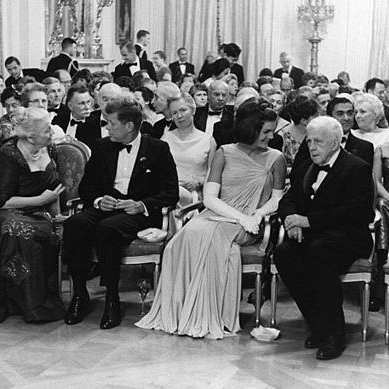
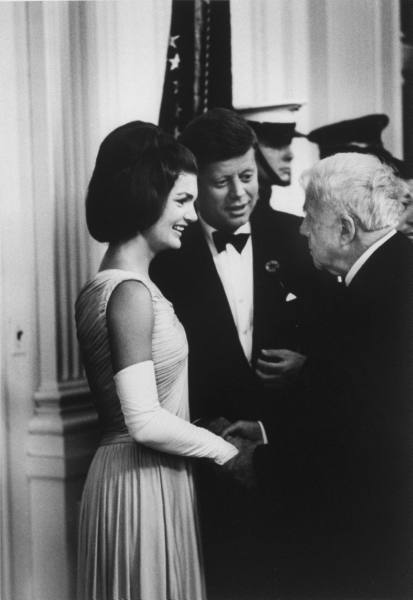
Here’s more on that beautiful Grecian-inspired dress of Jackie Kennedy’s, the one I thought would have looked nice on Michelle at Obama’s inaugural ball.

A reader and friend kindly sent me the following photo of Jackie wearing the dress at a gala function:

fb9e813dc577492083ec564d98f9ab29.jpg

And notice who was seated beside Jackie on that distant occasion: none other than poet Robert Frost! Thus it is that two of my posts on the Obama inauguration (see this) intersect.

I’m guessing that Frost must have enjoyed himself mightily that evening. And who was the regal-looking and lucky lady on JFK’s right? Pearl Buck, that’s who—the first woman Nobel laureate in literature, although recently she has fallen on harder times, critic-wise, than Frost (the Nobel eluded him to the end, despite four Pulitzers).

Here’s another view of the Kennedy dress on its original model, as well as Frost:

c.jpg

Love those gloves, too.

Posted in Fashion and beauty | 11 Replies

Senator Winfrey: the politics of celebrity and identity

The New Neo Posted on January 26, 2009 by neoJanuary 26, 2009

When governors have been called on to appoint senators in the past, they’ve tended to stick with party regulars and other established politicians.

But I suppose, after the serious consideration given to neophyte Caroline Kennedy to replace Hillary Clinton, it should come as no surprise that Governor Blagojevitch of Illinois thought about appointing TV superstar Oprah Winfrey to fill Barack Obama’s senatorial shoes—and that Oprah thought herself qualified to have accepted the offer, although she wasn’t really all that interested. She’s too busy doing other things.

Well, Oprah is indeed a busy gal. She’s got a lot of clout, and a vast number of projects over which she exercises a great deal of control. So I can hardly blame her for not being eager to take on the somewhat boring career of Senator. It involves a lot of down time, and one person usually can’t accomplish a whole lot there (actually, a hundred people often can’t accomplish a whole lot, either—but that’s another story).

The whole question got me wondering just who is best qualified to be appointed senator.

When a person runs for election to the Senate, the public uses its judgment to make that decision. Often (as with Barack Obama), the winner has at least some experience at the state legislative level.

But not always. For example, Hillary Clinton was judged qualified by the voters of New York. But she hardly lacked political experience; although she had never run for office before, she certainly had watched the sausage of government being made (as it were).

War heroes are the type of celebrities that have often entered politics successfully. But in recent years non-military celebrities, usually in the entertainment field, have sometimes been elected governors—witness Arnold Schwarzenegger of California (who also married into a celebrity political family), and wrestler Jesse Ventura of Minnesota. And then of course there’s the most successful celebrity of all, actor Ronald Reagan, also of California.

Minnesota has the additional distinction (a dubious one, IMHO) of having just (probably) elected a celebrity senator in Al Franken. He’s not the first, though; consider former basketball player (and Rhodes Scholar—always mentioned in nearly the same breath) Bill Bradley, who served for nearly twenty years as New Jersey’s senator. As for celebrity members of Congress, Sonny Bono comes to mind. But he worked his way up in time-honored fashion in local politics—even if his venue was celebrity-town Palm Springs.

But at least all these people slugged it out in the arena of open elections, and won. Now we’re talking about bypassing that process and relying entirely on celebrity and identity—including racial identity in the case of Winfrey and the non-celebrity pol who was actually appointed instead of her, Roland Burris. Both are a racial match for the outgoing Obama.

The same pattern is true in the gender arena for Hillary’s replacement. Caroline Kennedy is a woman, although not a politican. Non-celebrity politician Kirsten Gillibrand, the actual appointee, also matches in gender, although her political orientation is less liberal than Hillary’s or Kennedy’s. Perhaps actual political policy is considered less important than identity these days.

Posted in Politics, Pop culture | 36 Replies

But the real question is…

The New Neo Posted on January 24, 2009 by neoJanuary 24, 2009

…will she still wear it?

Posted in Uncategorized | 20 Replies

Tale of the camps: Guantanamo, al Qaeda, and Saudi re-education

The New Neo Posted on January 24, 2009 by neoJanuary 24, 2009

It should come as no surprise that one of the released Guantanamo prisoners has set up camp as deputy head of al Qaeda operations in Yemen. How these people must laugh at our delicate—and self-destructive—sensibilities!

One of the things in the article that caught my eye was that Said Ali al-Shihri, the “militant” in question, passed through a Saudi re-education/rehabilitation program on his way from Guantanamo to Yemen. Suffice to say he is not their most successful graduate, at least according to Saudi lights.

I became curious as to how these operations work, and found this description. It seems they are run by psychologists (good luck, folks) and religious teachers. They feature attempts to counter the incorrect religious notions of terrorists with passages from the Koran that challenge their beliefs and replace them with a kinder, gentler form of Islam and jihad.

Not a bad idea, actually. The Saudis report great success. Wonder if it’s true.

Posted in Terrorism and terrorists | 127 Replies

Those Crayola colors and the 50s childhood

The New Neo Posted on January 24, 2009 by neoJanuary 24, 2009

The other day I came across this chronology of Crayola crayon colors. Although I must confess that Crayolas were something I hadn’t thought of in decades, it all came back in a rush.

First there was the initial pack for the toddler, those big fat crayons with an exceedingly limited palette. Their lack of pointiness made it extra-challenging to color and keep within the lines, not to mention the difficulty of finding a suitable tint for filling in faces and other skin:

52048656-177é—150-0-0.jpg

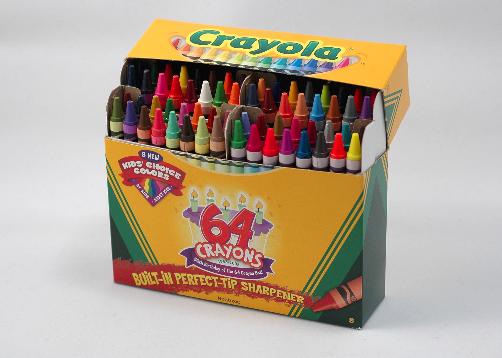
Ah but then, finally, after various transitional packages, I graduated to the wonder of the 64-pack, the one with the sharpener in the back:

482_hi.jpg

They were skinny and suitably pointy. But best of all was the variety of the beautiful colors. There was one called “flesh” that eased, without totally solving, the problem of filling in skin (the hue is still there, but renamed “peach” in 1962, for obvious politically correct reasons).

Some of these crayons—the least favored ones—seemed to last forever. But the most attractive and/or most useful got broken and worn down to nubs very quickly. It was a sad day when a favorite got so small it could no longer be sharpened.

Of the ones I loved (and “loved” is really the correct word), the top of the heap were the deep rich tones of “Burnt Sienna” and “Prussian Blue.” The latter has, for some inexplicable reason, been renamed “Midnight Blue” (hard to believe it’s a reaction to storms of protest by storm troops of angry Prussians, but who knows?)

“Burnt Sienna” seems to have survived, as have the red-brown roofs of the town that gave it its name. But I hestitate to offer any attempt at showing you this or any other Crayola color online. All the sites I checked were every bit as inadequate as this one, which purports to offer the proper shades but is so far off as to be worse than useless.

It’s hard to overestimate the importance Crayolas had in the life of the child of the 50s. Looking back, I recall that we (at least we girls) colored almost incessantly—that is, when we weren’t busy with our other major concerns, which were: jacks, jumprope, card games (Canasta and War, primarily) and hopscotch, listed in no particular order. Television was a distant fifth, although good for the times when we couldn’t scare up partners for our usual pursuits, which tended to be done in groups.

One would think that coloring with Crayolas would be a mostly solitary activity. But if one would think that, one would be wrong. We crayoned in groups, too, in a sort of parallel play—or at least in pairs. We used the supposedly creativity-draining coloring books. We drew our own pictures freehand. We made paper dolls and then we designed fanciful clothes for them, and colored them all with our trusty Crayolas.

We often faced the knotty choices of the Crayola aficionado: press down hard and make the color dark and true, and risk fatigue of the hand and arm, not to mention boredom? Or take the easy way out, and use less force? And, if the latter, was it better to fill in the page completely or would a few strokes do, in a sort of impressionist (or perhaps expressionist?) minimalism?

[NOTE: I am sorry that I missed the 50th birthday of the 64-pack last April. Or perhaps it’s just as well, since the ever-moving-forward Crayola folks celebrated by issuing eight new colors with the following sappy and non-descriptive names, reflective of the sentiments (and failings, in my humble opinion) of the present generation: Super Happy, Fun in the Sun, Giving Tree, Bear Hug, Awesome, Happy Ever After, Famous, and Best Friends.

You may be pleased to note, however, that Crayola has addressed and more or less solved the knotty political problem of skin color. The following photo is not a joke, nor is it photoshopped:

bin008w.gif

It offers a nice sampler of eight shades suitable for coloring the peoples of the world: White, Apricot, Peach, Mahogany, Tan, Burnt Sienna, Sepia and Black.]

Posted in Me, myself, and I, Painting, sculpture, photography, Pop culture | 26 Replies

Obamaphiles: it’s only love, and that is all

The New Neo Posted on January 23, 2009 by neoJanuary 23, 2009

Here’s a rapturous account of Obama’s inauguration from ex-uber-editor Tina Brown (hat tip: Ann Althouse.)

Remember, as you read it, that the author was once at the helm of Vanity Fair and The New Yorker, among other credits.

Brown’s fulsome prose is an excellent example of what I’ve been thinkng for quite some time, and that is this: if what we’ve seen in Bush Derangement Syndrome is hatred (and I believe it is), then what we are seeing among Obamaphiles is love.

I don’t mean that metaphorically; I mean it literally. Case in point, the besotted Brown:

…all day [Obama] was surrounded with astonishing poetic symbolism…[such as] the helicopter bearing away the ills of his predecessor in democracy’s spell-breaking moment of regenerative wizardry…[He is] the first president who has seemed to be in charge from the day he was elected, not, like other presidents from the day he was sworn in. The rest of the world, of course, elected him a year ago and have just been waiting to see their longing ratified…

[O]ur relief exploded yesterday into national outpourings of relief…

I was struck by how much less casual Obama looks behind the big, world beating smile. He exudes purpose and authority now. I told him my husband still has the contract he signed as president of Random House when their imprint Times Books acquired Dreams from My Father. “Worth something now, huh?” he told me, as he draped a long arm to gather me in between himself and his even taller vice president and easefully lit up for the camera. I felt safer and calmer than I have for eight years.

Love is not rational. The lover does not think he/she is idealizing the loved object. Instead, the perception is that the beloved represents a sort of objective perfection. Love’s bubble can burst, of course, when reality meets illusion. But usually it takes a fairly harsh dose of it before the love object is seen with clear eyes.

Why does Obama inspire love, rather than mere admiration? Some of the Obamalove is engendered by his youth, his good looks, his deep voice, and his coolness (in that piece I wrote, “choosing a President is now mostly about style rather than substance,” and that would be a good description of Ms. Brown’s career as well). But I submit that those who suffered most from hatred (rather than mere dislike) of Bush are the same people who are now in love with Barack Obama.

This is not a coincidence. For every action there is an equal and opposite reaction, and that’s a goodly part of what gives the love for Obama its full force.

Bush was hated for many reasons, among them his Texas style, his supposed frat-boy personality, and his alleged lack of intelligence. Obama is seen as the corrective to these things, his exact opposite. But I have come to believe that a very substantial part of the motivation for the depth of the hatred for Bush is that he forced the American people to confront the reality of terrorism, the rot in the fundamentalist Muslim world, and the need to combat it at times with violence.

These things are so markedly un-PC, so dreadfully distasteful, that they must be negated by the intelligentsia of the Left. Bush himself becomes the repository of evil rather than our enemies. Now that he’s gone, the whole thing can be regarded as a bad dream that has miraculously melted away. And ironically, it helps a lot that Bush’s war on terror has been markedly successful, which allows his haters to convince themselves that it was unnecessary.

In Tina Brown’s essay on Obama, she uses a word that struck me initially as very odd. I have highlighted it in bold in the following excerpt:

This was 9/11 in reverse. The last time I turned round and saw so many people behind me, it was that terrible day in New York when the twin towers burned and we poured out of our offices downtown and swarmed up Fifth Avenue. Then the faces were distraught. Now they were joyful. Then America had been assaulted by terror. Now it had been renewed by hope.

Ms. Brown is making the observation that the demeanor and emotional tenor of the two crowds are in contrast. Well, of course; why even bother to mention that? One was a group of people witness to a terrifying surprise attack in which thousands died; the other is watching a planned celebratory and ceremonial event.

If Brown had written “This was very different from 9/11″—indisputably true, but so what?—that statement would not have caught my attention. But the “reverse?” Did the three thousand dead spring to life? Did the planes fly out of the buildings, miraculously made whole, fires quenched? Have we returned to the innocent unawareness of 9/10?

For Brown, that return is a consummation devoutly to be wished. But Brown herself is not all that important, despite her status as a former star in the world of print journalism. The significance of her piece is that she has succinctly expressed what is behind much of the love for Obama: the depth of the need to undo 9/11 and its consequences, and to counter eight long years under the yoke of the dread and hated Bush.

[Note: Dr. Sanity appears to agree—with me, that is, not with Tina Brown. The doctor has written a wonderful post on the psychological phenomenon known as “undoing” (and although she wrote the following before the Tina Brown piece even appeared, it is nevertheless a perfect description of it):

[The intense feeling of Obama supporters] is not normal excitement or enthusiasm over an inauguration–even a very special or historic one. This is not even normal relief that now things are somehow going to be different. This is emotional excess that disguises a severe, disabling anxiety; an anxiety that has been tenously held in check by the psychological denial that came before. It is as if the bizarre national depression the media have been hyping for the last eight years suddenly flipped into a full-blown mania–with all the euphoria, grandiose ideas and plans, delusions of grandeur, wildly impulsive spending, irritability and inappropriateness one sees in an acute manic episode….

They will even go so far as to erase any evidence of events that have transpired since the beginning of the millennium when Bush took office and including 9/11–especially 9/11–so as to pretend they never happened.

They will simply ‘undo’ the last 8 years; rewrite the history and take us across the bridge back to the 20th century.]

Posted in Getting philosophical: life, love, the universe, Obama | 80 Replies

Another sign that our civilization has taken a very wrong turn

The New Neo Posted on January 23, 2009 by neoJanuary 23, 2009

Wigs for dogs.

pinkwig1.jpg

Posted in Pop culture | 15 Replies

Obama and the detainees: reversing Bush?

The New Neo Posted on January 22, 2009 by neoJanuary 22, 2009

Barack Obama has wasted no time reversing some of President Bush’s most controversial policies concerning the interrogation, imprisonment, and trials of foreign terrorist detainees.

Or has he? If you read the linked article carefully, you’ll see that the thrust of many of Obama’s actions so far has been to halt things in order to study them for a while, and with the plan to make more permanent decisions later.

Yes, coercive techniques such as waterboarding have been prohibited, and Guantanamo is supposed to close in a year. The CIA’s network of alternate detention facilities can no longer hold prisoners long-term. But:

…[Obama’s] orders leave unresolved complex questions surrounding the closing of the Guanté¡namo prison, including whether, where and how many of the detainees are to be prosecuted. They could also allow Mr. Obama to reinstate the C.I.A.’s detention and interrogation operations in the future, by presidential order, as some have argued would be appropriate if Osama bin Laden or another top-level leader of Al Qaeda were captured…

The decision to stop the commissions was described by the military prosecutors as a pause in the war-crimes system “to permit the newly inaugurated president and his administration time to review the military commission process generally and the cases currently pending before the military commissions, specifically.”

I’ve written extensively on many of the legal issues involved in the detainment and treatment of terrorists (see this, this, this, and this, for example). My main concern with Obama and the approach I think he will take is that he sees dealing with captured terrorists as a task for our regular criminal justice system. But that system was never designed to deal with terrorists, and there is a perfectly good—and far more appropriate—legal system in place for that: military law.

The fine tunings of how military law ought to apply in each case can be argued. But the full protection of the laws designed to protect our own civilian citizens, and most especially the very open rules concerning discovery (what the defense is allowed to know in a criminal case), are destructive and dangerous when applied to terrorists. It remains to be seen just how far Obama will go in the direction of allowing terrorists access to those rules and those protections.

Posted in Law, Obama, Terrorism and terrorists | 57 Replies

What Michelle Obama should have worn: channeling Jackie?

The New Neo Posted on January 22, 2009 by neoJanuary 23, 2009

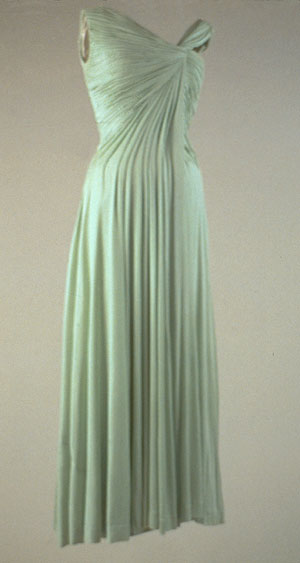
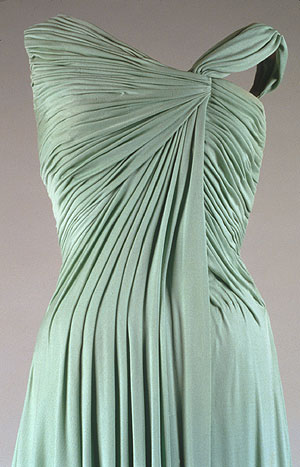
Not to belabor the point (oh, maybe just a little), but this is what Michelle Obama should have worn to the Inaugural Ball. Although a different color might have been in order, the cut and drape would have been just perfect:

16l.jpg

16al.jpg

The dress has the added attraction of being historical: designed by Oleg Cassini, it was worn by Jacqueline Kennedy in 1962 at a White House dinner honoring Nobel Prize Laureates of the Western Hemisphere.

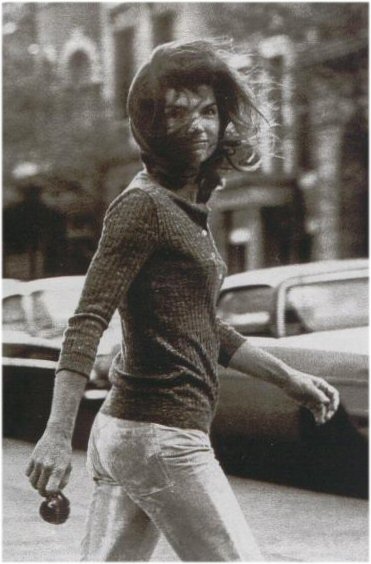
While looking for that dress, I noticed that all of Jackie’s clothes on display at the Met exhibit were beautiful. What taste that woman possessed (not to mention the money to indulge it)! And she had the model’s figure to go with them, both in the rarely-seen casual moment:

onassis_jackie2.jpg

And on the formal state occasion (note her posture in the following photo, as well):

jackie_kennedy-210é—315.jpg

I’m not saying Michelle Obama needs to be Jackie Kennedy. She most assuredly does not (and for starters, remember that Jackie was only thirty-one years old when her husband was inaugurated). But during Obama’s campaign, Michelle showed a tendency to follow in Jackie’s footsteps in terms of style of dress, and it really suited (pun intended) her. Perhaps now she’s searching for her own fashion identity—but if so, she’s looking for it in all the wrong places.

Posted in Fashion and beauty | 11 Replies

Post navigation

← Previous Post
Next Post→

Your support is appreciated through a one-time or monthly Paypal donation

Please click the link recommended books and search bar for Amazon purchases through neo. I receive a commission from all such purchases.

Archives

Recent Comments

  • neo on The AfD does very well in the recent German elections in Saxony-Anhalt
  • neo on The AfD does very well in the recent German elections in Saxony-Anhalt
  • BJ on Happy Labor Day
  • BJ on The Clancy jury apparently will end in a mistrial
  • Charles R Harris on The AfD does very well in the recent German elections in Saxony-Anhalt

Recent Posts

  • The AfD does very well in the recent German elections in Saxony-Anhalt
  • Happy Labor Day
  • Open thread 9/7/2026
  • A restrained AI spam comment
  • A lost skill

Categories

  • A mind is a difficult thing to change: my change story (17)
  • Academia (328)
  • Afghanistan (98)
  • Amazon orders (6)
  • Arts (8)
  • Baseball and sports (164)
  • Best of neo-neocon (91)
  • Biden (536)
  • Blogging and bloggers (595)
  • Dance (292)
  • Disaster (244)
  • Education (323)
  • Election 2012 (360)
  • Election 2016 (566)
  • Election 2018 (33)
  • Election 2020 (513)
  • Election 2022 (114)
  • Election 2024 (403)
  • Election 2026 (93)
  • Election 2028 (13)
  • Evil (129)
  • Fashion and beauty (324)
  • Finance and economics (1,042)
  • Food (317)
  • Friendship (48)
  • Gardening (18)
  • General information about neo (4)
  • Getting philosophical: life, love, the universe (734)
  • Health (1,161)
  • Health care reform (545)
  • Hillary Clinton (184)
  • Historical figures (337)
  • History (716)
  • Immigration (448)
  • Iran (464)
  • Iraq (227)
  • IRS scandal (71)
  • Israel/Palestine (821)
  • Jews (437)
  • Language and grammar (365)
  • Latin America (212)
  • Law (2,975)
  • Leaving the circle: political apostasy (124)
  • Liberals and conservatives; left and right (1,321)
  • Liberty (1,117)
  • Literary leftists (14)
  • Literature and writing (394)
  • Me, myself, and I (1,498)
  • Men and women; marriage and divorce and sex (929)
  • Middle East (384)
  • Military (324)
  • Movies (353)
  • Music (533)
  • Nature (261)
  • Neocons (32)
  • New England (183)
  • Obama (1,738)
  • Pacifism (16)
  • Painting, sculpture, photography (131)
  • Palin (93)
  • Paris and France2 trial (25)
  • People of interest (1,043)
  • Poetry (258)
  • Political changers (178)
  • Politics (2,793)
  • Pop culture (397)
  • Press (1,635)
  • Race and racism (882)
  • Religion (428)
  • Romney (164)
  • Ryan (16)
  • Science (641)
  • Terrorism and terrorists (971)
  • Theater and TV (266)
  • Therapy (71)
  • Trump (1,630)
  • Uncategorized (4,555)
  • Vietnam (109)
  • Violence (1,445)
  • War and Peace (1,027)

Blogroll

Ace (bold)
AmericanDigest (writer’s digest)
AmericanThinker (thought full)
Anchoress (first things first)
AnnAlthouse (more than law)
AugeanStables (historian’s task)
BelmontClub (deep thoughts)
Betsy’sPage (teach)
Bookworm (writingReader)
ChicagoBoyz (boyz will be)
DanielInVenezuela (liberty)
Dr.Helen (rights of man)
Dr.Sanity (shrink archives)
DreamsToLightening (Asher)
EdDriscoll (market liberal)
Fausta’sBlog (opinionated)
GayPatriot (self-explanatory)
HadEnoughTherapy? (yep)
HotAir (a roomful)
InstaPundit (the hub)
JawaReport (the doctor’s Rusty)
LegalInsurrection (law prof)
Maggie’sFarm (togetherness)
MelaniePhillips (formidable)
MerylYourish (centrist)
MichaelTotten (globetrotter)
MichaelYon (War Zones)
Michelle Malkin (clarion pen)
MichelleObama’sMirror (reflect)
NoPasaran! (bluntFrench)
NormanGeras (archives)
OneCosmos (Gagdad Bob)
Pamela Geller (Atlas Shrugs)
PJMedia (comprehensive)
PointOfNoReturn (exodus)
Powerline (foursight)
QandO (neolibertarian)
RedState (conservative)
RogerL.Simon (PJ guy)
SisterToldjah (she said)
Sisu (commentary plus cats)
Spengler (Goldman)
VictorDavisHanson (prof)
Vodkapundit (drinker-thinker)
Volokh (lawblog)
Zombie (alive)

Meta

  • Log in
  • Entries feed
  • Comments feed
  • WordPress.org
©2026 - The New Neo - Weaver Xtreme Theme Email
Web Analytics
↑