↓
 

The New Neo

A blog about political change, among other things

  • Home
  • Bio
  • Email
Home » Page 1717 << 1 2 … 1,715 1,716 1,717 1,718 1,719 … 1,917 1,918 >>

Post navigation

← Previous Post
Next Post→

Too much regulation or too little? Maybe it’s the wrong question

The New Neo Posted on March 14, 2009 by neoMarch 14, 2009

There’s a lengthy and heated argument going on today about what caused the recession. Not surprisingly, people are inclined to see what fits in with their worldview.

Conservatives and libertarians tend to be on the “it’s the fault of too much regulation” side of the question. Liberals tend to be on the “it’s the fault of too little regulation” side.

Who cares? Well, the blame game is always fun. But the more important reason we should try to understand what happened is that, in trying to design solutions, it helps to know how we got here.

The solution, according to most conservatives? Less regulation. The solution, according to liberals? That’s easy: more, and throw in a lot more government intervention as a whole—why not?

As for me, I’m inclined to believe that in general “less is more,” because of the incomplete state of our knowledge of complex processes. In other words, “first, do no harm.”

I’m not an economist, as I never tire of claiming. But it seems to me that, historically speaking, totally unregulated capitalism is not desirable. The best and clearest example I can think of is the need for child labor laws and other legislation to prevent blatant exploitation of workers.

But most issues are far more complex than that. In the present crisis, let’s take the example of over-leveraging. In 2004 there was a change in the SEC rules that allowed five investment firms to apply leverage ratios that were far more risky than in the past. You can probably guess who these firms were: Bear Stearns, Lehman Brothers, Merrill Lynch, Goldman Sachs, and Morgan Stanley.

Oh-oh.

So the liberals are right—right? Here’s a perfect example of deregulation—and maybe Bushian deregulation at that—that led us into this mess.

But, not so fast. Here’s the larger picture. It began (sacre bleu!) in Europe, of all places:

In 2004, the European Union passed a rule allowing the SEC’s European counterpart to manage the risk both of broker dealers and their investment banking holding companies. In response, the SEC instituted a similar, voluntary program for broker dealers with capital of at least $5 billion, enabling the agency to oversee both the broker dealers and the holding companies.

This alternative approach, which all five broker-dealers that qualified…voluntarily joined, altered the way the SEC measured their capital. Using computerized models, the SEC, under its new Consolidated Supervised Entities [CSE] program, allowed the broker dealers to increase their debt-to-net-capital ratios, sometimes, as in the case of Merrill Lynch, to as high as 40-to-1.

Not only did Europe lead the way, but this rule change was actually an attempt to increase regulation rather than to decrease it. Sound nuts? Well, let’s take a look [emphasis mine]:

[A]ll five of these major investment banks increased their debt-to-equity leverage ratios significantly in the period following their entry into the CSE program. That higher leverage, coupled with a high concentration of their assets in subprime mortgages and related real estate assets, left them exposed and vulnerable when market conditions soured in 2007-2008. For example, at the time of its insolvency, Bear Stearns’ gross leverage ratio had hit 33 to 1, and press reports placed Merrill Lynch’s debt/equity ratio at the time of its merger at 40 to 1.

But does the adoption of this relaxed net capital rule show that the SEC was “captured”? The problem with this simple hypothesis is that the SEC’s adoption of the CSE program in 2004 was not intended to be deregulatory. Rather, the program was intended to compensate for earlier deregulatory efforts by Congress that had left the SEC unable to monitor the overall financial position and risk management practices of the parent companies controlling these investment banks. Still, if the 2004 net capital rule changes were not intended to be deregulatory, they worked out that way in practice. The ironic bottom line is that the SEC unintentionally deregulated by introducing an alternative net capital rule that it could not effectively monitor.

So the new rule was an attempt to regulate more, not less, although it applied the wrong type of regulation. That’s a lot different than the cry of “more” or “less” regulation. But it doesn’t play as well on the news, does it?

My guess is that many of the policies being discussed as causes (or solutions) for the current recession feature similar ironies and/or complex interplays of regulation and deregulation (I may write on others at some future date). But the most dramatic force of all operating here may well be the law of unintended consequences: actions that lead to unplanned results that most people were unable to predict.

The most vital question is: how can we get smarter about all of this? And even if we were to do so, could we ever trust Congress and the SEC to apply that knowledge to benefit of us all?

Posted in Finance and economics | 53 Replies

In my continuing quest to find…

The New Neo Posted on March 14, 2009 by neoMarch 14, 2009

…a way to make us all forget our drab and wretched post-recession lives, I hereby offer some fashion resonances.

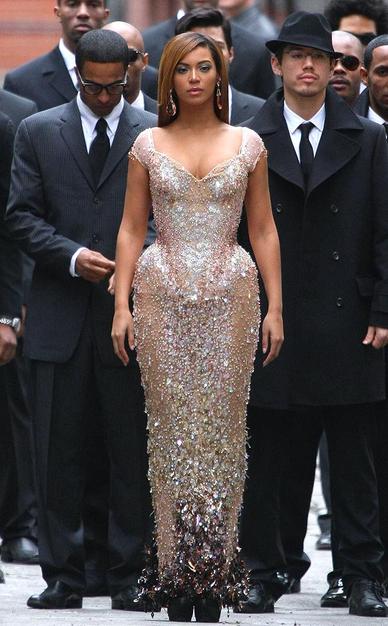
People have been stunned by this puzzling look sported by Beyonce:

beyoncehips.jpg

Parisian designer Thierry Mugler has managed to do to Beyonce what most women would kill him for: make her hips look a lot bigger. Thanks, Thierry, for nothing.

The padded hips are said to be an homage to styles popular in the Elizabethan era:

elizabethan.jpg

I beg to differ. The Elizabethan style has an enormously full skirt that, although padded and puffed in the general area of the hips, has no relation whatsoever to the real lower body underneath. The upper torso, on the other hand, is corseted to resemble a smooth and breastless cylinder.

This was the favored body shape. And since it virtually never existed in nature, the 16th-century equivalent of Thierry Mugler had to invent it. There were no curves whatsoever on top, unlike the outfit Beyonce is sporting.

Beyonce’s dress is actually a throwback to a different—and much more recent—era. Feast your eyes on Isabella Stewart Gardner of New York and then Boston, as painted by John Singer Sargent in 1888:

isabella_stewart_gardner.jpg

This painting was considered rather risque in the staid old Beantown of the times:

When the painting was shown at the St. Botolph Club, Boston, it caused a bit of a stir. The décolletage and the flattering curves of her dress made her husband request that the painting never be exhibited in public again during his lifetime. Mrs. Jack honored his wishes and even refused repeated requests by Sargent to show it in other exhibitions until after her own death, but she clearly loved the painting.

Let us all note, with bowed heads, the stunning difference between what was considered daring then and now.

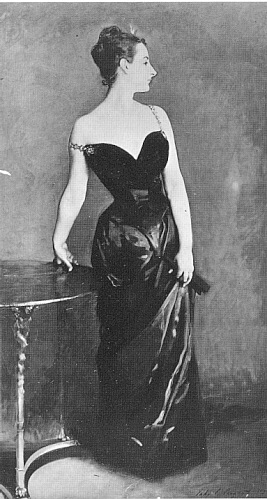
And speaking of daring—and of Sargent—we have another somewhat-Beyoncelike dress in his portrait of Madame X, a painting considered even more scandalous in the Paris of its 1884 day than Mrs. Gardner’s image was in Boston:

sargent_madame_xl.jpg

The big deal was this:

[I]t became instantly a salacious painting and a scandal in French society as a result of its sexual suggestiveness of her pose and the pale pasty color of her skin.

Once again, we can only sigh at how much the times they have a-changed.

But lest you think the French of the 1880’s utterly and unredeemably Puritanical (not likely), let me add that the original painting as shown was somewhat different and more suggestive than the one you see above. There was a little teaser in the first version that was later painted over for propriety’s sake. Here’s the original:

strappyx.JPG

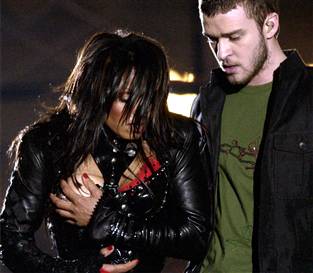
No doubt Janet Jackson took note back in 2004:

jacksonmalfunction.jpg

Posted in Fashion and beauty, Painting, sculpture, photography | 12 Replies

Healing time: pay attention to your surgeon—but not too much

The New Neo Posted on March 13, 2009 by neoJune 28, 2010

Recently I was talking to a friend who’d had shoulder surgery six months ago. When I asked her how she was doing she replied, “Oh, generally okay, I guess,” without a whole lot of her usual enthusiasm.

Turned out she had just been to her doctor for her six-month followup, and he had pronounced her shoulder to be as good as it was ever going to get. Since she still has a fair amount of pain and limitation—although certainly nowhere near as much as she had pre-surgery—this made her rather gloomy. She’d hoped for a better outcome.

I can’t tell you how many times I’ve heard this story. I’ve experienced it myself, with various injuries and orthopedic surgeries. It’s happened to friends. It used to happen to people I knew online some years ago in a support group I joined after I sustained an unusual arm injury.

It goes like this: the doctor, or the literature, says that after a certain surgery the patient will have completed all the healing he/she will ever experience by (fill in the blank) months afterwards. I’ve found, over and over, that very often it’s just not true. People can continue to improve for quite a bit longer, even for years in many instances.

In my own case, I had a complex nerve transposition surgery in my right elbow, after an injury that had given me chronic pain and disability for nine years. I’d engaged what seemed to be the best and most experienced surgeons to perform the operation. Before the surgery they told me upfront that it was a risky procedure and that I might even end up worse off than before. They told me that the normal healing time was six months to a year. They told me I should regain full range of motion a month or two after surgery.

They told me a lot of things. And even though they were kindly men and skilled surgeons as well, much of what they told me was just plain wrong.

Initially post-surgery I was very bad, with severe pain and restriction of movement. I was in constant fairly severe pain and unable to use that arm at all. The elbow was essentially frozen.

This stage lasted much longer than anyone had expected, and stumped a number of physical therapists, who proceeded to give up on me after haranguing me. This demoralizing situation continued for months until I found a more creative physical therapist who changed the program and gave me some different exercises from the ones all the others had been pushing, and within a day or two of beginning the new regime that elbow started moving.

After a year I was told this would probably be as much healing as I would ever experience. Oh, maybe there might be a miniscule bit more for the next six more months, but that would be it. I decided that at least the surgery hadn’t made me worse. It had been a gamble that hadn’t paid off, but the result wasn’t horrific, and I never regretted giving it a try.

But the healing continued. It was significant, and it went on for longer than six months.

After two years I felt I had experienced at least a 25% improvement, maybe even more. I’d take it.

After three years that percentage had increased to 50%. I was very happy about it.

And I’m not so sure my arm didn’t continue to improve for several years afterwards. At that point it was harder to tell, since the surgery had happened enough time earlier that I no longer remembered as many details of what it had felt like beforehand. Mercifully so, I might add; I never never never want to go there again, if I can possibly help it.

My experience may be a bit extreme. But from the evidence I’ve gained from talking to friends online and off, I’d say it’s rather typical of the general trend.

So this post is a sort of pep talk, in case you and/or someone you love have been discouraged by a doctor or physical therapist who’s told you that there’s a time limit to how long a person can improve, and that you’ve reached it. Don’t believe them.

Posted in Health | 46 Replies

Down with card check

The New Neo Posted on March 13, 2009 by neoMarch 13, 2009

One promise that Obama seems determined to make good on is card check.

Card check was one of the most pernicious policies he advocated during his campaign. I wrote about it back then, here.

Card check is so bad that even that hoary liberal George McGovern was incensed enough to speak out against it:

So I’m pleased to note that some Democrats in Congress are joining their Republican colleagues in bucking this particularly loathsome tide of union suckup that threatens to end the secret ballot and open the door to increasing union intimidation of employees.

If enough of members of Congress join this group, card check will not pass. In fact, if it’s clear beforehand that it is doomed to defeat, the leadership may even decide not to bring it up for a vote.

That’s a good news, bad news situation. The good news, of course, would be if card check were to die a decisive death. But the bad news is that the proposal and the fight against it has slipped beneath the awareness of most Americans.

Ask most of your friends if they’ve ever heard of card check and know what it is. My guess is that most will say “no.” And now, if the bill is defeated—and especially if it never comes to a vote—most people will never learn how close the Democratic Party and that wonderful guy, President Obama, came to signing away one of the most basic protections American employees have against union arm-twisting.

Posted in Liberty | 7 Replies

The Madoff confession: just aiming to please

The New Neo Posted on March 12, 2009 by neoMarch 12, 2009

Here’s a link to Madoff’s confession in full.

It’s a fascinating document, both for what it says and what it doesn’t say. Madoff is very careful to implicate only himself in the fraud. In his description of how it was done, he explains some of the many machinations he says he performed to hide and deceive, and to create the appearance of a bona fide operation, as well as to separate the Ponzi scheme from his more conventional (and legal) operations.

The only problem, of course, is that the man is a consummate liar.

But taking his confession at face value for the moment, one of its more interesting aspects is his allegation that he began the Ponzi scheme in order to please his clients during a period of declining investment returns in the recession of the early 90s. Madoff says that clients were expecting good earnings, and he didn’t want to disappoint them [emphasis mine]:

While I never promised a specific rate of return to any client, I felt compelled to satisfy my clients’ expectations, at any cost. I therefore claimed that I employed an investment strategy I had developed, called a “split strike conversion strategy,” to falsely give the appearance to clients that I had achieved the results I believed they expected.

So, the clients made him do it! Madoff casts himself as a people-pleaser, just giving the folks what they wanted.

And perhaps that is exactly the way he justified his criminal acts to himself. Talk about passing the buck!

Posted in Finance and economics, Law | 22 Replies

Madoff says he’s very very sorry

The New Neo Posted on March 12, 2009 by neoMarch 12, 2009

In breaking news, Bernard Madoff admits his crimes, and apologizes.

No, not this apology (starting at 00:40):

This one.

I’m watching on cable news, and the description of Madoff in court is that his affect was flat and bland as he read his words of contrition and frequently sipped water. This lack of emotion (except for the dry mouth, which could be a reflection of fear for himself rather than any real sense of shame) is entirely consistent with the sort of sociopathy I (and others) have speculated is part of Madoff’s character—although, paradoxically, sociopaths can appear remorseful in order to placate victims and the law, even when they are not.

Madoff doesn’t seem to be doing even that. What’s more, if he is so very contrite, and knew this day would come, and began the scheme in the 90s thinking it would be temporary (all of this was part of his confession), then why didn’t he stop and confess earlier, before more and more people and charities were drawn in?

Victims and others are quoted as saying they are certain Madoff had confederates in crime. And, although that is highly probable, I continue to maintain that to automatically assume it is impossible that Madoff acted alone is to underestimate the ability of a really smart con artist to pull off a con, especially when people trust him. If Madoff was able to con the SEC, I think it remains at least within the realm of possibility that he covered his tracks enough with the family members who worked in his office to fool even them. His blemish-free past certainly gave them reason to trust and respect not only his character but his business acumen (I have written elsewhere on how he might have accomplished cooking the books without their help—see the “Note” at the end of this post).

Whatever the Madoff family involvement, prosecutors and investigators will be on their own; Madoff’s plea was no bargain. There was no quid pro quo in exchange for lenience. Madoff appears to be remaining mum on what others may have done to help him.

What do we know about how the Madoff operation worked? There’s this:

…The money manager [of Madoff’s operation] told his employees to create false account documents and trade confirmations reflecting phony returns so as to transfer funds while giving the appearance of legitimate trades, and to generate false financial statements for regulators, prosecutors said. Those actions gave the appearance of a “legitimate investment advisory business,”…

The issue will be whether the government can establish that they knew what in the paper was in fact phony,” Christopher Steskal, a former federal prosecutor, said in a telephone interview. “If the facts show it, they will likely pursue those people. It seems improbable that he would do it alone.” …

His back-office staff had little or no experience and at Madoff’s direction misled clients about investments, prosecutors alleged in court papers.

“Certainly lower level employees are unlikely to be involved, but people with auditing function or authority to access accounts or make trades are more likely to have knowledge of the alleged fraud,” Steskal said.

Here’s more:

[Prosecuters] said [Madoff] hired people with little or no relevant experience in the investment business, directing them to create bogus documents such as client account statements and fake trade slips. No one else has been charged in the case.

Prosecutors said that to further the fraud, Madoff concocted phony balance sheets, income statements, cash flow documents and internal control reports. They said he then sent those documents to would-be clients and regulators at the U.S. Securities and Exchange Commission

One person I would wager is innocent is a former Madoff auditor with this sad story:

The Federal Bureau of Investigation recently interviewed a longtime auditor of the Madoff firm…Jerome Horowitz, [who] said that he saw no indication of fraud at the Madoff firm during his time as the auditor, from the early 1960s until his retirement in 1995, said a person familiar with the matter…

Mr. Horowitz, who is 80 years old and has terminal cancer, lost his life savings in the fraud, according to his lawyer. “Mr. Horowitz thinks this is a tragedy and feels horrible not only for his own family members, which are victims, but for all victims,” said his lawyer, Latour Lafferty. “He has cooperated fully with the FBI and wanted to explain his role in working for Mr. Madoff before he dies.”

As for the all-important “where is the money?” question, I was thinking about that (I doubt I’m not the only one). Although Madoff had probably stashed a lot of it somewhere, a great deal of it is probably gone, given to clients over the years.

No, this was not done through the goodness of Madoff’s heart. But since he was regularly paying clients earnings of about 10%, and this practice went on for many years, and there were no actual investments to grow the money much (Madoff alleged today that he put it in a back account at Chase), you figure it out.

For example, a person investing a million dollars with Madoff would get back $100,000 earnings a year on the investment. At least, he/she would think it was earnings; in actuality it wasn’t. In ten years at that sort of payment level, the principal would be gone. I’m not suggesting Madoff paid clients back from their own money, of course; it was from the pool of monies, but the point is still the same.

Unless there were a lot of people who got into the game recently and hadn’t had much time yet to receive their supposed earnings from Madoff, or unless there were a lot of people who rolled their earnings back into their principal invested with Madoff investments, the hefty payments to clients had to continue to keep the charade going. This would have substantially depleted the Madoff monies over the years.

To what extent? We haven’t a clue. But Madoff does.

Posted in Finance and economics, Law | 10 Replies

And now for a change of pace: Giselle through the ages

The New Neo Posted on March 11, 2009 by neoMarch 11, 2009

I find I need a bit of refreshment and rest from the nonstop gloom of the news. My idea of relaxation is to look at a few old ballet clips.

“Giselle” is one of those old-fashioned warhorses that people like to mock, the conventions of the ballet being both ancient (choreographed in 1841, it’s one of the oldest in existence) and sentimental. But to ballet lovers “Giselle” is the “Hamlet” of traditional ballet, rich with psychological depth, sorrow, betrayal, and redemption.

My first viewing of “Giselle” was as a tiny child, and I was bored nearly to tears. It was memorable, though, because it was one of the final performances of the British ballerina Alicia Markova, who had been a student of my British dance teacher in New York. And thus it was that my mother and I were allowed to go backstage to meet her and get an autograph. Markova, who was probably in her mid-40s at the time, looked tired and old and rather scary to me, since she was painfully thin and still in her garish stage makeup.

I’ve searched for a video of Markova dancing the role of Giselle in her prime. But alas, all I could find was the following, which shows her about as I saw her. She is performing Giselle’s famous variation from Act I, in which she happily dances for her new love, blissfully unaware of the tragedy that lies ahead. Note the very British restraint in Markova’s dancing; it is most definitely not my cup of tea:

Next is a rare clip of a fragment of the same variation danced by an even earlier ballerina, the Russian Olga Spessivtzeva, who performed from 1913 to 1939. She was one of the earliest exemplars of the modern type of line—long, lean, and elegant (the dancing doesn’t start till 00:27):

And here is my very favorite, Carla Fracci. I saw her dance this ballet in person many times during the 1960s and 1970s, as well as in the movie from which this clip comes. She never had the strongest technique. But it was fully adequate to her needs, which were to express all the charm and radiance of which a human being is capable:

Posted in Dance | 19 Replies

Camille Paglia learns…

The New Neo Posted on March 11, 2009 by neoMarch 11, 2009

…the price of criticizing Obama even a little bit (see the comments section at the link for a sample of what I’m talking about).

The venom she’s receiving from the Left for having the audacity to mention that things have not gone all that swimmingly in the Obama administration so far—plus her jaw-dropping defense of Rush Limbaugh—is nothing new. You’re either with them or against them—and, as a commenter writes, it’s another example of the Left eating their own.

Renegade Paglia has become quite a tasty morsel, it seems, especially since she mounted a defense of (gasp!) Sarah Palin way back when. The attacks on Paglia are especially ironic, since she still labors under the illusion (delusion?) that none of the errors, missteps, and awkwardness of the new administration are actually Obama’s fault. Defending him, Paglia writes:

…free the president from his flacks, fixers and goons—his posse of smirky smart alecks and provincial rubes…

President Obama—in whom I still have great hope and confidence—has been ill-served by his advisors and staff.

But did that staff spring into life, full-grown, from Zeus’ head? Hardly. In case Paglia hasn’t noticed, Obama is not only the person who chose the staff, but its key players are old and trusted advisers from his days in Chicago politics.

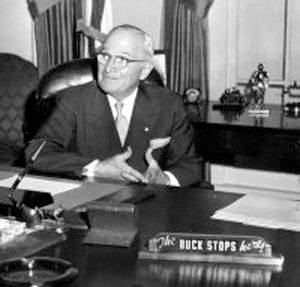
Camille, girlfriend, please take a look and remember what the Presidency is all about:

buckstops.jpg

[ADDENDUM: More Obama buck-passing.]

Posted in Obama | 57 Replies

Gee, I can’t imagine why any sane person would object to Charles Freeman’s appointment

The New Neo Posted on March 11, 2009 by neoMarch 11, 2009

I also can’t imagine why he would be accused of being anti-Jewish or anti-Israel. His parting words on withdrawing his name from consideration to chair the National Intelligence Council certainly give no indication of any bias on his part [emphasis mine]:

I do not believe the National Intelligence Council could function effectively while its chair was under constant attack by unscrupulous people with a passionate attachment to the views of a political faction in a foreign country….

The libels on me and their easily traceable email trails show conclusively that there is a powerful lobby determined to prevent any view other than its own from being aired, still less to factor in American understanding of trends and events in the Middle East. The tactics of the Israel Lobby plumb the depths of dishonor and indecency and include character assassination, selective misquotation, the willful distortion of the record, the fabrication of falsehoods, and an utter disregard for the truth. The aim of this Lobby is control of the policy process through the exercise of a veto over the appointment of people who dispute the wisdom of its views, the substitution of political correctness for analysis, and the exclusion of any and all options for decision by Americans and our government other than those that it favors.

There is a special irony in having been accused of improper regard for the opinions of foreign governments and societies by a group so clearly intent on enforcing adherence to the policies of a foreign government ”“ in this case, the government of Israel. I believe that the inability of the American public to discuss, or the government to consider, any option for US policies in the Middle East opposed by the ruling faction in Israeli politics has allowed that faction to adopt and sustain policies that ultimately threaten the existence of the state of Israel. It is not permitted for anyone in the United States to say so. This is not just a tragedy for Israelis and their neighbors in the Middle East; it is doing widening damage to the national security of the United States.

In other words, as Slublog (at Ace’s) says: “Shorter Chas: ‘It was the Joooooooos!'”

So, as Bret Stephens points out, what of those Chinese dissidents who objected so strenuously to Freeman’s appointment? Are they members of the far-reaching Israel lobby as well (“funny, you don’t look Jewish…)? And what about Freeman’s history of being a paid representative for the Saudis?

Not to mention 9/11—which is also the fault of the Jewish lobby, according to Freeman:

“We have paid heavily and often in treasure in the past for our unflinching support and unstinting subsidies of Israel’s approach to managing its relations with the Arabs,” [Freeman] said in 2006. “Five years ago we began to pay with the blood of our citizens here at home.”

I can’t say I see that Freeman is currently being silenced much by those nefarious Jews—he seems rather talkative to me. But I suppose that Jews—unlike every other group in America—have no right to voice an opinion about the appointment to a position of power in this administration of a person they see as biased against them.

Note, also, Mark Steyn’s piece on how the entire Freeman controversy has fallen under the radar screen of the MSM until now. Could it possibly be because it reflects badly on this current administration?

No, of course not. Even if it turns out that Freeman was never even vetted (or maybe especially if it turns out that Freeman was never even vetted).

Posted in Israel/Palestine, Jews, Obama | 13 Replies

Lifting the stem-cell research “ban”

The New Neo Posted on March 10, 2009 by neoMarch 10, 2009

Google “did bush ban stem cell research?” and you get this gaggle of articles. Some of the titles announce that Obama has ended Bush’s stem cell research ban, while others refer to Bush’s policy as a funding ban.

What a difference a word makes! The second set of articles more closely approximates the truth. But to be even more correct you would have to add “federal government” to “funding ban,” and change the word “ban” to “restriction,” as well as adding “embryonic” to modify “stem cell.” Bush never banned stem cell research nor even government funding for all of it; he did limit government funding to lines that had been developed prior to August 9, 2001, and he never had any problem funding adult stem cell research.

Many people have applauded Obama’s actions. But to agree with Obama’s new policy is it really necessary to distort history? Although it is indeed likely that the Obama directive reversing the Bush position will open up more opportunities for research with stem cells, it’s not as though under Bush things were not progressing, through the use of adult stem cells and other creative solutions (see this and this for two examples). But to acknowledge that would be to acknowledge that Bush wasn’t really against science, just a particular form of science that he considered unethical.

Obama has released a so-called “fact sheet” in tandem with his new executive order on stem cell research funding. In it he writes:

The previous Administration allowed the National Institutes of Health to fund human embryonic stem cell research on cell lines created before an arbitrary date, August 9, 2001, but prohibited research on cell lines created after that date. The Executive Order signed by President Obama today lifts this restriction, which has no basis in science and was not required by any law.

There it is again [emphasis mine]: “prohibited research on cell lines created after that date.” No, it did not; it just withdrew federal funding. And of course the Bush restriction had “no basis in science;” that’s a straw man argument. Bush never alleged it to have such a basis.

It was a decision about the ethics of science, and the way in which ethics and science interface. You may or may not agree with Bush’s decision; Obama clearly does not. But to pretend otherwise is to be disingenuous.

Posted in Obama, Science | 39 Replies

This Czech…

The New Neo Posted on March 10, 2009 by neoMarch 10, 2009

…has been there. And he’s telling Obama he doesn’t want to go there again.

Posted in Uncategorized | 6 Replies

The uncharismatic Bayh isn’t buying

The New Neo Posted on March 10, 2009 by neoMarch 10, 2009

I was watching Fox News last night and saw Greta Van Susteren interview Evan Bayh.

Long considered one of the Senate’s more moderate Democrats, Bayh announced back in December of 2008, shortly after Obama’s election, that he planned to form a coalition of other Democrat moderates in the Senate that would somewhat resemble the House’s Blue Dog coalition. In the Susteren interview last night, Bayh said he will vote against the current budget bill because this is neither the time nor the place to pass it with so many earmarks (bipartisan ones, by the way; some of them are pet Republican projects).

No one is quite clear on whether any of this will matter, because the bill may have plenty of votes without Bayh and his group. But he and Senator Feingold have urged Obama to veto the bill it if it passes.

This will not happen; of that much I’m certain. Obama has already said he intends to sign it, and launched his administration’s gobbledygook explanation that it all doesn’t signify much—pay no attention to the man behind the curtain, there are no broken promises about earmarks—because, after all, it’s “last year’s business.” Whaaa?

Perhaps the most interesting part of the Bayh interview was his comment that he believes one of the main reasons he has the perspective he does is that he was a governor before becoming a senator, and had to balance a budget. That’s certainly not the only explanation—I would imagine, for example, he’s hearing from his constituents that they don’t like the bill. Also he may really be enjoying the spotlight. But still, I think he’s onto something.

One of the major criticisms of Obama is that he has virtually no executive experience. Obama’s resume is especially thin in this regard. But a great many senators (John McCain was one) are lacking in that area.

I started to look up the resumes of every single Senator, but I got very weary and stopped at number twenty (alphabetical order). Among those twenty, however, there were only three who had been governors. Among the rest there was a smattering of businesspeople and a couple of Attorneys General. But the road to the Senate seems to pass overwhelmingly through the House.

Legislators tend to be career legislators, with previous political experience mostly in the legislature at a lower level (state and/or House) before they become senators. This was certainly true of Obama, who had also barely kept his Senate seat warm before he vacated it to run for President.

You think it doesn’t matter? Generally, it does. But charisma trumps experience nearly every time. Poor Evan Bayh could hardly scare up any support when he ran for president in 2008. In December of 2006 he dropped out of the race, just a little while after he entered it:

[I]t became crystal-clear to Sen. Bayh in New Hampshire last weekend that his candidacy lacks the requisite buzz. While Obama attracted thousands of purring supporters and dominated national headlines, Bayh couldn’t fill a room, and elicited little mention in the press.

A former Governor of Indiana, the soft-spoken Bayh is serving his second term in the U.S.Senate, where he’s earned a low-key profile as a fiscal conservative and a social moderate.

I suspect that Bayh would have made a better president than Obama. Heck, he even supported the Iraq War—a fact that worked against him as a candidate for the Democratic nomination, campaigning as he did at the end of 2006. But Bayh just didn’t—and doesn’t—have that certain something, that spark, that pizazz, the thing that made Chris Matthews’ leg tingle when Obama entered the room. And you know how much we all need pizazz and tingle in our leaders.

I’m being sarcastic here. But in a way I’m not. Because it’s an undeniable and bipartisan truth that that undefinable thing called charisma seems to be important for winning a presidential election.

It’s not that candidates can’t ever win without it—Richard Nixon, for example, was an anomaly since he was remarkably lacking in that quality, as well as several others (although he did have experience; if it weren’t for his paranoia and ethical flaws—big “ifs,” to be sure—he might even have made a fairly good president).

But pizazz usually counts for a great deal in the minds of the electorate. In the case of Obama, it counted for even more.

[ADDENDUM: Why, now it seems as though those moderate Democrats are giving Obama some trouble on card check, one of the worst proposals of the entire Obama administration so far.

Good.]

Posted in Politics | 9 Replies

Post navigation

← Previous Post
Next Post→

Your support is appreciated through a one-time or monthly Paypal donation

Please click the link recommended books and search bar for Amazon purchases through neo. I receive a commission from all such purchases.

Archives

Recent Comments

  • BJ on Happy Labor Day
  • BJ on The Clancy jury apparently will end in a mistrial
  • Charles R Harris on The AfD does very well in the recent German elections in Saxony-Anhalt
  • Charles R Harris on The AfD does very well in the recent German elections in Saxony-Anhalt
  • om on The AfD does very well in the recent German elections in Saxony-Anhalt

Recent Posts

  • The AfD does very well in the recent German elections in Saxony-Anhalt
  • Happy Labor Day
  • Open thread 9/7/2026
  • A restrained AI spam comment
  • A lost skill

Categories

  • A mind is a difficult thing to change: my change story (17)
  • Academia (328)
  • Afghanistan (98)
  • Amazon orders (6)
  • Arts (8)
  • Baseball and sports (164)
  • Best of neo-neocon (91)
  • Biden (536)
  • Blogging and bloggers (595)
  • Dance (292)
  • Disaster (244)
  • Education (323)
  • Election 2012 (360)
  • Election 2016 (566)
  • Election 2018 (33)
  • Election 2020 (513)
  • Election 2022 (114)
  • Election 2024 (403)
  • Election 2026 (93)
  • Election 2028 (13)
  • Evil (129)
  • Fashion and beauty (324)
  • Finance and economics (1,042)
  • Food (317)
  • Friendship (48)
  • Gardening (18)
  • General information about neo (4)
  • Getting philosophical: life, love, the universe (734)
  • Health (1,161)
  • Health care reform (545)
  • Hillary Clinton (184)
  • Historical figures (337)
  • History (716)
  • Immigration (448)
  • Iran (464)
  • Iraq (227)
  • IRS scandal (71)
  • Israel/Palestine (821)
  • Jews (437)
  • Language and grammar (365)
  • Latin America (212)
  • Law (2,975)
  • Leaving the circle: political apostasy (124)
  • Liberals and conservatives; left and right (1,321)
  • Liberty (1,117)
  • Literary leftists (14)
  • Literature and writing (394)
  • Me, myself, and I (1,498)
  • Men and women; marriage and divorce and sex (929)
  • Middle East (384)
  • Military (324)
  • Movies (353)
  • Music (533)
  • Nature (261)
  • Neocons (32)
  • New England (183)
  • Obama (1,738)
  • Pacifism (16)
  • Painting, sculpture, photography (131)
  • Palin (93)
  • Paris and France2 trial (25)
  • People of interest (1,043)
  • Poetry (258)
  • Political changers (178)
  • Politics (2,793)
  • Pop culture (397)
  • Press (1,635)
  • Race and racism (882)
  • Religion (428)
  • Romney (164)
  • Ryan (16)
  • Science (641)
  • Terrorism and terrorists (971)
  • Theater and TV (266)
  • Therapy (71)
  • Trump (1,630)
  • Uncategorized (4,555)
  • Vietnam (109)
  • Violence (1,445)
  • War and Peace (1,027)

Blogroll

Ace (bold)
AmericanDigest (writer’s digest)
AmericanThinker (thought full)
Anchoress (first things first)
AnnAlthouse (more than law)
AugeanStables (historian’s task)
BelmontClub (deep thoughts)
Betsy’sPage (teach)
Bookworm (writingReader)
ChicagoBoyz (boyz will be)
DanielInVenezuela (liberty)
Dr.Helen (rights of man)
Dr.Sanity (shrink archives)
DreamsToLightening (Asher)
EdDriscoll (market liberal)
Fausta’sBlog (opinionated)
GayPatriot (self-explanatory)
HadEnoughTherapy? (yep)
HotAir (a roomful)
InstaPundit (the hub)
JawaReport (the doctor’s Rusty)
LegalInsurrection (law prof)
Maggie’sFarm (togetherness)
MelaniePhillips (formidable)
MerylYourish (centrist)
MichaelTotten (globetrotter)
MichaelYon (War Zones)
Michelle Malkin (clarion pen)
MichelleObama’sMirror (reflect)
NoPasaran! (bluntFrench)
NormanGeras (archives)
OneCosmos (Gagdad Bob)
Pamela Geller (Atlas Shrugs)
PJMedia (comprehensive)
PointOfNoReturn (exodus)
Powerline (foursight)
QandO (neolibertarian)
RedState (conservative)
RogerL.Simon (PJ guy)
SisterToldjah (she said)
Sisu (commentary plus cats)
Spengler (Goldman)
VictorDavisHanson (prof)
Vodkapundit (drinker-thinker)
Volokh (lawblog)
Zombie (alive)

Meta

  • Log in
  • Entries feed
  • Comments feed
  • WordPress.org
©2026 - The New Neo - Weaver Xtreme Theme Email
Web Analytics
↑