
As might be expected, the Squeegee Men starting to come back. As is a new variety of panhandler/extortionist, the Sunday Hijacker.
Hillary Clinton: throwing Obama under the bus
Hillary Clinton’s interview with Jeffrey Goldberg features so much criticism of Obama’s foreign policy that the editors of the Weekly Standard have decided to feature lengthy quotes of Hillary’s in an editorial of theirs which is signed, “Hillary Rodham Clinton, for the editors.”
A person could be forgiven for thinking that Clinton was Obama’s opponent during his first term, rather than the most prominent instrument of that foreign policy.
Curious, isn’t it? It would be nice to get Clinton to answer this question: if his policy was so bad, why didn’t you resign earlier with a public statement of how you disagreed and why, when it might have made a difference? How do you explain the depth of your own betrayal and hypocrisy?
Hillary being Hillary, she’d have various lines of spin with which to answer. “Obama’s policies only got really bad after I left.” “I did protest and differ; just more privately” (which she more or less says in the Goldberg interview).
The truth is probably more like this: “I found it expedient to play along with Obama while his reputation was riding high, and now that it’s not—and I want to be his successor—I find the better part of valor is to differentiate myself from him and pretend I had little to do with it. And I trust voters will buy it, because they have the attention span and reasoning power of fleas.”
Actually, I think it most likely true that Hillary did disagree with Obama’s policy in several respects. That makes it even more despicably hypocritical that she played along with it as his eager handmaiden.
Robin Williams, RIP
When I first heard the news of Robin Williams’ death I thought it shocking because he was “only” 63. When just a moment later it came out that he probably had killed himself, that was even more shocking.
But then, right after that, I realized that although it was shocking it wasn’t so very surprising. It had been clear for a long, long time that Williams’ genius came hand in hand with some pretty formidable demons.
Williams was an overwhelming comic talent and huge personality, but I never really participated in all the Williams veneration. I somehow missed “Mork and Mindy,” and although I liked some of his movies they weren’t my favorites. The one I liked best was “The Fisher King,” which I don’t see featured all that prominently in the obituaries and tributes.
Speaking of tributes, late last night when I finally got to a TV I was surprised that cable news seemed to be devoting hour after hour to Williams’ death, as though he’d been Lincoln or Churchill or some other major historic figure. I think that might have surprised him, had he known. It certainly surprised me; after all, it’s not as though these are slow news days. But people did love Williams, who (in the old cliché) made them laugh and made them cry, and was also a generous man who donated his time to many charities.
Reports are that Williams had suffered from “severe depression of late.” Severe depression is a different animal from ordinary run-of-the-mill depression, which is bad enough. Severe depression can make a person who is successful, adulated, rich, famous, and possessed of a loving family take his/her own life in a moment of terrible but hard-to-resist impulse because he/she sees no hope of respite.
We may never know what really happened with Williams. But it is tragic. Suicides, whether famous or not, leave behind a legacy of pain for their families and friends. Williams was a man who seems to have wanted to bring joy to people instead, and mostly that’s just what he did.
RIP.
What took the coal miners so long?
The coal miners have finally turned on Obama
That’s not the mystery. The mystery is why they ever supported him in the first place. He kept many things a secret during his 2008 campaign, but his plan to bankrupt the coal industry was not one of them.
Did he hypnotize them? And who finally brought them out of their trance?
The unions are behind it, of course, but why did they support Obama in the first place? I know that unions are reflexive, automatic Democrats, but surely if a candidate threatens to destroy your own industry it might give you pause about supporting him?
ISIS and “understanding” evil
ISIS is the very personification of evil. But:
“We don’t understand real evil, organized evil very well,” said America’s former ambassador to Iraq and Afghanistan, Ryan Crocker, in an interview with The New York Times. “This is evil incarnate.”
“People like [Islamic State commander] Abu Bakar al-Baghdadi have been in a fight for a decade,” he added. “They are messianic in their vision, and they are not going to stop.”
My question is: does anyone ever “understand” evil? I don’t think so. Evil’s very nature is to be inscrutable. Evil is altogether mysterious and altogether different from the way most people operate or could even imagine operating.
In all the biographies and histories that have dealt with Hitler, for example, who has ever really explained him? No one.
Religious people posit a spiritual origin for evil. Non-religious people tend to doubt its existence, until they look into its eyes.
If it were necessary to fully understand evil in order to fight it, World War II would have never been won by the Allies. What is necessary is to be able to recognize evil and see it for what it is quite early in the game. Those are the important first steps. The next steps are finding the will and the tools to fight it. Evil is very strong, because it doesn’t know the same restraints and limits as morality or good.
Regarding ISIS, Elizabeth Warren pipes up:
“It’s a complicated situation right now in Iraq and the president has taken very targeted actions to provide humanitarian relief that the Iraqi government requested, and to protect American citizens,” Warren told reporters. “But like the president I believe that any solution in Iraq is going to be a negotiated solution, not a military solution. We do not want to be pulled into another war in Iraq.”…
“The point is there has to be a negotiated solution in Iraq, but we don’t negotiate with terrorists,” Warren said. She said, “This is partially a question of whether the U.S. government negotiates or whether we have the Iraqi government doing these negotiations, and how we help support them as they try to maintain an integrated country, and a country that better represents all of the people who live there.”
We may not understand evil, but we’ve learned that negotiating with it is impossible. The very nature of evil precludes negotiations, and it can only be met with great strength rather than weakness. Elizabeth Warren doesn’t even understand that much. Or perhaps she understands it and is just pretending not to, because she knows that’s an atittude that pleases her base.
Ronald Reagan may have been our last president who understood evil—at least, that is, how to recognize, name it, and fight it. Jimmy Carter was a religious man, so you’d think he would have known evil when he saw it, but that did not seem to be the case. The Bushes, both elder and younger, fought it militarily but in the case of Bush I he didn’t finish the job, and in the case of Bush II he made too many compromises with it and ultimately ran out of time. And Bill Clinton didn’t think in terms of evil at all.
But Warren’s words seem positively nonsensical. Perhaps the most curious thing about the quote is that she says there has to be a negotiated settlement in Iraq, whether it’s the US or the Iraqi government participating in the negotiations. But why this must be the case is left unexplained. Does she really think that the ISIS lion is going to lie down with the lamb? Far from being obligatory, is it even within the realm of possibility? A group like ISIS can only be destroyed or it will destroy the good in its path. It cannot be reasoned with.
Helicopters on the mountain
At least for the moment, though, our assistance seems to have actually assisted the Kurds, although Maliki is playing political games and may be digging in and refusing to relinquish power.
[NOTE: The title of this post refers to this.]
[ADDENDUM: More on the political infighting over the succession in Iraq.]
Musings on a Sunday
This and that…
Let me make this clear at the outset: I do not think Romney should run in 2016, and I do not think he will run in 2016.
That said, I agree with this article that points out how events have proven Romney right on almost everything he said during his 2012 campaign and Obama not only wrong but petty, malicious, divisive, and destructive.
And yes, it’s long been apparent that Obama is far worse than Nixon ever was. He’s just protected in a way that Nixon never was—au contraire.
Also, have you noticed that even a few liberal papers have called Obama on his seeming lack of a plan in his foreign policy? Their criticism is way too little, too late, and temporary, of course; there’s no evidence of a true change of heart or mind on their part. But why would they imagine he has a plan other than to undermine the US, and to avoid foreign action in general as much as possible, the better to concentrate on his intense need to drive this nation to the left domestically? If he has a Middle East policy at all, it seems to be to thwart Israel and to help Iran. In the case of ISIS, Obama is caught between pressure to seem humanitarian and oppose ISIS, his desire to remain removed from Iraq entirely, and his need to support Iran, which is an enemy of ISIS. What’s a fellow to do?
In Obama’s case, it’s always what he deems politically expedient. His national security advisors know almost nothing about national security, they are almost entirely political beings. So is it any surprise that they advise him based on political considerations? He ends up pleasing no one, however.
A little too Cozy for me
Somebody’s been making a ton of money off Cozy Classics, which are board picture books for toddlers. They feature a single word per each of twelve pages and are meant mostly to amuse their parents, I would guess:
Read the remarkable children’s board book from Cozy Classics in which Brothers Jack Wang and Holman Wang use needle felted figures to tell Moby-Dick in 12 words. Sailor. Boat. Captain. Leg. Mad. Sail. Find. Whale. Chase. Smash. Sink. Float.
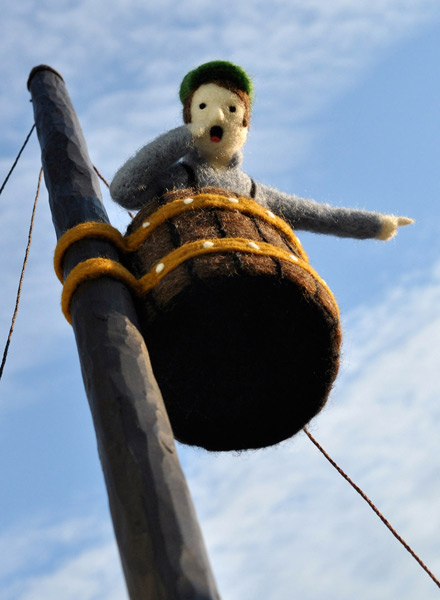
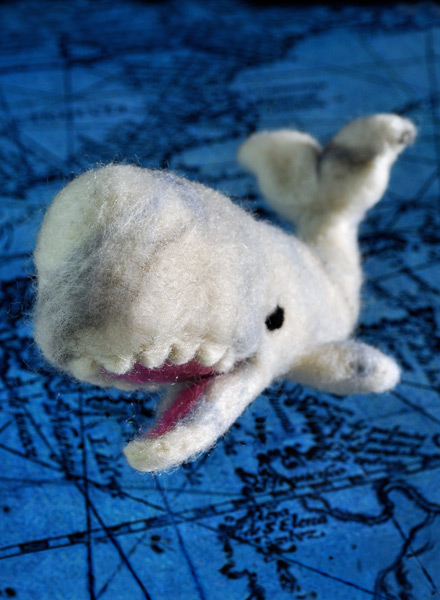
The “cozy” Moby Dick is quite an extraordinary concept. What’s next, The Cozy Brothers Karamazov? The Cozy Death in Venice? The Cozy Also Sprach Zarathustra? If you do some research on Amazon, you’ll find that the Cozy folks have already wrestled with the reductio ad absurdum of the Cozy War and Peace, Pride and Prejudice, Les Miserables, Oliver Twist, Jane Eyre, Emma, and Tom Sawyer.
Some of those are more Cozy than others.
ISIS, the rough beast
Read this, and think of ISIS:
THE SECOND COMING (W.B Yeats)
Turning and turning in the widening gyre
The falcon cannot hear the falconer;
Things fall apart; the centre cannot hold;
Mere anarchy is loosed upon the world,
The blood-dimmed tide is loosed, and everywhere
The ceremony of innocence is drowned;
The best lack all conviction, while the worst
Are full of passionate intensity.
Surely some revelation is at hand;
Surely the Second Coming is at hand.
The Second Coming! Hardly are those words out
When a vast image out of Spritus Mundi
Troubles my sight: somewhere in the sands of the desert.A shape with lion body and the head of a man,
A gaze blank and pitiless as the sun,
Is moving its slow thighs, while all about it
Reel shadows of the indignant desert birds.
The darkness drops again; but now I know
That twenty centuries of stony sleep
were vexed to nightmare by a rocking cradle,
And what rough beast, its hour come round at last,
Slouches towards Bethlehem to be born?
I’ve quoted that poem several times before, and have explained that it keep coming to my mind right after 9/11. These days it seems more than ever that the rough beast is on the march.
[NOTE: You might want to read an older post of mine that I think relevant to the business at hand.]
Obama’s tough love towards Iraq: that’ll teach ’em
Quite some time ago I came to the point of having difficulty reading Obama’s speeches and interviews in full. I don’t mean cognitive difficulty; I understand them well enough. I mean a weariness at the overwhelming combination of factual errors, conceptual flaws, deceptive characterizations, and arrogant preenings that appear in nearly every sentence.
Critiquing his words thoroughly would be a full-time job, and what’s the point? On the right most people already get the picture, and on the left most people still think he’s a great sage.
So I confess I have not read Obama’s interview with Thomas L. Friedman in the Times today in its entirety. What I have read is all the commentary on memeorandum from both left and right, including generous and lengthy excerpts of Obama’s statements from the Friedman article itself.
That process is sobering enough, and I was stone-cold sober already. Most of what Obama said to Friedman conveys an attitude towards the geopolitical world that can only be described as delusional and dangerous. However, if you go to the blogs on the left that, according to memeorandum, have discussed the Friedman/Obama interview, you’ll see almost nothing but high praise coming from their readers.
A brilliant man, that Obama, the best president in their lifetimes.
Yesterday I wrote a post entitled “Peace Prize in Our Time” which discussed the mindset of the left:
The worldwide events of the last few years underscore how putting the “can’t we all just get along?” crowd in charge is one of the surest paths toward chaos and war… Heart of Darkness is not something they want to acknowledge, and so they believe they can wish it or will it or talk it away…
It seems like madness to me.
Although I wrote those words the day before Obama’s Friedman interview, the interview quite nicely illustrates what I said (whether Obama actually believes his own words or not is another question). His interview is a monument to the “can’t we all just get along?” principle, writ large on a world stage. It is indeed madness—a madness that’s been tried many times before, and found wanting—but a madness that apparently appeals to his constituents and has the added benefit of justifying his passivity in the face of evil:
Obama made clear that he is only going to involve America more deeply in places like the Middle East to the extent that the different communities there agree to an inclusive politics of no victor/no vanquished..
Madness, as I said.
Obama doesn’t use the word “evil” for ISIS; that’s not his style. His message is basically that he held back from destroying ISIS (an axis of the axis of evil if there ever was one) when it would have been relatively simple because he wanted to teach Maliki and Iraq a lesson that they should stand on their own two feet and that they should be more inclusive:
…[T]he Kurdish region is functional the way we would like to see. It is tolerant of other sects and other religions in a way that we would like to see elsewhere. So we do think it’s important to make sure that that space is protected, but, more broadly, what I’ve indicated is that I don’t want to be in the business of being the Iraqi air force. I don’t want to get in the business for that matter of being the Kurdish air force, in the absence of a commitment of the people on the ground to get their act together and do what’s necessary politically to start protecting themselves and to push back against ISIL.”
The reason, the president added, “that we did not just start taking a bunch of airstrikes all across Iraq as soon as ISIL came in was because that would have taken the pressure off of [Prime Minister Nuri Kamal] al-Maliki.” That only would have encouraged, he said, Maliki and other Shiites to think: ” ”˜We don’t actually have to make compromises. We don’t have to make any decisions. We don’t have to go through the difficult process of figuring out what we’ve done wrong in the past. All we have to do is let the Americans bail us out again. And we can go about business as usual.’”
In other words, “I didn’t remove the cancerous tumor because I wanted the patient to learn to eat more fruits and vegetables before that.” Of course, if the tumor kills the patient, and then metastasizes to other parts of the world—well, too bad. The lesson is the most important thing.
Most liberals seem to have no difficulty whatsoever in applauding this stance. But California Senator Diane Feinstein appears to be one of the last holdouts of relative sanity on the liberal side:
Feinstein called for a broader military campaign against ISIL, not just the targeted missions authorized by the president.
“It takes an army to defeat an army, and I believe that we either confront ISIL now or we will be forced to deal with an even stronger enemy in the future. Inaction is no longer an option. I support actions by the administration to coordinate efforts with Iraq and other allies to use our military strength and targeting expertise to the fullest extent possible,” Feinstein said.
She’s a lonely voice among Democrats, as far as I can see.
If you can bear to read the entire Obama/Friedman interview, be my guest. But I’ll just close with an excerpt that features one of Obama’s signature outrageously inappropriate and profoundly hypocritical comparisons:
At the end of the day, the president mused, the biggest threat to America ”” the only force that can really weaken us ”” is us. We have so many things going for us right now as a country ”” from new energy resources to innovation to a growing economy ”” but, he said, we will never realize our full potential unless our two parties adopt the same outlook that we’re asking of Shiites, Sunnis and Kurds or Israelis and Palestinians: No victor, no vanquished and work together.
“Our politics are dysfunctional,” said the president, and we should heed the terrible divisions in the Middle East as a “warning to us: societies don’t work if political factions take maximalist positions. And the more diverse the country is, the less it can afford to take maximalist positions.”
While he blamed the rise of the Republican far right for extinguishing so many potential compromises, Obama also acknowledged that gerrymandering, the Balkanization of the news media and uncontrolled money in politics ”” the guts of our political system today ”” are sapping our ability to face big challenges together, more than any foreign enemy. “Increasingly politicians are rewarded for taking the most extreme maximalist positions,” he said, “and sooner or later, that catches up with you.”
So this is uniter Obama, he of the 2004 convention speech. The persona that’s been revealed as a lie countless times, Obama being the single person most responsible for our “dysfunctional” and divisive politics, champion of the “maximalist positions,” he who can’t resist calling out Republicans on the right as responsible for his own failures to even attempt a compromise, the man who barely knows the meaning of the word “compromise” in his own dealings with the right.
Peace Prize in our time
That Nobel Peace Prize for Obama certainly was premature, wasn’t it? Since he has become president, it’s been a challenge to name a part of the world that has not gotten worse rather than better.
Turns out that America as cowboy wasn’t so bad after all. The worldwide events of the last few years underscore how putting the “can’t we all just get along?” crowd in charge is one of the surest paths toward chaos and war. That is a terrible paradox, one that has been amply demonstrated in the past, particularly in Munich, 1938.
Does Obama really believe in the naive principles of “dialogue” that he espouses? Or is he playing a more underhanded game? I happen to think both are true: that he thinks his words are golden and can melt hearts of stone, and he also would like to undermine American power and has some sympathies with our enemies. But whatever is in Obama’s heart of hearts and mind of minds, I have no doubt that many of his followers are sincere.
I’ve talked with them. Some are salt of the earth people, really the nicest you’d ever want to meet, and I see their pacifism as an expression of their deepest wishes that the demons of human nature could be tamed by being met with a combination of love and rationality. Heart of Darkness is not something they want to acknowledge, and so they believe they can wish it or will it or talk it away. They see the ISIS “militants” as just misunderstood people with a grievance, people who could be placated by some empathic listening from a concerned and well-meaning liberal.
It seems like madness to me.
We’ve been talking about Kipling in this blog’s comments section recently (see this and this), mostly the poem “The Gods of the Copybook Heading.” Kipling’s a guy whose work still arouses very strong feelings. As “Sgt. Mom” writes:
He got a lot of things right, he saw to the core of things, unswervingly, he had the ability to write unsparingly and without being partisan ”“ in the ”˜voices’ of a lot of different characters in his world. He could put it “on” as a writer, and make you see that character’s view ”¦ but still remaining detached. Not unsympathetic ”“ but detached…
I am certain that Obama and the whole constellation of unsavory racists in his inner cabinet despise Kipling. All the more reason for me to despise them in return.
I am sure of that as well. If you look at the text of “The Gods of the Copybook Headings” you’ll see why. It is a profoundly realistic, resigned, and anti-liberal statement of human nature and its follies, and the futility of “hope and change.” The Gods of the Copybook Headings laugh at Nobel Peace Prizes, recognizing them as temporary illusions.
Another poem of Kipling’s that Obama and company, and most liberals, would profoundly hate is “The White Man’s Burden.” First of all, could there be a more exceedingly non-PC title? But reading the poem conveys a different and more “nuanced” message than one might think. There is something ironic about the text, which acknowledges the mixed results of the colonial endeavor, and its costs (burdens) to those “white men” who would undertake it.
Reading phrases such as “half-devil and half-child,” “to veil the threat of terror,” and “the savage wars of peace,” it’s hard not to think of ISIS today.
And then there’s:
Take up the White Man’s burden And reap his old reward:
The blame of those ye better, The hate of those ye guard–
That last phrase “the hate of those ye guard” is self-explanatory and extraordinarily relevant to Iraq.
And then there are two lines that actually gave me a chill. I had already written the beginning of this post by the time I read them, but they brought me full circle to Obama’s Peace Prize once again:
…Have done with childish days–
The lightly proferred laurel, The easy, ungrudged praise.
But Obama will never “have done” with them. They are much too seductive, and he grew used to receiving them long ago and considers them his due. Until now, the entire world has cooperated in awarding them to him. What would he do without them?
[NOTE: See this comment by Geoffrey Britain for a good statement of a more realistic and tragic view of what war and peace entails.]
John Hinderaker on Obama’s bombing announcement
Platitudes are not policy.
At least, they shouldn’t be. But they’re all Obama’s got.
Read the whole thing. Does Obama actually believe his own gobbledegook? Hinderaker seems to think so, but I have grave doubts.