Wow. Photos from the amazing collection of the Arabia Steamboat Museum in Kansas City, which displays artifacts found almost perfectly preserved in a steamboat that sunk in the Mississippi about 160 years ago.
[Hat tip: Maetenloch at Ace’s.]

Wow. Photos from the amazing collection of the Arabia Steamboat Museum in Kansas City, which displays artifacts found almost perfectly preserved in a steamboat that sunk in the Mississippi about 160 years ago.
[Hat tip: Maetenloch at Ace’s.]
The left’s approach is now two-pronged.
To the old “never let a mass murder opportunity go to waste in promoting gun control even though it wouldn’t have prevented it” method we can add the new, agreed-on “we act in effective ways, Republicans just stupidly pray.”
White House hopefuls on the Democratic side of the aisle called for stricter gun laws in the wake of the shooting in San Bernardino that left at least 14 dead.
But after yet another mass shooting in America, GOP presidential contenders were conspicuously silent on the issue of gun control.
Instead, the Republicans were preaching about prayer…The GOP presidential wannabes all followed the tired script.
Of course, “tired scripts” are in the eye of the beholder. Just yesterday, before the San Bernardino shootings, I wrote about how Obama and the left use every mass murder as an opportunity to immediately call for gun control no matter what the circumstances.
No matter that their proposals would rarely if ever have prevented the murders under consideration, or murder in general.
No matter that the states where these things happen often already have very strict gun control laws (as does California).
No matter that their campaign against the police has fostered increases in murder in general, particularly in black areas of large Democratic cities.
No matter that the left is pushing the entry of more and more illegal immigrants, who are responsible for quite a bit of crime (see this).
No matter that mass murderers frequently target places where anti-gun sentiment has resulted in gun-free zones and sitting-duck targets.
No matter that Obama’s abandonment of Iraq has fostered the rise of ISIS and increased Islamic terrorism around the world.
No matter that, as in the case of yesterday’s murders and perhaps others, neighbors or acquaintances who see suspicious behavior on the part of Democrat-favored minorities sometimes are reluctant to report it for fear of being labeled bigots.
No matter, also, that Republicans do in fact have action-oriented solutions on crime. That they happen to be first offering the time-honored response of prayers for victims and their families, as well as for the police, is not only human decency (a decency which Democrats, too, used to respect), but a response to the fact that (a) we don’t know all the facts of San Bernardino yet, so to opine now is to propagandize, something the left has already been doing; and (b) Republicans would be criticized harshly if they used these murders as an immediate call for implementing their action solutions, as they sometimes have in the past.
The left is purposely pretending to misunderstand what prayer is about. Or maybe many of them really do misunderstand. Prayer is not a substitute for action. It is a response that focuses—in the initial days after a tragedy when not that much is known of the facts, and the families of victims are still reeling from the shock and grief—on ways to deal with that shock and grief. Prayer appeals to the deity to help those people in their hour of need, to give them strength and courage and comfort. It is in a separate category from politics or political action—at least, it used to be, until the left got as open about its anti-religion agenda as it has become during the Obama years.
So, what are the action-oriented suggestions of the right that the left either mocks, criticizes, or ignores? More concealed carry, more armed citizens of the responsible gun owner type, fewer gun-free zones where murderers and terrorists know they can find defenseless “soft” targets. Of course, we all know what happens when the right makes those suggestions in the wake of mass murders. They are criticized as being both disrespectful to the victims and making the problem worse, even though there’s no evidence of that. The only “action” solution the Democrats want is gun control, even though they have never demonstrated exactly why their proposals would effectively prevent more mass murders.
Oh, and then there’s the issue of who these particular murderers were. Farook found his wife and partner-in-crime Malik in Saudi Arabia after meeting her online, but Farook himself was born in this country. He is 28 years old, which means he was born around 1987. I’ve read a number of pieces about the killers and their backgrounds, but curiously enough—although I finally found one that said the families are Sunni Muslims of Pakistani origin— I have yet to hear a word about when his parents (or grandparents) might have arrived here, and under what program. Was it, for example, the controversial H-1B visa program? What about the mosque Farook attended (he self-described as religious, and his family describes him that way too)? Was it known for radicalism, and was Farook perhaps radicalized there? Should we be keeping closer tabs on radical mosques that are used for recruitment?
Do Democrats really believe that some new gun law would have stopped Farook and his spouse from committing mass murder? I don’t think so. It is easy to get guns in extra-legal ways. There was nothing in the perpetrators’ backgrounds—no mental illness or criminal history, for example—that could have flagged their legal purchases of guns, either, even if new laws were passed to tighten the criteria. They had also rigged remote-controlled bombs in the meeting room where the murders occurred. The particular weapons they used are hardly the only way to commit mass murder.
Where there’s a will, there’s a way. These people clearly had the will. They were going to find a way.
[Scroll down for updates.]
This is a breaking news situation with very few details known so far, but an active shooter and many possible deaths have been reported at a disability center in San Bernardino, California.
At first I thought it was likely to be an instance of workplace violence It’s way too early to tell, of course, but now I’m thinking it’s some sort of terrorism, domestic or foreign. No obvious motive comes to mind for choosing that particular facility. But the report (which may or may not be true) that there were up to three shooters, and that they wore ski masks and perhaps body armor as well, indicates something more than a lone wolf or isolated crazy person.
Very bad news.
UPDATE 6:00 PM: Not much new information, but it increasingly appears that this was a well-organized pre-planned group effort.
People who do this sort of thing usually want everyone to know who they are, and why they did it—if they don’t expect to live. If they do expect to live, and have a getaway plan (which these shooters did), then they are more likely to keep their identities and motives quiet. No one has yet reported the gunman/gunmen saying or shouting anything that would identify their cause, and their masks are further indications of wanting to remain anonymous.
The target could reveal something about motive. But this one is hard to read. Who is against centers that serve the disabled? I think of Nazis, perhaps. Or, since it was a government center, anarchists. Then again, the ISIS terrorists in Paris executed disabled people in their wheelchairs, lined up in the concert hall.
We just don’t know.
UPDATE 6:20: There are reports on the local news that SWAT vehicles are closing in on suspects on San Bernardino Ave. or perhaps in a residential area, that there has been some gunfire, and that one or two suspects may be down. I have no idea whether this is true, but I certainly hope it is.
UPDATE 6:45: The live video is showing and reporting on a scene in a residential area, where SWAT vehicles and officers have surrounded a black SUV. The vehicle has been “all shot up,” one person is reported lying down in the back seat with a weapon resting on his chest, one is lying in the street and seems to be deceased, and another suspect has gotten away.
UPDATE 7:30: A neighborhood search is going on for the third suspect. It reminds me very much of the post-Boston-marathon search for Dzhokhar Tsarnaev that went on in Watertown, Massachusetts.
UPDATE 8:30: The police are saying that the two dead suspects in the SUV are a male and a female, dressed in assault-style clothing and with assault rifles.
In addition, an interview with someone who had been in the Inland Regional Center when the shootings occurred says that the site was a conference room where a Christmas Party for the Department of Public Health was being held.
This is becoming more strange every moment. Could it be a group—perhaps of related people—who had a beef with the Department of Public Health?
As for the third party, the police are now saying that a third person is in custody but may or may not be involved. The police still have not determined whether there was a third shooter.
Now the police chief is saying that there had been an altercation at the holiday party, and one person left as a result. They are theorizing it is possible that this person came back with another person to commit the murders. On the other hand, the FBI has been heavily involved, and that indicates they suspect much more than that.
UPDATE 10:17: Police are searching the suspect’s (or suspects’) home with a robotic device.
UPDATE 12:19 AM: Awaiting a police press conference. Meanwhile:
NBC News and The Los Angeles Times have each identified Syed Farouk of Corona, California as linked to the afternoon massacre in San Bernardino, California which took the lives of at least 14 people and left numerous victims wounded…
According to NBC News, a man named Syed Farook is listing as working as an Inspector for the San Bernardino County Department of Public Health. The massacre took place at a holiday party for employees of the Department of Public Health.
UPDATE: 1:10 AM: At another police press conference, it was announced that Syed Farook had worked for the county for 5 years and was American-born, aged 28. At this time it is thought that there were only two shooters. The woman was 27 years old and little is known about her, except it is thought the two were in a relationship. Both were shot by police.
Farook was indeed the person at the party who had some sort of altercation, left, and came back with the woman to commit the mass murder. He attended the party because he was an employee, and had attended the same party last year. But the police do not think the shooting was a spur-of-the-moment thing; it seemed planned.
Farook’s family now says the two were married.
Here’s a transcript and video of Obama’s Paris news conference, which was widely perceived as disturbingly unfocused and halting.
He said one thing in particular that received a lot of puzzled criticism:
“With respect to Planned Parenthood, obviously, my heart goes out to the families of those impacted,” Obama said in response to a reporter’s question. “I mean, I say this every time we’ve got one of these mass shootings; this just doesn’t happen in other countries.”
Remember, Obama said this at a press conference while in Paris. Paris, the city that has so very recently endured a series of mass shootings that killed over a hundred people, as well as the Charlie Hebdo shootings and the supermarket shootings that occurred in January of this year. Surely it oughtn’t to be much of a stretch for him to call them to mind, and some people have considered this evidence that he’s losing it in the cognitive sense.
I don’t think so.
Even when Obama denounced the Paris attacks right after they occurred, it sounded as though they had barely registered with him. So it’s not surprising that he might have already forgotten them, along with a few small incidents such as those listed here, as well as these and these, among others. Europe has had a large number of mass killings, of course, even in addition to Islamic terrorism. Not all are mass shootings, of course. But a high number of them are exactly that (including the Paris attacks both in October and last January). As for the others, the people are just as dead even if other means are used.
So, what’s going on here? The first thing you have to understand is that it’s not a slip of the tongue. Obama has said this sort of thing before—although not while in Paris one month after a heinous mass shooting. Note that in the quote he states “I say this every time we’ve got one of these mass shootings.” For example, after the Charleston shootings, he said:
But let’s be clear: At some point, we as a country will have to reckon with the fact that this type of mass violence does not happen in other advanced countries.
After that, he added that it doesn’t happen with as great frequency (although this article, which corrects for population, seems to prove him wrong even on that point). But originally he said these attacks simply don’t happen in other advanced countries.
That’s one of his mantras, because it combines several themes he holds dear: the superiority of Europe over the big bad United States, and the need for more gun control in the US (note that in Paris he specifically used the word “shootings” rather than the more generic “killings”). Therefore it is necessary for him to capitalize on every non-Islamic-terrorist act of mass shooting by hitting those themes, and if what he says represents a falsehood, or if on occasion (as in Paris) it lands him in a position that leads thinking people to conclude that what he’s just said is absurd, that doesn’t matter. The people he’s really addressing—liberals and the left—will for the most part swallow what he has to say with approval and assent, because they agree with his purpose: dissing the US, and restricting gun rights.
As I’ve stated for many years, Obama is a leftist with an agenda. He is relentlessly on message, and does not miss an opportunity to deliver that message. In addition, he has no shame about lying or misrepresenting the truth; you might say he is audacious in his ability to lie with conviction and with a straight face. One of the reasons he is able to do it is that he speaks to a higher truth and a higher cause—in this case, the cause of disarming the people and consolidating his own power and that of the left. It’s really very simple; I’ve explained it before in this post about the willingness to believe that 2 + 2 = 5.
But there’s another thing going on with Obama. Because the Paris attacks were terrorist attacks, in his mind they don’t really count. Terrorist attacks are some sort of extra category, because his goal is not to whip up outrage about them, his goal is to damp it down while whipping up outrage against ordinary US citizens with guns. That’s what he’s set his sights on (as it were), so that’s what he’s going to address.
Obama has sunk so low that even previous supporter Richard Cohen of the WaPo is wondering why the president sounds so lost and listless lately:
…[Obama’s] eloquence has been replaced by petulance and he has lost the power to persuade, which is something of a surprise. You can speculate that if the Barack Obama of today and not Winston Churchill had led Britain in World War II, the Old Vic Theatre Company would now be doing “Hamlet” in German…
To a large degree, Obama became president on the strength of his eloquence. To a large degree, that is what has deserted him. He is out of words because he is out of ideas. Consequently, he ought to listen to others. They’re not the ones who are popping off. He is.
Let’s get one thing straight: those liberals who feel as Cohen does right now will almost certainly vote for Hillary Clinton in 2016. Their disillusionment with Obama is not disillusionment with any of their previously-held political beliefs, it is personal to him.
Cohen thinks Obama has changed, but that’s another illusion of Cohen’s. Obama is mostly the same as always, minus a little bit of pizazz. He was never eloquent He never had good ideas. Nor is he “out of ideas”; he retains the same belief in the very same ideas. The only things that have changed about Obama are that more and more of the consequences of his presidency are piling up in the real world, plus he is a bit less smooth in delivery, and familiarity breeds contempt—even in the Richard Cohens of this world, who did not have the insight and perceptiveness to understand that they were looking at a smooth-talking BS-artist leftist narcissistic con man in the first place, even though it was pretty obvious.
I wrote about this back in November of 2009, in an article entitled “Obama the heartthrob: the end of the affair?” I saw some people as having fallen for a con, and as possibly starting to desert him (there were some, but it turns out not nearly enough to make a difference). Almost exactly five years ago I wrote another post on a related subject: “Falling out of love with Obama: a midfall night’s dream.” In it, I discussed an article I’d noticed by Tom Junod that seemed to indicate disillusionment, and it turns out that it is so similar to portions of the current one by Cohen that’s almost uncanny. The two are describing the same process, and so I’m going to reproduce some of that earlier post of mine here, slightly shortened.
Read as Tom Junod tries to puzzle it out in Esquire:
Though many Americans didn’t know very much about him, there was one thing that was never in doubt when we saw and heard Obama on the stump: his ownership of his gift. By the way he carried himself, we could tell that he had always had it, and because he always had it, we could be sure that he always would have it. How could we resist a man who simply by opening his mouth could move mountains ”” and who had ascended all the way to the presidency by staking his political life on his own eloquence? How could we resist a man who seemed so sure that we could not resist him?
Now his gift has all but deserted him, and all that prevents the story from becoming tragic is his own apparent refusal to be affected by it…In less than two years he had gone from sounding like a man who could always count on his ability to strum the mystic chords of memory to a man who, no matter what he said, sounded like a politician, and one in over his head at that. Now he sounded like a man who had already realized that he had lost more than he imagined he could but was just starting to understand that he was never going to get it back.
Junod is right, and he’s also wrong. He’s describing what he perceives to have changed about Obama, and it’s true. Rather like Dumbo when he lost his magic feather, Obama has lost some of the belief in his own invincibility that carried him along, and it shows.
But Junod thinks he is describing something that mainly has its locus in Obama himself, and that it is Obama who has changed. Not really, except for a slightly lower confidence level. Junod is actually describing the process of falling in and then out of love on the part of the viewer.
Obama never was a great communicator. It’s been said before, but it bears repeating now: he rode on a stump speech and a vague promise, and the fervent hope in people’s minds that he would be whatever they happened to want him to be. He was never articulate off the cuff. He was always condescending and cold once he left the confines of that set speech. He had a terrible and/or nonexistent political record. He had never run anything except the Annenberg Challenge (and that was done poorly) or the Harvard Law Review. He had no sense of humor.
They fell in love nevertheless. Love is great. It feels good, but it tends to be blind. And when you fall out of it, you wonder what happened. You can explain it by saying that it’s the love object who has changed. Or you can wonder whatever you were thinking of in the first place.
Junod and many Obamaphiles (is it premature to call them ex-Obamaphiles?) are doing the former. In one of my favorite Shakespearean plays, “A Midsummer Night’s Dream,” Titiana does the latter:
Shakespeare’s play is an exploration of love and its mysterious qualities. When Shakespeare has the character Puck observe to the Fairy King Oberon, “Lord, what fools these mortals be!” he’s talking at least in part of their propensity to be fooled—in the case of the play, by his own magic machinations, among other things. The play has the lovers manipulated in a curious way: Puck puts some drops in their eyes that alter their perceptions and make them fall in love with the first being who comes their way.
Thus, the locus of the change is placed in the beholder, where it often belongs. The object of love remains the same person, whether adored or despised. When Puck places the drops in her eyes, Fairy Queen Titania falls in love with an ass (that is, a rude laborer, Bottom, who has been transformed by magic into a man with a donkey’s head, but let’s not get too technical). When Puck later applies the antidote and she falls out of love, she can’t believe she ever liked Bottom in the first place.
Junod, on the other hand, doesn’t doubt that Obama originally possessed the sterling characteristics his admirers perceived in him. Junod sees the main locus of change as being in Obama, not in himself as Obama-watcher. When Junod writes, “How could we resist a man who simply by opening his mouth could move mountains?” he’s being hyperbolic (at least I hope he is). But Obamalove came close to being just that irrational and just that emotional.
Substitute “Cohen” (or Peggy Noonan, or any number of people) for “Junod,” and you have the present situation. In the ensuing years, however, Obama has done incalculable damage. He has changed this country and the world, but for the worse. And his Titanias don’t understand that it isn’t Obama who changed, but that it’s they who have finally gotten a bit of the antidote squeezed into their eyes—a bit, but not enough to understand and go forward to make better choices in the future.
Facebook’s Mark Zuckerberg and his wife Dr. Priscilla Chan have announced a decision they’ve made on the birth of the daughter:
Zuckerberg announced that his family will be giving away 99 percent of their shares in Facebook, which currently totals around $45 billion. This donation won’t happen overnight, but will take place over the course of Zuckerberg and Dr. Chan’s lifetime. The point is to start early enough so that his daughter and future generations will be able to live in a world that’s much better off than the one we’re in now.
The Chan Zuckerberg Initiative focuses on two areas: advancing human potential and promoting equality. With the former, Zuckerberg explained that he wants to cure diseases, clean up the environment, and cultivate entrepreneurship so that anyone can build a business that will solve any challenge to grow peace and prosperity. The latter is the next step, ensuring that everyone around the world has the same access to these opportunities regardless of where they come from, who their families are, or what their circumstances are.
If the Facebook shares total $45 billion, and they give away 99% of them, that will leave them with the non-paltry sum of $450 million worth of shares (did I do the math right? It’s hard to count all those zeros). They’re people with relatively simple tastes (that’s not sarcasm; it’s true), so that 450 mill should do them just fine. In addition, it’s not their entire wealth, the giveaway won’t happen overnight (they will be creating a limited liability company), and the assets they retain can continue to grow.
As for Zuckerberg’s goals, good luck with that. On a global scale, $45 billion really isn’t all that much. As an example, the US spends about five billion dollars each year on cancer research alone. That’s one country, one disease, one year, and no cure in sight (that’s not a knock on cancer researchers, either; it’s just an example of the magnitude and complexity of the task).
Fighting disease and helping struggling entrepreneurs by lending them money is a piece of cake, however, compared to Zuckerberg’s secondary goal—which is utopian, unachievable, and impossible to measure: “ensuring that everyone around the world has the same access to these opportunities regardless of where they come from, who their families are, or what their circumstances are.”
Although the goal is described in therms of equal access—a goal this country has probably come closer to realizing than any in the world—I very much doubt that’s what Zuckerberg and his wife ultimately mean. I think they actually mean what Thomas Sowell calls “cosmic justice.” Sowell wrote a brilliant book on the subject in 1999 (revised in 2002) called The Quest for Cosmic Justice; I recommend it highly. In it, Sowell explains why humans continue to yearn for cosmic justice (equality of outcome rather than merely of opportunity) even though it is not only unobtainable, but the attempt to achieve it is destructive of liberty and often makes things worse in terms of actual equality.
But let’s stick with Zuckerberg’s own words and not imagine he means what I think he may mean. To achieve any sort of meaningful equality of opportunity in other countries would require changing most of the governments and societies around the world, because that’s the reason for the lack of it. Is Zuckerberg a neocon, desirous of spreading the American system of democracy/republicanism, combined with human rights and liberty guarantees, all around the world? I doubt he would see it in those terms, but that’s probably what would be required to spread equality of opportunity, and there’s probably no amount of money that could do that effectively.
I congratulate Zuckerberg and Chan on the birth of their daughter. I assume that their efforts to fight disease and to help struggling entrepreneurs around the world will be fruitful and helpful to some people. They won’t transform the world, but what does? And I have little doubt that Zuckerberg, Chan, and their offspring will remain mega-rich and very comfortable, and I don’t begrudge them that in the least.
For now, I’m not going to call this the “Planned Parenthood shootings.” I’ve decided that the jury is still very much out on the Colorado Springs shooter’s motives, although the press and the left have acted as though there is no doubt. The MSM is being obscure about things that would undercut the preferred anti-abortion motive narrative.
As I wrote yesterday, most articles (even lengthy ones) on the subject still don’t reveal the location of the shooter and most of the victims when first shot. There is a great deal of evidence that indicates he may have shot all his victims outside the building, but it’s incredibly difficult to find out and requires an enormous amount of research and a careful piecing together from disparate sources. It certainly seems to me to be a purposeful obfuscation by the press.
There is no question that this shooting might have been motivated by animus at abortion and its providers. It may even have been sparked by those Planned Parenthood videos. But so far there is little reason to think so, based on the available evidence. Supplemental evidence may emerge that makes the shooter’s motive more clear, and perhaps the left will be vindicated on this. But for now, if you want to find the best reconstruction of what happened—complete with pictures—see this and this, and it doesn’t support the left’s narrative.
Location, location, location, as they say in real estate. And in this case, if the guy wanted to kill Planned Parenthood staff and/or clients, why not walk into the building initially and start shooting? The building was open and had little security and no metal detectors. So why did the perp start firing, seemingly at random, in a parking lot that served several businesses including Planned Parenthood? Why did he only go inside after two hours outside?
Also we have this about the allegedly unbalanced and just plain weird murderer, who has had a sketchy background and been accused of many crimes:
We don’t know yet if this guy has left an “e-trail,” in the manner of information-era suspects who post manifestos and videos. It seems doubtful, given his background and style of life. He has no trail at all, apparently, that pegs him as an anti-abortion activist.
The narrative has already been set, however: an anti-abortion activist, inflamed by hateful rhetoric from the right, went to Planned Parenthood and killed people because of his political convictions. And no amount of actual evidence could change this conviction, which has already been firmly lodged in so many people’s minds.
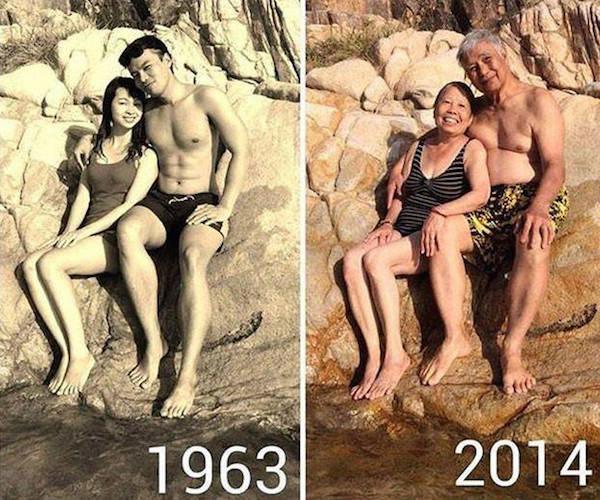
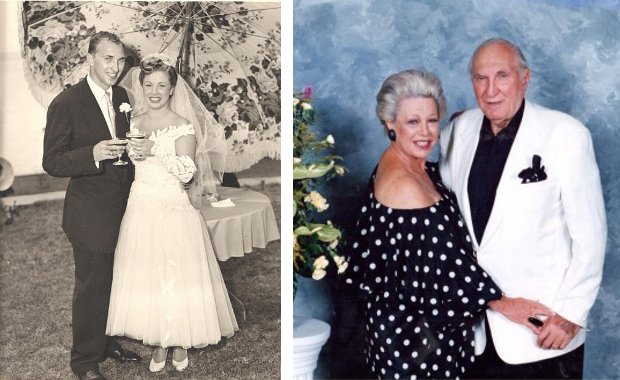
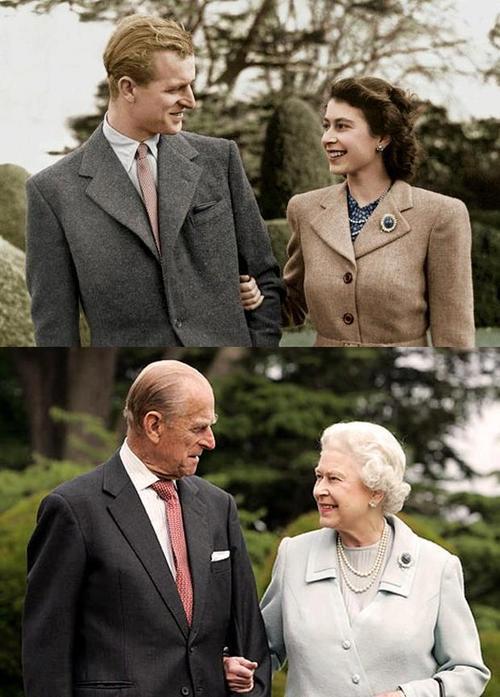
This article presents photos of couples when young, and then the same couples years later. Some of them aren’t particularly interesting. The passage of the twenty years that takes a couple from their 20s to their 40s doesn’t ordinarily demonstrate much dramatic change.
But this photo duo interested me; it features a 50-year span. They say that the legs are last to go, and this woman certainly illustrates that fact. For both members of the couple, however, although they wear their years well, gravity has taken its inevitable toll:
Then we have this. Sixty years later, this woman is extremely recognizable:
Even among the famous, every now and then it lasts:
Their share hasn’t grown very large yet, but the anti-immigration Swedish Democrats have risen in the polls since the refugee crisis has led the present government to force Swedes to accept so many of the “Syrian refugees” into their country.
The current government is a coalition of three parties: the Social Democrats, who are the largest group; the Greens; and the Left. That troika is now down 3 points in the polls to 39%, while the Swedish Democrats have risen 5 points to 19.9% support. It’s not a majority, but it is probably significant:
…[V]oters are signaling they want the group to have a bigger say. And after Sweden’s generous asylum policies led to a surge in refugee flows from war zones in the Middle East, the government’s political clout has waned. Its budget pact with the opposition fell apart in October and both the coalition and the main opposition parties have since been forced to tighten their stance on immigration.
Loefven in November opted to backtrack on a pledge to provide permanent residence permits to all Syrian refugees and will instead only offer temporary permits, unless asylum seekers arrive under the United Nations quota system. That will adjust rules to the “minimum EU level” to give Sweden some “breathing room,” he said on Nov. 24.
The government is tightening rules for family re-unifications and enforcing border controls. While the measures have had some effect, Loefven said the inflow of asylum seekers is still unsustainable and has urged other EU countries to do more. As many as 190,000 asylum seekers are expected to arrive in Sweden this year alone, a development that is overwhelming authorities in a country of 10 million where housing shortages are already an issue.
By my calculations, that influx represents 2% of the Swedish population, and that’s just this year. The Swedes are becoming more alarmed, and more of them awakening from their pleasant Socialist stupor as a result. Even before all of this, Sweden had been having difficulty with the fact that its rape statistics had skyrocketed, with most of the rapes being committed by immigrants of Middle Eastern origin:
1996 Swedish National Council for Crime Prevention report bears this out. It noted that Muslim immigrants from North Africa were 23 times more likely to commit rape than Swedish men. It is no wonder why today Sweden is deemed the rape capital of the Western world.
Even more shocking, however, is the political correctness overshadowing the reporting of these crimes. Sensitive about accusations of Islamophobia, the Swedish press refuses to sound a warning alarm for native women about who these sexual predators are. Thus, when a Muslim commits a rape, the media only refers to him as a Swedish male.
But this failure to shine the light on Muslim male rapists leaves them hiding in the shadows to commit even more egregious sex crimes. With no fear of accountability, these predators have adopted a pack mentality. A crime non-existent in Sweden in the 1970s is now commonplace today as the country has become a breeding ground for gang rapes.
Compiling statistics and understanding them is not as simple as that quote suggests, however. For one thing, Sweden has broadened its definition of the crime of rape in recent years to include issues of consent, including when a woman is in a state of “fear or unconsciousness.” So not all the rapes are what the law has traditionally thought of as rape. In addition, the reporting of rapes in Sweden is not conveniently broken down by authorities into categories that would be of particular interest in tracking the problem (I suspect the omission is not accidental), and the details must be teased out. However, there is every indication that Middle Eastern immigrants account for a huge proportion of the rapes in Sweden.
Swedes are becoming afraid of this and other mores that the newcomers bring with them, including of course their lack of assimilation into Swedish life:
“Often they don’t want to come here and change,” [a Swede] says. “They want to change us. And we don’t want to be changed. So that’s a conflict.”
The left calls this xenophobia. The right calls it realism. But it stands to reason that, if you let in large numbers of a group that wants to change you, you will be changed.
But why was no photo provided?:
Tiny women carry amazingly large luggage, twice their eighty-pound weight.
Sort of like fleas or ants.
Attorney David Begley (commenter “Cornhead”) has been posting at Powerline on nearly all the Republican candidates—most of whom he’s seen in person in Iowa, some not once but several times.
Now he has come out with a statement as to why he has chosen Carly Fiorina as his preferred, candidate, and why he thinks the Republican Party should do the same:
Lesson for voters today? Carly will challenge and change the status quo in Washington. She is an accomplished executive outsider. She is not tied to the old way of doing things and that is to the good as DC has failed and needs fundamental change.
Carly first came to my attention with her declarative statement that Hillary Clinton must not be President. The directness and boldness of her statement was refreshing but also the fact that she knows what is important. Her real opponent was not Scott Walker who was then leading in the polls. Since then she has largely focused on her three page tax code and zero based budgeting proposals. There is great power and significance in these two ideas but she hasn’t really gone into much detail. I think that she is prudent and smart not to do so because with fine details the special interests will mobilize and oppose her.
She distinguished herself in the debates by the force of her intellect and personality…I have seen her four times in person and, to put it nicely, the people of Iowa are not a Georgetown crowd. She chatted up the crowd at the Norwalk fire station and at a tent meeting with average Iowans. She is friendly and approachable but still business-like.
Much more at the link.
I’ve been impressed by Fiorina from the start, particularly her ability to get to the heart of the matter and to never pull her punches. I’ve been disappointed, however, that she’s been fading in the polls. Perhaps the constant criticism of her HP record has hurt her. Some think her Planned Parenthood position was responsible for her slide.
I have a different opinion. I think that initially her intensity and ability to deliver a strong message made her stand out in the first undercard debate. Then her exposure to a larger audience in the second top tier debate (which was her first top tier debate) caused her to rise quickly in the polls. But since then she’s gotten lost in the shuffle of so many candidates and struggled for air time against more well-known and/or controversial headline-making candidates. Because she doesn’t have enormous funds, she has had trouble publicizing herself further. But I think her drop in the polls since that initial rise has also been because in subsequent debates she lacked ease and humor and was too stuff and rigid.
Having seen Fiorina in person myself, that’s not the way she comes across in live appearances, especially when interacting with people one-on-one, but also in her speeches, where displays a lot of humor and warmth. I think she overcompensated in the debates because she wanted to impress with her seriousness, but lost on the “likeability” characteristic.
I also think that Carly originally positioned herself as the smart outsider. She still is that. But this particular year there are many outsiders who have crowded her out. Trump is of course the celebrity businessman reality-star outsider with the big mouth. Carson is the gentle, healing outsider. Cruz is the inside-outsider. That leaves Carly as struggling lately to differentiate herself in a way that matters to voters. As a woman, she has positioned herself as the female non-Hillary who has a particularly fine perch from which to attack Clinton, since Fiorina can’t easily being accused of being against women (although they can certainly try).
I wish Fiorina well. Perhaps, as so many have suggested, she might find her best role as VP nominee. It’s early, though, and she has time to regroup. But more lightness such as the following might be in order. I’ve cued it up to start at a part towards the end that shows her humor, but if you watch the whole thing you’ll see her exhibit her ability to speak succinctly and clearly on a problem:
The Colorado Springs shootings have afforded the media and the left many opportunities to criticize the right, but one of the most creative is this type of article, headlined “After two days of silence, GOP candidates respond to Planned Parenthood shootings.” Initially, the Republican candidates were widely criticized for not speaking out immediately. Then, once they issued statements condemning the killings, their previous silence was still given pride of place.
How about assuming that they were waiting at least a short while to find out what actually happened—who the victims were, whether they were chosen randomly or targeted, why they were shot, and where—before issuing statements that they would later have to retract? Was the shooter a crazy guy shooting wildly at people in a parking lot that happened to be near a Planned Parenthood office, as well as a strip mall and grocery, and did he then run into the Planned Parenthood office to take shelter and keep shooting people in the parking lot from there? Or did he target Planned Parenthood, and if so, was it from political conviction or some other reason?
First reports were that no one in the clinic was hurt, and the only named victims—such as Garrett Swasey, the police officer killed—were shot while in the parking lot. We’ve since learned the names of the two other fatalities, but not where they were killed, nor where the shooter was when it happened—was he inside the facility shooting at people inside? Outside shooting in? Inside shooting out? Did he go from one mode to another, and in what order? Ever since the shooting I’ve been searching for some clarity on these facts, but so far all I’ve discovered are conflicting reports (none of them official) or silence. However, the bulk of the evidence so far (subject to change, because this is tentative) seems to indicate that he probably began outside (not necessarily near the office) in the mall parking lot, shooting people outside, then ran inside the office and continued shooting from there.
One of the dead has been identified as Ke’Arre Stewart, 29, a male Army veteran, who was there accompanying a friend to the clinic. The circumstances of his shooting are unclear, but according to his brother (and I have no idea how accurate his report is, or on what it is based), Stewart was shot outside the clinic, having gone outside to use his cellphone.
The second fatality was Jennifer Markovsky, a 36-year-old mother of two who was “at the Planned Parenthood clinic supporting a friend.” Does “at the clinic” mean in the Clinic? In the parking lot? Near the clinic? That could matter in terms of the shooter’s motive, but the MSM either doesn’t know the details, or is being very sloppy about the details (purposely or accidentally).
A statement by the shooter to the effect of “no more baby parts” has been fastened on by an eager media and gotten tons of play, for obvious reasons: it’s near-perfect for the preferred narrative that connects the Planned Parenthood videos to these murders. But the truth seems much more vague:
A law enforcement official also told the Associated Press that Dear made a “no more baby parts” remark following his arrest Friday. The official said the remark was part of a rambling statement that investigators are parsing to understand the reasoning.
The law enforcement official who recounted Dear’s statement spoke on condition of anonymity because the official was not allowed to publicly discuss the ongoing investigation. The official said the “no more baby parts” comment was among a number of statements he made to authorities after his arrest, making it difficult to know his specific motivation.
Murders like these are terrible events that all sides, and virtually all people, deplore. But in the current climate they are made into political weapons long before the facts are out. For the Republicans, MSM questions about these shootings are like a minefield they must be prepared to traverse, a series of traps based on suppositions and innuendos and half-facts. For the most part the police are properly slow and cautious in releasing information, but leaves the MSM plenty of time to weave their story. If corrections have to come later (as with Columbine or Sandy Hook, where the media was initially wrong about a great deal), most people won’t read them and will be on to the next cause célé¨bre. By then the imposed narrative will have solidified in their minds, never to be dislodged by subsequent revelations, even ones that tend to discredit it.
Personally, I’d like to wait for facts, whichever side or cause (or lack of cause) the shooter espouses. But there’s hay to be made with these shootings, and so those who are out to make it can’t afford to wait.
[NOTE: And by the way, if the shooter turns out to have attacked Planned Parenthood intentionally because of a political anti-abortion motive, does that mean that no one can expose an abortion clinic’s wrongdoing for fear of a vigilante killing? Or, to take it one step further and into far more absurd territory, does that mean that Salinger shouldn’t have written Catcher in the Rye (the book that inspired Mark David Chapman), and Jodie Foster should have been nicer to John Hinckley, because these things motivated the assassination of John Lennon and the nearly-successful attempt on Reagan’s life, respectively?]
[ADDENDUM: I wanted to add that another purpose of setting the initial media narrative before the facts come out is to plant the narrative so firmly in people’s mind that it invalidates later officially-released facts that might contradict it. For example, this occurred in the Zimmerman and Michael Brown cases. The result is that, when police release the official reports, or when juries render their verdicts, if those things don’t dovetail with the previously-developed MSM narrative then it sets the stage for rage and riots, and gives the left even more opportunity to whip people up to leftist activism.]