
↓
 

The New Neo

A blog about political change, among other things

  • Home
  • Bio
  • Email
Home » Page 1032 << 1 2 … 1,030 1,031 1,032 1,033 1,034 … 1,916 1,917 >>

Post navigation

← Previous Post
Next Post→

Emerging thoughts on the Dallas shooting of police

The New Neo Posted on July 8, 2016 by neoJuly 8, 2016

There’s an awful lot to digest today, a lot.

Now it is being reported that during last night’s sniper attack in Dallas 12 officers and two civilians were shot, and five officers have died. That may be the largest death toll of police deliberately shot in one incident in this country, although I haven’t been able to ascertain for sure whether that’s true. In addition, one of the perpetrators is dead, not a suicide as originally reported but killed by a police-detonated “bomb robot” after a lengthy standoff.

Attacks on police have certainly occurred in this country before, but the aspect of last night’s killings that made it possible for the perpetrator[s] to shoot so very many officers seems to have been that the gunfire came from above, sniper-style. When I first heard some of the details of last night, one thought that occurred to me was that all or some of these snipers seem to have had specialized training, perhaps military in nature, to have been able to pull off something of this magnitude without injuring even more civilians. Another thought of mine was that whoever it was doing the shooting, this person or people didn’t much care whether civilians were killed, because firing into a demonstration like that is obviously going to expose demonstrators to grave risk, too.

Authorities have now identified the dead perpetrator as:

…Micah X. Johnson, 25, a former Army reservist and resident of the Dallas area…

Johnson had no known criminal history or ties to terror groups, the official said, and has relatives in Mesquite, Texas, which is just east of Dallas…

Authorities believe Johnson belonged to an informal gun club and took copious amounts of target practice, according to a law enforcement official…

Brown said a hostage negotiator spoke with the gunman at length before he was killed about 2:30 a.m.. The chief said the attacker said he was upset “with white people” and with recent police shootings. The suspect also said that he was not affiliated with any groups and that he acted alone, Brown said.

“The suspect said we will eventually find the IEDs,” Brown said, a reference to explosives. “He wanted to kill officers. And he expressed killing white people, killing white officers, he expressed anger for Black Lives Matter.”

So there’s fodder there for the anti-gun people (belonging to a gun club, etc.)—although inevitably they would use this opportunity anyway, no matter what, to make guns the culprit. However, a man this determined is going to get guns any way he can, despite any sort of gun control (plus he had no criminal record or other red flags, as far as we know).

I wonder, also, whether any of the people who have spent the last couple of years screaming police brutality against blacks are reflecting on how long the police held off killing this guy—how much forbearance police showed under the circumstances with five of their fellow officers dead.

It remains to be seen whether the other people in custody are connected to this guy or whether he really did act alone, as he stated. It’s hard to believe the latter, because so many people seem to perceive—from the direction and scope of the gunfire—that there were multiple shooters. But eyewitnesses can often be wrong.

There is little question in my mind that the perpetrator or perpetrators wished to increase racial enmity in this country through this act. My guess is that his or their philosophy is similar to that of a group I wrote about in a 2014 post on cop killers of the early 1970s, the BLA-affiliated murderers of NYPD officers Rocco Laurie and Greg Foster:

Probably the most famous police officer ambush case was that of partners and Vietnam vets Gregory Foster and Rocco Laurie, which occurred in January of 1972. Witnesses and an investigation indicated that they were shot in the back by BLA [Black Liberation Army] members as the officers walked down the street on their beat, and then shot again multiple times as they lay dying and the murderers had grabbed their service revolvers. The murders of Foster and Laurie caused a furor because they were part of a war on police, but also because both were well-liked, young, handsome, left young grieving wives and a great deal of fear in the NYPD, and because they were good friends and an interracial team (Foster was black and Laurie white). There was a 1974 book and a 1975 movie about the heinous crime, and although there were suspects (some of which have died or been killed in the ensuing years), no one has ever been tried for their murders.

The atmosphere today resembles the feeling that was in the air back in the early 70s, and that is most definitely not a good thing. This mood could be felt building and building prior to the murder of Ramos and Liu [two NYPD police officers ambushed and murdered at the time I wrote the post, in December of 2014], and the fear is that it will keep on building. Today, unlike in the 70s, even our leadership””and by that I mean Barack Obama (who consorts with the likes of Al Sharpton), Eric Holder, Bill de Blasio, for example””fans the flames of the hatred in ways subtle and not-so-subtle.

I wrote another post in 2014 about Foster and Laurie and the BLA:

Foster, who was black, and Laurie, who was white, were apparently targeted because of the interracial aspects of their partnership:

Two days [after their murder], police received a hand-printed letter signed by the BLA, a violent militant group which targeted and assassinated police officers across the country, claiming responsibility for killing Laurie and Foster.

“They were targeting what they called the ”˜salt-and-pepper,’ the black and white teams, and they didn’t like that, that the blacks and whites were working together,” Mrs. Laurie said.

There had been an ambush of a similarly interracial team the previous year, apparently committed by the same group.

You can read more about that group here; it was an offshoot of the Black Panthers, and was explicitly leftist in its belief system:

The newly formed BLA believed that “the character of reformism is based on unprincipled class collaboration with our enemy” and asserted the following principles:

That we are anti-capitalist, anti-imperialist, anti-racist, and anti-sexist.
That we must of necessity strive for the abolishment of these systems and for the institution of Socialistic relationships in which Black people have total and absolute control over their own destiny as a people.
That in order to abolish our systems of oppression, we must utilize the science of class struggle, develop this science as it relates to our unique national condition.

That somewhat explains the group’s targeting of interracial police teams, who were probably seen as examples of “reformist class collaboration with the enemy.” The BLA was thought to be responsible for at least 13 police killings over the years as well as many many other acts of violence (including an airplane hijacking). The list is very long; you can read it at the Wiki entry.

I doubt that someone like present-day cop killer Micah X. Johnson espoused leftist thought quite so openly; the influence of the left is probably more subtle but still very much present. Today’s proliferation of social media has its place, too, fanning the flames of every injustice and perceived injustice and spreading the word (a good example is the spate of recent threats to kill police that have been disseminated though Twitter).

I expect to have more to say about all of this in the next few days, as more information comes out. But the phenomenon of racial attacks on police is not new, although the scope of this particular attack is larger. It’s not at all clear whether it will spark other attacks of the sort or not, and what the ultimate fallout will be. I can even imagine it might engender some sympathy for police and increased appreciation for what they do, but I do not think that’s the most likely result at all. I think the most likely result by far will be a worsening of the anger and fear on both sides, which has already increased to a dangerous level.

[NOTE: I had some trouble thinking of a title for this post. “Police shooting” immediately conjures up the opposite of what happened, implying a shooting by police. The phrase “shooting of police” was the best I could come up with, but I realize that even that might not make it clear (to Google, for example) that I’m referring to a situation in which it was the police officers who were shot.]
Posted in Law, Race and racism, Violence | 28 Replies

Several Dallas police officers injured during demonstration against recent shootings by police

The New Neo Posted on July 7, 2016 by neoJuly 8, 2016

Breaking news: At least two police officers have been shot at a rally to “show solidarity for communities affected by officer-involved shootings this week in Louisiana and Minnesota.”

There’s very little news on the condition of the officers. I’m reading and hearing that there have been two officers wounded, but some reports say up to six, and that police are now negotiating with what is described as “a second shooter” or perhaps the original suspect. The protest had apparently been peaceful until the shooting occurred.

In breaking stories there is always a lot of confusion, so I expect there will be significant updates and changes.

UPDATE 11:30 PM

It has been announced that three officers (two police officers and one National Guard) [correction: I heard “Guard” but announcers were actually saying “DART” which I believe means Dallas Area Rapid Transit] were killed and seven more were seriously injured, three in critical condition. The shootings were a sniper type affair, from a height. I’m hearing this on Fox News.

They seem to be apprehending a suspect, or what looks like a suspect or possible suspect.

The original killings (in Louisiana and Minnesota) that the crowd was protesting are still in the process of being investigated. Both seem to involve black men killed by white officers, and although in both cases we do not yet know what actually happened, there is a real possibility of what would be a very troubling pattern of police shooting people with undrawn weapons. I hadn’t written about either of these cases yet because (recalling all the complicated situations in the past where the initial reports ended up being very misleading) I was waiting for more definitive facts to come out.

UPDATE 7/8 12:02 AM

The Dallas police chief says there were 11 officers shot. Two police officers have died as well as one transit officer, and one civilian was also wounded. A suspect is “trapped” in an undisclosed location.

UPDATE 12:45 AM

Police have now reported that a fourth officer has died, and that both suspects are in custody. There is also a “suspicious device” or package that the bomb squad is now investigating.

Some of the officers were shot in the back (recalling for me this terrible killing).

There is little doubt that the perpetrators wished to sow chaos, fear, and racial hatred. There is also little doubt they were aiming to pick off police officers but that they were also firing into a huge crowd of civilians and were willing to kill some of them if need be.

UPDATE 1:35 AM

Police Chief Brown says negotiations are ongoing with a suspect on the second floor of a parking garage who has been sporadically exchanging gunfire with police and threatening that there are many bombs around town set to go off. Police are investigating those claims. There are also several more suspects in custody, two males who were apprehended in a car, as well as one female.

Posted in Law, Race and racism, Violence | 47 Replies

So, what about Part II?

The New Neo Posted on July 7, 2016 by neoJuly 7, 2016

Yesterday I wrote Part I of a post in which I said I’d be putting up Part II today, which would be a brief review of some cases relevant to the Clinton email case (or non-case, at this point).

I still plan to polish up that post and get it out there soon, maybe tomorrow. But not today.

FBI director James Comey’s testimony today, which I wrote about here, makes me feel that listing the cases is futile, although interesting. Why bother? Why bother to argue logically, as Trey Gowdy did so brilliantly in the video of the hearing that I displayed in today’s previous post? Logic and reason only matter if the American people are predisposed to hear them and care about them. That’s always been an iffy proposition in any population, but right now it’s at an ebb lower in this country than at any point I can ever remember in my lifetime.

Posted in Uncategorized | 28 Replies

The archaic FBI: why it neither tapes nor transcribes interviews [see UPDATE]

The New Neo Posted on July 7, 2016 by neoJuly 7, 2016

[See UPDATE below.]

To most people (and I include myself) the news that the FBI neither taped nor even transcribed its interview with Hillary Clinton is quite shocking. Nor was she under oath, although that’s not as important since it’s already a crime to lie to the FBI.

But if it’s a crime to lie to the FBI, how would that get proven? Especially when you learn that the FBI almost never tapes or even transcribes such interviews except in a few extraordinary circumstances. I maintain that their interview with the presumptive nominee of the Democratic Party about possible crimes she committed ought to have qualified as an extraordinary circumstance (let’s hope it’s not a trend). But apparently the FBI disagreed.

Here’s the way the FBI usually operates (from an article written five years ago):

…FBI practice limits the taping of interviews or confessions. The FBI’s insistence on using analog technology in a digital age has long stirred controversy in courtrooms across the country…

FBI procedure calls for agents to take notes during interviews and use them as the basis for a typewritten summary report, called a form 302. These 302s become exhibits at trial. Along with an agent’s own testimony, they serve as the primary record of an interviewee’s statement.

Because the substance of the reports is so important — and because the reports are inherently subjective — defense lawyers often seek to pick them apart. putting the agent on the defensive. This is particularly the case when defendants are charged with obstruction or lying to FBI agents…

The FBI’s policy allows for statements to be recorded on a limited, highly selective basis; such recordings must have prior approval from bureau chiefs. Former agents say this is extremely rare…

Those in favor of the current FBI approach to audiotapes allege that any blanket, one-size-fits-all policy would be a logistical nightmare for the already-taxed agency. Furthermore, recordings could reveal FBI interview tactics or strategies.

I don’t really have to explain why this policy is so problematic in the Clinton case. It relies on trust of the FBI agents involved, including trust of the accuracy and completeness of their note-taking, as well as their freedom from bias. There’s no reason at this point to trust those things, I’m sorry to say. It also seems problematic in general, not just when interviewing someone a powerful as Clinton, although the stakes are higher with Clinton.

However, in the quick Googling I just did since I learned about all of this, I can’t find much more about current policy on the subject. If anyone can add to what I’ve written, feel free, and please give links.

UPDATE:

I found a more recent article (May 2014) that mentioned a new directive for recording FBI interviews with suspects:

Under a new policy announced Thursday by Atty. Gen. Eric H. Holder Jr., federal agents investigating drug and gun crimes, as well as the U.S. Marshals Service and the FBI, will videotape or audiotape suspects starting July 11. The interviews will be recorded between the arrest and first appearance in federal court.

For years, FBI agents have been criticized by defense lawyers in criminal trials for testifying about interviews based on recollections gleaned from scribbled notes.

The new directive was apparently triggered by the Tsarnaev case, where the suspect:

…was quizzed for hours by agents after his capture last year. Partly because of that process, Tsarnaev’s lawyers have asked a federal judge to throw out everything he said before the case goes to trial in November.

Eric Holder added the following at the time the new directive was announced:

“Creating an electronic record will ensure that we have an objective account of key investigations and interactions with people who are held in federal custody,” he said. “It will allow us to document that detained individuals are afforded their constitutionally protected rights.”

Equally important, he said, the new policy will be a “backstop” to ensure that federal agents have “clear and indisputable records of important statements and confessions made by individuals who have been detained.”

The reason I italicized the word “suspects” is that it is a limiting factor, and therefore I am assuming that by the time Hillary Clinton was being interviewed by the FBI she was no longer a “suspect” (if indeed she ever had been), and she certainly was not under arrest or “held in federal custody.” However, when the directive was first issued, this additional suggestion was made:

“This policy also encourages agents and prosecutors to consider electronic recording in investigative or other circumstances where the presumption does not apply,” such as in the questioning of witnesses.

So it seems they certainly might have videotaped or otherwise recorded her, but chose not to do so. There is also the possibility that Clinton had them agree to not record or otherwise transcribe her interview as a condition for her speaking to them.

[ADDENDUM: See also this.]

Posted in Law | 14 Replies

Comey’s testimony before the House: looking-glass world

The New Neo Posted on July 7, 2016 by neoJuly 7, 2016

First of all: forgive me, but I haven’t watched it. My excuse (besides the usual “busy doing other things earlier today”) is that at this point it’s hard to stomach much more of this.

I never expected Hillary to be indicted, ever. But the combination of so many offenses and so little accountability is sobering, as I watch the prospect I’ve been dreading for four years (of the Hillary presidency I predicted in December of 2012) drawing closer and closer.

That’s the only prospect that could ever get me to consider voting for a person like Donald Trump, and to also feel a sort of weirdly paradoxical fear at the thought that—as much as I detest him—he will lose and she will win.

Anyway, that’s the background. The foreground is the Comey testimony today. One point that appears to have emerged from the hearing is why Comey kept talking about “intent” when intent is not part of the statute: it seems he thinks it should be part of the statute. Whether or not he thinks that, and whether or not he is correct in thinking that, seems to me to be irrelevant. Are we now at the point where every legal official is a mini-legislature, or a mini-SCOTUS, either rewriting a statute or saying it’s legally invalid for some reason or other? Andrew McCarthy discusses why Comey’s contention is absurd, but it doesn’t take a lawyer and a great legal mind to understand the danger here.

What’s more as, this video shows, intent could easily be inferred from Clinton’s actions. In fact, it’s far more difficult to imagine there was no intent than to imagine there was. And intent could probably have been proven (not that it was required to do so; it explicitly was not required to do so under this statute):

Another revelation—more shocking than the others, at least to anyone who may have still believed in the intelligence and integrity of the FBI—is that when Hillary Clinton was finally interviewed, she was neither put under oath nor recorded nor does a transcript exist of her testimony.

Let that sink in for a moment: there is no record of it. Moreover:

Mr. Comey said it’s still a crime if she lied to his agents ”” though he said he doesn’t believe that happened.

Republicans have called for the FBI’s interview with Mrs. Clinton to be released so her public defense of her secret email system can be stacked up with what she told agents. But Mr. Comey said no transcript exists…

He indicated they did see evidence that foreign governments tried to gain access to Mrs. Clinton’s server, though it’s impossible to know whether they succeeded. He said they didn’t find definitive evidence one way or the other.

Mr. Comey also said Mrs. Clinton agreed to make herself available for the interview on Saturday, which lasted three and a half hours, and involved about a half-dozen agents. Mr. Comey said he was not there.

What else is there to say after that, expect “what difference at this point does it make?” As I wrote over a year ago:

One thing of which I’m fairly sure, though, is that most of Hillary’s supporters would support her no matter what and are not at all interested in this story whatever it may end up revealing. What’s more, if somehow Clinton is not nominated next year by the Democratic Party (although I continue to think she will be), they will vote for whoever is nominated.

So my answer to the question “what difference does it make?” is “None.” Actually, I’ll revise that to say that perhaps the only difference it makes is that it serves to further a deepen the cynicism among the American public about politicians and the way they function. Increasingly, they are all seen by growing numbers of voters as corrupt liars, and the only choice is the choice of which liar is more likely to help that voter’s particular interest group and give it more benefits.

I’m sorry to feel the degree of cynicism I now feel, and have felt for a long time. Each incident grows that cynicism a bit more, but it already had reached a fairly high level even before yesterday and today.

I also try to retain hope. There are black swans, and some are to the good.

Posted in Hillary Clinton, Law | 36 Replies

Case studies Part I: why the Comey announcement was so shocking

The New Neo Posted on July 6, 2016 by neoJuly 6, 2016

It’s a curious thing that yesterday’s Comey statement was shocking even though it was fully expected by the vast majority of people on the right. Although we didn’t know exactly how Comey was going to wriggle out of recommending an indictment for Hillary, we knew he probably would. But I think that, had anyone previously thought to carefully poll those who felt this way on the question of their predictions on how it would be done, the vast majority would have said they expected Comey to state that the elements of the crime weren’t there, nothing more to see, move along now.

Instead he delivered a decision with a split personality that made almost no sense to most people. To attempt to parse it is to risk getting a headache, and not just a metaphorical one. The elements of the crime were there, but nevertheless he’s not going to prosecute because…because…most people wouldn’t. Or maybe because some elements were missing that weren’t even required as part of the crime. Or because “similar” cases haven’t been prosecuted, but what those similar cases might be he didn’t see fit to tell us.

To many listeners (and not just those on the right; some Bernie supporters feel this way, too) the Comey speech seemed like blatant hypocrisy, or blatant admission of a judgment that is arbitrary and/or political. It was as though the Supreme Court had handed down a verdict “because we feel like it” or “because we say so.” It wasn’t just that so many listeners didn’t agree with the decision, it’s that Comey’s explanation for it seemed to make no sense.

That was the surprise; the failure to demonstrate an internal consistency/logic in giving reasons for the decision. It was as though Comey either couldn’t be bothered, or wracked his brain to come up with something that sounded good but even his brilliant mind couldn’t quite manage it. He did pretty well in the initial parts, the longer ones he labeled: “what we have done,” and “what we have found.” The fade occurred towards the end, in the much shorter (and yet very important) section “our recommendation to the Department of Justice.”

As David French writes:

Tuesday morning, FBI Director James Comey stepped up to a podium and calmly and methodically demolished every single Hillary Clinton lie, spin, and evasion regarding her misuse of classified information. Months of deception blew up in her face. And then Comey decided to make her president of the United States. Rarely have 30 minutes of television so perfectly encapsulated the decline and fall of the rule of law and the extraordinary privileges enjoyed by America’s liberal elite. After listing abuse after abuse ”” and detailing lie after lie ”” Comey declared that “no reasonable prosecutor” would prosecute Hillary for her obvious and manifest crimes.

I had been trying to avoid writing about this story again today. But I keep gnawing at it, like a dog on an especially tough and gristly bone. And one thing that struck me after a while about that last section is the fact that Comey didn’t cite a single case in his statement. After all, he wrote:

In looking back at our [other] investigations into mishandling or removal of classified information, we cannot find a case that would support bringing criminal charges on these facts. All the cases [previously] prosecuted involved some combination of: clearly intentional and willful mishandling of classified information; or vast quantities of materials exposed in such a way as to support an inference of intentional misconduct; or indications of disloyalty to the United States; or efforts to obstruct justice. We do not see those things here.

So it would be extremely helpful to know what cases the FBI has prosecuted involving “mishandling or removal of classified information” under this same statute? Names? Fact situations? Not that it actually matters, because failure to enforce the law in the past doesn’t mean it shouldn’t be enforced now (and Comey made it clear that he retained the right to enforce it in the future). But it makes sense for Comey to let us know which possibly-analogous cases were prosecuted, and even more interestingly, what were the similar cases that were investigated and not prosecuted despite the fact that (as with Hillary Clinton’s use of her server for classified information) they met the elements of the crime as written in the statute. How similar were they?

In other words, please let us poor peons know what you’re talking about. Are there actually cases with similar fact situations, where a Secretary of State or a high-up person similarly trusted with sensitive information decided to set up an entire parallel system to circumvent the secure systems already in place? And it should be a person close enough in time to what happened with Hillary that he or she would be subject to the same rules and regulations concerning an email system in this current age of widespread hacking, terrorism, and the like.

And then if you could be so kind as to tell us the situations in which the FBI investigated such persons, found the elements of the crime present, and dropped the prosecution—well, that would be good to know, too. And let us know exactly what statutes were involved in those investigations because—as of course you are fully aware—there are other statutes that require intent as an element of the crime and some statutes (such as one involved in the Hillary investigation) that do not.

[NOTE: In part II tomorrow, I will offer a summary of the cases that I did find, and what they seem to reveal.]

[ADDENDUM: You might also want to take a look at the AP’s list of false claims Hillary Clinton made about the emails that have “collapsed” as a result of the FBI investigation. Interesting indeed, and not the least because the AP is usually biased to the left side of things. Another relevant article is this one involving Comey’s prosecution of Frank Quattrone:

Quattrone found himself in Comey’s crosshairs and was subject to one of the most frivolous criminal prosecutions in the last twenty years. Comey presided over the decision to indict Quattrone for what was, essentially, an email directing people in his company to comply with a subpoena request.]

Posted in Hillary Clinton, Law | 69 Replies

Spambot of the day

The New Neo Posted on July 6, 2016 by neoJuly 6, 2016

Bot who seems unfamiliar with one of the internet’s favorite topics:

Yes! Finally someone writes about boob.

Finally??

By the way, the post on which the above spam comment appeared was about George Orwell.

Posted in Uncategorized | 4 Replies

Prosecutorial discretion: sometimes…

The New Neo Posted on July 6, 2016 by neoJuly 6, 2016

…as we saw yesterday, prosecutors make a seemingly politically-motivated decision not to prosecute a case even though the offense that has been committed satisfies all the elements of the crime and then some.

And sometimes, as we’ve seen in the recent past (see this and this, for example), prosecutors make a seemingly politically-motivated decision to go ahead and prosecute a case even though the case is very weak or even non-existent, or even if they have to cheat to do it.

Another example of a politically-motived prosecutorial decision to prosecute weak or nonexistent cases involves the decision to go ahead with the trials around Freddie Gray’s death. The fourth in the series will begin tomorrow.

Posted in Law, Politics | 10 Replies

The Comey announcement fallout: what now for Hillary and Trump?

The New Neo Posted on July 5, 2016 by neoJuly 5, 2016

[NOTE: See my previous posts on the Comey announcement about Hillary Clinton’s email server violations, here and here.]

So now we know for sure that there will be no Hillary Clinton indictment, and that she will almost certainly be the Democratic nominee.

Will the fact that Comey deemed her to be if not criminally liable, then “extremely careless,” matter? Chris Cillizza of the WaPo seems to think it might:

It’s hard to read Comey’s statement as anything other than a wholesale rebuke of the story Clinton and her campaign team have been telling ever since the existence of her private email server came to light in spring 2015. She did send and receive classified emails. The setup did leave her ”” and the classified information on the server ”” subject to a possible foreign hack. She and her team did delete emails as personal that contained professional information.

Those are facts, facts delivered by the Justice Department of a Democratic administration. And those facts run absolutely counter to the narrative put forth by the Clinton operation: that this whole thing was a Republican witch-hunt pushed by a bored and adversarial media.

For a candidate already badly struggling on questions of whether she is honest and trustworthy enough to hold the office to which she aspires, Comey’s comments are devastating. Watching them, I could close my eyes and imagine them spliced into a bevy of 30-second ads ”” all of which end with the FBI director rebuking Clinton as “extremely careless.”

Cillizza then points out that Hillary is almost certainly going to be facing Donald Trump as her opponent, and this is to her benefit. I tend to agree that in general Trump is one of the worst candidates possible to face Hillary. And yet…and yet…Trump is probably particularly well-positioned to take advantage of Comey’s decision by hammering home two memes he has recently developed (even before this ruling): “crooked Hillary” and the idea that the system is rigged. The two converge quite nicely in the Comey announcement, so for those not predisposed to like Hillary, and those who thought she could and should be indicted, they could certainly resonate rather loudly.

But the vast majority of Democrats, low information voting Independents, and the like, will not care one whit about the details of Comey’s speech. They will read the headlines, learn that Hillary’s not going to indicted, and translate that into “she’s innocent” or “what a tempest in a teapot” or “what difference, after all, does it make?” And many will tell themselves exactly and precisely what Cillizza thinks the Comey statement ought to put to rest: the idea that “this whole thing was a Republican witch-hunt pushed by a bored and adversarial media.”

I hope I’m wrong on that last bit.

Posted in Hillary Clinton, Politics | 60 Replies

The FBI’s failure to recommend a Hillary prosecution: what’s “intent” got to do with it?

The New Neo Posted on July 5, 2016 by neoJuly 5, 2016

{NOTE: See my previous post today on certain other aspects of the Comey announcement. The present post deals with some of the legal issues.]

When I first read the Comey statement I wondered why he was talking so much about lack of intent. Was intent an element of the crime? In law, intent is sometimes relevant and sometimes not, and therefore it’s not just an idle question. The way a statute reads on the question of intent matters very much as to whether a prosecutor need worry about whether that element is present.

So I wanted to take a while to learn whether intent mattered in the case of Hillary Clinton and the emails. I knew that certain respected legal minds would be weighing in on this, and Andrew McCarthy has done so in record time:

There is no way of getting around this: According to Director James Comey (disclosure: a former colleague and longtime friend of mine), Hillary Clinton checked every box required for a felony violation of Section 793(f) of the federal penal code (Title 18): With lawful access to highly classified information she acted with gross negligence in removing and causing it to be removed it from its proper place of custody, and she transmitted it and caused it to be transmitted to others not authorized to have it, in patent violation of her trust. Director Comey even conceded that former Secretary Clinton was “extremely careless” and strongly suggested that her recklessness very likely led to communications (her own and those she corresponded with) being intercepted by foreign intelligence services.

Yet, Director Comey recommended against prosecution of the law violations he clearly found on the ground that there was no intent to harm the United States.

In essence, in order to give Mrs. Clinton a pass, the FBI rewrote the statute, inserting an intent element that Congress did not require.

I don’t see how it could be more clear than that. And that, to me, is the essence of the problem—not whether we’d like Clinton to be prosecuted, but whether she should have been prosecuted if you’re interested in the rule of law. As I said in my previous post, I believed the Comey decision would be political. It needn’t have been, but it was, and to have made a more objective decision based on the law rather than politics would have taken a much bigger person than James Comey—and I believe that such persons are rare, particularly in public life, but not just in public life.

McCarthy continues:

The added intent element [added by Comey], moreover, makes no sense: The point of having a statute that criminalizes gross negligence is to underscore that government officials have a special obligation to safeguard national defense secrets; when they fail to carry out that obligation due to gross negligence, they are guilty of serious wrongdoing. The lack of intent to harm our country is irrelevant. People never intend the bad things that happen due to gross negligence…

…[W]hat the FBI has done today [is to have] told the public that because Mrs. Clinton did not have intent to harm the United States we should not prosecute her on a felony that does not require proof of intent to harm the United States. Meanwhile, although there may have been profound harm to national security caused by her grossly negligent mishandling of classified information, we’ve decided she shouldn’t be prosecuted for grossly negligent mishandling of classified information.

I think highly of Jim Comey personally and professionally, but this makes no sense to me.

You can feel McCarthy’s pain in trying to reconcile what he knows of Comey’s integrity and what he also knows about the law and the gross insult to the law that was perpetrated today.

Posted in Hillary Clinton, Law | 41 Replies

Comey: FBI does not recommend bringing charges against Hillary

The New Neo Posted on July 5, 2016 by neoJuly 5, 2016

In announcing that the FBI does not recommend bringing charges against Hillary for matters related to her private email server, Director James Comey said in effect she’s a fool, not a knave.

The complete text of Comey’s statement can be found here, and it basically says there was wrongdoing in nearly every conceivable way but no intent. I plan to write another post analyzing the decision in the legal sense, but the post I’m writing now is going to deal with it in the political and psychological sense.

Those who read this blog regularly know that I’ve said that Hillary would absolutely not be indicted, and that I’ve never wavered in that prediction. That really wasn’t a difficult call either; it simply seemed inevitable that it would not happen under a Democratic administration unless that administration decided it should happen, and despite some enmity between Obama and the Clintons it has long been my conclusion that Obama has decided that Hillary will be just fine for carrying on his legacy, and that he supports her candidacy.

The decision to prosecute in such matters is always completely discretionary—always. Maybe there are some exceptions, but to compel the indictment of a politician against the will of an administration, the smoking gun has to be not only smoking, but held in the perp’s hand and on camera in full view of the public. Even then, I’m not so sure it would matter.

There are some lines in T. S. Eliot’s poem “The Love Song of J. Alfred Prufrock” that popped into my head while thinking about Comey’s decision. In the poem, the decisions are not legal ones about a presumptive nominee for president, of course; nothing of the sort. But portions of the poem seem appropriate nevertheless, because they describe the process of making a risky decision and deciding to punt rather than be bold:

There will be time, there will be time
To prepare a face to meet the faces that you meet;
There will be time to murder and create,
And time for all the works and days of hands
That lift and drop a question on your plate;
Time for you and time for me,
And time yet for a hundred indecisions,
And for a hundred visions and revisions,
Before the taking of a toast and tea…

And indeed there will be time
To wonder, “Do I dare?” and, “Do I dare?”…
Do I dare
Disturb the universe?
In a minute there is time
For decisions and revisions which a minute will reverse…

Should I, after tea and cakes and ices,
Have the strength to force the moment to its crisis?
But though I have wept and fasted, wept and prayed,
Though I have seen my head (grown slightly bald) brought in upon a platter,
I am no prophet ”” and here’s no great matter;
I have seen the moment of my greatness flicker,
And I have seen the eternal Footman hold my coat, and snicker,
And in short, I was afraid.

And would it have been worth it, after all…

To have indicted Hillary would have been to disturb the universe. It may have even entailed personal danger for Comey; who knows what forces would have been arrayed against him, what pressure was brought to bear already? None was even required, however; the man could probably figure it out for himself, and it there was a way out of doing it, and a reason he could give, he was going to take it and escape the whole problem. And so he did.

[NOTE: As I said, I’m planning to write more. But I just want to add something about Comey’s history. He was originally appointed as Deputy AG by George W. Bush in 2003, after having been US Attorney for the Southern District of New York. In his capacity under Bush in the DOJ, he objected to certain aspects of the NSA surveillance program (it’s not clear exactly which ones). He left for the private sector in mid-2005.

It is not at all clear to me what Comey’s politics are. My guess is that he’s somewhat of a centrist, if that. Being appointed AG by Bush doesn’t tell you much; it’s interesting, for example, that in 2009 he was reported to have been under consideration as SCOTUS justice by Obama. That certainly wouldn’t indicate conservatism, to say the least. In 2013 he signed onto a brief supporting same-sex marriage, and later that year he was nominated by Obama as head of the FBI.

Comey has some other interesting experience involving the Clintons and their various legal issues, including the Whitewater investigation of Hillary and Bill and the look into the pardons Bill issued towards the end of his presidency. You can read some of the details here. With Whitewater, Comey was a deputy special counsel to the investigative committee in the Senate. He was the head of the pardons investigation. In both cases the results were similar: lots and lots of wrongdoing was found, but no charges brought. That is the way the present investigation was always going to end.

By the way, Comey also is the person who prosecuted Martha Stewart, as well as heading the (Valerie Plame) Scooter Libby investigation and prosecution. Both Stewart and Libby were given prison terms, and Stewart actually went to prison.]

[ADDENDUM: You can find some of the Twitter responses here.]

Posted in Hillary Clinton, Law, Poetry, Politics | 68 Replies

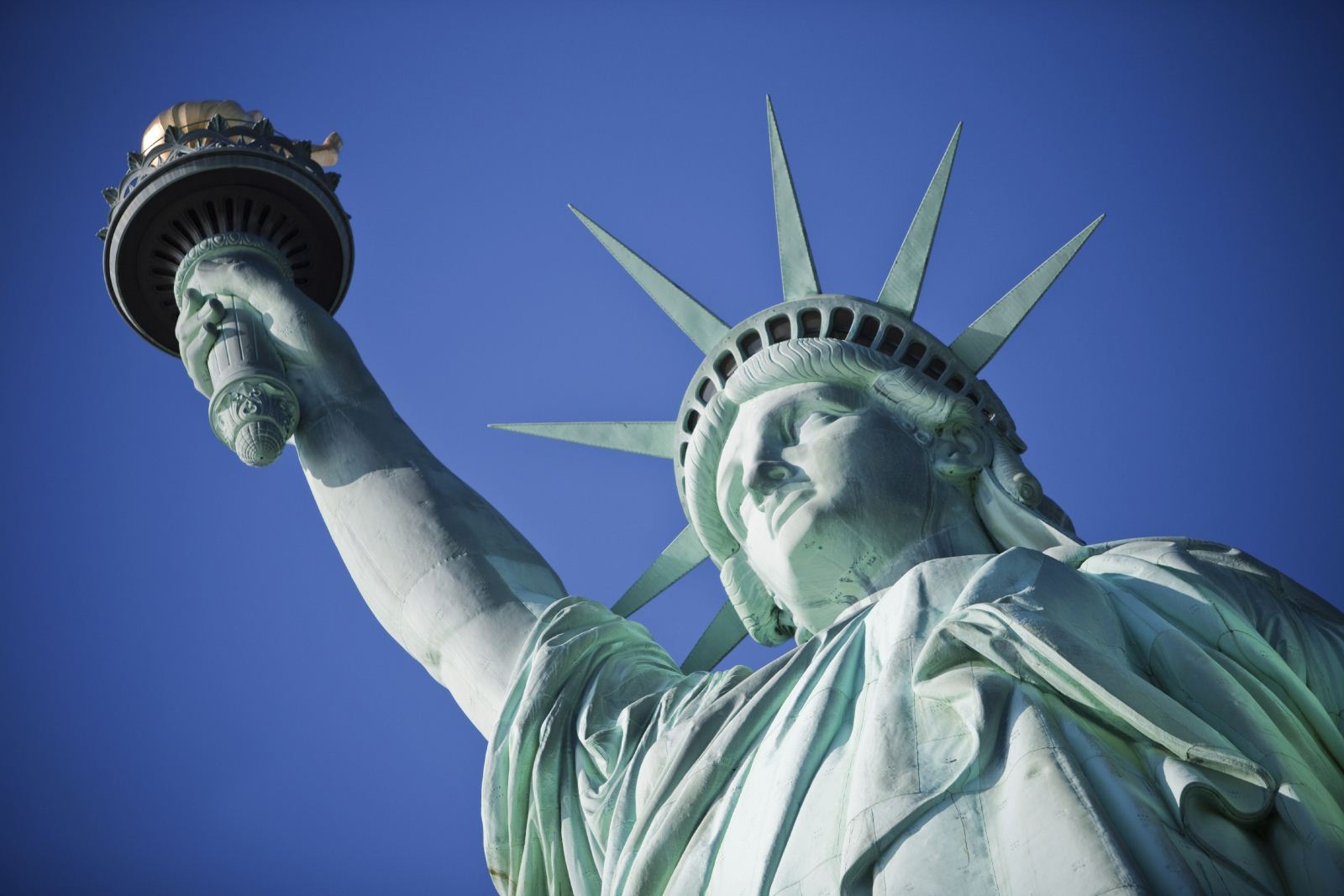
On liberty—Happy Fourth of July!

The New Neo Posted on July 4, 2016 by neoJuly 4, 2016

[NOTE: This is a slightly-edited version of a previous post.]

statueliberty

The Fourth isn’t just about barbecue, although I defer to no one in my regard for barbecue.

It’s about liberty. As the years go by, I appreciate that fact more and more, and sense that our liberty is more and more threatened from within as well as without—and by “within” I mean not just those among us who would destroy it for others, but something in the human heart and mind that means not everyone cares very much about it until they have lost it.

In fact, there’s something in many human hearts and minds that leads some people not to care about liberty even after they’ve lost it, unless they’re the ones in the Gulag.

For whatever reason, I’ve always been very sensitive to liberty, very touchy about it. For example, even when I was quite young, I would pay extra for a health insurance policy that gave me total freedom to choose my doctor. This may seem like a small thing, and at the time I didn’t connect it with any abstract principle such as “liberty.” But I had a horror of being boxed in by a government or a business or an agency telling what I could or could not do and where I could and could not go.

That’s not to say that I was some trailblazing, independent, courageous spirit, cutting an adventurous swath through the world. I lived a pretty ordinary life, I thought. I had a husband and a child. And even later, when I went through my political change, I had no idea where it would lead, either socially (estrangement from quite a few people, mostly mild but sometimes severe) or in terms of what I do with a great deal of my time (reading about politics/history, and writing this blog).

One doesn’t always have any idea where it will lead when you take a step, and then another step, and then another, and pretty soon you’re somewhere you never, never ever, thought you’d be.

When I was young I used to assume that a lot of people, the majority of people, felt the same way I did. Not just about liberty, but about a lot of things. For example, I thought just about everyone loved poetry—what’s not to like? I was in my thirties before I became aware that love of poetry was a relatively rare thing. Another thing I assumed, when managed care started taking over the health insurance world, was that more people would hate it and complain bitterly about it—and, if they could do it, would pay extra to get away from it. But I was surprised when so many people I knew didn’t seem all that offended by it, and even those who could have paid more in order to have choice often decided against it. They couldn’t be bothered, and were happy to save the money.

Then, when I was going through my slow political change between the fall of 2001 (post-9/11) and 2003, I was living a rather isolated life in a place when I hardly knew anyone, newly separated from a husband I’d been with for 30 years. I was also recovering from a very painful arm injury and surgery. So the change experience was a solitary one, and I didn’t start mentioning it to people until after it was pretty much complete some time in 2003.

I had somehow assumed that other people had been going through something similar to my political journey, although perhaps milder. This now seems to me a rather humorous thought, not to mention profoundly naive (you might even call it stupid), but that’s the way it was for me. I was truly shocked to be on the receiving end of a significant amount of hostility from a lot of people when I mentioned my positions on various issues of the day, and this sometimes involved friends and acquaintances I’d known for decades and with whom I’d never even discussed politics before or had a single disagreement of any substance.

Talk about an eye-opener.

Now I have a different way of looking at all of this. Continue reading →

Posted in Liberty, Me, myself, and I | 30 Replies

Post navigation

← Previous Post
Next Post→

Your support is appreciated through a one-time or monthly Paypal donation

Please click the link recommended books and search bar for Amazon purchases through neo. I receive a commission from all such purchases.

Archives

Recent Comments

  • Niketas Choniates on Tucker Carlson is to J. D. Vance as Hasan Piker is to Abdul El-Sayed
  • huxley on Some leftists are celebrating the murder of a young woman in New York because she’s a bank executive
  • Kate on Some leftists are celebrating the murder of a young woman in New York because she’s a bank executive
  • Keith on The Strait of Hormuz
  • Road Warrior on The Strait of Hormuz

Recent Posts

  • The Strait of Hormuz
  • Some leftists are celebrating the murder of a young woman in New York because she’s a bank executive
  • Tucker Carlson is to J. D. Vance as Hasan Piker is to Abdul El-Sayed
  • Open thread 9/2/2026
  • Update on my ex [plus further updates]

Categories

  • A mind is a difficult thing to change: my change story (17)
  • Academia (328)
  • Afghanistan (98)
  • Amazon orders (6)
  • Arts (8)
  • Baseball and sports (164)
  • Best of neo-neocon (91)
  • Biden (536)
  • Blogging and bloggers (593)
  • Dance (292)
  • Disaster (244)
  • Education (323)
  • Election 2012 (360)
  • Election 2016 (566)
  • Election 2018 (33)
  • Election 2020 (513)
  • Election 2022 (114)
  • Election 2024 (403)
  • Election 2026 (90)
  • Election 2028 (13)
  • Evil (129)
  • Fashion and beauty (324)
  • Finance and economics (1,042)
  • Food (317)
  • Friendship (48)
  • Gardening (18)
  • General information about neo (4)
  • Getting philosophical: life, love, the universe (734)
  • Health (1,160)
  • Health care reform (545)
  • Hillary Clinton (184)
  • Historical figures (337)
  • History (716)
  • Immigration (448)
  • Iran (464)
  • Iraq (227)
  • IRS scandal (71)
  • Israel/Palestine (820)
  • Jews (437)
  • Language and grammar (365)
  • Latin America (212)
  • Law (2,972)
  • Leaving the circle: political apostasy (124)
  • Liberals and conservatives; left and right (1,320)
  • Liberty (1,117)
  • Literary leftists (14)
  • Literature and writing (393)
  • Me, myself, and I (1,496)
  • Men and women; marriage and divorce and sex (929)
  • Middle East (384)
  • Military (324)
  • Movies (353)
  • Music (533)
  • Nature (261)
  • Neocons (32)
  • New England (183)
  • Obama (1,738)
  • Pacifism (16)
  • Painting, sculpture, photography (131)
  • Palin (93)
  • Paris and France2 trial (25)
  • People of interest (1,043)
  • Poetry (258)
  • Political changers (178)
  • Politics (2,793)
  • Pop culture (397)
  • Press (1,634)
  • Race and racism (881)
  • Religion (428)
  • Romney (164)
  • Ryan (16)
  • Science (639)
  • Terrorism and terrorists (971)
  • Theater and TV (266)
  • Therapy (71)
  • Trump (1,630)
  • Uncategorized (4,549)
  • Vietnam (109)
  • Violence (1,443)
  • War and Peace (1,027)

Blogroll

Ace (bold)
AmericanDigest (writer’s digest)
AmericanThinker (thought full)
Anchoress (first things first)
AnnAlthouse (more than law)
AugeanStables (historian’s task)
BelmontClub (deep thoughts)
Betsy’sPage (teach)
Bookworm (writingReader)
ChicagoBoyz (boyz will be)
DanielInVenezuela (liberty)
Dr.Helen (rights of man)
Dr.Sanity (shrink archives)
DreamsToLightening (Asher)
EdDriscoll (market liberal)
Fausta’sBlog (opinionated)
GayPatriot (self-explanatory)
HadEnoughTherapy? (yep)
HotAir (a roomful)
InstaPundit (the hub)
JawaReport (the doctor’s Rusty)
LegalInsurrection (law prof)
Maggie’sFarm (togetherness)
MelaniePhillips (formidable)
MerylYourish (centrist)
MichaelTotten (globetrotter)
MichaelYon (War Zones)
Michelle Malkin (clarion pen)
MichelleObama’sMirror (reflect)
NoPasaran! (bluntFrench)
NormanGeras (archives)
OneCosmos (Gagdad Bob)
Pamela Geller (Atlas Shrugs)
PJMedia (comprehensive)
PointOfNoReturn (exodus)
Powerline (foursight)
QandO (neolibertarian)
RedState (conservative)
RogerL.Simon (PJ guy)
SisterToldjah (she said)
Sisu (commentary plus cats)
Spengler (Goldman)
VictorDavisHanson (prof)
Vodkapundit (drinker-thinker)
Volokh (lawblog)
Zombie (alive)

Meta

  • Log in
  • Entries feed
  • Comments feed
  • WordPress.org
©2026 - The New Neo - Weaver Xtreme Theme Email
Web Analytics
↑