
Terrorism, and the failure to address it adequately, even after all these years.
And Theresa May is in cloud cuckoo land
I’m referring to this absurd statement of May’s:
We could never have predicted the tragic turn which events would take. We could never have imagined the appalling depravity which led a cowardly and callous killer to target innocent men, women, and children, in the way that we saw in Manchester two weeks ago. Nor could we have envisaged the brutal attack that was carried out on the streets of London Saturday evening.
I tried to find the context in which May said this, because sometimes taking a quote out of context distorts its meaning. Unfortunately, I could only find the excerpt (you can see a video of it at the link). In and of itself, it is more than absurd—it is deluded, bizarre, troubling.
Ever since 9/11 it has not been difficult to “predict” or “imagine” or “envisage” something of the sort, and worse. In fact, we don’t have to really use our imaginations or any sharp powers of prediction. It is obvious that such things will happen because they have happened many, many, many times before, both in the West and elsewhere. Even the particular methods and tools of the London Bridge attack—vehicles on a bridge, knives in public places—are highly familiar, as are the backgrounds of the killers.
All, all, completely and utterly predictable by even a simpleton or a young child. May is neither, but if she has so much trouble with the concept she should not be head of state.
I try to “imagine” some benign explanation for the May quote. Perhaps she also had added something like: Twenty or thirty years ago, we could never have imagined… I doubt that’s what she said, though, and even then, we should have imagined. But many decades ago, it at least would be understandable if we didn’t imagine it. Now? No excuse whatsoever.
Perhaps the problem is a form of ethnocentrism, a tendency to look at other cultures based on what’s customary in one’s own culture. The mind reels and the mind boggles at this behavior, yes, but it can’t reel and boggle so much that we deny reality. That’s a fatal error—and a puzzling one, considering the evidence before us.
The London Bridge terrorists are identified. Guess what?
Known wolves, of course.
There is nothing—I repeat, nothing—in the description of these men so far that would surprise anyone who’s been reading the news for the past decade or so. Known to the police? Check. Not considered enough of a threat, despite many warnings and reports of their extreme radicalization? Check.
Either the police are overwhelmed by thousands and thousands of such people, or they are making a conscious effort to ignore the threat (I say there’s probably some of both). I’ve written on the topic before, so there’s no need to go into it again; see this for a lengthy discussion that I posted after the Manchester bombing. I repeat this particular thought:
Why do these hotlines even exist? Is it to reassure people that they are helping authorities to do something about it when in fact nothing is done? In other words, to give a false sense of security?
And what happens to those on such a “watch list”? If Abedi [the Manchester terrorist] was on one, it apparently was one that was all “watch” and no action, because he was allowed to regularly travel back and forth to Libya despite it, and it is suspected he traveled from there to terrorist hot-spot Syria as well.
I wonder””did authorities even compile a file on Abedi linking all these reports, or was each call-in treated as disconnected from the others?
Similarly, there were plenty of call-ins on the supposed ringleader of the London Bridge plot, Khuram Butt (also known as “Abu”), and these warnings seem to have been ignored to an even greater extent than occurred with Abedi [emphasis mine]:
[One of] the [London Bridge] terror suspect[s] was also known by the name Abu Zeitoun, meaning ‘father of olive’ in Arabic.
The former friend [of Abu’s] claimed he contacted police after becoming concerned over comments he made about other attacks.
The friend told the BBC’s Asian network that the terrorist, who was known as Abu or Abs, had been radicalised watching vidoes of the infamous American hate preacher Ahmad Musa Jibril [on YouTube].
He said: “We spoke about a particular attack that happened and like most radicals he had a justification for anything and everything and that day I realised that I needed to contact the authorities.”…
“I phoned the anti-terror hotline. I spoke to the gentleman. I told him about our conversation and why I think he was radicalised.”
But he said he was not arrested and was allowed to keep his passport.
“I did my bit, I know a lot of other people did their bit, but the authorities did not do their bit,” he said.
And this part is exactly parallel to what happened with Abedi, who was banned from Didsbury Mosque for a similar reason:
…it also emerged that [Abu] was thrown out of his local mosque two years ago after clashing with the Imam about politics.
One more thing about Abu—he was featured in an alarming documentary about extreme jihadis living in Britain. If that isn’t a red flag, I don’t know what is.
So far it seems that two of the terrorists were British citizens and one was not, but Butt-“Abu” was actually born in Pakistan. Was he a naturalized citizen? When did he come to Britain? Under what circumstances?
Even now, why do only one in ten London police officers carry guns?
To me this is surprising, considering the enemy the Brits now face:
…[M]ore than 90 percent of the capital’s police officers carry out their daily duties without a gun. Most rely on other tools to keep their city safe: canisters of mace, handcuffs, batons and occasionally stun-guns.
This is no accident…
Giving everyday police officers guns sends the wrong message to communities, so this thinking goes, and can actually cause more problems than it solves.
British police apparently have a philosophy of engagement that comes from a lengthy tradition of not carrying guns. They do have specially trained gun-wielding police units which are called to the scene if needed, which seems to me to involve an almost inevitable delay. And every time they fire a gun and injure or kill someone, the incident is investigated to the hilt:
Some police have complained that officers are reluctant to sign up for firearms training because they fear being dragged through years of lengthy investigations in the unlikely event they have to use their weapon.
“Officers have seen what happens to their colleagues who have had to use lethal force to protect the public,” outgoing Metropolitan Police Commissioner Bernard Hogan-Howe told reporters last month. “Increasingly, they seem to be portrayed as suspects, based, I can only assume, on an underlying belief that they must have acted in a criminal fashion if someone has died.”
It appears that British police have reason to fear that they will be considered guilty till proven innocent. Fortunately for them (and the terrorists), the British citizenry also has a very low incidence of gun ownership, and so the police can often get away with not having firearms themselves and not get blown away by armed criminals.
There also seems to be a philosophy, even among police, that a certain amount of terrorism is acceptable, and that this is a fair trade-off to make for the sake of having a kinder, gentler police force, at least according to the following quotes:
While British officials have long since accepted that [a terrorist] attack is “highly likely,” they believe that intelligence-gathering and stronger links with the community ”” rather than gun-toting cops ”” will do more to keep the city safer.
“In a free and democratic society, there is going to be a balance between democracy, freedom and openness, and a police state ”” and none of us want to live in a police state,” said Brian Dillon, former head of the Met’s firearms command who now runs the counterterrorism consultancy Rubicon Resilience.
“Therefore at some point some attacks are regrettably going to hit home, that’s inevitable,” he added. “Not everything can be stopped.”
It’s an odd definition of “police state” that equates it with police officers having guns. To me, out-of-control surveillance and intelligence-gathering runs a greater risk of turning a place into a “police state,” but I guess the Brits don’t see it that way.
So, how many terrorist attacks are acceptable to the British? There have been two major ones in just the last two weeks, and one a few months ago. I think the British attitude towards this represents a pipe dream, a dangerous case of wishful thinking and a failure to come to turns with the reality of the world they now face.
In the London Bridge attack on Saturday, it took the police eight minutes after the first call to come to the scene and kill the terrorists. Some people have suggested that’s a very short time, but it seems to me it’s a relatively long time in a big city like London that has many police. In fact, there were apparently police on the scene much earlier than that, but they were hamstrung by their lack of lethal firepower. For example:
A British Transport Police officer who was seriously injured in the terror attack at London Bridge has been hailed for his “outstanding” bravery.
Armed only with just a baton, the unnamed officer tackled the attackers and suffered injuries to his head, face and leg.
“Although he is seriously unwell, he was able to recount how he faced the attackers armed only with his baton, outside London Bridge station,” Crowther said in a statement.
“It became clear that he showed enormous courage in the face of danger, as did many others who were at the scene and rushed to help.”
So British authorities think it’s a good idea to bring a baton to a knife fight? This seems like madness to me. Why should this officer be in the position of defending himself and the crowd with such an inadequate weapon?
Some civilians seem unaware of the extreme unlikelihood of the police in London being armed:
“As [the terrorists] left [a pub] I was going “Oi, oi, cowards!” Vowles said. “I was just trying to get their attention by throwing things at them … I thought if I throw bottles or chairs they can come after me. If I can get them to come to the main road then the police can stop them, they can obviously shoot them.”
They could obviously shoot them—if they were armed with guns, that is. Otherwise, it’s not so obvious.
And if you read this account from eyewitnesses, some describe the amount of time the attackers were rampaging as having been ten minutes or more. That’s a long time, and there were a lot of injured people; the terrorists had time to go into many restaurants and pubs. What’s more [emphasis mine]:
A chef from Fish restaurant said: “I saw two men with big knives downstairs outside Roast. They were stabbing people. The police were running away, they were normal officers, they were running away.
“Normal officers”—that is, essentially unarmed officers.
There is a plan to increase the number of police officers at stations, including armed officers:
British Transport police said travellers may notice an increased police presence following the attack.
In a statement, the force said: “Members of the public should expect to see extra police officers patrolling stations in London and the south-east following the attacks. You may also see some of our armed police officers at stations.”
I would certainly hope so.
During Saturday night’s attack, the police killed the three perpetrators. But this action by police was actually highly unusual in Britain, so much so that the police feel the need to explain why they did it:
Armed officers responding to the London Bridge terror attack fired an “unprecedented” number of rounds at the three attackers because they were wearing what appeared to be suicide belts, police said.
Eight officers fired 50 shots at three attackers to ensure they were neutralized, said Mark Rowley, assistant commissioner for specialist operations in the Metropolitan Police Service. Rowley is Britain’s most senior counterterrorism office.
The suicide belts were later determined to be fake…
“The situation these officers were confronted with was critical, a matter of life and death. Three armed men, wearing what appeared to be suicide belts, had already attacked and killed members of the public and had to be stopped immediately,” he said.
But “immediately” isn’t going to be so immediate if police aren’t usually armed with guns. And I wonder: if the terrorists had not been wearing fake explosive belts, would the police who killed them have had more trouble justifying their own lethal actions, under British law?
Not only does Britain have extremely strict gun control for private citizens, but it’s only in Northern Ireland that police are regularly armed:
In 2012, the BBC reported that just five percent of officers in England and Wales were authorized to carry firearms. Former Metropolitan Police deputy assistant commissioner Brian Paddick told the BBC that the officers want to appear “approachable” to the public.
This relic of 19th Century philosophy has survived to the 21st Century. Why the exception for Northern Ireland? You’ll have no trouble whatsoever guessing: their experience with IRA terrorism.
Some more history:
The issue of routine arming in Great Britain was raised after the 1952 Derek Bentley case, in which a Constable was shot dead and a Sergeant severely wounded, and again after the 1966 Massacre of Braybrook Street, in which three London officers were killed. As a result, around 17% of officers in London became authorised to carry firearms. After the deaths of a number of members of the public in the 1980s fired upon by police, control was considerably tightened, many officers had their firearm authorisation revoked, and training for the remainder was greatly improved. As of 2005, around 7% of officers in London are trained in the use of firearms. Firearms are also only issued to an officer under strict guidelines
And now, as noted earlier in this post, the percentage of armed police in London is up again but only to 10%. Part of the reason the number is still so small is quite obviously the fear of accidental killing of innocent civilians. These days the armed police are brought to the scene in an Armed Response Vehicle. Originally, the weapons were kept locked and needed special orders to be distributed to the officers, but more recently, the officers have finally been allowed to wear their weapons.
However, the rank and file police officer is very very much against carrying a gun him/herself:
Surveys by the Police Federation of England and Wales have continued to show police officers’ considerable resistance to routine arming. In the Federation’s most recent (2006) Officer/Arming survey, 82% of respondents were against the routine arming of police…
Perhaps this is one of the reasons why:
As with all use of force in England and Wales, the onus is on the individual officer to justify their actions in court.
To me as an American, the entire situation seems to be a form of extreme denial.
Terrorist attacks in London
The mechanisms: a vehicle and knives. The venues: London Bridge and Borough Market. Seven people are believed dead. Early reports are that five terrorists were involved, Two or three are believed to have been killed by police gunfire, and the rest apparently remain at large.
It’s not clear whether the count of seven dead includes the terrorists. Actually, as with most of these attacks, not much is clear right now, because the attack only occurred about four hours ago.
Tonight’s attack is part of the recent pattern of vehicles and/or knives. If a person has the will, it’s not at all difficult to carry out that sort of attack. It isn’t even necessary to get a gun or explosives, because just about everyone has access to a vehicle and a knife. I see no reason why such attacks would be stopping any time soon; there seems to be no dearth of willing killers and the police cannot possibly monitor them all even if they were determined to do so.
I’ve written many many posts about the situation, and so I refer you to my most recent ones: this and this.
RIP to the victims of this terrible act.
Bring back the opera-length evening glove
Long evening gloves used to be standard for all well-dressed women when they wore evening gowns during the 1950s. As a child, one of my very favorite occupations was to open the top drawer of my mother’s bureau (yes, I was allowed to do this) and to try on some of her gloves. They were long and short ones of different colors and materials, including kid, and many of the long ones had a row of tiny elegant buttons.
Here’s a high-fashion version:

And here’s Marilyn Monroe with a color-coordinated version to catch all those millionaires:
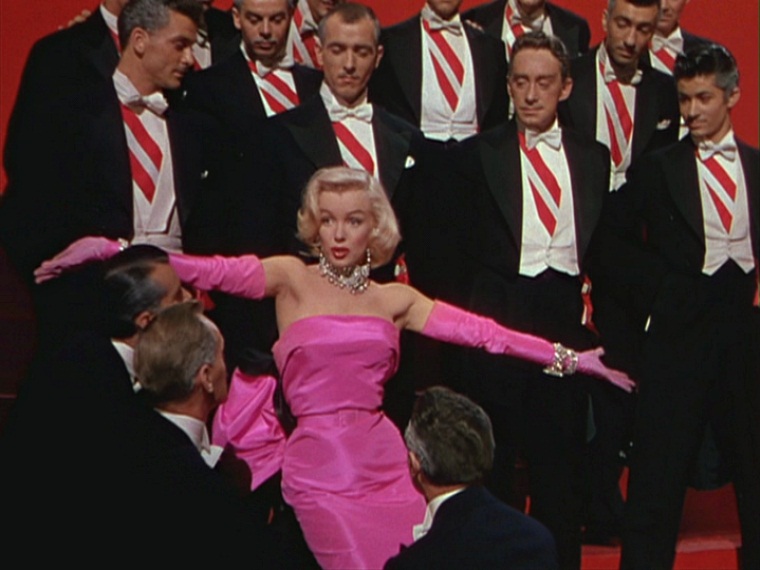
If you do a Google search now, it appears that long gloves have been somewhat relegated mostly to the kinky accessory category.
But look at Jackie, so elegant!


And I had a vague memory that Michelle Obama wore opera gloves, too, on occasion. And yes, here they are—the occasion seems to have been a meeting with Queen Elizabeth:
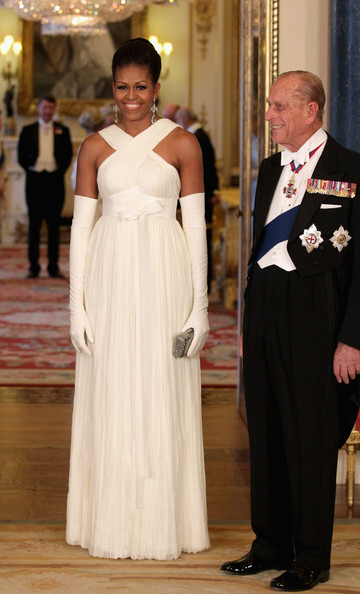
[NOTE: You might want to take a look at what Rita Hayworth does with evening gloves here.]
Intelligence leakers + liberal MSM = endangering our intelligence operations and the lives of agents
It’s an old story.
The MSM considers itself to be immune from prosecution for publishing intelligence information, even if it could harm this country and its operatives.
Actually, especially if it could harm the policies of the United States under President Donald Trump.
So we have things like this:
…[T]he Times has apparently made it the newspaper’s mission to make the [CIA’s] work much more difficult and far more dangerous by publicly identifying the man in charge of its covert operations in the Persian country [Iran]. The paper’s rationale? The report’s authors claimed that because the newspaper already outed D’Andrea in 2015 as the official in charge of a CIA drone program, ignoring desperate pleas from the CIA at the time to keep his name secret in order to protect both the agent and overall national security, it was kosher to out him as the agency’s new Iran chief in 2017…
…[T]he paper’s real reason for outing D’Andrea, who was depicted as a character known only as “The Wolf” in the film “Zero Dark Thirty,” is that he’s an Iran hawk likely to oppose the previous administration’s attempts to normalize the nation by giving it billions of dollars, trading it terrorists for hostages, and blessing its nuclear program.
When the Times and the WaPo published the Pentagon Papers back in 1971, a suit was brought about whether this was a violation of the Espionage Act. The case was decided by the Supreme Court in favor of the Times:
The question before the court was whether the constitutional freedom of the press, guaranteed by the First Amendment, was subordinate to a claimed need of the executive branch of government to maintain the secrecy of information. The Supreme Court ruled that the First Amendment did protect the right of the New York Times to print the materials…
In its decision, the court first established the legal question with the use of precedents. It first stated that “Any system of prior restraints of expression comes to this Court bearing a heavy presumption against its constitutional validity”. The purpose of this statement was to make the presence of the inherent conflict between the Government’s efforts and the First Amendment clear. The decision then stated that the government “thus carries a heavy burden of showing justification for the imposition of such a restraint”. This reinforced the idea that it was the Nixon Administration’s responsibility to show sufficient evidence that the newspapers’ actions would cause a “grave and irreparable” danger.
In his opinion, Justice Hugo Black wrote the following:
In the First Amendment the Founding Fathers gave the free press the protection it must have to fulfill its essential role in our democracy. The press was to serve the governed, not the governors. The Government’s power to censor the press was abolished so that the press would remain forever free to censure the Government. The press was protected so that it could bare the secrets of government and inform the people. Only a free and unrestrained press can effectively expose deception in government. And paramount among the responsibilities of a free press is the duty to prevent any part of the government from deceiving the people and sending them off to distant lands to die of foreign fevers and foreign shot and shell. … [W]e are asked to hold that … the Executive Branch, the Congress, and the Judiciary can make laws … abridging freedom of the press in the name of ‘national security.’ … To find that the President has ‘inherent power’ to halt the publication of news … would wipe out the First Amendment and destroy the fundamental liberty and security of the very people the Government hopes to make ‘secure.’ … The word ‘security’ is a broad, vague generality whose contours should not be invoked to abrogate the fundamental law embodied in the First Amendment. The guarding of military and diplomatic secrets at the expense of informed representative government provides no real security .
I see this as effectively placing no restrictions on the press at all, making the press sovereign and allowing it to expose any confidential information it wishes, as long as it can find a willing informant. Surely the Founders could not have meant that to happen, either.
I have previously written several posts on the Pentagon Papers, and I direct your attention to this one. Here’s a quote from this article:
Journalist Edward Jay Epstein has shown that in crucial respects, the Times coverage was at odds with what the documents actually said. The lead of the Times story was that in 1964 the Johnson administration reached a consensus to bomb North Vietnam at a time when the president was publicly saying that he would not bomb the north. In fact, the Pentagon papers actually said that, in 1964, the White House had rejected the idea of bombing the north. The Times went on to assert that American forces had deliberately provoked the alleged attacks on its ships in the Gulf of Tonkin to justify a congressional resolution supporting our war efforts. In fact, the Pentagon papers said the opposite: there was no evidence that we had provoked whatever attacks may have occurred.
In short, a key newspaper said that politicians had manipulated us into a war by means of deception. This claim, wrong as it was, was part of a chain of reporting and editorializing that helped convince upper-middle-class Americans that the government could not be trusted.
I repeat: is there any limit to the power of the press, to lie, distort, and advance its own agenda, all in the name of a protected freedom of the press? And what about the leakers? Is the press able to protect them from prosecution, as well, by keeping their identities secret?
Why Ruth Bader Ginsburg should be voting in favor of Trump’s travel ban EO
The Supreme Court is about to render judgment on the 4th Circuit’s upholding of an injunction against Trump travel ban EO. Professor Jacobson at Legal Insurrection suggests that, based on her prior remarks about Trump, Justice Ginsburg ought to be considering recusing herself:
This case, unlike other more mundane cases involving Trump policies that may come before the court, clearly places Donald Trump’s words, personality and credibility in issue.
One of the Justices already has expressed a view on Trump’s credibility. In July 2016, Justice Ruth Bader Ginbsburg was quoted in a CNN interview deriding Trump as “a faker”.
Professor Jacobson goes on to cite many other instances in which Ginsburg criticized Trump in no uncertain terms. She received negative press for this and finally stopped the practice, but her anti-Trump words are on record and they are quite unusual for a Justice of the Supreme Court.
Jacobson adds:
This is not a situation where a Justice merely is presumed to have political leanings (don’t they all?), or is affiliated with one political party more than another. Justice Ginsburg has publicly questioned Trump’s credibility, and that credibility is an issue in the case as it presents itself in the 4th Circuit decision from which review is sought.
I remember the incidents, and I criticized her for them at the time. But just now, when I read the Ginsburg quotes in Professor Jacobson’s LI post, one in particular struck me as especially relevant to the current travel ban EO case. Here’s the Ginsburg quote:
“He is a faker,” she said of the presumptive Republican presidential nominee, going point by point, as if presenting a legal brief. “He has no consistency about him. He says whatever comes into his head at the moment.”
In the travel ban cases, judges have cited Trump’s prior statements about wanting a Muslim ban and used those statements of Trump’s to invalidate his later travel ban on the basis of the earlier utterances, which they feel were motivated by religious animus towards Muslims. Aside from the rather dubious legal reasoning involved, this sort of judgment implies that Trump’s prior statements were the real ones, expressing his deepest feelings and the wellspring of his later EO, and that he’d merely learned to hide them.
But if we look at Ginsburg’s prior statement—the one I just quoted—it’s clear that she should be throwing out Trump’s “Muslim ban” campaign statements as worthless and meaningless, and evaluating his travel EO strictly on its own words. In other words, if Ginsburg believes that Trump is a “faker, has no consistency, and says whatever comes into his head at the moment,” then she would have no way to determine that his Muslim ban statements meant anything more than anything else he has said, before or since, and they must be discarded and the travel EO evaluated on its face only.
I don’t for a moment think Ginsburg will recuse herself from this case. And I don’t think for a moment that she’ll follow the line of reasoning I’ve just presented and rule in favor of allowing Trump’s EO to stand. But I think logic indicates that, if she does rule on the case, she should not take Trump’s prior Muslim ban statements (or any other prior statements of his) into consideration at all.
You wouldn’t think it possible to make Kathy Griffin look relatively tactful in comparison
But it’s been accomplished by Ken Jennings, he of Jeopardy fame and author of children’s books.
Why do I say Jennings made Griffin look relatively tactful? Well, she targeted Trump is a stunningly tasteless way, but Jennings not only did that but also mocked 11-year-old Barron Trump:
“Barron Trump saw a very long necktie on a heap of expired deli meat in a dumpster,” Jennings tweeted on Wednesday. “He thought it was his dad & his little heart is breaking.”
The atmosphere of Twitter, where pithy comments of ever-escalating boldness are rewarded (that tweet of Jennings has garnered over 23,000 “likes”), encourages this sort of supposed witticism. Jennings’ tweet has also drawn much heated criticism, even from those who don’t like Trump, just as Griffin’s photo-op with the severed head did.
Now, in a recent press conference (see this), Griffin made it clear that she sees herself as the victim. And her lawyer sees Jennings as a fellow victim of Trump and his family.
You can’t make this stuff up. And who would want to?
That’s a rhetorical question.
Campus indoctrination: the progressive summer reading list
[Hat tip: Fuzzy Slippers at Legal Insurrection.]
The NAS (National Association of Scholars) reports on the slant of the books on the typical college reading list given to incoming freshmen to prepare them for the rigors of college study:
Hundreds of American colleges and universities assign a summer reading to entering freshmen. NAS publishes the nation’s only comprehensive list of the books in college common reading. The newest edition, Beach Books 2016-2017: What Do Colleges Want Students to Read Outside Class?, lists and analyzes 359 assignments at 348 colleges located in 46 states.
Most assignments were contemporary memoirs and popular nonfiction that endorsed politically progressive perspectives on affirmative action, gay, lesbian, and transgender life, global warming, illegal immigration, racial identity, recycling, sexism, incarceration, or wealth.
We’re talking about a very different canon here from the classics of Western literature. A few are fine, but this is a steady diet. We’re also talking about books that are usually quite recent rather than older.
The NAS has offered a counter-list of 110 recommended books. I skimmed it, and one of the books in particular sparked a memory of a work that made a deep impression on me in college: Turgenev’s Fathers and Sons.
I’m writing the rest of this post from memory, and my memory of the book is almost certainly indistinct. After all, it’s been nearly a half-century (!!) since I read it. But its depiction of certain types of people—politically, intellectually, and emotionally—and the manner in which they come to believe in and commit various follies, struck a deep chord with me. Not only did I recognize some of the political types in both the student population and the older generation of my own time (the 60s), but I found familiar characters from my own family. The book also dealt with family interactions and how sons rebel against the ideas of their fathers.
All in all, it made me think and broadened my perspective. I now saw the 60s in the United States as at least partly a rerun of the 1800s in Russia (the book came out in 1862), and this was not a comforting thought in terms of where we might be headed. This book, and other example of older Russian literature that I read at the time, gave me a wider view than I would have had without them. It became clear to me that the supposedly wonderful uniqueness and ground-breaking thoughts of my generation were neither, and that our path might lead to something very very bad.
These Russian books made it impossible for me to join fully in some of the political excesses of my time. Some of that reluctance may have also been my own personality, but I am convinced that books were a large influence.
Not everyone is as influenced by books as I was. But the educators who compile their lists of assignments certainly are trying to influence malleable minds and guide them in a particular direction. And the people at the NAS who have come up with their counter-list are doing the same. Although I believe that education should have the goal of helping the student think and evaluate in an objective and logical manner, it also inevitably will have qualities of indoctrination and will tend to coax the student in t certain direction. As Allan Bloom wrote (and as I quoted him yesterday):
Every educational system has a moral goal that it tries to attain and that informs its curriculum. It wants to produce a certain kind of human being”¦In some nations the goal was the pious person, in others the warlike, in others the industrious”¦Aristocracies want gentlemen, oligarchies men who respect and pursue money, and democracies lovers of equality. Democratic education, whether it admits it or not, wants and needs to produce men and women who have the tastes, knowledge, and character supportive of a democratic regime. Over the history of our republic, there have obviously been changes of opinion as to what kind of man is best for our regime.
The reading list is one of the many tools marshaled in that endeavor. Do not underestimate its power; I certainly don’t.
Trump and the Climate Accord
President Trump has announced that the US is withdrawing from the Paris Climate Accord. That CNN article I just linked to says in the first sentence that his withdrawal will “seriously dampen global efforts to curb global warming.”
But do those efforts matter in any save the political and/or symbolic sense? Trump describes the Accord this way:
“The agreement doesn’t eliminate coal jobs, it just transfers those jobs out of the United States and ships them to foreign countries,” Trump said from the Rose Garden. “This agreement is less about the climate and more about other countries gaining a financial advantage over the United States.”
He also says he plans to negotiate a new and better deal.
Powerline’s Steven Hayward has written:
In one sense, the Paris Accord is so weak and unserious that it doesn’t much matter to the climate whether we stay or go. This is one reason why major oil companies want us to stay in, but chief climatista James Hansen calls the Paris Accord a “fraud.” Nevertheless, Tom Steyer is already shrieking that withdrawal from the Paris Accord would be a “declaration of war” against the American people. In fact, if you’re a true-believeing climatista, it is possible that the cause of reducing greenhouse gas emissions might prosper better without the Paris Accord.
The argument for indifference can be seen in these two simple charts, produced by our friends at the green-leaning Breakthrough Institute, which show that the Kyoto Protocol had no discernible effect on the rate of decarbonization that has been steadily taking place for decades now…[charts follow]
The point being made is that the Paris Accord is a red herring, mere window-dressing that doesn’t affect the real issues of climate and emissions that continue to be hotly debated. Of course, Trump will be demonized for this action by the AGW proponents, and lauded by the AGW detractors, but the Accord itself probably has had no appreciable effect whatsoever on climate change.
More background on the Paris Accord can be found here:
The Accord was doomed before negotiators ever assembled for photographs in December 2015. They were not there to commit each country to meaningful greenhouse-gas reductions; rather, everyone submitted their voluntary pledges in advance, and all were accepted without scrutiny. Pledges did not have to mention emissions levels, nor were there penalties for falling short. The conference itself was, in essence, a stapling exercise…
Celebrating the success of this collation coalition, Secretary of State John Kerry claimed that “186 nations in the world came together to submit a plan, all of them reducing their emissions.” That was not true. In fact, most of the major developing countries, whose emissions will drive climate change this century, pledged only to continue with business as usual…
The volunteer pledges have commanded precisely the respect they deserve. An April report by Transport Environment found only three European countries pursuing policies in line with their Paris commitments and one of those, Germany, has now seen two straight years of emissions increases. The Philippines has outright renounced its commitment. A study published by the American Geophysical Union warns that India’s planned coal-plant construction is incompatible with its own targets. All this behavior is socially acceptable amongst the climate crowd. Only Trump’s presumption that the agreement means something, and that countries should be forthright about their commitments, is beyond the pale.
That writer, Oren Cass, also makes the interesting point that Obama never submitted the agreement to the Senate because he knew he couldn’t get Senate approval, and that Trump could redress that error by submitting the withdrawal to a Senate vote. That ignores the fact that Trump’s withdrawal probably wouldn’t pass, either, due to the filibuster (unless the nuclear option were to be used). One of the drawbacks to a president such as Obama who does so many things by executive fiat without Congressional approval is that a subsequent president can do or undo the same things and not feel the least bit bad about it.
Investigating the unmasking
Of the seven subpoenas reportedly issued by the House [Intelligence] committee, four are said to involve the Russia aspect of the probe. Fox News reports that these subpoenas substantially duplicate information already sought by the Senate committee, and are directed at alleged collusion, at longtime Trump personal attorney Michael Cohen…, and at retired General Michael Flynn, Trump’s original national-security adviser…
The three subpoenas relating to the unmasking aspect of the investigation are directed to the CIA, the National Security Agency, and the Federal Bureau of Investigation. As the Fox report elaborates, the House committee has claimed that, while the NSA has been cooperative in making voluntary disclosures, the CIA and FBI have been slow to respond. Hence, the subpoena.
As I have previously explained, the CIA, NSA, and FBI are the investigative components of the 17-component “community” of intelligence agencies. It is those three agencies that collect raw intelligence and that make decisions about what identities should be unmasked…
Under the rules that apply to foreign-intelligence-collection, there is a presumption against revealing the names of American citizens. But there are significant loopholes: The names may be unmasked if intelligence officials determine that knowing the identity of an American is necessary in order to understand and exploit the intelligence value of the information collected.
Thus, as I’ve also outlined, it is unlikely that any single instance of unmasking would be found to be a violation of law ”” and, indeed, it would not violate any penal statute (it would violate court-ordered “minimization” procedures). Nevertheless, were a pattern of unmasking established, divorced from any proper foreign-intelligence purpose, that would be a profound abuse of power in the nature of a “high crime and misdemeanor” ”” the Constitution’s predicate for impeachment.
The trouble with investigations like this is that they are of necessity slow. There is no way around that, but it means that to most people it’s a big yawn, if they manage to follow it at all. It also means that any action comes way too late to stop the thing from happening till the damage is already done (or the advantage gained, depending on what side you’re on).
Another related problem is that these things tend to be very legalistic and complex. That also makes them hard to follow and instrinsically somewhat boring to most people. It’s much more fun, and easier, to talk about Trump’s “covfefe.”