↓
 

The New Neo

A blog about political change, among other things

  • Home
  • Bio
  • Email
Home » Page 940 << 1 2 … 938 939 940 941 942 … 1,915 1,916 >>

Post navigation

← Previous Post
Next Post→

The Donald Trump Jr. scandal continues

The New Neo Posted on July 12, 2017 by neoJuly 12, 2017

I guess I have to keep writing about this one, because it seems to be the only thing in the news right now. That’s hyperbole, of course, but as Paul Mirengoff of Powerline wrote today (and remember, Mirengoff has not been any sort of kneejerk Trump supporter in the past):

The mainstream media is in a state of ecstasy over the story of Donald Trump Jr.’s meeting with that Russian lawyer. It’s easy to understand why. After months with nothing to feed on, the media now has a scrap. In this context, the meal feels like a feast.

So, let’s plunge in and feast on some scraps, shall we?

I will now summarize what we know so far, and the conclusions I draw (knowing that things may change with future revelations, if any come):

(1) During the 2016 campaign, Donald Trump Jr. was acting as a private citizen campaigning for his father; he didn’t hold any official position in the Trump campaign hierarchy. However, we can assume he certainly was checking in with his father often. The extent of their coordination is unclear, however, and there is no evidence Jr. ever talked to his father about this particular meeting. Trump Jr. denies that he did, and in this case I happen to believe him, because he got absolutely no useful information from the meeting with the Russian lawyer (which occurred in June of 2016, a very busy time for the campaign).

(2) Trump Jr. is said to have publicly denied ever meeting with any Russians. If he did say that, it would be a lie. However, I’d love to get the exact wording of his denial and see what he actually said about this. I haven’t been able to find a word of it so far, so if anyone can find a link please put it in a comment so I can ascertain what he said (for example, whether he said “Russians” or limited the denial to members of the Russian government). I thought I’d struck pay dirt when I saw a link to this video entitled “Trump Jr.’s emails conflict with denials of contact between campaign, Russia,” but when I listened to the video I didn’t hear any conflict between the emails and the denials on the video. Instead, the video featured denials (mostly by other Trump aides) that the Trump campaign had colluded with Russians who’d been meddling with or hacking the US election. Trump Jr’s planned meeting was with a person who might have had dirt on Hillary Clinton (although Trump Jr. expressed his skepticism by adding “if it’s what you say”). But in fact the meeting demonstrated she had no such knowledge at all. It turns out there was nothing with which to collude; her agenda was something else entirely—an adoption law.

(3) When Trump Jr. met with the Russian lawyer (see this for more details about her), he initially thought she was some sort of Russian official but she was not. At what point did he learn that she wasn’t a Russian official? We don’t know; it may have been before the meeting, but it’s certainly likely that he had discovered it at some time before the meeting was over.

(4) Trump Jr. now says this about the incident: “this is before the Russia mania. This is before they were building it up in the press. For me, this was opposition research… So, I think I wanted to hear it out. But really, it went nowhere and it was apparent that that wasn’t what the meeting was actually about.” That seems to have been the case, at least according to reports so far of what transpired.

(5) Trump Jr. was a political neophyte at the time. He says he’s since learned more (I bet that’s true) and would have done things a bit differently.

(6) To me, the single most potentially damaging thing in the emails is this: Goldstone made a reference to Russians trying to help Trump’s campaign. The wording goes

…offered to provide the Trump campaign with some official documents and information that would incriminate Hillary [Clinton] and her dealings with Russia and would be very useful to your father.

This is obviously very high level and sensitive information but is part of Russia and its government’s support for Mr Trump…

Nothing we have learned so far, however, indicates that Trump Jr. believed there to have been such support from Russia, just because Goldstone referenced it. Receiving an email that alleges something doesn’t mean you accept the premise or have had any previous contacts with the group mentioned, but it is very plausible that Trump Jr. was very intrigued and wanted to learn more (his claim of “opposition research”).

I don’t think I’ve written a single word about Donald Trump Jr. up until this incident came out; he just wasn’t on my radar screen (except I think that in one post I mentioned his childhood reaction to the Trump divorce). So I have no vested interest in defending him. I don’t know what sort of person he is, abominable or upright or anything in between. I try to look at the whole thing in an objective light, and what I see so far is a tempest in a teapot. That could change if more is revealed, but that’s my conclusion at this point.

I think what happened is this: a somewhat naive and in-over-his-head Donald Jr. got a tip that someone might be able to give him some damaging info on his father’s opponent. That would have been fabulous opposition research, nothing seemed illegal about it to him at the time, and he said “Fine.” He should have run it by some lawyers who might have warned him off (or who actually might have said “go ahead,” for all I know), but he didn’t. When the meeting actually occurred, however, it was so disappointing, boring, and unrevealing that he probably did fail to mention it afterward to anyone. It’s even possible he forgot about it till the evidence of it came out later, although he certainly might have remembered it and was covering it up because he knew the opposition would make hay of it.

Not a single bit of this was a crime. Was it smart? No. Was it exemplary or admirable? Absolutely not. But I see it as an example of the type of thing that happens in politics every day—some sort of slightly shady and/or slightly nasty operation that fizzles, and then when asked about it, some sort of denial from the parties that may not be the truth, and certainly is not the truth, the whole truth, and nothing but the truth.

Obviously, the investigation into possible links between Trump and Russia will continue, as it should. If a smoking gun is found, so be it. This is not that smoking gun, although the media and the liberal/left will do its utmost to convince us it is, and they may even succeed.

[ADDENDUM: Commenter “Cap’n Rusty” linked to this interesting post by Jerry Pournelle that gives some perspective on how this sort of thing works in most campaigns.]
Posted in Politics, Trump | 24 Replies

A bit more about the “collusion” story

The New Neo Posted on July 11, 2017 by neoJuly 11, 2017

There’s a certain deja vu feeling today, isn’t there? The Donald Trump Jr. collusion story is being covered as though it were a bombshell revelation of the utmost importance, evidence of extreme wrongdoing and criminal as well. Whether it’s treason or collusion or both or something else the anti-Trump forces can’t agree on, but they all agree it’s terrible and singular and the only thing that’s happening today, and far different from all the other anti-Trump stories they’ve been peddling that haven’t really changed much of anything, including people’s minds.

But I see it as very much in the vein of all those other bombshells that pretty much fizzled. Of course, there could be further revelations that would change the picture. And even without that, it already could have legs if enough people believe it does, because the court that matters right now is the court of public opinion. But covering this story feels like covering all the others, and fills me with a sense of exhaustion and fruitless repetition.

Adding to that feeling is the fact that I went to bed very late last night and got up relatively early this morning.

However:

A lot of Twitter Lawyers and/or People Who Play Internet Lawyers on Twitter are making the claim that any willingness to accept information from a foreign source is violation of campaign finance laws — the claim is being made that this is either a solicitation of something “of value” or else a solicitation of an “in-kind” contribution.

A trial lawyer writes at Dan Abrams’ Law Newz site that this is just the chatterings of non-lawyers or lawyers yapping outside their fields of actual expertise — because campaign finance rules specifically permit any foreign national to volunteer services, including, specifically, information. The only forbiddance is that such volunteers cannot be compensated, which would make them non-volunteers.

That seems pretty clear, doesn’t it? We’re talking about money being exchanged, and that’s not even being alleged for Trump Jr.

Moreover:

The hystrionic partisan Jake Tapper is claiming, meanwhile, that these emails demonstrate “collusion” without any possible counterargument. Collusion means “cooperation with a corrupt purpose,” and cooperation includes the idea of “working together” or, second definition, “rendering aid.”

Trump Jr. did not offer to work with Russians, nor to render them aid. He stands accused of being willing to do what the media does as its daily trade — listen to a source with possibly interesting information.

What’s more—wait for it—you know who is alleged to have committed similar acts to Trump Jr.’s? None other than Democrat operatives, on behalf of Trump’s old opponent Hillary Clinton. These are quotes from a story that appeared in Politico last January (and, as Ace says, hardly garnered any interest at all at the time):

Ukrainian government officials tried to help Hillary Clinton and undermine Trump by publicly questioning his fitness for office. They also disseminated documents implicating a top Trump aide in corruption and suggested they were investigating the matter, only to back away after the election. And they helped Clinton’s allies research damaging information on Trump and his advisers, a Politico investigation found.

A Ukrainian-American operative who was consulting for the Democratic National Committee met with top officials in the Ukrainian Embassy in Washington in an effort to expose ties between Trump, top campaign aide Paul Manafort and Russia, according to people with direct knowledge of the situation.

Maybe yes, maybe no. I take it all with a grain of salt, but I believe these things may happen somewhat regularly these days on both sides. They’re part of the nasty sausage-making business of politics. But they are not the special province of Donald Trump Jr., and they do not consitute crimes of any sort.

Posted in Politics, Press, Trump | 90 Replies

The “collusion” story marches on

The New Neo Posted on July 11, 2017 by neoJuly 11, 2017

[See ADDENDA below.]

There’s a lot of news about possible Trump-campaign collusion with the Russians.

Or is should that be “news” as well as “collusion”?

A great deal of it has to do with a NY Times report that Powerline’s Scott Johnson characterizes this way:

In today’s episode the Times reports that before Donald Trump, Jr. arranged a meeting with “a Kremlin-connected Russian lawyer he believed would offer him compromising information about Hillary Clinton, Donald Trump Jr. was informed in an email that the material was part of a Russian government effort to aid his father’s candidacy, according to three people with knowledge of the email.” The Times has posted related stories here on the pageant angle to provide context.

In today’s installment of the collusion comedy none of the four Times reporters has seen the email. The Times does not report that anything was delivered in the meeting. So far as we can tell from the story, the thing was some kind of a hoax…

There is no evidence that the Russian lawyer had damaging information to deliver. There is no evidence that the Russian lawyer delivered damaging information. There is no evidence that Trump Jr. asked the Russian lawyer to come back with damaging information. There is no evidence that Trump Jr. would have promised the Russian lawyer anything if she had agreed to return with damaging information. There is no evidence that Trump Jr. came away from the meeting with anything but disappointed expectations.

Is this some kind of a joke?

That’s a rhetorical question, of course. I can assure everyone the Times does not mean it as a joke.

I’m with Jonah Goldberg (not known for his Trump fanship) on this:

…[T]he real reason I don’t write about the [collusion] story much: I just don’t know. There’s an investigation going on. It will produce its findings. Until then, my attitude is purely wait-and-see.

But here’s the thing: I wouldn’t be surprised by almost any finding by Robert Mueller. If he found no truly damning evidence of collusion, that wouldn’t surprise me at all. Nor would I be shocked if he found evidence of collusion. Sure, if he unearthed a videotape of Trump and Putin plotting their strategy over shvitz, I’d find that shocking. But you know what I mean…

It’s the same thing with this Donald Trump Jr. story. There were no meetings with Russians. Well there was that meeting about adoption with that Russian lawyer (attended by the campaign manager). Well, it was a meeting about opposition research that turned into a meeting about adoption, but I had no idea the Russian government was involved. Then the NYT reports last night about an email saying the meeting was pitched as part of a Russian-government operation. Then this morning the Russian lawyer says it was the Trump team that was desperate for Clinton dirt.

Now this story may end up being wrong, because shady Russian lawyers lie and the press screws stuff up a lot on this kind of thing too.

I think Goldberg is too kind to the press there. Some of what the press routinely does is “screwing stuff up,” some of it is knowingly lying, some of it is telling the truth, and a great deal of it is looking for dirt on Trump and being so eager to find it that the MSM will print anything it thinks will damage Trump, and spin it in the worst possible light.

But unfortunately for the Times, an awful lot of people (not just me, although I count myself among them) do not trust the Times and its spins—especially on the subject of Donald Trump.

On the latest Trump-collusion story, Powerline’s Paul Mirengoff (not ordinarily a Trump fan) adds:

So far…no evidence has emerged that the Trump campaign colluded with Russia in the computer hacking. And “so far” now means about a year.

Instead, we are told that President Trump’s son met with a Russian lawyer who is said to have “Kremlin ties.” Allegedly, he met with her after it was suggested to him that she had information damaging to Hillary Clinton and/or the Democrats. This is, as Scott says, the new meaning of collusion.

The problem is that there’s nothing wrong with a campaign operative meeting with a person, Kremlin ties or not, who may have adverse information on the opposing candidate or her party. You can call such a meaning “collusion” for effect if you like, but that’s taking liberties…

The Trump, Jr. story isn’t about collusion. So far, as Scott [Johnson] says, it’s about collusion comedy.

Ah, but you know what? Surprise, surprise; the anti-Trump forces aren’t laughing. They’re saying the usual this must mean something.

I doubt it—although (as Goldberg said) nothing would surprise me.

[ADDENDUM: I was going to add that I await the comments of Andrew C. McCarthy and Jonathan Turley on this (they’re the legal guys I trust the most on these topics), and sure enough, Turley has weighed in:

…[D]oes any of this constitute a clear crime or even a vague inkblot image of a crime?

No, at least not on these facts.

Richard Painter, an ethics lawyer under former President George W. Bush, has declared that the meeting “borders on treason.” Article III defines treason as “levying War against [the United States], or in adhering to their Enemies, giving them Aid and Comfort.” Trump Jr. went to a meeting on the belief that a lawyer had evidence of criminal collusion by Clinton with a foreign power. That is a rather curious basis for a charge of treason and would make traitors of countless campaign operatives…

MSNBC justice and security analyst Matthew Miller said Trump Jr. could now go to jail because “it doesn’t have to be money ”¦ it can be, potentially, accepting information. So he’s potentially confessing in his statement to committing a crime.”

Of course, the crux is “other thing of value.” Under this approach, a court would have to include information as a thing of value like money and then declare that Trump Jr. solicited the information by agreeing to go to the meeting. If that were the case, the wide array of meetings by politicians and their aides with foreign nationals would suddenly become possible criminal violations…

Consider the implications of such an unprecedented extension of the criminal code. The sharing of information ”” even possible criminal conduct by a leading political figure ”” would be treated the same as accepting cash. It would constitute a major threat to free speech, the free press and the right of association. It would also expose a broad spectrum of political speech to possible criminal prosecution.

Please read the whole thing.

My guess is that McCarthy will say essentially the same—but that won’t stop the baying hounds. There is no dearth of people—legal “experts” and otherwise—who are more than willing to twist the law with “unprecedented extensions of the criminal code” in order to get Donald Trump.]

[ADDENDUM II: More legal experts weigh in and agree that there’s no illegal violation here. See William A. Jacobson at Legal Insurrection, as well as John Hinderaker at Powerline.

Professor Jacobson writes:

The emails [released by Donald Trump Jr.] show no actual evidence of “collusion” or illegality. There is nothing indicating the information to be offered was stolen or otherwise improperly obtained, or that other than being willing to listen, the Trump campaign was involved in how the information was obtained. To the contrary, the promised information was “official records and information.”

This also took place prior to the hack of the DNC being publicly known, so there was no reason to suspect that this was hacked information. Notice how the narrative has changed from the Trump campaign colluding with the Russians to “hack the election” to the Trump campaign being willing to have a meeting with someone who may have damaging oppo research.

And of course, there was no there there. There’s no indication any information actually existed.

Jacobson adds that Trump Jr. showed “incredible amateurishness in how this was handled.” This consisted of not doing it through “surrogates and allies…to provide key players with deniability and distance.” In addition, Professor Jacobson says that Trump Jr. didn’t show enough suspiciousness towards “someone who approaches with such a promise” of a tip. But Trump Jr. had actually written [emphasis mine] “If it’s what you say I love it especially later in the summer.” That certainly shows some doubt and skepticism.

Jacobson adds:

Don’t think for a second the media or other Trump opponents actually care about the substance of Trump Jr.’s emails or meeting. If they actually cared about collusion with foreign governments, the January 2017 Politico report on actual collusion between Clinton allies and the Ukrainians would not have gone down the media memory hole.

My guess is that this won’t change any minds.

John Hinderaker writes:

…[T]he [released] emails support Trump Jr.’s statement that he attended the meeting because he had been told that the Russian with whom he would meet had negative information about Hillary Clinton…

This would obviously have been of great interest to the Trump campaign, and Trump, Jr. would have been foolish not to schedule the meeting. In one of the emails he says, “if it’s what you say I love it,” an entirely appropriate response that also showed an appropriate degree of skepticism. Trump may have assumed that the incriminating information would relate to the uranium transactions that are described in Clinton Cash, but there is no elaboration in the emails.

Second, someone in this chain is obviously lying, and it isn’t Donald Trump, Jr…Why any of these people would falsely claim to have dirt on Hillary is unclear…

…[O]nce again, the New York Times and the Washington Post have made fools of themselves by trying to fashion an anti-Trump news story out of entirely innocent materials.

I disagree on that last sentence. The papers believe they’ve struck pay dirt (of course, they always believe that, or hope that) and a lot of people concur with them. As I already said, I doubt this news will change many minds (although time will tell). But so far the story certainly hasn’t hurt the Times and the WaPo. They may be spinning the meaning and significance of the events wrongly (not that the left will ever see it that way). But this time they weren’t far off on the actual content of the emails. For the newspapers, this constitutes a rare victory.]

Posted in Press, Trump | 57 Replies

Young Japanese find that sex is scary

The New Neo Posted on July 10, 2017 by neoJuly 10, 2017

Especially when it’s with other people.

Well, you know what? It is kinda scary, especially when you’re young and a virgin. But it used to be—long, long ago, when I was a sweet young thing—that there were certain urges that propelled one into it despite any fear.

I grew up in an era when sex was scarier than today in certain ways. It was much more difficult to get birth control, so the risk of pregnancy was higher. Abortion was illegal (see this for a previous post of mine on the subject). Society placed a huge stigma on it, and on unwanted pregnancy as a whole, even if you married. A girls’ reputation could suffer not just from a pregnancy, but from having sex too easily and with too many people (and in some groups, one was too many).

But there were forces that propelled us into having sex and into getting married—because back then, the two were linked. The link was neither inevitable nor inextricable, but it was much tighter than it is today. And we wanted to marry (both men and women, for the most part), because marriage was the entree into officially approved sex and adult life, as well as children and a better standard of living and a social life that revolved around coupledom. In addition, sex was a force that was hard to deny (and who would want to, anyway?), and it was more difficult to satisfy the need to have sex outside of marriage unless one consorted with prostitutes or what was then called (unironically) sluts.

Now, it’s different. Very very different. Feminism is part of it, the sexual revolution that began in the 60s is part of it, leftism is part of it, economics (people of either sex can be self-supporting) is part of it, technology is part of it. Porn is ubiquitous and varied online, and very easily available. Ditto sex dolls as a substitute/surrogate. It’s also more difficult to negotiate a world in which women who seemed to be saying “yes” can claim “no” ex post facto, and the world will almost automatically take her side. Divorce is so ubiquitous as to be a serious consideration whenever a marriage is contemplated.

But we’re not talking so much about marriage, although that’s down, too, in Japan. We’re talking about sex.

Another phenomenon that’s not mentioned as often—but which I was thinking about the other day—is the chilling effect near-constant sexual stimulation can have. Chilling effect, you might ask? Wouldn’t it be the opposite?

Not always. I was in the car yesterday and happened to pass a young woman walking her dog. As I drove up on her from behind, I noticed (could not help but notice, really) that “behind” was quite literal in this case, because she had on tights of a shiny light material that clutched her hindquarters and revealed everything even more clearly than if she’d been walking down the street naked. She was young and had a nice figure, and she looked like a spotlight was shining on her butt saying “Look at me! Look at me!” It was literally glowing.

And that was rather mild, really, compared to what one sees every single day on the main street of just about every town in America. I contemplated how that would feel if I were a guy, having to constantly damp down my reactivity and arousal in order to not be in a constant state of turmoil. It’s certainly possible (and necessary, really) to do it, but couldn’t one of the costs (for some people, anyway) of the continual damping down be a difficulty in considering sex sufficiently pressing to brave the slings and arrows of actual real-life relationships?

[NOTE: Why this shying away from sex should be happening to such a particular degree in Japan is a question I cannot answer.]

Posted in Me, myself, and I, Men and women; marriage and divorce and sex | 66 Replies

I’m a complete sucker for this sort of thing

The New Neo Posted on July 10, 2017 by neoJuly 10, 2017

And I doubt that the sword is actually all that sharp.

Posted in Pop culture | 6 Replies

Meanwhile…the courts begin the shift to the right

The New Neo Posted on July 10, 2017 by neoJuly 10, 2017

This Bloomberg article isn’t happy about it, but its headline gets the phenomenon correct: “One of the Biggest Reasons Republicans Stick by Trump.”

Indeed, this is why:

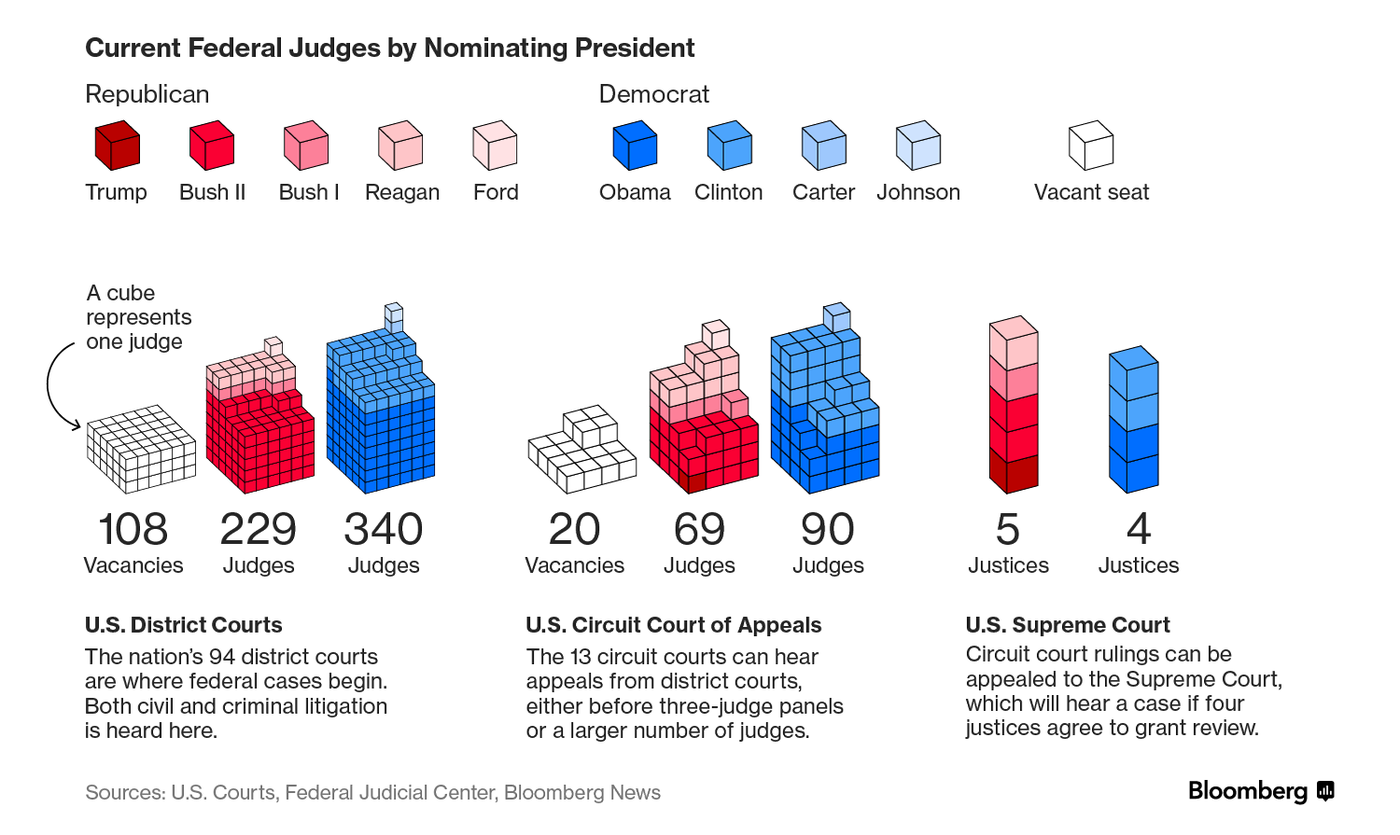
Although he’s been thwarted so far on his legislative agenda before Congress, most notably on health care, President Donald Trump has a big opportunity to reshape another branch of government outside his control: the federal judiciary. He has already moved swiftly to fill an unusual, inherited vacancy on the Supreme Court, and now his aides are working their way through a large number of openings on the lower federal courts. Some of his first picks are up for a Senate committee vote this month.

The article contains a handy chart that illustrates the situation facing Trump, as well as the opportunities. Here it is:

This is indeed one of the reasons a lot of people held their noses and voted for Trump. But there was also significant doubt about whether his lack of conservative bona fides would mean that as president he wouldn’t follow through on his promises to make judicial appointments that were reliably conservative. Of course, there’s no predicting how a justice or a judge will change over time (we’ve seen plenty of that sort of thing, mainly right to left). But so far, in terms of judicial appointments, Trump is exceeding the expectations of most conservatives who felt they had reason to doubt him (I was one of those people).

It’s hard to overestimate the importance of this. It will affect the legal system far into the future.

Posted in Law, Liberals and conservatives; left and right, Trump | 12 Replies

The NY Times claims it made an “honest mistake” about Palin

The New Neo Posted on July 10, 2017 by neoJuly 20, 2017

Sarah Palin has sued the NY Times for defamation based on an editorial in the paper shortly after the Scalise shooting. In it, the Times had made this false claim:

In 2011, when Jared Lee Loughner opened fire in a supermarket parking lot, grievously wounding Representative Gabby Giffords and killing six people, including a 9-year-old girl, the link to political incitement was clear. Before the shooting, Sarah Palin’s political action committee circulated a map of targeted electoral districts that put Ms. Giffords and 19 other Democrats under stylized cross hairs.

It was false in two ways. The first was that, in the Giffords shooting, there actually was no link to political incitement at all. This has been known for many years, and anyone familiar with the story ought to have been well aware of it.

The second is that Palin’s PAC had not published a map that fit that description; the cross-hairs were on the districts, not the people (the actual map can be found here).

The Times’ later “correction” of the story—published after a large public hue and cry had ensued—corrected the second fact but not the first, which was no longer stated so overtly but was nevertheless still implied as a possibility. Here is the correction:

Was this attack [the Scalise shooting] evidence of how vicious American politics has become? Probably. In 2011, Jared Lee Loughner opened fire in a supermarket parking lot, grievously wounding Representative Gabby Giffords and killing six people, including a 9-year-old girl. At the time, we and others were sharply critical of the heated political rhetoric on the right. Before the shooting, Sarah Palin’s political action committee circulated a map that showed the targeted electoral districts of Ms. Giffords and 19 other Democrats under stylized cross hairs. But in that case no connection to the shooting was ever established.

The standard of proof for defamation in a lawsuit against a newspaper, [clarification/correction added: or against anyone else, in a suit brought by a public figure, is higher than if it were brought by a citizen]. It is necessary to prove “actual malice,” but that doesn’t mean what people often think it means. It’s not required that one have a recording of the Times editors saying that they hate Palin’s guts. A showing that they published their editorial with “reckless disregard” for its truth or falsehood would suffice.

Now it is being reported in the NY Post that the Times’ lawyer has made the following claim in the newspaper’s defense:

“There was an honest mistake in posting the editorial,” lawyer David Schultz told Manhattan federal Judge Jed Rakoff…

On Friday, Palin’s lawyers argued that the Times knew the story was false.

“It was literally acknowledged the same day in another story in their paper,” said Kenneth Turkel.

Which brings us to my question: if the Times (or any other newspaper) claims it made an “honest mistake” in a story, shouldn’t its mistake be based on—you know—-something? Or can it be an honest mistake to just make s*** up?

If I had made the same statement about Palin the day after that Times editorial, and she had sued me for defamation, I might cite the Times as the authority on which I mistakenly had made my claim. But what authority can the Times cite? Its own editorial, in circular fashion?

Or perhaps Kathy Griffin, who tweeted in January of 2011, shortly after the Giffords shooting: “Watching the news? Congresswoman in AZ,who is ON Sarah Palin’s crosshairs map was SHOT in the head 2day. Happy now Sarah?”

I doubt that’s the authority on which the Times wishes to rely at this point. But beggars can’t always be choosers.

The sort of connection cited by Griffin was corrected time and again over the years in MSM stories across the land, including those in the Times itself. Even the Times’ fellow the WaPo pointed out the following, in a recent article about the Times editorial:

[Loughner’s] focus on Giffords began as early as 2007, long before the map was published. He became fixated on her since he met her at a constituent event in 2007, and decided he was unsatisfied by her answer to his question: “If words could not be understood, then what does government mean?”

Three days after the shooting, authorities filed criminal charges against Loughner after finding items in his home that showed he had plotted her assassination. They found in his safe a 2007 letter from Giffords thanking him for attending the constituent event, and an envelope stating “I planned ahead,” and the words “assassination” and “Giffords,” along with his signature.

Loughner had no clear political views. Instead, he was a troubled man who abused alcohol and drugs, and whose mental illness was apparent to his classmates and family even before he was diagnosed as schizophrenic during his court trial.

The Times wants the protection from constant defamation suits that is afforded by current law, based on the landmark 1964 case New York Times Co. v Sullivan that established the high standard of proof necessary to win such a suit [clarification/correction added: by a public figure]] against a newspaper. But aren’t newspapers supposed to meet some minimal standards of due diligence before publishing something? How low can that standard go?

In other words, for a mistake by a newspaper to be “honest,” must the paper not make some small effort to ascertain the truth? Is it not assumed to know the basic facts of something that’s been in the news for many years? And recall, this wasn’t an error by some cub reporter, it was by the full editorial board of the Times. And even after it published its correction—with all the benefits of hindsight and much published criticism in other media—it wasn’t all that much of a correction.

The Times’ motto has long been “All the news that’s fit to print.” This was neither news, nor fit to print. But after all, the Times never said “Only the news that’s fit to print.”

Posted in Law, Palin, Press | 38 Replies

Free-climbing El Capitan

The New Neo Posted on July 8, 2017 by neoAugust 16, 2018

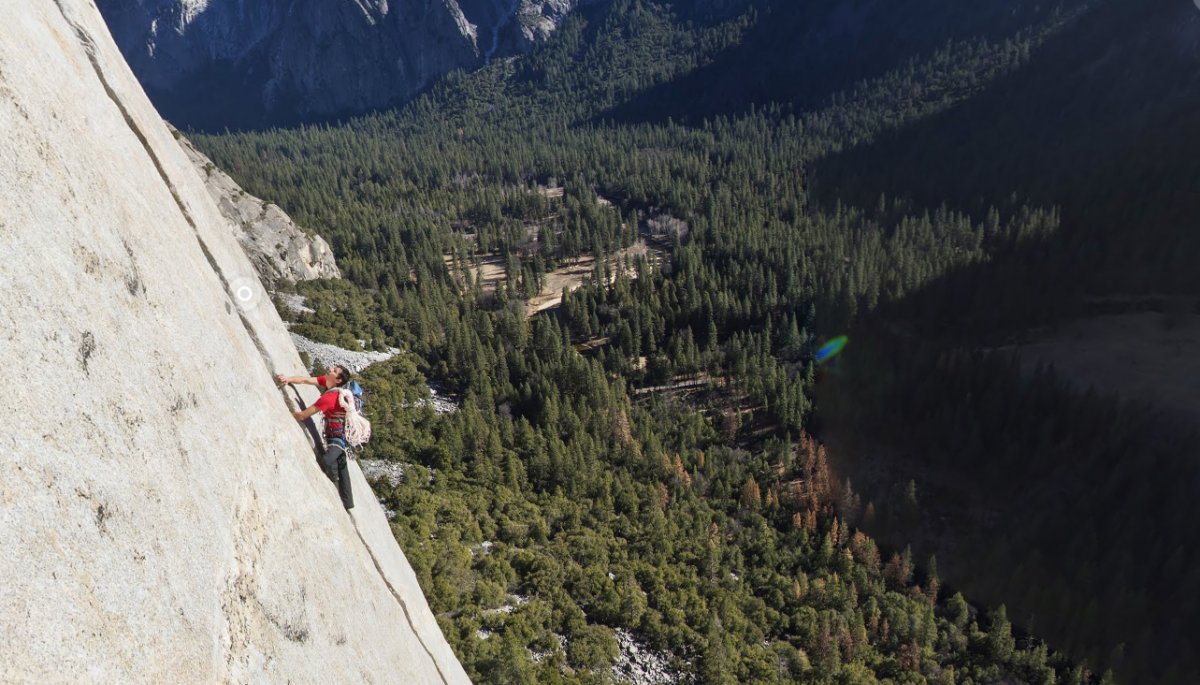
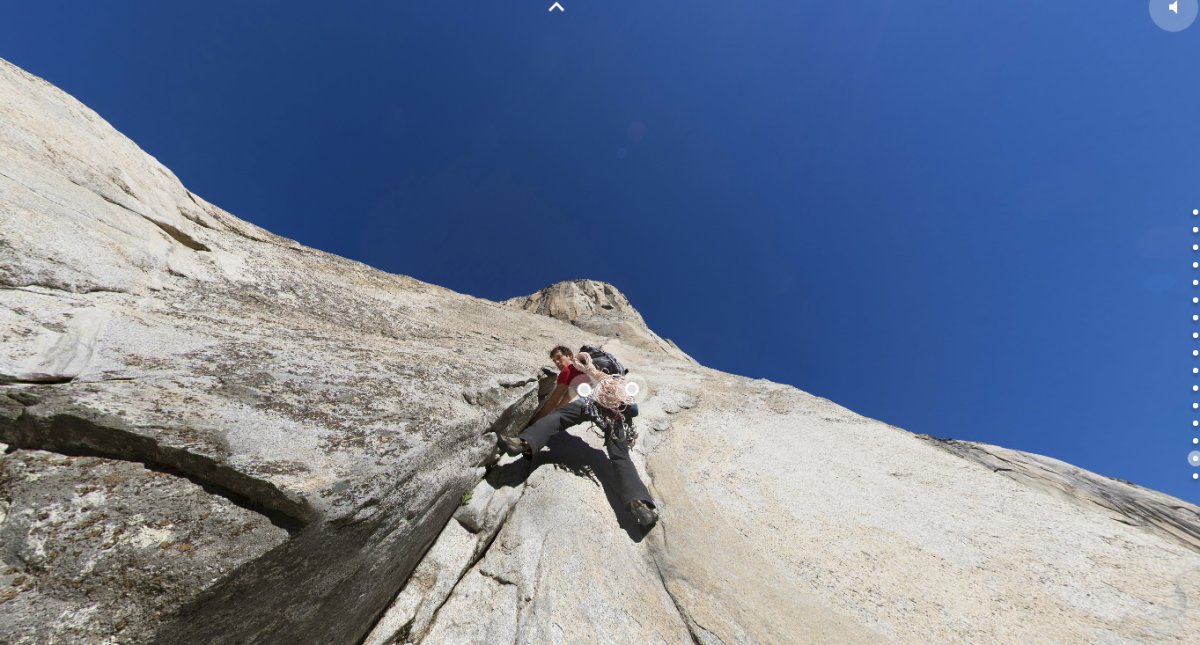
Yes, you read that right: someone climbed the monolith El Capitan in Yosemite without ropes, in what’s called a “free solo” ascent. That means crawling up the vertical rock face with only your hands, feet, muscles, and steely (some would say demented) nerves to help you along.

The man’s name is Alex Honnold, and you can read about his exploits in this NY Times article:

Alex Honnold woke up in his Dodge van last Saturday morning, drove into Yosemite Valley ahead of the soul-destroying traffic and walked up to the sheer, smooth and stupendously massive 3,000-foot golden escarpment known as El Capitan, the most important cliff on earth for rock climbers. Honnold then laced up his climbing shoes, dusted his meaty fingers with chalk and, over the next four hours, did something nobody had ever done. He climbed El Capitan without ropes, alone.

The world’s finest climbers have long mused about the possibility of a ropeless “free solo” ascent of El Capitan in much the same spirit that science fiction buffs muse about faster-than-light-speed travel – as a daydream safely beyond human possibility. Tommy Caldwell, arguably the greatest all-around rock climber alive, told me that the conversation only drifted into half-seriousness once Honnold came along, and that Honnold’s successful climb was easily the most significant event in the sport in all of Caldwell’s 38 years. I believe that it should also be celebrated as one of the great athletic feats of any kind, ever.

Also one of the great mental feats of any kind, ever:

Fear of falling is about as primal a fear as we humans have, and that fear is present to some degree whether you are 10 feet off the ground or 3,000. In this sense, Honnold’s specialty – free-soloing – is a distillation of the entire climbing world’s collective fantasy life. Vanishingly few elite climbers make careers out of free-soloing, and plenty call it irresponsible and deplorable, but in their heart of hearts they all recognize it as the final word in bad-assery…

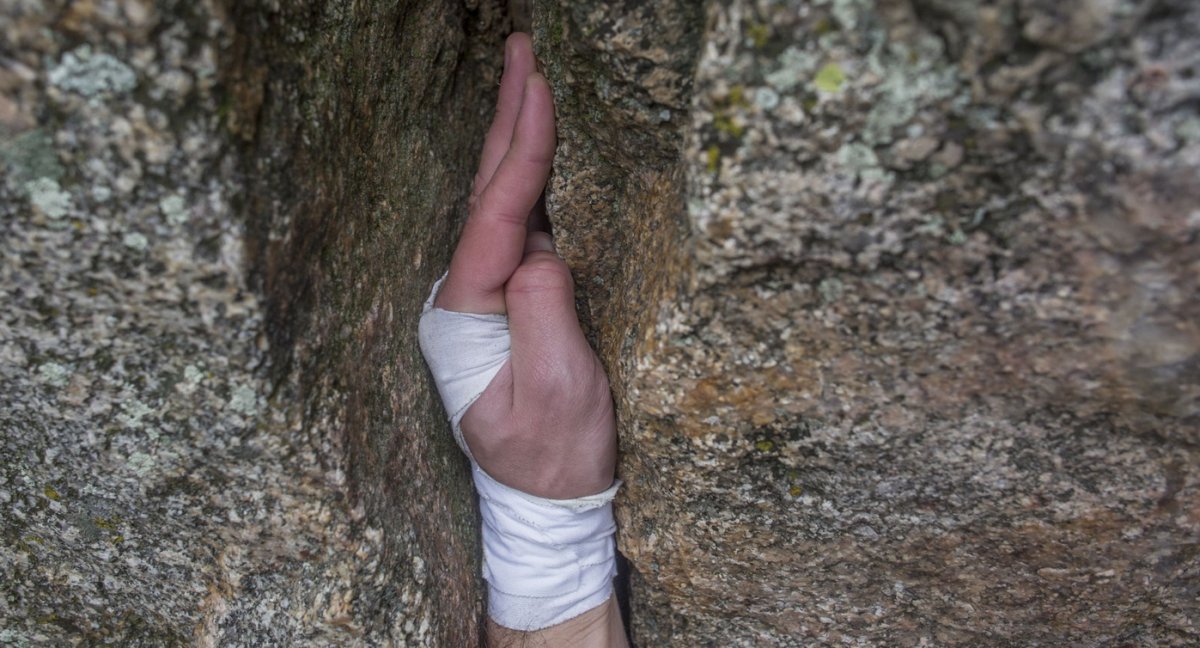
El Capitan does have vertical fractures that allow expert climbers to insert their hands and feet and sometimes entire legs and arms and then twist and flex those body parts in highly technical and painfully exhausting ways that do create a temporary grip over the abyss. Still, so much of that cliff is devoid of anything that normal human beings would recognize as handholds or footholds that the overwhelming majority of El Capitan climbers resort as I did to artificial aid. We insert hardware into cracks, clip nylon stirrups to that hardware and stand in the stirrups. Even then, we struggle to stay calm in an environment that feels like a mile-wide plain of smooth stone that we happened to be lying upon when it flipped to vertical and swung us higher into the sky than any of the world’s tallest skyscrapers yet reach…

…[T]he nature of the rock is such that no amount of finger strength can make it feel entirely secure. Much of the terrain is so smooth that it can be ascended only by identifying half-imaginary indentations, pressing shoe rubber against those indentations – smearing, as the technique is known – and then hoping that the rubber sticks while you ease upward.

Oooooo, sounds like fun, doesn’t it? NOT. But to climbers, and particularly to free-climbers such as Honnold, it’s a challenge they want to meet, and are confident they can and will meet.

I will pause now for a moment to post some photos I found here. This is only a small sample of what you can find if you click on that link, which I urge you to do. You won’t believe your eyes:

In case you hadn’t already figured it out, Honnold is different from you and me. I hate heights, so he’s particularly different from me:

Honnold’s sang froid on big cliffs is also so peculiar that even the world-class climbers who consider him a dear friend struggle to believe that it really is just sang froid and confidence, and not borderline-suicidal recklessness or at least a missing screw…[F]riends of Honnold’s joke that when Alex was a baby his mother must have stepped on his amygdala – the brain region that controls fear. Last year, fMRI testing at the Medical University of South Carolina tilted the scales toward precisely that explanation – an underactive amygdala, not a negligent mother – by confirming that Honnold’s fear circuitry really does fire with less vigor than most.

Sort of like those people who don’t feel pain, Honnold really doesn’t seem to feel much fear. But he feels enough of something akin to fear (or maybe it’s just the desire to live) that he’s very, very careful, practicing over and over with safety ropes until he knows the course cold and hasn’t fallen on any ascent for a long, long time.

My reaction to all of that is that of course Honnold’s brain is wired differently, as is true of most people who do extreme sports (although there’s a “which came first, the chicken or the egg” cause/effect question there). Honnold is one of the more extreme of the extremists. Ice water must run in his veins.

He is also—obviously—rather obsessive compulsive, as one must be to do that sort of thing successfully. Human beings can accomplish amazing feats if they have just the right combination of characteristics and all the stars are in alignment. He makes me think of wire-walker Kurt Wallenda, who said, “Life is on the wire, the rest is just waiting.”

However, Wallenda died in a fall from the wire after a lifetime of performing, and years after several members of his family were killed and some injured in a fall during the act in Detroit in 1962 (a roommate of mine had been present the night of the Detroit fall, and she told me about it and how frightening it was to be in the audience). Perhaps Wallenda just failed to retire at the right time, or maybe he assumed the risk and preferred to keep going.

But back to the Times article about Honnold:

Allow your mind to relax into the possibility that Honnold’s climb was not reckless at all – that he really was born with unique neural architecture and physical gifts, and that his years of dedication really did develop those gifts to the point that he could not only make every move on El Capitan without rest, he could do so with a tolerably minuscule chance of falling.

I agree with everything there until that last part—that Honnold’s chance of falling was “tolerably minuscule.” Obviously it was tolerably minuscule to Honnold; it depends on one’s tolerance. He’s the one who made the decision and assumed the risk, and he must have felt exceedingly confident. But that doesn’t mean his chance of falling was actually minuscule. I think it was certainly less than 50%, so that he was more likely than not to succeed. And of course we know that he did succeed.

This time. But I think that if, like the Wallendas, he repeated it often enough over time, he would probably die that way.

I wish him well. And maybe he’ll never do this again, having done it once (for his poor dear mother’s sake, I hope once is enough!).

Posted in Baseball and sports, Getting philosophical: life, love, the universe, Nature, People of interest | 35 Replies

Praising Western Civilization

The New Neo Posted on July 8, 2017 by neoJuly 9, 2017

You wouldn’t think it would be controversial to praise Western Civilization. Even among liberals.

After all, liberalism itself, and the principles of liberty, protection of the underdog, celebration of diversity, the scientific method, and a host of other things that liberals profess to celebrate, are products of Western Civilization. But when President Trump spoke in glowing terms about Western Civilization and the need to defend and preserve it, he was roundly criticized by liberals and the left as having dog-whistled to the white supremacist fringe of what has come to be known as the alt-right.

Of course, if Trump said the sky was blue he would be criticized for that, too. But his speech was not only a good one, it contained talk about Western Civilization that not so very long ago would have been considered completely mainstream and non-controversial.

What happened in the interim? Well, one thing that happened was President Obama, who was famous for not defending Western Civilization but for seeing its faults (and there are certainly many). But what has really happened is two things that are related. One of the strengths of modern Western Civilization is its propensity for soul-searching and ability to find fault with itself. But that has been taken to an extreme by another product of Western Civilization, a political left that celebrates the third world and considers the West the root of all evil, and thinks that to speak of its achievements is to be a terrible racist.

The second thing is that those ideas have become the catechism taught on college campuses. And it’s been taught for quite some time. Although I don’t know the exact date that the practice began, it was in full flower by the 80s, when Allan Bloom was writing The Closing of the American Mind.

Here’s a summary of Bloom’s observations of the way American education had gone by the end of the 80s:

As Bloom recognized, the fruits of egalitarianism are ignorance, the habit of intellectual conformity, and the systematic subjection of cultural achievement to political criteria. In the university, this means classes devoted to pop novels, rock videos, and third-rate works chosen simply because their authors are members of the requisite sex, ethnic group, or social minority. It means students who graduate not having read Milton or Dante or Shakespeare””or, what is in some ways even worse, who have been taught to regard the works of such authors chiefly as hunting grounds for examples of patriarchy, homophobia, imperialism, etc. It means faculty and students who regard education as an exercise in disillusionment and who look to the past only to corroborate their sense of superiority and self-satisfaction.

Academia has only gotten more so since then. What we see now are some of the fruits of that academic labor, resulting in an MSM that is almost wholly populated with people who believe just that, and a former president who also believed just that and was their champion. What a deep disappointment and outrage it must be for them to hear Trump say just the opposite.

The fact that the actual white supremacist wing of the alt-right have celebrated Trump’s Warsaw speech is also unsurprising. But it does not mean that Trump was speaking to them or is of them, although the left would have you believe that. People can celebrate a speech and see things in it that are not there, and they can also use that speech in ways it wasn’t intended.

“Western Civilization” used to be a required course for a liberal education. Around the time I went to school, the 60s (ah, the 60s), the situation was in transition. Western Civ (as it was not-so-affectionately called) had recently stopped being required in many colleges, and very few require it today, all these years later. It’s not just my imagination, either:

Survey courses in “Western Civilization,” once a common component of undergraduate curriculums, have almost disappeared as a requirement at many large private research universities and public flagships, according to a study released Wednesday [in May of 2011, but the link seems to be dead] by the National Association of Scholars.

The report finds that, since 1968, the number of the selected colleges that require Western Civilization courses as a component of general education curriculums and U.S. history as a component of history majors has dropped. This decrease has coincided with more focus on world history courses.

The association argues that Western Civilization courses are uniquely capable of introducing students to key themes of a liberal education. “In the absence of such an organizing principle the curriculum spins out into an all-things-to-all-people cornucopia of offerings, many of them exceptionally narrow in scope and many of them trivial in character,” the report states.

Historians and curriculum researchers attribute the de-emphasis on Western Civilization courses to significant changes in higher education curriculums, student diversity, university educational goals, and how history researchers study the world and receive training.

I remember my reaction in the 60s: joy. The reasons were many. As a typical teenaged student (although I was somewhat younger than average when I arrived at college) I resented required courses in general. But I had always disliked history courses in particular (go figure; I love history now) because I saw them as a dull recitation of irrelevant dates. That may have been a correct description of the history courses I had taken up to that point; I don’t know, because that part of my education is somewhat of a blur. I do know that somewhere along the line I had read a great many of the books that constitute the canon of Western Civilization, and liked them, but it was mostly in English classes that this had happened.

I think I was ignorant of what a “Western Civilization” course would have actually covered. It wouldn’t have been dates and battles; it would have been something like this, and I think I would have loved it:

Bloom regarded liberal education in its highest form as a conversation across the centuries that revolved around the perennially fresh question “What is the good life?” He championed what he called “the good old great books” because they are the prime repositories of thoughtful alternative answers to that question. A liberal arts education for Bloom centrally involved a meditation on those books and the “permanent questions” they posed in themselves and, above all, in relation to one another. As such a liberal arts education was “a resource against the ephemeral” and prophylactic against nihilism and spuriousness.

But these days my guess is that in many places (not all, of course) where Western Civilization is still taught it is presented as a toxic stain on humanity, a poisonous brew of intolerance and exploitation of suffering non-Western peoples, to be studied only to be condemned. That Trump doesn’t agree is one of his many crimes, according to the left.

I’m pretty sure that at this point the left doesn’t like Churchill, either. Or maybe he gets some sort of special pass, because he was fighting the Nazis?:

What General Weygand called the Battle of France is over. I expect that the Battle of Britain is about to begin. Upon this battle depends the survival of Christian civilization. Upon it depends our own British life, and the long continuity of our institutions and our Empire. The whole fury and might of the enemy must very soon be turned on us. Hitler knows that he will have to break us in this Island or lose the war. If we can stand up to him, all Europe may be free and the life of the world may move forward into broad, sunlit uplands. But if we fail, then the whole world, including the United States, including all that we have known and cared for, will sink into the abyss of a new Dark Age made more sinister, and perhaps more protracted, by the lights of perverted science. Let us therefore brace ourselves to our duties, and so bear ourselves that, if the British Empire and its Commonwealth last for a thousand years, men will still say, “This was their finest hour.”

And not so very long ago it was possible to publish an article like this one in The New Republic:

Churchill’s worldview also cannot be easily categorized. It blended Victorianism and Edwardism, Liberalism and Conservatism. He saw the world in grand, often romantic, terms and himself in the tradition of great leaders like Napoleon, Castlereagh, Marlborough, Disraeli, and Gladstone. The ultimate issue for Churchill was the advance of “civilization,” by which he meant the British and Western way of life””its liberal values, laws, culture, industry, and science. He saw Britain and its empire as propagators of civilization, imbuing his nationalism and imperialism with a moral imperative. He came to see the United States, also, as a guarantor of civilization, and his support for Zionism was ultimately rooted in the belief that the Jews in Palestine/Israel were collaborators in this grand cause. Everyone, no matter his or her race””and Churchill conceived a hierarchy of races””had an obligation to contribute to the world’s progress. As he wrote in a 1908 travelogue about Africa, “No man has a right to be idle, whoever he be or wherever he lives. He is bound to go forward and take an honest share in the general work of the world.”…

Churchill considered Nazism vile and barbaric, a rejection of civilization in every way, despite his respect for the German race. He was particularly offended by its anti-Semitism, which made Nazism, in some ways, worse than communism…

Churchill was clearly the indispensable man of the moment in 1940, whom destiny summoned to change the course of history. His overwhelming love of country and civilization, grave sense of obligation to protect and improve on all the good the ages had produced, romantic view of the world, and keen understanding of how history had reached a vital point, made him realize why he and Britain had to battle relentlessly, regardless of the odds. His firm conviction that individuals can overcome great adversity, his belief that great leaders can redirect global forces, and his uplifting oratorical abilities, allowed Churchill to shape the thoughts and feelings of his countrymen and save his country and civilization.

Note that the author mentions Churchill’s racism (which was a symptom of his time; Churchill was born in 1874), but does not emphasize it or let it detract from his mammoth accomplishments. The word “civilization” is used without irony, too; it is considered a non-controversial fact that it was worth saving. And by “civilization” it’s clear that Churchill meant Western civilization. To repeat:

…“civilization,” by which [Churchill] meant the British and Western way of life””its liberal values, laws, culture, industry, and science. He saw Britain and its empire as propagators of civilization, imbuing his nationalism and imperialism with a moral imperative. He came to see the United States, also, as a guarantor of civilization, and his support for Zionism was ultimately rooted in the belief that the Jews in Palestine/Israel were collaborators in this grand cause.

Contemplate that, and then read or listen to Trump’s Warsaw speech again.

Posted in Academia, History, Me, myself, and I, Press, Trump | 67 Replies

Trump and Putin meet

The New Neo Posted on July 7, 2017 by neoJuly 7, 2017

Voluminous coverage on the meeting.

The handshake passes muster at Vox, while Twitter has a field day with the pressing of the flesh.

How about the actual content of the talks? Well, there’s this:

At first, media thought Trump would not bring up accusations that Russia interfered with our presidential election in 2016. But after the two hour meeting ended, Secretary of State Rex Tillerson said that is the first topic Trump brought up…

To no one’s surprise, Russian Foreign Minister Sergei Lavrov eagerly “told reporters that Trump had accepted Putin’s denial of tampering in the US election.

Tillerson also told reporters that Trump and Putin “reached an agreement on curbing violence in Syria.”

Posted in Trump | 18 Replies

Europe and the US: Roger Simon asks…

The New Neo Posted on July 7, 2017 by neoJuly 7, 2017

…whether “Europe—subsconsciouly—expects America to save it again?”

My short answer: Yes, indeed. And not just subconsciously. I think they consciously expect it and believe it is their due.

But I also don’t think Europe—and we’re talking about Western Europe here, to be clear—believes it will require saving. It believes its current path is the right one, both in the moral and the practical sense.

Not all Western Europeans believe this, of course, not by a longshot. That’s why various nationalist, anti-immigrant, anti-EU parties have gained a lot of traction in recent years. An interesting question is whether that movement will gain support or lose it over time.

Posted in Uncategorized | 27 Replies

National security leakers upset at being monitored for leaks

The New Neo Posted on July 7, 2017 by neoJuly 7, 2017

Or something like that.

The premise of this Politico article initially seems so bizarre it’s hard to fathom. The title, “Trump’s leaks crackdown sends chills through national security world,” had me scratching my head and asking, “Isn’t that what’s it’s supposed to do?”

Here are some excerpts:

National security officials across the federal government say they are seeing new restrictions on who can access sensitive information, fueling fears in the intelligence and security community that the Trump administration has stepped up a stealthy operation to smoke out leakers.

Officials at various national security agencies also say they are becoming more concerned that the administration is carefully tracking what they’re doing and who they’re talking to ”” then plotting to use them as a scapegoat or accuse them of leaks.

One U.S. official voiced concern over even talking to their superiors about a benign call from a reporter. The agency this official works for had started limiting staff’s access to information, they said, and it would make it far easier to figure out who was talking to people in the media.

There was suspicion, the official said, that the agency was even tracking what they printed, to keep tabs on what information they were accessing.

For quite some time there have been an unconscionable number of leaks of national security information from those working in the field. This is not only potentially damaging, it’s often a criminal act. If a person is hired to work in national security, that’s one of many things that person learns at the outset and is expected to respect.

And yet the leaks keep coming, and they are aimed at damaging the Trump administration. Is Trump just supposed to shrug and say “Oh well, all in a day’s work for someone in national security?”

It’s too bad it’s come to this. But what else is the administration to do? The article continues:

In some cases, the official added, information has been so “choked down” that if something comes out in the press, “it’s either a bogus leak” or, the official said, the relevant agency will know exactly where it came from…

But as anxiety grows ”” and as the fog surrounding the Trump-Russia question gets thicker ”” there is a tangible fear of the unknown. No one knows how far Trump and his affiliates would go to silence their critics, or the reporters they talk to.

Rumors have ricocheted among national security officials and journalists in recent weeks that Trump- or GOP-related operatives have hired private eyes to try and intimidate reporters, or run rogue operations to find their sources. Some U.S. officials voiced concern to POLITICO that the White House could be seeking out amenable employees in different agencies to do its bidding, effectively sanctioning its own, parallel ”” and informal ”” intimidation measures.

The Obama administration was known to be hostile towards reporters’ sources, prosecuting more leak investigations than any of the previous administrations combined. But there was a standard ”” though still worthy of criticism ”” that leak prosecutions involved clear and present threats to national security.

Excuse me, but why would it be “worthy of criticism”? Even when Obama the Great did it? My guess is that the press believes it has a right to all information, classified or not, and that leakers are heroes who facilitate their glorious work, and therefore should be allowed free rein.

[NOTE: Boy, I’m sick of writing about the press. But these days, so much seems to come back to issues involving the press.]

Posted in Press, Trump | 12 Replies

Post navigation

← Previous Post
Next Post→

Your support is appreciated through a one-time or monthly Paypal donation

Please click the link recommended books and search bar for Amazon purchases through neo. I receive a commission from all such purchases.

Archives

Recent Comments

  • huxley on There’s a bid to vacate Chauvin’s state conviction
  • huxley on All the lonely people
  • Richard Cook on Is it really the biggest oil deal in recorded history?
  • Richard Cook on All the lonely people
  • Betsybounds on Is it really the biggest oil deal in recorded history?

Recent Posts

  • All the lonely people
  • Is it really the biggest oil deal in recorded history?
  • There’s a bid to vacate Chauvin’s state conviction
  • Open thread 8/29/2026
  • On my ex and the moon

Categories

  • A mind is a difficult thing to change: my change story (17)
  • Academia (328)
  • Afghanistan (98)
  • Amazon orders (6)
  • Arts (8)
  • Baseball and sports (164)
  • Best of neo-neocon (91)
  • Biden (536)
  • Blogging and bloggers (593)
  • Dance (292)
  • Disaster (244)
  • Education (323)
  • Election 2012 (360)
  • Election 2016 (566)
  • Election 2018 (33)
  • Election 2020 (513)
  • Election 2022 (114)
  • Election 2024 (403)
  • Election 2026 (89)
  • Election 2028 (12)
  • Evil (129)
  • Fashion and beauty (324)
  • Finance and economics (1,041)
  • Food (317)
  • Friendship (48)
  • Gardening (18)
  • General information about neo (4)
  • Getting philosophical: life, love, the universe (733)
  • Health (1,160)
  • Health care reform (545)
  • Hillary Clinton (184)
  • Historical figures (337)
  • History (716)
  • Immigration (447)
  • Iran (464)
  • Iraq (227)
  • IRS scandal (71)
  • Israel/Palestine (820)
  • Jews (437)
  • Language and grammar (365)
  • Latin America (212)
  • Law (2,971)
  • Leaving the circle: political apostasy (124)
  • Liberals and conservatives; left and right (1,318)
  • Liberty (1,116)
  • Literary leftists (14)
  • Literature and writing (392)
  • Me, myself, and I (1,496)
  • Men and women; marriage and divorce and sex (929)
  • Middle East (383)
  • Military (324)
  • Movies (353)
  • Music (533)
  • Nature (261)
  • Neocons (32)
  • New England (183)
  • Obama (1,738)
  • Pacifism (16)
  • Painting, sculpture, photography (131)
  • Palin (93)
  • Paris and France2 trial (25)
  • People of interest (1,043)
  • Poetry (258)
  • Political changers (178)
  • Politics (2,793)
  • Pop culture (397)
  • Press (1,634)
  • Race and racism (881)
  • Religion (428)
  • Romney (164)
  • Ryan (16)
  • Science (639)
  • Terrorism and terrorists (971)
  • Theater and TV (266)
  • Therapy (71)
  • Trump (1,628)
  • Uncategorized (4,545)
  • Vietnam (109)
  • Violence (1,442)
  • War and Peace (1,026)

Blogroll

Ace (bold)
AmericanDigest (writer’s digest)
AmericanThinker (thought full)
Anchoress (first things first)
AnnAlthouse (more than law)
AugeanStables (historian’s task)
BelmontClub (deep thoughts)
Betsy’sPage (teach)
Bookworm (writingReader)
ChicagoBoyz (boyz will be)
DanielInVenezuela (liberty)
Dr.Helen (rights of man)
Dr.Sanity (shrink archives)
DreamsToLightening (Asher)
EdDriscoll (market liberal)
Fausta’sBlog (opinionated)
GayPatriot (self-explanatory)
HadEnoughTherapy? (yep)
HotAir (a roomful)
InstaPundit (the hub)
JawaReport (the doctor’s Rusty)
LegalInsurrection (law prof)
Maggie’sFarm (togetherness)
MelaniePhillips (formidable)
MerylYourish (centrist)
MichaelTotten (globetrotter)
MichaelYon (War Zones)
Michelle Malkin (clarion pen)
MichelleObama’sMirror (reflect)
NoPasaran! (bluntFrench)
NormanGeras (archives)
OneCosmos (Gagdad Bob)
Pamela Geller (Atlas Shrugs)
PJMedia (comprehensive)
PointOfNoReturn (exodus)
Powerline (foursight)
QandO (neolibertarian)
RedState (conservative)
RogerL.Simon (PJ guy)
SisterToldjah (she said)
Sisu (commentary plus cats)
Spengler (Goldman)
VictorDavisHanson (prof)
Vodkapundit (drinker-thinker)
Volokh (lawblog)
Zombie (alive)

Meta

  • Log in
  • Entries feed
  • Comments feed
  • WordPress.org
©2026 - The New Neo - Weaver Xtreme Theme Email
Web Analytics
↑