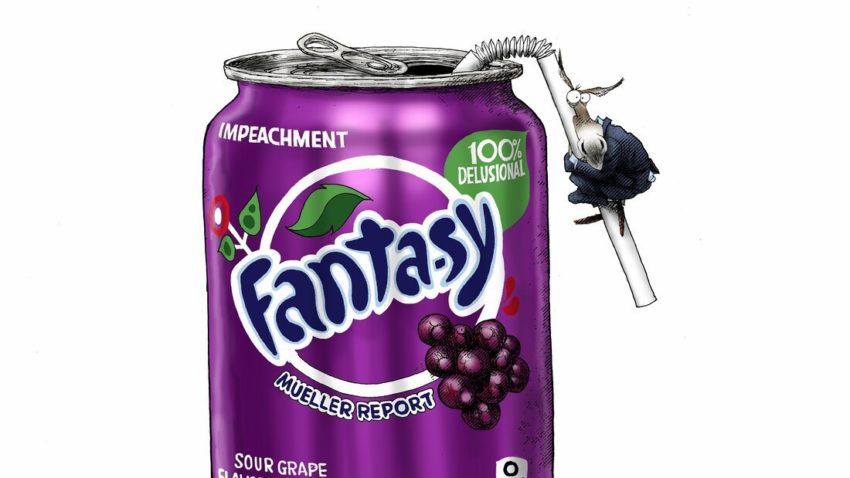
Aren’t they all?
But this article claims to list the most stressful ones.
Aren’t they all?
But this article claims to list the most stressful ones.
Liberal law professor Lara Bazelon has defended the new guidelines for dealing with charges of sexual offenses under Title IX at universities. The headline of her NY Times opinion piece reads “I’m a Democrat and a Feminist. And I Support Betsy DeVos’s Title IX Reforms,” which sounds as though it puts Bazelon in the same camp as Alan Dershowitz—a liberal Democrat who is bravely willing to go on record as not toeing the party line.
That such a stance is now worthy of special note is a sad thing, but that’s the way it is.
Here’s an excerpt from what Bazelon has written:
Education Secretary Betsy DeVos’s proposed regulations overhauling how colleges handle sexual assault, which may become law in January, are far from perfect. But there is a big reason to support them: I’m a feminist and a Democrat, and as a lawyer I have seen the troubling racial dynamics at play under the current Title IX system and the lack of due process for the accused. Ms. DeVos’s proposals take important steps to fix these problems.
So which is it, Ms. Bazelon: are DeVos’s directives correct because they protect the innocent in general, or are they correct because they protect innocent black men, who are accused in greater numbers than innocent white men?
Bazelon goes on to describe a case defended by a pro bono clinic she runs that represents “low-income students of color in California who face expulsion based on allegations of sexual assault.”. The case involved a presumably false accusation against a black student.
Her clinic is a laudable project. But what about low-income white students who are similarly accused? Are they not worthy of legal representation as well?
Bazelon goes on to describe why the DeVos standards would protect the falsely accused from the problems inherent in the Obama administration’s previous directives on the subject. All well and good; I’m very much in favor of the DeVos reforms, and have been writing about the unfairness of Obama’s system for years. But Bazelon seems to be saying that Obama’s system is a problem because of the racial disparities rather than because it is inherently unfair to the accused of any race:
The Office of Civil Rights does not collect data on race in Title IX cases, but the little we know is disturbing: An analysis of assault accusations at Colgate, for example, found that while only 4.2 percent of the college’s students were black in the 2012-13 school year, 50 percent of the sexual-violation accusations reported to the school were against black students, and blacks made up 40 percent of the students who went through the formal disciplinary process.
Bazelon adds:
I know my allies on the left will criticize my position, but we cannot allow our political divisions to blind us to the fact that we are taking away students’ ability to get an education without a semblance of due process. What kind of lesson is that?
It’s the kind of lesson the feminist left has been teaching for quite some time. It seems that the only reason that Bazelon is noticing this now is because black students have been disproportionately hurt by it.
Or perhaps she wrote her opinion piece with that emphasis because she thinks the racial angle is the only thing that might buy her some dispensation from the criticism of her peers. If she supports DeVos and Trump’s proposals, but only in the service of helping falsely accused young black men, would that give her a pass among her fellow liberals?
The yellow vest protestors of France are not a unitary movement. The majority are peaceful, but there’s a fringe group (right? left? anarchists?) who have been a great deal more violent, and it’s that latter group who have declared war on highway tolls:
French “yellow vest” protesters caused transport chaos on Tuesday after occupying highway toll booths and setting some of them on fire.
France’s biggest toll road operator, Vinci Autoroutes , said demonstrations were under way at some 40 sites in its network and that several highway intersections had been heavily damaged, notably in the south of France.
The Bandol toll station, east of Marseille in the south of France, suffered fire damage overnight into Tuesday and the A50 highway was closed, said Vinci, whose network is mainly in the south and west of the country.
“Motorists should take utmost care as they approach toll gates and motorway access ramps due to the presence of numerous pedestrians,” Vinci said in a statement.
Several people have died in roadside accidents at yellow vest roadblocks in recent weeks, mostly at the many roundabouts blocked by groups of demonstrators.
The demonstrators have also torched or otherwise damaged about half of the traffic radars in France. The ostensible reason for the focus of these attacks, at least originally, is that Macron has raised fuel taxes and changed the speed limits in a way that further burdens a great many people in France who had felt plenty burdened already.
The more intense of the demonstrators clearly fancy themselves revolutionaries. And although the size of the demonstrations have decreased, that doesn’t mean that determined people can’t still do a lot of damage. What the political fallout will ultimately be is anybody’s guess.
Judge Sullivan had a lot to say today in the Flynn sentencing hearing, but it’s not easy to sort out what it meant.
As an example of what I’m talking about, please read this post by Ace and compare it to this by Kemberlee Kaye at Legal Insurrection. The same facts but a different story is told by each.
In trying to sort out just how bad this was for Flynn, I’m going to fall back on a rule I apply to questions of SCOTUS justices during hearings: it’s very difficult to tell what a judge or justice is going to do from the things that judge says to lawyers and/or defendants. Reading the judicial tea leaves sounds easy but it often leads you down a false trail.
In the case of Judge Sullivan and Flynn, though, I think indications are that what’s happening is that Sullivan is puzzled as to why Flynn would plead guilty if he’s not guilty. That’s quite a contradiction. Here’s what I mean:
Judge Sullivan said he had some "concerns" based on Flynn's pre-sentencing filing. ”I cannot recall any incident in which the court has accepted a plea of guilty from someone who maintained he was not guilty and I don’t intend to start today.”
— Darren Samuelsohn (@dsamuelsohn) December 18, 2018
However, since Flynn is determined to plead guilty (why that is the case, we’re not sure, except he may want to get this over with rather than risk a trial), then Judge Sullivan may feel that he must penalize Flynn fairly harshly because he considers the crime of a public official lying to the FBI a serious one. That’s my takeaway from the proceedings so far.
See also this post at Powerline, which points out that Judge Sullivan has delayed the sentencing, in all probability to allow Flynn to offer more information on his dealings with Turkey (which I am pretty sure have nothing to do with Trump) and thus get himself more leniency. There is also the possibility that Trump will end up pardoning Flynn.
Or maybe it’s a silly people interlude. The dogs have a reason for doing it—they were trained with a food treat:
The New York Post’s Michael Goodwin received a letter from one of his reader’s last week, a gentleman by the name of Nolan Thomson Hare. Concerned over the refusal of Congressional leaders to fund a border wall, Hare wrote: “Can you please give me a note about where I can find a campaign organized to collect money from the general public?”
Goodwin posed this idea to his readers and one suggested that if each of Trump’s 63 million voters contributed $80, the wall could be built.
Interesting.
I doubt that enough money could actually be collected, though. It’s one thing to support a policy in theory, it’s another to actually shell out money for it. The ratio of the number of people willing to personally fund the wall to the number of people merely in favor of the wall’s construction is unknown, but the second group is probably a great deal larger than the first.
Were Trump’s payments to Stormy Daniels via Michael Cohen a crime of any sort? Bradley A. Smith at National Review says “no”:
…the law — following our common sense — tells us that the hush-money payments outlined by the U.S. Attorney are clearly not campaign expenditures. There is no violation of the Federal Election Campaign Act.
To reach the opposite conclusion, the U.S. Attorney is placing all his chips on the language “for the purpose of influencing an election.” Intuitively, however, we all know that such language cannot be read literally — if it were, virtually every political candidate of the past 45 years has been in near-constant violation…
So what does it mean to be “for the purpose of influencing an[] election”? To understand this, we read the statutory language in conjunction other parts of the statute. Here the key is the statute’s prohibition on diverting campaign funds to “personal use.” This is a crucial distinction, because one of the primary factors separating campaign funds from personal funds is that the former must be spent on the candidate’s campaign, while the latter can be used to buy expensive vacations, cars, watches, furs, and such. The law defines “personal use” as spending “used to fulfill any commitment, obligation, or expense of a person that would exist irrespective of the candidate’s election campaign.” So a candidate may intend for good toothpaste and soap, a quality suit, and a healthy breakfast to positively influence his election, but none of those are campaign expenditures…
…Mr. Trump had many valid, non-electoral reasons for trying to keep these allegations quiet, most notably family harmony, protecting family members (especially his young son, Baron), and preserving his future viability as a television personality in case he lost the election…
…Michael Cohen is pleading guilty to something that isn’t a crime. Of course, people will do that when a zealous prosecutor is threatening them with decades in prison. But his admissions are not binding on President Trump, and Trump should fight these charges ferociously.
Many Americans have convinced themselves that Trump is a uniquely dangerous and bad man, such that any available tool should be used to expel him from office. But in that way lies the bigger threat to our democracy and rule of law.
And who is author Bradley A. Smith? Oh, just a former chairman of the Federal Election Commission. So hey, what does he know about campaign finance law?
Here’s another article that says much the same thing, but adds this:
In Buckley v. Valeo, the Supreme Court determined that there had to be some limits placed on what could be considered “for the purposes of influencing” an election and thus determined it could be applied only to electoral statements that urged voters to expressly advocate for or against a candidate. If statements did not have those words of express advocacy – clear statements of support or opposition to named candidates – then they cannot be considered expenditures. Not publishing a story has no content – it cannot contain express advocacy – and thus cannot be an expenditure subject to the FECA.
Furthermore, no federal court has ruled that not influencing an election constitutes influencing an election. The federal government tried that theory once before, when Senator John Edwards had help supporting his mistress to keep his affair quiet…[T]his creative legal theory by the prosecutors has never previously been successfully used against anyone during FECA’s 45-plus years in existence…
Cohen probably took the plea bargain because he was threatened with a long prison sentence and financial impoverishment on the many financial and tax charges unrelated to any dealings with President Trump. On Wednesday, Cohen was sentenced to three years, which was a pittance compared to the likely threatened decades of imprisonment.
This is what the entire prosecution of Cohen was about in the first place: getting him to make allegations that would implicate Trump in return for leniency. The prosecutors were no doubt hoping for something more against Trump than they actually got, but they had to make do with what they had, and if they had to twist their legal reasoning into pretzels to do so, they were up to that task.
No court has to buy it, either, because they are working in the court of public opinion and the plan is to justify an impeachment.
Years ago I thought it sounded like a nifty idea. But in recent years I’ve decided no, not so much.
First of all, a sibling of mine did it already so I pretty much know the general picture—which I already knew anyway. There were no surprises, either.
But also, I have come to utterly distrust the reassurances that information will be kept strictly confidential. As this article says:
23andMe says that it doesn’t share, sell or lease any data to its collaborators’ without customers’ explicit consent. When it does have permission to share data, the data is not personally identifiable and is shared in aggregate, according to the company. Ancestry also allows data to be used for research only with consumers’ permission, said Jennifer Utley, its director of research.
Still, the Federal Trade Commission warned in a blog post last year that consumers should recognize the risks of handing their genetic information over to a company, saying “hacks happen.”
“That tiny sample can disclose the biological building blocks of what makes you you,” FTC Bureau of Consumer Protection senior attorney Leslie Fair wrote in the post. “The data can be very enlightening personally, but a major concern for consumers should be who else could have access to information about your heritage and your health.”
What’s more, I don’t want to know if I’m genetically predisposed to getting some dread disease that I can’t do anything about. Apparently you can opt out of that aspect of it. But do most people realize that?
I saw a link to this book at Instapundit. It’s called Real Life Organizing: Clean and Clutter-Free in 15 Minutes a Day.
As soon as I saw that, I felt the old seductive pull: maybe I should buy that, I thought. Maybe that one will finally do the trick.
It’s not that I’m so dreadfully disorganized or cluttered. But I’m certainly no neat freak, and organizational ability is not my strong suit. There was a time, back in my young mother/wife days, when I was a sucker for books like that, until I saw that they were merely adding to the clutter. That’s when I decided that de-cluttering books only really help the already-organized get even more organized.
For example, when I followed the link to the book’s Amazon listing, I discovered that according to the book the following is the first item people are supposed to do to become organized: create a household management binder.
As soon as I read that sort of thing I feel an incredible lassitude come over me.
Many decades ago I got rid of all the books I owned on de-cluttering my home. It felt good. But maybe I’ll just buy this one…just one…
The death and funeral of George H. W. Bush caused NY Times columnist Ross Douthat to write a piece called “Why We Miss the WASPs.” It contains the usual digs at Trump, of course, but it also expresses some un-PC ideas about WASPs. Here’s an excerpt [my observations are in brackets]:
The nostalgia flowing since the passing of George H.W. Bush has many wellsprings: admiration for the World War II generation and its dying breed of warrior-politicians, the usual belated media affection for moderate Republicans, the contrast between the elder Bush’s foreign policy successes and the failures of his son, and the contrast between any honorable politician and the current occupant of the Oval Office. [Douthat ignores the fact that the failure of Bush senior to take out Saddam Hussein led to Bush junior’s foreign policy moves in Iraq, and also that the main reason Bush senior is being hailed is that Trump critics see it is a good way to take a jab at Trump.]
…Writing in The Atlantic, Peter Beinart described the elder Bush as the last president deemed “legitimate” by both of our country’s warring tribes — before the age of presidential sex scandals [there was plenty of presidential sex scandal material in the 20th century, but no actual scandals only because the press acted to cover them up rather than to expose them], plurality-winning and popular-vote-losing chief executives [this had happened before, although earlier in history], and white resentment of the first black president [Douthat is repeating liberal talking points that cast disapproval of Obama as inherently racist, an error of logic but a productive propaganda point]. Also in The Atlantic, Franklin Foer described “the subtext” of Bush nostalgia as a “fondness for a bygone institution known as the Establishment, hardened in the cold of New England boarding schools, acculturated by the late-night rituals of Skull and Bones, sent off to the world with a sense of noblesse oblige. For more than a century, this Establishment resided at the top of the American caste system. Now it is gone, and apparently people wish it weren’t.” [It certainly isn’t completely gone at all, just disparaged]…
Put simply, Americans miss Bush because we miss the WASPs…
The WASPs are hardly gone, as I already said. They’re still fairly prominent in government positions—and in fact, although most people don’t think of it that way, Trump himself is somewhat of a WASP, at least technically if the broader meaning of the term (which stretches the definition to include people of Scottish descent) is used. Trump’s certainly white, he’ Protestant and he went to an Ivy League school (University of Pennsylvania).
I really think the nostalgia is less for WASPs and more for a time of relative unity and respect than for anything else. That time is gone—and it was gone even when the WASP son of Bush senior, Bush junior, was president.
If Trump is a WASP or at least somewhat of a WASP, he’s a WASP who violates the WASP rules. He’s taken a leaf out of Muhammad Ali’s “I’m the Greatest” book—and bragging is most definitely not a WASP trait. Trump’s not polite. He’s not refined. He’s not a gentleman (although he can be one when called for and when he makes up his mind to be). He didn’t go to Yale or Princeton or Harvard. He’s not old money—although he was raised with wealth—or of Mayflower origin.
Bush senior was a gentleman, and Bush junior was one as well although of a different style. As such, they got taken advantage of politically by those who were not gentlemen.
[NOTE: The title of this post is a riff on this.]
U.S. District Court Judge Emmet G. Sullivan, who is overseeing Michael Flynn’s case, demanded that the Special Counsel [Mueller] submit copies of FBI 302 reports from Flynn’s January 24th FBI interview as well as then-FBI Deputy Director Andrew McCabe’s memorandum from that day…
Judge Sullivan had set a deadline of 3 pm Friday which Mueller met. He included a cover letter warning the judge not to “minimize” the seriousness of the charges against Flynn. Missing from the documents was the original and crucial FBI 302 report. FBI rules require that a 302 report be prepared within five days of an interview. Instead, Fox News reports that the 302 submitted to Judge Sullivan was dated July 19, 2017 and “specifically came from an interview with Strzok in which the Flynn encounter was discussed — and not the original Flynn interview.” Worse still, this report was heavily redacted. One and a half pages were completely redacted.
The FBI’s treatment of Flynn—and its stonewalling about revealing what actually occurred, as well as its possible destruction or at least hiding of relevant documents—would be shocking if we hadn’t grown accustomed to such outrageous actions by what people have come to call the Deep State (otherwise known as unelected government officials). It’s still outrageous and wrong, but not shocking.
Law professor Jonathan Turley had this to say about it in an interview with Tucker Carlson:
…[Turley] said the case against Flynn was a “canned hunt” and investigators effectively “put him in a cage and shot him” by bringing him up on charges of lying during an interview brought about under unorthodox means.
Even if Flynn is ultimately exonerated, the intended damage to him and to the Trump administration has been done. That damage is not just to Flynn or even to Trump, however, it’s to the rule of law and to the feeling of trust much of America used to have in our own government.
This was the basis for the ruling:
Reed O’Connor, a federal judge in the Northern District of Texas, just killed Obamacare…
With the removal of the mandate penalty, the mandate no longer was a function of Congress’ taxing power, which was the basis upon which John Roberts and the liberal Justices on the Supreme Court upheld the constitutionality of the mandate in 2012…
The district court ruled that the mandate was an essential and inseverable part of Obamacare. Because the mandate was held to be unconstitutional and inseverable, the judge held the remainder of Obamacare to be unconstitutional.
Before you get too excited about this, let me add that the judge didn’t issue an injunction, so the ruling has no practical effect at the moment.
It also seems to me that, because Obamacare effectively destroyed the old individual insurance market, including its high-risk pools for pre-existing conditions (a phenomenon the existence of which keeps being ignored in discussions of the pre-Obamacare health insurance picture), to stop Obamacare in its tracks doesn’t make sense without an alternative system ready to be put in its place. That’s what “repeal and replace” meant. The old system—which was nowhere near as bad as its critics have made it out to be—no longer exists, so it can’t be relied on as fallback.
What’s more, this ruling may be reversed on appeal. But still, it’s interesting news.