
↓
 

The New Neo

A blog about political change, among other things

  • Home
  • Bio
  • Email
Home » Page 1627 << 1 2 … 1,625 1,626 1,627 1,628 1,629 … 1,864 1,865 >>

Post navigation

← Previous Post
Next Post→

Obama’s speech on health care

The New Neo Posted on September 9, 2009 by neoOctober 31, 2009

Well, I just bit the bullet and came in a little bit after he started. I won’t even attempt to be comprehensive. Consider this mainly as a thread giving you the opportunity to discuss it amongst yourselves.

It always amazes me that Obama presents his stimulus as having fixed or substantially helped the economy. This seems to be a needlessly obvious obfuscation, that goes against the perception of the majority of Americans. It can’t help but decrease trust in him rather than increase it.

Anecdotes and sad stories. I have no doubt there are many. But I also have no doubt there would be many—and perhaps many more—under Obamacare. So what do anecdotes prove?

Build on what works—why then, not adopt the Republicans’ suggestions?

Now he’s demonizing Congress itself. Well, can’t go wrong doing that. Everyone but Obama is a partisan hack, as we all know. But now, NOW is the time we must act!!

Nothing in this plan will require you to change your coverage. Pretty clever, that. The effects, of course, will not come at once.

Actually, the whole speech is clever. He’s trying to re-brand himself as the great compromiser, and everyone else as partisan. And, as I predicted earlier, he’s emphasizing the good things about the plan and not answering any the criticisms in any detail or substance. If you believe he’s an honest broker and telling the truth, it sounds great—who wouldn’t be for affordable and better health care for all? He’s banking on the fact that many people still want to like him and are disposed to believe him, as well as the economic ignorance of most Americans.

The young who fail to insure themselves are irresponsible and be required to get it. I guess he isn’t too worried about losing this, his strongest constituency.

Obama the moralist. We are all responsible for getting health insurance. Freedom? Schmeedom.

Predictable distortion of the “death panel” charges and what they actually said. “It is a lie, plain and simple.” Yes, Obama, takes one to know one.

Wouldn’t apply to illegal immigrants. One again, if you say so. I’ll just take your word for it—and you don’t need to even tell me the details of how this will be managed. Will proof of citizenship be required for any coverage?

Government will keep insurance companies honest!!

Obama’s narcissism is blatantly on parade here: I, I, I will do all of this!

Financed on savings and streamlining the system. Something the government is famous for.

Sounds great. The divide here really comes down to those who trust government to do such a thing and those who don’t. And those who still trust Obama and those who don’t.

And gee, he’s going to consider some sort of tort reform some day. A study will be launched.

The essence of this speech (aside from the constant “I, I”) is that Obama is proposing that the fox guard the henhouse.

Now comes the trash talk part, and the predictions about what will happen if we don’t pass this. “We know these facts are true.”

A letter from Ted Kennedy. Of course. And Kennedy says it’s a moral issue and a character issue. Wow. Just wow. Invoking Ted Kennedy about morality and character?

Another straw man: this bill vs. no bill.

The Republican rebuttal is actually rather good—if anyone is listening at this point. Of course, I’m not sure whether anyone was listening at any point, except us poor bloggers, the press, and the captive audience in Congress. It was delivered by a Louisiana Congressman named Boustany, who’s also a heart surgeon, a nice touch. He emphasizes what the Republicans would like to do to improve health care without raising the huge costs inherent in Obamacare.

[ADDENDUM: Watching a bit of the Fox News post-speechem, I note that Alan Colmes faulted Obama for not credibly answering the main question most Americans wanted him to addresss: how can this possibly be paid for in a deficit-neutral manner? If even Democrat stalwart Colmes doesn’t buy the idea that cutting waste in Medicare, etc. will do it, then I think Obama’s in a certain amount of doo-doo.

I like this observation by Stephen Green: [Obama] delivered a divisive speech to a divided nation ”” and that’s no way to spur a divided Congress into action.]
Posted in Health care reform, Obama | 115 Replies

Obama speech preview

The New Neo Posted on September 9, 2009 by neoOctober 31, 2009

Commenter “artfldgr” has kindly provided a link to some excerpts from Obama’s speech tonight.

Based on those, we have the following points:

(1) Obama asserts that we are facing a tremendous crisis—Cloward-Piven, anyone? Obama says that we’re at “a breaking point” because of lack of health care insurance.

(2) Action must happen now (actually, this is similar to #1).

(3) He offers still another reiteration of the fact that if you have private health insurance now, you won’t lose it. It will only get better. But he doesn’t answer critics who offer reasons why this is unlikely to be so.

(4) For the uninsured, there will be an insurance exchange. This particular exchange is a nebulous, poorly-explained, and poorly understood entity in terms of how it would actually work. But I am willing to bet that it won’t work—as opposed to what President Obama will be suggesting in his speech—the way it works for members of Congress.

(5) He’s in a fighting, truculent mood—and as usual, Obama personalizes this. Opposition won’t be tolerated, the great and powerful Obama has spoken:

I will not waste time with those who have made the calculation that it’s better politics to kill this plan than improve it. I will not stand by while the special interests use the same old tactics to keep things exactly the way they are. If you misrepresent what’s in the plan, we will call you out. And I will not accept the status quo as a solution. Not this time. Not now.

Obama doesn’t offer specifics on what he’ll do to stop them, either—except for the trash-talky threat to “call them out.” Oooo, I bet they’re shaking in their shoes over that.

(6) If this isn’t passed, doom will be our collective lot. And Obama appears to believe that all he has to do is state this as a fact to have us believe it:

Everyone in this room knows what will happen if we do nothing. Our deficit will grow. More families will go bankrupt. More businesses will close. More Americans will lose their coverage when they are sick and need it most. And more will die as a result. We know these things to be true.

We hold these truths to be self-evident—except that they’re not. Of course, it’s technically true that “our deficit will grow” if we do nothing—thanks to Obama. But even the CBO has said that, if the present health care plan is passed, it will make the deficit grow even more. I can’t quite imagine that whatever changes Obama might be promoting this evening will change that fact. And businesses? The taxes that will be placed on them and others to finance Obamacare (and which—at least as far as the excerpts go—Obama never mentions in his speech) will have a greater chilling effect on businesses than non-passage of the bill would.

But my favorite piece of demagoguery is Obama’s assertion that “more will die” if this bill isn’t passed. Talk about scare tactics!

Somehow, I don’t think the American people will buy it. But whether Congress will is another question.

Posted in Health care reform, Obama | 17 Replies

Why are Jews liberal?

The New Neo Posted on September 9, 2009 by neoSeptember 9, 2009

This new book by Norman Podhoretz, exploring the question of why Jews are so overwhelmingly liberal, looks like another must-read.

The same dependably liberal voting record seems to also be true of blacks in America. It may not be PC to say it, but Jews and blacks are probably the most monolithically liberal Democrat voting blocs in this country. Blacks voted about 95% for Obama in November of 2008, but it’s noteworthy that this high percentage was not just because he is black; they went 88% for John Kerry in 2004, which is a pretty powerful majority as well.

Jews are only slightly less united. In the years since 1972, when exit polls became common, Jews have voted an average of 72% for the Democratic presidential candidate, and they went 78% for Obama in 2008. The best estimate of the extent of Obama’s continuing support among Jews is indicated by this poll of Jewish Democrats (a somewhat oxymoronic phrase), which found that 92% approved of him in late August—and this despite Obama’s negativity towards Israel.

As the article about Podhoretz’s book points out, Jews are more liberal as they become more secular. Although it hardly explains the phenomenon, that idea ties in nicely with my post of yesterday about Leftism as a substitute for religion. Podhoretz’s thesis is that:

…liberalism has become for many Jews not simply a substitute for religion, but a religion itself, with roots in the history he describes and a set of doctrines and dogmas adhered to with the force of faith. For many modern Jews, conversion from liberalism to conservatism is roughly equivalent to what conversion to Christianity was to their ancestors in Eastern Europe.

This feeling of being an apostate if one leaves the Left and turns to the Right is true not only for Jews, but for most liberals. I’ve written quite a few essays on the subject. But right now I’ll just quote one decidedly non-Jewish changer, Zell Miller.

Miller had traveled so far from the Democrat Party that he addressed the Republican National Convention in 2004 with a blistering and fiery speech that excoriated that Democrats. When asked why he didn’t change party affiliations, he stated that being a Democrat was “like a birthmark”—something innate and hard to eradicate. Another southern Democrat from Miller’s area, Rep. Charles F. Jenkins, agreed:

“You’ve got people up here who just will not switch from the Democratic Party because they’ve been Democrats since they were born,” Jenkins said. “They’re hard-headed mountain people. And hard-headed mountain people don’t switch for anybody.”

The Democratic Party is certainly not composed entirely—or even primarily—of hard-headed mountain people from Miller and Jenkins’s home state of Georgia. But it seems to be almost universally true that, as I’ve said a few times before, a mind is a difficult thing to change. Whomever you are.

Posted in Jews, Liberals and conservatives; left and right | 37 Replies

When the going gets tough, Obama gets orating

The New Neo Posted on September 9, 2009 by neoOctober 31, 2009

It’s no secret that President Obama is going to address a joint session of Congress at 8 PM Eastern Time tonight. Except for the annual State of the Union speeches, presidents usually reserve the joint session address for very big issues indeed. As this piece points out, this will be only the 18th time in the last half-century that a president has felt the pressing need.

Somehow, though, I suspect we’ll be seeing more of this sort of thing from Obama. His ace in the hole, his solution to nearly every problem, is to give a speech.

I’ve written before about how little I like speeches in general, and political speeches in particular. Still, I plan to at least try to listen to Obama tonight and perhaps even post about it.

My dislike of speechmaking is idiosyncratically intense. But it seems the American people are starting to agree with me, at least about Obama. What was once perceived as his greatest strength is apparently starting to wear thin (I’ve read several poll results that state this, but right now I’m having trouble finding a link to any of them—if anyone can provide one please feel free in the comments section).

What will Obama say, and will his words succeed in convincing Congress and/or the American people (two very different beasts) of the worthiness of his cause? I haven’t a clue. But I agree with those who observe that the usual generalities about good intentions and extending coverage while magically cutting costs just won’t resonate the way they did back in the good old days of Obamalove.

Is the slippery Obama capable of actually giving some concrete details of what should be in the bill, and why, and how it will work? Probably, although I wouldn’t bet money on it.

But even if he does, I hope people pay attention to what he leaves out. Obama could easily list four or five principles of the bill that I might even agree with. The trouble is the parts he doesn’t talk about, those 1000-odd pages of dark matter that might work profoundly negative changes on our manner of health care delivery as well as our economy as a whole.

Posted in Health care reform, Obama | 14 Replies

Everything old is new again: Raymond Aron and other intellectuals of the anti-Left

The New Neo Posted on September 8, 2009 by neoSeptember 9, 2009

Perhaps many of you have heard of writer Raymond Aron before, but I hadn’t until I picked up a collection of essays by Roger Kimball published in 2002 and entitled Lives of the Mind.

Aron was the author of a book published in 1955 in France with the fascinating (to me, at least) title The Opium of the Intellectuals. According to Kimball, it was “a sensation” when it first came out in this country in translation in 1957. Although Kimball seems to assume his readership is at least familiar with Aron and his work, I think he’s giving most of us too much credit. But now I’ve put it on my lengthy “must read” list, because of Kimball’s description:

Aron’s subject is the bewitchment—the moral and intellectual disordering—that comes with adherence to certain ideologies. Why is it, he wondered, that certain intellectuals are “merciless towards the failings of the democracies but ready to tolerate the worst crimes as long as they are committed in the name of the proper doctrines? Aron’s title is an inversion of Marx’s contemptuous remark that religion is “the opium of the people.” He quotes Simone Weil’s sly reversal of the epigraph, “Marxism is undoubtedly a religion. in the lowest sense of the word…[I]t has been continually used…as an opiate for the people.” In fact—and fortunately—Weil got it only partly right. Marxism and kindred forms of thought never really became the people’s narcotic. But they certainly became—and in essentials they still are—the drug of choice for the group that Aron anatomized: the intellectuals.

Aron was another “changer.” According to Kimball, he went from being a declared socialist to an important critic of the Left, although he never identified himself as a man of the Right. An intellectual, he was not an elitist, but “above all a spokesman for that rarest form of idealism, the idealism of common sense.” Aron also believed in the Enlightenment value of the power of reason, but recognized “that reason’s power is always limited.”

Here’s the part of Kimballs’ essay that spoke to me the most:

Aron’s generosity of spirit was a coefficient of his recognition that reality was complex, knowledge limited, and action essential. Aron, Shils wrote, “very early came to know the sterile vanity of moral denunciations and lofty proclamations, of demands for perfection and of the assessment of existing situations according to the standards of perfection.” As Aron himself wrote in Opium, “every known regime is blameworthy if one relates it to an abstract ideal of equality or liberty.”…Aron understood that political wisdom rests in the ability to choose the better course of action even when the best course is unavailable—which is always.

There’s more, much more. But that will have to do for now. It struck me as I read those words, based on a work written over a half-century ago, that certain truths are spoken over and over but are rarely heard, because the falsehoods they critique are so continually seductive. Apparently, these things must be discovered over and over again by generation after generation, and are always in danger of being lost.

An idea similar to this one of Aron’s has come up on this blog many times, particularly when discussing the “torture” allegations connected with the Iraq war or the US’s decision during WWII to drop the atom bomb on Hiroshima. For example, I titled this post about the latter issue “Choices among crazinesses,” a phrase based on a quote from Lord Mountbatten, who said about Hiroshima that war requires choices among crazinesses:

“It would seem even more crazy,” he went on, “if we were to have more casualties on our side to save the Japanese”¦”

So the more things change the more they remain the same. Why do we keep having to relearn these things? Why does a truth so obvious remain difficult to take in and to understand? Part of the answer lies in the growing intellectualism of Western society. If the intellectuals have their own opium (Leftism itself), then the spread of higher education—although laudable in many other ways—causes the wider dissemination of idealistic and at the same time naive and selectively perfectionist thinking.

Books such as Allan Bloom’s The Closing of the American Mind, which detailed the pervasiveness of this sort of thinking in American universities back in the 80s, are companion pieces to Aron’s work. It should come as no surprise to learn that Bloom was an admirer of Aron; according to Kimball he described Aron as “the man who for fifty years…had been right about the political alternatives actually available to us.” Both Bloom and Aron’s books are further augmented by Thomas Sowell’s The Vision of the Anointed, which explores some of the same themes.

Sowell has also heard of Aron, of that you can be certain. Sowell says as much, in an article about Left/Right attitudes towards the poor, written in 2000 but every bit as relevant (if not more so) today:

Most of the leading opponents of the left, in the United States and around the world, began on the left. These include Ronald Reagan, Milton Friedman and the whole neo-conservative movement, as well as Raymond Aron in France and Friedrich Hayek in Austria. There is no comparable exodus from the right to the left.

Sowell goes on to say—and remember, this was written nine years ago:

For those of us whose main concern is the well-being of ordinary people, it is a no-brainer to abandon the left as soon as we acquire enough knowledge about what actually happens, as distinguished from what leftist theories say will happen.

It is a very different story for those on the left whose goal is either a self-righteous sense of superiority or the political power with which to express their self-infatuation by imposing their vision on others. Here the poor are a means to an end. These kinds of leftists show remarkably little interest in the creation of wealth, which has raised living standards for the poor, as compared to their obsession with redistribution, which has not.

‘Nuff said. Except, it turns out it’s not enough said, since these points have been made over and over and over, and yet look at where we are today. If the words of that last paragraph don’t apply almost perfectly (I added the “almost” in deference to Aron’s observations about the perils of perfection) to the current administration and its Democratic allies in Congress, I don’t know what does.

Posted in Getting philosophical: life, love, the universe, Liberals and conservatives; left and right, Literature and writing | 71 Replies

Placebo on the increase

The New Neo Posted on September 8, 2009 by neoSeptember 9, 2009

Here’s a truly fascinating article on the subject of placebos. Commenter “Donna” brought it to attention in the thread on acupuncture, and it’s relevant to that subject and so much more.

I don’t have time to do an in-depth piece about it right now, but I’ll just mention that the article points out that the placebo effect has become, for mysterious reasons, more powerful and widespread. Drugs that years ago were proven to be better than placebo are now failing that test, not because the drugs have gotten weaker or less effective but because the placebo effect has gotten stronger.

[ADDENDUM: Stuart Schneiderman has more.]

Posted in Health, Science | 10 Replies

How’s that dialogue coming along, Barack?

The New Neo Posted on September 8, 2009 by neoSeptember 8, 2009

Obama’s newer, kindler, gentler foreign policy approach comes up with a big fat zero.

Posted in Obama | 6 Replies

They didn’t name him “Baron” for nothing

The New Neo Posted on September 7, 2009 by neoSeptember 7, 2009

This speaks for itself. Baron Hill is so arrogant it’s almost funny, and the last line is especially ironic:

Posted in Uncategorized | 16 Replies

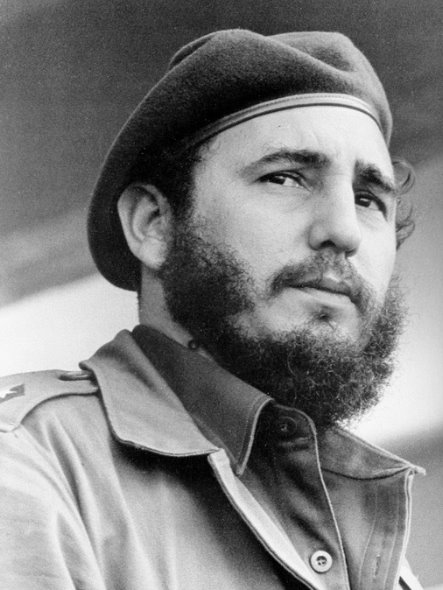
The passionate reporter: how Castro got his job through the NY Times

The New Neo Posted on September 7, 2009 by neoDecember 4, 2013

fidel.jpg

I had previously heard something vague about the NY Times having lauded Fidel Castro when he first came to power, but I didn’t know the details. Most people are ignorant (as I was) of the story of Times reporter Herbert Matthews, but it demonstrates—as does the Walter Duranty saga—how long the paper has been churning out misleading verbiage promoting Leftist causes while disguising the agendas of Leftist leaders. What’s even more disturbing (and familiar) is the reluctance of the reporters involved to recant, even in the face of overwhelming evidence to the contrary.

You can find the Matthews story here and here. It’s a cautionary tale of reporter hubris, naivete, and the persistence of stubborn and self-serving blinders. The occasion of both articles was a 2006 book about Matthews written by Anthony DePalma (another former Times reporter, by the way), entitled The Man Who Invented Castro.

Matthews, who had admired and supported Mussolini in his early days and then switched to the Republican cause in Spain, scored a journalistic coup when he trekked into the mountains of Cuba to interview Castro, proving that Batista had lied when he prematurely (very prematurely, as it turns out) reported the death of the young revolutionary. Matthews’s motivation for admiring Castro—according to this Reason piece by Glenn Garvin, and Matthews’s own words—was emotion:

Only a fool, Matthews wrote, would argue that a reporter “should have had no feelings or emotions or even bias about a story like the Cuban Revolution.” And a reporter’s heart should be pinned on his sleeve, or at least his copy. “One of the essentials of good newspaper work is what F. Scott Fitzgerald called ”˜the catharsis of a powerful emotion,’”…” Matthews said. “A catharsis is the escape hatch of the emotions that a drama arouses.”

Ron Radosh concurs that, according to De Palma’s book, Matthews seems to have been motivated mostly by feelings:

“I feel about Cuba somewhat as I did about Spain,” he confessed. “One . . . wants to share . . . if only as a sympathizer, what the Cubans are suffering.” Thus Matthews, in his own words, became “the man who invented Fidel.” Of course, as DePalma notes, that was simple bragging. Castro did not need Matthews to create him; he needed Matthews as a propaganda and publicity tool in Cuba.

And that’s exactly what Castro got, right to the end of Matthews life. Once it became crystal clear (contrary to Matthews’s repeated and fervent claims) that Castro actually was a Communist, the Times—to its mild but belated credit—finally stopped publishing Matthews’s apologia for the dictator, now that it had grown embarrassingly obvious how wrong Matthews and the Times had been.

But it was a bit late. The damage had been done—not to Castro’s reputation, which Matthews had made, but to the cause of anyone who might have opposed him when it might have mattered.

The title of my post, “Castro got his job through the NY Times,” is a reference to a William Buckley column on the subject that was famous in its time:

In those days, the Times had an ad campaign showing average citizens who had obtained jobs through its classified section. A soon-to-be-famous cartoon appeared in National Review, featuring a caricature of Castro with the caption, “I got my job through the New York Times.” Writing in The American Legion magazine, NR’s founder, William F. Buckley Jr., charged that Matthews had done “more than any other single man to bring Fidel Castro to power.” Matthews, he asserted, had been guilty of “ferocious partisanship” when he displayed the future tyrant as “a big, brave, strong, rebellious, dedicated, tough idealist.” The headline of Buckley’s article was that of the cartoon.

Radosh goes on to say:

Matthews, DePalma writes, “exulted in Castro’s triumph, for it could be said he had a hand in it.” All pretenses to journalistic objectivity were gone. He had now “chosen the winning side in an ideological battle.” For the rest of his life, Matthews remained true to his original mythical portrait of Castro as democrat, despite the vast amount of evidence to the contrary. He was pleased that he had helped bring down a “murderous regime”; the fact that Castro’s new government had within Matthews’s lifetime proven itself to be far more oppressive and violent than the Batista regime had ever been somehow evaded him.

Sound familiar? Apart from the historical interest of the Matthews/Castro case, I find the above paragraph particularly fascinating in psychological terms. Matthews is an excellent example of the oft-noticed tendency of those who have staked their reputations on a certain perception, and later are confronted with evidence that negates it, to deny that evidence and persist in their folly. In other words, a mind is a very difficult thing to change.

This is especially true in a case such as that of Matthews, of whom it could be said that he suffered from “Castro Arrangement Syndrome.” Not only was his reportage about Castro the highlight of his career, but it was a very emotional cause as well. To have admitted error would have been to realize that he’d been wrong in both respects, and had been taken in and deceived by a tyrant.

To the end of his life, Matthews denied Communist sympathies, although I think that probably was more of a semantic quibble than anything else. My guess is that Castro himself may have regarded Matthews as an especially useful idiot—so useful that, in 1997, on the fortieth anniversary of the Matthews/Castro interview, the government of Cuba erected a plaque at the mountain site of the encounter to commemorate the glorious historical occasion.

[ADDENDUM: The UN loves Castro almost as much as Matthews did.

And as far as Castrophilic reporters go, it’s not just Matthews—not by a longshot.]

Posted in Historical figures, Press | 20 Replies

Obama, disingenuous? Say it isn’t so

The New Neo Posted on September 7, 2009 by neoSeptember 7, 2009

Here’s a little coda from Britain about the release of the Lockerbie bomber. The Brown government claims that Obama and Clinton had full knowledge of what Scotland was about to do re Al Megrahi and voiced no objection until the resultant storm broke in this country over the news of Al Megrahi’s release and triumphant arrival in Libya:

British officials claim Mr Obama and Mrs Clinton were kept informed at all stages of discussions concerning Megrahi’s return.

The officials say the Americans spoke out because they were taken aback by the row over Megrahi’s release, not because they did not know it was about to happen.

”˜The US was kept fully in touch about everything that was going on with regard to Britain’s discussions with Libya in recent years and about Megrahi,’ said the Whitehall aide.

”˜We would never do anything about Lockerbie without discussing it with the US. It is disingenuous of them to act as though Megrahi’s return was out of the blue.

Disingenuous, Obama and Hillary? Hard to believe, isn’t it? Of course, it’s possible that it’s Whitehall that’s being disingenuous here. There’s plenty of disingenuousness to go around.

Posted in Obama, Terrorism and terrorists | 9 Replies

Happy Labor Day

The New Neo Posted on September 7, 2009 by neoSeptember 7, 2009

Labor Day is one of those holidays I ordinarily don’t think too much about, except as an excuse for a barbecue and a day off. It has bad associations for me because it always came around the time of the beginning of school in the New York City school system of my youth—thus, the name had special significance; “labor” indeed.

Here’s the history of the holiday. To a certain extent, it’s connected philosophically with International Worker’s Day, which I wrote about here, celebrated in other countries on the first of May.

I hope you all are having a good holiday, wherever you might be.

And here’s how Michael Moore is celebrating.

Posted in Uncategorized | 3 Replies

Today’s Honduras (and SEC investigation) updates

The New Neo Posted on September 5, 2009 by neoSeptember 5, 2009

See Fausta for more on Honduras, much more.

And this editorial by Monica Showalter at IBD is must-reading on the topic of US policy towards Honduras, the reaction of other nations, and the likely consequences.

In a completely unrelated affair, please read the 22-page report from the IG investigating the SEC’s “investigation” [sic] of Madoff. As bad as previous articles made the SEC out to be, the full 22-page version is worse.

Far worse. Words like “inept” and “stupid” don’t begin to describe the SEC’s behavior in the Madoff case, going back over sixteen years of missed opportunities and shockingly stupid moves on the part of supposedly intelligent public servants. Reading the report left me almost wishing that the SEC was purposely covering up for Madoff. Corruption might be preferable to negligence on this pervasive a scale.

But hey, let’s put them in charge of health care.

The IG has already released an even longer report on the same subject, 457 pages worth. It’s available here, for those of you who thirst for more. But I don’t think I’ll subject myself to that particular tome; I’ve had enough for a while.

Posted in Finance and economics, Latin America, Law | 27 Replies

Post navigation

← Previous Post
Next Post→

Your support is appreciated through a one-time or monthly Paypal donation

Please click the link recommended books and search bar for Amazon purchases through neo. I receive a commission from all such purchases.

Archives

Recent Comments

  • om on Is Iran approaching a tipping point?
  • Bob Wilson on Open thread 3/17/2026
  • sdferr on Is Iran approaching a tipping point?
  • miguel cervantes on Is Iran approaching a tipping point?
  • Gringo on Power out. Internet out.

Recent Posts

  • Is Iran approaching a tipping point?
  • Power out. Internet out.
  • Open thread 3/17/2026
  • Pundits unbound
  • Still another update on the SAVE Act

Categories

  • A mind is a difficult thing to change: my change story (17)
  • Academia (318)
  • Afghanistan (97)
  • Amazon orders (6)
  • Arts (8)
  • Baseball and sports (161)
  • Best of neo-neocon (88)
  • Biden (536)
  • Blogging and bloggers (581)
  • Dance (286)
  • Disaster (238)
  • Education (319)
  • Election 2012 (360)
  • Election 2016 (565)
  • Election 2018 (32)
  • Election 2020 (510)
  • Election 2022 (114)
  • Election 2024 (403)
  • Election 2026 (13)
  • Election 2028 (4)
  • Evil (126)
  • Fashion and beauty (323)
  • Finance and economics (1,000)
  • Food (316)
  • Friendship (47)
  • Gardening (18)
  • General information about neo (4)
  • Getting philosophical: life, love, the universe (724)
  • Health (1,132)
  • Health care reform (545)
  • Hillary Clinton (184)
  • Historical figures (329)
  • History (699)
  • Immigration (426)
  • Iran (403)
  • Iraq (223)
  • IRS scandal (71)
  • Israel/Palestine (785)
  • Jews (414)
  • Language and grammar (357)
  • Latin America (202)
  • Law (2,882)
  • Leaving the circle: political apostasy (124)
  • Liberals and conservatives; left and right (1,271)
  • Liberty (1,097)
  • Literary leftists (14)
  • Literature and writing (386)
  • Me, myself, and I (1,465)
  • Men and women; marriage and divorce and sex (902)
  • Middle East (380)
  • Military (308)
  • Movies (344)
  • Music (524)
  • Nature (254)
  • Neocons (32)
  • New England (176)
  • Obama (1,735)
  • Pacifism (16)
  • Painting, sculpture, photography (126)
  • Palin (93)
  • Paris and France2 trial (25)
  • People of interest (1,015)
  • Poetry (255)
  • Political changers (176)
  • Politics (2,765)
  • Pop culture (392)
  • Press (1,610)
  • Race and racism (857)
  • Religion (411)
  • Romney (164)
  • Ryan (16)
  • Science (621)
  • Terrorism and terrorists (967)
  • Theater and TV (263)
  • Therapy (67)
  • Trump (1,575)
  • Uncategorized (4,334)
  • Vietnam (108)
  • Violence (1,394)
  • War and Peace (962)

Blogroll

Ace (bold)
AmericanDigest (writer’s digest)
AmericanThinker (thought full)
Anchoress (first things first)
AnnAlthouse (more than law)
AugeanStables (historian’s task)
BelmontClub (deep thoughts)
Betsy’sPage (teach)
Bookworm (writingReader)
ChicagoBoyz (boyz will be)
DanielInVenezuela (liberty)
Dr.Helen (rights of man)
Dr.Sanity (shrink archives)
DreamsToLightening (Asher)
EdDriscoll (market liberal)
Fausta’sBlog (opinionated)
GayPatriot (self-explanatory)
HadEnoughTherapy? (yep)
HotAir (a roomful)
InstaPundit (the hub)
JawaReport (the doctor’s Rusty)
LegalInsurrection (law prof)
Maggie’sFarm (togetherness)
MelaniePhillips (formidable)
MerylYourish (centrist)
MichaelTotten (globetrotter)
MichaelYon (War Zones)
Michelle Malkin (clarion pen)
MichelleObama’sMirror (reflect)
NoPasaran! (bluntFrench)
NormanGeras (archives)
OneCosmos (Gagdad Bob)
Pamela Geller (Atlas Shrugs)
PJMedia (comprehensive)
PointOfNoReturn (exodus)
Powerline (foursight)
QandO (neolibertarian)
RedState (conservative)
RogerL.Simon (PJ guy)
SisterToldjah (she said)
Sisu (commentary plus cats)
Spengler (Goldman)
VictorDavisHanson (prof)
Vodkapundit (drinker-thinker)
Volokh (lawblog)
Zombie (alive)

Meta

  • Log in
  • Entries feed
  • Comments feed
  • WordPress.org
©2026 - The New Neo - Weaver Xtreme Theme Email
Web Analytics
↑