…is the Scott Walker recall election in Wisconsin.
Should be interesting. Here’s a roundup, including some new polls (valid or not).
And I wonder: do you agree with me that there seems to be a slight lull in the presidential election battles?

…is the Scott Walker recall election in Wisconsin.
Should be interesting. Here’s a roundup, including some new polls (valid or not).
And I wonder: do you agree with me that there seems to be a slight lull in the presidential election battles?
In the ever-expanding interests of diversity in academia and elsewhere, we’ve hit a new high (that is, low):
Touting a move to make its faculty more diverse, CUNY administrators have broken out Jews into a separate minority group: “White/Jewish.”
CUNY insists “some faculty” want the label, instead of being lumped in as just white. But the theistic tag has outraged both Jewish and non-Jewish professors, and sparked a furor.
Surely the folks at CUNY must know that they’re stepped on a third rail here, with a long and non-illustrious history. The definition of Jewishness—race, nation, religion?—and the use made of compiling statistics on such things is both controversial and well-known. So, why wade into it? The only possible use in this circumstance would be to limit the hiring of Jewish professors, who (let me take a wild guess here) are probably over-represented rather than under-represented on CUNY’s faculty.
But I’ll entertain the topic, if only briefly. One of the real problems with defining Jews as a religion is that although they are indeed that, they also regard themselves as a nation, which can easily be confused with a race but most assuredly is not. And in turn that concept is complicated by the fact that some, although hardly all, of Jews were somewhat isolated genetically for a long time and exhibit shared characteristics and tendencies that are at least partly genetic (including, perhaps, the tendency to be college professors at CUNY).
Any person of any ethnic or racial origin can convert to Judaism, and many do. And there are Jewish groups—some of them of great antiquity—from every major race on earth. “White/Jewish” as a special diversity category makes about as much sense as “White/Catholic” does—meaning, none at all. But making sense was never the point, I’m afraid.
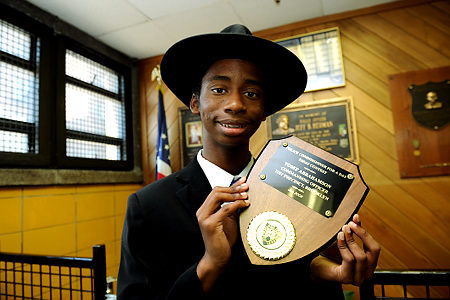
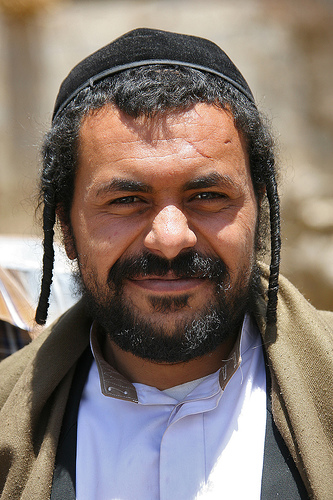
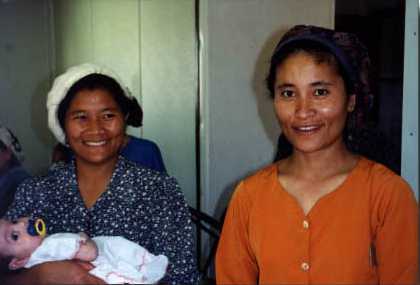
Around the world with Jews:

I got some spam email in my mailbox that began this way:
Who I am? Shiny green eyes, twenty two years…
It went on to catalogue her other enticing body parts—“C cup,” for example, which I would have thought was considered relatively meager these days. It was signed with a woman’s name like “Brandy” or “Candy” or “Natasha” or “Vanessa” whatever the porn name du jour might be.
But after I’d deleted it, I kept wondering about those shiny green eyes. Not “shining,” mind you, but “shiny.” Was this an extra-terrestrial come-on? Or perhaps she was offering—true love?
:
I have to say that till I wrote this post I’d never heard of this song or the group that sings it, The Kelly Family. They seem to be awfully popular in Europe, which tells you something about European pop music tastes. Please try to forgive me if this gives you a very disagreeable earworm.
…not.
The wrong Scott Walker, apparently.
And the whole thing also made me think of this period piece:
You’ll never guess who this is from looking at it, even though it’s a very famous person who’s usually instantly recognizable:

It’s Groucho Marx without his trademark mustache and bushy eyebrows or eyeglasses.
And to me it looks a lot like this guy, Gene Siskel the movie critic. A lot:

…but Elizabeth Warren is just a flipper.
And also, I suppose, a hypocrite. Although it’s an interesting question: is a person who rails against “predatory banks and heartless foreclosures” allowed to profit from those foreclosures? Is Warren just against the institution profiting, as opposed to the individual—particularly if that individual is herself?
…a sentence of life imprisonment.
Probably a rather short sentence, considering that the former president is 84 and ill.
Predictably, protests erupted from some Egyptians wanting blood. The protestors, of course, are vocal and loud and get a lot of coverage. Others are satisfied with the verdict, and I can’t get an idea of their relative numbers.
Here’s more; although the verdict was life, Mubarak and the others were found guilty of only some of the milder charges:
Watched by tens of millions on live television, the judge, Ahmed Refaat, declared that neither Mubarak nor any other defendants in the so-called “trial of the century” were responsible for ordering the lethal assault by security forces last January and February that left almost a thousand demonstrators dead, and that the toppled autocrat and his former interior minister Habib al-Adly were guilty only of not using their high political office to put a stop to the bloodshed.
All other charges, which included profiteering and economic fraud, were dismissed, allowing key members of Mubarak’s family and security apparatus ”“ including his two sons Gamal and Alaa and several top security officials ”“ to walk free. Legal experts claimed the ruling left Mubarak’s life sentence “wide open” to appeal, and political analysts said the outcome was a victory for the deep state and a sign of the old regime reasserting its grip over the country.
…Obama longs for McCain,” says the Washington Examiner headline.

The above photo was presciently supplied by Vanderleun at American Digest back on Dec. 2, 2011. But he was joking about the Republican primaries; who knew it would be Obama who’d be missing McCain come June?
McCain just wasn’t a good candidate against Obama. And he had some bad luck as well. Part of his problem was that he wasn’t telegenic: he looked stiff, awkward, and old, and couldn’t seem to muster up much energy for the fight. Some speculated that he didn’t even want the office, although I disagree on that.
But I think many of McCain’s problems in countering Obama were involved with the newness of the opponent. Without a track record, Obama was much, much more difficult to fight; that “blank screen” quality Obama himself noted, on which people could—and did—project whatever they wished him to be. And of course there was great appeal for many people in the novelty and symbolism of the first black president.
And even then, McCain was ahead in the polls almost till the end. The coup de grace was administered by the financial crisis. McCain was seen as the wrong man for the wrong time.
Unfortunately, Obama the winner was even wronger.
…Romney the fighter from “Open Blogger” at Ace’s:
Romney and his campaign staff are clearly moving themselves “inside the loop” in their campaign against Obama. They’re raising more money, they’re responding to the news cycle better, and they’re aggressive about getting in his face. As others have noted, Obama has never faced a tough campaign before and for the first time he has a highly public, highly visible record to defend. I’ve been waiting 30 years for a bare-knuckled Republican Presidential candidate; who would have thought it would be Mitt Romney? Not me, but I couldn’t be happier.
I like this new meme. And I must claim a little foresight. Who would have thought it? Moi, back in January of 2012:
Those who criticize Romney often like to say that Romney could never be tough enough to fight Obama. But Romney seems to be standing up to Gingrich rather well and keeping his cool.
Even if what they do is perfectly legal.
Even if they constitute an infinitesimal percentage of the total population of rich people—“one half of one percent of the 4 million tax filers that make up the top 3 percent” of earners.
Even if the number of much less wealthy people who don’t pay taxes is much greater—59 million of the latter to 21,000 of the former.
Even if the way the rich get out of paying taxes consists almost entirely of “donating to charity, investing in local and state governments, earning money overseas and writing off doctor bills.”
I also wonder about the political affiliation of most of these non-taxpaying rich people. I bet they’re not all Republicans. I wonder whether even the majority of them are Republicans; the article doesn’t go into that issue at all.
My personal opinion is that if it’s legal, I have no beef with them. If we want them to pay more, we should change the laws—but get ready for those unintended consequences. They’re a bitch.
In a recent interview:
…[Elizabeth] Warren repeatedly and adamantly proclaimed that the law schools at Harvard University and the University of Pennsylvania hired her as a professor because of her scholarship and teaching abilities, not to improve diversity on their faculties.
And that, my friends, is one of the unintended consequences of affirmative action. It almost automatically puts an asterisk next to everyone hired under its umbrella, and those people must try to undo that assumption.
Back in the bad old days before affirmative action, there really was discrimination against members of many minority groups. The upshot was that those who got hired in spite of this were not just good, they tended to be super-good. I have some personal experience of this; the black teachers I had in junior high school and college were some of the best teachers—maybe even the best teachers—I ever had (I wrote a post about one of them, here).
I wouldn’t want to go back to those days, of course. But the old dream of no discrimination—of judging job applicants on an equal basis—has never really been realized. Affirmative action was never the least bit fair, replacing one wrong with another, and we all know that two wrongs cannot make a right. I don’t know what should have been done instead, but I do know that even from its inception, when I was still a liberal, affirmative action made me very, very uneasy. As I wrote here:
We all have subsequently paid dearly, including those whom affirmative action was supposed to benefit, because their achievements have forever after been tainted by the suspicion (correct or incorrect) that they might not have been able to earn them if the playing field had not been recently slanted in their favor.
So, putting aside the whole issue of Ms. Warren the 1/32th Native American, we see that she is eager to make it clear that, despite her suspect claims to minority ancestry, she was not an affirmative action hire. The beauty of it is that she may or may not be correct; it is impossible to tell. But none other than Yale Law School graduate Clarence Thomas has declared that, post-affirmative, action:
…[with] taint of racial preference…Yale meant one thing for white graduates and another for blacks, no matter how much anyone denied it.
The truth is that women and minorities are hired to improve diversity on faculties. It’s absurd to claim otherwise. Some of these people have stellar qualifications and would have been hired anyway, as Ms. Warren claims for herself. Others would not have. And with affirmative action, it’s hard to tell which is which.
…for the Obama administration.
And, I might add, for the American people.
[NOTE: Here’s a roundup from Instapundit.]