Two actors I really like (or is it really one?), each with Judi Dench:
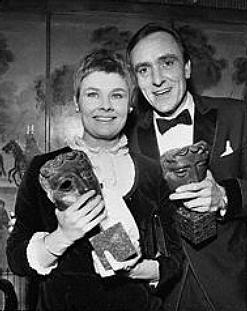
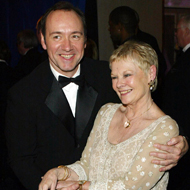

Two actors I really like (or is it really one?), each with Judi Dench:
Paul Mirengoff of Powerline has a controversial post about Obama’s motivations for asking Congress’s approval for going into Syria. Why controversial? Because he attributes principled motives to Obama (and not just the “principle” of playing politics, either).
Here’s Mirengoff:
So why did Obama go to Congress? I think he did so because he considers it the right thing to do. That is, Obama believes ”” as many do ”” that before the U.S. takes highly controversial military action in a war where serious nations stand on the opposing side, the peoples’ representatives should be consulted.
The idea that Obama acted as he did out of conviction shouldn’t be shocking. Most, though not all, of Obama’s important presidential decisions have been conviction-based. This is what conservatives mean when we talk about his ideological leftism.
To be sure, Obama’s most deeply held convictions don’t pertain to process. So it’s true that if Obama believed attacking Syria is imperative, he would not have bothered with Congress.
Instead, I submit, Obama believes that attacking Syria is the best response to Assad’s use of chemical weapons. And he believes that having Congress vote beforehand is the best procedure ”” the same belief he held before he was president.
I disagree with Mirengoff, as do most of the commenters at his piece. However, when I thought about it at a bit more, I realized that in a sense I agree that Obama’s decision is principled. It’s just that I disagree on certain of the details of what principles of Obama’s might be involved.
With Obama, the first principle is always to defend his own political butt, and to simultaneously blame the opposition and absolve himself of responsibility. Going to Congress is in accord with those principles.
Obama’s second principle here is to delay action until events force his hand one way or the other, and then to deliver too little too late.
Obama’s third principle is the more conventionally “principled” one. It takes a bit more explaining, but it is in this third principle that Obama expresses the basis of much of his foreign policy, which is mostly internationalist rather than being concerned with specific US interests.
Number three principle is the reduction of WMDs on the international scale, which has long been an interest of Obama’s. One of the few papers of his that have actually come down to us is a piece he penned while at Columbia which concerned the US, the USSR, and nuclear disarmament (I have previously written about his essay here). Chemical weapons are not nuclear ones, but they are in the same general category of weapons of mass destruction, and it doesn’t strain credulity to imagine that Obama has some true antipathy to Assad having used them on his people.
Of course, that leaves us with the need to explain why Obama was against Bush’s invasion of Iraq, when Saddam Hussein was thought to be developing nuclear weapons and had already used chemical weapons on his own citizens in 1988, on a greater scale than Assad has. At the time of the 2002 buildup to Bush’s invasion of Iraq, Obama was a mere state senator in Illinois—but he is on record as having spoken against it. The overarching reason appears to have been politics, politics, politics (the first principle tends to trump the third for Obama): it was Bush doing it, and Obama represented a very liberal district where supporting Bush would have been a huge no-no.
It’s instructive, however, to go back and look at Obama’s stated reasons in his speech, because he obviously couldn’t give “politics” as a motivation. One thing he cited was that the Iraq war would be a distraction from the real and more pressing concerns, which were domestic issues. That is actually consistent with what we know of Obama’s “principles” as president; he much prefers the latter to the former. Another reason he gave is that an invasion and occupation would be costly and risky. That is also consistent with Obama’s present position on Syria—as well as his positions on Egypt, Iraq, and Libya.
And then there’s this interesting tidbit from his 2002 speech:
[Saddam Hussein] is a brutal man. A ruthless man. A man who butchers his own people to secure his own power. He has repeatedly defied UN resolutions, thwarted UN inspection teams, developed chemical and biological weapons, and coveted nuclear capacity. He’s a bad guy. The world, and the Iraqi people, would be better off without him.
But I also know that Saddam poses no imminent and direct threat to the United States, or to his neighbors, that the Iraqi economy is in shambles, that the Iraqi military a fraction of its former strength, and that in concert with the international community he can be contained until, in the way of all petty dictators, he falls away into the dustbin of history.
Interesting, no? Especially that phrase, “Saddam poses no imminent and direct threat to the United States, or to his neighbors.” These arguments of Obama’s—which if true of Saddam Hussein (and at the time it was not at all clear they were true) are even more true of Assad—have fallen by the wayside this time, and are being advanced by Obama’s opponents rather than by Obama or his supporters.
In addition, if Assad were to fall or be weakened, who would rise to the ascendance in Syria? There is a general consensus that it would be Al Qaeda-affiliated “rebels.” And so one might argue that keeping hands off Assad, terrible though he is, is actually better for US (and even world) interests than the looming alternative.
It is fairly apparent from his 2002 speech that Obama believed that Saddam Hussein had chemical weapons and was intent on developing nuclear weapons, and yet Obama did not believe that was enough to constitute an “imminent and direct” threat of any sort to the US or to justify action. This was the party line of the day, and now the party in charge is a different party, and so different rules apply.
The other day I traveled by airplane, and I was pulled out of line for special consideration.
Actually, there wasn’t all that much of a line; it was Saturday night, and the airport was relatively quiet. But I was pulled out of whatever line did exist by a nice young uniformed man who asked me to hold out my hands to be swabbed. He ran a sort of Q=tip moistened with something or other over them and then ran that in front of a machine that read out a bunch of figures. And then he waved me on my way, after explaining (when I asked him) that he’d checked me for explosive residue.
Good thing I hadn’t fired any cap guns recently.
I can only hope they’re profiling, too, on the QT.
Labor Day is the bookend on the opposite end of summer from its holiday beginning, Memorial Day.
July Fourth is summer’s early peak, with the promise of long light-filled days ahead. But Labor Day is summer’s last gasp, the moment I dreaded as a child because it marked the finish of vacation and the start of the school year. Spiffy new clothes, a shiny bookbag, freshly sharpened pencils, and the promise of the beautiful autumn leaves’ arrival were nice. But they couldn’t make up for the fact that a new school year was beginning. Where oh where had the summer gone?
And it goes even more quickly these days. But let’s celebrate the fact that we don’t have to worry about the start of school anymore””except, perhaps, for the teachers among you.
Here’s wishing you all a Happy Labor Day! Barbecues, picnics, parades, beach, just hanging out in your yard, whatever you desire. And for the historically-minded among you, some information the origins of the holiday.
The scuttlebutt is that Obama wants to get the members of Congress on the record as voting yeah or nay:
His reasoning, according to officials who were in the room [when Obama explained his change of heart to his advisers in the Oval Office on Friday night]? He wants members on the record and on the hook, rather than simply criticizing from outside whatever action he takes.
This is congruent with what we already know of Obama. For him it’s all about political jockeying for position and his own status.
He has no idea how to make a difficult decision, but he’s helped by the fact that he has had no problem reversing himself in the past and has come to think that he will not suffer any serious consequences as a result.
He knows he can blame the Republicans, and he knows the Democrats will stick by him in the ways that count to him—on domestic issues like Obamacare and immigration, that is.
He didn’t really want to attack Syria anyway—if he does, he would be doing it mostly to save face about the red line he drew. So Syria itself is not the main issue.
His favorite modus operandi when something goes wrong for him is to pass the buck. So going to Congress at this point does just that, whether Congress ends up approving or disapproving.
I keep reading articles wondering if this will weaken Obama, but I’m not sure what they mean by “weaken.” He’s already weakened the US on the world stage, but since that’s his goal, that’s perfectly okay with him and is in fact a consummation devoutly to be wished. As for domestically, he’s not running for re-election. To be weakened, his own party would have to abandon him, and though they might gripe and grouse for a while it’s temporary and will not extend to other issues he deems important. And for him to be further weakened, voters would have to turn to Republicans in 2014 and 2016, and I just don’t see that happening as a result of Syria. Will voters even remember Syria at that point?
[Hat tip: Maggie’s Farm.]
What ever happened to the skilled labor force? It went to college, and that’s not an entirely good thing:
When everybody’s special, nobody is. Getting everyone into college means you have to dumb down the curriculum until it is nothing but meaningless drivel that has no application in the real world…
Forcing everyone to become smart is like a countrywide affirmative-action plan. It doesn’t work…
The controversy that destroyed 11-plus [the British meritocracy exam system] is long and complex, but the CliffsNotes version is that some clueless politician saw educated siblings do better than uneducated siblings and thought, “They should all have the opportunity to do as well as their brother.” But the educated sibling didn’t thrive because he was educated. He was educated because he thrived. If you think his brothers got ripped off, tell it to God. He was the one who doled out the lower IQs…
I’m not denying that outsourcing and automation has made many jobs obsolete. Of course it has. But that doesn’t mean you abandon the entire concept of a working class. There is still a huge demand for skilled labor.
But our young people aren’t skilled (or interested) in hard labor, so we bring in illegal Mexicans. When you take away a young person’s ability to work, you take away their pride.
True, but we have to be careful not to promulgate the myth of the stupid-but-happy worker, singing joyfully at his/her trade no matter how menial. A lot of work is boring and nasty, and a lot of people who used to do it were crippled or broken by it and nourished the dream that for their children things would be better.
And to a great degree, it was. But the article’s author, Gavin McInness, is correct in asserting that the whole process of pretending everyone is suited for higher academic study and a job in the professions has gotten absurd, and has had the effect of lowering standards to an alarming degree.
If you think about it, it was kind of a no-brainer (pun intended) that this would be the result. No doubt there were sincere people who thought (and still think) that human beings are infinitely malleable, and that inherent differences in intelligence and personality and abilities either don’t exist or don’t matter and can be transcended through enough and better education. Or additionally, there are people who thought (and still think) that, even though education won’t equal everything out, it still is necessary to pretend that it will, and that this should be the highest and most pressing goal of a society no matter what the costs.
Not so bright, is it?
…but this seems completely on target:
Syria’s government on Sunday mocked Mr. Obama’s decision, saying it was a sign of weakness. A state-run newspaper, Al Thawra, called it “the start of the historic American retreat,” and said Mr. Obama had hesitated because of a “sense of implicit defeat and the disappearance of his allies,” along with fears that an intervention could become “an open war.”
Syria’s deputy foreign minister, Faisal Mekdad, told reporters in Damascus that “it is clear there was a sense of hesitation and disappointment in what was said by President Barack Obama yesterday. And it is also clear there was a sense of confusion, as well.”
Not only a weak horse, but a skittish one.
…but sometimes we forget how nit-picky crazy they were [the following excerpt is from The House of Wittgenstein: A Family at War]:
To enjoy full civil rights under the new regime [in Austria after Germany’s takeover] each person required a Reich Citizenship Certificate, which could be obtained only by providing proof of Aryan descent. But this in itself was often problematic. Was a Jew considered Jewish by blood or by religion? What if one of his parents was half Jewish by blood but Christian by upbringing? This muddle was supposedly resolved by the Nuremberg Laws of September 1935, in which it was stipulated that a Jew must be defined as anyone who descends from at least three Jewish grandparents or from two Jewish grandparents if they themselves were, on or after September 15, 1935, either married to a Jewish person or a member of the Jewish community…
In the massive confusion, the system threw up thousands of surprises and anomalies. Many had not the slightest idea about their grandparents’ blood or religion. Furthermore investigations showed that there was far more Jewish blood in the system than the Nazis had either hoped of expected to find. When they discovered that Johann Strauss, the “Waltz King,” had Jewish blood they simply erased his record from the registry. Similar complications arose with the ancestors of Richard Wagner’s wife and of Lorenzo da Ponte, Mozart’s librettist, so that special arrangements had to be made in order not to have to ban performances of the Marriage of Figaro, Don Giovanni, and the “Blue Danube” Waltz, and so that Hitler could continue to enjoy the Wagner Festival at Bayreuth in the company of the composer’s granddaughter.
Many active members of the Nazi Party were brought to a rude awakening when they discovered that they themselves qualified as Jews under the Nuremberg rules…
Unfortunately, this didn’t stop them. They just bent the rules.
…[T]here is one man whose physiological performance defies all convention: Dean Karnazes is an ultrarunner from California and, at times, it seems as if he can run forever.
Karnazes has completed some of the toughest endurance events on the planet, from a marathon to the South Pole in temperatures of -25C to the legendary Marathon des Sables, but in his entire life he has never experienced any form of muscle burn or cramp, even during runs exceeding 100 miles. It means his only limits are in the mind.
Karnazes says he once ran for three days and nights continuously, and he only stopped because he got sleepy.
Karnazes doesn’t seem to have what’s called a lactate threshold:
While supreme willpower is a common trait among ultrarunners, Karnazes first realised that he was actually biologically different when preparing to run 50 marathons in 50 days across the US back in 2006. “I was sent to a testing center in Colorado,” he recalls. “First, they performed an aerobic capacity test in which they found my results consistent with those of other highly trained athletes, but nothing extraordinary. Next, they performed a lactate threshold test. They said the test would take 15 minutes, tops. Finally, after an hour, they stopped the test. They said they’d never seen anything like this before.”
And in unrelated news, we’re getting fatter all the time.
Oh, you already knew that? Well, I’m not talking about just Americans. Or about people in general. Or even about just their pets and zoo animals. This refers to animals under many other conditions, too, such as lab rats, who are taking in the same amount of food as before and yet getting heavier.
I feel their pain.
Rats, mice and primates (four types were analyzed in this study) in laboratories are fed a highly controlled, known diet that has remained relatively constant over time. Why are these animals getting fatter?
Perhaps for some reason they’re choosing to eat more of what they are offered or are somehow changing how they metabolize it, he said.
Allison pointed out at least three potential contributions to this and the other observations: endocrine disrupting chemicals, pathogens such as a virus, and/or changes in temperature where the animals are kept.
I read several articles on the subject, and nowhere did I see speculation on whether animals’ gut flora might have changed in a way that favors weight gain. So I’m here to offer that idea. It’s not so very fanciful, either; a phenomenon of the sort seems to be true of humans.
Perhaps when Congress returns and approves, which won’t be until after September 9th. But he reserves the right to do it before:
Before revealing he would seek approval from Congress, the President made clear that “we are prepared to strike whenever we choose.”
Strikes would be “effective tomorrow or next week or one month from now,” Obama said, adding that he is “prepared to give that order.”
Since this seems to be merely a symbolic gesture, I suppose it doesn’t matter how telegraphed it is, or when it occurs. Actually, for symbolic gestures, perhaps the more telegraphed and delayed the better, in order to build apprehension.
I think what happened is that President Obama may have been surprised by the relative unpopularity of his initial announcement that he might be about to attack Syria. He hadn’t intended to seek Congress’s approval, but he may have been convinced that it was necessary to win over the American people (although such considerations don’t often stop him).
This is interesting as well:
Also on Saturday, U.N. chemical weapons inspectors arrived in the Netherlands, where samples they collected in Syria will be evaluated in laboratories. The goal will be to check them for traces of poison gas that may have been unleashed in an Aug. 21 bombardment of a Damascus suburb.
U.N. spokesman Martin Nesirky said Saturday “whatever can will be done” to speedup the analysis, but he gave no timeline for a report on the results…
The experts took with them blood and urine samples from victims as well as soil samples from the affected areas for examination in laboratories in Europe.
Considering it’s the UN, my guess is that it will take quite a while. I wonder, if the report were to indicate that chemical weapons were not used, whether Obama would back off (my guess, however, is that the inspectors will find that they were, although I would not be completely shocked either if the opposite occurred).
The parallels between Syria now and Iraq in 2002-2003 is ironic, including the need to try to present the evidence of weapons of mass destruction. The differences are ironic, too, because there were many additional reasons to attack Saddam Hussein besides WMDs—most prominent among them his continued and repeated defiance of the UN inspections that had been imposed on him as a condition of the end of the Gulf War.
Despite this—and the fact that Saddam Hussein had also used chemical weapons against his own people, in 1988 on a much larger scale—Obama was opposed to attacking Iraq, although he was a mere state legislator rather than US senator at the time. Another ironic difference between the Iraq buildup and the present Syria one was, of course, that unlike Obama, Bush actually got the serious cooperation of a number of countries in the international community.
So, what will Congress do? Obama may have called their bluff. If they agree, they will be partially responsible for the result of any action he takes. If they disagree, and Assad continues his behavior, they will be responsible for allowing that to happen and Obama can say “Ah, if only you’d let me do it, none of this terrible stuff would have happened.”
…violates a basic rule of password protection.
Giants walk the earth these days.
One of the more interesting things about this video is that it shows that, with more information, opinions could change. Of course, we don’t know how representative these students are of the whole.