I present to you Exhibit A, actor Jake Hoffman (aka Dustin Hoffman’s son):

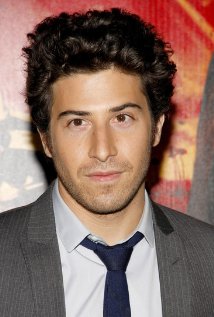
A little more handsome than his dad, though, don’t you think?

I present to you Exhibit A, actor Jake Hoffman (aka Dustin Hoffman’s son):
A little more handsome than his dad, though, don’t you think?
Aside from having to date your checks “2014,” that is?
We tried to figure out exactly what the hell was going to happen on January 1st, given that Obamacare kicked five million people off their insurance, and would certainly not manage to sign up that many by the deadline…
John Ekdahl suggested that Obama will just order hospitals and doctors to treat anyone who says he has insurance, whether he does or not. I believe Ekdahl’s term was that Obama will order everyone to be “deemed” as covered by insurance…
So is it actually inconceivable that Obama will simply issue a Kingly Edict and instruct insurers to insure people whether they actually are insured or not? Or that hospitals and doctors must, through this “transition period” which may contain “some disruptions,” must provide care without actual promise of payment?
Not only not inconceivable, but extremely conceivable that Obama will do this.
Remember that Obamacare is founded on estimates/supppositions (with a reckoning to come later) in several other ways. For example, the self-employed are given subsidies based on estimates of their income, and if the figure on line 37 of their federal income tax return ends up higher, the person will have to pay back the difference, and vice versa (if it’s lower they could get more government money). The insurance companies also are protected against loss and will be bailed out by the government under certain circumstances, or penalized (I explained how it will work here). Many deadlines and rules have been suspended by other Kingly Edicts of Obama’s, such as the one about group health insurance, and waivers he has given.
So why not this? As a practical matter, if Obamacare will still be chaotic on January 1—and it almost certainly will—something must be done. The damage to the health insurance market has already occurred, which may have been a feature and not a bug as far as Obama is concerned. Personally, I think it was a feature for him, but it wasn’t supposed to happen so dramatically and catastrophically, and the website was supposed to function properly to take up the slack.
When I try to imagine how I would fix it so that people were covered on January 1, I’m hard-pressed to come up with a solution. Any takers?
The results of a recent Kaiser poll are somewhat of a surprise to me. It found that one of the groups most down on Obamacare right now is white blue-collar women, otherwise known as “waitress moms,” who have turned against the law in the last month or so:
…50 percent [of this group] have a “very unfavorable” view of the law””9 points higher than in October. An additional 13 percent view it “somewhat unfavorably.” Indeed, antipathy among blue-collar white women runs even deeper than the most conservative white demographic group, blue-collar white men (59 percent of whom hold an unfavorable view, Kaiser found).
Remarkably, only 16 percent of blue-collar white women have a favorable view of Obamacare. They disapprove of it by a 4-1 ratio. (The poll found 21 percent did not know enough about the ACA to hold an opinion.)
Women are Obama’s natural constituency. But the article reminds me of something I had forgotten: it’s not “women” as a whole:
These voters [white blue-collar women] are by no means a strongly Democratic group: Obama won just 39 percent of them last year.
And the article also reminded me of something else that had slipped my mind, which is that white college-educated woman are not far behind:
40 percent of college-educated white women hold a “very unfavorable” view of the law””10 points higher than a month ago. An additional 10 percent view the law “somewhat unfavorably.” A month ago, those two groups together totaled just 42 percent.
That’s not damning in and of itself, but this is the one slice of the white electorate where Democrats usually perform well. President Obama won 46 percent of the group in 2012, and even that was an underwhelming showing compared with recent Democratic presidential candidates.
Because the white college-educated women I know are so overwhelmingly liberal Obama voters (the total is nearly 100% among them and that goes for their husbands, too; I am acquainted with only one couple where the wife is for Obama and the husband not) I tend to forget that, statistically speaking, such overwhelming support is not the norm. Obama won the female vote, but in particular he won the vote of single women, and single women are disproportionately young (another group he won) and minority (another group he won).
Unfortunately, the Kaiser poll does not break down its results into either marital status, age, or race (although if you look at the data, it did gather those facts and could break down the results that way if it chose to do so). I’d be very interested in learning whether single women and/or minority women have soured on Obamacare as well.
We already know that a great many of the young have turned on Obamacare. My guess is that the website fiasco has been particularly galling to them, as well as a perception that young people are being overcharged to pay for older people. Looking at the more detailed data from the millennial poll, here are some hints about the rest of the demographics, although the question being answered here was not about Obamacare but rather about approval of Obama:
…[Obama’s] approval rating among college students is down 11 percentage points to 39 percent, young male voters slipped 9 percentage points to 41 percent approval and this rating is now statistically tied with young female voters, whose approval of the president dropped 15 points to 40 percent. Young white voters’ approval dropped by 10 points to 28 percent, Hispanics decreased by 18 points (53% approval) — and approval among young Black voters slipped 9 percentage points, but was still strong at 75 percent.
That’s pretty powerful. Remember, though, that Republicans’ approval ratings—already low among this group—have dropped as well. So I’m not at all sure this measures anything more than a general disillusion with government. But as I pointed out yesterday, this could at least theoretically favor conservatives in 2014, if there’s any way to convey more about the fact that small government advocates are not just being meanies, but have a coherent philosophy that they hope will benefit people and the nation as a whole.
This latter idea ties into another finding of the poll on millennials, which is that the number of young people who believe the country “is moving in the right direction” is abysmally small:
Less than one-in-five (14%) young Americans in our poll indicate that the country is headed in the right direction, 49 percent believe its headed in the wrong direction, while 34 percent are not sure.
This drop in optimism was very pronounced among 18- to 29- year old females. The percent responding that the nation is moving in the right direction decreased by 14 percentage points from 2012 to 2013, compared to just 7 percentage points for males over the same time period. The percent of Black Millennials under 30 believing that the country is moving in the direction also dropped significantly from 2012 to 2013. In 2012, 49 percent of Black respondents believed the country was moving in the right direction. Now, less than one-in-four (24%) believe the country is moving in the right direction.
Of course, one must be careful in interpreting such numbers. Many of the respondents might consider that “the right direction” is ever more leftward. Many may be upset with Obamacare because it isn’t single payer. Both surveys would have done well to ask questions that probed these issues, but as far as I can tell they did not.
[NOTE: Notice from the title of this post that I’ve mastered the skill of making a heart in HTML code. I ♥ that.]
[ADDENDUM: The polls are even worse for Obama on the issues.]
…for a change.
What a difference a year—and some personal experience with Obamacare—makes.
However, before you think this reaction translates into support for conservatism, note that there’s a general dislike of all politicians, and Republicans come off even worse than Democrats. I’m not sure what that means for the future. Will young people refrain from voting? Will they turn to libertarians or even more extreme fringe movements and candidates? Or will their dislike of government translate into a desire for smaller government, and therefore to votes for conservatives?
Note also that the survey is of 18-to-29-year-olds. Time marches on, and it may be significant that today’s 18-year-olds were only thirteen when Obama was first elected. They hardly know anything else. They also were very small children when 9/11 occurred. Their world has been shaped by very different forces than the world of people even slightly older.
One of the courses that George Washington University law professor Jonathan Turley teaches is constitutional law. He is also an Obama supporter and a liberal, although he doesn’t always toe the party line. Turley certainly didn’t pull his punches in this article, or in his testimony before the House yesterday, on the topic of Obama’s presidential overreach and the possible remedies for it.
The entire article is worth reading (although I’ve only gotten through the first few pages so far). Here’s an excerpt:
Despite the fact that I once voted for President Obama, personal admiration is no substitute for the constitutional principles at stake in this controversy. When a president claims the inherent power of both legislation and enforcement, he becomes a virtual government unto himself. He is not simply posing a danger to the constitutional system; he becomes the very danger that the Constitution was designed to avoid…
…[T]he loss caused by the circumvention of the legislative branch is not simply one branch usurping another. Rather, it is the loss of the most important function of the tripartite system in channeling factional interests and reaching resolutions on matters of great public importance. The importance of this central function of Congress is magnified when the country faces questions upon which there is great division. Ironically, these are the same areas where presidents are most likely to issue nonenforcement orders due to opposition to the underlying legislation. Consider illegal immigration. There are few issues that are more divisive today. The immigration laws are the product of prolonged debates and deliberations over provisions ranging from public services to driver’s licenses to ICE proceedings to deportations. Many of these issues are considered in combination in comprehensive statutes where the final legislation is a multivariable compromise by legislators. Severity in one area can at times be a trade-off for leniency in another area. Regardless of such trade-offs, the end result is by definition a majoritarian compromise that is either signed into law by a president or enacted through a veto override. The use of executive orders to circumvent federal legislation increases the shift toward the concentration of executive power in our system and the diminishment of the role of the legislative process itself. It is precisely what the Framers sought to avoid in establishing the tripartite system.
There is no question that Turley is very alarmed by what’s been happening during the Obama administration. But today he reflects on something different but related—press coverage of the hearing at which he testified:
The Washington Post has a controversial take on yesterday’s hearing in its coverage by Dana Milbank. The hearing raised the serious question of a pattern of allegedly unconstitutional actions by President Obama in either barring enforcement of federal law or directly violating those laws. However, the Washington Post only reported on the fact that impeachment was raised in the hearing in the discussion of the constitutional means left to Congress to address presidential abuse. Republicans object that the Post piece misses 99 percent of the hearing detailing the rise of an imperial presidency under Obama and four hours of discussion of the dangerous shift of power in the tripartite system.
Turley goes on to analyze the testimony vs. the coverage and concludes the coverage was incorrect and misleading, mischaracterizing both the substance of the hearing and Republicans’ role in it. To those of us on the right, such news is no news at all. In fact, seeing this happen over and over again was one of the things that sparked the beginning of my political change experience.
When one first notices it, it’s hard to believe how blatant and shameless the distortions are. Turley was struck by it in part because he knew from personal experience, having been a major player in the hearings, how badly the WaPo misrepresented what happened there. I haven’t followed Turley’s work before, although I plan to do so now. But I wonder whether he knows how commonly this happens, and how pernicious are the effects on the voting public and its perceptions of reality.
.
Here’s John Hawkins’ list.
I like Steyn, who came in #1, but I prefer Sowell, who was #3. I’ve never even heard of some of the other high-up’s, and what in heaven’s name is Dick Morris doing at #14, or anywhere on the list? Andrew McCarthy, #30, is one of my very favorite writers, a keen analytical mind and a courageous one as well. I would have placed him much, much higher.
But the list reminds me how much depth there is on the conservative bench in terms of writers. It’s too bad most of the people reading them are conservatives, too. If I were to show the list to my liberal friends, how many of them would they have ever even heard about? At the most, probably only Coulter and Malkin (whom they’d hate), Krauthammer, and Morris.
This article on his visit to Havana is one of the best—and one of the saddest—essays Michael Totten has ever written. Communism destroys nearly everything it touches, not just physically but emotionally and spiritually.
Totten’s essay put me in mind of this famous quote by Winston Churchill:
Socialism is a philosophy of failure, the creed of ignorance, and the gospel of envy, its inherent virtue is the equal sharing of misery.
On the same page as the Churchill quote are a bunch of other people sounding off on the topic of socialism. Some of their quotes seemed worth highlighting, as well. Here’s one from Albert Einstein which reminds me (not that I needed much reminding; it’s one of the recurrent themes of Thomas Sowell’s work) that geniuses in one field are not necessarily geniuses in other fields:
The economic anarchy of capitalist society as it exists today is, in my opinion, the real source of the evil. We see before us a huge community of producers the members of which are unceasingly striving to deprive each other of the fruits of their collective labour…I am convinced there is only one way to eliminate these grave evils, namely through the establishment of a socialist economy, accompanied by an educational system which would be oriented toward social goals.
To counter Einstein, we have Roger Scruton’s: “It is not the truth of Marxism that explains the willingness of intellectuals to believe it, but the power that it confers on intellectuals, in their attempts to control the world.”
From L. Neil Smith:
Socialists get bees in their bonnets. And because they chronically lack any critical faculty to examine and evaluate their ideas, and because they are pathologically unwilling to consider the opinions of others, and most of all, because socialism is a mindset that regards the individual ”” and his rights ”” as insignificant, compared to whatever the socialist believes the group needs, terrible, terrible things happen when socialists acquire power.
And for those who label Hitler as having been on the right, we have this from the horse’s mouth:
We are socialists, we are enemies of today’s capitalistic economic system for the exploitation of the economically weak, with its unfair salaries, with its unseemly evaluation of a human being according to wealth and property instead of responsibility and performance, and we are all determined to destroy this system under all conditions.
“But what about Western Europe, for example Scandinavia?” my leftist friends might say. Well, what about it? Not only is the US different culturally and demographically, and therefore cannot be easily compared, but I have been singularly unimpressed by the state of both liberty and initiative in much of western Europe (which in any event is starting to run out of other people’s money, and which has been protected economically by the fact that the US has been providing its military security). As for Sweden, that paradise of welfare, see this, this, and this.
After all,Obamacare is probably the very first business most of them have ever run.
Reuters reports:
The administration is planning a “workaround” for payments, said Daniel Durham, vice president for policy and regulatory affairs at America’s Health Insurance Plans.
Health plans will estimate how much they are owed, and submit that estimate to the government. Once the system is built, the government and insurers can reconcile the payments made with the plan data to “true up” payments, he said.
“The intent is to make sure plans get paid on time, which is a good thing,” Durham told Reuters.
The fix puts an additional “burden” on insurance companies, already taxed by having to double-check faulty enrollment data from the HealthCare.gov system.
Now, companies need to quickly put together financial management systems to make the payment estimates, so they can be paid beginning in January, he said.
Can an entire administration be impeached for gross negligence?
However, repeal of Obamacare is not an option, according to Obama:
“We’re not repealing it as long as I’m president,” said Obama, who was flanked by Americans who have benefited from aspects of the law. He said, “If I have to fight another three years to make sure that this law works, then that’s what I’ll do.”
But he’s not an ideologue; oh no, not Obama.
And who’s that “we,” kimosabe? When last I checked, it was Congress that passed legislation, including repeals. Of course, Obama might mean he would veto any repeal, but as I wrote in an earlier post today, if enough Democrats turn against Obama and Obamacare (not likely, but possible), his veto might be overriden.
Wonder what he’d be planning then.
“Buddhahat” asks a good question:
Even if [Obamacare] continues to collapse in such a dramatic fashion ”“ thousands of doctors unavailable, numberless accounts hacked, etc ”“ so what? The MSM starts to figure out it’s a scam and start actual reporting about the extent of the disaster? So what?
It doesn’t matter how outraged we are. It doesn’t matter how many Dem senators are tossed out in 2014. We CAN’T get rid of Obamacare. Unless there are 66 Republican votes in the Senate, the “President” will veto any repeal bill sent to him, and Obamacare will continue to grind away at our freedoms until 2016, when the cancer will have taken root and it will be too late.
Too pessimistic?
I tend to think it’s impossible to be too pessimistic about Obamacare. But I think the situation may be a bit better than buddhahat is indicating.
If things continue to go poorly—and that’s a fairly big “if”—it will be the Democrats who will put pressure on Obama to allow them to repeal it. That doesn’t mean he’ll acquiesce, of course, but it’s possible.
People often say the result of all the chaos will be to try to pass single payer. But if Democrats don’t have the votes to do this in 2014, they won’t have them during the Obama presidency (as long as his presidency only lasts two terms).
That doesn’t mean it couldn’t happen later, as soon as Democrats get back more power in Congress and a new Democratic president (Hillary? Elizabeth Warren?) is elected. But I don’t think it will be happening during Obama’s presidency. And if Congress is controlled by Republicans, and enough Democrats join in (the ones coming up for re-election in 2016, for example), there even could be enough votes to override an Obama veto.
There’s also the impeachment avenue, which I do not think will succeed because they will not have enough Senate votes to convict. But SCOTUS could also surprise us by ruling against Obamacare in some of the upcoming lawsuits.
There’s also the problem that, if Obamacare is undone, another system would need to replace it. The old system will have been at least somewhat destroyed by that time, and I’m not at all sure it could be successfully reinstated (can Humpty be put back together again?). Republicans would need to facilitate a way to do that, plus add a few of their long-suggested-but-never-enacted reforms: fewer mandates rather than more, portability, some way of dealing with the pre-existing condition problem (a national high-risk pool?). Obama might veto a bill like that, too, but if enough threatened Democrats join in with the Republicans (to protect their own political hide) there could be enough votes to override Obama’s veto.
There’s a larger issue, of course, which is that a combination of factors means that the country has been leaning more and more leftward as time goes on. Will Obamacare disillusionment result in a course correction to that drift? Perhaps, perhaps not; I really can’t predict that. But the immigration battle coming up will be very telling. If Republicans lose that one (or chose not to fight it) all bets are off, because if amnesty goes through it is likely to solidify Democratic gains enormously.
It rhymes! Sort of, anyway: “Buy Amazon at neo-neocon.”
Yesterday was Cyber Monday, whatever that is (as you can see, my future is not in the ad business). But at Amazon it’s Cyber Monday for the whole week.
That means deals. That means you. That means me.
Well, duh.
It’s the connectivity, stupid:
Researchers found that many of the connections in a typical male brain run between the front and the back of the same side of the brain, whereas in women the connections are more likely to run from side to side between the left and right hemispheres of the brain…
A special brain-scanning technique called diffusion tensor imaging, which can measure the flow of water along a nerve pathway, established the level of connectivity between nearly 100 regions of the brain, creating a neural map of the brain called the “connectome”, Professor Verma said…
Men tend to outperform women involving spatial tasks and motor skills – such as map reading – while women tend to better in memory tests, such as remembering words and faces, and social cognition tests, which try to measure empathy and “emotional intelligence”.
Anyone who doesn’t think men and women are different in the way their brains operate hasn’t been paying attention. And anyone who thinks the differences are entirely due to nurture and not nature also hasn’t been paying attention (or has been paying attention but is in denial for political reasons). I’m pretty sure, however, that articles such as the one I linked to are oversimplifications and overgeneralizations, and that there’s a fair amount of overlap between the sexes in the results. But my intuition tells me 🙂 that there’s a general truth there.
However, I wonder whether they actually mean “map reading,” or whether they mean “sense of direction.” For example, I’m very good at reading a map. In the pre-GPS days I was the navigator in most of the male-female driving teams of which I was a member, and I did fairly well at that task. It’s when I’m trying to find my way around a place without a map that I fall down. When I ask for directions (which, even though I’m a woman, I really don’t like to do) I prefer to get simple instructions rather than more conceptual ones. Just tell me “go three blocks, turn left, then turn right at the Citgo station” rather than trying to get me to understand whether I’m going north or south or anything like that.
And give me a paper and pencil. I must write it down if it involves anything more than two steps.
Happy-face bot:
Hello, after reading this awesome piece of writing i am too cheerful to share my familiarity here with mates.