…and they’ll tell you who you vote for.
What about me? I hardly drink anything. Perhaps that makes me politically weird, which I already knew.

…and they’ll tell you who you vote for.
What about me? I hardly drink anything. Perhaps that makes me politically weird, which I already knew.
…and it’s not pretty.
But some of it is pretty funny:
…In a shocking interview, Lance Armstrong, after years of denial, admits to Oprah Winfrey that he took illegal drugs in all seven of his Tour de France victories, as well as using a motorcycle for certain stages of the race and “occasionally” shooting opponents with poison-tipped darts. Also he played “a small role” in the JFK assassination…
Washington faces another crisis in the form of a “sequester” that will happen automatically unless Congress can agree on a budget, which seems unlikely inasmuch as Congress cannot agree on what planet this is. If the sequester goes into effect, federal spending will continue to rise, but not quite as fast as it would have risen without the sequester. To a normal human, this means government spending is still increasing, but to Washington, the sequester means “draconian cuts” and is a looming disaster of epic proportions. Panic grips the city, as grim-faced former student council presidents write talking points far into the night…
…Kerry, continuing to stress the dire urgency of the [Syria] situation, compares Assad to Hitler, only to declare a few days later ”” moments before his aides are able to fell him with a tranquilizer dart ”” that any strike against Assad will be an “unbelievably small, limited kind of effort.” President Obama clarifies this by stating that “the United States military doesn’t do pinpricks.”
Just when it seems as if there is no good way out of the Syria mess, help miraculously arrives in the form of our generous old friends the Russians, who, despite being longtime allies of Syria, are willing to lend us a helping hand without any thought of benefiting themselves. Under their plan, Assad gets to remain in power but must give up his chemical weapons and go back to killing people in a more humane, less Hitlerish way. With the crisis averted, everybody in Washington heaves a sigh of relief, and that is the last we hear about the crisis in Syria…
…In other foreign-affairs news, Dennis Rodman travels to North Korea for a loon-to-loon meeting with Supreme Leader Kim Jong Un, who presents the former NBA star with a commemorative set of 50 political prisoners…
Diana Nyad completes an unprecedented swim from Cuba to Florida, a feat made all the more difficult by the fact that she had a family of five clinging to her back…
…[T]he federal government, in an unthinkable development that we cannot even think about, partially shuts down. The result is a catastrophe of near-sequester proportions. Within hours wolves are roaming the streets of major U.S. cities, and bacteria the size of mature salmon are openly cavorting in the nation’s water supply. In the Midwest, thousands of cows, no longer supervised by the Department of Agriculture, spontaneously explode. Yellowstone National Park ”” ALL of it ”” is stolen. In some areas gravity stops working altogether, forcing people to tie themselves to trees so they won’t float away. With the nation virtually defenseless, the Bermudan army invades the East Coast, within hours capturing Delaware and most of New Jersey.
By day 17, the situation has become so dire that Congress, resorting to desperate measures, decides to actually do something. It passes, and the president signs, a law raising the debt ceiling, thereby ensuring that the federal government can continue spending spectacular quantities of money that it does not have until the next major totally unforeseeable government financial crisis, scheduled for February 2014.
Things do not go nearly as smoothly with the rollout of Obamacare , which turns out to have a lot of problems despite being conceived of by super-smart people with extensive experience in the field of being former student council presidents. The federal Web site, Healthcare.gov, is riddled with glitches, resulting in people being unable to log in, people getting cut off, people being electrocuted by their keyboards, people having their sensitive financial information suddenly appear on millions of TV screens during episodes of “Duck Dynasty,” etc.
Fortunately, as the initial rush of applicants tapers off, the system starts to work a little better, and by the end of the second week U.S. Secretary of Blame Kathleen Sebelius is able to announce that the program has amassed a total enrollment, nationwide, of nearly two people, one of whom later turns out to be imaginary. But this is not good enough for a visibly angry and frustrated and, of course, surprised President Obama, who promises to get the Web site fixed just as soon as somebody answers the Technical Support hotline, which has had the White House on hold for 73 hours…
On the Obamacare front, the administration declares that the federal Web site has been significantly improved, although there are still occasional glitches, such as one that enables a Milwaukee woman seeking to compare dental plans to accidentally launch a tactical nuclear strike against Guatemala. But as Secretary of Blame Sebelius notes, “This kind of thing happens all the time with Orbitz.”
Today in the wee hours of the morning I saw an ad for this on TV (warning: autoplay video at the link). It is being marketed as the perfect pet—no upkeep and no bother, and yet reactive to your presence: a mechanical parakeet that moves its head and tail and sings its not-especially-mellifluous parakeet song when you look at it.
“Head & Tail Feathers Move Realistically!” “Sits on its Perch…Or Your Finger!” Has it come to this? Apparently.
Perfect Polly’s promoters might consider it flawless (or would certainly like you to think so), but Amazon customers who’ve ordered it seem to consider it a piece of bird excrement. It’s not the concept they have trouble with (after all, they liked it enough to have purchased it), it’s the execution. Apparently the bird is shoddily made and doesn’t quite work, and the its voice is very faint.
But for me the toy conjures up Hans Christian Anderson’s cautionary tale “The Nightingale”:
Then the artificial bird had to sing alone. It was just as great a success as the real one, and then it was so much prettier to look at; it glittered like bracelets and breast-pins.
It sang the same tune three and thirty times over, and yet it was not tired; people would willingly have heard it from the beginning again, but the emperor said that the real one must have a turn now-but where was it? No one had noticed that it had flown out of the open window, back to its own green woods.
That’s not the end of the story, of course.

We all know those Roman aqueducts, the arched wonders of the ancient world. But did you ever wonder what happened afterward, on the way to Rome (where all roads led, as well)?
For example, I had not known until I read this article that the bulk of the famed Roman aqueduct system was underground:
“The famous arched, over-ground aqueducts we see today are just the tip of the iceberg; 95% of the network ran underground,” says Marco Placidi, head of the speleologists group [engaged in mapping the system], which is sharing its results with Italy’s culture ministry.
Slaking the thirst of the fast-growing imperial capital meant linking it to springs many miles from the city. The ancient Roman engineers were equal to the task, supplying a quantity of water that modern engineers didn’t manage to match until the 1930s.
One of the aqueducts is still in use today. Now, that’s infrastructure! And others might have survived as well, had not the German tribes dealt them some parting blows back in the fall-of-the-empire days. The system was built with incredible solidity.
I like the look of the year so much better: “2014” is prettier than “2013.” And yes, that’s very numberist of me.
Fresh start. Clean slate. Even rather than odd. And right now I’m doing the two huge loads of laundry I’ve put off for a while.
And since I don’t drink, I don’t even have a hangover.
How about you?
I’ve got hundreds (literally) of drafts for posts on the blog ready and waiting to be polished and put up (about half of them seem to be on the subject of Obamacare). But no matter; I’m not doing it today.
For one thing, I lost the prime time for writing earlier, when my host went down for several hours. But maybe it was a blessing in disguise, because do we really have to have more politics today? It’s New Year’s Eve, after all.
So I’m going to be wild and frivolous. Or what passes for wild and frivolous in my life these days, which is to can politics for the rest of the day/evening and go out to eat.
Hope you have something very fun to do. Or, if you just want to spend a quiet evening at home with those you like and/or those you love or even alone, that’s fine too. New Year’s Eve is a strange holiday, a cross between the raucous and the solemn, and you can go either way or just keep it low-key.
My resolution? Same as always, and some day I might even keep it: go to bed earlier.
Happy New Year!
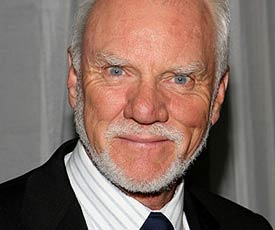
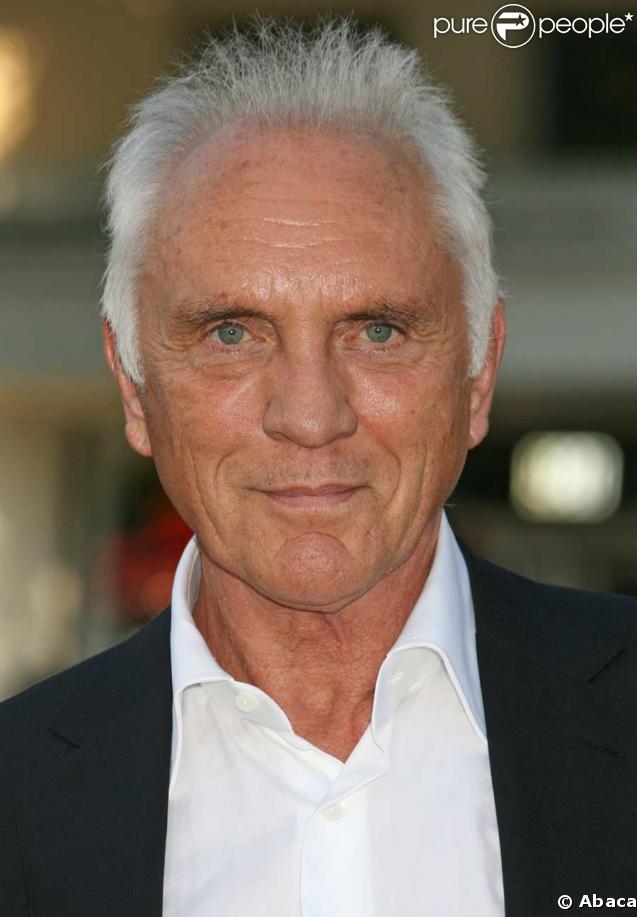
They didn’t look the least bit alike when they were young.
But in their declining/mature/twilight/golden years, they rather do (except for the ‘stache and some extra eyebrow bushiness):
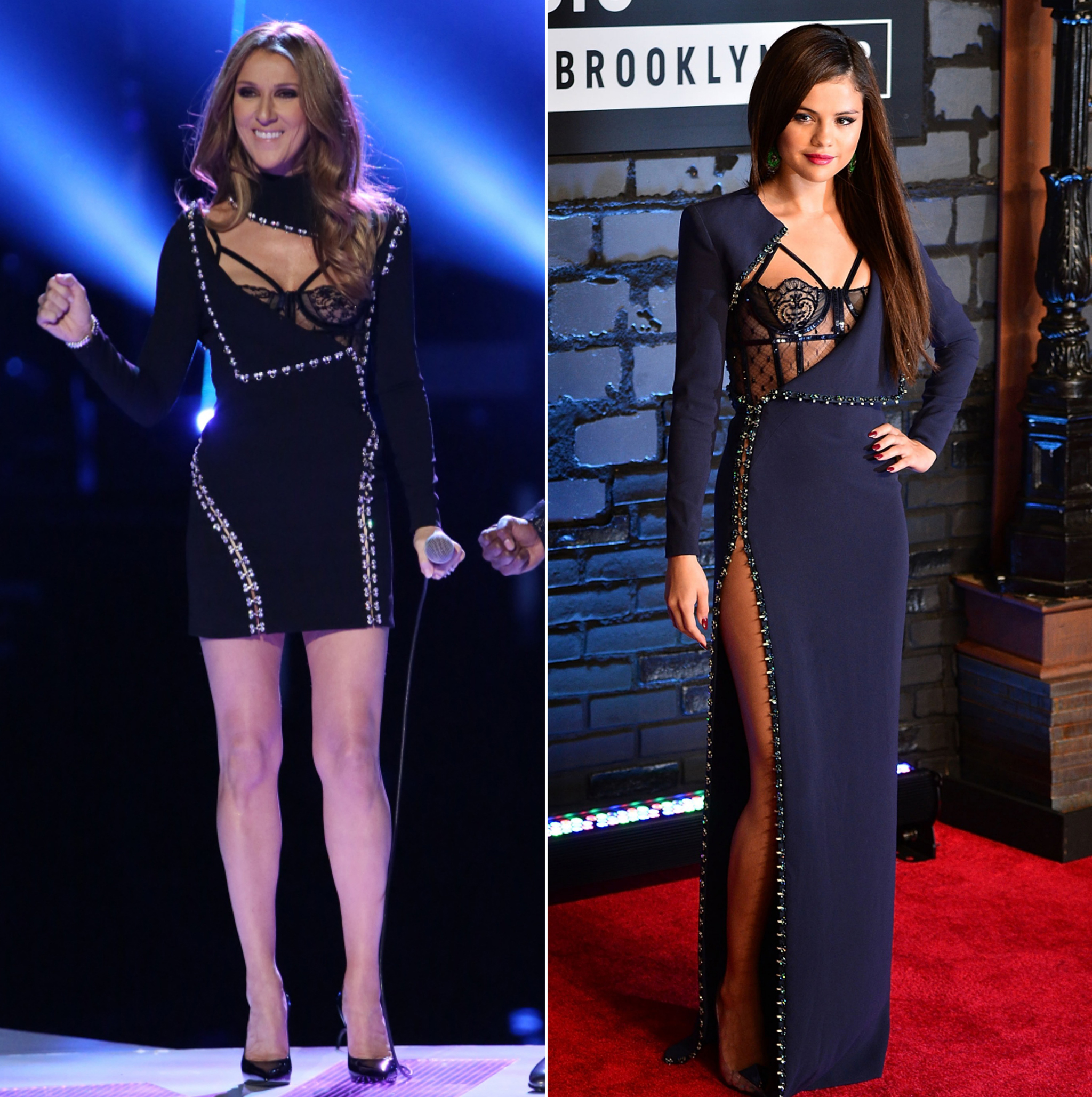
…to just dispense with clothing and call it a day:
…to mock the Romneys for having a black grandchild?
The main reason: their audience is so tiny and leftophile that the panel members forgot they were on TV and thought they were talking amongst themselves. Although they’ve now issued apologies and semi-apologies, it probably wasn’t until liberal CNN criticized them that they realized they might have done anything that could be considered even the least bit objectionable.
After all, the Romneys are infinitely mockable to the left, and just as with Sarah Palin the mockery goes on even though the campaign has ended. Unlike Palin, Romney has retreated from public life, but that doesn’t stop the left from continuing with the fun game of making fun of everything he and his family do.
Plus, the child is obviously going to be a black Republican. Everybody knows that black Republicans are not really black people and are therefore fair game.
[ADDENDUM: And in an only tangentially-related article, Joan Walsh bends over backwards to prove she’s not one of those bad white people. She’s a good white person. So please don’t hate her.]
The blog’s host was down for about two hours; it’s so frustrating when that happens. But we’re back (for now; I’d better type quickly and post this before it disappears again).
I’ll be putting up some posts a little later if the host holds up. But I just wanted to get in a heartfelt Happy New Year to you all!! Let’s hope 2014 is a great one!

When I was young I came across this book of courtroom speeches by Clarence Darrow. Although I was only about eleven years old it enthralled me, and I think it was one of the reasons I ended up going to law school not all that many years later.
So I came to law from a literary angle, because to me Darrow’s speeches were thrillingly eloquent. I knew nothing of his politics, and very little about the law itself. But he was an old-school leftist of the hard-nosed-crossed-with-bleeding-heart variety (if that makes any sense). And boy, could he talk!
I had first come across Darrow in a fictionalized version through the play “Inherit the Wind,” but shortly afterward I became interested in learning about the real thing. Thus, the book. His closing argument in the Leopold and Loeb murder trial was particularly memorable because it dealt with such strange and horrific facts: the cold-blooded murder of a 14-year-old boy named Bobby Franks by two older teenagers who came from fabulous wealth and who were both considered geniuses. Their motive seemed the strangest of all: besides implied thrill-seeking behavior, they thought they were supermen who could commit the perfect crime, a la Raskolnikov (although there’s no indication that they’d read that book—which might have acted as a deterrent—they in fact had read and been influenced by Nietzsche).
The country was clamoring for Leopold and Loeb’s execution, and Darrow had the unenviable task of pleading for their lives to be spared. They had already pled guilty, so it would have been unusual to have executed a murderer under those conditions, but the crime was so heinous and the trial had become so notorious (the first so-called “Crime of the Century”) that their execution was a very distinct possibility. In his subsequently-famous summation before the judge (the murderers had avoided a jury trial by pleading guilty) Darrow spoke for twelve hours.
Looking back now at his speech now with the perspective of an older person rather than the child that I once was, I am again struck by Darrow’s eloquence, but also by how much he focuses on the idea of determinism as opposed to free will, and by his world-weariness:
Why did they kill little Bobby Franks? Not for money, not for spite; not for hate. They killed him as they might kill a spider or a fly, for the experience. They killed him because they were made that way. Because somewhere in the infinite processes that go to the making up of the boy or the man something slipped, and those unfortunate lads sit here hated, despised, outcasts, with the community shouting for their blood. Mr. Savage, with the immaturity of youth and inexperience, says that if we hang them there will be no more killing. This world has been one long slaughterhouse from the beginning until today, and killing goes on and on and on, and will forever….
I know how easy it is to I talk about mothers when you want to do something cruel. But I am thinking of the others, too. I know that any mother might be the mother of little Bobby Franks, who left his home and went to his school, and who never came back. I know that any mother might be the mother of Richard Loeb and Nathan Leopold, just the same. The trouble is this, that if she is the mother of a Nathan Leopold or of a Richard Loeb, she has to ask herself the question: “How come my children came to be what they are? From what ancestry did they get this strain? How far removed was the poison that destroyed their lives? Was I the bearer of the seed that brings them to death?” Any mother might be the mother of any of them. But these two are the victims.
No one knows what will be the fate of the child he gets or the child she bears; the fate of the child is the last thing they consider.
I am sorry for the fathers as well as the mothers, for the fathers who give their strength and their lives for educating and protecting and creating a fortune for the boys that they love; for the mothers who go down into the shadow of death for their children, who nourish them and care for them, and risk their lives, that they may live, who watch them with tenderness and fondness and longing, and who go down into dishonor and disgrace for the children that they love…
Darrow goes on to describe the stupidity of the perpetrators despite their academic brilliance—their failure to take even the most elementary precautions (for example, they killed the boy in their car in the middle of traffic) as evidence that they’re crazy.
I have to say he has a point:
They get through South Chicago, and they take the regular automobile road down toward Hammond. They stop at the forks of the road, and leave little Bobby Franks, soaked with blood, in the machine, and get their dinner, and eat it without an emotion or a qualm.
I repeat, you may search the annals of crime, and you can find no parallel. It is utterly at variance with every motive, and every act and every part of conduct that influences normal people in the commission of crime.
Even sociopaths usually have more instinct for self-preservation than that, although just as little conscience (evidence of their later lives points to the probability that Loeb was a sociopath but Leopold was not, a combination that is not unusual for criminal duos).
Darrow’s argument was not only one against giving Leopold and Loeb the death penalty. It was really an argument against the death penalty itself, and against retributive justice and capitol punishment in general:
If these two boys die on the scaffold, which I can never bring myself to imagine, If they do die on the scaffold, the details of this will be spread over the world. Every newspaper in the United States will carry a full account. Every newspaper of Chicago will be filled with the gruesome details. It will enter every home and every family. Will it make men better or make men worse? I would like to put that to the intelligence of man, at least such intelligence as they have. I would like to appeal to the feelings of human beings so far as they have feelings– would it make the human heart softer or would it make hearts harder?
It goes on and on, and on and on. The entire address, long as it is, has the cadence of poetry, but it ignores the other side of the argument: that some murders are so heinous, some victims so innocent, that the crimes call out for the death penalty as a way to register the gravity of the act and the depth of society’s outrage.
Darrow almost seems to be arguing against free will in general:
…[I]ntelligent people now know that every human being is the product of the endless heredity back of him and the infinite environment around him. He is made as he is and he is the sport of all that goes before him and is applied to him, and under the same stress and storm, you would act one way and I act another, and poor Dickey Loeb another.
Darrow is arguing for a system of law in which mercy is stronger than justice, or at least one in which mercy is redefined:
I do not know but what Your Honor would be merciful if you tied a rope around their necks and let them die; merciful to them, but not merciful to civilization, and not merciful to those who would be left behind. To spend the balance of their days in prison is mighty little to look forward to, if anything. Is it anything? They may have the hope that as the years roll around they might be released. I do not know. I will be honest with this court as I have tried to be from the beginning. I know that these boys are not fit to be at large. I believe they will not be until they pass through the next stage of life, at forty-five or fifty. Whether they will be then, I cannot tell. I am sure of this; that I will not be here to help them. So far as I am concerned, it is over.*
I wrote that Darrow spoke poetically, but he also quoted poetry with some frequency in his summations. In addition, it turns out that Darrow was himself the subject of poetry; one of his law partners was the poet/lawyer Edgar Lee Masters, of “Spoon River Anthology” fame. Masters wrote three poems about Darrow, the most famous of which is this:
This is a man with an old face, always old…
There was pathos, in his face, and in his eyes.
The early weariness; and sometimes tears in his eyes,
Which he let slip unconsciously on his cheek,
Or brushed away with an unconcerned hand.
There were tears for human suffering, or for a glance
Into the vast futility of life,
Which he had seen from the first, being old
When he was born.
Darrow once gave a talk (text here) where he discussed poetry, including anecdotes about Thomas Hardy and A. E. Houseman, both of whom he had met (through Masters?), as well as Omar Khayyam and Edward FitzGerald (whom he had not met). The address also contains a lengthy passage arguing against the existence of free will, which seems to have been a particular béªte noire of Darrow’s. He quotes “The Rubaiyat”:
But helpless Pieces of the Game He plays
Upon this Chequer-Board of Nights and Days:
That’s a poet speaking; whether it be Khayyam or Fitzgerald or some combination of the two. But no system of law, however merciful, can actually believe we are helpless pawns and still function as a legal force.
Darrow contrasts Khayyam/Fitzgerald’s fatalism with Henley’s “Invictus,” that defiant ode to individual responsibility for which he has contempt.
As for me, I believe that we human beings are responsible for the choices we make during our lives here on earth, and that no system of law can possibly ignore that, and that exceptions should be rare and only under extreme circumstances. The rest is—as Thomas Sowell described so well in his book The Quest for Cosmic Justice—a doomed and dangerous attempt to produce cosmic justice here on earth, rather than earthly justice.
But I also know that one of Darrow’s favorite poems, Houseman’s “The Culprit,” which speaks in the voice of a boy (or man?) condemned to death by hanging (and which I first read as a young teenager myself) is unutterably and chillingly sad, and expresses some profound and complex truth about humanity:
The night my father got me
His mind was not on me;
He did not plague his fancy
To muse if I should be
The son you see.The day my mother bore me
She was a fool and glad,
For all the pain I cost her,
That she had borne the lad
That borne she had.My mother and my father
Out of the light they lie;
The warrant would not find them,
And here ’tis only I
Shall hang on high.Oh let no man remember
The soul that God forgot
But fetch the county kerchief
And noose me in the knot,
And I will rot.For so the game is ended
That should not have begun.
My father and my mother
They have a likely son,
And I have none.
Darrow once said, “Inside every lawyer is the wreck of a poet.” For most people who know lawyers, that might be an incomprehensible sentiment. Of Darrow himself, it was true.
[NOTE: *Only Leopold lived long enough to demonstrate what happened when he reached the next stage of life, as Darrow had speculated. Loeb was murdered in prison in 1936 (twelve years after the crime), but Leopold got out on parole in 1958 and lived a life that seems (at least, as best we can tell) to have featured repentance and good works.]
There are plenty of take-downs of the recent New York Times article that had asserted no al Qaeda tie-in for the Benghazi incident of September 2012, if you care to read any of them. But it’s clear not only that the Times has its own agenda on this, but that opinions on Benghazi solidified a long time ago and no one’s mind is about to be changed by any report from the Times or elsewhere.
I’m talking about what Hillary Clinton so offensively and yet brilliantly tapped into when she asked, “What difference does it make?” I discussed the answer here:
But Hillary is correct; to most voters, Benghazi, and a host of other things that used to be considered important, make no difference at all.
One reason, which may seem somewhat paradoxical but really is not, is widespread cynicism. If the public doesn’t expect integrity or truth from what used to be called our public servants (what a quaint phrase!), then lies and strategic stonewalling will not bother most people at all. What matters is what those public servants can get for you, and what they can scare you into thinking the opposition will take away from you…
Also see this:
The American people do not seem to be “concerned,” [about Benghazi] either, not at all. Major Garrett can ask all the questions he wants”¦but few people except us blogophiles on the right are listening, and Carney and Obama have learned that simply thumbing their noses at the American people is an excellent way to get the people to shrug”¦
I discovered this myself a few days after the election, when I had dinner with an old friend who is an intelligent, moderate, non-leftist Democrat with some conservative tendencies. This friend just didn’t care about Benghazi or the administration’s handling of it, didn’t know the details and was cynically dismissive of the topic because “all politicians lie.”
Although the public’s opinion of Obama has fallen considerably since I wrote those two pieces, it still doesn’t make much difference regarding Benghazi. The drop in approval ratings for Obama is composed of one part NSA spying and three parts Obamacare, and the rest is pretty much background noise (including the IRS scandal, which after all only affected us right-wing nutjobs—and according to the left we deserved it).
It has become fairly clear that the only thing with a chance of getting a significant percentage of erstwhile Obama-supporters to turn on him is something that affects them negatively, personally, directly, and obviously. In the NSA brouhaha, all of us have had our phone logs kept and therefore potentially accessed. In Obamacare, all people are potentially affected, either by already having seen their rates go up and their doctor access reduced, or by fear that the rot will spread to their own health insurance (even if employment-based) soon.
So why does the Times even bother to stir the Benghazi hornet’s nest again? I submit that its article wasn’t targeted to those of us on the right who might happen to have read it. It was pitched for its true readership: liberals. It has the purpose of reassuring them, if Obamacare and other problems has tempted them to revisit old controversies such as Benghazi and to re-evaluate them in the light of their crisis of Obama-faith, that there’s nothing much to see there. Perhaps more importantly, it sets the stage for a 2016 Hillary Clinton candidacy if she so desires, and prepares the prospective voter to cast a ballot for her with a pure heart.