↓
 

The New Neo

A blog about political change, among other things

  • Home
  • Bio
  • Email
Home » Page 1011 << 1 2 … 1,009 1,010 1,011 1,012 1,013 … 1,916 1,917 >>

Post navigation

← Previous Post
Next Post→

Is Pope Francis…

The New Neo Posted on October 3, 2016 by neoOctober 3, 2016

…channeling Ted Cruz?:

Pope Francis has urged almost 70million Catholics in the United States to study and pray and ‘choose with your conscience’ when considering who to vote for in November.

The pontiff was questioned by journalists following a visit to Azerbaijan. In a diplomatic answer, Pope Francis failed to endorse any particular candidate, although he has serious problems with both the Donald Trump and Hillary Clinton…

Pope Francis said: ‘You have asked me a question that describes a difficult choice because, according to you, there are difficulties with one and difficulties with the other.’

That’s certainly an understatement. Unlike the rest of us, though, the Pope is not going to have to choose.

Posted in Election 2016, Religion | 26 Replies

Did you know…

The New Neo Posted on October 3, 2016 by neoOctober 3, 2016

…that LeBron James is “the most influential person in the major swing state of Ohio”?

He’s endorsed Hillary Clinton, and when I clicked on that Business Insider article to which I just linked, I thought from the headline that they were being sarcastic about the influence part. But no; they seem completely serious, and believe that his backing could aid the Clinton campaign in that state.

And perhaps they’re right. The last time I followed basketball, the players wore tight short-shorts instead of long and baggy ones, and few if any had tattoos. The 70s, I’d say. So, what do I know?

Posted in Baseball and sports, Election 2016 | 8 Replies

The Times and Trump’s taxes

The New Neo Posted on October 3, 2016 by neoOctober 3, 2016

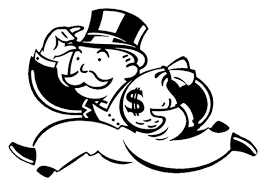
monopoly

The New York Times would have you believe that it’s a big big story to learn that Donald Trump sometimes lost a lot of money and most likely took a tax write-off for it in accordance with the law.

Such a story should be a big yawn and an even bigger “so what?” But the Times is counting on its propaganda skills and its ability to manipulate enough readers to make a difference. And with the Times it’s not just its own readers, but its influence on readers of other publications and consumers of other news and social media.

What is the word they want to get out? Well, if they were honest, it would go something like this: Real estate mogul Donald Trump sometimes loses big, as you already know if you know his history or the real estate development business. 1995, the year for which we’ve obtained some tax records of Trump’s, was one of those years when he lost big. According to current tax laws, Trump (exactly like anyone else who might be in his position, including us or you if we were dealing in that sort of business) is entitled by those losses to a particular kind of write-off for a certain number of future years. And like all of us, he probably took the tax advantage to which the law entitles him. He would have been a fool not to, and his accountants would have been negligent not to advise him to do it.

But that doesn’t quite have the requisite punch, does it? The way the Times wrote the article was different [emphasis mine]:

The 1995 tax records, never before disclosed, reveal the extraordinary tax benefits that Mr. Trump, the Republican presidential nominee, derived from the financial wreckage he left behind in the early 1990s through mismanagement of three Atlantic City casinos, his ill-fated foray into the airline business and his ill-timed purchase of the Plaza Hotel in Manhattan.

Tax experts hired by The Times to analyze Mr. Trump’s 1995 records said that tax rules especially advantageous to wealthy filers would have allowed Mr. Trump to use his $916 million loss to cancel out an equivalent amount of taxable income over an 18-year period…

The $916 million loss certainly could have eliminated any federal income taxes Mr. Trump otherwise would have owed on the $50,000 to $100,000 he was paid for each episode of “The Apprentice,” or the roughly $45 million he was paid between 1995 and 2009 when he was chairman or chief executive of the publicly traded company he created to assume ownership of his troubled Atlantic City casinos. Ordinary investors in the new company, meanwhile, saw the value of their shares plunge to 17 cents from $35.50, while scores of contractors went unpaid for work on Mr. Trump’s casinos and casino bondholders received pennies on the dollar.

“He has a vast benefit from his destruction” in the early 1990s, said one of the experts, Joel Rosenfeld, an assistant professor at New York University’s Schack Institute of Real Estate. Mr. Rosenfeld offered this description of what he would advise a client who came to him with a tax return like Mr. Trump’s: “Do you realize you can create $916 million in income without paying a nickel in taxes?”

There’s a lot going on there, isn’t there? I bow to no one in my detestation of Donald Trump, but following the tax laws is not one of the things for which I’m going to excoriate him. I’m not even so concerned that he didn’t always make good decisions in business; anyone who deals on that scale is going to have some “ill-fated” and “ill-timed” purchases. Hey, I’ve had some myself, although they’ve been confined to some “extraordinarily” small-scale dabbling in stocks.

It is quite obvious that the Times is creating a narrative of a rapacious top-hatted exploitative Rich Uncle Pennybags and using the tax story to push it. Now, Trump may indeed be a rapacious exploitative SOB (minus the top hat), but that has nothing whatsoever to do with the story of these completely legal tax returns and speculation on what would probably happen next in terms of deductions.

The Times is driving home three points. The first is that sometimes Trump failed at certain business endeavors, and they would like you to therefore see him as a failure. The second is that despite being a lousy businessman, Trump has too much money; in other words, the paper is trying to drum up class envy. The third is that if you put the first one and the second one together, you can see that Trump is rich despite his being incompetent, and that can only be explained by the fact that he’s a cheater and an exploiter of the people who work for him and those who invested with him. The fourth is that even though everything he did with his taxes was completely legal, it’s a form of cheating and ties in with Trump’s cheating in number three.

If anyone objects to that last bit, the proper remedy would be to change the tax code, of course, but the Times hasn’t bothered to explain why the law is written that way, or what would be the pros and cons of changing it. The Wall Street Journal attempts to give it some context here:

The tax treatment of losses, bound to become a subject of national debate, is a typically uncontroversial feature of the income-tax system. The government doesn’t pay net refunds when business owners lose money, but it lets taxpayers use those losses to smooth their tax payments as they make money. That reflects the fact that “the natural business cycle of a taxpayer may exceed 12 months,” according to a congressional report.

Typically, for federal returns, such net operating losses can be carried backward for two years to offset past income, then kept on a taxpayer’s books for 20 years. Mr. Trump’s losses could only qualify for a 15-year carryforward under the law at the time.

Real-estate developers can generate losses more easily than other taxpayers. They can take deductions for depreciation of their property and can also deduct interest when they borrow. Unlike investors in other businesses, they can use those losses to offset other income.

Tax law is nothing if not complicated, and it’s especially complicated if you get into the laws governing the very rich with many investments. Most of us have enough trouble understanding our own taxes without wading into the deep waters of the taxes of a typical large-scale real estate developer. But the Times considers that lack of understanding a feature, not a bug; an opportunity to push the propaganda line it favors. Trump has done them a favor, of course, by not disclosing all of this long ago, which would have at least stilled the part of the argument that hints that he’s hiding something even bigger. He probably has calculated that whatever is in his tax returns would upset the public, even if perfectly legal, and that it was smarter to withhold them. But it was inevitable that some of it would be leaked anyway.

Trump as candidate always had very unique vulnerabilities. The MSM, the left, the Times, Hillary Clinton, all of the above, are doing exactly what could have been (and was) easily predicted: bringing out this sort of thing at a timely juncture, just a few weeks before the election. They’ve got plenty more where that came from. Did anyone ever doubt they would be able to obtain access to some of Trump’s tax filings? And does anyone have any doubt that the following statements by Hillary Clinton during last week’s debate were probably the result of advance knowledge from the Times that the tax story was coming out?:

“There is something he is hiding,” Clinton said of Trump during the debate.

“Or maybe he doesn’t want the American people, all of you watching tonight, to know that he’s paid nothing in federal taxes, because the only years that anybody’s ever seen were a couple of years when he had to turn them over to state authorities when he was trying to get a casino license, and they showed he didn’t pay any federal income tax,” she said.

“That makes me smart,” Trump said.

Well, I wouldn’t go that far. At the very least, it makes him not-dumb. It also makes his tax accountants smart, or at least competent.

Neither the Times nor Hillary suggests what Trump might have done instead, of course. Not made money? Not lost it? Hired accountants who didn’t know their asses from their elbows? Donated many millions to the IRS of his own free will, over and above what was required?

Or remained a Democrat, perhaps? Then all would have been forgiven.

Posted in Election 2016, Finance and economics, Trump | 46 Replies

Trump: the GOP’s huge mistake? [BUMPED UP]

The New Neo Posted on October 1, 2016 by neoOctober 1, 2016

[BUMPED UP. Newer posts are right below it.]

Commenter “Bill” writes:

The GOP needs to be chastened and sober up and get with the real business of trying to salvage conservative principles and philosophy and stand up against leftism.

And it needs to quit whining and telling us the sky’s falling and we’re all going to die if we don’t vote for a man who is too unstable to be President.

(Trump,. by the way, was rage-tweeting from 3:20am on last night about a former Miss Universe, her sex tape, etc. This needs to be over. It needs to be over now. The GOP made a huge mistake.)

It’s really that last sentence (“The GOP made a huge mistake”) that caught my attention. But let’s start with the fist one: “The GOP needs to be chastened and sober up and get with the real business of trying to salvage conservative principles and philosophy and stand up against leftism.” Continue reading →

Posted in Election 2016, Liberals and conservatives; left and right, Trump | 207 Replies

Trump and Machado: it’s not about the women

The New Neo Posted on October 1, 2016 by neoOctober 1, 2016

There are about five weeks to Election Day. No time to waste.

But instead, Donald Trump seems to be putting a lot of his energy into tweets about Alicia Machado, in response to a remark by Hillary Clinton during the debate. Here’s the debate exchange:

CLINTON: You know, he tried to switch from looks to stamina. But this is a man who has called women pigs, slobs and dogs, and someone who has said pregnancy is an inconvenience to employers, who has said”¦

TRUMP: I never said that.

CLINTON: ”¦. women don’t deserve equal pay unless they do as good a job as men.

TRUMP: I didn’t say that.

CLINTON: And one of the worst things he said was about a woman in a beauty contest. He loves beauty contests, supporting them and hanging around them. And he called this woman “Miss Piggy.” Then he called her “Miss Housekeeping,” because she was Latina. Donald, she has a name.

TRUMP: Where did you find this? Where did you find this?

CLINTON: Her name is Alicia Machado.

I’m not going to bother to track the back and forth of Trump’s tweets on the subject. You can follow it if you like. My point is that it’s happening, his reaction is almost certainly hurting him, and it was completely predictable. That’s probably one of the reasons Hillary brought up the subject.

Remember that very first Republican debate, many moons ago? Remember the question Megyn Kelly asked Trump at the outset, the one that caused so much bickering and controversy, the one about his prior nasty statements on women?

The context was that initially the candidates were asked to take “the pledge” to support the eventual Republican nominee, and then the leadoff question to each candidate was “on the subject of electability in the general election.” First, Carson was questioned about his ignorance of foreign policy and his inexperience. Some errors he had made were cited, and then the question: “Aren’t these basic mistakes, and don’t they raise legitimate questions about whether you are ready to be president?”

Next up was Rubio, who was asked about his own lack of executive experience vis a vis Jeb Bush: “Could you please address Governor Bush across the stage here, and explain to him why you, someone who has never held executive office, are better prepared to be president than he is, a man who you say did a great job running your state of Florida for eight years?”

Then to Jeb, after a little background about people being sick of Bushes, “So do you understand the real concern in this country about dynastic politics?”

After Bush answered, it was Trump’s turn [emphasis mine]:

KELLY: Mr. Trump, one of the things people love about you is you speak your mind and you don’t use a politician’s filter. However, that is not without its downsides, in particular, when it comes to women.

You’ve called women you don’t like “fat pigs, dogs, slobs, and disgusting animals.”

(LAUGHTER)

Your Twitter account”¦

TRUMP: Only Rosie O’Donnell.

(LAUGHTER)

KELLY: No, it wasn’t.

(APPLAUSE)

Your Twitter account”¦

(APPLAUSE)

TRUMP: Thank you.

KELLY: For the record, it was well beyond Rosie O’Donnell.

TRUMP: Yes, I’m sure it was.

KELLY: Your Twitter account has several disparaging comments about women’s looks. You once told a contestant on Celebrity Apprentice it would be a pretty picture to see her on her knees. Does that sound to you like the temperament of a man we should elect as president, and how will you answer the charge from Hillary Clinton, who was likely to be the Democratic nominee, that you are part of the war on women?

TRUMP: I think the big problem this country has is being politically correct.

(APPLAUSE)

I’ve been challenged by so many people, and I don’t frankly have time for total political correctness. And to be honest with you, this country doesn’t have time either. This country is in big trouble. We don’t win anymore. We lose to China. We lose to Mexico both in trade and at the border. We lose to everybody.

And frankly, what I say, and oftentimes it’s fun, it’s kidding. We have a good time. What I say is what I say. And honestly Megyn, if you don’t like it, I’m sorry. I’ve been very nice to you, although I could probably maybe not be, based on the way you have treated me. But I wouldn’t do that.

Remember that the highlighted question was asked Trump in August of 2015, over a year ago. He’s had a lot of time to think about it since.

As have the voters.

So what is happening now should not be a surprise of any sort. And Kelly’s question remain as good today—better, even—than it was back then. One of the ways in which Trump seems to have answered it originally was by attacking Megyn Kelly (mostly after the debate), and so it should also be no surprise whatsoever that he’s doubling down now. And whoever voted for him in the primaries voted for him despite these weaknesses.

Perhaps some voted for him because of them, and perhaps they don’t see them as weaknesses. They may percevie them as his strength in defying political correctness. But although I’m hardly a fan of political correctness, and I am all for defying political correctness, I’m also for choosing your battles and being smart about your vulnerabilities when you do so. In the Republican primaries Trump could get away with certain things that weaken him in the general, and one of them is opening himself up to the misogynist charge for no good reason and to make no good point. What’s more (and this is my bigger concern about him, and something I judge to be a far greater vulnerability of his), this behavior opens him to the change of having a temperament that should not be in the oval office (note also that it was really “temperament” that Kelly was questioning Trump about, too, in August of 2015).

The “poor temperament” charge isn’t about misogyny at all, and it doesn’t rest on the idea that Trump hates women (or even that he hates fat people). It’s that he’s thin-skinned, impulsive, emotional, shoots from the hip, reckless, uncontrolled, a loose cannon. This is fine (or at least acceptable to many people) for a celebrity and entertainer. It’s not fine for a president with a (metaphorical) finger on the (metaphorical) nuclear button.

Trump’s recent behavior during the debate and after has fed right into the Clinton camp. What are his advisors telling him to do now? Does he listen to them? Can he execute what they might tell him? Those are further concerns that have nothing to do with Trump and women, and everything to do with temperament and judgment. And they are important considerations that are part of the reason Trump has failed to win enough support from even the right, this election year.

It does no good for Trump supporters to excoriate those who won’t jump aboard the Trump train. Categorical declarations that Hillary is worse don’t cut it the more Trump is seen as dangerously and destructively (even self-destructively) impulsive. And this tendency of Trump’s was already crystal clear in the early part of the campaign.

[NOTE: Do you think I’m happy to have to write these words? If you do, then think again. Ever since it became clear to me some time last August that Trump had a good chance of becoming the Republican nominee in 2016, I’ve been devastated and have felt that an incredibly and surpassingly important election that was the Republicans’ to win was being handed away to the weakest Democrat candidate ever. And so far, that’s how it has played out.]

Posted in Election 2016, Men and women; marriage and divorce and sex, Trump | 32 Replies

I never really loved you

The New Neo Posted on October 1, 2016 by neoFebruary 4, 2023

This quote from Nicole Kidman about her marriage to Tom Cruise caught my eye at Yahoo: Nicole Kidman on Marrying Tom Cruise at Age 23: ”˜I Look Back Now and I’m Like, “What?”’

I thought the article was going to be one of those things where someone reflects on an earlier relationship and says “I never really loved him/her.” But it’s not, as it turns out. Kidman is actually talking about the fact that she got married at all at the ripe young age of 23; she’s not dissing Cruise himself or their relationsip.

But it reminded me of a huge pet peeve of mine, which is the “I never really loved you” crowd.

First, a caveat. Fortunately, I’ve never heard those words addressed to me, so it’s not personal. Nor have I ever said them. My point of view is that, absent a marriage or relationship that takes place under some sort of coercion or major deception, the words almost always represent an attempt to revise history in order to make the speaker feel good at the expense of the listener.

The first time I ever heard anything resembling the phrase was in the book Gone With the Wind, which I read at the age of eleven. The exchange occurs at the end of the book, shortly before Rhett utters his famous parting shot at Scarlett. The first speaker here is Rhett, and he’s saying that even though he had originally loved Scarlett very much, his love for her is gone; it has worn out. The second speaker is Scarlett:

Mine wore out.”

“But love can’t wear out!”

“Yours for Ashley did.”

“But I never really loved Ashley!”

“Then, you certainly gave a good imitation of it – up till tonight.”

That always seemed to me to be the finest response: “well, you certainly gave a good imitation of it.” But Rhett can afford to be cavalier. Not only is he Rhett Butler (and you’re not), but in this scene, he’s the one doing the leaving and she’s the one begging that he reconsider, and she’s saying she never really loved someone else.

In contrast, when most people hear the words they aren’t about someone else; they’re about themselves: “I never really loved you.” And usually that’s said in the context of a devastating breakup, in which the leaver is saying it to the person being left. The classic case of adding insult to injury.

Why would a person do this? My theory is that it makes the leaver feel less guilty. It makes the leaver feel justified in leaving—after all, the whole thing was a grievous error, a mistake, and aren’t we supposed to right our mistakes? Otherwise, the leaver would have to face the fact that his or her love wore out, which is after all a possibility and part of being human, but it doesn’t make a person feel better about what he/she is about to do.

Also, that person is often in the first flush of a new love. That new love might really be stronger than the old. Or it might just be newer and seem stronger (people make mistakes, right?). At any rate, the leaver is trying to tell the one being left that the old love pales next to the new, and that’s why he/she must leave. That seems pretty cruel, too, even if (or perhaps especially if) true.

Especially amazing and pernicious to me are those people who say some version of, “If you really loved me, you’d be happy for me,” thus slyly transferring the guilt and badness to the person being left for not being appropriately saintly and loving. Poppycock. Romantic love is not the all-encompassing selfless self-sacrificing love of that sort, although I suppose sometimes we humans can get there. The passage of time (and new relationships for the one being left) can sometimes help. But placing that kind of burden of utterly selfless love on the person in the throes of the grief of being left for another man or woman is a case of cruelty piled on cruelty, to my way of thinking.

Of course, my way of thinking may not be your way of thinking. If so, then I never really loved you.

Posted in Best of neo-neocon, Me, myself, and I, Men and women; marriage and divorce and sex | 50 Replies

Live from Council Bluffs

The New Neo Posted on September 30, 2016 by neoSeptember 30, 2016

Our very own (and very intrepid) “Cornhead” reports at Powerline on a recent Trump rally in Council Bluffs, Iowa.

Cornhead has been indefatigable, and still going strong.

Posted in Trump | 8 Replies

Ah, the trials of a blogger!

The New Neo Posted on September 30, 2016 by neoSeptember 30, 2016

When I grind out a big big post like the one I just wrote (see below) I have a very strong urge to say “that’s it; I’m done for the day.”

But I also have a strong urge to balance it with something on another topic besides Trump, Hillary, the Republicans, the stressful 2016 election. What topic? Any topic.

Like this one.

Posted in Blogging and bloggers, Me, myself, and I | 13 Replies

Holocaust stories: temperament and trauma [Part II]

The New Neo Posted on September 29, 2016 by neoFebruary 22, 2025

[NOTE: Part I can be found here.]

I can’t find the quote right now, but Holocaust survivor and author Primo Levi—who wrote Survival In Auschwitz, which I consider the single most definitive and brilliant book on the camps from the point of view of someone who experienced them firsthand—said that for many ex-inmates, comparisons between what happened in the camps and their lives afterwards didn’t help (although it certainly did for the interviewee I quoted in Part I of this series). Levi said that even though the camps were exponentially worse than the rest of the more petty difficulties of life outside the camps, that each state (camps versus ordinary life) had its woes, and that survivors could still get annoyed and upset afterwards at the smaller frustrations and sorrows of ordinary existence.

That’s the human condition for most people; few are able to keep the contrast constantly in mind like the man in the Part I interview, and there’s no shame in that.

Levi was a scientist who wrote about the camps as though he were a scientist studying them: cool, dispassionate, analytical. He died as a possible suicide in a fall in 1987 at the age of 67. Whether he killed himself or died accidentally has been hotly debated and the answer is still unclear.

Levi is an author whose work I greatly admire, and I am hardly alone, as his biographer Carole Angier writes:

We feel we know and love him from his work, because we know and love his gentle, rigorous, witty, open mind. But the rest of him is completely closed. Primo Levi is, in fact, one of the most secretive writers who ever lived. And not only in his work. Though he gave hundreds of interviews, he used them not to lower the walls but to raise them still higher, by presenting a careful construct of himself almost to the end. He presented the same construct to most people throughout his life; even, as long as he could, to himself. That construct – the calm, rational, optimistic man – was his ideal: an ideal he managed to reach in much of his life, because it was both a moral imperative and a psychological necessity to him.

But it was not the reality. “I have no instincts,” he said, with his smile, “or if I do, I repress them.” But the more he repressed them, the more they resisted, and took their revenge. The man who loved and spoke to the whole of humanity found private, emotional life impossibly hard. And the man who chose optimism, because one must not spread despair, found he had locked the despair inside him; and more and more often it rose and drowned him.

Even though it is not known whether Levi killed himself, it is known that he suffered from depression. But his depression predated his Holocaust experience and represented a lifelong struggle. A different man, a different temperament, than the man interviewed in Part I. And yet Levi managed to live and work for about forty highly productive and creative post-Holocaust years until his death. If he did kill himself (and the preponderance of evidence is that he did; he certainly was depressed prior to his death) it was his own temperament, and his own unhappy family history, that probably led him to it:

…Auschwitz did not destroy him. It came very near at the time, and immediately afterwards. But after that it did almost the opposite, requiring him to understand and to communicate, the two things that kept him alive. “I am a talker,” he said. “If you stop up my mouth, I die.” When, in his last depression, he felt he could no longer communicate, he died. That is what killed him, not his memories of Auschwitz. Neither Alex the Kapo of If This Is A Man [the European title of Survival in Auschwitz], nor his heirs, should imagine they have that victory.

Angier also offers a few excerpts from Levi’s great masterpiece about the camps. Here is a passage that reflects with Levi’s usual brilliance and extraordinary clarity on the mindset in the camps that brought some small (very small, in this case) measure of optimism to a situation so full of nearly unfathomable misery:

Strange how, in some way, one always has the impression of being fortunate, how some chance happening, perhaps infinitesimal, stops us crossing the threshold of despair and allows us to live. It is raining, but it is not windy. Or else, it is raining and is also windy: but you know that this evening, it is your turn for the supplement of soup so that even today, you find the strength to reach the evening. Or it is raining, windy and you have the usual hunger, and then you think that if you really had to, if you really felt nothing in your heart but suffering and tedium – as sometimes happens, when you really seem to lie on the bottom – well, even in that case, at any moment you want you could always go and touch the electric wire-fence, or throw yourself under the shunting trains, and then it would stop raining.

Posted in Evil, Getting philosophical: life, love, the universe, History, Jews, Literature and writing, People of interest | Tagged Holocaust, Primo Levi | 22 Replies

Gary Johnson gets an endorsement

The New Neo Posted on September 29, 2016 by neoSeptember 29, 2016

The Detroit News is a Republican paper. Today the editors write:

Today this newspaper does something it has never done in its 143-year history: endorse someone other than the Republican candidate in a presidential contest.

Since its founding in 1873, The Detroit News has backed a Republican every time it has made a presidential endorsement (three times we have sat on the sidelines ”” twice during the Franklin Roosevelt elections and in the 2004 Bush/Kerry contest).

We abandon that long and estimable tradition this year for one reason: Donald J. Trump.

They go on to endorse Johnson.

Posted in Election 2016, Press | 64 Replies

The awfulness of the Clinton email scandal

The New Neo Posted on September 29, 2016 by neoSeptember 29, 2016

See this (read the whole thing):

This mass destruction of evidence was known to Comey. It’s in his investigative case summary. Yet he couldn’t make an obstruction case?

“Any one of those in that long list says obstruction of justice,” Ratcliffe said. “Collectively, they scream obstruction of justice.”

Ignoring such evidence leads “not just reasonable prosecutors but reasonable people to believe that maybe the decision on this was made a long time ago not to prosecute Hillary Clinton,” he added.

And this, about how it was the DOJ and not the FBI that granted immunity in the emails case:

“The FBI doesn’t grant immunity to anybody, the Department of Justice is able to grant very different kinds of immunity,” Comey said. “If new and substantial evidence develops a witness lied [under immunity], of course the Department of Justice can pursue it. Nobody gets lifetime immunity.”

In addition:

Comey told Rep. Ben Sasse (R-NB) that Mills needed the immunity “because without it, Mills would have fought investigators tooth and nail in an effort to withhold her computer.” But as Guy Benson points out, Hillary has claimed she and her team have fully cooperated. Well, doesn’t this declaration contradict her statement?…

Despite all of this, the FBI and DOJ allowed Mills to act as Hillary’s attorney and sit in on Hillary’s interview even though she was a witness.

And I found this in the comments at Legal Insurrection:

““because without it, Mills would have fought investigators tooth and nail in an effort to withhold her computer.””

Physically when the FBI executed the search warrant? Because I’ve never heard of a witness/target/whatever setting the terms for what evidence FBI investigators were entitled to have and under what conditions. If this had been anyone else the FBI would have simply seized the evidence. Cheryl Mills nor her attorneys could have done nothing about it. Getting a judge to sign off on a search warrant is not an adversarial procedure.

Basically Comey is admitting that Mills was in charge of this investigation , on behalf of Clinton. That’s been clear from start to finish. When Mills was interviewed, she and her attorneys set the parameters for what the investigators were allowed to ask. When investigators asked about Clinton’s email procedures Mills et al shut down the interview. And at the end, when Clinton was interviewed Mills, and immunized target in the investigation herself, sat in as Clinton’s attorney.

This is despicable, but it’s clear that Obama and his court toadies and throne sniffers such as Comey don’t have to lie well. In fact, the more obvious the lie the better because it just serves to highlight the fact that they’re giving Congress and the American people the finger and telling us that they’re above the law.

Which pretty much sums up my reaction.

So, all you have to do to get immunity is Just Say No?

But it’s that last part of the LI comment I quoted that strikes me as especially true and very insightful. One of the things I’ve noticed during the entire Obama administration is how clear it is that there is no objectivity and no impartiality in institutions we used to think were both—the press, long long ago (although I believe that was always an illusion); the FBI; the DOJ; the IRS. The lies of elected officials during the Obama administration have become more blatant, and that’s because the people involved feel immunized (usually metaphorically speaking, although in the case of the emails it’s a literal immunization) in advance. They know they will not be held accountable. They know that a press that’s almost wholly on their side will not turn on them. They know the American people won’t be able to figure it out on their own, or if they do figure it out they will be powerless to stop them.

[NOTE: And in connection with the last paragraph of this post, please see this post of mine that counters the popular meme on the right that the GOP ever “took impeachment off the table.”]

Posted in Hillary Clinton, Law | 28 Replies

Another makeover

The New Neo Posted on September 28, 2016 by neoSeptember 28, 2016

Why? Because I like them, that’s why.

And because they have nothing to do with politics (although I’m sure someone creative can come up with a tie-in).

Here’s one that’s more subtle than some of the others, but still quite transformational:

Posted in Fashion and beauty | 12 Replies

Post navigation

← Previous Post
Next Post→

Your support is appreciated through a one-time or monthly Paypal donation

Please click the link recommended books and search bar for Amazon purchases through neo. I receive a commission from all such purchases.

Archives

Recent Comments

  • Skip on “Our democracy” in Germany
  • Ilana on Open thread 9/1/2026
  • Marlene on Open thread 9/1/2026
  • AesopFan on Update on my ex
  • Marlene on Update on my ex

Recent Posts

  • Update on my ex
  • Open thread 9/1/2026
  • Letitia James was out to get Trump
  • “Our democracy” in Germany
  • Utopias and dystopias: the twain shall meet

Categories

  • A mind is a difficult thing to change: my change story (17)
  • Academia (328)
  • Afghanistan (98)
  • Amazon orders (6)
  • Arts (8)
  • Baseball and sports (164)
  • Best of neo-neocon (91)
  • Biden (536)
  • Blogging and bloggers (593)
  • Dance (292)
  • Disaster (244)
  • Education (323)
  • Election 2012 (360)
  • Election 2016 (566)
  • Election 2018 (33)
  • Election 2020 (513)
  • Election 2022 (114)
  • Election 2024 (403)
  • Election 2026 (89)
  • Election 2028 (12)
  • Evil (129)
  • Fashion and beauty (324)
  • Finance and economics (1,041)
  • Food (317)
  • Friendship (48)
  • Gardening (18)
  • General information about neo (4)
  • Getting philosophical: life, love, the universe (734)
  • Health (1,160)
  • Health care reform (545)
  • Hillary Clinton (184)
  • Historical figures (337)
  • History (716)
  • Immigration (448)
  • Iran (464)
  • Iraq (227)
  • IRS scandal (71)
  • Israel/Palestine (820)
  • Jews (437)
  • Language and grammar (365)
  • Latin America (212)
  • Law (2,972)
  • Leaving the circle: political apostasy (124)
  • Liberals and conservatives; left and right (1,319)
  • Liberty (1,117)
  • Literary leftists (14)
  • Literature and writing (393)
  • Me, myself, and I (1,496)
  • Men and women; marriage and divorce and sex (929)
  • Middle East (383)
  • Military (324)
  • Movies (353)
  • Music (533)
  • Nature (261)
  • Neocons (32)
  • New England (183)
  • Obama (1,738)
  • Pacifism (16)
  • Painting, sculpture, photography (131)
  • Palin (93)
  • Paris and France2 trial (25)
  • People of interest (1,043)
  • Poetry (258)
  • Political changers (178)
  • Politics (2,793)
  • Pop culture (397)
  • Press (1,634)
  • Race and racism (881)
  • Religion (428)
  • Romney (164)
  • Ryan (16)
  • Science (639)
  • Terrorism and terrorists (971)
  • Theater and TV (266)
  • Therapy (71)
  • Trump (1,629)
  • Uncategorized (4,548)
  • Vietnam (109)
  • Violence (1,442)
  • War and Peace (1,026)

Blogroll

Ace (bold)
AmericanDigest (writer’s digest)
AmericanThinker (thought full)
Anchoress (first things first)
AnnAlthouse (more than law)
AugeanStables (historian’s task)
BelmontClub (deep thoughts)
Betsy’sPage (teach)
Bookworm (writingReader)
ChicagoBoyz (boyz will be)
DanielInVenezuela (liberty)
Dr.Helen (rights of man)
Dr.Sanity (shrink archives)
DreamsToLightening (Asher)
EdDriscoll (market liberal)
Fausta’sBlog (opinionated)
GayPatriot (self-explanatory)
HadEnoughTherapy? (yep)
HotAir (a roomful)
InstaPundit (the hub)
JawaReport (the doctor’s Rusty)
LegalInsurrection (law prof)
Maggie’sFarm (togetherness)
MelaniePhillips (formidable)
MerylYourish (centrist)
MichaelTotten (globetrotter)
MichaelYon (War Zones)
Michelle Malkin (clarion pen)
MichelleObama’sMirror (reflect)
NoPasaran! (bluntFrench)
NormanGeras (archives)
OneCosmos (Gagdad Bob)
Pamela Geller (Atlas Shrugs)
PJMedia (comprehensive)
PointOfNoReturn (exodus)
Powerline (foursight)
QandO (neolibertarian)
RedState (conservative)
RogerL.Simon (PJ guy)
SisterToldjah (she said)
Sisu (commentary plus cats)
Spengler (Goldman)
VictorDavisHanson (prof)
Vodkapundit (drinker-thinker)
Volokh (lawblog)
Zombie (alive)

Meta

  • Log in
  • Entries feed
  • Comments feed
  • WordPress.org
©2026 - The New Neo - Weaver Xtreme Theme Email
Web Analytics
↑