
Sorry Sergei, it’s Misha all the way:
Happy Mother’s Day!
[NOTE: This is a slightly-edited repeat of my traditional Mother’s Day post. It was written while my mother was still alive.]


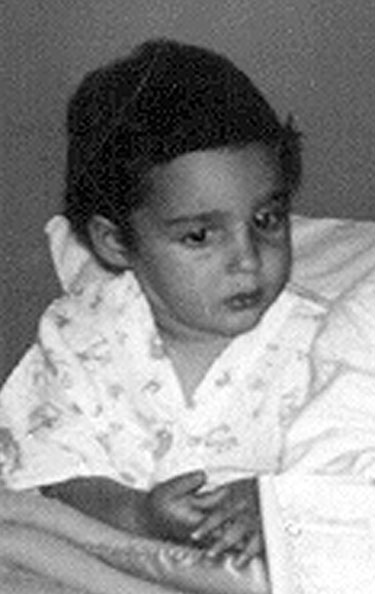
Okay, who are these three dark beauties?
A hint: one of them is one of the very first pictures you’ve ever seen on this blog of neo, sans apple. Not that you’d recognize me, of course. Even my own mother might not recognize me from this photo.
My own mother, you say? Of course she would. Ah, but she’s here too, looking a bit different than she does today—Mother’s Day—at ninety-eight years of age. Just a bit; maybe her own mother wouldn’t recognize her, either.
Her own mother? She’s the one who’s all dressed up, with longer hair than the rest of us.
The photo of my grandmother was taken in the 1880’s; the one of my mother in the teens of the twentieth century; and the one of me, of course, in the 1950s.
Heredity, ain’t it great? My mother and grandmother are both sitting for formal portraits at a professional photographer’s studio, but by the time I came around amateur snapshots were easy to take with a smallish Brownie camera. My mother is sitting on the knee of her own grandfather, my grandmother’s father, a dapper gentleman who was always very well-turned out. I’m next to my older brother, who’s reading a book to me but is cropped out of this photo. My grandmother sits alone in all her finery.
We all not only resemble each other greatly in our features and coloring, but in our solemnity. My mother’s and grandmother’s seriousness is probably explained by the strange and formal setting; mine is due to my concentration on the book, which was Peter Pan (my brother was only pretending to read it, since he couldn’t read yet, but I didn’t know that at the time). My mother’s resemblance to me is enhanced by our similar hairdos (or lack thereof), although hers was short because it hadn’t really grown in yet, and mine was short because she purposely kept it that way (easier to deal with).
My grandmother not only has the pretty ruffled dress and the long flowing locks, but if you look really closely you can see a tiny earring dangling from her earlobe. When I was young, she showed me her baby earrings; several miniature, delicate pairs. It astounded me that they’d actually pierced a baby’s ears (and that my grandmother had let the holes close up later on, and couldn’t wear pierced earrings any more), whereas I had to fight for the right to have mine done in my early teens.
I’m not sure what my mother’s wearing; some sort of baby smock. But I know what I have on: my brother’s hand-me-down pajamas, and I was none too happy about it, of that you can be sure.
So, a very happy Mother’s Day to you all! What would mothers be without babies…and mothers…and babies….and mothers….?
The story of my left eye – so far: Part IV
[Part I can be found here.
Part II can be found here.
Part III can be found here.]
Part III ended with my discovery – just a few days before my scheduled Boston surgery with a doctor whose prognostications for the success of my eye surgery were very gloomy because of the large extent of the adhesions that had stuck my cataract to my iris – of an eye surgeon in Los Angeles specializing in complex cataract surgery. He seemed to have glowing testimonials and excellent credentials, but was this just a slick advertising campaign? I didn’t know, but my next move was to see whether I could get a timely appointment with him, and so the next morning I called his office.
The receptionist was friendly, and the news was better than I’d even hoped for – an appointment about three weeks from my call. I said “yes!” with enthusiasm, and then called the Boston office and canceled. I explained to them that I needed time to reflect on what I was doing – which was certainly true.
And then I emailed the eye surgeon who was a friend of my brother’s, who had been giving me some advice during the decision-making process. I explained to her that I had decided to have the surgery in Los Angeles, that I had in-laws there with whom I could stay, and that the surgeon’s name was Uday Devgan.
I was a bit frightened about what she would write back – would it be something like “don’t go to that quack”? But the gist of her reply was, “He is fantastic. Great choice.”
Great choice. She obviously had already known about him, and I wondered why she hadn’t suggested my going to him when she’d learned I was searching for someone who might be able to tackle my case. But I quickly realized that I hadn’t made it clear to her that I was willing to travel that far, and she had thought I was limiting my search to New England.
Her response was all I need to feel a sense of tremendous relief. I knew that this doctor might not consider me a good candidate. I knew that after he examined me he might be just as pessimistic as the Boston doctor had been. But I also felt very strongly – much as I had felt when I saw Dr. Jobe over twenty years ago for my arm problems (see this as well as this) – that I was going to just about the best person possible to have a much-needed surgery, although of course the risks had not evaporated.
I required help on the trip; for example, I certainly couldn’t drive. My ex-husband kindly consented to go with me (we’re friendly), and it was his brother with whom we were going to stay. And so there was a flurry of preparations to leave in three weeks.
One of the quite unusual and I think amazing things about Dr. Devgan is that if a patient emails him with a question he will answer it by email, and he’ll do so pretty quickly. But I decided not to ask any questions prior to my appointment, because I figured whatever I needed to learn would be revealed after my examination. And so I went to California without knowing what he would decide, but I was at peace with that.
I was still somewhat frightened, but much less frightened than I’d been for many months. I continued to have a good gut feeling about this doctor – a literal gut feeling, because my GI symptoms improved.
In his office the examination took a long time, most of it performed by assistants who were uniformly pleasant and efficient. The doctor himself was cheerful and calm as well as friendly. He told me that my case was indeed more complicated than the usual and would take a bit longer to perform, but he would do it. He radiated a quiet confidence but not arrogance. I was given a surgery date in six days. I think his schedule was probably organized that way because so many people came in from out of town, including many who had come further than I, and the idea was to avoid the necessity of two separate trips.
As the date approached my nervousness increased, but never about the doctor himself, just about the surgery. I’d been told I would be awake but groggy, much like a colonoscopy but with a little more consciousness because more cooperation would be required from the patient. For example, sometimes I would be told to look at some lights, and I had to be aware enough to do that.
And that’s exactly what happened. One of the only things I remember about the surgery itself was being asked several times to look at three bright lights in front of my eye. I also remember something Dr. Devgan said two times during the surgery that made a very deep impression on me – so deep that I remember them, and the feelings they engendered in me, with great clarity. Twice I heard him say, “Beautiful.” These two statements were separated in time, and I knew (or thought I knew) that he meant that he had succeeded in performing some technically challenging maneuver. Each time he said it, I could feel my whole body relax. Through the haze of tranquilizers and numbing agents I had still retained quite a bit of fear, and this was the first time I thought that at the very least he had succeeded in getting that scar tissue cleared, removing my cataract, and inserting the new lens.
The rest remained to be seen – literally.
[To be continued in Part V…]
Recent poll: the existence of certain areas of bipartisan agreement
Here’s a discussion of a poll from April 19-27 that shows the GOP with a 10-point lead in the generic ballot (the poll itself can be found here and the crosstabs are here). Whether that will stand now that Alito’s draft has been leaked is anyone’s guess, but my opinion is that although the margin may shrink somewhat it will remain the case that the GOP leads.
It’s also unclear how the election will go. Many things can happen between now and November, and that includes fraud. So I make no predictions at this point.
But there’s a different reason I’m bringing up the poll. Embedded in it was this:
When asked if they supported anti-grooming laws, such as one recently passed in Florida, that prohibited government school employees from exposing elementary school children to sexual topics without the consent of their parents, 70 percent of respondents said they supported such laws. Support for anti-grooming laws transcended both party and ideology, according to the poll results. Fifty-nine percent of Democrats and 69 percent of self-described progressive liberals said they supported anti-grooming laws that protect elementary school children from being forcibly exposed to sexual topics by school employees without parental consent.
On the issue of transgender sports, 69 percent of respondents said it was unfair to force female athletes to compete against male athletes who identify as transgender and claim to be women. Majorities of Republicans (74 percent), Democrats (63 percent), and Independents (71 percent), as well as majorities of self-described conservatives (74 percent), moderates (69 percent), and progressive liberals (65 percent), said they believed it was unfair to force women to compete against men who claim to be women.
When asked if they supported entrepreneur Elon Musk’s bid to purchase Twitter and eliminate political censorship from the social media platform, voters said they supported Musk’s free-speech takeover of Twitter by a more than 2-to-1 margin, with 59 percent saying they supported his bid compared to just 28 percent who opposed it.
Unfortunately, the Musk question wasn’t broken down by party affiliation, although I noticed that both black and hispanic voters had a majority in favor of it, which indicates pretty strong Democrat support for the move.
These are indication of the fact that both in cultural sexual matters involving children and women’s sports, as well as the issue of free speech online, the left has moved too far for all but its most radical leftist base.
What did Roe do?
There’s so much confusion on this issue that I thought I’d try to clarify. Much of this confusion is purposely sowed by fearmongers on the left who want people to be afraid that overruling Roe will start a cascade of events that will take away long-established rights such as that of interracial marriage. It’s an absurd assertion but a very useful one for the left because it preys on (and furthers) the ignorance of the American public.
So what did Roe do? It didn’t “legalize” abortion, not exactly, because abortion was already legal in any state that had voted to make it legal. By the time Roe was decided, abortion already had been legalized under certain conditions in twenty states, and in Hawaii, New York, California, Alaska, and Washington had few restrictions. Any state could have legalized abortion through the usual channels. So abortion was either legal or illegal as the states decided for themselves and under the restrictions they chose.
What Roe did had to do with which government entity was allowed to decide the question: the states or the federal government. In Roe, a branch of the federal government (SCOTUS) ruled that abortion was a right that states could not deny their citizens. Abortion was declared to be a federally and constitutionally established right. To rule that way, the SCOTUS justices had to find a constitutional right that had not been felt to exist before, and that was the aspect of the case that even some pro-abortion people found troubling. Certainly those who were against abortion found it very troubling.
And that is the basis for the Alito draft, as I understand it (having only read summaries and discussions of it): that abortion is not a constitutional right and that states can therefore decide for themselves, as before. It seems rather simple and obvious to me, but as I’ve said, it’s in the interests of the pro-abortion crowd – and especially the left – to lie about it and make a repeal seem much more restrictive than it is.
If you think about it, though, Alito’s draft is indeed “pro-Choice” – although it locates the “choice” in the states rather than in each individual. Roe took away that choice from the states and gave it to the individual, but made it mandatory that states allow abortion. Also, since abortion would remain legal post-Roe in many states, women who want abortions will retain the choice to get them in other states that allow it.
However, it’s likely that such a situation will make it more difficult for poorer women to get them; travel is more of a hardship on the poor. I predict that, as before, an illegal abortion network will therefore spring up in states that don’t allow it legally. That will endanger the lives of women somewhat, because of the lack of controls, and that troubles me. However, it’s not a reason to keep Roe in place. Roe was always a bad decision that set a bad precedent, and it’s regrettable that SCOTUS decided to go ahead with it rather than waiting for the states to continue to sort it out.
Open thread 5/7/22
If you have trouble understanding the narrator’s accent, you can turn on closed captions:
On protesting at the homes of SCOTUS justices
White House press secretary Jen Psaki refused to condemn on Thursday plans for protests to take place outside of conservative Supreme Court justices’ homes over the leaked draft opinion that suggests they plan to overturn Roe v. Wade.
‘Look, I think the president’s view is that there’s a lot of passion, a lot of fear, a lot of sadness from many, many people across this country about what they saw in that leaked document,’ Psaki said. ‘We obviously want people’s privacy to be respected.’
She added to the query, asked by Fox News Channel’s Peter Doocy, ‘I don’t have an official U.S. Government position on where people protest.’
People’s privacy should be respected, but the White House has no position on the matter?
Furthermore:
Doocy was citing a Fox News report that said pro-choice activists – under the moniker ‘Ruth Sent Us,’ after the late Justice Ruth Bader Ginsburg, a proponent of Roe – published what are likely the home addresses of Justices Amy Coney Barrett, Samuel Alito, Brett Kavanaugh, Clarence Thomas, Neil Gorsuch and Chief Justice John Roberts.
Ruth Bader Ginsburg believed abortion should be legal, but “proponent of Roe” doesn’t really fit her. Here are some of the things Ginsburg said about Roe:
“Measured motions seem to me right, in the main, for constitutional as well as common law adjudication,” she argued. “Doctrinal limbs too swiftly shaped, experience teaches, may prove unstable. The most prominent example in recent decades is Roe v. Wade.”
Ginsburg noted that Roe struck down far more than the specific Texas criminal abortion statute at issue in the case.
“Suppose the court had stopped there, rightly declaring unconstitutional the most extreme brand of law in the nation, and had not gone on, as the court did in Roe, to fashion a regime blanketing the subject, a set of rules that displaced virtually every state law then in force,” she said. “A less encompassing Roe, one that merely struck down the extreme Texas law and went no further on that day, I believe and will summarize why, might have served to reduce rather than to fuel controversy.”…
Ginsburg went on to contrast the court’s landmark decision in Roe with a slew of decisions from 1971 to 1982 in which the court struck down “a series of state and federal laws that differentiated explicitly on the basis of sex.”
Rather than creating a new philosophy of law and imposing it on the nation immediately, “the court, in effect, opened a dialogue with the political branches of government.”
“In essence, the court instructed Congress and state legislatures: rethink ancient positions on these questions,” Ginsburg noted. “The ball, one might say, was tossed by the justices back into the legislators’ court, where the political forces of the day could operate.”
And that’s exactly what Alito and the other conservative justices are proposing to do by overruling Roe: toss the ball back into the legislators’ court, where the political forces of the day can operate. But the left doesn’t want people to know that.
ADDENDUM: Oh, and by the way, it’s against the law in Virginia to protest at a home. Quite a few SCOTUS justices live in Virginia.
More quotes from writer Milan Kundera
Long-time readers of this blog know that one of my favorite authors is Milan Kundera. Here are a few more Kundera quotes that offer food for thought:
Once the writer in every individual comes to life (and that time is not far off), we are in for an age of universal deafness and lack of understanding.
Every love relationship rests on an unwritten agreement unthinkingly concluded by the lovers in the first weeks of their love. They are still in a kind of dream but at the same time, without knowing it, are drawing up, like uncompromising lawyers, the detailed clauses of their contract. O lovers! Be careful in those dangerous first days! Once you’ve brought breakfast in bed you’ll have to bring it forever, unless you want to be accused of lovelessness and betrayal.
This next one is about leaving the leftist circle dance, something that happened to Kundera:
That is when I understood the magical meaning of the circle. If you go away from a row, you can still come back into it. A row is an open formation. But a circle closes up, and if you go away from it, there is no way back. It is not by chance that the planets move in circles and that a rock coming loose from one of them goes inexorably away, carried off by centrifugal force. Like a meteorite broken off from a planet, I left the circle and have not stopped falling. Some people are granted their death as they are whirling around, and others are smashed at the end of their fall. And these others (I am one of them) always retain a kind of faint yearning for that lost ring dance, because we are all inhabitants of a universe where everything turns in circles.
ADDENDUM: I noticed in the comments a couple of people mentioning the negative aspects of circle dancing. In previous posts I’ve covered what Kundera had to say about that, but I think it’s good to include those other Kundera quotes again, because they are so good and so tragic.
Totalitarianism is not only hell, but all the dream of paradise– the age-old dream of a world where everybody would live in harmony, united by a single common will and faith, without secrets from one another. Andre Breton, too, dreamed of this paradise when he talked about the glass house in which he longed to live. If totalitarianism did not exploit these archetypes, which are deep inside us all and rooted deep in all religions, it could never attract so many people, especially during the early phases of its existence. Once the dream of paradise starts to turn into reality, however, here and there people begin to crop up who stand in its way. and so the rulers of paradise must build a little gulag on the side of Eden. In the course of time this gulag grows ever bigger and more perfect, while the adjoining paradise gets even smaller and poorer.
And here’s another:
…[T]he Communists…had an imposing program. A plan for an entirely new world where everyone would find a place. The opponents had no great dream, only some tiresome and threadbare moral principles, with which they tried to patch the torn trousers of the established order. So it’s no surprise that the enthusiasts, the spirited ones, easily won out over the halfhearted and the cautious, and rapidly set about to realize their dream, that idyll of justice for all. I emphasize idyll and for all, because all human beings have always aspired to an idyll, to that garden where nightingales sing, to that realm of harmony where the world does not rise up as a stranger against man and man against other men, but rather where the world and all men are shaped from one and the same matter.
There, everyone is a note in a sublime Bach fugue, and anyone who refuses to be one is a mere useless and meaningless black dot that need only be caught and crushed between thumb and finger like a flea. There were people who immediately understood that they did not have the right temperament for the idyll and tried to go abroad. But since the idyll is in essence a world for all, those who tried to emigrate showed themselves to be deniers of the idyll, and instead of going abroad, they went behind bars. Thousands and tens of thousands of others soon joined them, including many Communists like the foreign minister, Clementis, who had lent his fur hat to Gottwald. Timid lovers held hands on the movie screens, adultery was harshly suppressed by citizens’ tribunals of honor, nightingales sang, and the body of Clements swung like a bell ringing in the new dawn of humanity.
And then those young, intelligent, and radical people suddenly had the strange feeling of having sent out into the world an act that had begun to lead a life of its own, had ceased to resemble the idea it was based on and did not care about those who had created it. Those young and intelligent people started to scold their act, they began to call to it, to rebuke it, to pursue it, to give chase to it.
ADDENDUM II: And that last paragraph, about trying to call back an act that’s regretted, reminds me of this post of mine about the Sorcerer’s Apprentice and Goethe’s, “The spirits which I have summoned/I now cannot banish.”
Russia: we’re bravely fighting those Jewish Nazis here, there, and everywhere
Hatred of Jews isn’t a new thing for Russia, which in addition to all the rest of its propaganda has specialized in anti-Jewish propaganda for a long time. The Tsarist-era fabrication “The Protocols of the Elders of Zion” is the anti-Semitic gift that keeps on giving, with people quoting and believing it to this day:
The hoax was plagiarized from several earlier sources, some not antisemitic in nature. It was first published in Russia in 1903, translated into multiple languages, and disseminated internationally in the early part of the 20th century. It played a key part in popularizing belief in an international Jewish conspiracy.
Distillations of the work were assigned by some German teachers, as if factual, to be read by German schoolchildren after the Nazis came to power in 1933, despite having been exposed as fraudulent by the British newspaper The Times in 1921 and the German Frankfurter Zeitung in 1924. It remains widely available in numerous languages, in print and on the Internet…It has been described as “probably the most influential work of antisemitism ever written”.
The Russian Revolution was supported by many Jews who believed the revolutionaries’ promises of an end to anti-Semitism, but over time that promise became a cruel joke as the Soviets persecuted Jews. The Putin government now seems to think it’s a great idea to call the Jewish president of Ukraine a Nazi, and to say that Israel – a country that has tried to remain neutral during the Ukraine War although its sentiments lie with Ukraine – is pro neo-Nazi. Because the Putin propaganda machine rests on the idea that what it’s doing in Ukraine is an anti-Nazi cleanup, it must put out this sort of tripe:
Russian Foreign Minister Sergey Lavrov extended an argument he made on Sunday that Ukrainian President Volodymyr Zelensky’s Jewish roots don’t preclude him from being a neo-Nazi. Israel was infuriated by the comments, saying the attack was “unforgivable.”…
In a statement on Tuesday, Russia said Israeli Foreign Minister Yair Lapid’s response was “anti-historical” and that Israel’s response “large explain why the current Israeli government supports the neo-Nazi regime in Kyiv.”
The statement went on to cite “examples of cooperation between Jews and the Nazis” during the Holocaust, according to the Times of Israel.
Those examples of “cooperation,” according to Russia, were coerced during the Holocaust, but Zelensky participates in crimes “quite consciously and quite voluntarily,” the statement continued.
Lavrov’s comments on Sunday were aimed at criticizing Ukraine but drew ire from Israel, a country that has maintained relative neutrality in the conflict between the two countries.
It’s ironic to note – as I’m sure Lavrov did not – that it was actually Russia (the USSR at the time) that allied itself with the Nazi regime and cooperated with it in invading Poland in order to gain territory. Funny that – and I don’t mean funny ha-ha. It was only when the Nazis turned on Russia itself that the Soviets broke off with the Nazis.
If your memory needs refreshing, speaking of territory:
Soon after the pact [between Germany and the USSR], Germany invaded Poland on 1 September 1939. Soviet leader Joseph Stalin ordered the Soviet invasion of Poland on 17 September, one day after a Soviet–Japanese ceasefire came into effect after the Battles of Khalkhin Gol. After the invasions, the new border between the two countries was confirmed by the supplementary protocol of the German–Soviet Frontier Treaty. In March 1940, parts of the Karelia and Salla regions, in Finland, were annexed by the Soviet Union after the Winter War. That was followed by the Soviet annexation of Estonia, Latvia, Lithuania and parts of Romania (Bessarabia, Northern Bukovina and the Hertsa region). Concern for ethnic Ukrainians and Belarusians had been used as pretexts for the Soviets’ invasion of Poland. Stalin’s invasion of Bukovina in 1940 violated the pact since it went beyond the Soviet sphere of influence that had been agreed with the Axis.
The territories of Poland annexed by the Soviet Union after the 1939 Soviet invasion east of the Curzon line remained in the Soviet Union after the war ended and are now in Ukraine and Belarus. Vilnius was given to Lithuania. Only Podlaskie and a small part of Galicia east of the San River, around Przemy?l, were returned to Poland. Of all the other territories annexed by the Soviet Union in 1939 to 1940, those detached from Finland (Western Karelia, Petsamo), Estonia (Estonian Ingria and Petseri County) and Latvia (Abrene) remain part of Russia, the successor state to the Russian SSR after the dissolution of the Soviet Union in 1991. The territories annexed from Romania had also been integrated into the Soviet Union (as the Moldavian SSR or oblasts of the Ukrainian SSR). The core of Bessarabia now forms Moldova. Northern Bessarabia, Northern Bukovina and the Hertsa region now form the Chernivtsi Oblast of Ukraine. Southern Bessarabia is part of the Odessa Oblast, which is also in Ukraine.
The pact was terminated on 22 June 1941, when Germany launched Operation Barbarossa and invaded the Soviet Union, in pursuit of the ideological goal of Lebensraum.
So Russia still retains some of that territory gained from its alliance with the actual real-life Nazis.
NOTE: As far as coerced Jewish collaboration with the Nazis goes, I have written about that at length. Here’s a piece I wrote about kapos; I suggest you read it because most people don’t understand much about kapos and throw the word around in ignorance. I also have a draft about the Judenrat that I’ve never finished and published (here’s an article someone else wrote, however). Suffice to say that what people do for survival when plunged into a nightmare situation at the hands of others – and the fact that they sometimes were forced to make decisions in which some were sacrificed in order (they believed) to save a greater number – cannot be judged in the usual ways and constitute a moral “gray area” as Holocaust survivor and author Primo Levi wrote.
And while we’re at it, now may be as good a time as any to state that although George Soros is many abominable things, “Holocaust collaborator” isn’t one of them, although that’s often an accusation made against him. I dealt with that question and several others here, and in greater detail here and here.
Open thread 5/6/22
Trans identity as a fad for teen girls
When I was in graduate school, there were a number of self-destructive body-oriented fads that were rife among teenage girls, the most popular at the time being cutting and anorexia. Those days, it appears that embracing a trans identity is following a somewhat similar pattern, as described here by a parent:
My teenage daughter has decided that she is “trans”. So have all her friends. Not some of them. Not most of them. Every. Single. One.
She had never heard of trans, and had no signs of gender dysphoria, until she was moved to a new, cool trans-friendly school by her unsuspecting, politically liberal parents. There she met a group of geeky (or dare I say nerdy?), smart, slightly (but not very) gender nonconforming, artsy kids. As I understand it, they all discovered “trans” together. The old “cis” friends were swiftly discarded in favour of this exciting new peer group.
Exploring “trans stuff” online with friends is a source of great interest and excitement—a real social event…
Bonding with friends, searching for their identity and place in life, working out their sexuality, separating from family—these are all normal developmental tasks for teens. For many, youth subcultures can be a natural part of that. Some are harmless. Some, like drug use and extreme dieting, not so much. But in the case of the latter, sensible adults usually intervene to help steer the young people in the right direction. Not in the case of trans. Here we have adults steering kids down a dangerous path, which involves permanent, life altering drugs and surgeries for which there is no good evidence base.
For many of these kids, LGBTQ+ is a youth subculture. It really is as simple as that. Recent surveys have been identifying skyrocketing rates of “trans” or “queer” identification in young people. One found that an astonishing 39% of young adults in the US aged between 18-24 identified with the label LGBT—the figure for teens <18 may well be even higher. Of course this figure includes gay and lesbian people as well as those identifying as trans. Another poll, which looked only at gender, found that nearly 10% of US high schoolers identified as “gender diverse”. Yet another survey gives a lower figure of 1.8%. Whichever figure is correct, this is a huge explosion in numbers over a very short period of time. As endocrinologist Dr Will Malone asks; “How do we reconcile these numbers with 2013 data reporting the prevalence of adult gender dysphoria to be a rare 2-14 in 100,000?”
This is a very different pattern from the traditional trans personal history. It was a much more rare situation that involved a perception very early in life – much earlier than the teen years – of being trapped in a different body. There was nothing and no one promoting the idea, either, unlike today, and so it didn’t take on the aspect of a fad.
Victor Davis Hanson sums up the left’s m.o.
It’s not a new observation, but Hanson states it so well [emphasis mine]:
So what is behind leaking Supreme Court drafts of impending opinions, or seeking to pack the Supreme Court with 15 justices, or ending the Senate filibuster, or adding two more states to the 60-year-old, 50-state union, or curtailing states’ rights to set their own balloting procedures, or trashing the Constitution’s Electoral College?…
The answers are obvious.
The hard Left has detoured from the mainstream of American voters onto a radical trajectory. So it will never find 51 percent public approval for any of its current extremist and crackpot initiatives.
Instead, it sees success only through altering the rules of governance or changing the demography of the electorate—or both.
That is not just what our left is doing, it’s what the left always does in order to gain power unless it can somehow convince a population to install it in the first place. And if the left manages to come to power legally at first, they change the rules afterwards so that they can never lose power again. The rules only serve to restrain the right, and when the right is in power the left tries to hold them to the rules. But when the left is in power all bets are off.
The American far left (as opposed to more old-fashioned liberals of the past) has never had the degree of power it has now, and they are showing their ruthless hands. That’s causing a backlash, which causes the left to become even bolder about their desire to change the rules to gain more power and to keep it forever.
Hanson ends his piece with the idea that these actions on the part of the left are a double-edged sword that sets “precedents for the next Republican president” that the left may end up regretting. But I will add that the left doesn’t intend there to ever be a “next Republican president,” so to them such precedents don’t matter.