
Reading about the horribly destructive fires in Maui and the victims as well as survivors who endured so much has got me remembering. Maui – a place I’ve never been, although I’ve been to Oahu – is often thought of as a kind of Paradise.
And the place I’m remembering is another Paradise, which was just a town. Five years ago, as most of you know, it was destroyed by fire. Most of you also probably know that Gerard had lived there and escaped that morning. But I’ve never written about my own experiences in Paradise, before that fire and after.
Gerard moved there from Seattle in 2014 to help take care of his mother, who was still in pretty good shape despite being about to turn 100, but who needed more help than before. He’d had it with Seattle, and decided to return to the part of California in which he’d grown up. I helped him move.
Initially, he thought maybe he’d live in Chico, where his mom lived. But rentals there were more expensive than in Paradise, which was a smaller town about twenty minutes away. The road from Paradise to Chico is called Skyway, and it’s aptly named, passing by a lovely canyon for most of its route is it moves from the higher elevation – and slightly cooler clime – of Paradise down to the flat heat of Chico. The house he rented in Paradise had a relaxing yard and deck, three bedrooms and the usual comforts, and it suited him just fine.
I, on the other hand, would have preferred Chico. Paradise was somewhat dull, and almost every time he needed to buy anything more than groceries, or wanted to go to a restaurant, we’d haul ourselves off to Chico. But I had to admit that the Skyway views were beautiful, as were the vistas from a park there. I spent somewhere between two months and four months living there each year during the four years Gerard rented that house, and so I got to know the town very very well and found my own rhythms within it.
I wasn’t there for the fire. But on November 8, 2018, I got an uncharacteristically early call from Gerard. It was about 1 PM my time, 10 AM his time, and he started out by saying, “Well, I’ve moved in with my mother.”
I had no idea what was going on. It sounded like a joke, or maybe his mother had taken ill – but no. He explained that he’d woken up around 6:30 AM and it looked a bit hazy outside, and then he smelled the faint whiff of smoke. As someone who’d grown up in that area, he knew that he probably shouldn’t mess around. So he grabbed the cat, the cat carrier, his computer, his hard drive, and a few shirts, and drove down the Skyway. Just to be safe. He expected to return in a couple of days.
He had left before the road became a corridor between two walls of flame. You’ve probably seen the videos; people who left just a while later encountered a harrowing journey and some didn’t make it. But for Gerard, although there was a lot of traffic, it wasn’t yet too bad. And when he spoke to me, he had no idea the town was no more.
About an hour or so later my phone rang again. It was Gerard. This time he said, “It’s gone.”
“What’s gone?” I asked. “What are you talking about?”
“Paradise,” he said. “It’s completely destroyed. Everything. Gone.”
Then of course I followed the news and spoke to him daily, and I arrived there about three weeks later shortly after he’d managed to get a tiny apartment in the same apartment complex as his mother. The day I got there, there were two things in that apartment: a couch and a chair. Three things I guess, because to me Olive the cat was a new addition. For the next month or so, I went with Gerard as he outfitted both himself and the new apartment. There were large warehouse-type places with donated clothing and household goods, there were trips to Walmart and Costco and the Dollar Tree and many others. We kept meeting other people with carts piled high, full of basic goods like brooms and dustpans and pots and Comet and everything a person might need to completely outfit a new dwelling.
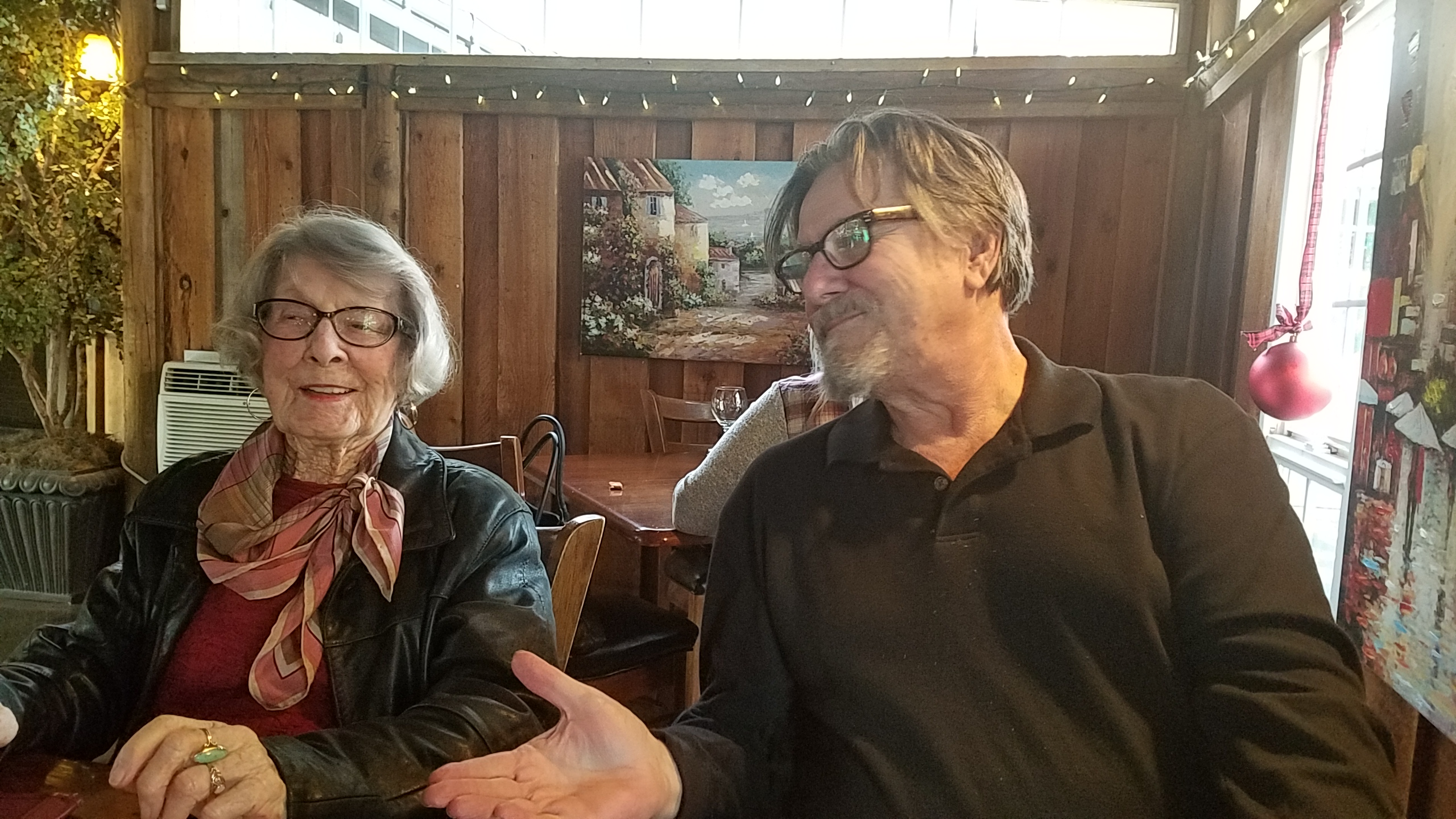
Slowly but surely, the apartment started filling up. Packages arrived daily from readers who sent all sorts of things: toys for Olive, books for Gerard. At the end of November, it was his mother’s 104th birthday, and I took a few photos. Here’s one:
A short while later, the authorities let the ex-residents of Paradise return to the town to look at their homes. Gerard already knew his was destroyed. We drove up the Skyway from Chico and stopped at a checkpoint where Gerard had to show his ID, and then they gave us two Hazmat suits. It was a strangely foggy day that lent an unreal quality to an already unreal scene, as though Paradise was a mirage that had emerged from some sort of time warp.
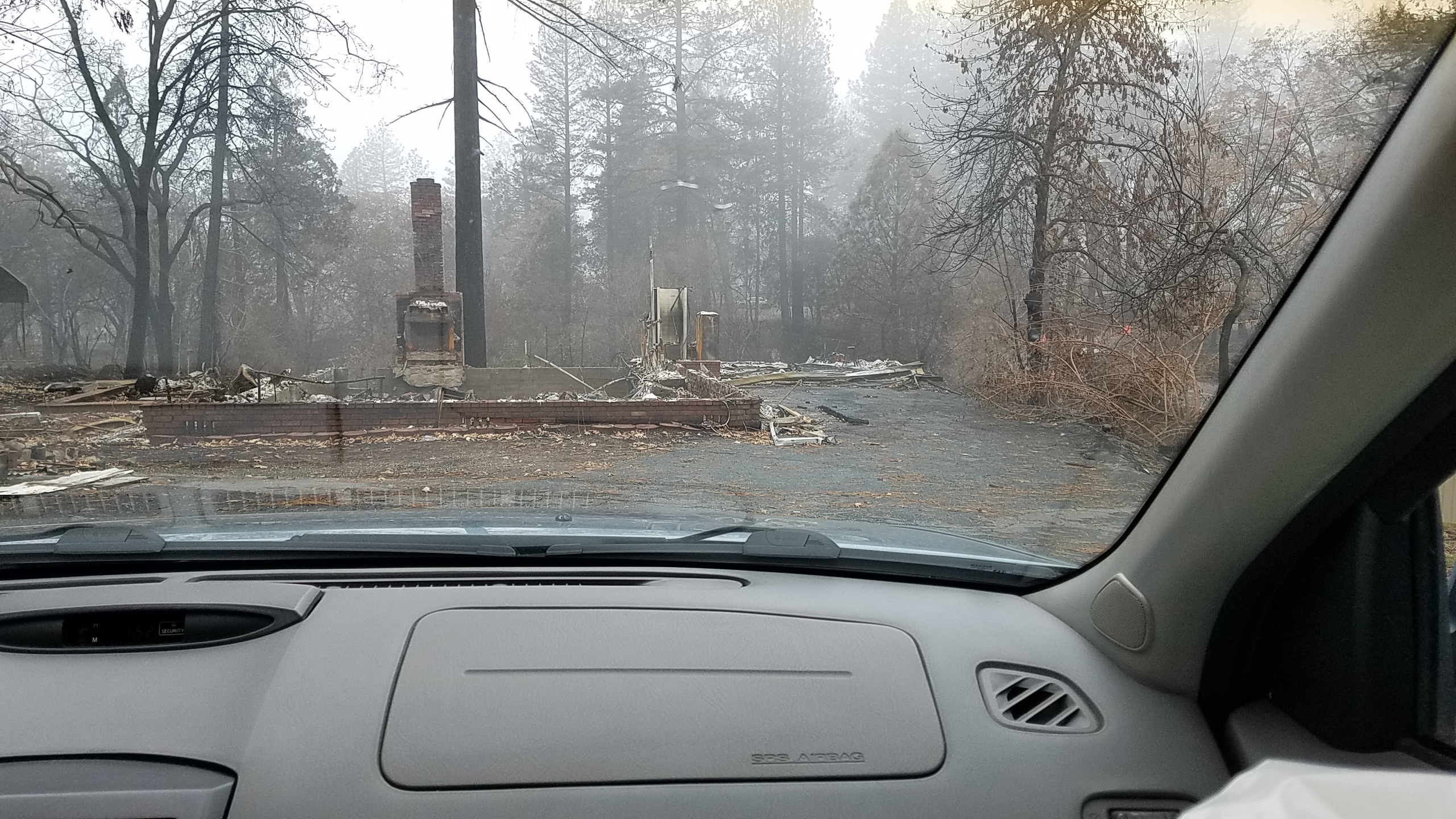
When we got to the town, I was surprised to see that, because many of the thick trees were now gone, the views were far more spectacular from many more places. Other than that, though, what we saw was grim even though we expected it. Here are a few of my photos. The first is the moment of our arrival at his house, which is directly in front of us:
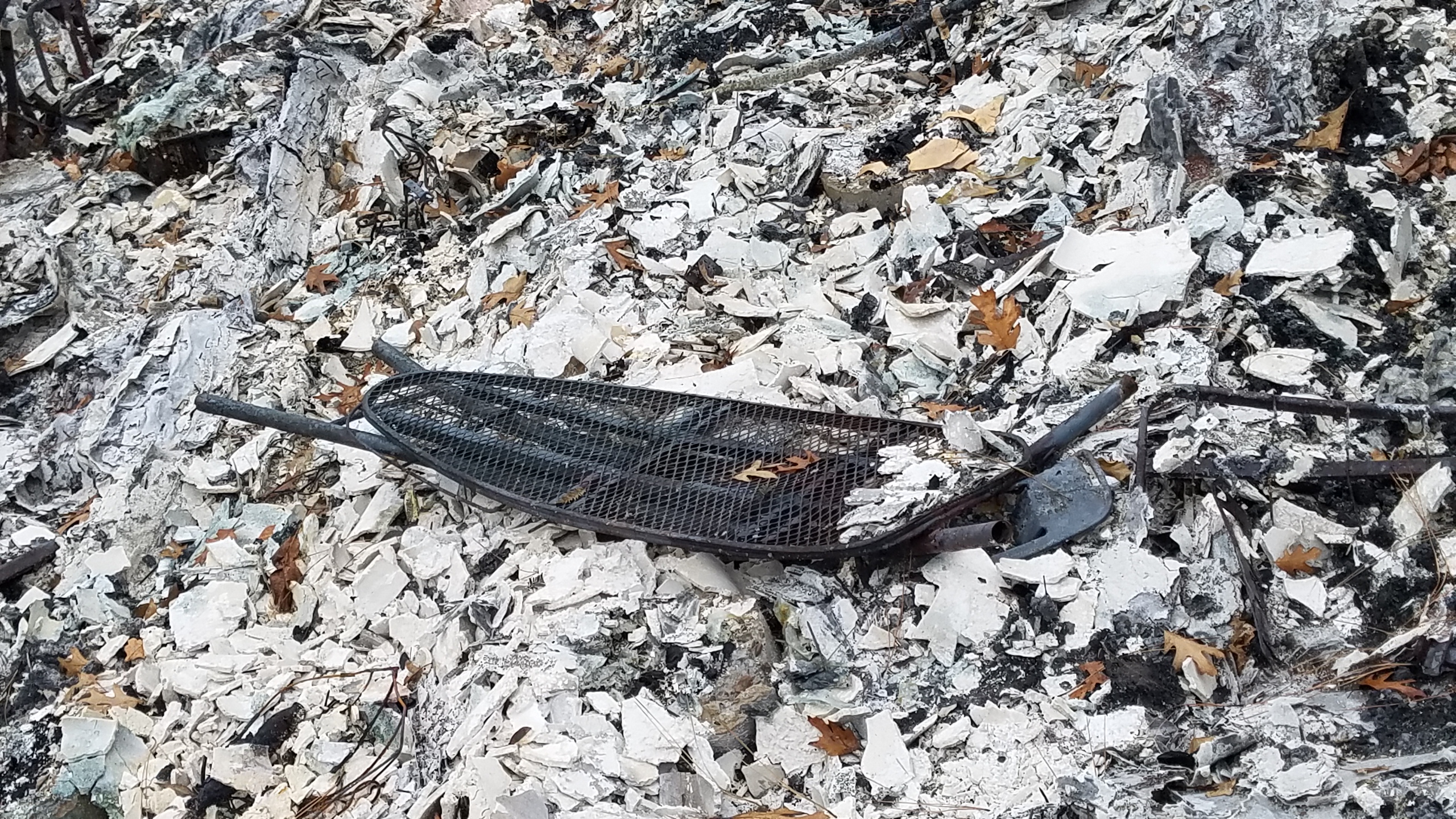
It was almost completely reduced to ashes, except for a few metal things that were twisted but recognizable. Here’s Gerard’s ironing board, minus its padding and cover:
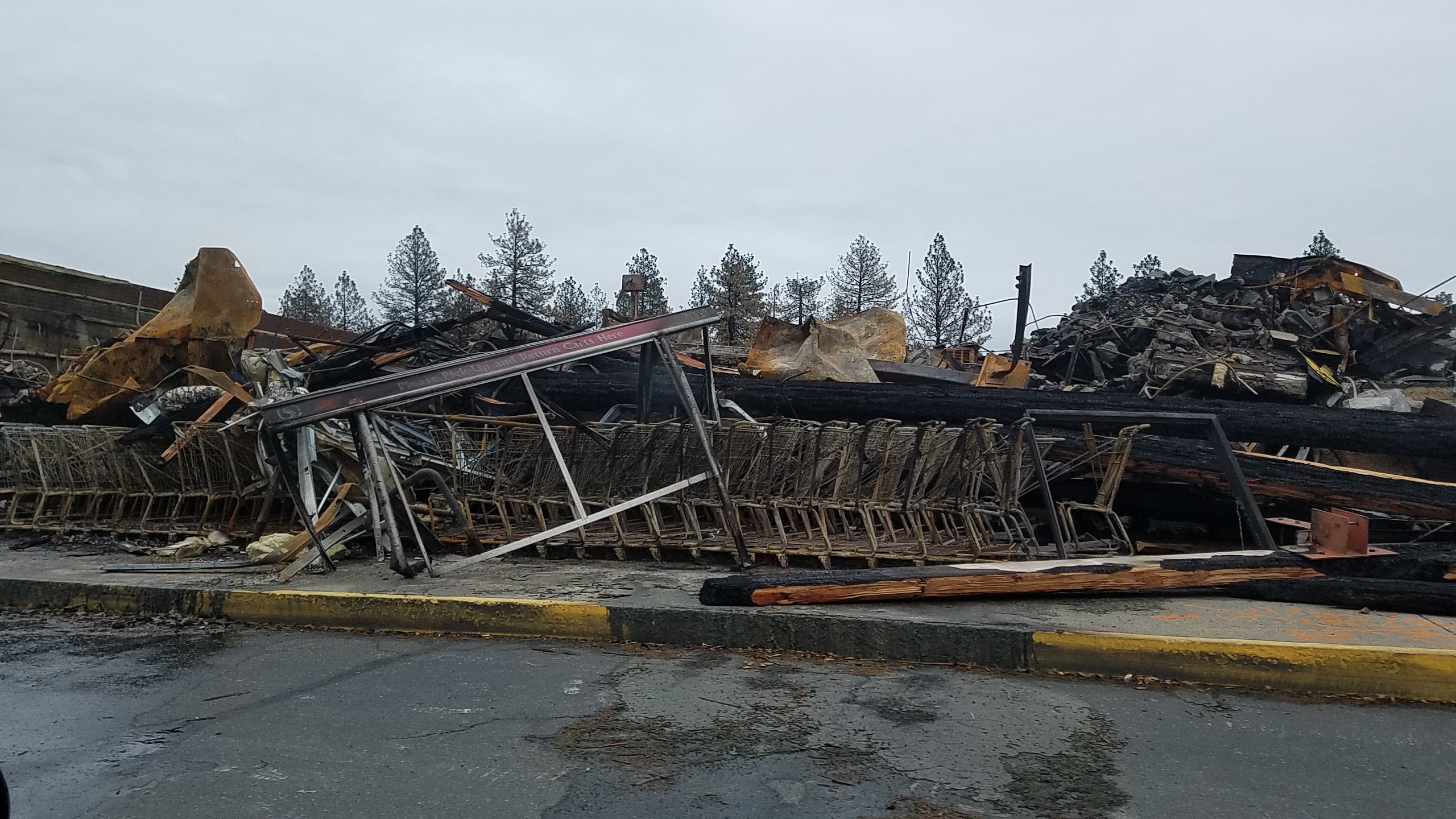
Here’s the Safeway where we used to shop. The carts are still all neatly lined up:
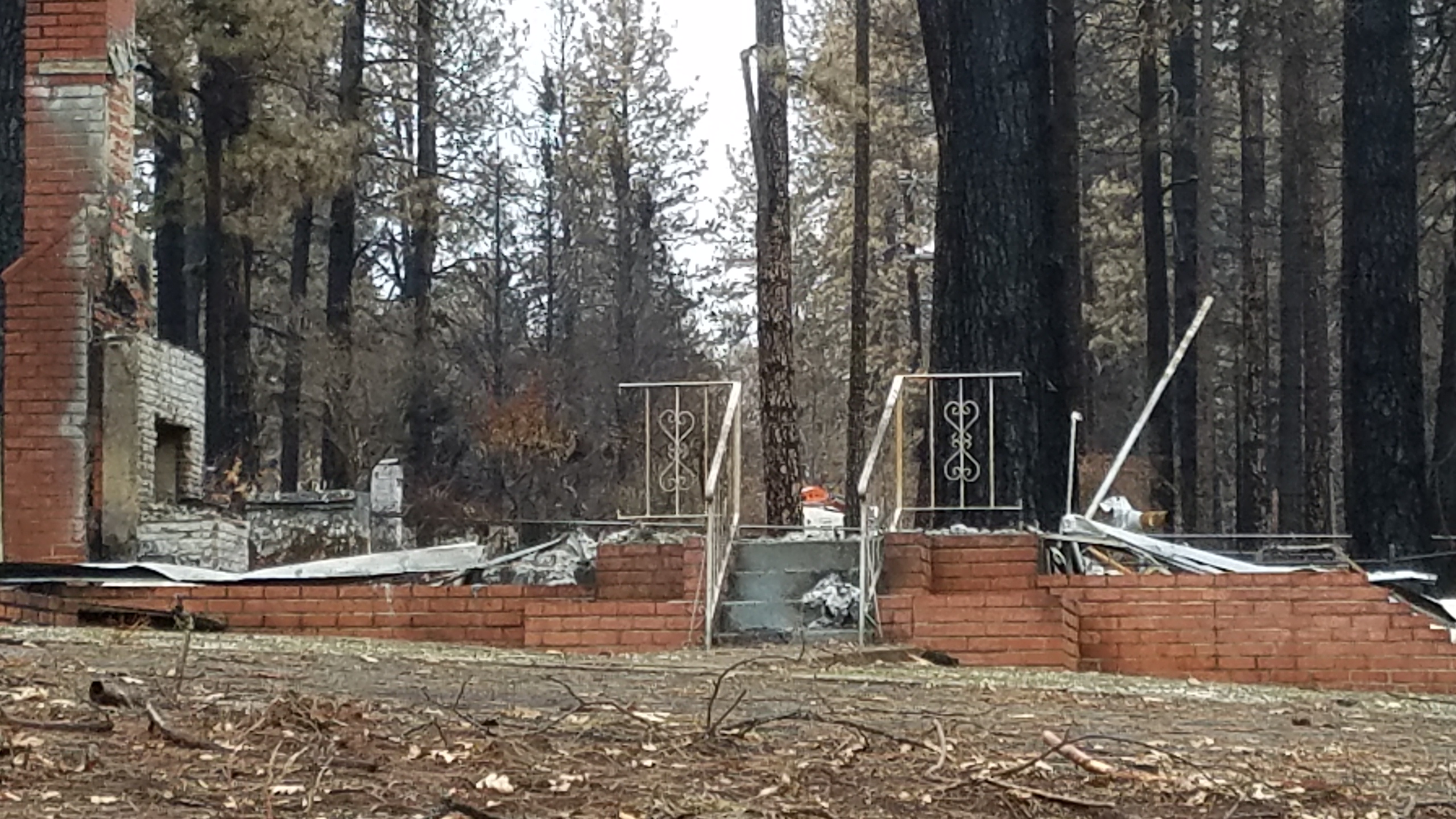
As we drove around, we saw many sights like this one: entrances made of fire-proof material such as brick, now leading to nowhere instead of their former homes:
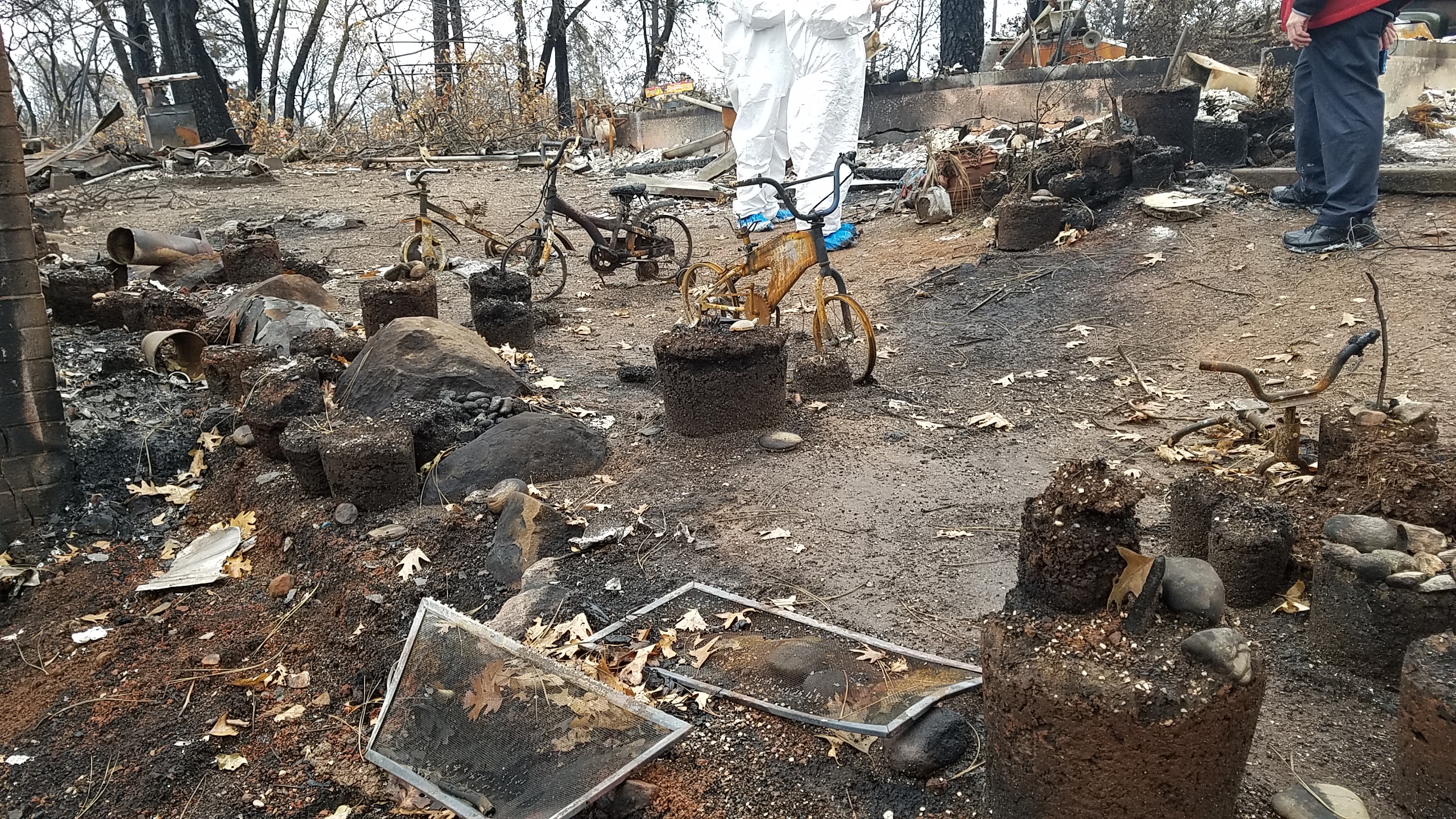
Here’s Gerard talking to his neighbor; she’s in a Hazmat suit, but he never wore his. Those are her kids’ tricycles:
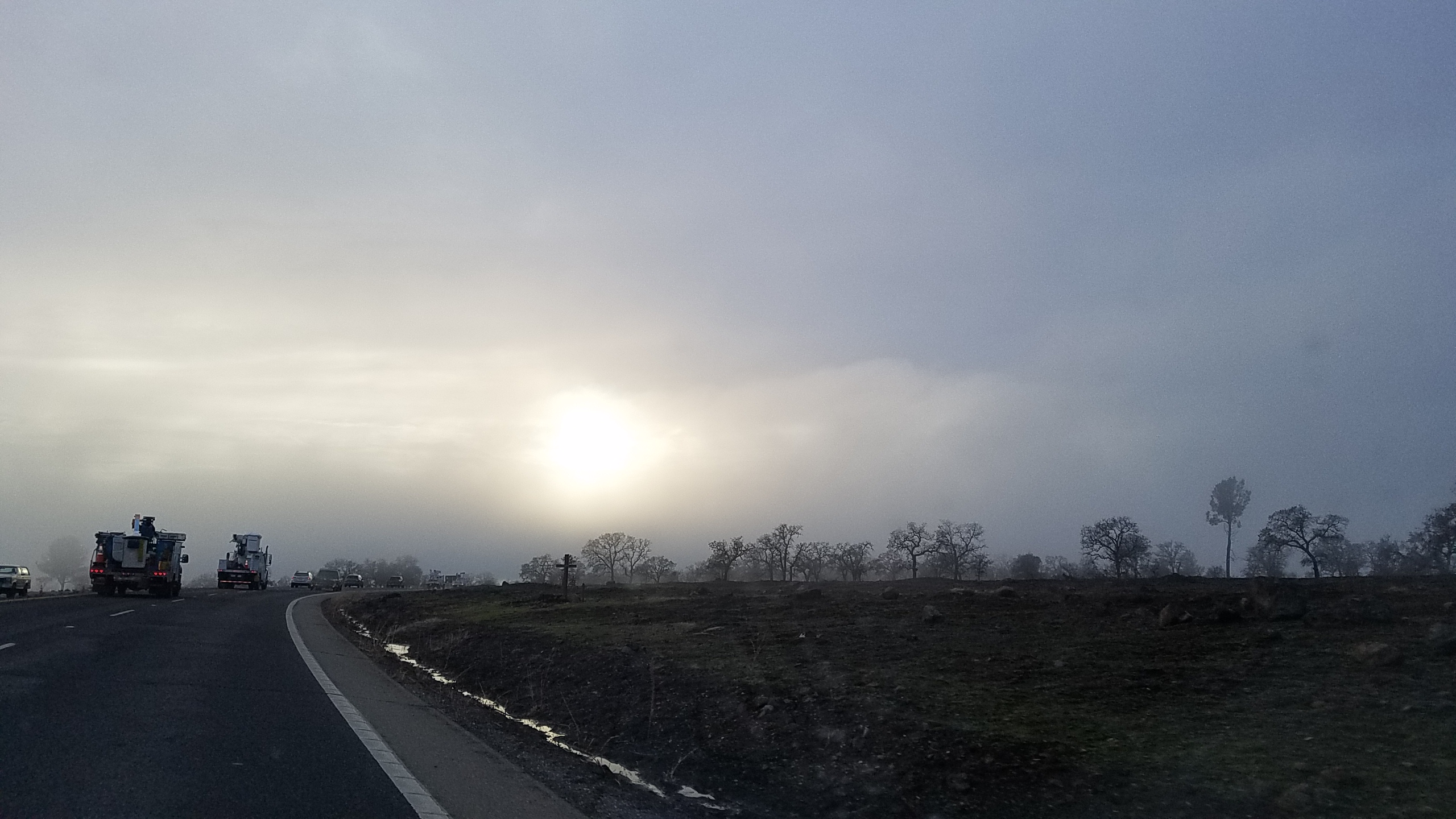
This is what the road back to Chico looked like:
And then, about a week later, I was walking near Gerard’s apartment and I felt a sinking feeling when I saw a neighbor of his mother’s running fast towards me. He asked me urgently which apartment Gerard lived in. Gerard’s mother had fallen and it turns out she’d sustained a concussion and went to a rehab facility for a few weeks. This was the beginning of a cascade of events that signaled the end for her; she died about six months later.
What a year.
Gerard returned to Paradise two more times after that with me, and I’m pretty sure those were the only two times he ever went back. The first time was for a benefit concert. The second was at my urging, perhaps a year later. I wanted to see what had been rebuilt, but he didn’t want to go. I decided to go myself and was okay with that, but he suddenly decided he’d go with me. He was very quiet on the trip, and on the way home he said, “That’s it. I’m not ever going back.”
And that was that.