↓
 

The New Neo

A blog about political change, among other things

  • Home
  • Bio
  • Email
Home » Page 1802 << 1 2 … 1,800 1,801 1,802 1,803 1,804 … 1,863 1,864 >>

Post navigation

← Previous Post
Next Post→

New dress code may go into effect in Iran

The New Neo Posted on May 19, 2006 by neoMay 19, 2006

Iran may be about to revive an old custom. A law passed by the Iranian parliament needs only the approval of “Supreme Guide” Ali Khamenehi to become practice.

It actually was passed two years ago, but languished until recently “revived at the behest of President Mahmoud Ahmadinejad.” What a surprise.

Here’s the gist of it:

Iran’s roughly 25,000 Jews would have to sew a yellow strip of cloth on the front of their clothes, while Christians would wear red badges and Zoroastrians would be forced to wear blue cloth.

Oh well, there are so few of them left in Iran, anyway. But it wasn’t always that way.

See this, this, and this.

[NOTE: Allahpundit cautions that the story may not be true.

And here’s more on the confusion.

Still more evidence that this is likely to be false.]

Posted in Uncategorized | 269 Replies

Revolutions devouring their own

The New Neo Posted on May 19, 2006 by neoNovember 5, 2019

In the Atlantic article I discussed yesterday, a name on the first page caught my eye: Sadegh Ghotbzadeh, the Iranian foreign minister at the time of the hostage crisis.

Suddenly, although I hadn’t thought of him in decades, the memory came back. Ghotbzadeh! I recall his sardonic, jaded, man-of-the-world expression—a strange combination of arrogance and weariness. As the spokesperson for the regime, he was featured often on TV (I think on the nascent “Nightline,” then entitled “America Held Hostage”). As a visible and familiar figure, he became somewhat of a focus for my frustration and annoyance with the entire situation. Something about him seemed hollow, although he was clearly intelligent and articulate.

As events unfolded, it turned out that Ghotbzadeh was one of those cautionary figures, a man who was instrumental in planning a revolution that then got away from him and proceeded to devour him in the process. Like Robespierre, Danton, and Desmoulins; like Trotsky and so many other engineers of the Russian revolution who were slaughtered in the great purges; authors of violent revolutions often come to violent ends at the hands of their violent former comrades.

Thus it was with Ghotbzadeh. Here he is:

Ghotbzadeh was close to the Ayatollah Khomeini while both were in exile in Paris, and became one of his right-hand men back home in the early days of the revolution. He seems to have been motivated most strongly by hatred of the Shah’s regime. But, paradoxically, his role in the hostage crisis was as a relative moderate (accent on the “relative;” moderate in comparison to what?). He seemed to be working for a diplomatic solution, and lost favor with the Iranian powers that be in the process.

Former hostage and Ambassador at the time, Bruce Laingen, has this to say about Ghotbzadeh:

I didn’t like him at the outset for the role he played as Foreign Minister, but I sensed as time went on over those months, that he came to the conclusion, himself, fairly early, that this hostage business was counterproductive to the revolution and that it needed to be ended. I think he genuinely wanted to end it and was prepared to make some concessions to do that. And he stuck his neck out to do that. He showed some guts.

It all unraveled rather quickly:

Ghotbzadeh finally resigned in 1980 over the deadlock in negotiations. That year, after he was arrested and briefly detained after criticizing the ruling Islamic Republican Party, he retired from public life. In 1982 he was arrested on charges of plotting against the regime. Although he denied any conspiracy to take Khomeini’s life, he apparently admitted complicity with Ayatollah Mohammad Kazem Shariat-Madari in a plot to overthrow the government. Ghotbzadeh was convicted in August 1982 and executed the following month.

Did he really plan to end the Khomeini reign, and, if so, with what was he planning to replace it? Or were the charges trumped up, and was he forced to confess to crimes he didn’t commit? At the time, I remember being astounded at the news of his startling reversal of fortune and allegiance; it was quite a switch from disliking him to feeling some sympathy for the man.

Guillotining having gone out of style, Ghotbzadeh was shot by a firing squad shortly after his trial. The revolution had eaten another of its own.

But not everyone connected with the early days of the revolution has met such a fate. Others connected with the hostage crisis have prospered. It’s unclear whether or not the current Iranian President, our good friend Ahmadinejad, was one of those “student” hostage-takers, although several former hostages have identified him as such. But there’s very little doubt about the identity of another former hostage-taker who’s riding high at present: Hussein Sheikholeslam, recently an Iranian diplomat and legislator.

Why do I mention Sheikholeslam? Only because I came across an interesting fact about him, an indication of the sort of cross-fertilization process that seems to have been at work in the revolutions of the 60s/70s. Sheikholeslam may not have been an actual student at the time of the hostage-taking in Iran. But whether or not Sheikholeslam was a student at that point, he certainly had been a student earlier—at UC Berkeley, where he learned a thing or two:

UC Berkeley gained a reputation as a center of student anti-war protest during the 1960s and 1970s. During that tempestuous period, an Iranian student named Hussein Sheikh-ol-eslam attended Cal. He became fluent in English. He also absorbed the demonstrations criticizing American imperialism in Vietnam and other nations.

After Hussein returned to Iran, writes Mark Bowden in his new book, “Guests of the Ayatollah,” his anti-Americanism planted deep roots in his Islamic religion. In late 1979, the tree connected to those roots bore ugly fruit.

The student protests of the 60s didn’t actually revolutionize much in the directly political and traditionally revolutionary (i.e. a sudden overthrow of the existing government) sense in the US. The “revolution” they began here took a cultural form, with resultant political results (and intent). But in Iran, students who had learned the anti-American and propaganda lessons of the 60s used them later to great (and more instant) effect. Some forget that the 60s didn’t just happen in this country; the protests occurred in Europe as well.

Khomeini spent some of his exile in France, but I was surprised to learn (from Wikipedia, so this could be taken with a grain of salt) that the French were not necessarily simpatico to him during his rather short sojourn there:

In 1963, [Khomeini] publicly denounced the government of Shah Mohammad Reza Pahlavi. He was thereby imprisoned for 8 months, and upon his release in 1964, he made a similar denunciation of the United States. This led to his forced exile out of Iran. He initially went to Turkey but was later allowed to move to Iraq, where he stayed until being forced to leave in 1978, after then-Vice President Saddam Hussein forced him out…after which he went to Neauphle-le-Ché¢teau in France. According to Alexandre de Marenches (then head of the French secret services), France suggested to the Shah that they could “arrange for Khomeini to have a fatal accident”; the Shah declined the assassination offer, arguing that this would make him a martyr.

[NOTE: My post about Azar Nafisi, author of Reading Lolita in Tehran, is relevant here. Nafisi, an Iranian national, likewise fell in with other radical Iranian students while studying in this country. Then, when she returned to Iran, she saw quite a few of those former associates imprisoned—and in some cases executed—by their former comrades-in-arms.]

Posted in Best of neo-neocon, Getting philosophical: life, love, the universe, Iran | 13 Replies

Not a rumor: McCartneys separate

The New Neo Posted on May 19, 2006 by neoJuly 30, 2010

It was no rumor, after all (or rather, no mere rumor). The McCartneys have split.

The speculation so far seems to revolve around the money angle: “McCartney Divorce Could Be Biggest in UK History.”

And, once again, the photo of Paul accompanying the article is quite cruel. Shall I be cruel and reproduce it? Oh, okay; but only as an object lesson in a point I tried to make yesterday–do not, especially as you get older, allow photographs to be taken from below chin level:


Just to refresh your memory, here’s Paul from a similar angle in happier days:


Reports are that the divorce is that somewhat rara avis, an amicable one. Sometimes divorces can be exactly that, and I hope this one ends up fitting the description by the time it’s over. There’s a young child involved, for starters.

There are also older children involved–or perhaps the word “offspring” would be more appropriate; they’re certainly not kids–who are reported to have disliked Heather from the start.

I don’t claim to have any special knowledge of the inner workings of the McCartney marriage–I barely know anything about its outer workings. But my guess is that, after a marriage as long and extraordinarily harmonious as McCartney’s first one is reported to have been, change can come hard.

And of course, even though Paul is a fairly well-preserved almost-sixty-four, the age difference between Paul and Heather is profound. She’s thirty-eight, which makes her approximately half his age and, more importantly, about the age of his children.

Remarriages involving stepchildren, small or grown up, can have extra difficulties. It stands to reason, especially when the children’s loyalty to a first spouse is profound, which is often (and understandably so) the case. One would think that if the children are grown up the path is eased (and this is ordinarily very true), but having a stepparent of one’s own age is a special case that can be experienced as unbalancing.

Of course, it’s all sheer speculation on my part as to the factors that may have contributed to the breakup. The only ones who know the true story of a marriage are the participants, and much of the time even they don’t know a whole lot. The recent divorce rate, often quoted as one in two, actually isn’t quite that high, but it’s high enough, with the US leading at 44% and the UK following close on its heels. So perhaps Paul is simply typical of our times: he’s 1 for 2 so far.

Posted in Men and women; marriage and divorce and sex | 2 Replies

A debacle, indeed: revisiting the Iran embassy hostage rescue attempt

The New Neo Posted on May 18, 2006 by neoFebruary 16, 2008

This piece from the Atlantic Monthly Online, “The Desert One Debacle,” about the Carter administration’s attempt to rescue the embassy hostages in Iran in 1980, is a sobering read.

I vaguely remember the incident–just one in a long line of frustrations connected with that sorry spectacle. But the details–which I’d never read before–are a case of “whatever could go wrong, did go wrong;” from vicious sandstorms, to the utterly improbable coincidence of the planes’ initially encountering a truck and a civilian passenger bus as they landed in the desert, to a fatal airplane crash. Debacle, indeed; the planes never even came near Tehran.

Perhaps it’s a good thing they didn’t. From the evidence in the piece, the loss of life would likely have been even greater had they done so. It’s very difficult to believe that this mission ever had any chance of succeeding. Not only was the weather problem in the desert underestimated, and the assault force relatively small (one hundred thirty two men maximum, with some planes expected to encounter technical difficulties and drop out), but here was the game plan for controlling crowds around the embassy:

Another presidential directive concerned the use of nonlethal riot-control agents. Given that the shah’s occasionally violent riot control during the revolution was now Exhibit A in Iran’s human-rights case against the former regime and America, Carter wanted to avoid killing Iranians, so he had insisted that if a hostile crowd formed during the raid, Delta should attempt to control it without shooting people. Burruss considered this ridiculous. He and his men were going to assault a guarded compound in the middle of a city of more than 5 million people, most of them presumed to be aggressively hostile. It was unbelievably risky; everyone on the mission knew there was a very good chance they would not get home alive. Wade Ishmoto, a Delta captain who worked with the unit’s intelligence division, had joked, “The only difference between this and the Alamo is that Davy Crockett didn’t have to fight his way in.”

At any rate, it didn’t come to that. After flying through vicious sandstorms, landing in the desert, and encountering a Mercedes passenger bus filled with ordinary Iranians (who were promptly searched by the Americans and prepared to be flown out of Iran for the duration of the mission), the rescue attempt was aborted because too many aircraft had been rendered inoperative.

Then, as the evacuation of the planes was underway, one of the helicopters crashed into a transport plane on the ground, causing a conflagration and the death of eight members of the assault force. From the description of the scene, it’s a wonder the death toll wasn’t higher.

Reading about the hostage crisis brings back gut-wrenchingly bad memories: the endless negotiating, the arrogant posturing of the hostage-takers, the seeming impotence of our government. It’s easy to recall that it was long; at the time, it seemed nearly endless, but the actual length was astounding: 444 days. The incident was one of the reasons Carter lost the Presidency (and rightly so), suffering the final ignominy of the hostages’ release on Ronald Reagan’s Inauguration Day.

In retrospect–and perhaps even at the time–the entire hostage crisis was a debacle, not just the rescue attempt. The consensus is that Carter’s mishandling of the situation caused the US to be perceived as weak and vulnerable.

This recent Salon article contains a telling vignette on the subject, from the Iran of 2004:

So it was that I stood impatiently before the window to check out while the [hotel] receptionist took his sweet time to retrieve my American passport from the cubby behind him. He held it for a long, strange moment before he slid it my way. Wistfully, he said: “How I wish I had a passport like that.” Off we were, talking about the election. The receptionist hoped President George W. Bush would defeat Sen. John Kerry. He hated the Democrats, he professed. It wasn’t my first encounter with this Iranian enthusiasm for the Republican Party, as unfathomable as it was widespread. Under the Republican President Dwight Eisenhower, after all, the United States toppled Iran’s popular nationalist prime minister, Mohammad Mossadegh, in 1953, consolidating power in the hands of the brutal and despised shah, Mohammad Reza Pahlavi. Under the Democratic President Bill Clinton, the United States finally apologized for engineering those events. I asked the receptionist to explain. “Jimmy Carter,” he replied with disgust. “He could have stopped this Islamic Revolution, and he didn’t.” When it comes to Iran, where revolutionaries identified Carter with every bad turn the United States had ever visited on their or any other third-world country, and where Americans would come to associate him with haplessness and defeat, somehow everything the president from Plains, Ga., did would always be wrong. His presidency, already a fragile vessel, shattered on the shoals of the Iranian hostage crisis — those 444 days at the end of his single term when the staff of the American embassy in Tehran was held captive by militant students. From then on, he would forever be linked in the American mind with the humiliation of seeing one’s countrymen blindfolded, helpless, surrounded by angry mobs of Shiites — believers in a religion most Americans only dimly apprehended, revolutionaries who hated the United States for having supported a regime most Americans were barely conscious existed. And now, 26 years later, this Iranian hotel worker in a single gesture renounced his country’s revolution and laid it at the feet of the very president whose likeness Iranian revolutionaries burned in effigy as they massed outside the seized embassy compound.

Posted in History, Iran | 46 Replies

“Will you still need me, will you still feed me, when I’m sixty-four?” Jury still out on that one

The New Neo Posted on May 18, 2006 by neoJuly 25, 2009

It’s an ugly rumor, I know, and I shouldn’t repeat ugly rumors.

But just this once, I will: Paul McCartney and his wife Heather might be splitsville (the photo accompanying that link, by the way, is proof that after a certain age–or perhaps at any age–you should avoid having a photo taken from a low perspective. Trust me on that one).

So ladies, if you were a “Paul girl” such as yours truly, there is still hope. Not a whole lot of hope, but then again, there never was a whole lot, was there? The odds were always against us. And although even Sir Paul himself is looking a trifle raggedy lately, only those among us without sin should cast the first stone.

But it’s the timing of the story–if true–that impresses me. Because it turns out that today Paul is exactly one month short of his sixty-fourth birthday!

So perhaps that song was prescient, after all, in its uncertainty (although the line, “you’ll be older too” doesn’t seem to apply in Heather’s case):

When I get older losing my hair
Many years from now
Will you still be sending me a valentine
Birthday greetings, bottle of wine?
If I’d been out till quarter to three
Would you lock the door?
Will you still need me, will you still feed me
When I’m sixty-four?

You’ll be older too
And if you say the word
I could stay with you

I could be handy, mending a fuse
When your lights have gone
You can knit a sweater by the fireside
Sunday mornings go for a ride
Doing the garden, digging the weeds
Who could ask for more?
Will you still need me, will you still feed me
When I’m sixty-four?

Every summer we can rent a cottage in the Isle of Wight
If it’s not too dear
We shall scrimp and save
Grandchildren on your knee
Vera, Chuck & Dave

Send me a postcard, drop me a line
Stating point of view
Indicate precisely what you mean to say
Yours sincerely, wasting away
Give me your answer, fill in a form
Mine for evermore
Will you still need me, will you still feed me
When I’m sixty-four?
Ho!

Posted in People of interest | 8 Replies

Apres le deluge

The New Neo Posted on May 17, 2006 by neoFebruary 16, 2008

Well, we’ve had a week–or is it two?–of almost unending rain. But today, sun!

Here’s that same view outside the window of my study. You can see the changes; two weeks ago:

vs. today:

The birch tree is almost fully leafed out, hiding the evergreens that used to dominate.

Posted in Gardening | 14 Replies

Floods in New England: weather, climate, and change

The New Neo Posted on May 16, 2006 by neoNovember 16, 2008

It’s a commonplace quip in New England that if you don’t like the weather, just wait five minutes. In other words, our weather is very changeable. Very.

Another quip is that there are two seasons in New England, winter and the Fourth of July. In other words, winter’s long and cold, and summer fleeting. Very.

Right now most of New England is in the midst of torrential rains and swollen rivers, record-setting within the last seventy years or so but not unprecedented. First we had a spring drought, and the initial rain was welcomed, but now it’s “Rain, Rain, Go Away” in earnest.

Schools are closed, basements are flooded, roads are damaged, and it’s still raining. My house is on a hill, and everything’s still dry inside, but I hear bitter complaints all around.

A friend sent these photos from an apartment complex in New Hampshire, one of those old converted mills that are ordinarily so picturesque.


Those windows you’re looking at with the water close to rushing into them are on the first floor, and the apartments they’re attached to have been evacuated.

When this sort of weather happens, people–being people–search for explanations. Global warming is often blamed for all the perturbations we’ve experienced lately, and for all I (or anyone) knows it may indeed be so.

But I think we often forget how constant change in weather has been. That New England saying refers only to short term day-by-day and hour-to-hour fluctuations. We cling to the illusion–and it’s just that, an illusion–that weather in general is stable over time, when in fact the opposite is actually true.

Our lifetimes are short enough that we don’t perceive these fluctuations in climate (“weather” becomes “climate” when we speak of the long term), but scientists know they exist and theorize as to their cause. There have been many; the glaciation of the ice ages are among the most well-known and dramatic. But we don’t have to go back that far in time to get an idea of the scope of climactic change; more recently there was the Medieval Warm Period and the Little Ice Age.

Here’s a small glimpse of some of the features of these climactic events, to give an idea of the relative speed with which the climate changed in those days, even before the massive burning of fossil fuel:

[The Medieval Warm Period lasted] from about 1000 to 1300 AD. As with the Little Ice Age, its timing and effects varied from region to region, and many experts doubt that the Medieval Warm Period was a truly global phenomenon. In East Asia, for example, temperatures were cooler.

Europe, though, enjoyed an undeniably balmy climate during the early medieval period. Agriculture flourished farther north and at higher elevations on mountains than is possible even in today’s warmish climate, and harvests generally were good.

Farmers raised wine grapes in England 300 miles north of present limits, and in what now are icebound parts of Greenland, Norse settlers grazed sheep and dairy cattle. In his book Climate History and Modern Man, H.H. Lamb noted that the great burst of cathedral-building and population expansion in medieval Europe coincided with the peak of the Medieval Warm Period.

By about 1400, the climate had cooled to temperatures comparable to today. Over the next century or two, the world would cool still further, bringing on the Little Ice Age.

…Some mark its inception as early as the 1200s, others view the Little Ice Age “proper” as beginning around 1450 or even later.

Disagreements arise because the phenomenon was not simply a giant cold snap. The cooling trend began at different times in different parts of the world and often was interrupted by periods of relative warmth.

All agree, however, that it lasted for centuries, and that the world began emerging from its grip between 1850 and 1900….

That’s recent; very recent indeed. Long before that, descendents of those who’d settled in Greenland in a warmer era had all died, and Iceland’s population was decimated. And, as an ex-New Yorker, I find this word picture of the Little Ice Age in that city something to marvel at:

In the fledgling United States, New York harbor froze over in winter, allowing people to walk from Manhattan to Staten Island.

As a child, such things fascinated me, in particular the ebb and flow of the ice ages themselves. I spent hours poring over a series of maps in the World Book Encyclopedia purporting to show the extent of different glaciations, as well as the changing shapes of the continents.

The idea that the coastline that seemed so immutable to me was only this way for a long moment in time, that all was flux, that over unimaginable aeons the very shape of the ground beneath us had altered immeasurably, that seas had appeared where mountains had been, and vice versa–all of this filled me with a sense I can only describe as wonder. That the world was far stranger than I could ever imagine, and in ways I could never understand, seemed just about right.

[NOTE: Speaking of change, here, for your viewing pleasure, are some animated drawings of the movements of the continents over time.]

Posted in Uncategorized | 48 Replies

Blogger burnout: it’s the end of the beginning

The New Neo Posted on May 15, 2006 by neoMay 15, 2006

There’s an interesting wave of fatigue running through the blogosphere. A lot of people are writing about it: The Anchoress is taking time off from politics, although not from blogging; Shrinkwrapped offers keen insight; Austin Bay opines, and Belmont Club weighs in with his trademark deep reflection.

The consensus is that a frustrating frustration is abroad in the land, related to the fact that the “easier” parts of this struggle have ended or are ending. Not that any of it has been easy, but Afghanistan and al Qaeda, and even to some extent Iraq, were clearer targets and tasks than the ones that lie ahead.

Still, they’ve been difficult, and are not clearly over yet, and people are tired. Tired of the struggle, tired of the bloodshed, and in some way tired most of all of the endless haranguing and vicious infighting here in the US.

But now we’re facing even tougher problems. As Austin Bay says:

Al Qaeda is being defeated”“ it’s not dead but it’s on its way to defeat. Even Al Qaeda’s latest rants reflect an awareness that their great gambit has failed…There is also a growing awareness that Iraq’s long slog may well result in the emergence of a new, more open political system in the Muslim Middle East. It’s still going to take a couple of years for this to be evident ”“and the worst defeatists and naysayers will either go to their graves denying it”“ but all of the indicators are there…Iran’s mullahs are demonstrating once again the limitations of UN multi-lateralism”“ sharp minds on the left and right recognize this. A lot of people staked their hopes for peace and a better future on UN multilateralism. The Iranian situation also illustrates the limits of US unilateralism ”” how many times can the world’s superpower go it alone?…

I think Iran is indeed one of the biggest causes of blogger fatigue, combined with our lack of agreement on the seriousness of the problem–if we can’t agree on the vicious intent and dangerousness of the Iranian leadership, what can we agree on?

Iran is a topic I’ve tried to wrap my mind around many times, and still it looms, unresolved and seemingly–perhaps–unresolvable. All approaches seem potentially either catastrophic or ineffectual, or both. So fatigue is an understandable reaction; the mind tends to shut down.

For me, personally, I think I faced something of this way back on 9/11, strangely enough. Not the details, of course; I couldn’t possibly have foreseen them. But it came to me that day that we were in something that would be very long and extraordinarily difficult. Here were my thoughts, from my “A mind is a difficult thing to change” series:

[On September 11, 2001], I went to the ocean and sat on the rocks. It was the loveliest day imaginable. I had been alive for over fifty years at the time, and I cannot recall weather and a sky quite like that before. It added to the utter unreality of the day and my feelings. The sky was so blue as to be almost piercing, with a clarity and sharpness that seemed other-worldly. It made it feel as though the heavens themselves were speaking to us; but what were they saying?

All this clarity and purity was enhanced by the fact that there wasn’t an airplane in the sky. There were boats of all types on the bluest of oceans, the sun beamed down and made the waves sparkle, and it all seemed to have a preciousness and a beauty that came with something that might soon be irretrievably lost…

Even on that very first day, as I sat on the rocks overlooking the beautiful ocean that I loved so much, I thought we had entered a new era, one which would probably go on for most of my lifetime however much longer I might live. The fight would be long and hard, and there would be many many deaths before it was over. Perhaps it would result in the end of civilization as we knew it–yes, my thoughts went that far on that day. This war would encompass most of the globe. I had no idea how it would work out, but I knew that we were in for the fight of our lives.

The legal actions of the past–the puny trial after the first World Trade Center attack, for example–no longer seemed like an effective response. It seemed, in retrospect, to have been almost laughably naive. The situation didn’t even seem amenable to a conventional war. Something new would have to be invented, and fast. And it would have to be global. It would have to have great depth and breadth, and it would probably last for decades or even longer.

It’s long, and it’s hard. But fatigue is really not an option, although of course we all feel it. In the deceptively simple yet majestically eloquent words of that wily old leader, Winston Churchill, who knew what long hard struggles were all about, and who knew how to describe them:

This is not the end. It is not even the beginning of the end. But it is, perhaps, the end of the beginning.

[NOTE: I just wanted to add that the fatigue I’m writing about here is certainly not limited to the blogosphere, nor even to the so-called right. In an earlier (and longer) version of this post, I made that clear, but when I shortened the post it became much less clear.]

Posted in Uncategorized | 247 Replies

A daughter reminisces: the making of a writer

The New Neo Posted on May 15, 2006 by neoMay 13, 2009

Here’s a beautiful piece by the Anchoress, an honest and complex tribute to the mother who gave her her love of words.

It would be interesting to uncover the heredity/genetics of what makes up a writer and reader. And by “writer” I don’t just mean professionals, but amateurs as well, all those who love words (remember, the root of the word “amateur” is “lover”) .

The Anchoress’s mother was brought up by deaf parents, which may have made her love of words even more powerful. As the Anchoress writes:

She gave me that – the love of words – of the very sound of words – the ability to take delight in a well-turned phrase or a crafty sentence, the ability to sense something beyond vowels and consonants, something that sounds like real music and gives almost as much delight. Drunk or sober, angry or gleeful, the stuff that poured from her mouth would routinely stop me in my tracks for the sheer glory of her word usage. I revelled in her immense vocabulary, her flawless diction. If some surprising, or obscene, words occasionally found their way into her soliliquies, even those were rendered inoffensive thanks to the plucky, affectionate way she inserted them.

Some people are just drawn to words from the start; I was one of them. And, as with the Anchoress, it did seem to run in our family. I grew up with a mother to whom I automatically gave all my school papers to edit, just as my father was in charge of checking my math homework (at least for a while). My mother loved taking the old blue pencil (metaphoric, in her case) to my childish efforts, indicating grammar corrections and the like, and then explaining them to me in a teaching moment. Didn’t everybody’s mother?

And didn’t everybody’s brother read poetry aloud to them in-between bouts of teasing and various other forms of torment? Some might call the poetry readings themselves a form of torment–but not me.

The answer, of course, is no. But I wasn’t aware of that at the time; I thought such skills went with parenthood, and maybe even big-brotherhood.

My mother used to have a newspaper column, and she was a child prodigy as a poet. My mother’s father was a writer also, although he worked in advertising, and her entire family used to compose funny jingles for all occasions–birthdays, weddings, any small excuse–set to popular tunes of the day. (Perhaps that’s why I appreciate Dr. Sanity’s lofty skills in that particular arena so much). I carried on the blue pencil tradition for my son when he was growing up. And now he’s a better editor and writer than I.

Which is as it should be, right?

Posted in Language and grammar, Literature and writing | 2 Replies

For Mother’s Day: mothers and babies

The New Neo Posted on May 14, 2006 by neoJuly 25, 2009

Okay, who are these three dark beauties?

A hint: one of them is the very first picture you’ve ever seen on this blog of neo-neocon, sans apple. Not that you’d recognize me, of course. Even my own mother might not recognize me from this photo.

My own mother, you say? Of course she would. Ah, but she’s here too, looking a bit different than she does today–Mother’s Day–at ninety-two years of age. Just a bit; maybe her own mother wouldn’t recognize her, either.

Her own mother? She’s the one who’s all dressed up, with longer hair than the rest of us.

The photo of my grandmother was taken in the 1880’s; the one of my mother in the teens of the twentieth century; and the one of me, of course, in the 1950s.

Heredity, ain’t it great? My mother and grandmother are both sitting for formal portraits at a professional photographer’s studio, but by the time I came around amateur snapshots were easy to take with a smallish Brownie camera. My mother is sitting on the knee of her own grandfather, my grandmother’s father, a dapper gentleman who was always very well-turned out. I’m next to my older brother, who’s reading a book to me but is cropped out of this photo. My grandmother sits alone in all her finery.

We all not only resemble each other greatly in our features and coloring, but in our solemnity. My mother’s and grandmother’s seriousness is probably explained by the strange and formal setting; mine is due to my concentration on the book, which was Peter Pan (my brother was only pretending to read it, since he couldn’t read yet, but I didn’t know that at the time). My mother’s resemblance to me is enhanced by our similar hairdos (or lack thereof), although hers was short because it hadn’t really grown in yet, and mine was short because she purposely kept it that way (easier to deal with).

My grandmother not only has the pretty ruffled dress and the long flowing locks, but if you look really closely you can see a tiny earring dangling from her earlobe. When I was young, she showed me her baby earrings; several miniature, delicate pairs. It astounded me that they’d actually pierced a baby’s ears (and that my grandmother had let the holes close up later on, and couldn’t wear pierced earrings any more), whereas I had to fight for the right to have mine done in my early teens.

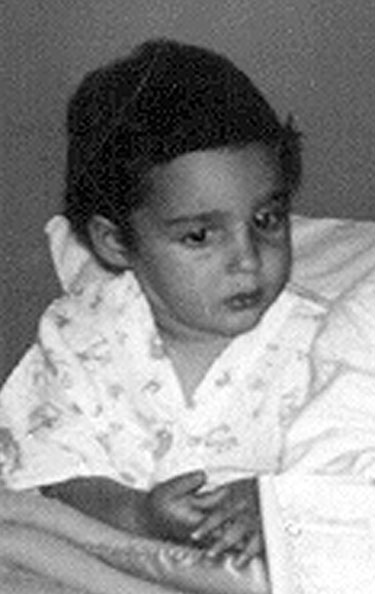
I’m not sure what my mother’s wearing; some sort of baby smock. But I know what I have on: my brother’s hand-me-down pajamas, and I was none too happy about it, of that you can be sure.

So, a very happy Mother’s Day to you all! What would mothers be without babies…and mothers…and babies….and mothers….?

Posted in Me, myself, and I | 11 Replies

Answering a true liberal’s question about Iraq

The New Neo Posted on May 13, 2006 by neoMay 13, 2006

Recently an elderly aunt (oh, I don’t think she’d like that “elderly” bit at all!) who lives in San Francisco asked me the following question during a phone conversation we were having, “So, do you still think it was good for us to go into Iraq?”

She’s a lifelong liberal Democrat, but one of those people in my life who, since my “change,” has always been patient and respectful towards me in all of our discussions. We actually don’t talk too much any more about politics–it’s mostly become one of those “agree to disagree” things–but at first we certainly did, and (unlike many) she made efforts to listen and never flew off the handle.

So, when she asked that question, her tone was only ever-so-slightly dubious, with the subtext, “How could you possibly believe such a thing?” only vaguely hinted at.

My answer amounted to the following:

Yes, in a way, although I never phrased it that way to begin with and wouldn’t describe it that way today. It’s not a question of “good for us,” although the results could end up being good for us in the long run. But the way I saw it at the time, and still see it, is that it was a difficult and risky decision that represented something we needed to do, faced with a bad situation that had been building for decades in that area.

The risks were always huge, but we had to take a stand on Saddam’s defiance of the terms of the ceasefire and of the UN’s authority, and we had to try to see whether we could get something decent going in the region. That country seemed, for a whole host of reasons (including, most prominently, humanitarian ones), a good place to try to start.

I take the long view, and the jury is still out on what will happen in Iraq. You may not realize it, because of the news sources you read, but the government there is still moving ahead, and the country is not actually in a civil war, despite the bitter and bloody conflict. And it may also seem strange to you when I say this, but I was actually expecting worse. I expected far more bloodshed to occur, and more unrest and street fighting, not less. In this perhaps I’m different than most, but I seem to recall those were the prewar predictions even from the Left–which they seem to have forgotten, since moving the goalposts is always good sport.

I never thought a good outcome was a foregone conclusion. And the idea that the Bush administration uniformly thought so is a distortion (and here I referenced my posts on that theme, and on the famous “cakewalk” remark).

Her response was to thank me for a thoughtful and complex answer–which gives you a good idea of what sort of a person she is, and why we can talk together. I doubt she agreed with me, but not only is she willing to talk and to listen, but I know I represent one of the few opposing views she ever encounters, and she values hearing a different perspective. That makes her a true liberal indeed, in the first sense of the word as it’s defined here:

broad: showing or characterized by broad-mindedness; “a broad political stance”; “generous and broad sympathies”; “a liberal newspaper”; “tolerant of his opponent’s opinions”

Posted in Uncategorized | 18 Replies

Blogger collage

The New Neo Posted on May 13, 2006 by neoMay 13, 2006

I just noticed (via this link to the site by Gerard Van der Leun) that I’ve got a place in the blogger collage Blogs With a Face.” I’m especially honored, since I hardly qualify–I’m more like “blogs with a partly-hidden face.”

Van der Leun is especially pleased with his positioning next to the stunning Michelle Malkin. As well he might be. And I, likewise, have no reason whatsoever to complain about my personal surroundings. I am more or less encircled by some of the finest male pulchritude in the blogosphere, both on the sides and above.

And they can write, too.

Posted in Uncategorized | 3 Replies

Post navigation

← Previous Post
Next Post→

Your support is appreciated through a one-time or monthly Paypal donation

Please click the link recommended books and search bar for Amazon purchases through neo. I receive a commission from all such purchases.

Archives

Recent Comments

  • SD on Open thread 3/11/2026
  • om on The press and that Iranian school that was reported to have been hit
  • ambisinistral on The press and that Iranian school that was reported to have been hit
  • Kate on The press and that Iranian school that was reported to have been hit
  • huxley on As the sun quickly sets, not on the British Empire – that’s already gone – but on Britain itself

Recent Posts

  • Peeking through Iran’s fog of war
  • The press and that Iranian school that was reported to have been hit
  • As the sun quickly sets, not on the British Empire – that’s already gone – but on Britain itself
  • Open thread 3/11/2026
  • Those plucky ISIS kids

Categories

  • A mind is a difficult thing to change: my change story (17)
  • Academia (318)
  • Afghanistan (97)
  • Amazon orders (6)
  • Arts (8)
  • Baseball and sports (161)
  • Best of neo-neocon (88)
  • Biden (536)
  • Blogging and bloggers (580)
  • Dance (286)
  • Disaster (238)
  • Education (319)
  • Election 2012 (360)
  • Election 2016 (565)
  • Election 2018 (32)
  • Election 2020 (510)
  • Election 2022 (114)
  • Election 2024 (403)
  • Election 2026 (11)
  • Election 2028 (3)
  • Evil (126)
  • Fashion and beauty (323)
  • Finance and economics (999)
  • Food (316)
  • Friendship (47)
  • Gardening (18)
  • General information about neo (4)
  • Getting philosophical: life, love, the universe (724)
  • Health (1,132)
  • Health care reform (545)
  • Hillary Clinton (184)
  • Historical figures (329)
  • History (699)
  • Immigration (426)
  • Iran (400)
  • Iraq (223)
  • IRS scandal (71)
  • Israel/Palestine (785)
  • Jews (412)
  • Language and grammar (357)
  • Latin America (201)
  • Law (2,880)
  • Leaving the circle: political apostasy (124)
  • Liberals and conservatives; left and right (1,269)
  • Liberty (1,097)
  • Literary leftists (14)
  • Literature and writing (386)
  • Me, myself, and I (1,463)
  • Men and women; marriage and divorce and sex (902)
  • Middle East (380)
  • Military (307)
  • Movies (342)
  • Music (523)
  • Nature (254)
  • Neocons (32)
  • New England (176)
  • Obama (1,735)
  • Pacifism (16)
  • Painting, sculpture, photography (126)
  • Palin (93)
  • Paris and France2 trial (25)
  • People of interest (1,015)
  • Poetry (255)
  • Political changers (176)
  • Politics (2,764)
  • Pop culture (392)
  • Press (1,609)
  • Race and racism (857)
  • Religion (411)
  • Romney (164)
  • Ryan (16)
  • Science (621)
  • Terrorism and terrorists (965)
  • Theater and TV (263)
  • Therapy (67)
  • Trump (1,573)
  • Uncategorized (4,327)
  • Vietnam (108)
  • Violence (1,393)
  • War and Peace (958)

Blogroll

Ace (bold)
AmericanDigest (writer’s digest)
AmericanThinker (thought full)
Anchoress (first things first)
AnnAlthouse (more than law)
AugeanStables (historian’s task)
BelmontClub (deep thoughts)
Betsy’sPage (teach)
Bookworm (writingReader)
ChicagoBoyz (boyz will be)
DanielInVenezuela (liberty)
Dr.Helen (rights of man)
Dr.Sanity (shrink archives)
DreamsToLightening (Asher)
EdDriscoll (market liberal)
Fausta’sBlog (opinionated)
GayPatriot (self-explanatory)
HadEnoughTherapy? (yep)
HotAir (a roomful)
InstaPundit (the hub)
JawaReport (the doctor’s Rusty)
LegalInsurrection (law prof)
Maggie’sFarm (togetherness)
MelaniePhillips (formidable)
MerylYourish (centrist)
MichaelTotten (globetrotter)
MichaelYon (War Zones)
Michelle Malkin (clarion pen)
MichelleObama’sMirror (reflect)
NoPasaran! (bluntFrench)
NormanGeras (archives)
OneCosmos (Gagdad Bob)
Pamela Geller (Atlas Shrugs)
PJMedia (comprehensive)
PointOfNoReturn (exodus)
Powerline (foursight)
QandO (neolibertarian)
RedState (conservative)
RogerL.Simon (PJ guy)
SisterToldjah (she said)
Sisu (commentary plus cats)
Spengler (Goldman)
VictorDavisHanson (prof)
Vodkapundit (drinker-thinker)
Volokh (lawblog)
Zombie (alive)

Meta

  • Log in
  • Entries feed
  • Comments feed
  • WordPress.org
©2026 - The New Neo - Weaver Xtreme Theme Email
Web Analytics
↑