Remember this clever video on Keynes and Hayek’s theories? Look at the actors in it:
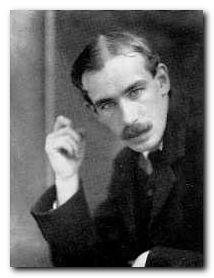
And look at the actual men, when they were young. Here’s Keynes:
And here’s Hayek:
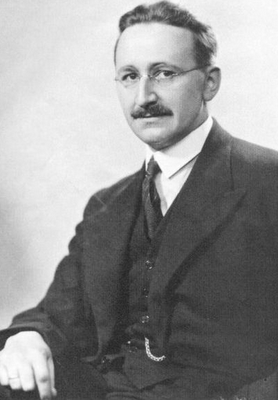
Pretty good likenesses, no?

Remember this clever video on Keynes and Hayek’s theories? Look at the actors in it:
And look at the actual men, when they were young. Here’s Keynes:
And here’s Hayek:
Pretty good likenesses, no?
This WSJ piece and this one from RealClearMarkets both comment on the fact that the bills have come due for the welfare state. This is most readily apparent in Europe, a part of the world that has pursued the cradle-to-grave comforts of the system most relentlessly. Obama, Pelosi, and Reid are a day late and more than a dollar short.
If you weren’t around during the fifties and sixties, perhaps you’ve never heard of Julie London. But she was one of the most beautiful—and sexiest—singers ever. So here, since we all need a little relief from the cares of the day, I invite you to sway with Julie:
Compare and contrast with this roughly contemporaneous version by Rosemary Clooney. It’s not bad, but to my mind it can’t compare:
Clooney is talking about dancing. But London seems to be talking about quite a bit more.
Here’s the beauteous London on the special quality of her own singing:
It’s only a thimbleful of a voice, and I have to use it close to the microphone. But it is a kind of oversmoked voice, and it automatically sounds intimate.
I don’t think it was quite as automatic as that.
Why was Amy Bishop not apprehended and incarcerated long ago? Or, at the very least, forced to have an encounter with the mental health system?
If this report is true (and I’d like to see a link to the additional police records to which it refers), new facts have been uncovered about her behavior after leaving the house in the 1986 shooting of her brother that make it even more shocking that she was never charged with a crime. Talk about the proverbial smoking gun:
Bishop had fled with the gun, and two officers tracked her down outside a car dealership near her home. As one officer asked Bishop to put the gun down, a second officer, using a truck as cover, moved within about 5 feet of Bishop.
“I drew my service revolver and yelled three times drop the rifle,” Officer Timothy Murphy wrote. “After the third time she did.”
Police examined the shotgun and found it loaded with a 12-gauge round. A second round was discovered in her pocket.
She didn’t drop the rifle immediately? She had more rounds in her pocket?? And there is also a report that she had threatened a worker at the dealership, pointing the shotgun at his chest and demanding a car; the police must have known that as well, because the man said they questioned him.
When combined with is known of the other facts of the 1986 case, these more recent revelations point to a massive coverup; no police force could be that incompetent. Not only was Amy’s 18-year-old brother unserved by the justice system of the Commonwealth of Massachusetts, but her later victims are a direct result of that abject failure as well.
Were there other chances to get Amy along the way? Unfortunately, we do not know enough about the 1993 pipe bomb case to make a judgment. Perhaps the police simply did not have enough evidence to pin that one on anyone. And the fact that Amy was the terror of her Ipswich neighborhood—you know, the sort of person who complains about everything and everybody and becomes its scourge—was not actionable under the law, either. What could they have charged her for: being obnoxious?
But one excellent chance to have gotten Bishop into the criminal justice system was muffed in 2002, when she physically assaulted a woman in an International House of Pancakes. This time, there appears to have been no dispute about the facts, no “accident” excuse was accepted And yet the charges were dismissed, and Bishop was not even required to attend anger management classes, despite a prosecutor’s recommendation (not that this would necessarily have helped, but it would have represented the first and only intervention by the mental health system in Amy’s very obviously troubled and aggressive life).
There is virtually no question that Bishop should have been convicted in 1986 and in 2002. If the records of the 1986 crime had not been “disappeared,” the lesser crime of 2002 might have been taken more seriously. But even without these convictions, it is also surprising that Bishop never was treated by a mental health professional (again, that would not have necessarily made a particle of difference, but there’s a chance it might have). People cannot be forced into the mental health system, even temporarily—unless they have harmed themselves or others, or seriously threatened such harm. Amy Bishop most definitely fit either or both of those categories.
In addition, even at the U. of Alabama there were serious and official questions about her mental health. A group of student complained to the department. A professor on her tenure committee (who wishes to remain anonymous) had reported her as “crazy,” and his complaints reached the associate provost of the university, John Severn. But there was no thought to do anything about it; the context in which Severn was concerned was the university’s defense against a lawsuit filed by Bishop after her tenure denial, in which she alleged (what else?) gender discrimination. The professor didn’t budge; he reiterated his claim to Severn.
Well, now the prescient teacher gets to say “I told you so.” But that must be scant comfort:
No one incident stands out, the professor said, but a series of interactions caused him to think she was “out of touch with reality.” Once, he said, she “went ballistic” when a grant application being filed on her behalf was turned in late. The professor said he avoided Ms. Bishop whenever he saw her, on or off the campus. When he spotted her not long ago at a Barnes & Noble bookstore, he made sure he was out of sight until she had left the store. He even skipped a faculty retreat because he knew she would be there…
When the professor found out on Friday afternoon that there had been a shooting on the campus, he didn’t immediately hear exactly where it happened, who was involved, or whether the shooter was a faculty member, student, or someone from outside the university. Even so, the professor said his first thought was: “Oh my God. I bet it was Amy Bishop.”
Why do I continue to harp on the Bishop case? It points out how profoundly the system failed Bishop’s brother, her family, her neighbors, many people who crossed her path along the way, and her final victims. Why did it take their deaths to call attention to a woman whose acts were screaming for intervention her entire adult life?
We think Bishop’s story began with the Braintree coverup—but for all we know, there were earlier incidents. We think we know the steps along the way—but for all we know, there were other victims at other times. Why did it have to get to the point of blowing away three more people and seriously wounding three others before this woman was recognized as a danger to the entire community? There was no one to put all the facts together and see the big picture until it was much too late.
[NOTE: On reflection, it is difficult to escape the thought that at least part of the reason Bishop was not taken seriously enough was that she is a woman. While there is no question that women are much less likely than men to be murderers, there is also no question that a significant number of them are (see this and this), and that this particular woman exhibited clear signs of extreme dangerousness that were ignored.]
Sometimes I think I should have an entire category entitled: “Not the Onion.
This would fit right in:
In March, 2002, Bishop walked into an International House of Pancakes in Peabody with her family, asked for a booster seat for one of her children, and learned the last seat had gone to another mother.
Bishop, according to a police report, strode over to the other woman, demanded the seat and launched into a profanity-laced rant.
When the woman would not give the seat up, Bishop punched her in the head, all the while yelling “I am Dr. Amy Bishop.”
Bishop received probation and prosecutors recommended that she be sent to anger management classes, though it is unclear from court documents whether a judge ever sent her there.
The woman, identified in court documents as Michelle Gjika, declined to comment, saying only “It’s not something I want to relive.”
Little did Gjika know she got off easy.
Amy Bishop was a walking time bomb, and no one connected the dots.
[Hat tip: Gabriel Malor at Ace.]
[ADDENDUM: More. Much more. (Hat tip: PA Cat.)]
This hardly sounds like news:
White House officials are retooling the administration’s communications strategy to produce faster responses to political adversaries, a more disciplined focus on President Obama’s call for “change” in Washington and an increasingly selective use of the president’s time…
“It was clear that too often we didn’t have the ball — Congress had the ball in terms of driving the message,” communications director Dan Pfeiffer said. “In 2010, the president will constantly be doing high-profile things to be the person driving the narrative.”
Senior White House aides described the changes as an aggressive response, aimed at producing fresh momentum for the president’s faltering agenda…
Big yawn; sounds like the same old same old. Do Obama and his advisers really believe this will work when it has not worked before? Do they really think more “aggressiveness” and more blah-blah-blah is likely to hide the twin facts of Obama’s inaction on things the public cares about, and misguided bulldog-like action on things the public doesn’t want?
[NOTE: It may be time to revisit—once again—this reflection on Obama’s devotion to words over substance.]
In an excellent development, the Taliban’s top military commander has been captured in Pakistan:
Mullah Abdul Ghani Baradar, the group’s No. 2 leader behind Afghan Taliban founder Mullah Mohammad Omar and a close associate of Osama bin Laden, was captured in the southern Pakistani port city of Karachi, two Pakistani intelligence officers and a senior U.S. official said.
The NY Times reports that it was a joint operation involving Pakistani and American intelligence forces, and that Baradar has already been interrogated for several days by both Pakistani and American interrogators, with the Pakistanis taking the lead.
There are a great many unknowns about the Baradar capture. Why have the Pakastanis suddenly decided to cooperate in cracking down on the Taliban? Apparently they could have apprehended this guy some time ago. How will this affect the Afghan war? What will happen to Baradar after his interrogation? Will he stay in Pakistan? And if he were to come here, would he end up facing a civilian trial like KSM (although Obama may be backtracking on that last point, even for KSM)?
The Times adds what knowledgeable readers could already have figured out:
The conditions of the questioning are unclear. In its first week in office, the Obama administration banned harsh interrogations like waterboarding by Americans, but the Pakistanis have long been known to subject prisoners to brutal questioning.
This is the strange reality of our split personality on the issue of “brutal questioning”—otherwise known as coercion or even torture, depending on the method, who is speaking, and who is performing the activity. If it’s the left speaking about Americans under the Bush administration’s aegis doing the interrogating, the definition of torture is fairly inclusive. But if we allow the Pakistanis to do it, the reviews from liberals and/or the left have been more mixed—not so much on the definition of torture (we rarely learn very much about what the Pakistanis actually do, but one can imagine it’s a good deal worse than waterboarding), but on whether it is permissible to let others do it for us.
For example, Spencer Ackerman takes a hard line on torture no matter who performs it, writing:
The ultimate point of fighting the Taliban is to compel them to give up fighting and accept some version of a post-Taliban order in Afghanistan. Torturing Baradar ”” which the Pakistanis have been known to do ”” is counterproductive to that effort. If we treat the guy respectfully, in a demonstrated way, it might spur a reconsideration of Taliban goals. I am not counting any chickens, but any hope of a game-changing possibility will be foreclosed upon if we or our allies torture Baradar.
Ackerman seems to be making a strategic rather than a moral argument against torture. His assertion is that, if both Americans and Pakistanis refrain from torturing Baradar, there is a good chance that it will result in the Taliban seeing the light and changing their goals. This argument not only ignores a host of important questions (the moral issues, the question of whether torture actually helps in gaining useful information that could prevent future attacks), but it makes the following extremely suspect assumption, common on the left: that the Taliban share our enlightenment attitudes and would experience some sort of conversion “aha!” moment on hearing of our good treatment of prisoners, rather than feeling nothing but contempt for what they would perceive as our softness and stupidity.
The Pakistanis live in what you might call a rough neighborhood. The Taliban have long proven their own harshness as well. Our long domestic argument about the morality and efficacy of torture against terrorists has only been possible because we live in a kinder, gentler neighborhood. But it is a mistake to project our own thinking onto the Taliban, and deeply naive to imagine that they will be so impressed by our warmhearted compassionate non-torturing restraint that they will suddenly change their ways and reconsider their entire project.
Visionary poetbot:
“They are the builders of the next generation. To what extent the work will grow should depend on the creativity they are dare to show.”
As with all such shootings, the mass murder at the University of Alabama, Huntsville is shocking and disturbing. But it has some uniquely shocking factors.
The U of A shooting appeared at first to follow a common pattern of workplace mass murder: revenge for a job lost or denied, or slights from fellow workers. But from the start it also had two factors that were extremely unusual: the perpetrator, Amy Bishop, was both a female and a professor.
Workplace mass murderers tend to overwhelmingly to be men, disgruntled employees fired and down on their luck. Female mass murderers are not only less common, but when they occur their focus is generally domestic. But there was some precedent for Bishop’s act: the case of Jennifer San Marco, a female former postal employee and workplace murderer who had a history of prior mental problems
Speaking of prior problems—the U of A case quickly became even more shocking when it was disclosed that perpetrator Amy Bishop had shot and killed her 18-year-old younger brother, an aspiring violinist, twenty-three years ago in their family home in Braintree Massachusetts. That case was ruled an accident and dismissed under mysterious and poorly-explained circumstances, with rumors of a police cover-up, perhaps because of Amy’s mother’s position on a police personnel committee.
As if that weren’t enough, news subsequently emerged of another case in which Bishop was a suspect: in 1993, a pipe bomb was mailed to a work colleague of hers by an unknown assailant, and Bishop fell under suspicion because she had feared a negative evaluation by him. The bomb never exploded, and there was not enough evidence to convict her, but the case is chillingly similar to the recent shootings in terms of possible motive.
It begins to appear that Ms. Bishop was hardly the cool and cerebral scientist and suburban mother of four who suddenly snapped in the face of work pressure. It is difficult to escape the notion that she is not only a recent mass murderer but also a long-time serial killer, and that her victims include the categories of both domestic and workplace. This would make her one of the most versatile killers around—as well as one of the strangest—who benefited greatly in the past from police corruption and/or incompetence.
It’s hard to know which of the two was operating most powerfully in the long-ago Braintree slaying. The facts as described in the police report (please read) make little sense on their face, and ought to have aroused suspicion (other records in the case seem to have mysteriously disappeared long ago). Here’s a summary of the police report:
According to the investigation report, after Amy and her father had a disagreement, he left for a shopping trip and she went to her room. Amy decided to go to her parents’ room to teach herself to load the shotgun the family had acquired the previous year for protection after a break-in. She succeeded but could not remove the shells, and the gun fired in the bedroom. Amy then went downstairs to ask for help unloading it and inadvertently shot her brother while her mother watched, according to the report.
Their stories to the detectives contained some discrepancies. Amy’s mother said Amy asked her for help unloading the gun; she told Amy to be careful where she pointed it, and that Amy turned and accidentally shot her brother. Her mother said she screamed and called the police, as Amy ran out of the house.
Amy said she asked her brother, not her mother, for help unloading the gun, and that she was pointing it beside her leg for safety. She said her brother told her to point it up instead. As he walked across the kitchen floor, someone said something, and Amy turned and the gun went off.
There are so many problems here that it’s hard to know where to begin. But let’s start with this one: does it seem like normal and innocent behavior to practice loading a shotgun you’re unfamiliar with right after having a quarrel with your father? Then, if the gun goes off accidentally in an upstairs bedroom while you’re trying to unload it, does it seem like normal and innocent behavior to take the gun down with you into the kitchen where your mother and brother are in order to let them know what’s happening and get their help?
No, of course not. You would know that it is courting disaster for a novice to fool around with a gun alone; a qualified person should be present for careful instruction. You would know that, after the first accidental discharge, you should put that thing down immediately and leave it upstairs, because you had already received a very clear demonstration of its dangerousness in your very untrained hands.
The report contains an additional strange vignette: Amy reported that as the gun went off and she heard her brother say “oh, no” and her mother scream, Amy then ran out of the house without realizing that her brother had been shot. This is also highly implausible, even in an accidental shooting as described. Yes, the perpetrator might run out of the house in fear, but only after seeing that he/she had shot someone. Amy reports she fled because she thought she might have damaged the kitchen—but if so, why not look? Why would she not turn around when she heard her mother scream?
As written, the report makes it very clear that the police were relying on the eyewitness testimony of the mother of both victim and perpetrator, who labeled it an accident. That was the supposed reason why they did not investigate further. But given the facts of the case, this seems either remarkably naive, or evidence of the fact that the fix was in. The police took the mother’s word that she did not hear a shotgun firing upstairs in her own house while she was present? And they didn’t even bother to test out the gun to see if this was a reasonable statement?
The report also fails to mention the specific type of shotgun used, an omission that seems highly unusual, as well. I am quite ignorant about technical issues involving guns, but the police should not be. Note as well the following comment at Volokh:
Pump-action shotguns cannot be fired accidentally more than one time. They are not automatic, meaning they do not pump (expel a spent shell and load a new, live shell) by themselves…The trigger did not go off without being pulled with significant force. Unless it was specifically altered, the trigger force was at least 5 and usually 6.5 pounds. Brushing it, jostling the gun, etc. does not make a shotgun go off. You must pull the trigger, hard…The gun did not go off until someone took the safety off. All widely-available shotguns, unless modified, have safeties. None are designed so that the safety can be taken off accidentally.
See also this:
I like how the “investigators” make no mention of physical evidence. You know like the kind, make and caliber of the shotgun, the spent shells and their location, the nature of the prior discharge in her room, the distance from which the victim was shot and whether that corresponded with the statements, etc. No, just mom’s word and they were off to catch some speeders
Speaking of mom’s word, see this:
I’m sure that the defense attorneys here will be thrilled to learn that “my mom said I’m innocent” is now considered probative.
Good point; it should hardly have been enough. But when the exonerating mother of the perpetrator is also the mother of the victim, perhaps her word might be more easily believed. At any rate, it should not be sufficient. However, here the police made no effort to build an independent case, despite the fact that the description of the witnesses just did not make sense.
In the light of all that has happened since, it is interesting to note that, on the last page of the Braintree police report, Amy Bishop seems to be describing having something like a dissociative experience when she says she did not see her brother or remember anything about putting on her jacket or going outside with the gun. It’s difficult to know whether she is being disingenuous; perhaps she is. But perhaps not. It is certainly possible for a perpetrator to split off psychologically from his/her own aggressive actions and deny the crime ever happened. This should not absolve perpetrators of legal responsibility for their killings—but it is a psychologically protective mechanism by which they internally and externally deny their own overwhelming guilt.
It is possible that this sort of splitting and denial is another of Amy’s patterns. After the U of A killings, she is reported to have said the following:
Bishop was calm as she got into a police car Friday, denying that the shootings occurred. “It didn’t happen. There’s no way. … They are still alive.”
It is easy to say that Amy Bishop is just a cold-blooded liar, since she is certainly a cold-blooded killer. But it is not unbelievable to think that her psychological splitting is real, and that she is able to block off the memories of what she has done, although this fact should not reflect on her guilt and subsequent punishment.
[NOTE: In this article, relatives of the U of A shooting victims question—and understandably so—how it was that Bishop was ever hired to teach with such a record. The problem is that her record, although extremely suspicious, did not include any charges or arrests. Therefore there was nothing in her past that she would ordinarily have had to disclose in the usual questionnaire.
Perhaps hiring committees should do exhaustive Google searches of all candidates. Perhaps some of them already do.]
[ADDENDUM: Here are two contemporaneous news stories about the original Braintree killing. You can see that they differ in some small details from the police report.]
Does anyone think that Indiana Senator (D) Evan Bayh would be retiring from Congress but for the current internecine and anti-incumbent atmosphere? Bayh says it’s not because he doubts that he could be re-elected, and polls back that up (he has a double-digit lead over the Republican likely to run against him):
My decision was not motivated by political concern. Even in the current challenging environment, I am confident in my prospects for re-election. At this time I simply believe I can best contribute to society in another way: creating jobs by helping grow a business, helping guide an institution of higher learning or helping run a worthy charitable endeavor.
Bayh also said about his fellow Democrats, in an interview last month after Scott Brown’s election:
There’s going to be a tendency on the part of our people to be in denial about all this…[But] if you lose Massachusetts and that’s not a wake-up call, there’s no hope of waking up.
Perhaps Bayh was tired of caucusing with the sleepers in his own party. Maybe he was tired of the arm-twisting. Or perhaps he was just tired—with a sweeter deal waiting in the wings.
One would think so, after these startling admissions from Climategate player Phil Jones.
Let’s see: the dog ate his hockey-stick data in 1988. His record-keeping in general is “not as good as it should be.” There has been no statistically significant global warming for the last fifteen years. And perhaps in the Medieval Warm Period it was as warm on a global scale as today.
But no; AGW still stands. It’s hard to escape the notion that at this point such belief is mostly faith-based:
[The BBC’s environmental analyst] Mr Harrabin told Radio 4’s Today programme that, despite the controversies, there still appeared to be no fundamental flaws in the majority scientific view that climate change was largely man-made.
To their credit, the British press has been all over this from the start (here’s more). But it’s hardly a local story, although Jones and many others are based in Britain. It’s global. What’s up with the crickets in our MSM?
And I would still dearly love to know who leaked those original emails. That person is a world-class hero.
[ADDENDUM: More here.]
[NOTE: In honor of Valentine’s Day, a repeat of a previous post. Happy Valentine’s Day to all!]
Wendy Hill, a psychology professor at Lafayette College, is interested in kissing—the science of it, that is. Her research found that kissing (of the romantic variety) has a measurable effect on certain hormones:
[Hill’s team] found that kissing reduced the levels of cortisol, a stress hormone, in both sexes. But levels of oxytocin, a hormone linked to social bonding that they expected to be boosted by kissing, only rose among the men.
For women, a romantic atmosphere (dimmed lights, mood music) helped raised their oxytocin to the level of the men’s. Ah, women. So very demanding! Especially on Valentines Day—which happens to be today, folks.
And then there’s chocolate:
In 2007 British scientists measured the brain and heart activity sparked by passionate kissing, but found it was less intense that the stimulation produced by eating chocolate.
Speaking of mood music, and kissing:
[ADDENDUM: The recession is romantic—who knew? And kissing is even more widespread than one might think; it’s practiced by 90% of societies.]