↓
 

The New Neo

A blog about political change, among other things

  • Home
  • Bio
  • Email
Home » Page 1493 << 1 2 … 1,491 1,492 1,493 1,494 1,495 … 1,933 1,934 >>

Post navigation

← Previous Post
Next Post→

Obama’s interim appointment

The New Neo Posted on January 5, 2012 by neoJanuary 5, 2012

In a move that should hardly surprise anyone, Obama has circumvented the power of Republicans in Congress by appointing Richard Cordray as head of the new Consumer Financial Protection Bureau. It’s been clear for a long time that the fight has been escalating; Republicans are determined to wring concessions about the structure of the Bureau by blocking the appointment of anyone for that job, and Obama is just as determined to get around them by hook or by crook.

Jonathan Chait explains just how evil the Republicans are and why Obama is one smart and wonderful cookie to have done what he did. Investors Business Daily claims that Obama is acting more like a king than a president, and that “ruling” is what he had in mind all the time.

From Chait:

Fights between Congress and the president over presidential appointments have gone on for decades. But Senate Republicans have taken the fight to a new level by using the power to deny appointments to require changes in the laws. The Dodd”“Frank financial reform established the C.F.R.B., but Wall Street hates it, and Republicans openly vowed not to confirm any director unless Obama agreed to weaken the law.

This is an entirely new use of congressional power to block appointments. The normally mild-mannered James Fallows has called this “nullification,” and Republicans have begun using it to paralyze large swaths of the government. The normal presidential recourse against hardened opposition to an executive branch nominee is to make the appointment when Congress is out of session, but Republicans closed off that avenue as well, by holding pro forma sessions year-round. If it held up, this would give Congress enormous power over the president ”“ allowing it to unilaterally halt any agency it likes in return for any demand at all. They have likewise refused to confirm any directors at all to the National Labor Relations Board, denying the agency a quorum and essentially halting the enforcement of federal labor law.

So Obama tried the audacious and legally indeterminate move of simply declaring the pro-forma session a sham, insisting Congress really was on recess, and appointing his man.

From IBD:

A little more than three years after Jarrett declared Obama’s majesty, his spokesman Jay Carney warned on the day of the Iowa caucuses that “if Republicans choose the path of obstruction rather than cooperation, then the president is not going to sit here . .. he’s going to take the actions that he can take using his executive authority.”

Within a day, Obama made good on the threat. On Wednesday, he bypassed the congressional approval process and named Richard Cordray as head of the new Consumer Financial Protection Bureau. The appointment, made while the Senate is in a pro forma session and not in recess, came after that chamber blocked Cordray’s confirmation last month.

Not only is Obama trampling precedent that says recess appointments are to be done only after the Senate has been out of session for 10 days or more, he’s also trying to circumvent legislation.

As noted by Mark Calabria of the Cato Institute, the Dodd-Frank bill that created the Consumer Financial Protection Bureau requires the CFPB’s authority to remain with the Treasury secretary until the CFPB director is “confirmed by the Senate.” Cordray still lacks that confirmation.

In a case like this, I’m not sure what Congress can do to stop Obama. But the usual recourse in these fights between executive and legislative branches (and although the details may be different, this is hardly the first time) is the judiciary. And that’s where this may all end up:

The U.S. Chamber of Commerce has not decided whether it will file a legal challenge to the appointments, according to David Hirschmann, who heads the Chamber’s Center for Capital Markets Competitiveness. But he said he’s confident that Obama’s precedent-shattering move will land the administration in court.

Those who don’t mind Obama’s re-election might reflect on how this sort of thing could play out in the four years of Obama II.

[ADDENDUM: Professor William Jacobson of Legal Insurrection has more to say on this.]
Posted in Obama, Politics | 20 Replies

Is it in the bag for Romney?

The New Neo Posted on January 5, 2012 by neoJune 7, 2012

There are so many articles floating around lately saying “Romney has the nomination all sewed up” that there’s hardly any need to link to them; if you do much reading about politics, you’ve already seen plenty (but, for the sake of example, here’s one and here’s another).

Some are from the left and some from the right, but the gist of them is that the fat lady is singing and Republicans may as well just close their eyes and think of England—or, in this case, America (and by the way, Queen Victoria got a bad rap on that one).

You won’t see me saying the same thing, however. Of course, if I were forced to bet money right now on the identity of the Republican nominee, I’d place it on Romney. He’s most likely—but hardly inevitable.

Iowa means little. It’s always been an atypical race, and New Hampshire isn’t far behind in its lack of representativeness, although in a very different way from Iowa (far fewer evangelicals, far less social conservatism, “maverick” qualities and small sample). But in the most recent data I can find from South Carolina, Gingrich leads Romney by a considerable amount. To a lesser extent, the same is true of Florida. Do they not matter?

But none of this is as persuasive in my mind as the simple fact that, if enough of the more conservative candidates were to drop out of the race and leave one strong “true conservative” candidate standing, the entire picture could change dramatically if this were done early enough. Romney’s support remains low in terms of percentage of the whole, and although it is likely that at least some of Gingrich’s and Santorum’s and Perry’s supporters (note that I omit Paul’s fanatically devoted followers) would go to Romney, my guess is that a greater number would go to the last non-Romney standing.

If may not happen that way, of course. For example, maybe no one will drop out except Bachmann, who’s already done so. Or maybe all their votes would go to Romney if they do.

But I don’t think the oft-repeated notion that because Romney has the most money he’ll be the inevitable vote-winner is correct. Money can help, but it can’t overcome much of the sort of antipathy many Republicans have towards Romney—and the most activist Republicans at that, who are most likely to take part in primaries.

This has nothing to do with my own personal preferences for nominee. As readers of this blog already know, I’m not averse to Romney or to his nomination, and at the moment he has a slight (emphasis on the slight) edge over the other candidates for me. But I’ve never seen him as the least bit inevitable, with his support levels holding steady in the 20s, and the degree of distrust for him so high.

[NOTE: I do not agree with Rush Limbaugh, however, that Obama and advisers would prefer Romney as candidate because they think he’s the weakest of the bunch. I believe that Obama is licking his chops at the entire field because all have significant weaknesses he could exploit.]

Posted in Election 2012, Romney | 11 Replies

America the fat

The New Neo Posted on January 4, 2012 by neoJanuary 4, 2012

In a piece entitled, “Why we’re getting fatter—and what to do about it,” David Frum does a good job on the first part:

The problem for the country echoes the problem for individuals: Willpower is not enough. “(It’s a) basic instinct, even stronger than the sexual instinct, to store calories to survive the next period of starvation. And we live in an environment where there’s food every half mile. It’s tasty, cheap, convenient, and you can eat it with one hand.”…Weight gain is driven by two trends: increases in calories consumed and decrease in calories expended. Modern America induces both.

But then there’s that second part—“what to do about it”:

If you as an individual want to change your weight, you must change your whole life. Likewise, to reduce obesity in modern society, we will have to alter the way society is organized…It’s no small project. It would involve the redesign of cities, the relocation of schools, the reinvention of our modes of eating and amusement…[I]f we are to succeed, we should understand: The campaign against obesity will have to look a lot less like the campaign against smoking (which involves just one decision, to smoke or not to smoke) and much more like the generation-long campaign against highway fatalities, which required the redesign of cars, the redesign of highways, and changes in personal behavior like seat-belt use and drunk driving.

Nanny state, anyone?

Posted in Health | 69 Replies

Iowa: Santorum’s day to shine

The New Neo Posted on January 4, 2012 by neoJanuary 4, 2012

Commenter Wolla Dalbo points out that the Iowa results indicate that Romney remains not all that popular with voters.

Absolutely true, and increased familiarity hasn’t seemed to change that situation.

But I’m not sure it matters this time round for one reason: none of the other candidates are all that popular, either, and their negatives are (if possible) even stronger.

Take Santorum, who virtually tied Romney in Iowa. He appeals strongly to social conservatives, of whom there are many there. But it’s likely his candidacy will go the way of Huckabee’s before him. Iowa is not a particularly good prognosticator of ultimate victory, and Santorum hasn’t yet fallen under the scrutiny he’ll receive now that he’s in double digits. Part of the strength of his Iowa showing has to do with Iowa demographics, and part of it is his status as the latest candidate du jour.

A problem in this GOP race is that the large number of candidates has made it difficult for a frontrunner to emerge. Difficult, but hardly impossible. If one of them stood head and shoulders above the rest in that desirable combination of experience, policy, intelligence, charisma, and leadership that spells “winner,” he/she would probably have a majority of Republican votes by now despite the size of the field. That hasn’t happened, and the only way it will start happening, IMHO, is when more of the lesser candidates start dropping out of the race for lack of money. I still think that person won’t be Santorum.

Posted in Election 2012 | 23 Replies

Somehow I doubt…

The New Neo Posted on January 4, 2012 by neoJanuary 4, 2012

…that this particular endorsement will help Romney.

Maybe McCain still holds a grudge against him.

And despite the Iowa results, I don’t get this type of “Mitt Romney has it all sewed up” article. Premature, to say the least.

And I don’t think it’s just the writer trying to influence voters to believe it. In the primaries, people want to express themselves, and they’re just as likely to feel defiant and want to do the opposite of what’s predicted as to go along with the prognostications.

In other news: Bachmann’s out. Which at this point is both anticlimatic and a good idea; now the field can begin to coalesce around the stronger candidates.

Whoever they are this week.

Posted in Election 2012 | 11 Replies

Iowa: the selection process begins

The New Neo Posted on January 3, 2012 by neoJanuary 3, 2012

The 2012 election has been a long—almost interminable—time coming. But the Iowa caucuses have arrived today. Your thoughts?

Posted in Uncategorized | 33 Replies

Easy for you to say

The New Neo Posted on January 3, 2012 by neoJanuary 3, 2012

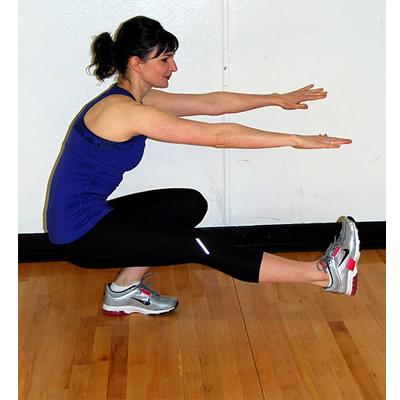
This photo was accompanied by a caption that began, “One-legged squats don’t seem very tricky…”

Say what?

Posted in Health | 20 Replies

Gingrich v Romney: lies and the lying liars…

The New Neo Posted on January 3, 2012 by neoJune 7, 2012

Let’s get one thing straight: to be a politician is to lie sometimes, or at the very least to tell half truths and/or shade the truth when it’s strategic to do so.

And sometimes—as today, when Newt Gingrich called Romney a liar—those who call others “liar, liar, pants on fire” are lying themselves (or telling half-truths, or shading the truth) in the very act of accusation.

For example, after calling Romney a liar, Newt added, by way of explanation:

Well, I’ll let you go and check [Romney’s] record, Bob. Look, you’re a professional reporter. Did he support Reagan in the ’80s or not? The answer is no. Did he vote as a Democrat for Paul Tsongas in ’92 or not? The answer is, yes, he did. Did he say that he didn’t want to go back to the Reagan-Bush years in ’94? Yes, he did. Did he run to the left of Teddy Kennedy? Yes he did. Now, why is it politically incorrect to tell the truth?

Well, my name isn’t “Bob,” and I’m not a professional reporter, but I took Gingrich up on his invitation to check the record anyway.

Gingrich’s assertion that Romney did not support Reagan in the 80s—when Romney was a private citizen in business—appears to rest on a single statement Romney made during his 1994 debate against uber-liberal Ted Kennedy in uber-liberal Massachusetts for the Senate seat Kennedy had held for decades. Romney tried to deflect Kennedy’s criticism of certain Reagan polities by saying, “I was an independent during that time of Reagan-Bush. I’m not trying to return to Reagan-Bush.”

Note that Romney says nothing about whether or not he actually supported, or voted for, Reagan in the 80s. He merely speaks of his Independent registration and his reluctance to return Massachusetts to the Reagan-Bush years, a typical politician’s dodge to try to avoid a knotty problem: how to appeal to liberal Massachusetts voters as a Republican without being branded as that horror of horrors (to the majority of Massaschusetts voters anyway), a Ronald Reagan wannabe. The answer was to distance himself as best he could. Whether he actually supported Reagan or not in the 80s we simply do not know.

On to Gingrich’s next assertion. Here’s what I found about Romney’s vote for Tsongas—whom, by the way, I remember well, having supported him in 1992, and who remains one of my favorite politicians of all time and was a person who was far enough to the right that he’d be drummed out of today’s Democratic Party. Romney offers two stories, both of which feature him crossing over as a registered Independent to vote for Tsongas in the 1992 Democratic primary in Massachusetts and then voting for George H.W. Bush in the general election.

So no, Romney did not “vote as a Democrat” for Tsongas; he voted as an Independent in the Democratic primary, and then voted for Republican Bush in the general. Romney’s explanations for this decision are as follows: (a) he wanted to support Tsongas over Clinton because the former was a Massachusetts native son and a candidate Romney liked better than Clinton, always intending to vote for Bush in the general; and (b) Romney thought Tsongas a weaker candidate in the general, less likely to beat Bush, whom he favored in the general.

This sort of strategy is performed all the time in crossover states such as Massachusetts, where Independents are allowed the freedom to vote in either primary. Since in 1992 the Republican primary was uncontested—the incumbent Bush was going to be nominated—Romney’s actions make sense and are not evidence of closet liberalism, whichever way you interpret them.

Now let’s tackle Gingrich’s statement that Romney ran “to the left of Teddy Kennedy.” Gingrich knows, of course, that in order to have a chance of winning in Massachusetts at all, Romney had to throw off the conservative label and color his positions in the most liberal possible light. I’ve studied that 1994 campaign and listened to several segments from their debates, and I see no justification for Gingrich’s statement. There’s no question that on some issues Romney tried to position himself not too far to the right, and not too far to Kennedy’s right. But to the left of Kennedy? That is, at least as far as I can see, a—lie.

Now, maybe you don’t think someone who is not completely conservative on all issues, and/or who was not always conservative on all issues—someone who’s changed and become more conservative, as Romney says he has—should be nominated or even elected president, even if the alternative is Obama. Maybe you think no one who’s ever campaigned for office in a liberal state against a liberal, and who therefore had to present himself as not-so-conservative in order to have a chance of winning, is too hypocritical for you to support, even if the alternative is Obama (although if hypocrisy disqualifies a candidate for you, you better sit out virtually every election). Maybe you think that no one who’s ever won office in a liberal state and had to compromise with a liberal legislature and its veto threat is someone you could vote for, even if the alternative is Obama. Maybe you just don’t trust Romney, then or now, because of all of this.

As I’ve said many times before, I’m not trying to talk anyone into liking Romney. I’m not too keen on him myself; I would have preferred any number of other candidates who unfortunately are not running. But if you don’t like him, at least dislike him for the right reasons, not for distortions of his record.

Posted in Election 2012, Liberals and conservatives; left and right, Romney | 31 Replies

Obama’s second term

The New Neo Posted on January 2, 2012 by neoMay 25, 2015

Commenter “foxmarks” writes:

Barry can’t really be a -100. He has studiously continued many of GWB’s policies (cf: FICA tax holiday, GITMO, drone strikes). Barry’s rhetoric is a -100, but as the Progs fairly argue, he has governed as a moderate Republican. His laziness has led me to no longer fear a 2nd term. Obamacare will either lead to my desired systemic correction or be overturned by the Supremes. I have zero faith that Congress will repeal and replace with anything that honors individual liberty and market-based pricing. I don’t want mere repeal, I want a catastrophic defeat at the hands of economic reality or legal principle.

Foxmarks is not alone; I’ve noticed a growing number of people in the blogosphere saying some version of the above. I’m working on a larger article discussing the danger of the idea that it’s more desirable to strive for a catastrophic event that will lead to something revolutionary (and which its advocates think they will be able to control) rather than a gradual step-by-step redressing of the problems. But that’s not this post. Here I’m going to deal with the idea that Obama would continue to govern as a “moderate Republican” in a second term.

Obama is a politician, and although he’s no genius he’s a smart man, smart enough to have been at least somewhat strategic in his decisions during his first term. Unless you think he really is a moderate Republican in his secret heart, there is no reason to suppose he will govern moderately in his second term, when he will no longer have any need to appeal to independents in order to be re-elected.

It is logical to assume that he will see his second term as an opportunity—perhaps his last—to accomplish what he could not in his first. That can be done not only by legislative means but by executive fiat. His power to veto the legislation passed by a most-likely-Republican Congress that will almost certainly not have the numbers to override him will remain intact, and he will exercise it. He will be setting foreign policy and appointing Cabinet members and czars, and they will be setting domestic policy as well.

And, of course, he will most likely be appointing one or several liberal Supreme Court justices, who will remain in office for life.

It makes no sense to assume that Obama will be too lazy to exercise these prerogatives in a second term when the opportunity presents itself. I have little doubt that he still adheres to a left-wing ideology, and has merely been thwarted in achieving most of what he desired in his first term (although Obamacare was a fine start). A second term will present a golden opportunity.

Posted in Election 2012, Liberals and conservatives; left and right, Obama | 56 Replies

Pay no attention to that debt behind the curtain

The New Neo Posted on January 2, 2012 by neoJanuary 2, 2012

Regular readers of this blog know that economics is not my field of expertise, although I’m familiar enough with the subject to know that common sense doesn’t get a person very far, and that there’s a great deal of argument among so-called experts about what should be done in the current economy.

I also know that Paul Krugman is a disingenuous, self-serving egomaniac. How do I know that? Not from reading his economics posts, but from a lengthy bit of research I did in 2003, a year or so before I became a blogger, on the subject of Krugman’s explanation of and apologia for the anti-Semitism of Mahathir Mohamad of Malaysia (I recall that he wrote a subsequent column on the brouhaha as well, and for some reason I can’t locate it right now). Coming to that conclusion didn’t take any knowledge of economics at all—just research, reading comprehension, and logic.

I could write a very long paper on what my research uncovered, but that’s not the point of this post. For now, suffice to say that I started out having no particular opinion about Krugman except that I knew he’d won a Nobel for economics, and had written some popular books on the subject that I’d heard were pretty fair and fairly good. But when I delved into the story behind Mahathir’s remarks, the more I learned the more I was stunned to discover that Krugman had misrepresented nearly everything about them except the actual quote. For example, Krugman said that Mahathir was using the remarks to shore up his domestic flank, but it turns out that Mathahir was actually retiring from politics. Krugman also failed to mention Mahathir’s lengthy history of anti-Semitism, and Krugman’s deeply entwined relationship with Mathahir and Malaysia.

There was more—much more. But the point was that, on a subject that was much more accessible to me than economics, many hours of research convinced me that Paul Krugman was a man who played fast and loose with the truth, and who would double down on his misrepresentations when accused and challenged. That hardly makes him unique, but it does make him suspect.

Which brings us to the subject of today’s post—Krugman and the debt. I would not be paying attention to Krugman except for the fact that, when he writes about economics, he still has clout and influence (including among certain people whose intelligence I respect, and who know more about economics than I do).

I have my usual difficulty evaluating what he’s saying about the economy vs. what his critics write about what he’s saying. Case in point: this recent column of Krugman’s. Cut away all the gratuitous and mean-spirited slams (Krugman’s trademark) at conservatives and you get this kernel:

…U.S. debt is, to a large extent, money we owe to ourselves.

This was clearly true of the debt incurred to win World War II. Taxpayers were on the hook for a debt that was significantly bigger, as a percentage of G.D.P., than debt today; but that debt was also owned by taxpayers, such as all the people who bought savings bonds. So the debt didn’t make postwar America poorer. In particular, the debt didn’t prevent the postwar generation from experiencing the biggest rise in incomes and living standards in our nation’s history.

But isn’t this time different? Not as much as you think.

It’s true that foreigners now hold large claims on the United States, including a fair amount of government debt. But every dollar’s worth of foreign claims on America is matched by 89 cents’ worth of U.S. claims on foreigners. And because foreigners tend to put their U.S. investments into safe, low-yield assets, America actually earns more from its assets abroad than it pays to foreign investors. If your image is of a nation that’s already deep in hock to the Chinese, you’ve been misinformed. Nor are we heading rapidly in that direction.

When I read that, I thought it made no sense on the face of it. How can Krugman compare debt owed by government to debt owed to private US companies abroad (which is what he appears to be doing)? I’m certainly not the only one raising this question. A commenter named “SteveinCH” remarks, in response to a post by Owen Gray at The Moderate Voice about Krugman’s column:

And here we have a great example of why Paul Krugman is so dangerous to the US economy. I first saw a version of the argument that Owen links to over the holidays. Although I hate linking to Krugman, the link can be found below.

Now, why is this such a dangerous argument? Because it massively misrepresents the story and I rather suspect Dr. Krugman knows this to be true. To show you why, let’s refer to the 2010 census data.

http://www.census.gov/compendia/statab/2012/tables/12s1289.pdf

Now, let’s focus on government investment outside the US and foreign government holdings inside the US. The private holdings are not income that accrue to the US government so they are irrelevant for Dr. K’s argument.

US government assets abroad are about $560 billion. Most of that is reserve assets (the stuff that notionally backs our currency). Most of the reserve assets don’t pay interest (things like gold and SDRs). The securities holdings of the US government abroad are less than $100 billion.

Now foreign governments hold $4 trillion of US government securities. Foreign corporations hold another $1 trillion of US securities. So the ratio of instruments the US is paying debt on versus receiving interest on is somewhere between 8 and 50 to 1, nothing like the charts Dr. K uses.

Then again, maybe Dr. K believes public and private assets are the same and money paid to US corporations is actually paid to the government. At least his math would work then but you’d think it might be worth owning up to that assumption.

As to why he’s dangerous, it’s because people like Owen and many others simply link to his work, never understanding how disingenuous he’s actually being.

Here’s another critique of Krugman, this one by an economics professor at George Mason University. It focuses on a different point, but one that also involves public vs. private sector considerations:

When government spends money, resources that would otherwise have been used to produce valuable private-sector outputs are instead used to produce public-sector outputs. The values of these foregone private-sector outputs are a genuine cost of government projects regardless of government’s funding method, regardless of the merits of the government projects, and regardless of the nationalities of government’s creditors. And the private-sector outputs that are never produced because resources are instead used to produce public-sector outputs do not miraculously appear ”“ they are not miraculously ”˜unforegone’ ”“ simply because the obligation to pay for public-sector outputs is deferred to the future or because the holders of the debt instruments are citizens of the same country as the taxpayers.

The argument in the above paragraph isn’t unique: it is elaborated in great detail in many of the works on public finance by another Nobel laureate economist, James Buchanan.* It’s discouraging that Mr. Krugman seems to be unfamiliar with Buchanan’s contributions.

My guess is that Krugman is not unfamiliar with Buchanan’s contributions. My guess is that he disregards everything that does not fit into the message he wants to deliver. In this, again, he is hardly unusual—for a columnist, that is. But Mr. Krugman should finally own up to the fact that he long ago stopped being an economist at all, and morphed into a polemicist in economist’s clothing.

Posted in Finance and economics, People of interest | 21 Replies

Happy New Year!

The New Neo Posted on December 31, 2011 by neoFebruary 26, 2025

Here it comes again, folks, the day it’s obligatory to have a rollicking good time.

Why, I’m not so sure. Perhaps because the passage of the years can be depressing, especially after the age of forty or so. Or perhaps it’s because we have to face learning to write a different number on our checks, just when we’ve finally gotten used to the old one.

And then there’s the drinking. In previous years, I offered this hangover recipe for the day after, even though I (she says smugly) don’t really drink.

As for tonight, I’m not planning much, although I might change my mind at the last minute. That’s the prerogative of age (and iffy weather).

And then there are the ubiquitous resolutions. This year I’ve fastened on a single one: to go to bed earlier. It’s one I’ve focused on before, and obviously had a lot of difficulty keeping, since I’m trying again. I’ve always been a tremendous nightowl, and being a blogger hasn’t helped me any in my (admittedly weak) efforts to change my nightowl proclivities.

So a very HAPPY NEW YEAR to all of you! Are you planning anything fun?

[ADDENDUM: Bumped up.]

Posted in Uncategorized | 21 Replies

All that Jazz apple

The New Neo Posted on December 31, 2011 by neoDecember 31, 2011

I just had one of these. They’re great! Incredibly crisp and with a subtly complex taste, with overtones of pear.

Really.

Posted in Food | 4 Replies

Post navigation

← Previous Post
Next Post→

Your support is appreciated through a one-time or monthly Paypal donation

Please click the link recommended books and search bar for Amazon purchases through neo. I receive a commission from all such purchases.

Archives

Recent Comments

  • Brian E on Open thread 11/7/2026
  • Karmi on Open thread 11/7/2026
  • Mike Plaiss on Open thread 11/7/2026
  • Mike Plaiss on Open thread 11/7/2026
  • neo on My trusty rusty old car

Recent Posts

  • My trusty rusty old car
  • If you don’t vote because you’re tired of voting for the lesser of two evils, you get the greater of two evils
  • On fraud: New Hampshire turns blue with a tiny purple spot
  • Open thread 11/7/2026
  • So, why am I renewing my passport?

Categories

  • A mind is a difficult thing to change: my change story (17)
  • Academia (330)
  • Afghanistan (98)
  • Amazon orders (6)
  • Arts (8)
  • Baseball and sports (164)
  • Best of neo-neocon (91)
  • Biden (536)
  • Blogging and bloggers (599)
  • Dance (292)
  • Disaster (244)
  • Education (328)
  • Election 2012 (360)
  • Election 2016 (566)
  • Election 2018 (33)
  • Election 2020 (513)
  • Election 2022 (114)
  • Election 2024 (403)
  • Election 2026 (124)
  • Election 2028 (14)
  • Evil (130)
  • Fashion and beauty (324)
  • Finance and economics (1,053)
  • Food (319)
  • Friendship (48)
  • Gardening (18)
  • General information about neo (4)
  • Getting philosophical: life, love, the universe (737)
  • Health (1,169)
  • Health care reform (546)
  • Hillary Clinton (184)
  • Historical figures (338)
  • History (718)
  • Immigration (452)
  • Iran (467)
  • Iraq (227)
  • IRS scandal (71)
  • Israel/Palestine (835)
  • Jews (444)
  • Language and grammar (365)
  • Latin America (216)
  • Law (2,997)
  • Leaving the circle: political apostasy (125)
  • Liberals and conservatives; left and right (1,334)
  • Liberty (1,119)
  • Literary leftists (14)
  • Literature and writing (394)
  • Me, myself, and I (1,523)
  • Men and women; marriage and divorce and sex (934)
  • Middle East (385)
  • Military (327)
  • Movies (355)
  • Music (534)
  • Nature (262)
  • Neocons (32)
  • New England (185)
  • Obama (1,740)
  • Pacifism (16)
  • Painting, sculpture, photography (132)
  • Palin (93)
  • Paris and France2 trial (25)
  • People of interest (1,051)
  • Poetry (259)
  • Political changers (179)
  • Politics (2,797)
  • Pop culture (397)
  • Press (1,636)
  • Race and racism (885)
  • Religion (431)
  • Romney (164)
  • Ryan (16)
  • Science (642)
  • Terrorism and terrorists (983)
  • Theater and TV (266)
  • Therapy (71)
  • Trump (1,637)
  • Uncategorized (4,631)
  • Vietnam (109)
  • Violence (1,465)
  • War and Peace (1,035)

Blogroll

Ace (bold)
AmericanDigest (writer’s digest)
AmericanThinker (thought full)
Anchoress (first things first)
AnnAlthouse (more than law)
AugeanStables (historian’s task)
BelmontClub (deep thoughts)
Betsy’sPage (teach)
Bookworm (writingReader)
ChicagoBoyz (boyz will be)
DanielInVenezuela (liberty)
Dr.Helen (rights of man)
Dr.Sanity (shrink archives)
DreamsToLightening (Asher)
EdDriscoll (market liberal)
Fausta’sBlog (opinionated)
GayPatriot (self-explanatory)
HadEnoughTherapy? (yep)
HotAir (a roomful)
InstaPundit (the hub)
JawaReport (the doctor’s Rusty)
LegalInsurrection (law prof)
Maggie’sFarm (togetherness)
MelaniePhillips (formidable)
MerylYourish (centrist)
MichaelTotten (globetrotter)
MichaelYon (War Zones)
Michelle Malkin (clarion pen)
MichelleObama’sMirror (reflect)
NoPasaran! (bluntFrench)
NormanGeras (archives)
OneCosmos (Gagdad Bob)
Pamela Geller (Atlas Shrugs)
PJMedia (comprehensive)
PointOfNoReturn (exodus)
Powerline (foursight)
QandO (neolibertarian)
RedState (conservative)
RogerL.Simon (PJ guy)
SisterToldjah (she said)
Sisu (commentary plus cats)
Spengler (Goldman)
VictorDavisHanson (prof)
Vodkapundit (drinker-thinker)
Volokh (lawblog)
Zombie (alive)

Meta

  • Log in
  • Entries feed
  • Comments feed
  • WordPress.org
©2026 - The New Neo - Weaver Xtreme Theme Email
Web Analytics
↑