Say it isn’t so, Flipper.
If you could talk, that is.

Say it isn’t so, Flipper.
If you could talk, that is.
A few days ago I used the term “barbarism” in reference to the Nairobi mall attack. It’s the proper one. And this is an excellent article making a similar point—by a writer who appears to be a liberal, yet.
But here is one part of it with which I disagree:
What we have today, uniquely in human history, is a terrorism that seems myopically focused on killing as many people as possible and which has no clear political goals and no stated territorial aims.
In that sentence I think author Brendan O’Neill underestimates the scope of we’re dealing with. Yes, these terrorists love violence for its own sake; it makes them feel both powerful and powerfully feared. “Feared” is a concept that’s particularly important, for it ties into their “political goals” and “territorial aims” in a way that O’Neill does not seem to credit.
His article mentions two recent terrorist attacks: the church in Pakistan and the Nairobi mall. But both do have political goals, and the same one: frightening and thereby intimidating Christians in Pakistan and Kenya. Although in Pakistan Christians are a minority, and in Kenya they are a majority, the goal of the Islamic terrorists is the same—driving them away, or wiping them out, but above all scaring them into abandoning their faith or at least the public worship of their faith, and ceding the field entirely to Islam. Thus, the terrorists’ “territorial aims” are quite clear too, and related—although this “territory” is partly one of the mind—to ultimately install Islamic sharia governments in these countries. And then, on to other countries.
A good example of an Islamist terrorist organization with these goals is Boko Haram, a group based in Nigeria that has been responsible for a series of horrific attacks, including one yesterday. It is very upfront about its political and religious goals beyond the killings themselves. From Wiki:
[Boko Haram] is an Islamist movement which strongly opposes non-Sharia legal systems, and what they deem “Westernization.” Founded by Mohammed Yusuf in 2001, the organisation seeks to establish sharia law in the country. The group is also known for attacking Christians, bombing churches and attacking schools.
…The group seeks to “purify Islam” and is known for using motorbikes as its primary mode of travel. The movement is divided into three factions. In 2011, Boko Haram was responsible for at least 450 killings in Nigeria. It was also reported that they had been responsible for over 620 deaths over the first 6 months of 2012. Since its founding in 2001, the jihadist terrorists have been responsible for roughly 4,000 deaths comprising mostly innocent people.
In much of its reportage on yesterday’s attack, the MSM could not quite bring itself to call these people “terrorists.” But, as Brendan O’Neill says in the last paragraph of his column (although not referring to Boko Haram itself), “even the term terrorist might be too good for them.” They are killers who wish to sow chaos and fear, but they are also barbaric terrorists and enemies of civilization and learning (other than that of the Koran, of course) who would like to take us back to medieval times by amplifying that fear with the goal of closing schools and taking over education.
Here’s what they did yesterday in Nigeria (and also see how the NY Times dances around to avoid the words “terrorism” and “terrorist”—they are “militants,” “extremists,” “gunmen,” “attackers”):
The attackers drove into the campus of the Yobe State College of Agriculture, in a rural area just south of Damaturu, Yobe state’s capital, survivors said. A student, Musa Aliyu, 21, said Sunday that the attackers had entered the college’s dormitories as students slept and then opened fire randomly in the darkness.
The attack was the second large-scale massacre of civilians attributed to Boko Haram in less than two weeks. The Nigerian military has been pressing a scorched-earth counterinsurgency campaign against Boko Haram for four months and appeared to have halted its attacks in the urban centers of northeastern Nigeria, while hundreds of civilians fled into neighboring Niger to escape the violence. In rural areas, though, killings by the group — including at least 143 reported deaths in the northeastern town of Benisheik on Sept. 17 — appear to be continuing unabated.
In its war against the Nigerian state, Boko Haram has singled out government institutions, especially schools, for attack. One of its tenets is that Western-style education, not based on the Quran, in conventional schools is sinful and un-Islamic; the group has burned numerous schools in Maiduguri, the largest city in the region, and in early July it attacked a government secondary school in the town of Mamudo, killing 42 people, mostly students.
In yesterday’s attack “almost all those killed were Muslims” rather than Christians. At first glance, this might seem bizarre, and would appear to tie into O’Neill’s theories about the lack of logic in the strategy of such groups. But that would be wrong, because in this case the idea is to scare Muslims into being better Muslims by the twisted definitions Boko Haram uses. In their minds, Muslims who adopt Western ways—including studying Western methods of agriculture, or even scientific ones, as it seems these young people were doing—or who read Western books or don’t wear the proper Islamic outfits, are apostates and deserve death. Boko Haram’s political goal is to scare people into complying, close down such schools, and ultimately to establish a fundamentalist Islamic state (think “Taliban”) in Nigeria and elsewhere.
What’s so hard to understand about this? It’s only hard to understand if you close your mind to reality.
…of the defunding/shutdown brouhaha?
At this point I have the sneaking suspicion it is mainly a propaganda opportunity on both sides, full of sound and fury, signifying nothing.
It’s always risky to prognosticate, and I certainly could be wrong, but I predict that the denouement of this particular episode will be anticlimactic. Obamacare will basically go ahead for now, and the government will either not shut down or will shut down a little bit for a little while.
What I’m especially sick of is the disgusting rhetoric on the part of too many Democrats and the White House itself, for example the execrable comments by Obama senior advisor Dan Pfeiffer in which he compared Republicans to arsonists, hostage-takers and suicide bombers. But we’ve come to expect that sort of tone from this administration—combined with their sanctimonious insistence that it’s the other side that specializes in inflammatory rhetoric.
I’ve been wondering what most Americans think of it all. I’ve already read the polls that indicate more people will blame Republicans than Democrats if there’s a shutdown, something that’s hardly surprising given the way the thing’s been covered by the MSM.
But what I really wonder is how many people are actually paying attention at this point.
[ADDENDUM: Aha! Just came across this piece by John Podhoretz which makes some interesting related points about shutdowns and the American public’s attention to politics:
Oh, Lord, the government shutdown of 1995. How I craved it. How utterly sure I was that it would reveal the naked political perfidy of the Clinton administration…
Oh, Lord, how wrong I was.
The political and social impact of the government shutdown was completely the reverse of what I had expected. For it was not Bill Clinton and the Democrats who were blamed for the shuttering of the government, but Newt Gingrich and the Republicans. Americans wanted the federal government up and running, and they didn’t like the image (admittedly fed to them by the liberal media) of a petulant GOP having a temper tantrum because it couldn’t get its way.
I learned one key political lesson from the calamitous confrontation in the fall of 1995, which is this: There is a huge divide in this country between people who follow politics closely, either as an avocation or a career, and the vast majority of Americans who don’t.
So very true. However, this is not the same country and the same electorate it was in 1995. The press has become even more biased towards Democrats, it’s true, and demographics more favorable to them as well. But people are also more jaded in general and more disillusioned with government: Congress, president, all of it. How that will play out I don’t know, but I do believe it’s true.]
Here’s a story about the heroic actions of a guy named Abdul Haji at the Nairobi mall massacre scene. Note the photo of the two rescuers with the guns; it’s a graphic demonstration of how guns are neither good nor bad, but it’s how they’re used that counts.
I hope this guy is well-protected. Of course, his whole family was already at risk even before this (as you’ll see if you read the article).
The plight of the Nairobi mall hostages, who had trouble telling perpetrator from rescuer for a while, also highlights the dilemma of knowing who to trust in these situations.
But despite the laudable and exceedingly courageous heroics of this man and so many others, why was the official response to the standoff so relatively ineffective for so long? The torture reports make me think that getting the jump on a situation such as this is absolutely of the essence, rather than merely trying to prevent the killing of hostages and stalling for time. With such vicious and barbaric perpetrators, the killing they do is only the final part of it.
Here’s an interesting comment to the PJ article:
You’ll have to forgive me if I’m not joining in the heartwarming hosannas here. I just read in the UK Guardian about the unspeakable atrocities inflicted on the hostages (that we won’t be reading about in the MSM) and I am not in the mood for string-plucking human interest stories.
I want to keep it civil so I’ll choose my words carefully: A single competent rifle platoon, landed on the roof, should have been able to clean that place out in two hours. Instead, hundreds of Kenyan soldiers, police and various “security” detachments, running around like headless chickens and striking dramatic poses for the photogs, managed to keep this pooch-screw going for FOUR doggone days…in a “mall” that looks about the size of a single downtown department store in Yanqui-land.
As the place was managed by an Israeli company I’m not surprised it was floated to send in the Israeli commandos to do the job…but I don’t have to be told to guess that little Kenyatta Jr. allowed himself to be shouted down by the Arab League.
This was an even worse show than the Mumbai follies. You may color me disgusted. However, given the quality of the performance art put on in the streets of Boston recently, our over-equipped, over-weight Homeland Security forces just may come close when it happens in the Mall of the Americas.
We don’t know the details, of course, so we don’t know whether this commenter is being unfair or not. But I wonder if we’ll ever know them. And meanwhile our MSM is doing its bit to not report on the worst parts. They’re “protecting” us—from the reality of what terrorists are willing and eager to do. The MSM’s motive? Promoting the favored liberal narrative, and making sure there’s no backlash against protected groups.
At CNN, David Rothkopf says he’s skeptical of Iran’s intentions:
There are 34 years of reasons to be skeptical about any negotiations that may emerge from Friday’s historic phone call between President Obama and Iranian President Hassan Rouhani. There are scores of broken promises and outright lies about Iran’s nuclear program itself. There is Iran’s state sponsorship of terror and its efforts to extend its influence across the Middle East at the expense of peace, human dignity and America’s allies.
Indeed. But it’s still Historic and A Good Thing, according to Rothkopf and so many others:
But there are no reasons not to be appreciative of the significance of the call, the courage it took for President Obama to seek it, or the good common sense that is to be associated with the United States talking to its enemies.
Aside from the deep irony pointed out by John Hinderaker (“President Obama is willing to negotiate with Iran, but not with the House of Representatives”), it reveals a stunning lack of knowledge by a supposed foreign policy expert (I refer of course to Rothkopf, who is the editor-at-large for the publisher of Foreign Policy, not to President Obama).
Here are some of the reasons this call does not necessarily represent “good common sense,” and that its “significance” may be something quite other than Rothkopf suggests: talking with the Iranian president Rouhani is likely to give the Iranian government increased legitimacy in the world’s eyes and allows it to gain points for a moderation it almost certainly lacks. It also buys it time. What’s more, Obama and/or his representatives—if they really believe that meaningful and productive negotiation with Iran (rather than mere window-dressing) are possible by this route—can end up yielding concessions that are against US interests, and actually weakening our own position.
The possible downside is clear, and probably not limited to what I’ve listed. The upside is almost impossible to figure, as Rothkopf himself is quite aware. So, why do it? Because it’s a feather in Obama’s cap among those in this country and elsewhere who believe that talk itself is always a good thing and often a substitute for action or results. When you’re talking to your enemy (and that’s what the Iranian government is and has been since 1979, an enemy) you are showing what a nice person/country you are. And being nice is what it’s all about.
Commenters such as this one at the Rothkopf article understand and are impressed:
Obama has handled Syria perfectly, a serious threat with no war. Now he is close to peace with Iran. Ended Iraq and winding down Afghanistan. Obama is the best foreign policy president in the US in many, many years. Too bad he cannot run for a third term, he would win on foreign policy alone.
So much for Rothkopf’s caveats and reservations. According to that commenter (and so many others), the opening of talks means we are “close to peace with Iran.” An astounding degree of naivete, but not an unusual one these days.
An additional sidenote: the Rothkopf column is entitled “Obama and Rouhani: ‘Jaw jaw’ better than ‘war war’,” and in the last paragraph Rothkopf cites Winston Churchill as having said, in his famous quote, “To jaw-jaw is always better than to war-war.”
I’ve long wondered about that quote; it doesn’t really sound like Churchill, who famously and bitterly criticized the “jaw-jaw” (although he didn’t use the term at the time) of Neville Chamberlain and Hitler in Munich. Also, anyone who knows much about Churchill’s life is aware that Churchill was himself a warrior who did not shy away from war when he felt it was necessary, and so that “always” word in the quote seemed especially suspect to me as well.
So I decided to look up the provenance of the quote, and found that according to Bartleby it was never written nor recorded in any way at the time it was supposedly made, which was at a White House luncheon in June of 1954 (Cold War era; my guess is that Churchill was referring to “jaw-jaw” with the Soviets):
His exact words are not known, because the meetings and the luncheon that day were closed to reporters, but above is the commonly cited version.
His words are quoted as “It is ”˜better to jaw-jaw than to war-war,’” in the sub-heading on p. 1 of The New York Times, June 27, 1954, and as “To jaw-jaw always is better than to war-war” on p. 3.
The Washington Post in its June 27 issue, p. 1, has “better to talk jaw to jaw than have war,” and The Star, Washington, D.C., p. 1, a slight variation, “It is better to talk jaw to jaw than to have war.”
So, not only do we not know what Churchill actually said, but only the Times quoted it as including the word “always.” The other two papers give a version that doesn’t really say much more than that talking tends to be preferable to all-out war, a fairly non-controversial and general statement.
I’ve got a new piece up at PJ. Recently there have been a host of articles purporting to compare the cost of health insurance premiums under Obamacare with the cost of premiums today, or with the costs originally projected under the program. But that’s only a small part of a much bigger picture about the costs of Obamacare.
I suggest you think long and hard before clicking on this link about the extreme barbarism with which the terrorists at the Nairobi mall treated their victims, because it contains some of the most disturbing information you will ever read.
I should also include a caveat that it has not yet been corroborated, and I suppose it could turn out to be false.
I would like for it to turn out to be false, because the alternative is exceedingly harrowing. But so far I will assume it is true, because I’m not sure what motivation the Kenyan soldiers reporting these details would have to lie about them, and because we’ve already seen a similar sadistic strain among some Islamic terrorists (slow beheadings,
The behavior of the terrorists in Nairobi conjures up an archaic past in which torture was commonplace: the Inquisition, the Roman Coliseum, the fates of other Christian martyrs, and all the many novel ways that ancient marauders had of massacring defeated civilian populations. It also brings to mind a more recent past, one that continues to haunt us to this day: the Nazi concentration and death camps.
What could be done to protect a population against predators of such savagery? When I asked myself that question, I came up with very similar suggestions as those of John Hinderaker, although I hadn’t yet read his article:
First, al Shabab should be destroyed. It would make sense for an international force to invade Somalia and hunt down all members of that group. Second, with hindsight, Kenyan authorities waited too long to take definitive action to kill the terrorists. They allowed the siege to stretch out over four days. That may have made sense on the assumption that they were dealing with a “normal” hostage situation, but in the future, terrorists should not be allowed to work their evil deeds for so long. Third, far more civilians need to be armed.
Will these things happen? I very much doubt it. The entire world seems to have become exhausted with the struggle and to have less energy for it than it had a decade ago.
Back in 2006 I wrote a piece about the barbarism exhibited by so many terrorists. It still seems relevant (alas), and so I’ll reproduce a portion of it here:
…[T]he…word “barbaric” caught my eye. Like many familiar words, ordinarily we hardly think about what it really means.
barbarian, barbarous, boorish, brutal, coarse, cruel, fierce, graceless, inhuman, lowbrow, primitive, rough, rude, tasteless, uncivilized, uncouth, vulgar, wild
The word is the essence of cultural non-relativism. Its origins are in antiquity:
…from Latin barbaria, from Latin barbarus, from the ancient Greek word βάÏβαÏος (barbaros) which meant a non-Greek, someone whose (first) language was not Greek. The word is imitative, the bar-bar representing the impression of random hubbub produced by hearing spoken a language that one cannot understand, similar to blah blah or rhubarb in modern English.
Many cultures traditionally have had terms for “the other.” Even if those appellations don’t start out as pejorative, they usually wind up that way. And so it is with “barbarian” and “barbaric,” which have come into general use to mean especially vicious, cruel, and sadistic.
It’s really that last definition–sadistic–that seems to be the most important element here. When a soldier kills, there is always violence, no matter how the killing is accomplished. But barbarism implies a gratuitous level of mayhem, a sort of overkill, which indicates an emotional element that drives the perpetrator towards inflicting the maximum amount of pain for personal enjoyment and sensations of power.
One of the hallmarks of jihadi violence has been this element of barbarism–or, perhaps more correctly, sadism. There is a practical and strategic goal as well, which is to instill fear. Sadism and strategy are not mutually exclusive, however; they can coexist, and both may be driving this particular behavior. No one who has watched the beheading videos–or even read descriptions of them–can avoid the sense that those doing the deed are reveling in their own barbaric power, unleashed…
The bottom line is that barbarism and sadism are possibilities for all human beings. But some societies and some historic times seem to encourage their fuller expression. And the task of a “civilized” military is to reduce the elements of sadism, while preserving the ability to kill.
I’ve written previously about how US soldiers are trained to kill without sadism, here. It’s not an easy task, but it’s the goal of the US military to reduce combat stress and make atrocities far less likely to occur (read the post for the details of how this is done). In contrast, the goal of the Nazis was to maximize the expression of sadism in their concentration camp guards. Likewise, this seems to be the goal of the jihadis, or at least many jihadi elements.
Another word for it, of course, is evil.
Just to help you out—the first two are one person, the second two another.
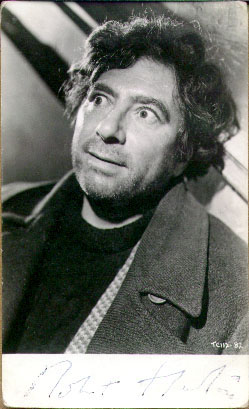
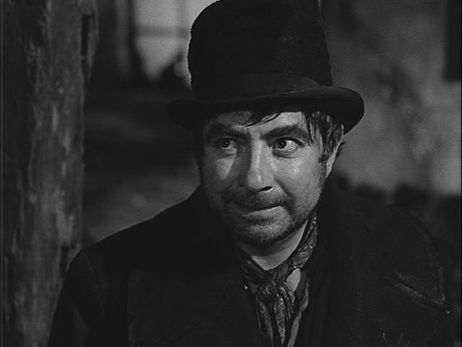
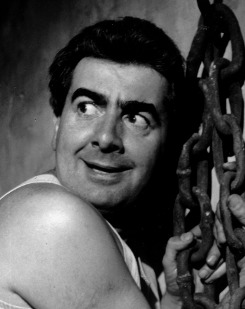

Daniel Henninger of the WSJ believes that, if passed, it will do just that:
This thing called “ObamaCare” carries on its back all the justifications, hopes and dreams of the entitlement state. The chance is at hand to let its political underpinnings collapse, perhaps permanently.
If ObamaCare fails, or seriously falters, the entitlement state will suffer a historic loss of credibility with the American people. It will finally be vulnerable to challenge and fundamental change. But no mere congressional vote can achieve that. Only the American people can kill ObamaCare.
Henninger goes on to explain how entitlement programs, once established, perpetuate themselves even if they aren’t working all that well. He gives examples not only in this country but from others.
So why does he go on to write that it now seems likely that the public will reject Obamacare even after it’s implemented? In other words, what would be so different about Obamacare?
Henninger doesn’t quite say. He cites the fact that dislike of Obamacare has been growing rather than shrinking, and he adds that indications are that Obamacare will be “a disaster.” I assume that’s why he thinks Obamacare will be different—it will be a disaster on a larger scale, and people will make the connection and reject it.
I wish he were right, but I think he’s wrong. His prediction rests on the assumption that (a) it will be a big enough disaster that most people will turn on it; and (b) most people will connect the “disastrous” results with the bill itself. But if history is any guide (and I believe it is), it ain’t necessarily so. Did people reject the New Deal because it didn’t end the depression and in some years actually seemed to worsen it? Did people reject President Obama for a second term even though the economy was doing so poorly? Has Greece rejected the welfare state?
In fact, even if Obamacare is a disaster for a lot of people, they may go in the other direction and double-down on big government control: they may be just as likely to say that the problem with Obamacare was that it didn’t go far enough, and reject it in favor of single payer.
Of course, Henninger doesn’t think that’s likely. But it’s always dangerous to let a bad policy go forward on the assumption that there will be a backlash in the direction you’re hoping for. Best to nip it in the bud. With Obamacare, of course, it’s too late for that.
As I wrote above; I’d like for Henninger to be right. So feel free to disagree with me; it would cheer me up.
[ADDENDUM: A version of this is cross-posted at Legal Insurrection.]
I’ve got a new post up at PJ’s Lifestyle section.
The topic: driving the Model T versus driving the cars of today.
Not about politics at all. Okay, maybe just a little.
The Russians do so like their vodka:
Today, according to the World Health Organization, one in five men in the Russia Federation die due to alcohol-related causes, compared with 6.2 percent of all men globally. In 2000, in her article “First Steps: AA and Alcoholism in Russia,” Patricia Critchlow estimated that some 20 million Russians are alcoholics in a nation of just 144 million.
The problem has been going on for centuries, and attempts to combat it have been sporadic and largely futile. Those death rates are astoundingly high, but they were even higher just a few years ago.
And Russians aren’t picky when they drink, either:
…[A]s of 2003 Russia was Europe’s heaviest per capita spirits consumer; its reported hard liquor consumption was over four times as high as Portugal’s, three times that of Germany or Spain, and over two and a half times higher than that of France.
Yet even these numbers may substantially understate hard spirit use in Russia, since the WHO figures follow only the retail sale of hard liquor. But samogon””home-brew, or “moonshine”””is, according to some Russian researchers, a huge component of the country’s overall intake. Professor Alexander Nemstov, perhaps Russia’s leading specialist in this area, argues that Russia’s adult population””women as well as men””puts down the equivalent of a bottle of vodka per week.
…One forensic investigation of blood alcohol content by a medical examiner’s office in a city in the Urals, for example, indicated that over 40 percent of the younger male decedents evaluated had probably been alcohol-impaired or severely intoxicated at the time of death””including one quarter of the deaths from heart disease and over half of those from accidents or injuries. But medical and epidemiological studies have also demonstrated that, in addition to its many deaths from consumption of ordinary alcohol, Russia also suffers a grisly toll from alcohol poisoning, as the country’s drinkers, in their desperate quest for intoxication, down not only sometimes severely impure samogon, but also perfumes, alcohol-based medicines, cleaning solutions, and other deadly liquids. Death rates from such alcohol poisoning appear to be at least one hundred times higher in Russia than the United States””this despite the fact that the retail price in Russia today is lower for a liter of vodka than a liter of milk.
The question, of course, is why so much drinking? There may be a significant genetic component, but that only increases the risk and does not explain the phenomenon. But in a society in which drinking is as common and accepted as it is in Russia, those with the gene are probably more likely to be drawn to the behavior. And of course there’s the famous Russian gloom.
I must confess that my ancestors probably did a bit to encourage all of this—although not the hard liquor part. Family legend has it that they were brewers living in Alsace-Lorraine who were invited into Russia some time around the 1870s by Alexander II, with the aim of helping to establish a viable beer industry in Russia.
I have no information on how successful they were. But after Alexander’s assassination things tightened up considerably in that country, and whether they took to drink or not they managed to leave for the US in the early years of the 20th century.
For which I’m extraordinarily grateful.
Sparked by the Aaron Alexis case, Ann Coulter wrote a blistering piece excoriating liberals for deinstitutionalization of the mentally ill:
But liberals won’t allow the dangerous mentally ill to be committed to institutions against their will. (The threat of commitment is very persuasive in getting disturbed individuals to take their medicine.) Something in liberals’ genetic makeup compels them to attack civilization, for example, by defending the right of dangerous psychotics to refuse treatment and then representing them in court after they commit murder.
Liberals won’t even agree to take the most basic steps to prevent psychotics from purchasing guns — yes, GUNS! — because to allow the release of mental health information would be “stigmatizing.”
I have no quarrel with that, as far it goes. But it doesn’t go far enough; Coulter is leaving out an important part of the picture.
Sure, Coulter is correct that liberals have defended deinstitutionalizaton and pushed it, and continue to do so, as well as protecting the privacy of the mentally ill and therefore their gun rights. But originally it was libertarians who spearheaded the deinstitutionalization drive, and then their ideas were taken up by the left. So it was a fusion of the two groups that is responsible. Similar fusions of liberals and libertarians have occurred with the movement to legalize marijuana, just to take one example—even though in certain other ways they may be at loggerheads.
The grand-daddy of the movement to “liberate” the mentally ill was Dr. Thomas Szasz, who was a fervent libertarian. He did not believe there was such a thing as “mental illness” (see this article for a fuller explanation of Szasz’s views and his political orientation).
As far as Aaron Alexis goes, it’s unclear whether banning the mentally ill from buying guns would have helped. Alexis had not yet formally entered the mental health system; as far as I know, he was not in therapy. So he most likely had no mental health diagnosis.
Institutionalizing him probably would have depended on the involuntary commitment laws, because that may have been what it would have taken. Were his relatives alarmed enough to have pressed that? Would anyone else have considered his situation dire enough to have sounded the alarm, and would they have succeeded, even under easier commitment laws?
But if somehow Alexis had been involuntarily committed, even for a short time—enough time to have gotten him started on medication for schizophrenia—and if he had continued to cooperate with taking the medication once he was released, there’s at least a decent chance that the murders at the Navy Yard could have been prevented.
[Hat tip: Maetenloch at Ace’s; plus this.]