↓
 

The New Neo

A blog about political change, among other things

  • Home
  • Bio
  • Email
Home » Page 1046 << 1 2 … 1,044 1,045 1,046 1,047 1,048 … 1,916 1,917 >>

Post navigation

← Previous Post
Next Post→

Now that marijuana looks likely to be legalized in more and more states…

The New Neo Posted on May 10, 2016 by neoMay 10, 2016

…we realize that we have no idea how to set legal limits for driving under the influence:

The study commissioned by AAA’s safety foundation said it’s not possible to set a blood-test threshold for THC, the chemical in marijuana that makes people high, that can reliably determine impairment. Yet the laws in five of the six states automatically presume a driver guilty if that person tests higher than the limit, and not guilty if it’s lower.

As a result, drivers who are unsafe may be going free while others may be wrongly convicted, the foundation said.

The foundation recommends replacing the laws with ones that rely on specially trained police officers to determine if a driver is impaired, backed up by a test for the presence of THC rather than a specific threshold. The officers are supposed to screen for dozens of indicators of drug use, from pupil dilation and tongue color to behavior.

Oh, that will end well, don’t you think?

Posted in Law | 11 Replies

Gives “Finger lickin’ good!” a whole new meaning

The New Neo Posted on May 9, 2016 by neoMay 9, 2016

Hey, why not?:

If you can’t seem to kick that awful nail-biting habit, you might as well get some flavor out of it with KFC’s new chicken-flavored edible nail polish. It comes in two different flavors ”“ ”˜Original’ (beige), and ”˜Hot & Spicy’ (red), and is quite literally “Finger Lickin’ Good”!

The product was developed by marketing firm Ogilvy & Mather for KFC Hong Kong, in collaboration with the company that provides KFC’s blend of herbs and spices. “Yes, it’s actually a real thing,” confirmed Ogilvy & Mather employee Anna Mugglestone. “It takes like chicken. It’s crazy.”

Each ”˜flavor’ of nail polish comes packaged in a “designer bottle and box” (no bucket, sadly). Customers can paint their nails with the product and proceed to lick their fingertips “again and again and again,” to enjoy the flavors of KFC anytime, anywhere. And if you’re worried about safety, the chain claims that the product is “sourced from natural ingredients”.

Sounds like The Onion, but I guess it’s real. Wouldn’t appeal to me; I had KFC chicken recently and it was dreadful—soggy and tasteless.

The whole thing reminds me, though, of this Mary Poppins story. The finger-lickin tastiness possessed by the character “Mrs. Corry” leaves KFC-flavored nail polish behind in a cloud of dust. It’s a great great story, too, one of my very favorites:

…”What’s all this I hear?” cried the curious high little voice, coming nearer. And presently, round the corner of the glass case the owner of it appeared. She was as small as her voice and as crackly, and to the children she seemed to be older than anything in the world, with her wispy hair and her sticklike legs and her wizened, wrinkled little face. But in spite of this she ran towards them as lightly and as gaily as though she were still a young girl.

“Now, now, now ”” well, I do declare! Bless me if it isn’t Mary Poppins, with John and Barbara Banks. What ”” Jane and Michael, too? Well, isn’t this a nice surprise for me? I assure you I haven’t been so surprised since Christopher Columbus discovered America ”” truly I haven’t!”

She smiled delightedly as she came to greet them, and her feet made little dancing movements inside the tiny elastic-sided boots. She ran to the perambulator and rocked it gently, crooking her thin, twisted, old fingers at John and Barbara until they stopped crying and began to laugh.

“That’s better!” she said, cackling gaily. Then she did a very odd thing. She broke off two of her fingers and gave one each to John and Barbara. And the oddest part of it was that in the space left by the broken-off fingers two new ones grew at once. Jane and Michael clearly saw it happen.

“Only Barley-Sugar ”” can’t possibly hurt ’em,” the old lady said to Mary Poppins.

“Anything you give them, Mrs. Corry, could only do them good,” said Mary Poppins with most surprising courtesy.

“What a pity,” Michael couldn’t help saying, “they weren’t Peppermint Bars.”

“Well, they are, sometimes,” said Mrs. Corry gleefully, “and very good they taste, too. I often nibble ’em myself, if I can’t sleep at night. Splendid for the digestion.”

“What will they be next time?” asked Jane, looking at Mrs. Corry’s fingers with interest.

“Aha!” said Mrs. Corry. “That’s just the question. I never know from day to day what they will be. I take the chance, my dear, as I heard William the Conqueror say to his Mother when she advised him not to go conquering England.”

“You must be very old!” said Jane, sighing enviously, and wondering if she would ever be able to remember what Mrs. Corry remembered.

Mrs. Corry flung back her wispy little head and shrieked with laughter.

“Old!” she said. “Why, I’m quite a chicken compared to my Grandmother. Now, there’s an old woman if you like. Still, I go back a good way. I remember the time when they were making this world, anyway, and I was well out of my teens then. My goodness, that was a to-do, I can tell you…

And note the chicken reference at the beginning of that last paragraph.

Posted in Food, Literature and writing, Pop culture | 9 Replies

Fighting “stupidity”

The New Neo Posted on May 9, 2016 by neoMay 9, 2016

The always-fascinating Richard Fernandez offers some quotes from anti-Nazi Dietrich Bonhoeffer that I want to call attention to:

“Against stupidity we are defenseless,” [Bonhoeffer] wrote, because imbeciles never feel a qualm. Against the stupid “neither protests nor the use of force accomplish anything … reasons fall on deaf ears; facts that contradict … simply do not need to be believed … and when facts are irrefutable they are just pushed aside as inconsequential, as incidental. In all this, the stupid person, in contrast to the malicious one, is utterly self-satisfied and, being easily irritated, becomes dangerous by going on the attack.”

I must say I find that quote resonates with my experience of trying to have a discussion with certain true believers, whether they be Obama supporters or Trump supporters or 9/11-truthers or any number of other zealots. By “true believers” I am not including everyone who might support either Obama or Trump, of course. But I think anyone who’s been around the blogosphere for the last couple of election cycles knows exactly the sort of thing—and the sort of arguments—I mean, the kind of worship that ignores or negates anything that might contradict or even challenge their faith in their leader, and a sharp and cutting anger at and/or contempt for anyone who would disagree with them.

The thing is, though, these people are not imbeciles. Nor are they even especially stupid, not in the general sense, and not in most other arenas of their lives. There seems to be something special that for want of a better term I’ll call political stupidity, a sort of willed stubborn refusal to look at the flaws in the candidate of choice, to acknowledge when they go wrong, and to accept that other people who oppose them are not evil but have their reasons, sometimes good reasons.

Bonhoeffer’s use of the term “stupid person” is probably meant in the same way as “idiot” in the well-known political phrase “useful idiot.” It doesn’t mean people who actually have IQs in a well-below-average range, it means people who act stupidly or sound stupid in the specific area of politics, people who are somehow blocked from acknowledging certain truths that threaten to invalidate their beliefs. These people are usually reacting to the painful discomfort (cognitive dissonance) that would almost certainly result if they took an objective look. In some people (many people, actually) this results in the wearing of blinders to protect oneself from even having to consider changing their minds and/or admit to having been wrong about something so important.

Bonhoeffer further said:

In conversation with [the stupid man] one virtually feels that one is not dealing not at all with him as a person, but with slogans, catchwords and the like that have taken possession of him. … Having thus become a mindless tool, the stupid person will also become capable of any evil and at the same time incapable of seeing that it is evil. This is where the danger of diabolical misuse lurks, for it is this that can once and for all destroy human beings.

Bonhoeffer was, of course, writing during the Nazi era, and the evil he saw many previously ordinary-seeming people perpetrate, or help to perpetrate, was extreme and blatant. But evil is not always that obvious. And “diabolical misuse” can easily come about by the mechanism of propaganda, an exceptionally powerful tool to which all of us are somewhat vulnerable. The extent of the vulnerability varies greatly from person to person, and the type of propaganda each person is susceptible too varies, as well. Fear? Rage? In-group feeling? Guilt? Self-righteousness? Need to control? Surrender of control? Rebelliousness?

I could go on, but you get the idea.

The 20th Century saw the growth of propaganda by masters of the art, some of them diabolical masters. The 21st has seen new tools—particularly involving the internet and social media—to further the spread of propaganda and the speed with which it can be propagated. One might think that the internet should have made us smarter—all of that access to information—and in some cases and some ways I suppose it has. But in way too many ways and for way too many people it has helped to make us stupider in the sense that Bonhoeffer used the word.

Posted in Getting philosophical: life, love, the universe, People of interest, Politics | 64 Replies

Happy Mother’s Day!

The New Neo Posted on May 8, 2016 by neoMay 8, 2016

[NOTE: This is a repeat of what has become my annual Mother’s Day post. It was written while my mother was still alive.]

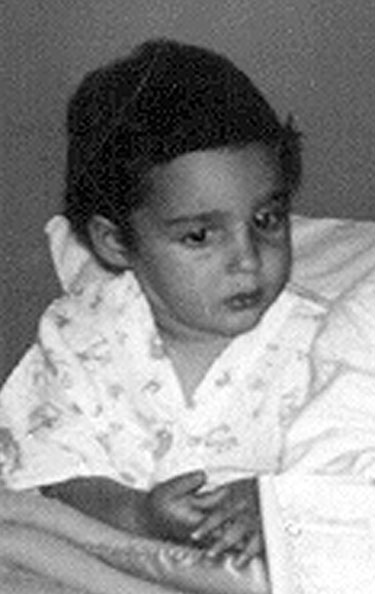
Okay, who are these three dark beauties?

A hint: one of them is the very first picture you’ve ever seen on this blog of neo-neocon, sans apple. Not that you’d recognize me, of course. Even my own mother might not recognize me from this photo.

My own mother, you say? Of course she would. Ah, but she’s here too, looking a bit different than she does today—Mother’s Day—at ninety-eight years of age. Just a bit; maybe her own mother wouldn’t recognize her, either.

Her own mother? She’s the one who’s all dressed up, with longer hair than the rest of us.

The photo of my grandmother was taken in the 1880’s; the one of my mother in the teens of the twentieth century; and the one of me, of course, in the 1950s.

Heredity, ain’t it great? My mother and grandmother are both sitting for formal portraits at a professional photographer’s studio, but by the time I came around amateur snapshots were easy to take with a smallish Brownie camera. My mother is sitting on the knee of her own grandfather, my grandmother’s father, a dapper gentleman who was always very well-turned out. I’m next to my older brother, who’s reading a book to me but is cropped out of this photo. My grandmother sits alone in all her finery.

We all not only resemble each other greatly in our features and coloring, but in our solemnity. My mother’s and grandmother’s seriousness is probably explained by the strange and formal setting; mine is due to my concentration on the book, which was Peter Pan (my brother was only pretending to read it, since he couldn’t read yet, but I didn’t know that at the time). My mother’s resemblance to me is enhanced by our similar hairdos (or lack thereof), although hers was short because it hadn’t really grown in yet, and mine was short because she purposely kept it that way (easier to deal with).

My grandmother not only has the pretty ruffled dress and the long flowing locks, but if you look really closely you can see a tiny earring dangling from her earlobe. When I was young, she showed me her baby earrings; several miniature, delicate pairs. It astounded me that they’d actually pierced a baby’s ears (and that my grandmother had let the holes close up later on, and couldn’t wear pierced earrings any more), whereas I had to fight for the right to have mine done in my early teens.

I’m not sure what my mother’s wearing; some sort of baby smock. But I know what I have on: my brother’s hand-me-down pajamas, and I was none too happy about it, of that you can be sure.

So, a very happy Mother’s Day to you all! What would mothers be without babies…and mothers…and babies….and mothers….?

Posted in Uncategorized | 6 Replies

More on the Ben Rhodes flap

The New Neo Posted on May 7, 2016 by neoMay 7, 2016

On Thursday I wrote a very brief post linking to an article about Obama’s advisor Ben Rhodes and his influence on Obama’s foreign policy, particularly the Iran deal.

The Rhodes article was so disturbing it’s been the talk of the blogosphere for quite a few days (for example, see this, this, this, and this). In the ensuing time, as I’ve read more about it, I find I have a few things to add to the mix.

Here’s the original article that has caused all the fuss, a piece by David Samuels based on an interview with Rhodes. It’s long; I suggest you read the whole thing. But here’s an excerpt that tells you some of the things you need to know:

Like Obama, Rhodes is a storyteller who uses a writer’s tools to advance an agenda that is packaged as politics but is often quite personal. He is adept at constructing overarching plotlines with heroes and villains, their conflicts and motivations supported by flurries of carefully chosen adjectives, quotations and leaks from named and unnamed senior officials. He is the master shaper and retailer of Obama’s foreign-policy narratives, at a time when the killer wave of social media has washed away the sand castles of the traditional press. His ability to navigate and shape this new environment makes him a more effective and powerful extension of the president’s will than any number of policy advisers or diplomats or spies. His lack of conventional real-world experience of the kind that normally precedes responsibility for the fate of nations ”” like military or diplomatic service, or even a master’s degree in international relations, rather than creative writing ”” is still startling…

…One day, when Rhodes and I were sitting in his boiler-room office, he confessed, with a touch of bafflement, “I don’t know anymore where I begin and Obama ends.”…

Having recently spent time working in Hollywood, I realize during our conversations that the role Rhodes plays in the White House bears less resemblance to any specific character on Beltway-insider TV shows like “The West Wing” or “House of Cards” than it does to the people who create those shows.

If you have noticed that Obama’s “foreign-policy narratives” seem to not be grounded in anything as worldly or mundane as the facts of geopolitical history, you’d be right, and the abysmal ignorance of Ben Rhodes is one of the many reasons. The narrative has been elevated above the facts—they don’t need no steenking facts when they’ve got Ben Rhodes. In this I suppose he exhibits a sort of postmodern genius, because it’s worked, hasn’t it?

The tone of the NY Times piece is hard to characterize. It seems rather neutral and descriptive, and the reader is allowed to come to his or her own conclusions about the tale it chronicles of ignorance, deception, spin, and media complicity, as well as PR brilliance.

The author David Samuels indicates that most of us haven’t heard of Rhodes before, but those of us who follow the news most definitely have. I’ve been alarmed about him for quite some time, and wrote this piece three years ago, as well as this one in 2008, where I mentioned the Rhodes hire (he was then 30 years old) and expressed these reservations:

I understand that youth does not necessarily mean historical ignorance, but it does mean that a candidate should be extra careful to make sure his/her young speechwriters have a very strong grounding in the subject.

Obama may be unable to do this because he himself has a certain lacuna where in-depth historical knowledge ought to be. That should make him especially aware of hiring people who can fill in the gaps, but in order to do this he would have to acknowledge his own weakness, something for which he’s shown little capacity to date.

Well, that certainly panned out. The post also contained an excerpt from an article describing the fact that Obama and his writers seemed more interested in the “narrative” than in anything else. So this was all foreshadowed.

Other strange revelations in the Samuels piece are that the ignorant and inexperienced Rhodes, whose previous resume was limited to “writer” (and not an especially sucessful writer at that), had as one of his first official jobs the writing of the Iraq Study Group’s report, on which he had an enormous influence in terms of its conclusions. Yes, you read that right. He also helped write the 9/11 Commission report, and was absolutely essential to and very active in framing the Iran deal.

Obama’s speechwriter Jon Favreau was in part responsible for hiring Rhodes, and with no overt sense of irony Samuels has this to say about that:

The idea of someone with a masters in fiction who had also co-authored the Iraq Study Group and 9/11 Commission reports seemed perfect for a candidate who put so much emphasis on storytelling.

Samuels never directly condemns Obama or Rhodes, but he doesn’t seem to be praising them, either. Passages such as this one give you the tone of his article:

When I suggested that all this dark metafictional play seemed a bit removed from rational debate over America’s future role in the world, Rhodes nodded. “In the absence of rational discourse, we are going to discourse the [expletive] out of this,” he said. “We had test drives to know who was going to be able to carry our message effectively, and how to use outside groups like Ploughshares, the Iran Project and whomever else. So we knew the tactics that worked.” He is proud of the way he sold the Iran deal. “We drove them crazy,” he said of the deal’s opponents.

Yet Rhodes bridled at the suggestion that there has been anything deceptive about the way that the agreement itself was sold.

“The suggestion” of something deceptive must have come from Samuels, I’d imagine, but he doesn’t come out and say that. It’s a curious tightrope-walk of a piece.

So here’s my question to add to the mix: why did Samuels write this, and in particular why did the NY Times publish it? It seems to indict the Obama administration, if only indirectly. Do the Times editors see the story it tells us an admirable one? Have we come that far?

And why did Rhodes so freely give this interview and say things that would seem to the objective observer to be an indictment of himself and the administration? Is he so arrogantly confident that he and they are correct and all the experts wrong, and therefore all this spinning to get the narrative out is perfectly justified and wonderful?

Posted in Iran, Obama, People of interest | 53 Replies

The spam filter has a lot of work to do

The New Neo Posted on May 7, 2016 by neoMay 7, 2016

Just a little inside baseball—I thought you might be curious to know how much spam the filter on a blog like this must block. There’s some variation, but depending on the day the number of spam comments that get caught in that filter in a 24-hour period is usually between 5,000 and 10,000.

Many of them are from the same groups, over and over again. It’s very rare for a spam comment to not get trapped in that filter, and for that I’m very grateful, because you can see how spam could easily overwhelm a blog. The number of spam comments here have increased tremendously over time; I think when I started out it was just a few hundred a day, although I can’t say I remember.

Posted in Blogging and bloggers | 11 Replies

Death by GPS

The New Neo Posted on May 7, 2016 by neoMay 7, 2016

Here’s a description of how reliance on our GPS sytems can steer us terribly wrong, in the literal sense.

Beware.

The phenomenon of people automatically following their GPS’s directions is something I’ve noticed many times even in myself. We get into a “follow the leader” mode of thoughtlessly obeying orders, orders that seem innocuous enough. When we’re in the car listening to that calm, hypnotic voice, there’s a mild suspension of agency and autonomy. “Simon says,” and we follow.

The GPS works against the creation of a mental map of a geographic area (the article goes into an explanation of that, too). It’s a series of instructions, disconnected from each other and with no overarching picture of the whole. Unlike the process of looking something up on a map, we are passive and uninvolved, except to plug in the destination.

Fortunately, most people don’t end up in the dire straits of the couple in the article. But there is danger even if we’re not on isolated mountain roads. For example, at times I’ve had to restrain myself from making a left turn when stopped at a red light, because the voice of the GPS has ordered me to do so and I’m in that obedient lemming-like mode. Rather frightening.

But I love my GPS nevertheless. It’s gotten me out of many tough spots. And when you’re driving alone, it’s very difficult to read a map, and I often drive alone. So I’ve found my GPS invaluable.

I keep saying “my GPS,” but it’s really my cellphone and Google Maps. I used to have a dedicated GPS, but it finally died and I saw no reason to replace it, since cellphones have taken over that function. I set the destination, put my bluetooth in my ear (or turn up the volume on the phone itself), and wait for that soothing-yet-somehow-annoying voice to guide me through the labyrinth.

Posted in Me, myself, and I | 28 Replies

Trump’s solution to the debt

The New Neo Posted on May 7, 2016 by neoMay 7, 2016

For those of you who say that there’s no way Donald Trump could be a worse president than Hillary Clinton, I put before you this story:

Asked whether the United States needed to pay its debts in full, or whether he could negotiate a partial repayment, Mr. Trump told the cable network CNBC, “I would borrow, knowing that if the economy crashed, you could make a deal.”

He added, “And if the economy was good, it was good. So, therefore, you can’t lose.”

Such remarks by a major presidential candidate have no modern precedent. The United States government is able to borrow money at very low interest rates because Treasury securities are regarded as a safe investment, and any cracks in investor confidence have a long history of costing American taxpayers a lot of money.

Experts also described Mr. Trump’s vaguely sketched proposal as fanciful, saying there was no reason to think America’s creditors would accept anything less than 100 cents on the dollar, regardless of Mr. Trump’s deal-making prowess…

Pressed to elaborate on his remarks, Mr. Trump did appear to step back. He said that he was not suggesting a default, but instead that the government could seek to repurchase debt for less than the face value of the securities. The government, in other words, would seek to repay less money than it borrowed.

Such a process can apparently can work that way for businesses. But the United States is not a business:

The United States simply cannot pursue a similar strategy. The government runs an annual deficit, so it must borrow to retire existing debt. Any measures that would reduce the value of the existing debt, making it cheaper to repurchase, would increase the cost of issuing new debt. Such a threat also could undermine the stability of global financial markets.

Trump’s business acumen is often touted as being good preparation for the presidency. But I have never thought that argument makes much sense, particularly if the candidate’s experience is limited to business. Business requires a different skill set and a different knowledge base, as well as being a different context with different rules and different forms of power . But far far more importantly and specifically, Trump appears to lack even the humility to understand what knowledge he lacks, and narcissists are not known for hiring knowledgeable people to take up the slack, or for taking their advice (example: Barack Obama).

I find statements like that one from Trump frightening, and it was supposedly in his field of expertise.

Here’s another take on Trump’s statements. Not good.

Right now I observe two types of Trump supporters. The first group wanted him to be the nominee from the start, or at the very least jumped on board before he became the only man standing. I would call them the enthusiasts. Then there are the reluctant ones who are willing to vote for him since he appears to be the nominee, but plan to vote with one hand holding their noses closed and/or with barf bags at the ready. Their main goal is to stop Hillary Clinton. I particularly sympathize with that second group, because it’s possible that one day I might join their numbers.

But I ask both groups whether stories such as the one above give them pause. It certainly gives me pause. Trump’s response seems to be an error of such magnitude that it’s hard to excuse or explain. Nor is this sort of thing the only time he’s said something that shows a similar lack of judgment. Add to this Trump’s character problems and you get a man who could do a great deal of damage, perhaps even more than his opponent.

A while back quite a few people were arguing that there’s no need to worry, because if Trump gets really dangerous then we can count on Congress to impeach him, because Democrats and Republicans would join in. I have to say that what I’ve seen so far doesn’t persuade me that that’s so. What I see a great deal of among politicians on the right is a failure of courage and a refusal to stand up for principles, an aligning with power for power’s sake as well as a fear of being a target of Trump’s lying, accusatory invective. I don’t have much faith in the presence of enough profiles in courage in Congress to make a difference.

[NOTE: The Weekly Standard is trying to drum up enthusiasm for an as-yet-unnamed third party candidate, much like a player to be named later. It’s something I’ve never even considered in any previous election. But I wonder whether the special circumstances of 2016—when both candidates are heartily and widely disliked, even in their own parties—could favor such a third-party run.

I’ll add that I have no independent way of evaluating whether Trump’s proposal as described above is as bad as they say, because my grasp of the economics of it is shaky. But I find the arguments that it could be disastrous pretty persuasive. If you disagree, I’d be curious to hear why.]

Posted in Finance and economics, Trump | 57 Replies

The future of Schengen

The New Neo Posted on May 6, 2016 by neoMay 6, 2016

“Schengen” is the elimination of traditional border-crossing rules in Europe, a development that has been hailed and welcomed for years but which is increasingly threatened by Europe’s Muslim refugee crisis. If you’re interested (and I certainly am) in the topic, take a look at this article about the state of the Schengen policy:

What makes the allegiance to Schengen so strong among Europeans? We found that in 13 countries, protecting the principle of free movement is the most important issue regarding how member states feel about the future of Schengen. Second on the list were two tied results, the economic benefit of the Schengen zone, and the ability of Schengen to help manage migration flows.

So there’s a principle involved, one that’s attractive to many Europeans and their view of Europe and what it should be. People like the idea of how far they’ve progressed since the bad old days of conflict. The other attraction is practical: money. These two reasons make Europe loathe to give up its Schengen, even in the face of the very real problems they face:

..[T]he idea that terrorism is a European threat which is best tackled together…underlines the sense that although border controls have been reinstalled over the past few months, there is a fundamental belief that these are temporary, not permanent changes, even if the route back to the old Schengen is difficult to see at the moment.

So the principle—the ideal of togetherness and cooperation—is being applied to a possible solution for the refugee problem, at least in people’s minds if not in the practical sense. In the practical sense, Schengen has been very advantageous—so far, anyway:

It is clear that the economic effects of a suspension to the Schengen system are destructive for countries that have built their markets on the assumption of free trade and movement. Time is money, and border controls make commuting and cross-border transport a significant cost factor.

Competing with all of this is the fear that many citizens of European countries have that, unless immigration/migration is checked, Europe will be in trouble both demographically (and therefore culturally) and economically. This has led to an increase in support for nationalist and anti-immigration parties in many countries across Europe. The tension between the borderless EU dream and what people perceive as the results of the vast influx of “migrants” is inescapable and likely to continue.

Posted in Immigration | 26 Replies

Trump, Clinton, and pathological lying vs. strategic lying

The New Neo Posted on May 6, 2016 by neoMay 6, 2016

Pathological and/or compulsive lying is not the same as ordinary lying. Ordinary lying is strategic and episodic, and the person doing it usually realizes he/she is lying. There is a reason for the lying, a reason an objective observer can easily understand. The lie can be about the liar him/herself, another person or persons, a group, or something that occurred.

Pathological and compulsive liars certainly exercise that sort of lying. But sometime they just lie for the sheer fun of it, or to pile it on, or even for no discernible reason. And they tend to be the most convincing liars because they either don’t have a conscience to begin with, or they have lost all sight of truth and falsehood and think anything they say is okay because they said it.

Sometimes they even justify to themselves what they do because they have a basic assumption that everybody lies in exactly that way—that no one should be trusted, ever. So they think they’re just doing what all people (except perhaps the most naive of patsies/marks) do.

Politicians are often strategic liars to one degree or another—some to a great degree and some to a much lesser degree. In addition, some are pathological/compulsive liars, but this is much more rare. Continue reading →

Posted in Election 2016, Evil, Getting philosophical: life, love, the universe | 89 Replies

The potato and societal development

The New Neo Posted on May 6, 2016 by neoMay 6, 2016

Some people eat potatoes on a daily basis. They feel that a meal without a potato is like a day without sunshine

I’m not one of them, although I like potatoes and eat them about once a week. I especially like a mideastern potato salad I sometimes make, with a dressing of olive oil, lemon juice, cumin, and dried mint instead of the conventional mayo. And I particularly enjoy those small potatoes coated in a little olive oil, sprinkled with salt and pepper and a smidge of oregano, and roasted in the oven to just the right degree of brown and crispy.

But all of that is just an introduction to this article about how potato cultivation—and grain vs. root cultivation in general—has affected societies, and been affected by them as well.

Posted in Food, History | 16 Replies

The clueless, ignorant, and arrogant are in charge

The New Neo Posted on May 5, 2016 by neoMay 5, 2016

Indeed, they are. But you probably already knew that.

Posted in Uncategorized | 18 Replies

Post navigation

← Previous Post
Next Post→

Your support is appreciated through a one-time or monthly Paypal donation

Please click the link recommended books and search bar for Amazon purchases through neo. I receive a commission from all such purchases.

Archives

Recent Comments

  • DT on Some leftists are celebrating the murder of a young woman in New York because she’s a bank executive
  • Geoffrey Britain on Tucker Carlson is to J. D. Vance as Hasan Piker is to Abdul El-Sayed
  • Tuvea on Some leftists are celebrating the murder of a young woman in New York because she’s a bank executive
  • Geoffrey Britain on Tucker Carlson is to J. D. Vance as Hasan Piker is to Abdul El-Sayed
  • Unwillin Bar-Kiss on Some leftists are celebrating the murder of a young woman in New York because she’s a bank executive

Recent Posts

  • The Strait of Hormuz
  • Some leftists are celebrating the murder of a young woman in New York because she’s a bank executive
  • Tucker Carlson is to J. D. Vance as Hasan Piker is to Abdul El-Sayed
  • Open thread 9/2/2026
  • Update on my ex [plus further updates]

Categories

  • A mind is a difficult thing to change: my change story (17)
  • Academia (328)
  • Afghanistan (98)
  • Amazon orders (6)
  • Arts (8)
  • Baseball and sports (164)
  • Best of neo-neocon (91)
  • Biden (536)
  • Blogging and bloggers (593)
  • Dance (292)
  • Disaster (244)
  • Education (323)
  • Election 2012 (360)
  • Election 2016 (566)
  • Election 2018 (33)
  • Election 2020 (513)
  • Election 2022 (114)
  • Election 2024 (403)
  • Election 2026 (90)
  • Election 2028 (13)
  • Evil (129)
  • Fashion and beauty (324)
  • Finance and economics (1,042)
  • Food (317)
  • Friendship (48)
  • Gardening (18)
  • General information about neo (4)
  • Getting philosophical: life, love, the universe (734)
  • Health (1,160)
  • Health care reform (545)
  • Hillary Clinton (184)
  • Historical figures (337)
  • History (716)
  • Immigration (448)
  • Iran (464)
  • Iraq (227)
  • IRS scandal (71)
  • Israel/Palestine (820)
  • Jews (437)
  • Language and grammar (365)
  • Latin America (212)
  • Law (2,972)
  • Leaving the circle: political apostasy (124)
  • Liberals and conservatives; left and right (1,320)
  • Liberty (1,117)
  • Literary leftists (14)
  • Literature and writing (393)
  • Me, myself, and I (1,496)
  • Men and women; marriage and divorce and sex (929)
  • Middle East (384)
  • Military (324)
  • Movies (353)
  • Music (533)
  • Nature (261)
  • Neocons (32)
  • New England (183)
  • Obama (1,738)
  • Pacifism (16)
  • Painting, sculpture, photography (131)
  • Palin (93)
  • Paris and France2 trial (25)
  • People of interest (1,043)
  • Poetry (258)
  • Political changers (178)
  • Politics (2,793)
  • Pop culture (397)
  • Press (1,634)
  • Race and racism (881)
  • Religion (428)
  • Romney (164)
  • Ryan (16)
  • Science (639)
  • Terrorism and terrorists (971)
  • Theater and TV (266)
  • Therapy (71)
  • Trump (1,630)
  • Uncategorized (4,549)
  • Vietnam (109)
  • Violence (1,443)
  • War and Peace (1,027)

Blogroll

Ace (bold)
AmericanDigest (writer’s digest)
AmericanThinker (thought full)
Anchoress (first things first)
AnnAlthouse (more than law)
AugeanStables (historian’s task)
BelmontClub (deep thoughts)
Betsy’sPage (teach)
Bookworm (writingReader)
ChicagoBoyz (boyz will be)
DanielInVenezuela (liberty)
Dr.Helen (rights of man)
Dr.Sanity (shrink archives)
DreamsToLightening (Asher)
EdDriscoll (market liberal)
Fausta’sBlog (opinionated)
GayPatriot (self-explanatory)
HadEnoughTherapy? (yep)
HotAir (a roomful)
InstaPundit (the hub)
JawaReport (the doctor’s Rusty)
LegalInsurrection (law prof)
Maggie’sFarm (togetherness)
MelaniePhillips (formidable)
MerylYourish (centrist)
MichaelTotten (globetrotter)
MichaelYon (War Zones)
Michelle Malkin (clarion pen)
MichelleObama’sMirror (reflect)
NoPasaran! (bluntFrench)
NormanGeras (archives)
OneCosmos (Gagdad Bob)
Pamela Geller (Atlas Shrugs)
PJMedia (comprehensive)
PointOfNoReturn (exodus)
Powerline (foursight)
QandO (neolibertarian)
RedState (conservative)
RogerL.Simon (PJ guy)
SisterToldjah (she said)
Sisu (commentary plus cats)
Spengler (Goldman)
VictorDavisHanson (prof)
Vodkapundit (drinker-thinker)
Volokh (lawblog)
Zombie (alive)

Meta

  • Log in
  • Entries feed
  • Comments feed
  • WordPress.org
©2026 - The New Neo - Weaver Xtreme Theme Email
Web Analytics
↑