↓
 

The New Neo

A blog about political change, among other things

  • Home
  • Bio
  • Email
Home » Page 1040 << 1 2 … 1,038 1,039 1,040 1,041 1,042 … 1,916 1,917 >>

Post navigation

← Previous Post
Next Post→

Japanese boy abandoned by parents is found after 6 days

The New Neo Posted on June 4, 2016 by neoJune 4, 2016

By now you may all know the story of how 7-year-old Yamato Tanooka got lost in the woods: his parents disciplined him by putting him out of the car, and when they returned “a few minutes later” he was gone. A huge search of the nearby forest was mounted, and as the days wore on it seemed less and less likely that he would ever be found alive.

But a very wonderful thing has happened—Yamato has been discovered, alive and well:

…at a military base on Friday, about 5.5km (3.4 miles) from where he went missing last Saturday.

The site had allegedly already been searched on Monday morning, but the boy was not found. The search team comprised 180 people and search dogs.

The soldier who found Tanooka had not been part of any previous rescue efforts, AP reports.

Yamato told police he had walked to the military base by himself soon after his parents left him.

“I drank water to get by,” he reportedly said. “There wasn’t anything to eat.”…

The soldier who found him had not been searching for him, but discovered the boy on opening the door of a building on the base. It’s not at all clear why the boy had not been found during the earlier search. It’s also not at all clear how the boy had managed to locate the base in the dense woods. Was it just chance? (From this recent story, we know how easy it is to get lost in dense woods and wander around aimlessly without progressing very far at all.)

All of Japan is talking about the event, and the child’s father has apologized profusely on behalf of the parents. It’s not all that unusual for parents to threaten to leave children somewhere in order to make them behave, but it’s rare that they actually leave the child rather than merely use the threat as a tool.

I have my own memories about such things; you may have quite a few yourselves. When I was a child and my mother used to drive me hither and yon, she would often get annoyed at something I did or said, and would threaten to put me out of the car and make me walk home. Sometimes this happened when we were very far away from home, and it scared me (although I can’t remember what sparked the incidents; my recollection of myself was as having been well-behaved).

I do remember calling her bluff once, though. It’s no coincidence that we weren’t all that far from the house at the time, the weather was decent, and I probably could have successfully walked home. I think I was around eight or nine, and when my mother stopped the car and said I should get out I did just that—I jumped out angrily and started to walk away. But my mother didn’t drive away; instead, she followed me slowly in the car with her window rolled down and ordered me to get in. This went on for perhaps a half block, and then I complied. It seemed I had made my point, although it took its toll on both of us.

When my son was young, the scene played out very differently. Neither my husband nor I was going to threaten our son with any such thing, but he was sometimes pretty headstrong and we still had to discipline him. Once when he was about two and a half we were in a large mall and had been there for several hours. It was time to go home, and we told our son so.

“No!” he said vehemently. “I want to stay!”

When we insisted we needed to go, our son said even more forcefully that he was going to stay in the mall. So instead of our abandoning him, he was proposing to abandon us.

My husband asked him, “But who will take care of you?” Without missing a beat, standing smack in the middle of the mall, our son immediately pointed to the first man who walked by. “He will!” our son said firmly and triumphantly, not the least bit perturbed. Then a woman passed by, and our son pointed again: “She will.”

He had a point. We finally just picked him up and took him out of there.

Posted in Me, myself, and I, Men and women; marriage and divorce and sex | 12 Replies

Muhammed Ali dies at 74

The New Neo Posted on June 4, 2016 by neoJune 4, 2016

Muhammed Ali’s death is the sort of news that will be covered in the media for weeks, with tributes and reminiscences. He styled himself “The Greatest,” and boxing aficionados say that he certainly was one of the greatest, or maybe even the greatest, just as he had always claimed.

People like me, who never followed boxing and can hardly bear to watch it, still know a lot about Muhammed Ali, because he has been a huge celebrity and unique personality ever since he burst on the scene as Cassius Clay. Brash and talkative, he went through many transformations—his name, his women, his religion, the form his religion took (from racial- and anger-focused Black Muslim to more conventional Islam and a far more mellow outlook)—as well as the terrible transformation wrought comparatively early in his life by Parkinson’s disease.

Parkinson’s is a progressive disease, and Ali’s diagnosis came at the age of 42—although, looking back, his trainer Angelo Dundee thought he might have shown signs as early as the age of 38. It is commonly assumed that his Parkinson’s was the result of his boxing career and all the blows he took, and although that may be true it is not necessarily the case for Ali:

Dr. Fahn [the neurologist at Columbia-Presbyterian who originally diagnosed him] cannot be certain that Ali’s condition was indeed caused by boxing or if in fact Parkinson’s would have been his fate regardless of what career path he had chosen. An early Ali complaint of numbness in his lips and face, rendering him unaware of when food needed to be wiped away, indicated damage to the brain stem due to boxing, according to Dr. Fahn. But the steady progression of the disorder over the years, he adds, is more indicative of classic Parkinson’s disease. “The proof is only going to come at his autopsy,” Dr. Fahn says, “because the pathology is a little bit different between the two conditions.”

Ali’s last years sound as though they were very difficult and especially ironic for someone once so fleet of mouth and foot: nearly immobile and virtually speechless after three decades of Parkinson’s progression. But in his public appearances, and reportedly in private, he neither complained nor felt sorry for himself. He harnessed his ferocious will in the service of making the best of it and for many years traveled the world with a message of peace.

A very big life. RIP.

Posted in Baseball and sports, Health, People of interest | 35 Replies

One of the reasons we’re in this predicament: talk shows

The New Neo Posted on June 3, 2016 by neoJune 3, 2016

Talk shows seemed like a great idea at the beginning. And in many ways they still are.

I’m not against them, or saying they should stop. They provide a gathering place and information for political junkies, a forum for a bunch of like-minded people (and some not-so-like-minded) to chat and to argue about important things, sometimes in a humorous and entertaining way. What could go wrong?

Well, there’s the double-edged sword of sensationalism. Twitter and many blogs foster this, too, as does the 24-hour news cycle.

This comment explains something I’ve alluded to several times on this blog:

[Rush] Limbaugh’s behavior makes sense when you keep in mind that he is, foremost, an entertainer. His shtick is outrage, tapping into that sense that many right-leaning Americans have over the state of politics and culture.

Of course he won’t acknowledge incremental progress such as passage of an Obamacare repeal bill. To do so risks that his audience may feel as if things are going their way for once. That lowers the sense of urgency they feel for finding a kindred voice on the radio. Smaller audience = smaller revenue from advertisers.

I don’t enjoy pointing out that an advocate who’s done so much to help conservatives unite has such a cynical motive. But it’s well-known among similar enterprises (D.C. think tanks, advocacy groups, education foundations) that when your constituency calms down, your fundraising falls off.

Limbaugh’s job is to keep people agitated.

I wrote about Limbaugh here, and about Twitter and its effect on this election here. People have become more and more used to expressing their anger in political ways. That’s not to say the anger isn’t real; it is. It’s not to say that some or perhaps much of it isn’t justified; it is. But the word “rabble-rousing” has a reality, too, which is that already-existing anger can be fanned, exacerbated, channeled, by speech directed at crowds.

Twas ever thus. The difference is that these days it’s much easier to reach more and more and more people, and to speak to the worst in them rather than to the best.

Sometimes I feel like Miniver Cheevy (except of course for the drinking).

…Miniver loved the days of old
When swords were bright and steeds were prancing;
The vision of a warrior bold
Would set him dancing.

Miniver sighed for what was not,
And dreamed, and rested from his labors;
He dreamed of Thebes and Camelot,
And Priam’s neighbors.

Miniver mourned the ripe renown
That made so many a name so fragrant;
He mourned Romance, now on the town,
And Art, a vagrant.

…Miniver scorned the gold he sought,
But sore annoyed was he without it;
Miniver thought, and thought, and thought,
And thought about it.

Miniver Cheevy, born too late,
Scratched his head and kept on thinking;
Miniver coughed, and called it fate,
And kept on drinking.

Posted in Poetry, Politics, Pop culture, Press | 30 Replies

The Gershwins and dual talents

The New Neo Posted on June 3, 2016 by neoJune 3, 2016

[NOTE: Once in a while I recycle an old post just for fun. At this point, I’ve published so many posts—10,542, according to trusty old WordPress—that even I have forgotten some of them. This one was very enjoyable to research—so here it is again, with a few additions for your reading pleasure.]

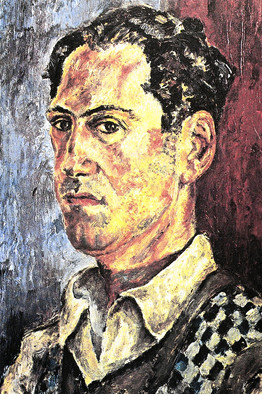
I’ve been doing some research about George Gershwin (George Gershwin: An Intimate Portrait (Music in American Life) is an especially wonderful biography), and I’ve been surprised to learn that, in addition to his formidable musical talent, Gershwin was a major collector of modern art and a credible painter himself. Here’s a self-portrait:
Continue reading →

Posted in Arts, Music, Painting, sculpture, photography | 4 Replies

Zachary Taylor analogies

The New Neo Posted on June 3, 2016 by neoJune 3, 2016

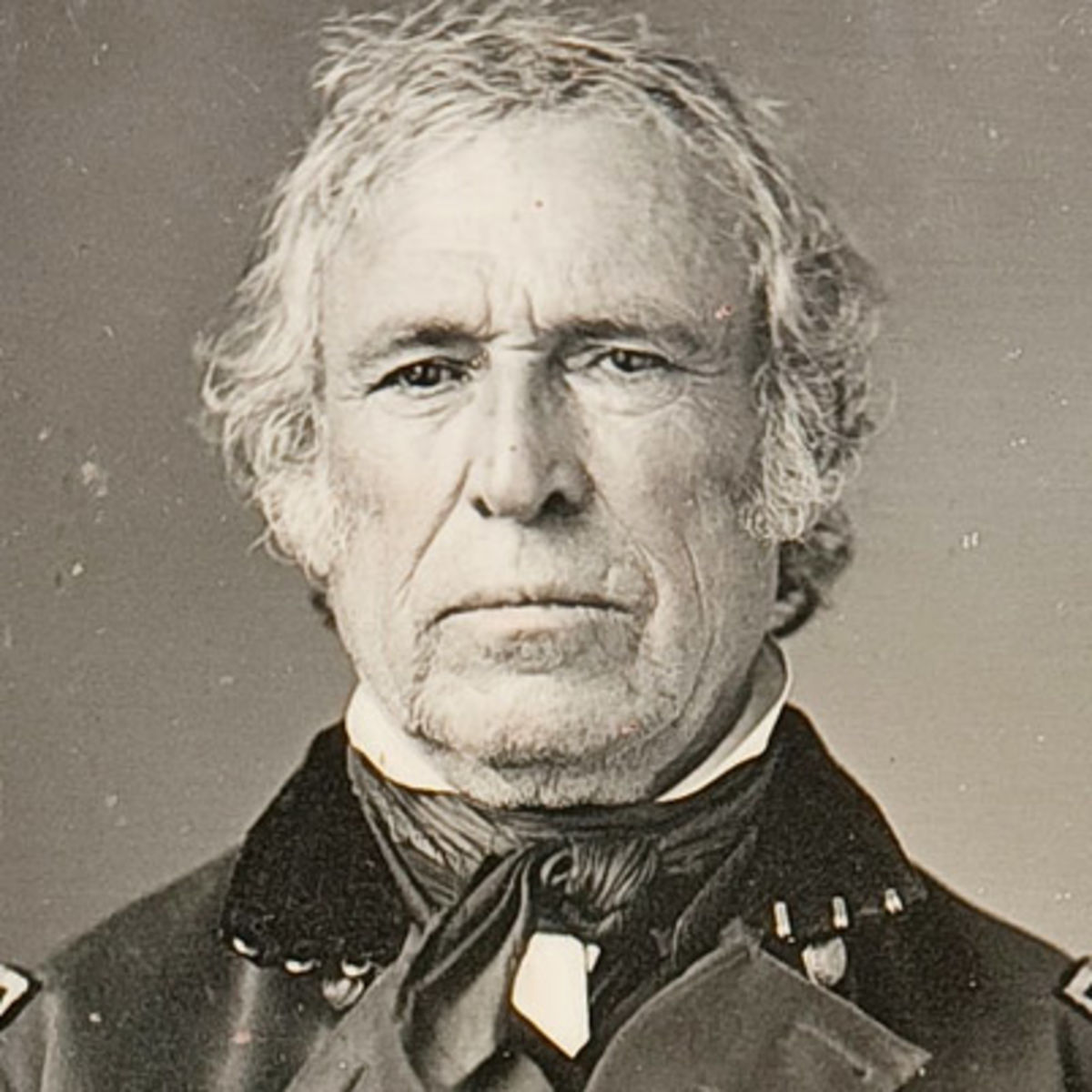
Politico has an article describing the effect the candidacy of Zachary Taylor had on the Whig Party in 1848. Hint: not good, not good at all.

Many have called Donald Trump’s unexpected takeover of a major political party unprecedented; but it’s not. A similar scenario unfolded in 1848, when General Zachary Taylor, a roughhewn career soldier who had never even voted in a presidential election, conquered the Whig Party.

A look back at what happened that year is eye-opening””and offers warnings for those on both sides of the aisle. Democrats quick to dismiss Trump should beware: Taylor parlayed his outsider appeal to defeat Lewis Cass, an experienced former Cabinet secretary and senator. But Republicans should beware, too: Taylor is often ranked as one of the worst presidents in U.S. history””and, more seriously, the Whig Party never recovered from his victory. In fact, just a few years after Taylor was elected under the Whig banner, the party dissolved””undermined by the divisions that caused Taylor’s nomination in the first place, and also by the loss of faith that followed it.

I think such candidacies tend to be symptoms rather than causes, although they can exacerbate the already-existing riffs. I won’t bore you by quoting myself once again from 2012, where I predicted that the Republican Party would tear itself apart. Not really a very difficult prediction to make, since it’s been doing some version of that for much of my lifetime, particularly the “Rockefeller Republican” wing versus the conservative wing. Now they’ve been joined by a disaffected populist, nativist wing doing a fair amount of the rending.

But what I really want to point out is the resemblance of Zachary Taylor to an elderly Charlton Heston:

taylor

Posted in History, Politics | 16 Replies

Crazy Jakes: turkeys in love…

The New Neo Posted on June 2, 2016 by neoJune 2, 2016

…with their own reflections:

Betty Ann DiGiacomo said she discovered a wild turkey wandering outside her Mount Laurel home about 7:30 a.m. Friday and she soon discovered the bird seemed enamored with her son’s brand new Honda Civic, which he bought two months ago.

“I was laughing because it looked like he was looking over it to see if it was a good car, like he was shopping for a car,” DiGiacomo told WPVI-TV. “I named him Patrick — Patrick the love struck turkey.”

Experts said the turkey is displaying what’s known as “Crazy Jake Behavior,” which is named for adolescent male turkeys, or Jakes.

The experts said turkeys in the mating mindset will often become attracted to shiny objects and will sometimes show an interest in their own reflections.

DiGiacomo said Patrick wouldn’t let anyone else approach the car.

If you ever wondered why they are called “turkeys,” it was the type of misunderstanding that resulted in the name “Indians” for the native inhabitants of the Western Hemisphere:

When Europeans first encountered turkeys in America, they incorrectly identified the birds as a type of guineafowl ”“ i.e., as members of a group of birds which were thought to typically come from the country of Turkey. The name of the North American bird thus became “turkey fowl”, which was then shortened to just “turkey”…

The birds came to England via merchant ships from the Middle East where they were domesticated successfully. These merchants were called “Turkey merchants” as much of the area was part of the Ottoman Empire. Hence the name “Turkey birds” or, soon thereafter, “turkeys”.

Posted in Nature | 15 Replies

Decisions, decisions

The New Neo Posted on June 2, 2016 by neoJune 2, 2016

Every day there’s some new outrage from Donald Trump and/or Hillary Clinton. That’s almost a given, and it’s something we have grown used to.

“Grown used to” can segue into “grown complacent about.” But I’m not complacent—nor do I think most of you are complacent. Nevertheless I no longer have been describing, detailing, and reacting in print to every single thing that happens during this election season. I register them in my mind, however.

And of course I plan to continue to write about these things quite often, as the spirit moves me. But daily blow-by-blow narration of every single incident (sometimes several-times-daily blow-by-blow narrations)? No; the time for that was during the GOP primary season, when something could still have been done about it.

Trump is now going to be the GOP nominee. Hillary Clinton will almost certainly be the Democratic nominee, absent an indictment which I’ve long predicted will not come. That is our choice (although if a viable third-party candidate with a chance of being anything but a spoiler appeared, I would still support such a candidate). Many if not most of us have already made our choices: Trump, Hillary, none of the above, third-party. Those of us who still haven’t decided for absolute certain (I’m not going to vote for Hillary, but there is a chance of Trump or third-party for me) are not going to decide tomorrow. We probably won’t decide till it’s close to November, or perhaps in that lonely voting booth.

[NOTE: A reader sent me a link to this New Yorker essay by Adam Gopnik about how dangerous Trump is or could be. My reaction to the Gopnick article is that it completely misses the two biggest points about Trump’s most recent supporters, the ones who are only coming aboard now that he’s sewn up the nomination. It’s not surprising that Gopnik, who is of the liberal/left, would miss these points in his zeal to criticize those Republicans, and to characterize Trump as uniquely dreadful among American party nominees (which I happen to think Trump actually is).

The first point that Gopnik seems to miss (or dissembles about; I don’t read Gopnik’s mind, so I don’t know which it is) is that Trump’s late-embracers aren’t embracing him at all; they are very reluctant to do so and have been dragged kicking and screaming to it. The vast majority of them still detest him and are well aware that he’s potentially dangerous. Unlike what Gopnik asserts about them, there is little real acceptance among them of the idea that Trump can be controlled, and I have never observed his description: “Columnists and magazines that a month ago were saying #NeverTrump…now vibrating with the frisson of his audacity.”

In the latter part of his essay, Gopnik describes a line he believes Trump will cross, that of a leader and/or president being an “enemy of the liberal constitutional order of the United States””the order that has made it, in fact, the great and plural country that it already is. [Trump] announces his enmity to America by word and action every day.” That brings us to the second huge point Gopnik misses, which is that most of those who have regretfully decided to support Trump at this late date think that the line that already been crossed by his predecessor, Barack Obama.

Also, it depends what you mean by “enmity.” Trump professes his love for America, but his lack of respect for and willingness to abide by “the constitutional order of the United States” that has made us great is clear, and that latter fact has troubled me greatly about him from the start. Gopnik doesn’t see fit to acknowledge Obama’s violation of that respect, and the right greatly fears and expects Hillary Clinton to continue along those same lines. So there isn’t a person in the race who respects the Constitution (there was, but Cruz and others like Walker are gone).

Trump is merely more rhetorically up-front and less deceptive about his plans to cross that line. These reluctant Trump-supporters don’t delude themselves that they can control him or that he will be faithful to the Constitution—they merely think he is at least partly on their side in what he might end up doing, and Hillary is not.]

Posted in Election 2016, Trump | 33 Replies

Living under Hitler, living under Stalin

The New Neo Posted on June 2, 2016 by neoJune 2, 2016

Commmenter “Tom G” writes:

…[N]on-Jewish “German life in Nazi Germany” before and thru the war was a heck of lot better than “Russian life in the USSR”. Knowing what I know now, if I had to choose how to live thru that time, I’d have chosen to live under Hitler rather than Stalin (being also non-Jewish).“German life in Nazi Germany” before and thru the war was a heck of lot better than “Russian life in the USSR”.

It’s one of those choices that are interesting to talk about but something we can all be grateful we don’t have to actually make (not literally between Hitler and Stalin, anyway).

Of course, attempting to compare even hypothetically is fraught with difficulties, because the analogy doesn’t really work. For example, we are comparing a relatively short number years of Hitler with a much longer Soviet period. We are comparing a very highly developed country which nevertheless was on the ropes after WWI (which it precipitated) to a rather backward country that had undergone a revolution.

But I want to take up the thought experiment at least for a moment, because Tom G’s comment taps into an old issue for me, which is that I don’t think most people are aware of the fact that the majority of the German people did not originally support the Nazis, and that the Nazi rise to power (as well as its cementing of power within the country) was effected by a tremendous amount of intimidation, threat (some of it very physical), and resultant fear in the populace. There was also a rather extensive German anti-Nazi resistance, particularly in certain divisions of the Wehrmacht. Concentration camps were originally designed as gulags for the politically rebellious or merely inconvenient, or for revenge (that was before there were death camps whose sole purpose—rather than their subsidiary one—was to kill people; death camps were reserved mainly for Jews). So the difference with the Soviets were not all that great, especially as time went on in Nazi Germany.

If you’d like to read an important book on the ways in which the Nazis consolidated their power in Germany step by vicious, insidious, and thuggish step, take a look at The Nazi Seizure of Power: The Experience of a Single German Town, 1930-1935. It will chill your blood, and give you at least a modicum of sympathy for the significant number of Germans who were not Nazis and who unfortunately felt themselves to be powerless in the face of this evil. I’ve also written before about Victor Klemperer’s diaries (such as I Will Bear Witness: A Diary of the Nazi Years, 1933-1941), which relate a similar tale. A Jew who was married to a Gentile woman and who lived in Dresden, Klemperer met quite a few “ordinary Germans” who expressed their rage to him (privately, naturally) at what was happening both to him and his fellow Jews, to themselves, and to Germany.

What’s more, during the war years there was universal conscription and a such a high death rate that towards the end of the war the Germans were drafting 14-year-olds. And I haven’t even gotten into the destruction wrought by the war itself in terms of bombings and the destruction of German cities. None of this is to deny that Germany as a whole, and many many Germans who did support the Nazis, were culpable. But we’re not talking about guilt or innocence here; we’re talking (or at least Tom G seems to be talking) about quality of life under each regime.

The Soviets and the Nazis used coercion, violence, and threats, as well as gulags and/or concentration camps, on their own people to keep them in line. Both countries had material shortages. Both lost a lot of population during WWII. I couldn’t begin to compare what percentage of the population in each country was composed of courageous dissidents, what percentage suffered greatly (either as dissidents/resistance or more silently), what percentage was relatively comfortable and just going along to get along, and what percentage was composed of party apparachniks who profited and lived the good life. All I know is that there were very significant numbers of each in each country, and that I would not want to have lived in either place at the time.

Posted in History | 26 Replies

Intellectuals and conservatism

The New Neo Posted on June 1, 2016 by neoJune 1, 2016

Oh boy, is this post of Ace’s chock-full of things to think about. I have no idea what led me to it at this point (after all, it’s over three years old), but the topic—intellectuals and conservatism—seems even more relevant to me this election year.

And, being an intellectual myself (I always have been, whether on left or right, whether I like to admit it or not), I’ve done a lot of thinking about it.

Conservatism’s underpinnings are both strongly intellectual (Edmund Burke, for example) and profoundly emotional (“live free or die”). Combine the two and you have conservatism.

Modern conservatism had a pretty intellectual spokesperson back when conservatism was thought to be dead in the water: William F. Buckley. His National Review was a forum for ideas, and those ideas took root.

It’s almost funny that Reagan was thought to be a dunce when he actually was a very rare combination—and that combination was responsible for his tremendous success—of being a well-read man of ideas (a fact that only came out after his notebooks were published] and a charismatic popularizer of those ideas. How often are those two things combined? Almost never, and that’s why so far there’s been only one Reagan.

The Founding Fathers were most definitely intellectuals, and by modern standards—not those of their times— conservatives politically, although not in the sense of preserving the colonial status quo. But they were also masters at not sounding too esoteric, at clarity of thought and expression simple enough to allow people to understand their message even if those people were not intellectuals. In that sense perhaps they were also popularizers. And they were most definitely men of action.

Today’s intellectuals (particularly those of the academic variety) are mostly liberals and/or leftists. That’s how it came to pass that I once had dinner with a man who said to me, on learning of my right-leaning politics, “I can’t believe it; you’re so intelligent but yet you’re conservative!” And because he was old enough to remember, I was able to say “Did you ever hear of William Buckley, for example?” He got my point, although he didn’t like my point. He wanted to see Buckley as a complete anomaly, the only intellectual or smart conservative in the world.

But the right is hardly made up solely of intellectuals—or of conservatives, for that matter. There are plenty of other strains on the right, as is being hammered home to us with great force during this particular election cycle. As Ace wrote in that post back in December of 2012:

…ultimately politics is about reaching the common man, and from what I’ve seen, while the common man certainly doesn’t want a dummy in high office, the common man tends to get suspicious of anyone who is too obviously intelligent, or, perhaps, just finds that someone who tribally signifies as Intellectual is not part of his own tribe and ergo does not “share my values.”

I think every political movement needs an intellectual wing. But what I think it needs even more of is a populist wing.

Three and a half years later, mull that one over in the light of the Donald Trump vs. Ted Cruz phenomenon. Back when it was written I would have heartily agreed with it, and to a certain extent I still agree with it—without that popular touch, a candidate will probably lose. But populism is dangerous, too, and there’s something known as an over-correction.

Therein lies the dilemma.

Posted in Liberals and conservatives; left and right | 42 Replies

The refugee and the refugees: even the Dalai Lama says…

The New Neo Posted on June 1, 2016 by neoJune 1, 2016

…that there are too many refugees in Europe:

“When we look into the face of every single refugee, especially the children and women, we can feel their suffering,” said the Tibetan spiritual leader, who has himself lived in exile for over half a century.

“A human being who is a bit more fortunate has the duty to help them. On the other hand, there are too many now,” he said, according to the German translation of the interview in the Frankfurter Allgemeine Zeitung.

“Europe, for example Germany, cannot become an Arab country,” he added with a laugh, the daily reported. “Germany is Germany.

“There are so many that in practice it becomes difficult.”

He adds that Europe should take them in, but only temporarily. This of course presents a host of problems: where are they housed in the meantime? What is their legal status? When and how do they go back, if they don’t want to and/or their countries have not gotten any better?

Of course, the current Dalai Lama himself is in exile from the Chinese takeover of his own country. That has been the case for him since 1959, heading a government in exile based in India. As such, he has a personal interest (in addition to a spiritual one) in the cause of taking in the refugee, and a personal interest as well in the repatriation of refugees and the preservation of national identities. So his attitude makes perfect—if not practical—sense.

I can’t find a translation of the entire interview, but I’ve seen no references to any remarks he might have made about the danger of terrorists arriving among the refugees. If he did not mention it, it’s an interesting—although perhaps unsurprising—omission

Posted in Immigration, Religion | 13 Replies

Trump vs. Hillary: the unpopularity contest

The New Neo Posted on June 1, 2016 by neoJune 1, 2016

Much has been written about the fact that the 2016 election is shaping up as an unpopularity contest rather than the more ordinary popularity contest. That is, the candidate who has managed to offend a bit less is likely to be the winner.

But the fact that both Donald Trump and Hillary Clinton have in common their record-setting unfavorables for party frontrunners obscures the very great differences in how such unpopular people got where they are. One of the most curious things about this election year is that we have two such people, but the paths by which the two parties have come to choose them are nearly the opposite.

Odd, isn’t it?

Hillary Clinton has had a fifteen-year record of political service, not to mention eight previous years as First Lady. She was a two-term senator who quit in her second term in order to become Secretary of State for four years. Whatever you think of her actual accomplishments while serving in those roles—as well as the character traits that have made her a highly distrusted figure—hers is the sort of political resume that looks good on paper, the sort of thing that speaks of experience and would ordinarily be called “presidential.”

Hillary gave Obama a good run for his money in 2008 during the primaries, and everyone knew she’d try again this time as an elder stateswoman. She was “next in line,” which was one reason she had no or few real challengers in 2016; Sanders is only doing relatively well now because he’s the only non-Hillary alternative in the Democratic game, not because he was really thought of as a credible candidate initially. Another reason Clinton had no serious challengers may have to do with the thinness of the Democratic bench. But for whatever reason, this year was expected to be a Hillary Democratic coronation, and only the extent of the hatred of her has made it less than that.

Nevertheless, Clinton is on her way to becoming the nominee (unless she’s indicted, which I still do not think will happen) because she is seen as politically experienced, is next in line, and has had little or no significant competition. Even a very disliked person can do relatively well under such circumstances.

In contrast, Donald Trump has had no political experience in office whatsoever. Nada. Zippo. Zilch. Not only was he not next in line, but the Republican Party didn’t even seem to be aware that he was in line at all.

And challengers? He had at least 16 of them if I remember correctly, many of whom were highly qualified, experienced, and personable.

And that latter fact is part of why Trump, despite his unpopularity, is now poised to become the Republican nominee—he had too many challengers who deserved serious attention and who ended up splitting the serious attention. The Republican primaries were also set up to favor a frontrunner, even if that frontrunner did not get majorities, so the porcess ended up favoring a candidate such as Trump who appealed to a significant and loyal minority and might even be hated and despised by the rest.

It didn’t matter if most GOP voters hated him as long as they were unable to unite behind anyone else. The unconventional Trump appealed to more people more consistently than any one of his challengers did. That went on for so long that his lead became insurmountable, and a momentum/bandwagon effect took over.

So now these two highly disliked people are almost certainly about to face off against each other in the general election in November. Nothing like it has ever been seen in American politics before. I’m not even sure anything like it has ever been seen in world politics before.

Interesting times, interesting times.

Posted in Election 2016, Hillary Clinton, Trump | 45 Replies

Liberté and égalité of outcome…

The New Neo Posted on May 31, 2016 by neoMay 31, 2016

…are of course completely incompatible.

That would seem to be quite obvious, wouldn’t it? And yet so many people cannot see it.

Or perhaps they see it, and make their choice between the two.

Not to mention the fact that equality of outcome is impossible to implement, no matter how hard you try. But the trying goes on (see The Quest for Cosmic Justice) nevertheless.

Who came up with that “Liberté, égalité, fraternité” slogan for the French Revolution? Why, Robespierre, naturally. It was not the only slogan, nor the invariable slogan—the “fraternité” part was often left out and some other word (such as “amitié” or “charité”) was substituted. But the first two—liberté and égalité—seem to have always been part of it.

And the following should sound very, very familiar:

Equality…was defined by the 1789 Declaration in terms of judicial equality and merit-based entry to government…

The compatibility of liberté and égalité was not doubted in the first days of the Revolution, and the problem of the antecedence of one term on the other not lifted. Thus, the Abbé Sieyé¨s considered that only liberty ensured equality, unless the latter was to be the equality of all dominated by a despot; while liberty followed equality ensured by the rule of law. The abstract generality of law…thus ensured the identification of liberty to equality, liberty being negatively defined as an independence from arbitrary rule, and equality considered abstractly in its judicial form.

This identification of liberty and equality became problematic during the Jacobin period, when equality was redefined (for instance by Frané§ois-Noé«l Babeuf) as equality of results, and not only judicial equality of rights. Thus, Marc Antoine Baudot considered that French temperament inclined rather to equality than liberty, a theme which would be re-used by Pierre Louis Roederer and Alexis de Tocqueville, while Jacques Necker considered that an equal society could only be found on coercion.

If you’ll excuse my French: plus é§a change, plus c’est la méªme chose.

It’s clear that the Russian Revolution finished what the French began.

It also seems that the American temperament used to be “inclined rather to liberty than to equality,” but that the Gramscian march of the last 100 years or so has changed that.

Posted in History, Liberty | 7 Replies

Post navigation

← Previous Post
Next Post→

Your support is appreciated through a one-time or monthly Paypal donation

Please click the link recommended books and search bar for Amazon purchases through neo. I receive a commission from all such purchases.

Archives

Recent Comments

  • crasey on Tucker Carlson is to J. D. Vance as Hasan Piker is to Abdul El-Sayed
  • bill on Tucker Carlson is to J. D. Vance as Hasan Piker is to Abdul El-Sayed
  • Rick67 on Tucker Carlson is to J. D. Vance as Hasan Piker is to Abdul El-Sayed
  • Niketas Choniates on Open thread 9/2/2026
  • TJ on Open thread 9/2/2026

Recent Posts

  • The Strait of Hormuz
  • Some leftists are celebrating the murder of a young woman in New York because she’s a bank executive
  • Tucker Carlson is to J. D. Vance as Hasan Piker is to Abdul El-Sayed
  • Open thread 9/2/2026
  • Update on my ex [plus further updates]

Categories

  • A mind is a difficult thing to change: my change story (17)
  • Academia (328)
  • Afghanistan (98)
  • Amazon orders (6)
  • Arts (8)
  • Baseball and sports (164)
  • Best of neo-neocon (91)
  • Biden (536)
  • Blogging and bloggers (593)
  • Dance (292)
  • Disaster (244)
  • Education (323)
  • Election 2012 (360)
  • Election 2016 (566)
  • Election 2018 (33)
  • Election 2020 (513)
  • Election 2022 (114)
  • Election 2024 (403)
  • Election 2026 (90)
  • Election 2028 (13)
  • Evil (129)
  • Fashion and beauty (324)
  • Finance and economics (1,042)
  • Food (317)
  • Friendship (48)
  • Gardening (18)
  • General information about neo (4)
  • Getting philosophical: life, love, the universe (734)
  • Health (1,160)
  • Health care reform (545)
  • Hillary Clinton (184)
  • Historical figures (337)
  • History (716)
  • Immigration (448)
  • Iran (464)
  • Iraq (227)
  • IRS scandal (71)
  • Israel/Palestine (820)
  • Jews (437)
  • Language and grammar (365)
  • Latin America (212)
  • Law (2,972)
  • Leaving the circle: political apostasy (124)
  • Liberals and conservatives; left and right (1,320)
  • Liberty (1,117)
  • Literary leftists (14)
  • Literature and writing (393)
  • Me, myself, and I (1,496)
  • Men and women; marriage and divorce and sex (929)
  • Middle East (384)
  • Military (324)
  • Movies (353)
  • Music (533)
  • Nature (261)
  • Neocons (32)
  • New England (183)
  • Obama (1,738)
  • Pacifism (16)
  • Painting, sculpture, photography (131)
  • Palin (93)
  • Paris and France2 trial (25)
  • People of interest (1,043)
  • Poetry (258)
  • Political changers (178)
  • Politics (2,793)
  • Pop culture (397)
  • Press (1,634)
  • Race and racism (881)
  • Religion (428)
  • Romney (164)
  • Ryan (16)
  • Science (639)
  • Terrorism and terrorists (971)
  • Theater and TV (266)
  • Therapy (71)
  • Trump (1,630)
  • Uncategorized (4,549)
  • Vietnam (109)
  • Violence (1,443)
  • War and Peace (1,027)

Blogroll

Ace (bold)
AmericanDigest (writer’s digest)
AmericanThinker (thought full)
Anchoress (first things first)
AnnAlthouse (more than law)
AugeanStables (historian’s task)
BelmontClub (deep thoughts)
Betsy’sPage (teach)
Bookworm (writingReader)
ChicagoBoyz (boyz will be)
DanielInVenezuela (liberty)
Dr.Helen (rights of man)
Dr.Sanity (shrink archives)
DreamsToLightening (Asher)
EdDriscoll (market liberal)
Fausta’sBlog (opinionated)
GayPatriot (self-explanatory)
HadEnoughTherapy? (yep)
HotAir (a roomful)
InstaPundit (the hub)
JawaReport (the doctor’s Rusty)
LegalInsurrection (law prof)
Maggie’sFarm (togetherness)
MelaniePhillips (formidable)
MerylYourish (centrist)
MichaelTotten (globetrotter)
MichaelYon (War Zones)
Michelle Malkin (clarion pen)
MichelleObama’sMirror (reflect)
NoPasaran! (bluntFrench)
NormanGeras (archives)
OneCosmos (Gagdad Bob)
Pamela Geller (Atlas Shrugs)
PJMedia (comprehensive)
PointOfNoReturn (exodus)
Powerline (foursight)
QandO (neolibertarian)
RedState (conservative)
RogerL.Simon (PJ guy)
SisterToldjah (she said)
Sisu (commentary plus cats)
Spengler (Goldman)
VictorDavisHanson (prof)
Vodkapundit (drinker-thinker)
Volokh (lawblog)
Zombie (alive)

Meta

  • Log in
  • Entries feed
  • Comments feed
  • WordPress.org
©2026 - The New Neo - Weaver Xtreme Theme Email
Web Analytics
↑