To A Child Dancing In The Wind
by William Butler Yeats
I
Dance there upon the shore;
What need have you to care
For wind or water’s roar?
And tumble out your hair
That the salt drops have wet;
Being young you have not known
The fool,s triumph, nor yet
Love lost as soon as won,
Nor the best labourer dead
And all the sheaves to bind.
What need have you to dread
The monstrous crying of wind?
II
Has no one said those daring
Kind eyes should be more learn’d?
Or warned you how despairing
The moths are when they are burned,
I could have warned you, but you are young,
So we speak a different tongue.
O you will take what ever’s offered
And dream that all the world’s a friend,
Suffer as your mother suffered,
Be as broken in the end.
But I am old and you are young,
And I speak a barbarous tongue.
[Emphasis mine]
One of my favorite JB songs. Been listening to his music over 50 years. And very appropriate.
Walter Russell Mead made a highly similar point yesterday in a WSJ editorial.
One of my favorite Jackson Browne songs.
Turns out it started as a song for a friend who was a male dancer, then morphed into one for his wife who died in 1976, then into a general song Browne sings when honoring the deaths of others.
_____________________________________________
I wrote this for a friend of mine who died in a fire. He was in the sauna in a house that burned down, so he had no idea anything was going on. It was very sad. He was a really interesting guy. Besides being a great dancer, he was an ice skater – he had a job in the Ice Follies. And he was a great tailor – he would make his friends clothes. He was a Renaissance man.
When I wrote him the song – it’s a song I’ve sung many times, other times when people have died – but I was making a metaphor out of the dance. Just the idea that your life is a dance. And there’s a line in it, ‘In the end, there is one dance you do alone.’
That’s one of the songs I’ve sung all through the years, and for me, it’s like going to that place, and dealing with the fact that life will end. It’s a sad song, but at the same time, it feels good to sort through that reality and touch base with it, and then go on.
Also, the arrangement complements it. He sings the line solo with no musical accompaniment.
In one of my very first jobs, running a summer program for kids, my boss had that Jackson Browne lyric on a poster behind his desk. It has run through my head at random ever since, and has brought a little comfort with it.
Neo and huxley, the line about dancing alone at the end connects with another lyric from roughly the same time. I’m not otherwise much of a Grateful Dead fan, but Ripple makes me listen, and this lyric reminds me of those who’ve walked alone before me.
There is a road, no simple highway
Between the dawn and the dark of night
And if you go, no one may follow
That path is for your steps alone.
@neo: Also, the arrangement complements it. [Browne] sings the line solo with no musical accompaniment.
Nicely observed!
Something I especially like about reaction videos is hearing the insights of people, who are not Heap Big Critics, yet nonetheless share out of their own particular sensibilities.
I hear great stuff I would never have thought of.
Mrs. Whatsit:
“Ripple” was the song that turned me around on the Dead. The “American Beauty” album was their masterpiece.
I was marked forever.
________________________________
Let it be known there is a fountain
That was not made by the hands of men
History doesn’t repeat itself, but it often rhymes, is a maxim commonly attributed to Mark Twain.
COVID and artificial intelligence don’t rhyme in the traditional sense. But listen closely to the political cadence and the similarities become difficult to ignore.
Both arrived as potentially existential threats. Both generated remarkably coordinated warnings from politicians, government officials, experts, and industry leaders. And both quickly produced the familiar prescription: We are facing catastrophe, time is running out, and government must act.
…
Some of the people leading the race are now asking government to help slow the race.
Business titans generally don’t beg Washington to regulate their industries. When they do, it is reasonable to ask why.
Perhaps these executives genuinely fear what they are creating. Given the extraordinary capabilities of AI, that possibility should not be dismissed.
But there is another possibility.
Regulation is expensive. Giant corporations can afford armies of lawyers, compliance officers, lobbyists, engineers, and safety researchers. Smaller competitors and startups often cannot. What begins as a regulatory guardrail can eventually become a competitive moat.
…
Do you hear the rhyme with COVID yet?
Within weeks in early 2020, Americans went from hearing about a strange flu-like illness originating in China to lockdowns, business closures, shuttered schools, masks, social distancing, travel restrictions, and Americans being prevented from visiting family members in hospitals and nursing homes.
Health authorities warned of catastrophe unless extraordinary measures were taken.
Then came the vaccines, followed by additional mandates and restrictions, again justified primarily in the name of public safety.
COVID was real. People became sick and died. Likewise, AI risks may be real. Powerful autonomous systems capable of hacking computer networks or acting outside human control deserve serious scrutiny.
But that isn’t the point.
The rhyme is in what happens politically when a genuine risk becomes an existential crisis.
Risk creates fear. Fear creates urgency. Urgency produces demands that government “do something.” And suddenly restrictions or government powers that would have seemed unthinkable months earlier become not only acceptable but supposedly essential.
Benjamin Franklin warned of the perils of giving up liberty for safety.
…
The point is not that COVID wasn’t real, that climate doesn’t change, or that AI poses no risks.
The question is what happens when risk becomes crisis, crisis becomes fear, and fear becomes the justification for government intervention that only weeks earlier would have been politically unimaginable.
That is where COVID and AI begin to rhyme.
Notice the recurring vocabulary.
Existential threat. Catastrophe. Humanity. Safety. We must act now.
And notice the recurring prescription.
More rules. More regulation. More government.
Perhaps the recent sequence of AI events is simply coincidence. A senator proposes sweeping legislation. Days later, an obscure AI researcher quits and warns of human extinction. AI executives suddenly call for slowing their own industry. Then prominent political figures begin demanding government action.
Maybe nobody coordinated anything.
Maybe everyone independently reached the same conclusion at almost exactly the same time.
Do you believe in coincidences?
History doesn’t have to repeat itself to teach us something.
Sometimes it merely needs to rhyme.
And this rhyme sounds strangely familiar.
AesopFan / AI….when the printing press was introduced, it was a force for the decentralization of information. But when the press became steam-powered and fed by stories distributed over the telegraph network, it drove re-centralization with only a select few deciding what got wide distribution.
And while the Internet was, initially, similarly a force for decentralization, when it is connected to AI it could become a force for even more powerful re-centralization.
I suspect that when people talk about AI risks, the main risk they are concerned about is that information flows will remain out of their grasps.
Leave a Reply
HTML tags allowed in your
comment: <a href="" title=""> <abbr title=""> <acronym title=""> <b> <blockquote cite=""> <cite> <code> <del datetime=""> <em> <i> <q cite=""> <s> <strike> <strong>
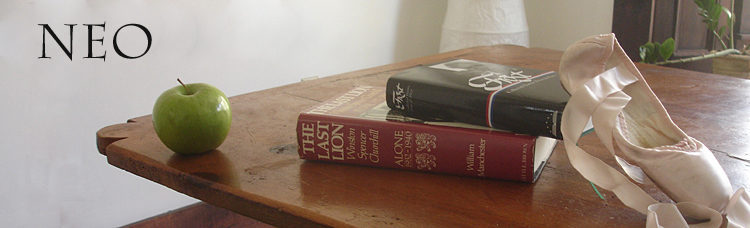
To A Child Dancing In The Wind
by William Butler Yeats
I
Dance there upon the shore;
What need have you to care
For wind or water’s roar?
And tumble out your hair
That the salt drops have wet;
Being young you have not known
The fool,s triumph, nor yet
Love lost as soon as won,
Nor the best labourer dead
And all the sheaves to bind.
What need have you to dread
The monstrous crying of wind?
II
Has no one said those daring
Kind eyes should be more learn’d?
Or warned you how despairing
The moths are when they are burned,
I could have warned you, but you are young,
So we speak a different tongue.
O you will take what ever’s offered
And dream that all the world’s a friend,
Suffer as your mother suffered,
Be as broken in the end.
But I am old and you are young,
And I speak a barbarous tongue.
[Emphasis mine]
One of my favorite JB songs. Been listening to his music over 50 years. And very appropriate.
Timeless truths.
We are all with you, Jeanne.
Over on Instapundit.
https://pjmedia.com/vodkapundit/2026/09/23/good-luck-keeping-ai-on-a-communist-leash-n4957557
Walter Russell Mead made a highly similar point yesterday in a WSJ editorial.
One of my favorite Jackson Browne songs.
Turns out it started as a song for a friend who was a male dancer, then morphed into one for his wife who died in 1976, then into a general song Browne sings when honoring the deaths of others.
_____________________________________________
I wrote this for a friend of mine who died in a fire. He was in the sauna in a house that burned down, so he had no idea anything was going on. It was very sad. He was a really interesting guy. Besides being a great dancer, he was an ice skater – he had a job in the Ice Follies. And he was a great tailor – he would make his friends clothes. He was a Renaissance man.
When I wrote him the song – it’s a song I’ve sung many times, other times when people have died – but I was making a metaphor out of the dance. Just the idea that your life is a dance. And there’s a line in it, ‘In the end, there is one dance you do alone.’
That’s one of the songs I’ve sung all through the years, and for me, it’s like going to that place, and dealing with the fact that life will end. It’s a sad song, but at the same time, it feels good to sort through that reality and touch base with it, and then go on.
–Jackson Browne (2016)
https://www.songfacts.com/facts/jackson-browne/for-a-dancer
huxley:
Yes, that line is an amazing one.
Also, the arrangement complements it. He sings the line solo with no musical accompaniment.
In one of my very first jobs, running a summer program for kids, my boss had that Jackson Browne lyric on a poster behind his desk. It has run through my head at random ever since, and has brought a little comfort with it.
Neo and huxley, the line about dancing alone at the end connects with another lyric from roughly the same time. I’m not otherwise much of a Grateful Dead fan, but Ripple makes me listen, and this lyric reminds me of those who’ve walked alone before me.
There is a road, no simple highway
Between the dawn and the dark of night
And if you go, no one may follow
That path is for your steps alone.
@neo: Also, the arrangement complements it. [Browne] sings the line solo with no musical accompaniment.
Nicely observed!
Something I especially like about reaction videos is hearing the insights of people, who are not Heap Big Critics, yet nonetheless share out of their own particular sensibilities.
I hear great stuff I would never have thought of.
Mrs. Whatsit:
“Ripple” was the song that turned me around on the Dead. The “American Beauty” album was their masterpiece.
I was marked forever.
________________________________
Let it be known there is a fountain
That was not made by the hands of men
–Grateful Dead, “Ripple” (Official Live Video)
https://www.youtube.com/watch?v=5yJmBC7cMTM
Another post on AI – is it another crisis that shouldn’t be allowed to go to waste?
https://www.americanthinker.com/articles/2026/09/do-covid-and-ai-rhyme/
AesopFan / AI….when the printing press was introduced, it was a force for the decentralization of information. But when the press became steam-powered and fed by stories distributed over the telegraph network, it drove re-centralization with only a select few deciding what got wide distribution.
And while the Internet was, initially, similarly a force for decentralization, when it is connected to AI it could become a force for even more powerful re-centralization.
I suspect that when people talk about AI risks, the main risk they are concerned about is that information flows will remain out of their grasps.