
And speaking of deals
There’s this explanation from Trump of the India/Pakistan ceasefire:
? JUST IN – TRUMP: "I said [to India/Pakistan] – let's stop it. If you stop it, we'll do trade. If you don't stop it, we're not gonna do any trade… and all of a sudden, they said, 'I think we're gonna stop.' And they have."
"We're gonna do a lot of trade with Pakistan, with… pic.twitter.com/IOYS87bLQ1
— Eric Daugherty (@EricLDaugh) May 12, 2025
Simplicity itself.
And then there’s this, which I see as another opening move:
President Donald Trump declared Monday that the U.S. “will no longer tolerate profiteering and price gouging from Big Pharma” as he signed an executive order implementing what his administration is calling “most favored nations drug pricing.”
“The principle is simple – whatever the lowest price paid for a drug in other developed countries, that is the price that Americans will pay,” Trump said at the White House. “Some prescription drug and pharmaceutical prices will be reduced almost immediately by 50 to 80 to 90%.”
Trump said that “starting today, the United States will no longer subsidize the healthcare of foreign countries, which is what we were doing. We’re subsidizing others’ healthcare, the countries where they paid a small fraction of what for the same drug that what we pay many, many times more for and will no longer tolerate profiteering and price gouging from Big Pharma.”
I suspect – although I don’t know – that his goal is to even out the prices; in other words, to lower our prices and raise the prices in other countries, so that the disparity isn’t as great. For example, he also said this:
For years, pharmaceutical and drug companies have said that research and development costs were what they are, and for no reason whatsoever, they had to be borne by America alone,” Trump said. “Not anymore, they don’t.”
So it’s a question of who will bear the cost of innovation. I have no idea whether this order is enforceable, and whether it will have the desired effect.
But I’ve long felt that the situation is more complicated than the “stick it to Big Pharma” people think, and I believe Trump is aware of that. For example:
The Pharmaceutical Research and Manufacturers of America trade group opposes the order, saying, “This Foreign First Pricing scheme is a bad deal for American patients.”
“Importing foreign prices will cut billions of dollars from Medicare with no guarantee that it helps patients or improves their access to medicines,” the group’s president, Stephen Ubl, said in a statement provided to Fox News Digital. “It will jeopardize the hundreds of billions our member companies are planning to invest in America, making us more reliant on China for innovative medicines.”
“To lower costs for Americans, we need to address the real reasons U.S. patients are paying more for their medicines. We are the only country in the world that lets PBMs, insurers and hospitals take 50% of every dollar spent on medicines,” Ubl also said. “In fact, hospital markups in 340B and the rebates and fees paid to middlemen in the U.S. often exceed the total cost of medicines oversees. Giving more of this money to patients will lower their medicine costs and reduce the gap with European prices.”
Not my field of expertise. Have at it in the comments.
Freed hostage Edan Alexander is now in Israel
Wonderful news. Hostage Edan Alexander, who is a citizen of the US and Israel, and who was kidnapped by Hamas on October 7, 2023, has been released and is in Israeli hands:
In a video released by the Prime Minister’s Office, Netanyahu says the release was “achieved thanks to our military pressure and the diplomatic pressure applied by President Trump,” calling it “a winning combination.”
Netanyahu adds that he spoke with Trump, who reaffirmed his commitment to Israel and promised to “continue working closely” to achieve the war’s goals: freeing all hostages and defeating Hamas.
“These goals go hand in hand,” Netanyahu says in the video.
Our wonderful MSM has been promoting the idea that there’s a rift between Trump and Netanyahu. You can find a ton of articles to that effect. Although I doubt they agree on everything (including the value of negotiating with Iran), I doubt any disagreements rise to the level of a “rift.” For what it’s worth, Ambassador Huckabee has strongly denied the rumors:
“He spent more time with the prime minister of Israel than he has any other world leader, so I would just say to people, ‘Relax, calm down, Donald Trump loves you, there’s no doubt about that, he’s got your back,’” Mike Huckabee told Israeli Channel 12 on Saturday night. “He is the same Donald Trump that, four years as president, did more for Israel than any other American president.”
As for Edan Alexander, first reports are that “suffered severe torture and was held handcuffed in a cage for an extended period of time.” Alexander was in the IDF when he was taken, and so he probably received especially severe treatment at the hands of his captors.
So, what price does Israel and/or the US have to pay to get Alexander back? It’s not completely clear, although Hamas doesn’t ordinarily give up such prizes for free. Supposedly his release is “unconditional,” but obviously something is expected. The question is what. Everything is speculation at this point except that it’s pretty obvious it comes just as Trump is about to visit Doha.
Edan Alexander isn’t the only American held by Hamas, but he’s probably the last living American hostage there:
Four additional American citizens remain captive in Gaza: Omer Neutra, Itay Chen and dual citizens Gadi Haggai and Judith Weinstein-Haggai, who are believed to be deceased. Talks are reportedly underway for the return of their bodies, with Boehler confirming that the U.S. has requested their repatriation.
Welcome home, Edan Alexander.
The China deal – for now
Trump certainly keeps those announcements coming. Here’s the CNN spin on the deal with China revealed today:
The United States and China agreed Monday to drastically roll back tariffs on each other’s goods for an initial 90-day period, in a surprise breakthrough that has de-escalated a punishing trade war and buoyed global markets.
The announcement, which was made in a joint statement, comes after a weekend of marathon trade negotiations in Geneva, Switzerland by officials from the world’s two largest economies, during which both sides touted “substantial progress.”
Both sides recognize “the importance of a sustainable, long-term, and mutually beneficial economic and trade relationship,” they said in the statement.
Global investors are cheering a thaw in the trade war sparked by US President Donald Trump’s massive tariffs, which have roiled financial markets, disrupted supply chains and stoked recession fears.
A “surprise breakthrough”? Most people on the right are not the least bit surprised, having considered the “punishing trade war” an opening move from Trump. In fact, I don’t even think that CNN is surprised – they might be disappointed, perhaps, because I believe they’d rather “stoke” more “recession fears.”
At any rate, this is probably still early on in the jockeying for position between the US and China. It’s a good sign, however.
Some details:
The mutual tariff revisions will be imposed by May 14. Trump’s 20% fentanyl-related levies on China, imposed in February and March, will stay. However, each side has agreed to lower “reciprocal” tariffs on the other by 115 percentage points for 90 days.
That effectively means the US will temporarily lower its overall tariffs on Chinese goods from 145% to 30%, while China will cut its levies on American imports from 125% to 10%, according to the joint statement.
Under the agreement, China will also suspend or cancel its non-tariff countermeasures imposed on the US since April 2.
And here’s Treasury Secretary Scott Bessent:
The consensus from both delegations is neither side wants to be decoupled, and what have occurred with these very high tariffs … was an equivalent of an embargo, and neither side wants that. We do want trade. We want more balance in trade. And I think both sides are committed to achieving that.
Statements by the Chinese were similarly positive.
Open thread 5/12/2025
When I was young, my mother still called the refrigerator the icebox:
Happy Mother’s Day!
[NOTE: This is a slightly-edited repeat of my traditional Mother’s Day post. It was written while my mother was still alive.]


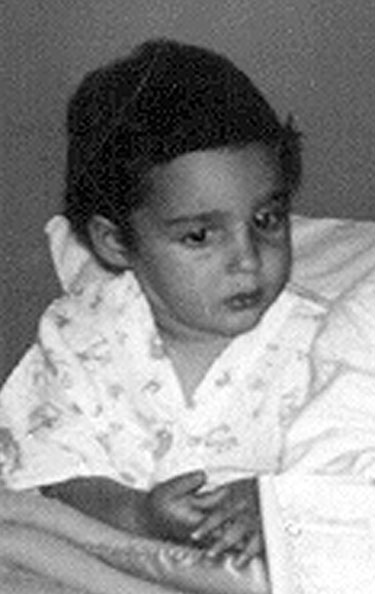
Okay, who are these three dark beauties?
A hint: one of them is one of the very first pictures you’ve ever seen on this blog of neo, sans apple. Not that you’d recognize me, of course. Even my own mother might not recognize me from this photo.
My own mother, you say? Of course she would. Ah, but she’s here too, looking a bit different than she does today—Mother’s Day—at ninety-eight years of age. Just a bit; maybe her own mother wouldn’t recognize her, either.
Her own mother? She’s the one who’s all dressed up, with longer hair than the rest of us.
The photo of my grandmother was taken in the 1880’s; the one of my mother in the teens of the twentieth century; and the one of me, of course, in the 1950s.
Heredity, ain’t it great? My mother and grandmother are both sitting for formal portraits at a professional photographer’s studio, but by the time I came around amateur snapshots were easy to take with a smallish Brownie camera. My mother is sitting on the knee of her own grandfather, my grandmother’s father, a dapper gentleman who was always very well-turned out. I’m next to my older brother, who’s reading a book to me but is cropped out of this photo. My grandmother sits alone in all her finery.
We all not only resemble each other greatly in our features and coloring, but in our solemnity. My mother’s and grandmother’s seriousness is probably explained by the strange and formal setting; mine is due to my concentration on the book, which was Peter Pan (my brother was only pretending to read it, since he couldn’t read yet, but I didn’t know that at the time). My mother’s resemblance to me is enhanced by our similar hairdos (or lack thereof), although hers was short because it hadn’t really grown in yet, and mine was short because she purposely kept it that way (easier to deal with).
My grandmother not only has the pretty ruffled dress and the long flowing locks, but if you look really closely you can see a tiny earring dangling from her earlobe. When I was young, she showed me her baby earrings; several miniature, delicate pairs. It astounded me that they’d actually pierced a baby’s ears (and that my grandmother had let the holes close up later on, and couldn’t wear pierced earrings any more), whereas I had to fight for the right to have mine done in my early teens.
I’m not sure what my mother’s wearing; some sort of baby smock. But I know what I have on: my brother’s hand-me-down pajamas, and I was none too happy about it, of that you can be sure.
So, a very happy Mother’s Day to you all! What would mothers be without babies…and mothers…and babies….and mothers….?
“Gloria” in three iterations
I had very vaguely remembered the hit song of the 80s entitled “Gloria,” sung by Laura Branigan, but that was about it for my knowledge of the song. But the other day I came across this version of a Leonard Cohen song and discovered that Laura Branigan had once been a Leonard Cohen backup singer. Her voice was so powerful, though, that it’s hard for her to make it stay in the background. You can really hear her characteristic sound here (it’s from 1976), although she’s not belting it out. She just had the sort of voice that could penetrate just about anything:
Then I got more curious about Branigan and her big hit “Gloria,” and discovered to my surprise that the song’s origin was from Beethoven by way of Italy. Surprised? I was. The original song has this history:
“Gloria” is a 1979 song written and composed in Italian by Umberto Tozzi and Giancarlo Bigazzi, and first translated to English by Jonathan King. A 1982 cover version by American singer Laura Branigan, with different English lyrics, peaked at number two on the US Billboard Hot 100 and has been certified platinum by the Recording Industry Association of America …
Umberto Tozzi first recorded “Gloria” in 1979, using the word “Gloria” and the fragment of a melody sung with that word from Ludwig van Beethoven’s setting of the Latin Mass, Missa solemnis.
It was a big hit in Europe. Here’s Tozzi, with some oddly but rather endearingly awkward dance moves, lip-syncing his own song. But the song and even the arrangement sounds exactly the same to me as its later (1982) American iteration with Branigan, although the words in translation are very different. Tozzi sings about a love with a perhaps imaginary but idealized woman named Gloria:
Powerhouse Branigan made it grittier and very 80s, but the music itself sounds remarkably similar:
Unfortunately, Branigan died at the age of 52. But Tozzi still goes on. Here he’s singing “Gloria” in 2022, no longer trying to dance, and looking and acting nothing like his earlier self. I’ll have to take it on faith that it’s actually him. He seems barely there, but the audience is having a great time:
ADDENDUM:
I certainly don’t want to leave out Beethoven. I thought it might be hard to find the phrase that was the inspiration for the pop song, but it wasn’t hard at all. I’ve spotlighted it here:
Here’s the whole piece:
Meet the potential 51st state: Alberta
I don’t think Alberta will actually secede from Canada. But it’s being seriously considered, at least by some people:
Alberta doesn’t belong in this Canada.
That’s not treason. It’s not even radical. It’s a simple observation of cultural, economic, and political reality — a reality growing starker by the year. Albertans have known for decades that something is deeply broken in the Confederation they were born into. But it’s only recently, as Ottawa’s indifference curdled into hostility, that many have begun asking the inevitable question: What if we left?
Not just to form a new nation. But to join one that already reflects their values. A nation that respects liberty, rewards hard work, and doesn’t treat resource-producing states or provinces like piggy banks and political afterthoughts. A nation that — however imperfect — still believes in the rule of law, in constitutional government, and in the right of free people to govern themselves.
That nation is not Canada. That nation is the United States.
From the moment Alberta entered Confederation in 1905, it was treated as an afterthought — an imperial holding ruled from the East. The so-called “national interest” always seemed to mean Quebec’s interest. And while Alberta built the pipelines, powered the economy, and filled the federal coffers, Ottawa wielded its power like a colonial governor, redistributing wealth and writing laws with no regard for the West’s values or prosperity. …
In 1998, Canada’s Supreme Court issued its landmark Secession Reference. The Court ruled that if a province were to vote clearly and decisively for independence, the federal government would be constitutionally obligated to enter into negotiations.
The union, in other words, rests on consent — and consent can be withdrawn.
Much much more at the link.
Ceasefire announced between India and Pakistan – but does it have any meaning?
Reports are that it was violated almost immediately, but who knows? This is from CNN, so take it with the usual grain of salt:
India and Pakistan agreed to an immediate ceasefire on Saturday, unexpectedly halting the worst fighting in decades between the nuclear-armed neighbors, just when their tit-for-tat strikes appeared to be spiraling out of control.
Although US President Donald Trump was the first to announce the ceasefire and claimed credit for it, India and Pakistan have offered contradictory accounts about the extent of US involvement in the agreement.
Just hours after the announcement there have been reports of violations from both sides.
Let’s make sure that Trump gets little credit if it ends up being a good thing. And let’s make sure he gets all the blame if it doesn’t hold.
More:
India’s Ministry of Information said the agreement was worked out “directly between the two countries,” downplaying US involvement and contradicting Trump’s claim. The ministry also said there was “no decision” to hold further talks.
But Pakistani officials have heaped praise on Washington.
“We thank President Trump for his leadership and proactive role for peace in the region,” said Prime Minister Shehbaz Sharif.
A Pakistani source familiar with the negotiations told CNN that the US – and Rubio in particular – was instrumental in striking the deal.
Time will … tell.
Ras Baraka, ICE, New Jersey, and dear old dad
Ras Baraka, the mayor of Newark, was arrested yesterday:
Authorities arrested Newark Mayor Ras Baraka for allegedly trespassing and ignoring warnings from the feds to leave an ICE facility.
The facility holds alleged violent criminals, such as MS-13 gang members and child rapists.
“Baraka reportedly entered the federal facility without authorization and refused to leave when ordered,” reported Shore News Network. “Homeland Security Investigations issued repeated directives for the mayor to remove himself from the premises, which he allegedly ignored.”
What a cause to choose.
Afterwards, he made this statement:
The U.S. attorney wasn’t there. She doesn’t know what happened. Clearly, that is not the context of what happened. I was there for over an hour in that space, and nobody ever told me to move. I was in there for over an hour, not a single person, not an officer from ICE, not any of the security guards. Nobody told me to leave that place.
Somebody from Homeland Security came in the end and began to escalate the situation, and we wound up being where we are today, and that’s frankly the extent of it. I didn’t go there to break any laws, I didn’t break any laws. I was there as the Mayor of the City, exercising my right and duty as an elected official, supporting our Congress people, preparing for a press conference that was supposed to happen there.
However, a video was released of the incident:
In the video, you can hear the Homeland Security agent asking Baraka to leave, and he also goes on to point out that multiple other warnings had already been given. …
Further, the fact that he was arrested outside the fence doesn’t change the fact that he was trespassing before that. If I break into your house but end up out on the lawn when police arrive, that doesn’t negate the crime that was committed.
Three House members – Democrats, of course – were also involved in the political theater. My guess is that Baraka was quite happy to be arrested so that he could claim he’s a persecuted hero.
When I first read the story, the name “Baraka” rang a bell, and it wasn’t just the resemblance to Obama’s first name. Back when Baraka had first been elected Newark’s mayor, in 2014, I wrote this post about him and his father. Here’s an excerpt:
So it appears that family, particularly Baraka’s father, and name recognition played a large part in Baraka’s victory. But in the entire 1000-word article, the Times somehow neglects to mention something I’d consider rather important about that family name, something that readers of a certain age (my age, to be exact) remember and that would enable newer readers to place Baraka’s father and understand who he was, and that’s his birth name, Leroi Jones, the name by which he first became famous as a “militant poet.”
The Times probably has good reason to leave this sort of thing out:
“Within the African-American community, some compare [Amiri Baraka, aka Leroi Jones] to James Baldwin and call Baraka one of the most respected and most widely published Black writers of his generation. Others have said his work is an expression of violence, misogyny, homophobia and racism. Baraka’s brief tenure as Poet Laureate of New Jersey (2002 – 03), involved controversy over a public reading of his poem “Somebody Blew Up America?” and accusations of anti-semitism, and some negative attention from critics, and politicians.”
If you follow the link to the poem you’ll find those accusations are hardly made-up, and you’ll find other examples on Baraka’s Wiki page to show that he was an equal-opportunity hater of almost everyone except black people, with “his advocacy of rape and violence towards, at various times, women, gay people, white people, and Jews.”
Unfortunately (or perhaps fortunately), the link to the poem that I originally provided is dead, and in a quick search I haven’t found the complete text of the poem anywhere. But there’s this:
The pushback was related to a poem he’d written in response to the September 11 attacks, “Somebody Blew Up America,” targeting forces of global oppression and singling out white men, who, according to Baraka, had committed the most crimes against humanity. Demanding its audience re-think assumptions, the poem fires a barrage of powerful statements and urgent questions, often in dramatic repetition: “Who? Who? Who?”
National public outcry against the work came after he read it at the 2002 Geraldine R. Dodge Poetry Festival in Stanhope, New Jersey. The poem includes the line “Who told 4,000 Israeli workers at the Twin Towers to stay home that day?” Accusing him of anti-Semitism, critics demanded he be removed from his post as New Jersey Poet Laureate. With no legal mechanism in place to unseat Baraka, the governor simply eliminated the position. The poet refused to apologize: “I don’t have regrets about writing the poem,” he said. “Because the poem is true.”
But really, his anti-Semitism was just the tip of a very large iceberg of hatred. See the plot of his 1964 play “Dutchman.” Part of the plot, which takes place on a subway (Clay is a young black man; Lula is a white woman:
Clay launches into a monologue. Clay suggests that whites let black people dance “black” dances and make “black” music. He explains that these segregatory actions assuage black Americans’ anger towards whites and distracts them from accessing the “white man’s intellectual legacy”. Clay states that if black people stopped trying to heal their pain through dance, music, civic participation, religion, or focusing on moving upwards in American society, and became coldly rational like white people, black people would just kill all the whites and be done with racism in America. Clay says that if he were to take Lula’s words to heart, he should just kill all the white people he meets.
Although Clay says all this, he deeply rejects this plan of action. He states that he does not want to kill and that he prefers to be ignorant of the problem. He says he would rather choose to pretend to be ignorant of racism, not try to get rid of it by fighting with whites.
Once Clay makes his confession, Lula changes strategies again. Clay makes as if to leave, but Lula coolly, rationally, stabs him twice to the heart. She directs all the other passengers, blacks and whites, in the train car to throw his body out and get out at the next stop.
How much of his father’s philosophy does Baraka the Younger share? I don’t know, but there’s this about his college days:
… [Ras Baraka] also began to synthesize his father’s militancy and start to define his own brand of activism. He was concerned about the apathy of his generation, that the Black movement his father and others had led in the ’60s and ’70s was foundering. He started a dorm-room meeting group, which in 1987 would provide security for Public Enemy when they visited the campus.
He transformed that group into a formidable student activist organization — Sons and Daughters of Panthers, later renamed Black Nia F.O.R.C.E. (Freedom Organization for Racial and Cultural Enlightenment), which met every Friday night on campus. The group’s philosophy was shaped, they said, by Martin Luther King Jr, Malcolm X and Louis Farrakhan — a wide variety, indeed. The structure and tone of the meetings were influenced by Nation of Islam and the Black Panthers, while at the same time resembled his father’s gatherings in Newark.
Later, Baraka headed a large protest at Howard when Lee Atwater was appointed to the Board:
At one point, police were ordered to storm the building. They dropped officers on the roof, who cut open a hole for entry, and rappelled inside, Baraka recalls. On a side entrance, they used a battering ram while football players on the inside leaned against the door. But then Washington Mayor Marion Barry arrived and called off the attack, aborting what could have been a deadly confrontation.
“From that point on, I was a Marion Barry supporter. I don’t care what he did,” Baraka said.
In the end, it was the university administration who blinked. Atwater resigned from the Howard board. The next month, the university’s president resigned. Foreshadowing his path toward politics, Baraka was elected as vice president of the Howard University Student Association.
The demonstration gave him name recognition and led to a political office within the university. It is apparent that Baraka’s current “protest” and arrest is aimed at positioning him as the frontrunner in the primary for the governorship:
With pollsters saying it’s still anyone’s ballgame, the final weeks will come down to the hopefuls energizing their followers and winning over undecided voters who don’t like President Donald Trump but have trouble distinguishing one Democrat from another.
While every Democrat has commercials saying they’ll fight Trump, Baraka’s arrest at the hands of the president’s ICE agents puts him in another league. It could anger Democratic voters and will energize his base. And with all this attention, everybody will know Baraka’s name.
“He was already over-performing,” the Democratic operative said of Baraka. “This is where our party is right now: looking for a fight with Trump.”
That’s what it’s come down to for the Democrats. It didn’t work for Kamala and Walz, but it just might work for Baraka in New Jersey.
Open thread 5/10/2025
US higher education is no meritocracy, and that doesn’t seem to be changing
That’s the premise of this article:
For most of its history, America’s higher-education system, for all its flaws, operated around a hard but fair rule: Raw intellectual firepower mattered. Talent mattered. The ability to retain information and apply it correctly mattered. Academic excellence was the surest path to opportunity. You didn’t need family connections (although they certainly helped). You didn’t need a billion-dollar last name (again, that didn’t hurt either). You needed results.
Academic brilliance is now, in many cases, a liability unless paired with the “correct” ideological identifier.
Today, that operating system is being systematically dismantled. Academic brilliance is now, in many cases, a liability unless paired with the “correct” ideological identifier. In the modern Ivy League, identity is currency. Grievance is gold. Merit, once the only metric that really mattered, is treated like a relic of an oppressive past.
That’s been true for quite some time, and the article indicates that despite Trump’s efforts, nothing has really changed. Well, it’s early yet. But it wouldn’t surprise me if it doesn’t change, because colleges are now dedicated not to learning but to destructive leftist goals.
The article doesn’t say too much else although it does give some details. But it brought to mind once again the fact that one of the main goals of today’s education in most Western countries is learning to hate your own country. It’s taught in lower levels and in higher ones, and it’s certainly not unique to the United States. In fact, it’s not only the US that is labeled hateful; it’s western civilization as a whole, and all its traditional values – one of which is meritocracy.
Which in turn reminds me of an old post of mine based on some work by Allan Bloom. I reproduce the relevant portion here (it constitutes the remainder of the present post), but you might want to read the whole thing.
[Here’s Allan Bloom] again [emphasis mine], with an important and telling anecdote from his own past: …
Civic education turned away from concentrating on the Founding to concentrating on openness based on history and social science. There was even a general tendency to debunk the Founding, to prove the beginnings were flawed in order to license a greater openness to the new. What began in Charles Beard’s Marxism and Carl Becker’s historicism became routine. We are used to hearing the Founders being charged with being racists, murderers of Indians, representatives of class interests. I asked my first history professor in the university, a very famous scholar, whether the picture he gave us of George Washington did not have the effect of making us despise our regime. “Not at all,” he said, “it doesn’t depend on individuals but on our having good democratic values.” To which I rejoined, “But you just showed us that Washington was only using those values to further the class interests of the Virginia squirearchy.” He got angry, and that was the end of it. He was comforted by a gentle assurance that the values of democracy are part of the movement of history and did not require his elucidation or defense. He could carry on his historical studies with the moral certitude that they would lead to greater openness and hence more democracy. The lessons of fascism and the vulnerability of democracy, which we had all just experienced, had no effect on him.
I find that passage about the obtuseness of Bloom’s history professor astounding as well as very descriptive of how we got here. The complete dominance of the radical professors as far as numbers go are a more recent manifestation, although there have long been some. But Bloom was a student of that history professor back in the mid-1940s, having been born in 1930 but having also been precocious enough to get his undergraduate degree at the age of eighteen from the University of Chicago after having entered at fifteen. The unnamed history professor Bloom describes in that passage was almost certainly not a radical. At most he was probably only mildly liberal. Perhaps he even passed for what was then known as conservative. If so, he was also unaware of the lessons to which Bloom refers to in that last sentence I quoted, even though – as Bloom notes – they had just experienced those lessons in WWII. The professor did not see any relation between what he was saying about the Founders and what would ultimately undermine our republic and all the values he probably held dear.
But Bloom, his student, saw it, even back then, even at so young an age.
Note also the tone of barely-restrained sarcasm; Bloom seems to have had a certain amount of contemptuous anger at those academics who could have been so stupid as to not have realized the effects of their throwing out the precious baby and leaving the dirty bathwater (it seems his first history professor was none too happy with his challenges, either). As the book goes on, some of the best passages involve Bloom’s description of the faculty’s craven abdication during the student uprisings of the 1960s, when he was one of those who tried (in vain, as it turned out) to hold his finger in the dike of the best traditions of Western Civilization. If you read the book [The Closing of the American Mind], pay particular attention to those uprisings, which were the template for what’s happening today.