…to the House’s fishing expedition attempt to subpoena Trump’s financial records from before he was president.
You can read about it here. It’s a temporary stay, pending a full appeal.

…to the House’s fishing expedition attempt to subpoena Trump’s financial records from before he was president.
You can read about it here. It’s a temporary stay, pending a full appeal.
I learned from an announcement at Ace of Spades last night that commenter “rickl” has passed away. He was a prolific commenter here for a decade, from 2006 to 2016. He hadn’t been active here in the last couple of years, but many of you may remember him and I thought you might like to know.
Rest in peace, rickl.
Good doggie:
NEW: President Trump honors Conan, the hero dog injured in the raid that led to the death of ISIS leader al-Baghdadi: "Conan did a fantastic job and we're very honored to have Conan here and to have given Conan a certificate and an award." https://t.co/Bqol3VEWS1 pic.twitter.com/0ZcImnpZIS
— ABC News Politics (@ABCPolitics) November 25, 2019
They’re young, they’re female, and they’re bold. And they’re having some difficulties:
The three most prolific members of the so-called “squad” of freshman Democratic congresswoman face allegations of violating campaign finance laws and House ethics rules for their personal or political benefit 10 months into their terms.
The article describes the charges against AOC, Rashida Tlaib, and Ilhan Omar. They certainly seem to be fast learners – in terms of political corruption.
They and their supporters will say the charges are (ahem) trumped up, and that they are being persecuted.
When Bill Clinton was impeached and then tried and acquitted in the Senate, Republicans controlled both legislative bodies. So the impeachment and trial – which was conducted with protection of minority and presidential rights, unlike the present-day process so far in the House – made a certain amount of sense. GOP control in the House pointed towards impeachment, and although GOP control in the Senate was nowhere near the requisite 67, at least it assured that the Republicans would be managing the proceedings in the Senate against Clinton.
In the case of the removal process for Richard Nixon – although it never came to impeachment and trial because Nixon resigned first – both legislative bodies were controlled by Democrats. The situation was very similar to what later prevailed with Bill Clinton, in which the opposition party (in this case, the Democrats) would have directed a Senate trial because it had a majority, but lacked 67 senators to convict. However, there was one huge difference: enough GOP senators had turned on Nixon that they went to him and informed him that a Senate conviction was highly likely. Therefore, he resigned.
But in both cases, that of Clinton and Nixon, the party opposed to the president controlled both bodies of Congress. This is not the case today, which brings us to a curious situation and a puzzlement: why are the Democrats doing this, if they control only the House and not the Senate?
My answers (some or all of the following):
(1) They feel that the propaganda value of the testimony will damage Trump for the election.
(2) They hope that something new will be unearthed during the process that will end up sinking him in the election.
(3) They hope that something new will be unearthed during the process that will end up sinking him in the Senate and that enough Republicans will come to their side to effect his conviction and removal.
(4) They want to satisfy their base.
(5) They are crazy.
(6) They can’t do math.
(7) They never even looked to the future, and so they forgot about the Senate aspect of the process.
There are probably more possibilities, but I think that’s enough for now.
And so far, (1) (2) and (3) seem to have backfired.
[NOTE: CBS legal analyst Jonathan Turley observes:
Whether this is intentional or not, it [impeachment and removal process] seems designed to fail in the Senate. I don’t think you could prove a removable offense of a president on this record even if the Democrats were in control. This thing is too narrow, it is – it doesn’t have a broad foundation, and it’s an undeveloped record. There are a lot of core witnesses that were not called. And the question is why? They said, “We want a vote by December. We want to vote before Santa.” Why? Why – why would you – why would you be pushing this instead of calling these critical witnesses?…
And so the question is, what is this going to look like in the Senate? And I got to tell you, I think this could be the trial that Trump wants. And they will – the first witness they call may be Hunter Biden.”
Turley, who is often described as a liberal but is actually more of the libertarian persuasion, is a bit like Alan Dershowitz in that he tends to be pretty fair and to sometimes speak up for Trump even though he is very much not a fan.]
And they are voting for pro-democracy candidates:
Pro-democracy candidates appear to have made major gains in Hong Kong’s district council elections, as early results trickled in Monday morning, with multiple high-profile pro-government figures losing their seats.
More than 2.9 million people turned out to vote in Sunday’s elections, which have been framed as a de facto referendum on the almost six months of ongoing protests in the semi-autonomous Chinese city. With more than 95% of constituencies declared, pro-democracy candidates appeared to have won a landslide victory.
Speaking to CNN, Kenneth Chan, an expert on politics and governance at Hong Kong Baptist University, said the more than 70% turnout — higher than any other election in the city’s history — “exceeded many predictions” and demonstrated both Hong Kongers’ commitment to democracy and that they are “counting on this election to point a way out of this impasse.”
A way out of the impasse? I wish that were true, but I don’t buy it. There’s this, for example:
China’s government has responded to a stunning landslide victory for pro-democracy candidates in the Hong Kong elections by emphasising that the city will always be ruled from Beijing, and warning against further protest violence.
The foreign minister, Wang Yi, warned against “attempts to disrupt Hong Kong”, as a few hundred people took to the streets again in support of protesters holed up in a university that has been under siege by police for over a week.
“No matter how the situation in Hong Kong changes, it is very clear that Hong Kong is a part of Chinese territory,” he told reporters on the sidelines of the G20 meeting in Tokyo. “Any attempts to disrupt Hong Kong or undermine its stability and prosperity will not succeed.”
They feel they can’t afford to lose Hong Kong. The only questions are how far they are willing to go to keep it, and how far the protesters are willing to go – as well as whether the police and/or military will continue to do the bidding of China or whether they will decide to cast their lot with the demonstrators (I see no sign of the latter, but I certainly don’t have any inside track on that).
More here:
The election results pose a dilemma for Beijing, and Hong Kong’s chief executive, Carrie Lam. Hand-picked to rule by party leaders, Lam always insists she rules independently, but is widely accepted to have coordinated her hardline response to protesters with China’s top leadership.
Before the vote, Lam often claimed she had the support of a “silent majority”, as she escalated the police response to protests, invoked sweeping colonial-era emergency powers, and ruled out meeting any of the protesters’ main demands.
That argument was clearly untenable after pro-government candidates were swept from power across the city, holding on to barely one in 10 seats on district councils. Nearly 3 million ballots were cast; both in absolute numbers and in turnout rates it was the biggest exercise in democratic participation that Hong Kong has seen.
However, the district councils don’t really have much power:
There will be few immediate political consequences in Hong Kong because the councils have limited powers, only a small budget and a mandate restricted to hyper-local issues such as parks, bus stops and waste collection.
But these local election victories may sow the seeds of greater long-term influence for democrats, because the councils play a role in choosing the city’s chief executive and some legislators.
Stay tuned.
This is a rare treat, a video featuring Suzanne Farrell of the New York City Ballet in Balanchine’s great work “Concerto Barocco” to the music of Bach.
Farrell was about 21 years old in this performance, and she was a singular dancer who is hard to describe, because her qualities were unusual. People keep using the word “mesmerizing” in the comments to describe her, and I think it is correct – although of course we’re looking at a technically-deficient black-and-white video on a computer screen, and dance is best experienced in three dimensions and in person.
Another thing I remember reading about Farrell is that she is a religious person. I think her dancing is a form of meditation, which is very different from the approach of most ballet dancers. She is not showing off or even “projecting.” Something internal is happening that is perceived by the audience but not directed to the audience. It is spiritual in its essence, and that quality was present from start, when she was a teenager.
From the comments at YouTube:
She never plays to the audience. Rather, she let’s you in on a private experience. She really does dance as if no-one is looking.
I call your attention to Farrell in the pas de deux, the passage I’ve cued up here:
And watch the repetitive revolutions (known as promenades) in arabesque penché. which Farrell gives a slightly spiraling effect (but doesn’t over-exaggerate the height of the raised leg in back, unlike more recent dancers), and then a few moments later the twirls and what I call the “swoops” where her excellent partner Ludlow carefully lowers her down almost to the floor as she bends backwards with fluidity:
Here’s the entire thing, in case you’re interested. The finale is really arduous (start at around 18:29 and watch to the end). And remember that this comes after close to twenty minutes of nonstop dancing for most of them:
This is good news:
On October 28, 2019, we reported on a stunning development in Nicholas Sandmann’s previously dismissed lawsuit against The Washington Post, Judge Reopens Nicholas Sandmann lawsuit against Washington Post.
The same judge has ruled in similar cases against CNN and NBC, and allows the cases to move forward on the same basis as the WaPo case…
…[I]n all three cases the only surviving claim is as to the allegation that Sandmann blocked Phillips. That’s a narrow issue on the surface, but it’s an issue Sandmann’s lawyers could drive a truck through because they get discovery of the entire news process that led up to the reporting — and who knows what they might find that would allow for trying to reinstate the other claims.
A couple of evenings ago, the conversation at the next table between two women went like this:
“None of this would be happening if only Hillary Clinton had been elected.”
“Yes, and she would have been elected if only Russia hadn’t interfered on Trump’s behalf.”
Stuck in January, 2017. The Mueller report, the FISA abuses, the revelations about the Steel dossier, the Strzok/Page emails, and all the rest – no significance. Here are two people who continue to believe in Russiagate, and who continue to deeply mourn the fact that Hillary Clinton was screwed out of her rightful place at the helm of the country.
They are hardly alone. If you go to MSM sites or blogs on the Democratic side and read the comments there, you can see that these two woman voice the majority position. Although the veneration of Hillary Clinton is sometimes absent, there is the firm conviction that Trump is guilty of all the things of which he’s accused, and that he only won the election of 2016 (or appeared to win it) because it was stolen with help from the Russians. The recurrent argument is that he must be removed through impeachment and conviction now, because he is planning to steal the 2020 election as well, and then his trail of corruption will continue, only worse.
Lawfare against Netanyahu has gotten to the point of this indictment:
Israeli Prime Minister Benjamin Netanyahu has been indicted on charges of bribery, fraud and breach of trust, Attorney General Avichai Mandelblit announced Thursday, prolonging the country’s political uncertainty as it looks set to head into its third national election in a year.
Netanyahu, who has denied any wrongdoing and said he is the victim of a “witch hunt,” faces up to 10 years in prison if convicted of bribery and a maximum 3-year term for fraud and breach of trust, according to legal experts.
“I give my life to this state, I fought for it, I was wounded for it. I have to say this is a very hard day,” Netanyahu said in a nationally televised address on Thursday night. “I think you need to be blind to see that something wrong is going on. This is a political coup.”
If it sounds familiar, that’s because it is. The main differences between what’s happening to Trump in the US and what’s happening to Netanyahu in Israel (besides the details) is that in the US the process is being handled by the correct mechanism for removing a president, impeachment (even though it’s being undertaken in a partisan and unfair manner), and in Israel the removal is being attempted through the court system.
In the US, although a president can be sued civilly while in office – a SCOTUS decision with which I have always disagreed – he or she cannot be criminally indicted. So although a US president can be impeached by the House and convicted by the Senate, a single unelected prosecutor cannot charge him through the court system.
It turns out that is true in Israel as well; an Israeli PM has immunity from prosecution. No Israeli PM has ever been criminally charged before. But the prosecutor in the Netanyahu case is asking that the Knesset waive Netanyahu’s immunity:
Mandelblit will now ask the Knesset to waive Netanyahu’s immunity, a process which can take 30 days.
Frequently, indicted MKs waive their immunity sooner, but Netanyahu has been trying to delay any impact on his power from the indictment process and may try to draw out the process longer.
This seems wrong to me, because it open up any Israeli PM to a politically vengeful indictment.
As for the charges against Netanyahu, although this article by Alan Dershowitz is from last March, it explains them quite well [emphasis mine]:
The first charge relates to the receipt of gifts — cigars, Champagne, jewelry and other items often gifted by friends to friends. If Netanyahu received a dozen cigars and bottles of Champagne and a few pair of cuff links from a friend who asked him to do the kind of favor politicians are often asked to do for constituents, no one would accuse him of a crime. But because the prosecutor believes he took too many of such items — the value, it’s said, comes to hundreds of thousands of dollars — he is being prosecuted.
But how much is too much for purposes of criminalizing gifts and favors? Where is the precise line one must willfully cross to make such gifts a crime? There is no written law or regulation that expressly states how much is too much…
No one in a democracy should have to guess where the line is that separates questionable actions from crimes. Netanyahu is being charged with guessing wrong.
The second and third charges share a fundamental flaw in that they seek to criminalize normal political behavior: Efforts by politicians to secure fair or positive media coverage, or minimize negative coverage, in exchange for particular votes or actions.
Netanyahu is being charged with accepting (or discussing accepting) the “bribe” of better coverage. But if seeking, accepting or expecting better media coverage were an element of crime, there would not be enough prisons in Israel or any other democracy to house the number of politicians who voted a certain way or who did certain favors with the expectation that it would improve their coverage by the media…
The larger point is that Israel has vague, elastic and open-ended criminal laws that can be stretched to target political opponents. So does the United States. In our country, such laws include obstruction of justice, conspiracy and witness tampering, as we have seen in the ongoing investigations of President Trump. In Israel, these include breach of trust and bribery — the crimes with which Netanyahu is being charged.
the precedents the attorney general is establishing will lie around like a loaded gun, ready to be picked up and misused for partisan advantage in future cases. Weaponizing accordion-like criminal statutes in the context of partisan politics threatens democracy, the rule of law, and in the case of the Netanyahu charges, the freedom of the press.
A fundamental question in any democracy is whether a single individual — in this case an appointed attorney general — should be empowered to make decisions that may thwart the will of the voters.
It’s an easy question for me to answer, and the answer is NO.
[ADDENDUM:I found the cursory of treatment of immunity and Knesset waiver in that article rather odd. It seemed as though a fuller explanation of the mechanism should have been offered, but there was just that brief mention without hardly any explanation at all.
So I decided to dig deeper just now, and I found that apparently the article misstated the situation, as best I can determine. In fact, the default position is not immunity from prosecution for a PM, but the Knesset can vote to grant immunity. Quite the opposite of the statement in the originally quoted article, which is somewhat puzzling.
That may explain why the charges have been filed at the present time. This is the situation and the timing, in more detail:
Netanyahu has 30 days – until December 22 – to ask the Knesset to grant him immunity from prosecution.
Under normal circumstances, when an MK is charged with a crime, the attorney-general must submit a copy of the indictment to the Knesset. Then the MK may go to the Knesset House Committee seeking immunity. At that point, the legal proceedings against the MK are frozen and Mandelblit cannot submit the indictment to the courts.
The House Committee would then vote, and if it grants the lawmaker immunity, it must go to a second vote in the plenum.
But these aren’t normal circumstances, and a vote on immunity for Netanyahu is unlikely to take place in the next six months, putting the prime minister’s trial on hold.
There have not been regular Knesset committees in almost a year, since the 20th Knesset was dissolved in December 2018. We’re now on the 22nd Knesset, and the election was over two months ago, but there still is neither an opposition nor a coalition to decide who heads which committees, and who sits on them.
More at the link.
So it appears that the prosecutor is taking advantage of the complete disarray of the Knesset due to the election results being so close that no one is in control. And it appears that the default position is no immunity for a PM. And it also appears that instead of waiting for a pending election, the prosecutor (one person) is going forward to try to finesse the upcoming election.]
Caroline Glick believes this is a big deal:
U.S. Secretary of State Mike Pompeo’s statement Monday that Israeli settlements are not illegal per se is the most significant shift in U.S. Middle East policy in the past generation…[T]he issue of the legality of Israeli settlements has been the defining issue of much of the international discourse on Israel for a generation.
In the vast majority of cases, the discourse has revolved around the widely held allegation – with no basis in actual law – that Israeli communities in Judea and Samaria are illegal. This allegation has served as the justification for a continuous barrage of condemnations of Israel in international arena and for anti-Israel legal verdicts in international courts…
Pompeo made two revolutionary assertions in his statement. First, he said that “after carefully studying all sides of the legal debate,” like the Reagan administration before it, the Trump administration has concluded, “The establishment of Israeli civilian settlements in the West Bank is not per se inconsistent with international law.”
Second, Pompeo noted, the near ubiquitousness of the false assertion that settlements are illegal has not advanced the prospects for peace. To the contrary, it has harmed the chances of getting to peace…
Pompeo’s statement, and indeed the Trump administration’s decision to publish its position now represents a complete rebuke of the European Union…
Since taking office, Trump has worked consistently to align U.S. foreign policy in the Middle East and beyond to the world as it is, rather than to the world as “experts” imagine it to be. In the Middle East, this realignment of U.S. policy has provided the nations of the region – including Israel and the Palestinians – with the first chance of reaching genuine peace they have ever had.
Will this matter, though? I can’t imagine that the EU or the international community will do an about-face because Trump says so. On the other hand, the old way wasn’t working at all. Those “experts” often haven’t been doing us any favors, and as we can see in the current impeachment drama, they are hopping mad about Trump’s defiance of their ways.
[Hat tip: Ann Althouse.]
The Guardian has published an article entitled “The 10 Greatest Cardigans”:
And “cardigans” isn’t some special British word for something more important than a sweater that buttons down the front. This is actually an article identifying and ranking the great button-down sweaters in history. #7 is that thick, nubby thing Jeff Bridges wore in “The Big Lebowski.” #4 is that even rattier thing Kurt Cobain wore in Nirvana’s MTV “Unplugged” performance. #1 is the J. Crew “symbol of Michelle Obama’s mastery of soft-power semiotics” that FLOTUS wore on her first visit to London
I saw “The Big Lebowski” and although I remember it pretty well I confess I didn’t remember the cardigan. Of Cobain’s sweater I have zero knowledge. And Michelle Obama’s cardigan? It didn’t do any more for me than the expression “soft-power semiotics” does. And yet Michelle’s sweater topped the Guardian list at #1, I suppose because everything the Obamas ever did was intensely praiseworthy to the Guardian.
This following didn’t make the cut. But I submit that it’s well worth at least honorable mention and maybe more:
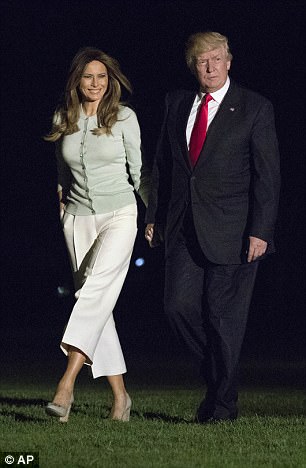
When I saw the headline of the article, I was almost positive that I knew what the #1 greatest cardigan would be: this one, of course.
I really don’t know how the Guardian could have ignored it.