
Erdogan again
In no surprise at all, Erdogan has won the runoff election in Turkey. This extends his rule for five more years.
Turkey is very different from the US, but boy does this sound familiar:
“The entire nation of 85 million won,” he told cheering crowds outside his enormous palace on the edge of Ankara.
But his call for unity sounded hollow as he ridiculed his opponent Kemal Kilicdaroglu – and took aim at a jailed Kurdish leader and the LGBT community.
The opposition leader denounced “the most unfair election in recent years”.
Mr Kilicdaroglu said the president’s political party had mobilised all the means of the state against him and he did not explicitly admit defeat.
International observers said on Monday that, as with the first round on 14 May, media bias and limits to freedom of expression had “created an unlevel playing field, and contributed to an unjustified advantage” for Mr Erdogan.
Posing as a unifier while being quite the opposite, the triumph of rhetoric over reality? Check.
Opposition claims unfair election? Check.
The media putting not just its thumb but its entire body on the scale, contributing to the “rigging” of the information prior to the election, in order to favor one candidate? Check.
And the results were fairly evenly split – it seems he’s won with about 52% of the vote. A close vote result is similar to the US, as well.
In addition, Turkey is experiencing rampant inflation of a degree that’s greater than ours; the article says the increase is close to 44% a year.
Erdogan is 69, which starts sounding young to me. He was the Prime Minister of Turkey from 2003-2014 and has been Turkey’s president ever since then:
Since a failed coup in 2016, Mr Erdogan has abolished the post of prime minister and amassed extensive powers, which his opponent had pledged to roll back.
Once power becomes entrenched, it’s extremely difficult to dislodge. As Erdogan himself famously said in the 1990s when he was the mayor of Istanbul: “Democracy is like a tram. You ride it until you arrive at your destination, then you step off” (depends on the translation; sometimes it’s not “tram” but “train” or “streetcar”). I have long thought that to be one of the most clever and succinct summations ever uttered of how “democracy” can be used as a vehicle for tyranny.
For Memorial Day: on nationalism and patriotism
[NOTE: Both are more threatened in this country now than ever before in my lifetime, due to a frontal assault from the left which controls the media and educational system as well as the federal government. The following is a repeat of a previous post, slightly edited and updated.]
The story “The Man Without a Country” used to be standard reading matter for seventh graders. In fact, it was the first “real” book—as opposed to those tedious Dick and Jane readers—that I was assigned in school.
It was exciting compared to Dick and Jane and the rest, since it dealt with an actual story with some actual drama to it. It struck me as terribly sad—and unfair, too—that Philip Nolan was forced to wander the world, exiled, for one moment of cursing the United States. “The Man Without a Country” was the sort of paean to patriotism that I would guess is rarely or never assigned nowadays to students – au contraire.
Patriotism has gotten a very bad name during the last few decades.
I think this feeling gathered more adherents (at least in this country) during the Vietnam era, and certainly the same is true lately. But patriotism and nationalism seem to have been rejected by a large segment of Europeans even earlier, as a result of the devastation both sentiments were thought to have wrought on that continent during WWI and WWII. Of course, WWII in Europe was a result mainly of German nationalism run amok, coupled with a lot more than nationalism itself. But the experience seemed to have given nationalism as a whole a very bad name.
Here’s author Thomas Mann on the subject, writing in 1947 in the introduction to the American edition of Herman Hesse’s Demian:
If today, when national individualism lies dying, when no single problem can any longer be solved from a purely national point of view, when everything connected with the “fatherland” has become stifling provincialism and no spirit that does not represent the European tradition as a whole any longer merits consideration…
A strong statement of the post-WWII idea of nationalism as a dangerous force, mercifully dead or dying, to be replaced (hopefully) by a pan-national (or, rather, anational) Europeanism. Mann was a German exile from his own country who had learned to his bitter regret the excesses to which a particular type of amoral nationalism can lead. His was an understandable and common response at the time, one that many decades later helped lead to the formation of the EU. The waning but still relatively strong nationalism of the US (as shown by the election of Donald Trump, for example) has been seen by those who agree with Mann as a relic of those dangerous days of nationalism gone mad without any curb of morality or consideration for others.
But the US is not Nazi Germany or anything like it, however much the far left may try to make that analogy. There’s a place for nationalism, and for love of country. Not a nationalism that ignores or tramples on human rights (like that of the Nazis), but one that embraces and strives for and tries to preserve them here and abroad, keeping in mind that—human nature being what it is—no nation on earth can be perfect or anywhere near perfect. The US is far from perfect, but has been a good country nevertheless, always working to be better, with a nationalism that traditionally recognizes that sometimes liberty must be fought for, and that the struggle involves some sacrifice.
So, I’ll echo the verse that figured so prominently in “The Man Without a Country,” and say (corny, but true): …this is my own, my native land. And I’ll also echo Francis Scott Key and add: …the star-spangled banner, O long may it wave, O’er the land of the free and the home of the brave. Those lines from the anthem express a hope that has been fading. But even though things are looking dim for both liberty and courage these days, it is not over.
When I looked back at my original, longer version of this post, I saw that it was written on Memorial Day in 2005, not that long after I began blogging. Seems longer ago than that. This is another portion of what I wrote then, and although I was describing my post-9/11 thoughts, I think it’s especially appropriate now [updates in brackets]:
I’d known the words to [our national anthem] for [over sixty years], and even had to learn about Francis Scott Key and the circumstances under which he wrote them. But I never really thought much about those words. It was just a song that was difficult to sing, and not as pretty as America the Beautiful or God Bless America (the latter, in those very un-PC days of my youth, we used to sing as we marched out of assembly).
The whole first stanza of the national anthem is a protracted version of a question: does the American flag still wave over the fort? Has the US been successful in the battle? As a child, the answer seemed to me to have been a foregone conclusion–of course it waved, of course the US prevailed in the battle; how could it be otherwise? America rah-rah. America always was the winner. Even our withdrawal from Vietnam, so many years later, seemed to me to be an act of choice. Our very existence as a nation had never for a moment felt threatened.
The only threat I’d ever faced to this country was the nightmarish threat of nuclear war. But that seemed more a threat to the entire planet, to humankind itself, rather than to this country specifically. And so I never really heard or felt the vulnerability and fear expressed in Key’s question, which he asked during the War of 1812, so shortly after the birth of the country itself: does that star-spangled banner yet wave, o’er the land of the free and the home of the brave?
But now I heard his doubt, and I felt it, too. I saw quite suddenly that there was no “given” in the existence of this country–its continuance, and its preciousness, began to seem to me to be as important and as precarious as they must have seemed to Key during that night in 1814.
And then other memorized writings came to me as well–the Gettysburg Address, whose words those crabby old teachers of mine had made us memorize in their entirety: and that government of the people, by the people, for the people, shall not perish from the earth. Here it was again, the sense of the nation as an experiment in democracy and freedom, and inherently special but vulnerable to destruction, an idea I had never until that moment grasped. But now I did, on a visceral level.
We certainly feel the threat now, don’t we?
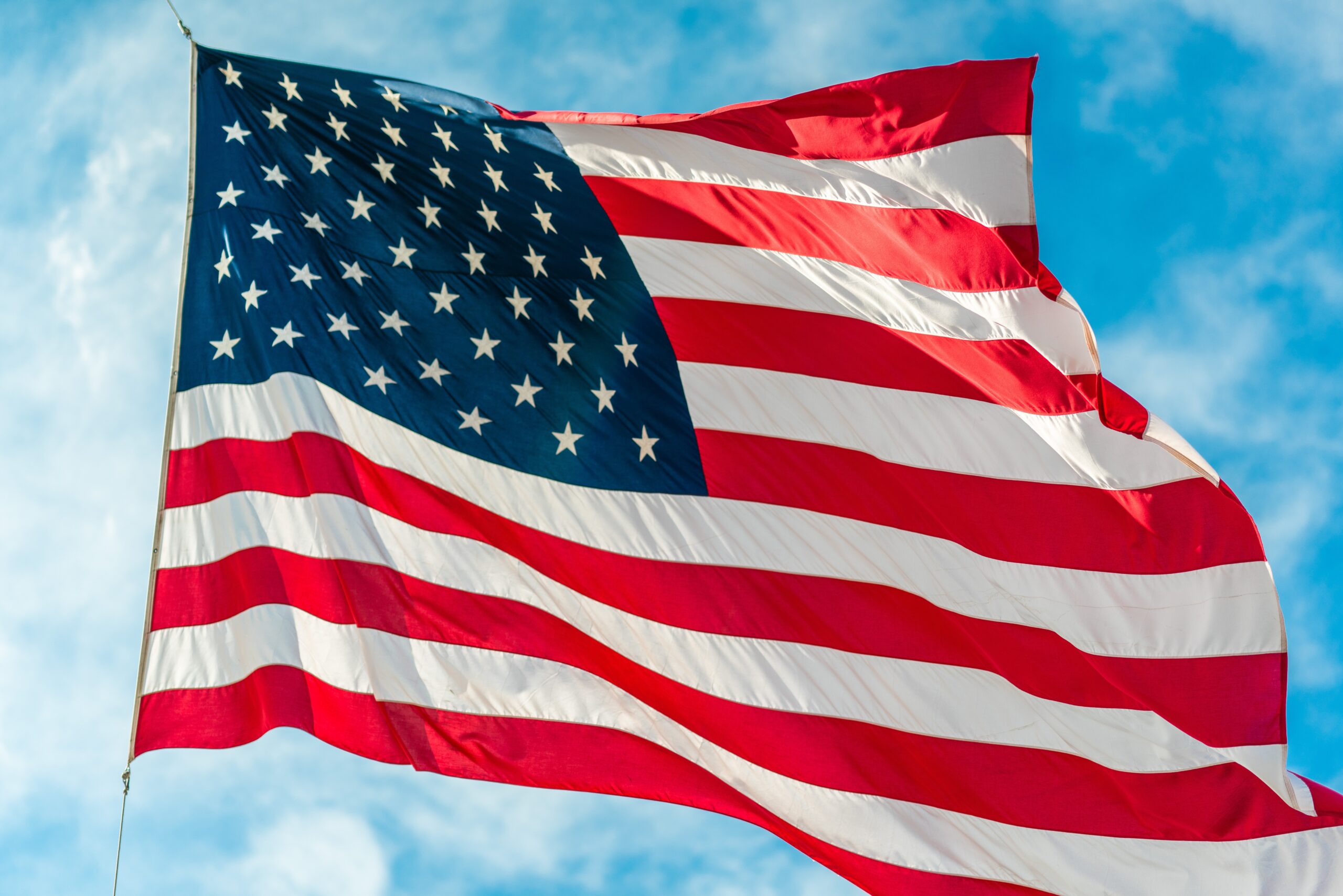
A song for Memorial Day
I’ve posted this song before, but I think it bears repeating, especially on Memorial Day.
It’s Tim McGraw’s extraordinarily moving song “If You’re Reading This“:
If you’re readin’ this
My momma’s sittin’ there
Looks like I only got a one way ticket over here.
I sure wish I could give you one more kiss
War was just a game we played when we were kids
Well I’m layin’ down my gun
I’m hanging up my boots
I’m up here with God and we’re both watchin’ over youSo lay me down
In that open field out on the edge of town
And know my soul
Is where my momma always prayed that it would go.
If you’re readin’ this I’m already home…
The first time I ever heard the song I got the chills as the lyrics unfolded and I realized what it was about, and then again and again as the heartstrings were jerked harder and harder as the song went on.
Most of us do, or should, feel a very strong gratitude to the men and women who sacrificed their lives to defend liberty here and abroad, and a very strong sorrow that it was necessary. On Memorial Day, we thank them.
Open thread 5/29/23
Taken recently.

Looking back with the Moody Blues
The Moody Blues were big in the late 60s. But for reasons I never could quite articulate, their music creeped me out at the time. It didn’t make sense that I disliked their songs, because they had many elements I tend to enjoy: male singers, British, harmony. Nevertheless, I just didn’t like the sound or possibly it had to do with whatever else was going on with me at the time.
But I never connected the following song to them at all when I heard it on the radio when it came out about twenty years later. A few days ago I learned for the first time that it was by the Moody Blues, and it surprised me because it seems stylistically different from their famous 60s works. Anyway, although I’ve rarely thought of it in the intervening years, I like its bounciness combined with regret (a combination the Bee Gees often explored as well), conveying a common human experience of looking back and yearning:
Time passes – about thirty more years. The high notes are the first to go:
An aged man is but a paltry thing,
A tattered coat upon a stick, unless
Soul clap its hands and sing, and louder sing
For every tatter in its mortal dress,
Nor is there singing school but studying
Monuments of its own magnificence;
And therefore I have sailed the seas and come
To the holy city of Byzantium.
The Humpty Dumpty left uses “ban” to mean whatever they say it does
And that meaning is 100% determined by politics.
Used to be that just about everyone understood that little kids didn’t have free access in their school libraries to everything ever published. Nor was every book in the world on their “recommended reading” lists.
Duuuh.
The word “ban” was reserved for prohibitions on the publishing or distribution of a book even for adults in a certain country or state or city. And the sale of pornography to minors was prohibited just about everywhere in the US (and plenty of other countries). I seem to recall that, in my youth, kids under 18 couldn’t even purchase a Playboy magazine, although I certainly knew that didn’t stop them from locating one. Even now, I don’t think kids can enter an “adult” bookstore or a shop that sells erotica and purchase something.
Remember the quaint “Banned in Boston”? That didn’t mean “not available in grade school libraries” or “not recommended for younger students.”
Now, however, there are numerous claims by the left that that type of school rule or non-recommendation constitutes a “banning” by the right. And I’ve heard Democrat voters I know parrot this idea back as though these actions constitute a real banning, whereas if most of them knew what was actually involved they’d be in favor of it. But the left doesn’t want them to know that.
Here’s the latest incident of this type from the left.
I know the definition of “ban” is already somewhat flexible but surely there are better words to to describe a book being moved from one section of the school library to… another section of the same library pic.twitter.com/x3icdHKtA1
— Kat Rosenfield (@katrosenfield) May 24, 2023
The left pays particular attention to the use of language, as Orwell knew full well.
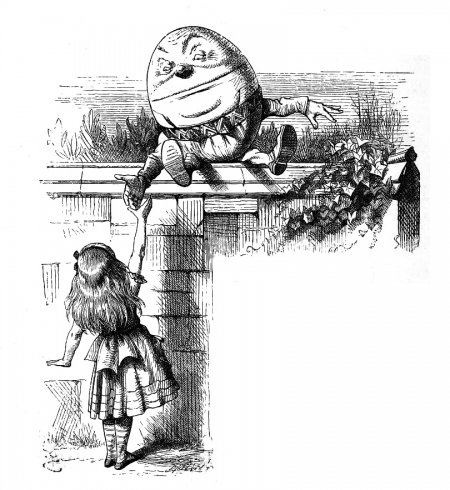
And why do I call them the “Humpty Dumpty left”? This is why:
`And only ONE for birthday presents, you know. There’s glory for you!’
`I don’t know what you mean by “glory,”‘ Alice said.
Humpty Dumpty smiled contemptuously. `Of course you don’t– till I tell you. I meant “there’s a nice knock-down argument for you!”‘
`But “glory” doesn’t mean “a nice knock-down argument,”‘ Alice objected.
`When I use a word,’ Humpty Dumpty said in rather a scornful tone, `it means just what I choose it to mean–neither more nor less.’
`The question is,’ said Alice, `whether you CAN make words mean so many different things.’
`The question is,’ said Humpty Dumpty, `which is to be master– that’s all.’
There’s no rule that a president and VP can’t be from the same state…
…although there’s a common misconception to that effect. I noticed a couple of people mentioning the supposed rule yesterday in the comments – thus, this post.
There’s no law or regulation against a president and vice president of the United States being from the same state. The reason why some people mistakenly believe such a prohibition exists comes down to a particular aspect of the Electoral College system laid out in Article II of the U.S. Constitution.
Article II states: “The electors shall meet in their respective states, and vote by ballot for two persons, of whom one at least shall not be an inhabitant of the same state with themselves.”
Under the original system, electors did not distinguish between candidates for the nation’s top two offices; the candidate with the most votes became president, while the runner-up became vice president. The 12th Amendment, adopted in 1804 after two chaotic elections, mandated that electors cast separate ballots for president and vice president. However, the rule preventing an elector from voting for two people from his home state remained in effect under the new system.
In most elections, this quirk in the system wouldn’t even matter.
In other words, a candidate for president can choose a VP from his or her home state. Nothing prohibits it and in most elections it’s fine. However – and this can be a rather big “however” – in a close election, and if the home state of both has many electoral votes, it can end up mattering.
How would it go if the election results were close, and the electors in Florida were prohibited from voting for both members of a (highly unlikely anyway) Trump/DeSantis ticket? Here are some possibilities:
One possible scenario is the Electoral College would vote to elect the new president but not elect the vice president. In that case, the election of the next vice president would become the work of the U.S. Senate, where each senator would get one vote.
If that vote is miraculously tied — well, we’re not sure what would happen next. Some people say the sitting vice president might get to break the tie. Others note that the vice president is not a senator, which is the process spelled out in the Twelfth Amendment…
Another possible scenario is that the Electoral College would vote to elect a new vice president and not a president. In this case, the U.S. House of Representatives would break that deadlock, with members of each state casting a single vote. A majority wins.
So it seems that nothing would prohibit it. But in these day of razor-thin victories, it would be highly inadvisable. Back in 2000, Cheney clarified – prior to the election – that he was a Wyoming resident rather than a Texas resident, in order to be Bush’s running mate and avoid the problem entirely. Recalling how close that 2000 election was, it turned out to be a good move on his part.
As I already wrote, though, I believe chances are extremely dim that Trump and DeSantis would ever run on the same ticket (note, by the way, Trump’s latest mendacious and hypocritical claim against DeSantis. That linked article also describes DeSantis’ stance on the IRS and taxation.)
Open thread 5/27/23
The most brilliant ballet takeoff ever:
What are you doing…
…Memorial Day weekend?
Something fun, I hope.
As for me, I might take off for some nature-gazing, but other than that I have no particular plans.
Wherefore woke corporations?
The right has a saying: “Get woke, go broke.” It’s not always true, but it does seem as though it is sometimes the case that taking a woke leftist stance hurts the bottom line. Just ask Budeweiser or Disney. And yet it’s seemingly done all the time.
It certainly didn’t used to be that way – that is, companies were far more rigorous in enforcing a “no-politics or alignment with causes” stance (see this). What changed? On the surface, it would seem to make no sense, but there are a host of reasons for it that probably would take a book to explain (and there may be a book someone has already written, and that someone isn’t me).
Here are a few of those reasons that come to mind: (a) the generation that is often in charge these days was educated, steeped, and marinated in leftist social activism as an absolute good and perhaps a required good (b) these woke campaigns are included in the general heading of historically less controversial anti-discrimination – in this case, in ascending order of presentation in time, anti-racism, anti-homophobia, and anti-transphobia (c) human resources departments have become completely dedicated to these things, as well; and (d) the companies are afraid of threats and boycotts by the left if they don’t toe the leftist line.
They are learning that the right can put economic pressure on them too.
Will it matter? I don’t know. I think there will be a little pullback by these companies from the more egregious examples, but not a lot.
Sort-of predictions for election 2024
Here are some predictions of mine, even though I usually try not to make political predictions. But I’ll go out a step or two on a limb and say that:
(1) Trump and DeSantis will not run on a ticket together, even though a lot of people would like it if they did.
(2) Robert Kennedy Jr. will not be the Democrat nominee. He’s considered a loose cannon by the Democrat establishment and the more people hear him the more they will be exposed to his wackier views, of which he has many. Nor is he the least bit conservative, although some of his somewhat more mainstream views, particularly on COVID, are shared by a lot of people on the right as well as some on the left. I also believe his voice problems are a drawback, although not as important a drawback as the rest.
(3) Nor will Michelle Obama be the nominee on the Democrat side. She doesn’t want the job.
(4) I continue to think Biden will be the nominee. The only way he’d be withdrawing would be if he experienced a catastrophic decline in health. Many people predicted he’d be replaced by now as president, but I never thought so – for the simple reason that he’s incredibly useful to the Democrat Party. He will do or say virtually anything the left requires, and he does it while cloaking himself in the aura of his stint as Obama’s VP, as well as his lengthy history in the Senate and his goofy fake-genial persona. Sure, he’s an old white guy, but he says and does the correct woke things and he chose Kamala as his VP, and although she’s been a bitter disappointment to the left in terms of her own popularity as a possible successor, she still checks the right boxes.
(5) The Republican nominee? I make no predictions. Trump is way in the lead, but it’s so early that most people aren’t really aware of much about DeSantis, not from their own perceptions anyway. I do think that the eventual nominee has a tough tough task ahead of him to overcome the built-in obstacles to victory in the presidential race.