…this is going to be resolved in the nick of time.
Am I being too optimistic?

…this is going to be resolved in the nick of time.
Am I being too optimistic?
I spent a ton of time the other day hooked up to a phone tree that went around in circles and ultimately failed to answer my question or even deal with it at all. I finally gave up.
But while I was engaged in listening to the chirpy pseudo-helpful voice giving me the numbers to press if I wanted assistance with this thing or that thing or that other thing (all leading to recorded help rather than a real live individual, of course), and hearing the intermittent blare of unpleasant music, I recalled those halcyon days when answering machines first came into being.
At the beginning, they seemed wonderful. They had not yet evolved to their present purpose of saving money while maximally annoying the customer/consumer/caller through avoidance of all human-to-human contact; back then, they actually routed you to someone who could answer your questions, if need be. It seemed a huge advance over the earlier method, at least for big companies with a lot of phone traffic, because in the past all you’d get would be a busy signal that could last all day.
But be careful what you wish for. We all know where it has led.
The same is true, to a great degree, of home phone answering machines, and later voicemail. At first it seemed a great way to make sure your message got through, rather than fruitlessly dialing with no answer when someone happened to be out. But then—slowly, over a period of many years—it seemed that more and more people were screening their calls. The practice began with those who were being harassed by someone, and so it made sense for them to screen calls. Then it morphed into those who were just too busy to answer. And then, with the advent of caller ID, it seemed that an increasing number of people—I really don’t know how many—never answered their phone at all, and have come to consider all telephone conversations to be a bother. And although in retrospect this denouement seems almost inevitable, who would have originally thought that this would be where our brave new world would lead?
Although the police have not officially named him, it’s pretty clear that Anders Behring Breivik, a native Norwegian, is the perpetrator in the Oslo terror attacks. The left has long been expecting another Tim McVeigh-style homegrown western terrorist, and now it looks as though they’ve found one in Breivik.
But so far we know very little about Breivik and his motives. And what little we do know is largely based on words that were posted by the killer himself on a Facebook page he set up just a few days before the killings:
On the Facebook page attributed to him, Mr Breivik describes himself as a Christian and a conservative. It listed his interests as hunting, body building and freemasonry…
Police chief Svinung Sponheim said that internet posting by Breivik suggested he has “some political traits directed toward the right, and anti-Muslim views”.
We can assume that Breivik composed the page knowing it would be heavily scrutinized after the mass murders, whether he lived or died. It was meant as a message, but of what sort? Is it true? Perhaps. Intentionally misleading? Perhaps. Half and half? Perhaps. He appears to have begun both the Facebook page and a meager (single tweet) Twitter account on the same day, July 17.
A great many people had originally theorized this was an al Qaeda attack due to its modus operandi, especially the double venue. It was logical to assume so, but also logical to point out that this conclusion might be wrong: the Timothy McVeighs of the world exist, and are not just a figment of some leftist multi-culturalist’s imagination. Evil comes in many guises, although it usually follows patterns.
Speaking of patterns, Breivik does seem to somewhat resemble McVeigh, with a few European twists. The perpetrator of the Oklahoma City bombing was a paranoid survivalist, loner (although he did have accomplices), and gun fanatic who hated government with a passion and bombed a government building. And Breivik does seem to fit the “loner” pattern even more than McVeigh; the Norwegian police have found Breivik’s allegiances to be somewhat of a mystery so far:
“He just came out of nowhere,” a police official told The Associated Press.
…[H]he didn’t belong to any known factions in Norway’s small and splintered extreme right movement, and had no criminal record except for some minor offenses, the police official told AP.
“He hasn’t been on our radar, which he would have been if was active in the neo-Nazi groups in Norway,” he said. “But he still could be inspired by their ideology.”…
Neo-Nazi groups carried out a series of murders and robberies in Scandinavia in the 1990s but have since kept a low profile.
“They have a lack of leadership. We have pretty much control of those groups,” the police official said.
So he’s not an official Nazi. Plus, Breivik calls himself “Christian” on his Facebook page. But his act is resoundingly un-Christian, and in fact anti-Christian; it goes against every tenet that Christianity holds dear.
The following appears to be the best clue about Breivik’s possible motives that has so far emerged [emphasis mine]:
He was a youth and adult member of the conservative Fremskrittspartiet (FrP) or Progress Party, VG newspaper reports, remaining involved until 2007. The party’s most prominent manifesto pledge is to minimize immigration.
His membership was confirmed by a senior party member, Jonas Kallmyr, who is quoted by VG as saying that encountering Breivik was “like meeting Hitler before World War II”…
[A] post in Breivik’s name in October 2009 advises “Hans”, described as the founder of Document.no, to “develop an alternative to the violent extreme Norwegian Marxist organisations Blitz, SOS Rasisme and Rod Ungdom” — all left-wing movements in Norway.
“The conservatives dare not openly express their viewpoints in public because they know that the extreme Marxists will trump them. We cannot accept the fact that the Labour Party is subsidising these violent “Stoltenberg jugend”, who are systematically terrorising the politically conservative,” the post reads.
He is making a reference to the youth movement of Prime Minister Jens Stoltenberg, who heads the Labour Party.
It’s quite a leap, though, from expressing that sort of anger in a comment on an online bulletin board to mowing down over 80 members of that youth movement in cold blood. The victims at the camp were all teenagers and young people, shot deliberately and methodically by the lone gunman:
“He first shot people on the island,” a 15-year-old camper named Elise told The Associated Press. “Afterward he started shooting people in the water.”
Those in the water were desperately trying to flee. This sort of cold-blooded behavior on the part of a perpetrator who sees and targets his victims seems less like the usual terrorist attack and more like the Gabrielle Giffords shooting in Tucson, or any number of school mass murders—such as, for example, Charles Whitman at the U. of Texas. But most of all it resembles Columbine.
People tend to forget (or never even knew in the first place) that the Columbine shooters were not hurt kids getting back at those who’d teased them, but instead had a grandiose political agenda:
…Harris and Klebold planned for a year and dreamed much bigger. The school served as means to a grander end, to terrorize the entire nation by attacking a symbol of American life. Their slaughter was aimed at students and teachers, but it was not motivated by resentment of them in particular. Students and teachers were just convenient quarry, what Timothy McVeigh described as “collateral damage.”
The killers, in fact, laughed at petty school shooters. They bragged about dwarfing the carnage of the Oklahoma City bombing and originally scheduled their bloody performance for its anniversary. Klebold boasted on video about inflicting “the most deaths in U.S. history.” Columbine was intended not primarily as a shooting at all, but as a bombing on a massive scale. If they hadn’t been so bad at wiring the timers, the propane bombs they set in the cafeteria would have wiped out 600 people. After those bombs went off, they planned to gun down fleeing survivors. An explosive third act would follow, when their cars, packed with still more bombs, would rip through still more crowds, presumably of survivors, rescue workers, and reporters. The climax would be captured on live television. It wasn’t just “fame” they were after””Agent Fuselier bristles at that trivializing term””they were gunning for devastating infamy on the historical scale of an Attila the Hun. Their vision was to create a nightmare so devastating and apocalyptic that the entire world would shudder at their power.
And, but for a few problems with the explosives, they might have succeeded in at least some of this.
I started out by comparing Breivik to McVeigh, and the parallels seem obvious. But on reflection it seems that the better analogy might be to Harris and Klebold—who in turn acknowledged themselves to have been inspired by McVeigh. Breivik can call himself whatever he wants on his Facebook page, but my strong hunch is that, in the end, his motives will turn out to be a toxic mix of the personal and political: a combination of psychopathic imbalance, grandiosity, fascination with guns, and rage at the Labour Party for its advocacy of multiculturalism.
Okay, I take it back.
It’s really, really, really hot today.
Maybe. Sure looks like it:
A bomb killed seven people in Norway’s capital Oslo on Friday…Shortly afterwards, a gunman opened fire at the island of Utoeya north-west of Oslo, where Stoltenberg’s Labour party youth section’s annual gathering was taking place.
Daily newspaper VG said on its website a man dressed as a policeman had been shooting wildly and had hit many people.
Norwegian commercial broadcaster TV2 said several people had been killed in the shooting spree.
There was no clear claim of responsibility and while the attacks appeared to bear the hallmarks of an Islamist militant assault, analysts said it was too early to draw any conclusions.
NATO member Norway has been the target of threats before over its involvement in conflicts in Afghanistan and Libya.
Multiple, time-coordinated attacks? Car bomb? Sure has the hallmarks of Islamicist terrorism (or what the Reuters article so carefully calls a “militant assault,” although rather surprisingly they do manage to put the word “Islamist” in there too). And Oslo has the people, some of whom have the motive. Norway has a sizable but hardly enormous Muslim population, somewhere between 2% and 3.4%, the majority of whom are from Pakistan. The city of Oslo, however, has a greater concentration of Muslims: 7.5%.
No, of course this doesn’t mean that it’s certain that the attack is an example of Islamicist terrorism. And yes, no doubt the majority of the Muslims of Oslo are law-abiding. But there’s no escaping the conclusion that Islamicist terrorism is the most likely explanation for this unprecedented (for Norway, anyway) attack.
No place to run, no place to hide—and Norway gets no points off for previous good behavior:
There have been previous threats against Norway, but political violence has been almost unknown in a country renowned for sponsoring the Nobel Peace Prize and mediating in conflicts ranging from the Middle East to Sri Lanka.
It seems clear that the death toll might have been worse—and it might have included the Prime Minister:
The bombing blew out windows in a 17-story modern building housing the prime minister’s office, set fire to the Oil Ministry across the street and left broken masonry, glass and twisted steel girders littering the street.
The mangled remains of an overturned automobile lay amid the debris.
Authorities said Prime Minister Stoltenberg was safe, as he had been working at home instead of in his office at the time of the mid-afternoon blast. Norwegians work short hours in the summer and many were on summer holidays, so there were fewer people on the streets and in office buildings than would normally be the case at that time of day.
“This is very serious,” Mr. Stoltenberg told Norwegian TV2 in a phone call. He said it was too early to say if the bombing was a terrorist attack. Police had advised him not to say where he was speaking from.
I hope that’s a mistranslation, because it’s certainly not too early to say if the bombing was a terrorist attack. It most certainly was, whoever the perpetrator[s] might be. Does Mr. Stoltenberg work for Reuters?
It also seems that Oslo’s got some catching up to do:
Oslo, a city of 1.4 million population, is a relatively easy target for terrorists. Residents interviewed after the bombing on Friday said security is fairly light around the government buildings that appeared to be the focus of the attack, with no restrictions on driving and parking cars in front of them.
That’s a very basic form of security, and I’m surprised it had not been implemented previously. Oslo may have been in denial until now, but that could change.
[UPDATE 6:32 PM—The gunman at the youth camp appears to have been Norwegian:
The gunman appeared “tall, blond and [of] Nordic looks” according to reports.
A reporter from Norwegian TV 2 news channel, Lasse Evensen, said he has spoken to several witnesses at the site.
“They told me that there was a man with light hair and light skin, 190 centimeters tall and well-trained, who pulled out an automatic weapon and opened fire,” said Evensen.
It has also been reported that someone has been arrested, although it’s not clear whether this was the gunman or someone else:
Norway’s Minister of Justice and the Police Knut Storberget said that a Norwegian man was arrested after being shot by police.
So it is possible that this was not an Islamicist terrorist attack, but the act of some other copycat group. It is also possible that it was indeed an Islamicist terrorist attack, and that ethnic Norwegians were recruited for the task. It is also possible that all of this information is misinformation; sometimes it takes a while for things to sort themselves out in an event so dreadful and chaotic. Reports are also conflicting about the number of teenagers killed; some witnesses have said as many as 30.]
[UPDATE 9:49 PM–One source claims that the suspect has been named, and that he’s a right-wing extremist. I can find no corroboration for this as yet, although it’s certainly possible. We know from the example of Tim McVeigh that home-grown terrorists can be extremely lethal.
Was McVeigh really a right-wing extremist? Well, he certainly wasn’t a man of the left. But I would characterize him more as a paranoid survivalist, loner, and gun fanatic who hated government with a passion—thus, his target, a government building. It would not surprise me if the Norwegian gunman were a somewhat similar figure who hates the present Norwegian government and ruling Labour Party, since these were his targets.]
…don’t work, because we seem to be getting fatter.
But never fear:
The definition of obesity is set by federal health professionals. Their calculations are controversial, in part, because the rate of premature death is lower among Americans in the “overweight” category than among those who fit into the “normal” weight category.
So, should we be encouraging weight gain? If so, I’ll do my bit:

[Hat tip: Althouse.]
The British phone-hacking scandal is something I’ve managed to avoid writing about so far, although if you’d like to read about the substance of it please feel free. But a new and admittedly more trivial angle that caught my attention is the recent fuss made about News International editor and accused hacker-in-chief Rebekah Brooks’s hair, which looked like this in happier days:

It’s not the usual female corporate hair, which is ordinarily sleek and smooth and/or pulled back. If a woman’s hair is her crowning glory, Ms. Brooks’s is a particularly noteworthy diadem. It reminds me of nothing more than the coifs of the women beloved by so many pre-Raphaelite painters such as Rossetti, whose Helen of Troy is typical of the genre:

And then of course there was Pretty Woman:

The associations are almost inevitable: Temptress. Wild woman. Sex. Trouble. Fun. Risk-taking. Free. Or—you fill in the blanks. Certainly not Corporate, Staid, Dependable, Predictable.
Although Brooks is a Brit, her curly-hair type is more typical of other ethnicities. For example, most influential black women in the public eye have long had to deal with the choice about what to do with hair that, in its natural state, can look pretty unruly. First Lady Michele Obama’s smooth hair choice has been the subject of no small amount of commentary (for husband Barack it’s easier: clip it short). And many Jewish women, likewise, have faced their own version of the dilemma (see Debbie Wasserman Schulz and her mane).
But hardly anyone gets off easy in this hair game. Even with hair that approximates the most acceptable look du jour, there are few wash-and-wear styles any more. The preferred do is so bone-straight that it can only be arrived at for many courtesy of a ceramic iron, which is a sort of hair press.
Here’s famous hairperson Jennifer Aniston sporting the look:
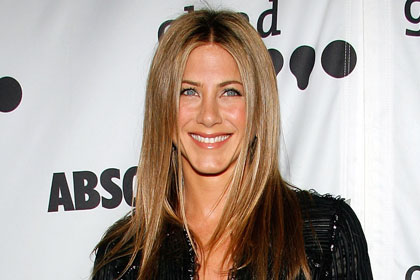
As for me, I’ve got a dog in this race: I’m a curly-haired woman myself, going in and out of fashion with the tide. Back in the 60s I had a fling with ironing it: never again. My face and hair seem to go together, and straight hair looks odd on me.
I won’t give out my secrets for working with my hair and making the curls more curly and less frizzy, but let’s just say it doesn’t just happen. YouTube is a testament to that—there must be thousands upon thousands of videos instructing girls and women of all ages, shapes, sizes, and ethnicities in taming their curly manes. Here’s a rather sweet one:
Note, by the way, the stylist’s remark, “Your face is made to complement your curls.” Or your straight hair, if that’s what you happen to have. And for the most part that’s true.
But I’m not so sure about Rebekah Brooks. Her hair and features don’t quite seem to go together. The hair overpowers the face; it’s just about all you notice. Perhaps, right now, that’s the way she prefers it.
It’s a correlation, not a causation, but still…
There’s an old New England joke that we’ve got two seasons here: winter and the Fourth of July.
But not this year. This year, folks, we’ve got a real summer, one that would do any place proud. It’s been sunny and hot nearly every day, mostly in the mid-80s to 90s. But, unlike most hot summers here (and we’ve had plenty of them), it’s not been humid, and there haven’t been tons of thunderstorms.
And this really nice summer weather has gone on day after day after day. Do you know how rare this is around here? And how pleasant? Usually when it’s in the 90’s in New England, everyone is highly uncomfortable and sopping wet.
And if it gets too hot, there’s always this:
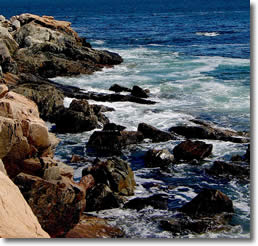
Carping bot:
The following time I read a weblog, I hope that it doesnt disappoint me as a lot as this one. I mean, I know it was my option to read, however I actually thought youd have one thing interesting to say. All I hear is a bunch of whining about one thing that you could possibly repair in the event you werent too busy searching for attention.