I understand the temptation to pass hate speech laws.
But there’s a temptation to do a lot of things that are wrong and lead to an unacceptable loss of liberty. We are not free to do anything that harms another person, but with just a few exceptions (for example, the old yelling “fire” in a crowded theater*) we should be able to say anything. Once speech is made actionable because it expresses hate or harms some group’s feelings, we are already far far down a steep and slippery slope. “Speech” includes propaganda.
“I can tell you that Canada has one of the most comprehensive sets of laws against hate crime anywhere in the world,” wrote Sirois.
She highlighted what she termed “hate propaganda” provisions in the Criminal Code criminalizing the promotion of hatred against an identifiable group, and further noted that “identifiable group” now includes any section of the public distinguished by “among other characteristics, religion or national or ethnic origin.”
The article indicates that Canada is considering using these laws against the groups promoting boycotts of Israel.
Now, I happen to be a supporter of Israel, and I am completely against the BDS groups and their lying propaganda, and believe them to be highly antisemitic for the most part although they deny it. In a country with hate speech laws, they would be one of the groups I’d consider it sweetest to prosecute. But I support neither such laws nor such prosecution, because the hate speech laws are still wrong even when used against groups whose work I despise.
More and more and more as time goes on, I think that a large part of American exceptionalism is its attitude towards free speech and therefore its commitment to liberty, which is beginning to seem unique in all the world but is increasingly threatened.
[* See this for the evolution of that doctrine and its present-day manifestation.)
[NOTE: This is a repeat of my traditional Mother’s Day post. It was written while my mother was still alive.]
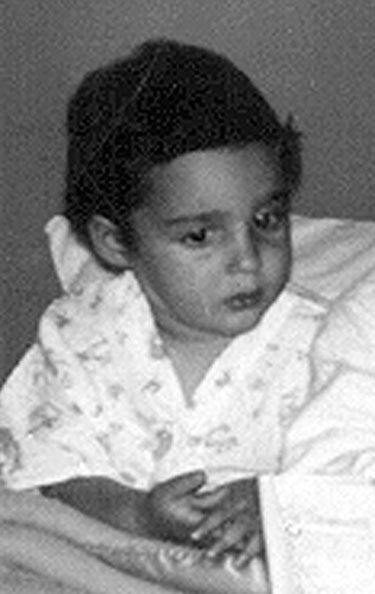
Okay, who are these three dark beauties?
A hint: one of them is the very first picture you’ve ever seen on this blog of neo-neocon, sans apple. Not that you’d recognize me, of course. Even my own mother might not recognize me from this photo.
My own mother, you say? Of course she would. Ah, but she’s here too, looking a bit different than she does today—Mother’s Day—at ninety-eight years of age. Just a bit; maybe her own mother wouldn’t recognize her, either.
Her own mother? She’s the one who’s all dressed up, with longer hair than the rest of us.
The photo of my grandmother was taken in the 1880’s; the one of my mother in the teens of the twentieth century; and the one of me, of course, in the 1950s.
Heredity, ain’t it great? My mother and grandmother are both sitting for formal portraits at a professional photographer’s studio, but by the time I came around amateur snapshots were easy to take with a smallish Brownie camera. My mother is sitting on the knee of her own grandfather, my grandmother’s father, a dapper gentleman who was always very well-turned out. I’m next to my older brother, who’s reading a book to me but is cropped out of this photo. My grandmother sits alone in all her finery.
We all not only resemble each other greatly in our features and coloring, but in our solemnity. My mother’s and grandmother’s seriousness is probably explained by the strange and formal setting; mine is due to my concentration on the book, which was Peter Pan (my brother was only pretending to read it, since he couldn’t read yet, but I didn’t know that at the time). My mother’s resemblance to me is enhanced by our similar hairdos (or lack thereof), although hers was short because it hadn’t really grown in yet, and mine was short because she purposely kept it that way (easier to deal with).
My grandmother not only has the pretty ruffled dress and the long flowing locks, but if you look really closely you can see a tiny earring dangling from her earlobe. When I was young, she showed me her baby earrings; several miniature, delicate pairs. It astounded me that they’d actually pierced a baby’s ears (and that my grandmother had let the holes close up later on, and couldn’t wear pierced earrings any more), whereas I had to fight for the right to have mine done in my early teens.
I’m not sure what my mother’s wearing; some sort of baby smock. But I know what I have on: my brother’s hand-me-down pajamas, and I was none too happy about it, of that you can be sure.
So, a very happy Mother’s Day to you all! What would mothers be without babies…and mothers…and babies….and mothers….?
…and yet Galina Mezentseva has been retired for at least twenty years, and is of my generation.
The minute I watched the very first video that I’d ever seen of her, which featured her performing Odile (the Black Swan role in “Swan Lake”), I was riveted. I’ve seen plenty of dancers, and know the styles of so many that for the most part I don’t even have to see their faces to identify them. They are all a bit different, but they divide into types.
But Mezentseva is different from all of them. She has an unusual combination of qualities that could seem really mannered and affected but does not because some extraordinary conviction, a seamless dramatic commitment on her part, plus a tremendous physical strength that never comes across as delicate or fragile but is still very beautiful and feminine, as well as a musicality that never falters, transcends it all and puts her performance into another realm—the realm of the nearly inhuman.
There isn’t a moment you aren’t assured that her balance will be plumb straight. There isn’t a moment she isn’t fully stretched, particularly her endless (and somewhat thin, even for a dancer) arms. Nothing is left to chance, nothing is unintentional, and everything is of a piece. When upright with arms fully stretched, her fingers seem to extend outward into the space around her—to the ceiling, to the wings—and she gives the illusion of filling the entire stage not just with her presence, but with her body.
I’ve never seen anything like it. And this is a video, never the best medium for dance.
She poses sometimes, and that has a certain stagey element. But I don’t care, because her poses are the fullest, most extreme expression of the music and the ballet I’ve ever seen, and she does all of this without looking like a gymnast or contortionist. Remember that these videos were taken in the 70s and 80s, when this sort of physicality was almost unheard of. At one point she sustained a very severe Achilles tendon injury and was apparently never the same again, according to admirers, and I’m not sure whether any of these videos are after the injury, but they are still marvelous.
There are actually very few videos of her at all, for some reason. Here she is as Odette, the Swan Queen (I’m not keen on the photography here, which features too many closeups, but that’s a small and relatively unimportant point):
This one is a long documentary with excerpts from many ballets—very wonderful. There are a few talking heads here and there; you’ll have to speak Russian to understand them, because there are no subtitles. But there’s a lot more dancing than talking.
There are many other videos at YouTube, if you want to watch more.
Here’s a good one to send round to all your liberal friends who are still accepting emails from you It’s two years old, but it’s new to me:
I teach a class at Stanford Business School titled “Financial Crises in the U.S. and Europe.” During one class session while explaining the events of September 2008, I kept referring to the efforts of the threesome of Hank Paulson, Ben Bernanke, and Tim Geithner, who were joined at the hip in dealing with firm-specific problems as they arose.
One of my students asked “How involved was President Bush with what was going on?” I smiled and responded, “What you really mean is, ”˜Was President Bush smart enough to understand what was going on,’ right?”
The class went dead silent. Everyone knew that this was the true meaning of the question. Kudos to that student for asking the hard question and for framing it so politely. I had stripped away that decorum and exposed the raw nerve.
I looked hard at the 60 MBA students and said “President Bush is smarter than almost every one of you.”
More silence.
I could tell they were waiting for me to break the tension, laugh, and admit I was joking.
I did not. A few shifted in their seats, then I launched into a longer answer.
Yesterday I wrote a post discussing certain liberals who say Pam Geller spouts hatred but who defend her right to do so. Some of them don’t even feel the need to give quotes or details in order to illustrate this supposed hate of Geller’s.
One, however—Jonathan Zimmerman—offered these examples of Geller’s hatemongering statements:
A few years ago, I invited Pamela Geller to visit the class that I teach about “culture wars” in the United States. Geller had recently spearheaded a campaign to block the construction of a mosque near the site of the World Trade Center attacks. I wanted my students to understand why.
Moments into her remarks, the answer became clear: Pamela Geller is an anti-Islamic bigot who couldn’t care less about the facts. Geller said the so-called “Ground Zero Mosque” was just the tip of a gigantic plot to “Islamicize” America. She warned that states and localities might adopt Sharia law, which would legalize polygamy and child marriage. And all of that would happen with the blessing of the “pro-Muslim” President Obama, whom Geller said could be a closet Muslim himself.
Geller herself came into the comments section of Zimmerman’s article to write this note about what Zimmerman had claimed she said that day:
Here is the video of the entire talk I gave to “Professor” Zimmerman’s class. It shows what a bald-faced liar he is. I never said the things he ascribes to me. Shame on Zimmerman and Politico.
She posts a link to the video after that, but I’ll give you the video itself. It’s long; a little over an hour, with the last 47 minutes or so devoted to a question and answer period she had with the students. Geller’s speech lasted about the first twelve minutes. Since Zimmerman had said that “moments into her remarks” Geller had revealed herself to be “an anti-Islamic bigot who couldn’t care less about the facts,” I figured I wouldn’t have to listen long to hear the type of hateful and fact-falsifying comments to which he referred.
I waited. And waited some more. I listened to the first 30 minutes of the video, and nowhere in that portion did I hear Geller say anything that I thought could reasonably be interpreted as Zimmerman portrays it. Perhaps she gets around to it somewhere in the last half of the question and answer period; I stopped listening when I got to minute thirty because all I had heard until then from her were very reasonable remarks, and I didn’t have unlimited free time at my disposal. Zimmerman had written that her bigotry, disregard of facts, and those other statements had occurred “moments into her remarks,” and I had given it much more than what are ordinarily regarded as “moments.” I heard nothing of the sort.
What did the video actually reveal? A libertarian position, including statements such as the fact that we need to offer support to moderate Muslims, because after all, “Who has suffered more at the hands of jihad than Muslims?”
She also says, “You can’t criticize Islam without being called a racist;” that certainly seems to be true, although “bigot” is the more popular descriptor these days. At minute 20:28 she makes it quite clear once again that she’s not accusing all Muslims. And around minute 22:20, as she is about to mention to the class an FBI statistic involving the number of hate crimes against Muslims, she adds as caveat, “Everybody check everything I say; I insist.” Doesn’t sound much like a disregard of the facts to me.
Watch and decide for yourself (and if there’s suddenly a lot of hatred expressed by Geller in the last 30 minutes, please let me know):
[NOTE: Here’s more about Jonathan Zimmerman. He’s a professor of education and history at NYU. He writes many op-eds, and on Philadelphia’s NPR he “discusses contemporary news events in historical perspective…In 2008 he received NYU’s Distinguished Teaching Award, the university’s highest teaching honor.”]
I’ve written a lot about the Pamela Geller incident and the reaction among pundits and the press, because it seems to me it has brought out some disturbing, although important, truths. The main one is how many people are willing to offer what Salman Rushdie called (in the aftermath of the Charlie Hebdo murders) the “Yes, but…” defense [sic] of free speech, which he rejects as no defense at all. Free speech means freedom for speech with which you disagree, by people you don’t much care for.
Another thing this has brought out is the virulence of the verbal attacks against Geller by her critics in this country, some of whom I’ve already pointed out, and their failure to offer any proof to back up their accusations. Another is that both Geller’s defenders and her verbal attackers (not her violent attackers, but her verbal ones) don’t necessarily break down neatly into the left vs. right camps you’d think they would.
Some liberals, for example, like Jonathan Zimmerman, absolutely loathe her and yet they pause in the midst of their vilification* to heartily and strongly defend her right to speak. His article is even titled “Je Suis Pamela Geller,” at the same time he’s also calling her an “appalling bigot” and “hateful” in it. Whereas some who are supposedly on the right and who might actually agree with some of her premises have said she should have kept quiet and not offended Muslims.
And yet it’s Zimmerman, who clearly despises her, who is defending her. Steven Lubet at TNRdoes almost exactly the same thing as Zimmerman—calls Geller a “a nasty-hearted Islamophobe” and calls her campaign to stop the ground zero mosque “despicable” and “repulsive anti-Islam activism.” Yet he adds:
Blaming her, even partially and conditionally, for an act of terror stretches moral reasoning beyond the breaking point…
There comes a point…when defiance is the only feasible response to censorship. In a better world, we would all respect the religious sensitivities of others, and no one would have cause for offense. Alas, we live in a world where atheist bloggers are hacked to death in the streets of Bangladesh, and Seattle cartoonist Molly Norris has been forced into hiding for four years after being placed on an Al Qaeda hit list. Self-silencing””at the point of a machete””is not the answer to this problem.
Lubet then makes sure the reader knows how much he hates Geller:
I stand second to no one in my contempt for Pamela Geller and everything she represents. Her derision of Islam and Muslims is morally wrong, but that does not make her morally responsible for the attack in Texas…
The defense of free expression should become stronger in the face of violent threats, not weaker.
It is to the shame of American liberalism that the assertion of such an essential ideal has defaulted to reactionary hatemongers such as Pamela Geller.
Like the NY Times, Lubet feels absolutely no obligation to illustrate what he’s talking about when he excoriates Geller in this way. The only specific offense of hers he even mentions is her opposition to the ground zero mosque—a position which, by the way, was shared by the majority of Americans and New Yorkers (by enormous margins). If that’s her offense, then most of America are reactionary hatemongers, too. And Lubet doesn’t even offer another example of her awfulness; we’re supposed to just take his word for it.
I find this one of the most curious aspects of the entire episode, although very emblematic of the leftist mind as I’ve come to know it. It is open season on Geller, and no one seems to feel the need to prove that she deserves such contempt. Nor was Geller a household word until this incident, so it’s not as though all the readers are familiar with her work. And yet some of the same people doing this also manage to defend free speech with some vigor, while the majority of their fellows (and some on the right as well) do not.
The distinction seems to come down to which people still value liberty at all. Some have lost that sentiment entirely, it seems.
[NOTE: *In the comments to Zimmerman’s article (at the moment, it’s the one at the top of the list), Geller herself offers this video in refutation of Zimmerman’s claims about what she actually said at the event he is describing.]
Earlier this morning I wrote about the fact that even Nate Silver, pollster extraordinaire, got this one wrong, and by a significant amount. I was thinking as I wrote that post that pollsters had gotten the Israeli election wrong as well. Both were predicted to be very close; both were not, in particular the UK election.
What went wrong with the polls? Now Nate Silver himself asks that question. Ever since the election of 2012 in this country, I’ve come to respect Silver as a pollster, because despite all the criticism he got that year, he was spot on. Here’s what Silver says:
Perhaps it’s just been a run of bad luck. But there are lots of reasons to worry about the state of the polling industry. Voters are becoming harder to contact, especially on landline telephones. Online polls have become commonplace, but some eschew probability sampling, historically the bedrock of polling methodology. And in the U.S., some pollsters have been caught withholding results when they differ from other surveys, “herding” toward a false consensus about a race instead of behaving independently. There may be more difficult times ahead for the polling industry.
I remember that, in the leadup to the election of 2012, a lot of conservatives were mocking the skewed polls, pointing out the cell phone problem, and in general saying the polls were biased. After the election, when the polls turned out to have been pretty accurate (and Silver extremely accurate), that put some of those arguments to rest. Now the arguments have woken from their slumber, making us wonder again—and making Silver wonder, as well.
It was predicted to be a very close election, too close to call. But that turned out to be a bad prediction, because Conservatives have done very well indeed in the UK election, so well that there will probably be no need to form a coalition government:
The BBC forecast, with 635 of 650 seats declared, is Conservative 331, Labour 232, the Lib Dems 8, the SNP 56, Plaid Cymru 3, UKIP 1, the Greens 1 and others 19.
Parliamentary elections are complex things, and the parties involved are many and various. This makes a majority rather than a coalition government something of a triumph. Prime Minister Cameron defied those who said he could not increase the Conservatives’ lead, and even FiveThirtyEight (Nate Silver’s blog), which was so impressive at calling our own 2012 election, didn’t do so well with the Brits.
Hope this “conservatives do well; better than expected” trend manages to spread to our side of the pond for 2016.
…[T]he Muhammad Art Exhibit and Contest in Garland, Tex., was not really about free speech. It was an exercise in bigotry and hatred posing as a blow for freedom.
Pamela Geller, the anti-Islam campaigner behind the Texas event, has a long history of declarations and actions motivated purely by hatred for Muslims…
Geller revels in assailing Islam in terms reminiscent of virulent racism or anti-Semitism…
As for the Garland event, to pretend that it was motivated by anything other than hate is simply hogwash.
Well now, there’s a tightly reasoned argument for you, worthy of the Times.
You may think I’m leaving out something important—some reason the Times gives for all this invective against Geller, some quotes or proofs or examples. Something other than the bald assertion of the editors, the argument from authority with the editors as the authority.
So here’s my challenge to the Times editors: give us some quotes from Geller. Some, you know, evidence of her hatred. Surely there must be reams and reams and reams. What has Geller said that’s so venomous and bigoted? About whom did she say it, all Muslims or Muslim terrorists? What was so hateful about the cartoon that won the contest, and why is it so obvious it wasn’t about free speech?
And while you’re at it, watch this video, and then tell us again that Geller’s Garland conference wasn’t about freedom of speech and that the very idea that it might have been is hogwash and pretense, and that it’s she who is the hater:
I realize that the Times editors will never do any of this, and it’s not just because they don’t read this blog. They will never feel the need to back up what they are saying in their editorial about Geller because they don’t have to do it—their readers neither demand nor expect it.
It isn’t often you see a majority of this magnitude:
The vote on cloture on the Corker-Menendez bill was 93-6; the final vote on the merits, 98-1. With that, the Senate rebuked the White House’s plan to avoid Congress entirely on a final Iran deal. If there is a final deal, at least President Obama will be barred from immediately lifting sanctions, will have to turn over the whole deal to lawmakers and will risk a resounding bipartisan “no” vote. It is not ideal, but only Sen. Tom Cotton (R-Ark.) in the end made the perfect the enemy of the good to vote no on the merits.
So what, you might say? Lots of conservatives think it’s a bad deal because without it, a 2/3 vote would be needed to approve the deal as a treaty, and with it, a 2/3 vote (because of the necessity for a veto override) will be needed to block it. But they are ignoring reality, which is that without it there is not chance it would even come up before Congress at all, because Obama would consider it not to be a treaty, and he could win that argument.
Such a huge majority could only be achieved with a bill that didn’t contain any of the stronger amendments that McConnell blocked; in fact, no majority would have been achieved at all. The Don Quixotes among you probably don’t care; better no bill than this one. The Sancho Panzas (that includes me) disagree, and say this is a bill that at least has a chance of stopping some parts of an Iran deal, and it’s the only way that could have been accomplished.
I may be writing another post on this, but not today (busy day). In the meantime, I pretty much agree with what Scott Johnson has to say on the matter.
I have heard, or read, person after person stating as a given that Pam Geller is a hater, and/or that what she is doing is hate speech, and/or that she hates Muslims. Just Google “Pam Geller hates” and you’ll come up with a ton of hits to that effect. But when I look at a random selection, I see a bunch of articles that either fail to quote something specifically hateful that Geller has said, or quote something out of context in a way that doesn’t fairly represent what was being said by Geller if you go to the source.
You can do it yourself if you want; maybe you can find some Geller quotes in articles criticizing her that are more pointed or more accurate, and which make a good case that Geller is a hater. But as far as I can see, this alleged hate by Geller seems like pretty weak tea compared to two other types of hatred: the hatred expressed by some of those accusing Geller of hate, and the hatred regularly taught by Palestinians to children in a manner that’s become so mainstream that it’s even featured on children’s TV programs (and that latter hatred taught by Palestinians is, by the way, not just against Zionists or Israelis, it’s against Jews).
You don’t believe me? For an example from the category of the Geller-accusers, take a look at the very first article on Geller that comes up in the aforementioned Google search. It’s not on an obscure website, either; it’s at the NY Daily News, and it’s by Linda Stasi (no, I’m not making that name up). Entitled “With Pamela Geller’s Prophet Muhammad cartoon stunt in Texas, hate rears its ugly face again,” it’s a bit confusing as to whose “hate” is being referenced there—the would-be killers’, or Geller’s, or perhaps the author’s.
You be the judge. Here’s the lede:
Looks like Pamela Geller will get her wish: More dead Americans at the hands of radical Muslims. Hell, the hatemonger finally even got ISIS to pay attention to her.
It goes on, of course. You really have to read the whole thing to get the full and robust flavor of it. But I’ll excerpt a bit more:
Geller, like ISIS and al Qaeda, revel in hate and nothing would make any of them happier than to be the catalyst for the killing of hundreds of innocent Americans to prove a point. Geller would be a hero to the hateful. Damn the cost in innocent lives, damn the heartache.
Don’t think for a minute that violence isn’t what she, just like the murderers of ISIS, want.
Although my own commitment to free speech means I won’t be calling for Stasi to be censored, I find it extraordinary that the NY Daily News would choose to publish something as—well, I guess the word could be “hateful” in its blame-the-victim mentality—as that. But of course they’re perfectly free to do so.
But if you really want to see hate, I suggest you take a look at this:
That is one of many such videos you can find at the excellent website Palestinian Media Watch, a site dedicated to publicizing what the Palestinian media and leaders actually say rather than what the sympathetic west would like them to be saying. It does invaluable work at exposing the teaching and institutionalization of hatred among an entire group:
Founded in 1996, Palestinian Media Watch is an Israeli research institute that studies Palestinian society from a broad range of perspectives by monitoring and analyzing the Palestinian Authority through its media and schoolbooks. PMW’s major focus is on the messages that the Palestinian leaders, from the Palestinian Authority, Fatah and Hamas, send to the population through the broad range of institutions and infrastructures they control.
PMW’s many reports and studies on Palestinian summer camps, poetry, schoolbooks, crossword puzzles, religious ideology, women and mothers, children’s music videos and the PA’s indoctrination of adults and children to seek Shahada (Martyrdom), have had significant impact on the way the world sees the Palestinians. PMW has presented its findings before members of US Congress and to members of Parliament in numerous countries, including the European Union, Britain, France, Norway, Sweden, Holland, Switzerland, Canada and Australia, and has lectured at universities and conferences world wide.
Browse the site, send links to other people if you’re impressed, and if you care to donate, please go here.