I noticed that there’s a proposal to ban the n-word in Boston public schools:
“The critical thing is making sure the students understand that we want to do this with them and that this is not about punishing them,” said Sadiki Kambon, director of the Black Community Information Center.
“We don’t want them suspended or expelled — we just want them to get on board with us,” Kambon said.
Kambon and Imam Abdullah Faaruuq of the Mosque for the Praising of the Lord in Roxbury emerged from an hour-long meeting with Chang at school headquarters saying they were encouraged by the enthusiasm to support The Coalition to Ban the N-Word.
Kambon’s effort was quickly praised by other black community leaders.
“I think it’s critically important. They’re trying to create an atmosphere where the word will not be tolerated, and I think that makes all the cultural sense in the world,” said Darnell Williams, director of the Urban League of Eastern Massachusetts.
My guess is that this is aimed more at black students’ use of the word than white ones, because the word has become rather casual among young black people today, partly as a result of rap music. Banning words is a very dangerous and slippery slope, although a school system has the power to ban lots of things that are usually considered rights (dress codes are standard in schools, for example). Schools maintain decorum, and trying to discourage the flinging of certain words around is part of that.
This is dangerous and troubling, though (and note some of the players, which makes me wonder what’s next for banning). When I was growing up, we kids would never even think of using such words or a host of others, in school or elsewhere. They were powerful and scary, and we didn’t ordinarily hear adults using them, either; it was a rare rare exception. You may have grown up in a different atmosphere, but that was the milieu in which I was raised, and my public high school was no stranger to minority students, either.
I’ve never used the n-word myself (except perhaps when directly quoting someone using it). Except for rap music—which I cannot stand and don’t voluntarily listen to—and movies and television and the like, I’ve never personally witnessed a person using it to address anyone.
Except for one time.
And that one time, the person was referring to me.
It happened when I was three years old. The elderly man across the street (who had probably been born in the 1870s, by my current calculations) said to me jokingly that I looked like “a little n***** baby.”
I had absolutely no idea what that was. But it didn’t sound like a pretty word, and the manner in which he said it didn’t sound nice, either. But when I asked him what the word meant, he just sort of chuckled at me.
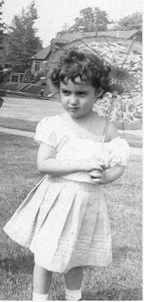
By the way, this is what I looked like around that time. It was in the summer, when I played outdoors nearly every day and always got a very dark suntan (and no, I didn’t ordinarily carry a paper umbrella around; this was a gift I had been given and it only lasted a day before it broke):
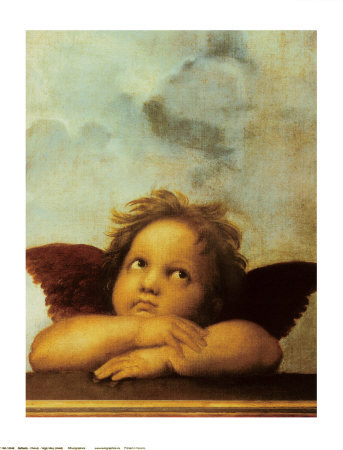
My mother often used to call me something quite different, which she meant to be affectionate: sullen cherub.
That day, though, when I got home from across the street and asked her what the word n***** meant, she was very sharp with me.
“Where did you hear that?” she asked, frowning.
I told her that the old man across the street had called me that. She said it was a very very bad and rude word that meant the same as Negro people (which was the “right” word back then), but that I should never ever say it. And that was that.
But it scared me that a mere word could have such power, and I’ve remembered the incident all these years.