↓
 

The New Neo

A blog about political change, among other things

  • Home
  • Bio
  • Email
Home » Page 1058 << 1 2 … 1,056 1,057 1,058 1,059 1,060 … 1,934 1,935 >>

Post navigation

← Previous Post
Next Post→

A couple more things about Trump and Judge Curiel

The New Neo Posted on June 7, 2016 by neoJune 7, 2016

My “note” at the end of this post has engendered quite a bit of discussion about Trump’s remarks accusing Judge Gonzalo Curiel of bias. First, let me repeat a bit of what I wrote there:

Trump’s “racist” comment about the judge was to say that he had “an absolute conflict” because he was “of Mexican heritage” and a member of a Latino law association…It’s a question of Trump’s attacking someone’s identity as a member of an ethnic group rather than sticking to that person’s specific beliefs.

I want to emphasize a couple of things that I didn’t point out in the previous post. The first is about Trump’s phrase “absolute conflict.” Trump didn’t say “possible conflict.” He used the word “absolute,” which does not admit of any doubt, equivocation, or gradation. It indicates something complete, given, absolute.

Whatever Trump actually meant by this in the recesses of his brain, we have to assume he said what he meant and he meant what he said, which is that Mexican heritage acts as an absolute bar to hearing any lawsuit connected with Donald Trump, an assertion that is (to use a phrase I ordinarily detest) un-American and goes against the principles on which our laws are based [see NOTE* below]. It is identity politics, a sort of mirror image of what the left does, which is to claim (for example) that a privileged white man cannot have an unbiased opinion about a black person but is automatically racist.

Unfortunately, we have traveled quite far down that road anyway, because statements like that one about white male bias are made every single day. That doesn’t make them right, and it doesn’t make Trump’s statement right, either.

What should Trump have said (not that he ever would have done it this way)? Say what the judge has done that he thinks is biased. Ruling against the Great Trump is not enough. Say exactly what organization the judge is part of and mention some of the biased positions it holds. Describe how all of that might tie in to the case the judge is hearing. It wouldn’t take long to do this; doesn’t have to be a book. But unless it’s done, and if you say instead that some ill-defined bias is due to the judge’s “Mexican heritage,” or just some Latino law association that “supports Mexico,” you haven’t done the job nearly well enough and you open yourself to charges of racism that seem very very plausible.

And by the way, for what it’s worth, that Latino law group is not the same one as the larger La Raza left-wing radical organization nor is it affiliated with it. The most you can say (and it isn’t all that much) is that the law group’s website contains a link the other group.

I think that there is a good possibility that Trump’s statements about Judge Curiel have hurt him more than most of the un-PC things he’s said in the past. You know why? Because the subject he’s talking about is not a principle such as illegal immigration or PC-speech or the like, it’s about a case””that of Trump University being accused of fraud””in which Trump already is looking bad. To imagine a judge ruling against him in that case without being the least bit biased against him is not difficult. It’s easy. So this charge against Curiel looks like the usual Trump practice of throwing the book at anyone who might thwart him.

One more thing—have you noticed many Republicans in Congress and elsewhere trying to thread the impossible needle of Trump-support? Support him and you’re tarred with everything he says and does. Don’t support him and you’re a traitor. It hurts every single one of them in some way; there is no good path out of it. It is potentially very damaging to the right as a whole (actually, I think it’s already been damaging to the right as a whole).

Just as one example of what I mean—Chris Christie is reduced to defending Trump’s Curiel remarks by saying that Trump has “a right” to express his opinion. Well, duh! Of course he does, and everyone else has a right to listen to Trump’s opinion and draw the conclusions they think are logical.

So far Ted Cruz isn’t having any of it, by the way. Probably because Cruz knows that he’s already regarded as persona non grata by a lot of his colleagues, he doesn’t need to worry about being called a traitor to the GOP cause. Been there, done that. So when asked about whether he would ever endorse Trump, he simply stared in silence.

[NOTE: One area in which the legal system is not color-blind is in jury selection. Because of a long history of black people being excluded from juries that are supposed to be of the defendants’ “peers,” there has long been an effort to have juries be composed of an ethnic and gender mix that reflects the community. Whatever you think of that effort, it is very different from claiming that any particular one juror would be automatically or absolutely biased because of his/her race, ethnicity, or gender. It is an effort at inclusion of the previously-barred, not exclusion of a certain group.

Lawyers, however, get a certain number of what’s called “peremptory challenges” in the process of jury selection, which means they can get a prospective juror dismissed for any reason whatsoever—unless those challenges show a pattern of exclusion based on race. It’s a legally complex issue—too complex to go into here—but see this article for more.

The point with juries is not that people of a certain race are automatically biased, it’s that people of a certain race or origin should not be excluded from a jury for that reason, and that actual bias in terms of specific action or beliefs has to be demonstrated or at least suggested (particularly for non-peremptory challenges), rather than bias based on a person’s identity.]

[ADDENDUM: Please see this comment of mine and read the links, particularly this one which describes the history of the legal association of which Judge Curiel is a member.]

[ADDENDUM II: I have noticed that some people seem to be confusing La Raza with the Reconquista groups. There is some overlap, and you can read up yourself on the extent of the affiliation, which La Raza now denies (rightly or wrongly). I have done some reading on it, and while I think there is no question that some Reconquista advocates must also be members of La Raza, the two groups officially focus on and advocate different things. Reconquistas are the Hispanic supremicist groups who explicitly want to re-take the lands they feel the US took away from Mexico. La Raza is an advocacy group that is more analogous to the current leftist advocacy makeup of the NAACP.]

Posted in Election 2016, Law, Race and racism, Trump | 143 Replies

Awakening from the Trump spell? Too little, too late

The New Neo Posted on June 6, 2016 by neoJune 6, 2016

I noticed that a prominent Trump facilitator and a prominent Trump shill are rather unhappy with Trump’s recent comments about Judge Gonzalo Curiel.

The facilitator is Joe Scarborough:

After months of amiable interviews and a report that their “friendship” was making NBC executives uncomfortable, [Scarborough] and [Trump] have recently been bickering on Twitter. And now the feud has ratcheted up another level, with Scarborough on Monday ripping Trump’s “racist statement” that a federal judge of Mexican descent is inherently biased against him…

Scarborough went on to suggest that he had tried to reason with Trump all this time to give him the benefit of the doubt in hopes that he would eventually see the light.

“That’s what I was hoping, that perhaps we could put pressure on him to back down and change that policy,” he said. “Instead, Al, he’s doubled down. And now it’s people that may have ”” what is it, one-16th Mexican blood? If you’ve got one-16th Mexican blood that maybe you can’t be a judge. One-16th Muslim blood? I mean, this is unbelievable. He is getting worse, not better.”

This is a good example of a self-serving media personality (Scarborough was once a politician, but no more) trying to have it both ways. He never was an outright Trump supporter, and always was somewhat critical of him. But his Trump interviews were very chummy, and he gave Trump tons of air time and friendly publicity, too. So Scarborough preserved the plausible deniability of being somewhat critical, at least intermittently, while helping Trump at the same time. That way he probably thought he was protected whichever way the nomination and general election went.

Newt Gingrich is the shill who has talked Trump up and helped to give him huge legitimacy. And Gingrich doesn’t like Trump’s Curiel remarks, either:

Former Speaker Newt Gingrich (R-Ga.) said on Sunday that presumptive GOP presidential nominee Donald Trump should not have attacked a California judge regarding his “Mexican heritage.”

“This is one of the worst mistakes Trump has made,” Gingrich said on “Fox News Sunday.”

“I think it’s inexcusable.”

Ah, but I don’t think that word “inexcusable” means what you think it means—because believe me, Gingrich will excuse it. In fact, he already seems to be doing so, or poised to do so:

“Trump has got to, I think, move to a new level,” he said.

“He’s got to move his game up to the level of being a potential leader.”

Still, Gingrich said he’s been “amazed” by how fast Trump has grown and how fast the presumptive GOP nominee learns from his mistakes.

Mistakes? Learn? I’d love Gingrich to describe what those “mistakes” have been, and how Trump’s behavior has changed as a result of that “learning.” I don’t see it. I see a person whose every conventionally bad move has led to more votes and more adulation, and who has changed absolutely nothing as a result, and why should he? I suppose his followers would say that’s one of his big strengths.

I continue to believe that Trump will do poorly in the general, although I’ve revised my predictions from his having about a 1 in 100 chance of winning to his having about a 1 in 5 chance of winning. But I really wonder how people like Scarborough and Gingrich can keep a straight face when they say what they say. I suppose that’s one of those skills politicians have that many ordinary people lack—the ability to sound sincere no matter what. And if Scarborough is actually being sincere when he says he thought his own reasoning could change Trump, then he’s even more of a fool than I think he is.

[NOTE: By the way, just to clarify, Trump’s “racist” comment about the judge was to say that he had “an absolute conflict” because he was “of Mexican heritage” and a member of a Latino law association. Had Trump merely said that the judge was a member of La Raza or a Hillary-supporter (for example), and therefore biased against Trump, it would have caused some furor but nowhere near as much. It’s a question of Trump’s attacking someone’s identity as a member of an ethnic group rather than sticking to that person’s specific beliefs.

Trump also mentioned that he thought the judge had a conflict of interest:

The New York businessman also alleged the judge was a former colleague and friend of one of the Trump University plaintiffs’ lawyers. The judge and the lawyer once worked together as federal prosecutors, but the lawyer, Jason Forge, in an interview said he had never seen the judge socially.

Leaving aside for now the question of whether such a slight association many years ago really does represent a conflict, that’s at least a valid type of point to raise, unlike that of the judge’s ethnic origins.]

Posted in Law, Politics, Press, Race and racism, Trump | 93 Replies

David French does the right thing…

The New Neo Posted on June 6, 2016 by neoJune 6, 2016

…and says he will not run for president.

Perhaps you missed the original story, which was that Weekly Standard editor Bill Kristol had supposedly suggested French as a conservative 3rd party candidate. I never posted about the story for the simple reason that I never thought it would happen, and therefore I decided to wait.

I also thought that, although French is an excellent writer and excellent guy with an excellent resume, he hadn’t a chance of winning. And that was not because I think a third-party candidate could not win or would not be a good idea, at least in principle; it’s because French doesn’t have the name recognition or experience (not that experience seems to matter to most people anymore) or the political chops .

Apparently, French agrees:

I spent the last several days with some of the best minds in politics. I learned that the ballot-access challenge can be met with modest effort (by an existing network ready to activate), that the polling for a true outsider independent was better than most people know, and that there are many, many Americans ”” including outstanding political talents ”” who are willing to quit their jobs ”” today ”” to help provide the American people with an alternative.

“But given the timing, the best chance for success goes to a person who either is extraordinarily wealthy (or has immediate access to extraordinary wealth) or is a transformational political talent…it is plain to me that I’m not the right person for this effort.

That seems correct to me—including the fact that the ballot-access problem is not at all insurmountable, and that people are hungering for an alternative to both Trump and Clinton. But a “transformational political talent” is apparently needed, whatever that might mean (I would say that Obama was one, as is Trump, so not all transformations are positive). Or maybe we just need a “political talent,” which French does not appear to be.

This Examiner article ends with the following sentence:

It is not clear whether another candidate is ready at the moment to jump in.

Ha! You can say that again. Actually, I think it’s pretty clear that another candidate is not ready at the moment to jump in, or that person would have already jumped. The problem is that it’s also not clear who this person could possibly be. It’s easy to imagine (Bill Kristol imagined, I can imagine, you can imagine) that a third-party candidate has a good chance of actually getting a lot of votes this year and not just acting as a spoiler, or at the very least acting as enough of a spoiler to throw the election to the House. But it’s difficult to get down to brass tacks and imagine who this candidate might actually be.

This sort of conundrum has been characteristic of the entire 2016 campaign season. For the Democrats, it was always obvious that Hillary Clinton was not a great candidate, but it was not at all obvious who might be a better one. For the Republicans, the problem was different but ended up being similar: it was easy to imagine better candidates (there they were, right up there on the stage), but it seemed impossible to get enough of them to drop out in time to give a non-Trump candidate a fighting chance. Now that the two most unpopular nominees in history seem inevitable (barring a few details like possible indictments), a vast number of the country’s voters on both sides feel a sense of horror and unreality that we’ve arrived at this rotten predicament, as well as a sense of powerlessness at how to change it.

Posted in Election 2016 | 44 Replies

ISIS is now…

The New Neo Posted on June 6, 2016 by neoJune 6, 2016

…conducting a purge of its ranks:

In March, a senior commander with the Islamic State group was driving through northern Syria on orders to lead militants in the fighting there when a drone blasted his vehicle to oblivion.

The killing of Abu Hayjaa al-Tunsi, a Tunisian jihadi, sparked a panicked hunt within the group’s ranks for spies who could have tipped off the U.S-led coalition about his closely guarded movements. By the time it was over, the group would kill 38 of its own members on suspicion of acting as informants…

“Daesh is now concentrating on how to find informers because they have lost commanders that are hard to replace,” said a senior Iraqi intelligence official in Baghdad, using the Arabic acronym for the Islamic State group. “Now any IS commander has the right to kill a person whom they suspect is an informer for the coalition.”

Paranoia reigns, and probably justified paranoia at that. Any such organization ends up eating its own. But that does not necessarily destroy the group—unfortunately.

We also cannot be sure that any of these reports is the truth.

Posted in Terrorism and terrorists | 10 Replies

This is rich: covering the Trump coverage

The New Neo Posted on June 4, 2016 by neoJune 4, 2016

Paul Waldman, a journalist on the left, has noticed something. He has a piece in today’s WaPo describing the fact that Trump coverage in the MSM has mysteriously changed:

The news media have come in for a lot of criticism in the way they’ve reported this election, which makes it exactly like every other election. But something may have changed just in the last few days. I have no idea how meaningful it will turn out to be or how long it will last.

But it’s possible that when we look back over the sweep of this most unusual campaign, we’ll mark this week as a significant turning point: the time when journalists finally figured out how to cover Donald Trump.

They didn’t do it by coming up with some new model of coverage, or putting aside what they were taught in journalism school. They’re doing it by rediscovering the fundamental values and norms that are supposed to guide their profession…

If this evolution in coverage takes hold, we can trace it to the combined effect of a few events and developments happening in a short amount of time. The first was Trump’s press conference on Tuesday, the ostensible purpose of which was to answer questions about a fundraiser he held in January to raise money for veterans’ groups. In the course of the press conference, Trump was at his petulant, abusive worst, attacking reporters in general and those in the room…

That’s enough to give you Waldman’s tone—serious, probing—and his message. Waldman goes on to add the following “reasons” the press is now planning to cover Trump fairly and in accord with time-honored journalistic standards: the revelations about Trump University, plus Trump’s verbal attack on the judge in the case.

Waldman adds:

Put together this series of developments coming one after together, and I suspect that many journalists are deciding that the way to cover Trump is just to do it as honestly and assiduously as possible, which would itself be something almost revolutionary. If the tone of his coverage up until now has been “Wow, is this election crazy or what!” it could become much more serious ”” as it completely appropriate given that we’re choosing someone to hold the most powerful position on earth…

If they can keep doing that, they’ll bring honor to their profession ”” and I doubt Trump’s candidacy could survive it.

I would find the Waldman article humorous if it weren’t so cleverly disingenuous. Not disingenuous about Trump himself, but about the media coverage of him.

I say that because anyone—anyone—who’s given the topic of Trump’s MSM coverage a moment’s thought ought to know what’s going on here. I would imagine that Waldman does, too, although I suppose it’s possible (highly unlikely, though) that he’s just a “fool” in the old “fool vs. knave” question.

What’s going on is what I predicted, you predicted, just about every sentient being on the right predicted, from the start: the MSM would facilitate Trump’s nomination by going relatively easy on him in the primary season and then go hard on him in the general. He’s not quite nominated yet, so they’re just now beginning the latter approach (don’t want to inspire the sleepy Republican Party to figure out how to nominate someone else at this late date), but the GOP primaries are most definitely over and the pivot to the general has begun.

It’s no mystery at all.

[NOTE: Waldman makes another unintentionally humorous statement here: “Plenty of presidential candidates have had shady doings in their pasts, but can you think of anything that compares to Trump University?” Well, let me think, I dunno—there’s Hillary Clinton and a certain email problem, and a certain Foundation problem, and a certain…]

Posted in Election 2016, Press | 67 Replies

Japanese boy abandoned by parents is found after 6 days

The New Neo Posted on June 4, 2016 by neoJune 4, 2016

By now you may all know the story of how 7-year-old Yamato Tanooka got lost in the woods: his parents disciplined him by putting him out of the car, and when they returned “a few minutes later” he was gone. A huge search of the nearby forest was mounted, and as the days wore on it seemed less and less likely that he would ever be found alive.

But a very wonderful thing has happened—Yamato has been discovered, alive and well:

…at a military base on Friday, about 5.5km (3.4 miles) from where he went missing last Saturday.

The site had allegedly already been searched on Monday morning, but the boy was not found. The search team comprised 180 people and search dogs.

The soldier who found Tanooka had not been part of any previous rescue efforts, AP reports.

Yamato told police he had walked to the military base by himself soon after his parents left him.

“I drank water to get by,” he reportedly said. “There wasn’t anything to eat.”…

The soldier who found him had not been searching for him, but discovered the boy on opening the door of a building on the base. It’s not at all clear why the boy had not been found during the earlier search. It’s also not at all clear how the boy had managed to locate the base in the dense woods. Was it just chance? (From this recent story, we know how easy it is to get lost in dense woods and wander around aimlessly without progressing very far at all.)

All of Japan is talking about the event, and the child’s father has apologized profusely on behalf of the parents. It’s not all that unusual for parents to threaten to leave children somewhere in order to make them behave, but it’s rare that they actually leave the child rather than merely use the threat as a tool.

I have my own memories about such things; you may have quite a few yourselves. When I was a child and my mother used to drive me hither and yon, she would often get annoyed at something I did or said, and would threaten to put me out of the car and make me walk home. Sometimes this happened when we were very far away from home, and it scared me (although I can’t remember what sparked the incidents; my recollection of myself was as having been well-behaved).

I do remember calling her bluff once, though. It’s no coincidence that we weren’t all that far from the house at the time, the weather was decent, and I probably could have successfully walked home. I think I was around eight or nine, and when my mother stopped the car and said I should get out I did just that—I jumped out angrily and started to walk away. But my mother didn’t drive away; instead, she followed me slowly in the car with her window rolled down and ordered me to get in. This went on for perhaps a half block, and then I complied. It seemed I had made my point, although it took its toll on both of us.

When my son was young, the scene played out very differently. Neither my husband nor I was going to threaten our son with any such thing, but he was sometimes pretty headstrong and we still had to discipline him. Once when he was about two and a half we were in a large mall and had been there for several hours. It was time to go home, and we told our son so.

“No!” he said vehemently. “I want to stay!”

When we insisted we needed to go, our son said even more forcefully that he was going to stay in the mall. So instead of our abandoning him, he was proposing to abandon us.

My husband asked him, “But who will take care of you?” Without missing a beat, standing smack in the middle of the mall, our son immediately pointed to the first man who walked by. “He will!” our son said firmly and triumphantly, not the least bit perturbed. Then a woman passed by, and our son pointed again: “She will.”

He had a point. We finally just picked him up and took him out of there.

Posted in Me, myself, and I, Men and women; marriage and divorce and sex | 12 Replies

Muhammed Ali dies at 74

The New Neo Posted on June 4, 2016 by neoJune 4, 2016

Muhammed Ali’s death is the sort of news that will be covered in the media for weeks, with tributes and reminiscences. He styled himself “The Greatest,” and boxing aficionados say that he certainly was one of the greatest, or maybe even the greatest, just as he had always claimed.

People like me, who never followed boxing and can hardly bear to watch it, still know a lot about Muhammed Ali, because he has been a huge celebrity and unique personality ever since he burst on the scene as Cassius Clay. Brash and talkative, he went through many transformations—his name, his women, his religion, the form his religion took (from racial- and anger-focused Black Muslim to more conventional Islam and a far more mellow outlook)—as well as the terrible transformation wrought comparatively early in his life by Parkinson’s disease.

Parkinson’s is a progressive disease, and Ali’s diagnosis came at the age of 42—although, looking back, his trainer Angelo Dundee thought he might have shown signs as early as the age of 38. It is commonly assumed that his Parkinson’s was the result of his boxing career and all the blows he took, and although that may be true it is not necessarily the case for Ali:

Dr. Fahn [the neurologist at Columbia-Presbyterian who originally diagnosed him] cannot be certain that Ali’s condition was indeed caused by boxing or if in fact Parkinson’s would have been his fate regardless of what career path he had chosen. An early Ali complaint of numbness in his lips and face, rendering him unaware of when food needed to be wiped away, indicated damage to the brain stem due to boxing, according to Dr. Fahn. But the steady progression of the disorder over the years, he adds, is more indicative of classic Parkinson’s disease. “The proof is only going to come at his autopsy,” Dr. Fahn says, “because the pathology is a little bit different between the two conditions.”

Ali’s last years sound as though they were very difficult and especially ironic for someone once so fleet of mouth and foot: nearly immobile and virtually speechless after three decades of Parkinson’s progression. But in his public appearances, and reportedly in private, he neither complained nor felt sorry for himself. He harnessed his ferocious will in the service of making the best of it and for many years traveled the world with a message of peace.

A very big life. RIP.

Posted in Baseball and sports, Health, People of interest | 35 Replies

One of the reasons we’re in this predicament: talk shows

The New Neo Posted on June 3, 2016 by neoJune 3, 2016

Talk shows seemed like a great idea at the beginning. And in many ways they still are.

I’m not against them, or saying they should stop. They provide a gathering place and information for political junkies, a forum for a bunch of like-minded people (and some not-so-like-minded) to chat and to argue about important things, sometimes in a humorous and entertaining way. What could go wrong?

Well, there’s the double-edged sword of sensationalism. Twitter and many blogs foster this, too, as does the 24-hour news cycle.

This comment explains something I’ve alluded to several times on this blog:

[Rush] Limbaugh’s behavior makes sense when you keep in mind that he is, foremost, an entertainer. His shtick is outrage, tapping into that sense that many right-leaning Americans have over the state of politics and culture.

Of course he won’t acknowledge incremental progress such as passage of an Obamacare repeal bill. To do so risks that his audience may feel as if things are going their way for once. That lowers the sense of urgency they feel for finding a kindred voice on the radio. Smaller audience = smaller revenue from advertisers.

I don’t enjoy pointing out that an advocate who’s done so much to help conservatives unite has such a cynical motive. But it’s well-known among similar enterprises (D.C. think tanks, advocacy groups, education foundations) that when your constituency calms down, your fundraising falls off.

Limbaugh’s job is to keep people agitated.

I wrote about Limbaugh here, and about Twitter and its effect on this election here. People have become more and more used to expressing their anger in political ways. That’s not to say the anger isn’t real; it is. It’s not to say that some or perhaps much of it isn’t justified; it is. But the word “rabble-rousing” has a reality, too, which is that already-existing anger can be fanned, exacerbated, channeled, by speech directed at crowds.

Twas ever thus. The difference is that these days it’s much easier to reach more and more and more people, and to speak to the worst in them rather than to the best.

Sometimes I feel like Miniver Cheevy (except of course for the drinking).

…Miniver loved the days of old
When swords were bright and steeds were prancing;
The vision of a warrior bold
Would set him dancing.

Miniver sighed for what was not,
And dreamed, and rested from his labors;
He dreamed of Thebes and Camelot,
And Priam’s neighbors.

Miniver mourned the ripe renown
That made so many a name so fragrant;
He mourned Romance, now on the town,
And Art, a vagrant.

…Miniver scorned the gold he sought,
But sore annoyed was he without it;
Miniver thought, and thought, and thought,
And thought about it.

Miniver Cheevy, born too late,
Scratched his head and kept on thinking;
Miniver coughed, and called it fate,
And kept on drinking.

Posted in Poetry, Politics, Pop culture, Press | 30 Replies

The Gershwins and dual talents

The New Neo Posted on June 3, 2016 by neoJune 3, 2016

[NOTE: Once in a while I recycle an old post just for fun. At this point, I’ve published so many posts—10,542, according to trusty old WordPress—that even I have forgotten some of them. This one was very enjoyable to research—so here it is again, with a few additions for your reading pleasure.]

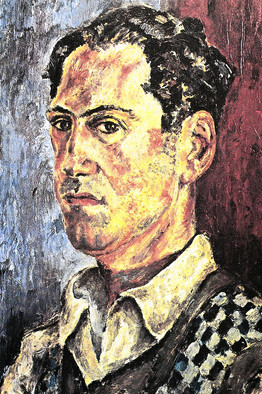
I’ve been doing some research about George Gershwin (George Gershwin: An Intimate Portrait (Music in American Life) is an especially wonderful biography), and I’ve been surprised to learn that, in addition to his formidable musical talent, Gershwin was a major collector of modern art and a credible painter himself. Here’s a self-portrait:
Continue reading →

Posted in Arts, Music, Painting, sculpture, photography | 4 Replies

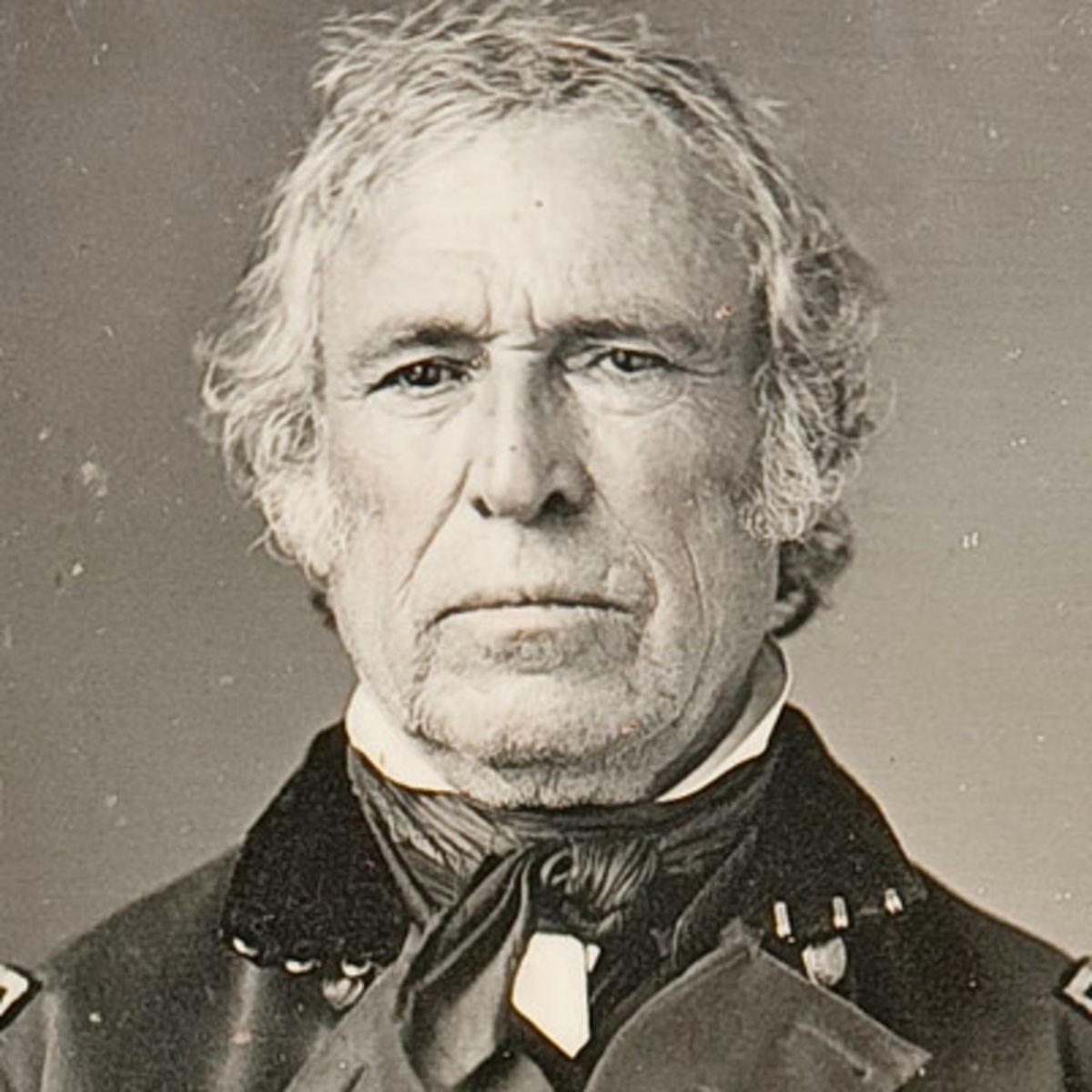
Zachary Taylor analogies

The New Neo Posted on June 3, 2016 by neoJune 3, 2016

Politico has an article describing the effect the candidacy of Zachary Taylor had on the Whig Party in 1848. Hint: not good, not good at all.

Many have called Donald Trump’s unexpected takeover of a major political party unprecedented; but it’s not. A similar scenario unfolded in 1848, when General Zachary Taylor, a roughhewn career soldier who had never even voted in a presidential election, conquered the Whig Party.

A look back at what happened that year is eye-opening””and offers warnings for those on both sides of the aisle. Democrats quick to dismiss Trump should beware: Taylor parlayed his outsider appeal to defeat Lewis Cass, an experienced former Cabinet secretary and senator. But Republicans should beware, too: Taylor is often ranked as one of the worst presidents in U.S. history””and, more seriously, the Whig Party never recovered from his victory. In fact, just a few years after Taylor was elected under the Whig banner, the party dissolved””undermined by the divisions that caused Taylor’s nomination in the first place, and also by the loss of faith that followed it.

I think such candidacies tend to be symptoms rather than causes, although they can exacerbate the already-existing riffs. I won’t bore you by quoting myself once again from 2012, where I predicted that the Republican Party would tear itself apart. Not really a very difficult prediction to make, since it’s been doing some version of that for much of my lifetime, particularly the “Rockefeller Republican” wing versus the conservative wing. Now they’ve been joined by a disaffected populist, nativist wing doing a fair amount of the rending.

But what I really want to point out is the resemblance of Zachary Taylor to an elderly Charlton Heston:

taylor

Posted in History, Politics | 16 Replies

Crazy Jakes: turkeys in love…

The New Neo Posted on June 2, 2016 by neoJune 2, 2016

…with their own reflections:

Betty Ann DiGiacomo said she discovered a wild turkey wandering outside her Mount Laurel home about 7:30 a.m. Friday and she soon discovered the bird seemed enamored with her son’s brand new Honda Civic, which he bought two months ago.

“I was laughing because it looked like he was looking over it to see if it was a good car, like he was shopping for a car,” DiGiacomo told WPVI-TV. “I named him Patrick — Patrick the love struck turkey.”

Experts said the turkey is displaying what’s known as “Crazy Jake Behavior,” which is named for adolescent male turkeys, or Jakes.

The experts said turkeys in the mating mindset will often become attracted to shiny objects and will sometimes show an interest in their own reflections.

DiGiacomo said Patrick wouldn’t let anyone else approach the car.

If you ever wondered why they are called “turkeys,” it was the type of misunderstanding that resulted in the name “Indians” for the native inhabitants of the Western Hemisphere:

When Europeans first encountered turkeys in America, they incorrectly identified the birds as a type of guineafowl ”“ i.e., as members of a group of birds which were thought to typically come from the country of Turkey. The name of the North American bird thus became “turkey fowl”, which was then shortened to just “turkey”…

The birds came to England via merchant ships from the Middle East where they were domesticated successfully. These merchants were called “Turkey merchants” as much of the area was part of the Ottoman Empire. Hence the name “Turkey birds” or, soon thereafter, “turkeys”.

Posted in Nature | 15 Replies

Decisions, decisions

The New Neo Posted on June 2, 2016 by neoJune 2, 2016

Every day there’s some new outrage from Donald Trump and/or Hillary Clinton. That’s almost a given, and it’s something we have grown used to.

“Grown used to” can segue into “grown complacent about.” But I’m not complacent—nor do I think most of you are complacent. Nevertheless I no longer have been describing, detailing, and reacting in print to every single thing that happens during this election season. I register them in my mind, however.

And of course I plan to continue to write about these things quite often, as the spirit moves me. But daily blow-by-blow narration of every single incident (sometimes several-times-daily blow-by-blow narrations)? No; the time for that was during the GOP primary season, when something could still have been done about it.

Trump is now going to be the GOP nominee. Hillary Clinton will almost certainly be the Democratic nominee, absent an indictment which I’ve long predicted will not come. That is our choice (although if a viable third-party candidate with a chance of being anything but a spoiler appeared, I would still support such a candidate). Many if not most of us have already made our choices: Trump, Hillary, none of the above, third-party. Those of us who still haven’t decided for absolute certain (I’m not going to vote for Hillary, but there is a chance of Trump or third-party for me) are not going to decide tomorrow. We probably won’t decide till it’s close to November, or perhaps in that lonely voting booth.

[NOTE: A reader sent me a link to this New Yorker essay by Adam Gopnik about how dangerous Trump is or could be. My reaction to the Gopnick article is that it completely misses the two biggest points about Trump’s most recent supporters, the ones who are only coming aboard now that he’s sewn up the nomination. It’s not surprising that Gopnik, who is of the liberal/left, would miss these points in his zeal to criticize those Republicans, and to characterize Trump as uniquely dreadful among American party nominees (which I happen to think Trump actually is).

The first point that Gopnik seems to miss (or dissembles about; I don’t read Gopnik’s mind, so I don’t know which it is) is that Trump’s late-embracers aren’t embracing him at all; they are very reluctant to do so and have been dragged kicking and screaming to it. The vast majority of them still detest him and are well aware that he’s potentially dangerous. Unlike what Gopnik asserts about them, there is little real acceptance among them of the idea that Trump can be controlled, and I have never observed his description: “Columnists and magazines that a month ago were saying #NeverTrump…now vibrating with the frisson of his audacity.”

In the latter part of his essay, Gopnik describes a line he believes Trump will cross, that of a leader and/or president being an “enemy of the liberal constitutional order of the United States””the order that has made it, in fact, the great and plural country that it already is. [Trump] announces his enmity to America by word and action every day.” That brings us to the second huge point Gopnik misses, which is that most of those who have regretfully decided to support Trump at this late date think that the line that already been crossed by his predecessor, Barack Obama.

Also, it depends what you mean by “enmity.” Trump professes his love for America, but his lack of respect for and willingness to abide by “the constitutional order of the United States” that has made us great is clear, and that latter fact has troubled me greatly about him from the start. Gopnik doesn’t see fit to acknowledge Obama’s violation of that respect, and the right greatly fears and expects Hillary Clinton to continue along those same lines. So there isn’t a person in the race who respects the Constitution (there was, but Cruz and others like Walker are gone).

Trump is merely more rhetorically up-front and less deceptive about his plans to cross that line. These reluctant Trump-supporters don’t delude themselves that they can control him or that he will be faithful to the Constitution—they merely think he is at least partly on their side in what he might end up doing, and Hillary is not.]

Posted in Election 2016, Trump | 33 Replies

Post navigation

← Previous Post
Next Post→

Your support is appreciated through a one-time or monthly Paypal donation

Please click the link recommended books and search bar for Amazon purchases through neo. I receive a commission from all such purchases.

Archives

Recent Comments

  • R2L on Open thread 11/11/2026
  • Richard Illyes on Veterans Day; Armistice Day
  • om on Veterans Day; Armistice Day
  • om on News roundup
  • Richard Illyes on Veterans Day; Armistice Day

Recent Posts

  • News roundup
  • Veterans Day; Armistice Day
  • Open thread 11/11/2026
  • The refinery issue
  • This type of ed is special, all right

Categories

  • A mind is a difficult thing to change: my change story (17)
  • Academia (330)
  • Afghanistan (98)
  • Amazon orders (6)
  • Arts (8)
  • Baseball and sports (164)
  • Best of neo-neocon (91)
  • Biden (536)
  • Blogging and bloggers (599)
  • Dance (292)
  • Disaster (244)
  • Education (329)
  • Election 2012 (360)
  • Election 2016 (566)
  • Election 2018 (33)
  • Election 2020 (514)
  • Election 2022 (114)
  • Election 2024 (403)
  • Election 2026 (125)
  • Election 2028 (14)
  • Evil (130)
  • Fashion and beauty (324)
  • Finance and economics (1,054)
  • Food (319)
  • Friendship (48)
  • Gardening (18)
  • General information about neo (4)
  • Getting philosophical: life, love, the universe (737)
  • Health (1,169)
  • Health care reform (546)
  • Hillary Clinton (184)
  • Historical figures (338)
  • History (720)
  • Immigration (452)
  • Iran (467)
  • Iraq (227)
  • IRS scandal (71)
  • Israel/Palestine (836)
  • Jews (445)
  • Language and grammar (365)
  • Latin America (216)
  • Law (2,997)
  • Leaving the circle: political apostasy (125)
  • Liberals and conservatives; left and right (1,335)
  • Liberty (1,119)
  • Literary leftists (14)
  • Literature and writing (394)
  • Me, myself, and I (1,524)
  • Men and women; marriage and divorce and sex (935)
  • Middle East (385)
  • Military (327)
  • Movies (355)
  • Music (534)
  • Nature (262)
  • Neocons (32)
  • New England (185)
  • Obama (1,740)
  • Pacifism (16)
  • Painting, sculpture, photography (132)
  • Palin (93)
  • Paris and France2 trial (25)
  • People of interest (1,051)
  • Poetry (259)
  • Political changers (179)
  • Politics (2,797)
  • Pop culture (397)
  • Press (1,636)
  • Race and racism (885)
  • Religion (431)
  • Romney (164)
  • Ryan (16)
  • Science (642)
  • Terrorism and terrorists (983)
  • Theater and TV (266)
  • Therapy (71)
  • Trump (1,638)
  • Uncategorized (4,636)
  • Vietnam (109)
  • Violence (1,465)
  • War and Peace (1,036)

Blogroll

Ace (bold)
AmericanDigest (writer’s digest)
AmericanThinker (thought full)
Anchoress (first things first)
AnnAlthouse (more than law)
AugeanStables (historian’s task)
BelmontClub (deep thoughts)
Betsy’sPage (teach)
Bookworm (writingReader)
ChicagoBoyz (boyz will be)
DanielInVenezuela (liberty)
Dr.Helen (rights of man)
Dr.Sanity (shrink archives)
DreamsToLightening (Asher)
EdDriscoll (market liberal)
Fausta’sBlog (opinionated)
GayPatriot (self-explanatory)
HadEnoughTherapy? (yep)
HotAir (a roomful)
InstaPundit (the hub)
JawaReport (the doctor’s Rusty)
LegalInsurrection (law prof)
Maggie’sFarm (togetherness)
MelaniePhillips (formidable)
MerylYourish (centrist)
MichaelTotten (globetrotter)
MichaelYon (War Zones)
Michelle Malkin (clarion pen)
MichelleObama’sMirror (reflect)
NoPasaran! (bluntFrench)
NormanGeras (archives)
OneCosmos (Gagdad Bob)
Pamela Geller (Atlas Shrugs)
PJMedia (comprehensive)
PointOfNoReturn (exodus)
Powerline (foursight)
QandO (neolibertarian)
RedState (conservative)
RogerL.Simon (PJ guy)
SisterToldjah (she said)
Sisu (commentary plus cats)
Spengler (Goldman)
VictorDavisHanson (prof)
Vodkapundit (drinker-thinker)
Volokh (lawblog)
Zombie (alive)

Meta

  • Log in
  • Entries feed
  • Comments feed
  • WordPress.org
©2026 - The New Neo - Weaver Xtreme Theme Email
Web Analytics
↑