There were a lot of good speakers last night. I didn’t watch them all, but Artur Davis and Mia Love especially impressed me—Davis because he’s a changer, and Love because she showed that a demographic which usually goes Democratic (young black female) has a place in the Republican Party if attracted to its philosophy and principles. Hope she wins and goes to Congress, even if media outlets like MSNBC pretended she does not exist. To them, she doesn’t.
But last night it really was the Ann Romney and Chris Christie show. They were the ones who aroused the most curiosity, and they both delivered.
I’d seen Ann Romney speak before, so I was already familiar with how good she is: very. I was further impressed, as she stepped up to the podium last night, with how incredibly attractive and young she looked. Whoever did her hair and makeup hit it out of the park.
As did Ann herself. She exhibits an impressive combination of ease, grace, warmth, intensity, and sincerity. Her delivery is wonderful, too: clear and strong, never strident or shrill. The message was fairly simple: I love this guy, he’s never let me down, and he won’t let you down either.
What’s more, she even managed to touch on a subject of interest to me: his good deeds as a private citizen. Yesterday I expressed the wish that this information be placed before the public, but that it wouldn’t be easy to do it right:
It definitely would have to be done through surrogates, though, and the touch would have to be very delicate.
And that’s a good description of what Ann Romney did when she said:
Mitt doesn’t like to talk about how he has helped others because he sees it as a privilege, not a political talking point.
In one sentence she both mentioned it and de-politicized it as much as possible, while getting across the idea that it’s sincere rather than a strategic ploy. I hope others at the convention will go on to flesh out some of the details of what Mitt actually did; it’s pretty impressive.
Of course, none of this will ever earn any kudos from the left. I went to a few blogs of that persuasion last night just to see what commenters were saying, and sure enough it was the usual snipey nasty “she’s a privileged robot” stuff.
On to Christie, one of my favorite politicians (not an oxymoron). I thought his speech was stirring, although others criticized him for not being an attack dog throwing red meat to the Obama-detesting base. But that’s a feature, not a bug. After all, the goal is to appeal to independents and swing voters, and he did that in the very best way, by contrasting Republican principles and policies with Democratic ones, and doing it in the manner he’s master at: clear, concise, immediately understandable, powerful and yet conversational.
Cristie has what they used to call the common touch. Even his girth, so unusual for a politician today, conveys that impression, as does his accent, which speaks to me personally of home. Christie took the high road, and it was a stroke of genius for him to basically ignore Obama, which probably infuriated Obama even more than excoriating him would have.
Christie is a Republican of a certain type that’s rather rare: the urban, northeastern, tough-talking guy. The closest Republican I can think of to Christie is Giuliani, another Italian (Christie is only half) former prosecutor from the New York City area (Christie was born in Newark; close enough). And there’s another Italian-American politician from New York that he reminds me of, at least physically:
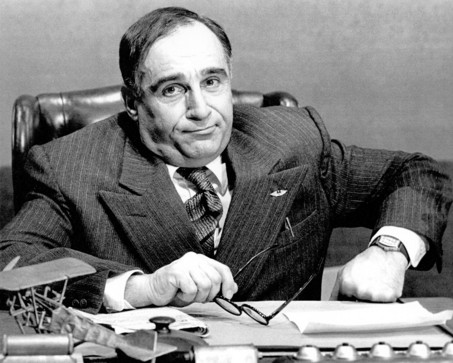


Christie is taller than La Guardia, it’s true—but then, who isn’t?
