If something happens to him as a result, I assume the family can sue the FBI?
This has gone beyond a show trial.
By the way, I’ve said it before and I’ll say it again: Obama will never dump Holder. The guy is golden, exactly and precisely what Obama wants, the perfect lackey, mind-meld alter ego, what-have-you.
Of course, I have little doubt that if Holder had to be let go, Obama could find another willing legal beagle eager to do his bidding. But never another so perfect, or so willing, as Holder.
The article says it’s the largest city in the US to ever file for bankruptcy, but New York came mighty close in 1975. I know, because I owned a very small NYC bond at the time, and I remember the crisis well:
Rohatyn and a deputy were referred to as the “Batman and Robin of New York.” The legendary Lazard banker talked to Quartz about his worries that the same tools he used might not be available in Detroit.
“We couldn’t do this today,” says Rohatyn. “The various stakeholders are no longer around the same table.”
He’s referring to three major breakthroughs that helped refinance the Big Apple. First, municipal unions, as well as conceding pay cuts, used their pension funds to invest in the city. Then big Wall Street banks, which owned a lot of New York municipal debt and therefore had strong incentives to cooperate on restructuring, agreed to defer loan repayment and underwrote new securities on the cheap. And despite President Gerald Ford’s famous message to New York, pressure from Congress””and even from foreign governments fearing a default””led to federal guarantees on the city’s debt…
The Motor City is in a different position. Today’s weaker unions aren’t able to make the kind of investments they did four decades ago. The financial sector is not entwined in Detroit’s problems, and the city’s debt is in the hands of a far greater number and much more diverse cast of investors, making consensus on restructuring much harder. It’s also not clear that today’s Congress, let alone foreign leaders, would be interested in bailing out America’s 18th-largest city. And on top of all that, Orr faces ongoing strife between the city’s Democratic council and the anti-union Republican governor who appointed him, not to mention citizens upset at losing control of their beleaguered city.
By the way, one of the things that arguably may have helped lead to NYC’s financial troubles back then was none other than ye olde Cloward-Piven strategy:
Cloward-Piven’s early promoters cited radical organizer Saul Alinsky as their inspiration. “Make the enemy live up to their (sic) own book of rules,” Alinsky wrote in his 1971 book Rules for Radicals. When pressed to honor every word of every law and statute, every Judeo-Christian moral tenet, and every implicit promise of the liberal social contract, human agencies inevitably fall short. The system’s failure to “live up” to its rule book can then be used to discredit it altogether, and to replace the capitalist “rule book” with a socialist one.
The authors noted that the number of Americans subsisting on welfare — about 8 million, at the time — probably represented less than half the number who were technically eligible for full benefits. They proposed a “massive drive to recruit the poor onto the welfare rolls.” Cloward and Piven calculated that persuading even a fraction of potential welfare recipients to demand their entitlements would bankrupt the system. The result, they predicted, would be “a profound financial and political crisis” that would unleash “powerful forces for major economic reform at the national level.”…
Cloward and Piven recruited a militant black organizer named George Wiley to lead their new movement. In the summer of 1967, Wiley founded the National Welfare Rights Organization (NWRO). His tactics closely followed the recommendations set out in Cloward and Piven’s article. His followers invaded welfare offices across the United States — often violently — bullying social workers and loudly demanding every penny to which the law “entitled” them. By 1969, NWRO claimed a dues-paying membership of 22,500 families, with 523 chapters across the nation.
Regarding Wiley’s tactics, The New York Times commented on September 27, 1970, “There have been sit-ins in legislative chambers, including a United States Senate committee hearing, mass demonstrations of several thousand welfare recipients, school boycotts, picket lines, mounted police, tear gas, arrests – and, on occasion, rock-throwing, smashed glass doors, overturned desks, scattered papers and ripped-out phones.”These methods proved effective. “The flooding succeeded beyond Wiley’s wildest dreams,” writes Sol Stern in the City Journal. “From 1965 to 1974, the number of single-parent households on welfare soared from 4.3 million to 10.8 million, despite mostly flush economic times. By the early 1970s, one person was on the welfare rolls in New York City for every two working in the city’s private economy.” As a direct result of its massive welfare spending, New York City was forced to declare bankruptcy in 1975. The entire state of New York nearly went down with it. The Cloward-Piven strategy had proved its effectiveness.
…take a look. I think it explains a lot, although I’d bet money that very few people have watched it.
Remember, also, that this video was made the day after Martin was killed, and Zimmerman had talked to police right away with no advice from counsel. This is the story he told immediately after the killing occurred, with no assistance in crafting it. His story conformed in all but the smallest details with his call to the police that night (which he almost certainly had not heard when he made this video), and did not change over time in any essential way, nor did it conflict with the forensic evidence that developed later (and he could not have known at the time what evidence would eventually develop). The video answers questions about the “following” issues and pretty much all the rest, but most people with an anti-Zimmerman agenda have chosen to ignore it, if they even know about its existence at all:
[ADDENDUM: By the way, I was just listening to a cable TV news show, and there it was again: “The bottom line is that Zimmerman was told to stay in his car, and he got out and followed Trayvon, and if he hadn’t done that none of this would have happened.” The host, the usually sharp Greta Van Susteren, said nothing to correct the speaker. And like clockwork, I’ve heard that exchange or something almost identical nearly every time I listen to a discussion of this case. It has become a completely entrenched False Truth.]
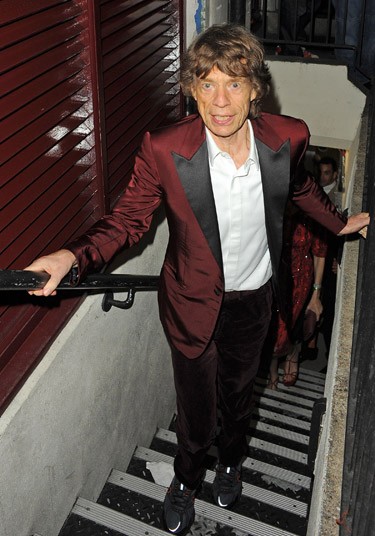
Does he look good for 70? I suppose so, but I’ve lost sight of what 70 looks like, people age so variably. And I must say I never thought Mick Jagger looked young, or good even when he actually was young. He was always so skinny, and he has somehow managed not to gain an ounce. Is there a Mick Jagger diet book in his future?
Most people refer to the problems that have come to the fore in Obama’s second term—the deepening of the Benghazi evidence of wrongdoing on the government’s part, the misuse of the IRS’s power for political reasons, the NSA domestic spying, and the invasion of the privacy of certain members of the press—as scandals. I’ve done it too, but mostly because I’ve not been able to think of a better word for them.
I don’t think “scandals” fits the bill. It implies some sort of conventional wrongdoing—sex and/or money, for example, The Weiner emails were a scandal. Clinton having an affair (whether he “had sex” or not) with Monica Lewinsky was a scandal, although it had other connotations as well. Fanny Foxe and Wilbur Mills—now, that was a scandal (ah, for the golden olden days!).
What’s been going on with Obama is something different, and something much more basic to the exercise of government. Perhaps a word we could use is “violations” or “abuses,” although those really don’t seem strong enough or specific enough, either.
But let’s not worry so much about semantics. Events like the Zimmerman trial raise their own important concerns, but they also tend to act as distractions from these other issues that are more basic in terms of abuse of government power (although the post-Zimmerman “dialogue” seems to have a larger agenda, too, which is to increase white guilt, inflame black rage, and further erode the right of the average person to protect him/herself).
However, even that term “distractions” is tricky, because there are so many violations that each one acts as distraction vis a vis the others. It has been overwhelming, a game of whack-a-mole where the machine keeps winning and we can’t keep up. And that seems to be part of the plan.
So this post is an attempt to get back to business and update on what’s happening, so we don’t lose sight of it:
—IRS hearings continue with an eye to finding how high up the rot went, and Carter Hull, a retiring IRS lawyer, says it began in Washington.
—The Benghazi probe seems quiescent for now, and Congressman Frank Wolf is indicating that the government made the Benghazi survivors sign non-disclosure agreements.
—And surprise surprise, the NY Times prints a deceptive headline about Obamacare’s probable effect on premiums in that state, making it sound much better than it is likely to be for most people.
—Notice, also, how little we hear about Egypt and other world news—except, of course, for the royal baby whose arrival seems imminent. Here’s one about Syria, and of course there’s also the burning question of whether Mexico’s obesity (which we discussed here) is actually the fault of the US. I kid you not.
Fifty-eight? He looks seventy-eight to me. I consider fifty-eight young (hey, I’m starting to consider seventy-eight kinda young, too. It’s all in the attitude, right?)
Sharpton used to be a big man—“big” in this case being a euphemism for fat (not that there’s anything wrong with that). He’s lost 125 pounds, a formidable amount, and he says he did it without surgery.
That’s good. But sometimes when people lose that much weight later in life they get that shriveled-up look. Maybe he should add a little olive oil to the diet.
Does this count as an article that’s not about the Zimmerman case?
I keep trying to stop writing about the case and focus on other things, because there are surely plenty of important ones. But my frustration and anger is actually building rather than letting up, which is a surprise because the verdict was at least the correct one.
I promise myself (and you) I’ll stop writing about this soon and get on to other things, but just one more…just one more. Like potato chips, only nowhere near as tasty—in fact, not tasty at all.
What is it that irks me so very much even at this late date? A lot of things, actually (some of which I’ve written about already)—but in particular it’s the amount of disinformation everywhere, disinformation that’s authoritatively parroted by the left and right alike at times. So much that people “know”—and in fact are righteously, adamantly certain they know—is false.
Like vampires, these memes are hard to kill, and are even repeated by those who are basically behind the verdict and Zimmerman, and who should know better. But apparently there’s a lot of lazy, slipshod thinking and writing out there, as well as purposeful lying.
I’ve already dealt with the “followed” meme, from which so many others flow. And today William Jacobson of Legal Insurrection talks about a related meme, the “Zimmerman was told not to get out of his car” falsehood, here. Of course, there’s also the “Zimmerman the racist” theme, the “open season on black youths” theme, and too many others to list, most of them based on nothing more than the political leanings of the speaker combined with an abysmal ignorance (or feigned ignorance) of the facts of the case and the law. And some of this comes from lawyers as well.
It makes me angry, because although I can tolerate plenty of disagreement, I can’t stand it when people spread lies or misunderstandings that could be cleared up by doing just a minimum of research, and the public swallows it whole. I don’t pretend to know exactly what happened every moment between Zimmerman and Martin that night—there are some things we’ll never know—but I at least try my best to learn as much as I can from the information we do have and not to misstate the facts, and to use logic in analyzing what those facts might mean. I have respect for people on either side of the issue who do the same, but they’re nowhere near as numerous as they should be.
That’s why last night when I happened across the following exchange on Hannity between Juan Williams and someone I’d never heard of before named Leo Terrell, I felt as though Terrell was channeling me in his obvious frustration with Williams’ ignorance and sloppy reasoning. What’s all the more surprising is that it turns out that Terrell, a lawyer, is apparently an extreme liberal who usually disagrees vociferously with all conservative positions. But for some reason, this time he’s in agreement with what is usually thought of as the conservative side, and he seems to know his facts about the case. Watch what he does to Williams:
Curiously satisfying, at least to me.
Now let’s get to another issue—the fact that Zimmerman had called 911 many times before. Our very own commenter “Mitsu” gave particular weight to that fact yesterday, writing about it in comment after comment. I offer a few here:
These facts are quite easy to ascertain: Zimmerman became a member of the neighborhood watch in September 2011, long after most of his eccentric calls to 911 were made. How many times have YOU called 911? To say that his 911 behavior wasn’t odd is to stretch credulity.
You [neo]…make no mention of [Zimmerman’s] 46 calls to 911. If you can read the 46 call record and conclude Zimmerman was a completely run of the mill, ordinary, responsible and level-headed member of a neighborhood watch, I have to say I think your judgement of that is at variance with most people’s.
And in this comment of Mitsu’s, he refers to Zimmerman’s “obsessiveness, his paranoia, his incessant calls to 911.”
My response to all of this can be found here, but I’ll just summarize it as saying that we have no idea if Zimmerman’s call numbers were unusual, given the situation in the neighborhood where he lived, since we have nothing to compare it to (such as, for example, calls to 911 by other neighbors).
But the exchange made me curious. Was there indeed something unusual about Zimmerman’s making so many calls? Not that it is relevant to Zimmerman’s guilt or innocence—it is not, at least not in the legal sense. But I wanted to know nevertheless.
So I did some Googling. Until yesterday, I’d never read this in-depth article from Reuters about the Zimmerman family when George was growing up, and (more to the point) what exactly had been happening in Zimmerman’s neighborhood prior to the night he killed Martin.
Please do yourself a favor and read the whole thing. But here’s an especially relevant excerpt (amazing that we have to turn to Reuters for this sort of thing; who would have guessed it?) [Emphasis mine]:
By the summer of 2011, Twin Lakes [where Zimmerman lived] was experiencing a rash of burglaries and break-ins. Previously a family-friendly, first-time homeowner community, it was devastated by the recession that hit the Florida housing market, and transient renters began to occupy some of the 263 town houses in the complex. Vandalism and occasional drug activity were reported, and home values plunged. One resident who bought his home in 2006 for $250,000 said it was worth $80,000 today.
At least eight burglaries were reported within Twin Lakes in the 14 months prior to the Trayvon Martin shooting, according to the Sanford Police Department. Yet in a series of interviews, Twin Lakes residents said dozens of reports of attempted break-ins and would-be burglars casing homes had created an atmosphere of growing fear in the neighborhood.
In several of the incidents, witnesses identified the suspects to police as young black men. Twin Lakes is about 50 percent white, with an African-American and Hispanic population of about 20 percent each, roughly similar to the surrounding city of Sanford, according to U.S. Census data.
One morning in July 2011, a black teenager walked up to Zimmerman’s front porch and stole a bicycle, neighbors told Reuters. A police report was taken, though the bicycle was not recovered.
But it was the August incursion into the home of Olivia Bertalan that really troubled the neighborhood, particularly Zimmerman. [His wife] Shellie was home most days, taking online courses towards certification as a registered nurse.
On August 3, Bertalan was at home with her infant son while her husband, Michael, was at work. She watched from a downstairs window, she said, as two black men repeatedly rang her doorbell and then entered through a sliding door at the back of the house. She ran upstairs, locked herself inside the boy’s bedroom, and called a police dispatcher, whispering frantically.
“I said, ‘What am I supposed to do? I hear them coming up the stairs!'” she told Reuters. Bertalan tried to coo her crying child into silence and armed herself with a pair of rusty scissors.
Police arrived just as the burglars – who had been trying to disconnect the couple’s television – fled out a back door. Shellie Zimmerman saw a black male teen running through her backyard and reported it to police.
After police left Bertalan, George Zimmerman arrived at the front door in a shirt and tie, she said. He gave her his contact numbers on an index card and invited her to visit his wife if she ever felt unsafe. He returned later and gave her a stronger lock to bolster the sliding door that had been forced open.
“He was so mellow and calm, very helpful and very, very sweet,” she said last week. “We didn’t really know George at first, but after the break-in we talked to him on a daily basis. People were freaked out. It wasn’t just George calling police … we were calling police at least once a week.”
In September, a group of neighbors including Zimmerman approached the homeowners association with their concerns, she said. Zimmerman was asked to head up a new neighborhood watch. He agreed.
Less than two weeks later, another Twin Lakes home was burglarized, police reports show. Two weeks after that, a home under construction was vandalized.
The Retreat at Twin Lakes e-newsletter for February 2012 noted: “The Sanford PD has announced an increased patrol within our neighborhood … during peak crime hours.
“If you’ve been a victim of a crime in the community, after calling police, please contact our captain, George Zimmerman.”
On February 2, 2012, Zimmerman placed a call to Sanford police after spotting a young black man he recognized peering into the windows of a neighbor’s empty home, according to several friends and neighbors.
“I don’t know what he’s doing. I don’t want to approach him, personally,” Zimmerman said in the call, which was recorded. The dispatcher advised him that a patrol car was on the way. By the time police arrived, according to the dispatch report, the suspect had fled.
On February 6, the home of another Twin Lakes resident, Tatiana Demeacis, was burglarized. Two roofers working directly across the street said they saw two African-American men lingering in the yard at the time of the break-in. A new laptop and some gold jewelry were stolen. One of the roofers called police the next day after spotting one of the suspects among a group of male teenagers, three black and one white, on bicycles.
Police found Demeacis’s laptop in the backpack of 18-year-old Emmanuel Burgess, police reports show, and charged him with dealing in stolen property. Burgess was the same man Zimmerman had spotted on February 2.
I think I’ll just stop there, although the article doesn’t. I believe I’ve made my point. Paranoid, calling 911 too much? Hardly. And if Zimmerman was reporting a lot of suspicious black men—well, that’s because there were a number of black men that had been wandering around Twin Lakes acting suspiciously.
I said the article doesn’t stop there. It goes on to complete the narrative with a very brief description of the Martin killing, adding the almost-obligatory, “[Zimmerman] disregarded police advice against pursuing Martin.” However, the article was written on April 25, 2012, before too many of the details of that night were known (although the writer should have figured it out properly just from the evidence in the emergency call).
At any rate, we can now piece these things together and get a fuller portrait. That portrait reflects well on Zimmerman, and poorly on those who would torment him and tarnish his name further for propaganda purposes. Too bad they are so numerous.
This should come as no surprise whatsoever. After all, black people are disproportionately the victims and perpetrators of violent crime, most often black-on-black crime, although that doesn’t grab the headlines very often. But SYG has become a popular target of black activists and pundits, despite its inapplicability to the Zimmerman case, drawing the ire of even so disparate a duo as Eric Holder and Stevie Wonder.
Stevie Wonder? Yes, he is boycotting Florida because of the law, although I would imagine Florida can somehow manage to survive without him, and his action will only serve to penalize Wonder fans in that state. Plus, he needs to curtail his touring significantly more than that, because although he may not know it, plenty of states have similar laws. In case Wonder’s reading this (not a likely event), I’ve helpfully provided a crib sheet for him. In addition to Florida, there’s:
Many states have some form of stand-your-ground law. Alabama, Alaska, Arizona, California…Georgia, Indiana, Iowa, Kansas, Kentucky, Louisiana, Maine, Massachusetts (though the term is used very loosely here), Michigan, Mississippi, Missouri, Montana, New Hampshire, North Dakota, Ohio, Oklahoma, Pennsylvania, Rhode Island, South Carolina, South Dakota, Tennessee, Texas, Utah, West Virginia,, Wisconsin and Wyoming have adopted Castle Doctrine statutes [defending the home space], and other states (Iowa, Virginia, and Washington) have considered stand-your-ground laws of their own…
Some of the states that have passed or are considering stand-your-ground laws already implement stand-your-ground principles in case law. Indiana and Georgia, among other states, passed stand-your-ground statutes due to possible concerns of existing case law being replaced by the “duty to retreat” in later court rulings. Other states, including Washington and Virginia, have implemented stand-your-ground judicially but have not adopted statutes.
Here’s the scoop on racial differences in the actual operation of the SYG law in the state of Florida:
But approximately one third of Florida “Stand Your Ground” claims in fatal cases have been made by black defendants, and they have used the defense successfully 55 percent of the time, at the same rate as the population at large and at a higher rate than white defendants, according to a Daily Caller analysis of a database maintained by the Tampa Bay Times. Additionally, the majority of victims in Florida “Stand Your Ground” cases have been white.
African Americans used “Stand Your Ground” defenses at nearly twice the rate of their presence in the Florida population, which was listed at 16.6 percent in 2012.
That “majority of victims…have been white” doesn’t mean that most of the people the black defendants have killed have been white, by the way. It just means that most of the victims in cases involving either black or white defendants have been white rather than black. If you’re interested in a more in-depth analysis of Florida’s SYG law and race, this article gives a lot more information, and paints a picture of no small complexity, too long to summarize easily.
But let’s forget about the racial angle for a moment, shall we? What about the law’s effect on crime in general? Well, as you might suspect, it’s difficult to say, because different studies have found different things, as is true for statistical analyses of so many issues in criminology. But that doesn’t stop demagogues from using the issue to support their favorite cause.
Maybe I shouldn’t have, but I expected better from the WSJ editors than this:
Mr. Zimmerman made many mistakes that February evening, not least failing to heed police advice not to pursue Martin.
Earth to WSJ editors: do your homework. There is no evidence that Zimmerman “failed to heed police advice not to pursue Martin”, and some evidence that in fact he stopped pursuit of Martin after the dispatcher told him it wasn’t necessary to follow him. This “following” meme has taken on a life of its own, and it’s time it was put to rest.
—According to the transcript of his 911 call, Zimmerman said “okay” after the dispatcher said he didn’t need to follow him.
—Zimmerman mentions that he had lost sight of Martin (who had started running), and never again indicates he knows where Martin is.
—Zimmerman had been in the car early in the call, and he only gets out of the car after the dispatcher asks him of Martin, “He’s running? Which way is he running?” That’s when he gets out of the car and tries to find the direction Martin is running in order to tell the dispatcher Martin’s probable new location if he can. It is immediately after that that the dispatcher says he doesn’t need to follow him and Zimmerman responds “okay.”
—Zimmerman spends a great deal of time trying to describe his own whereabouts to the dispatcher so that the police can find him when they arrive. Zimmerman indicates that they should go “straight past the clubhouse and make a left and then go past the mailboxes you’ll see my truck.” That’s where he is planning to meet them, although he doesn’t know the exact address. When the dispatcher then asks for Zimmerman’s home address, he worries aloud about giving it to them, because he says,”oh, crap, I don’t want to give it out ”“ I don’t know where this kid is (inaudible).”
Sure doesn’t sound like a person who is continuing to follow someone—especially since Zimmerman hasn’t even got a clue where Martin is at that point, and is making arrangements to meet the police, whom he’s hoping will get there very soon. In addition, the fight occurred not far from where the 911 call took place. If it was Zimmerman who was following Martin, why would that have happened? It’s much more likely that Martin doubled back to find Zimmerman, whom he’d gotten a bead on earlier (Zimmerman had described Martin as having stared at him while Zimmerman was in the car making the 911 call).
This is simply no evidence that Zimmerman followed Martin after the dispatcher suggested he didn’t need to do so, and all the evidence indicates that he did not follow him. I understand why the “follow” story might be promulgated by liberals and the left. But what’s going on with the WSJ editors? Have they really paid that little attention to the facts of the case?
Perhaps it’s time for a public apology from the WSJ to Zimmerman, or at the least a very noticeable correction?
So, was Martin guilty of a homophobic hate crime when he assaulted Zimmerman?
You know, I keep wanting to get away from writing about this case. It’s dominated the news so much for quite a while, and now it’s supposedly “over.”
But it stubbornly resists being over. The repercussions and the twistings and turnings keep on coming, and they raise so many fascinating issues that the entire case seems to have become a sort of magnet for controversies of our times.